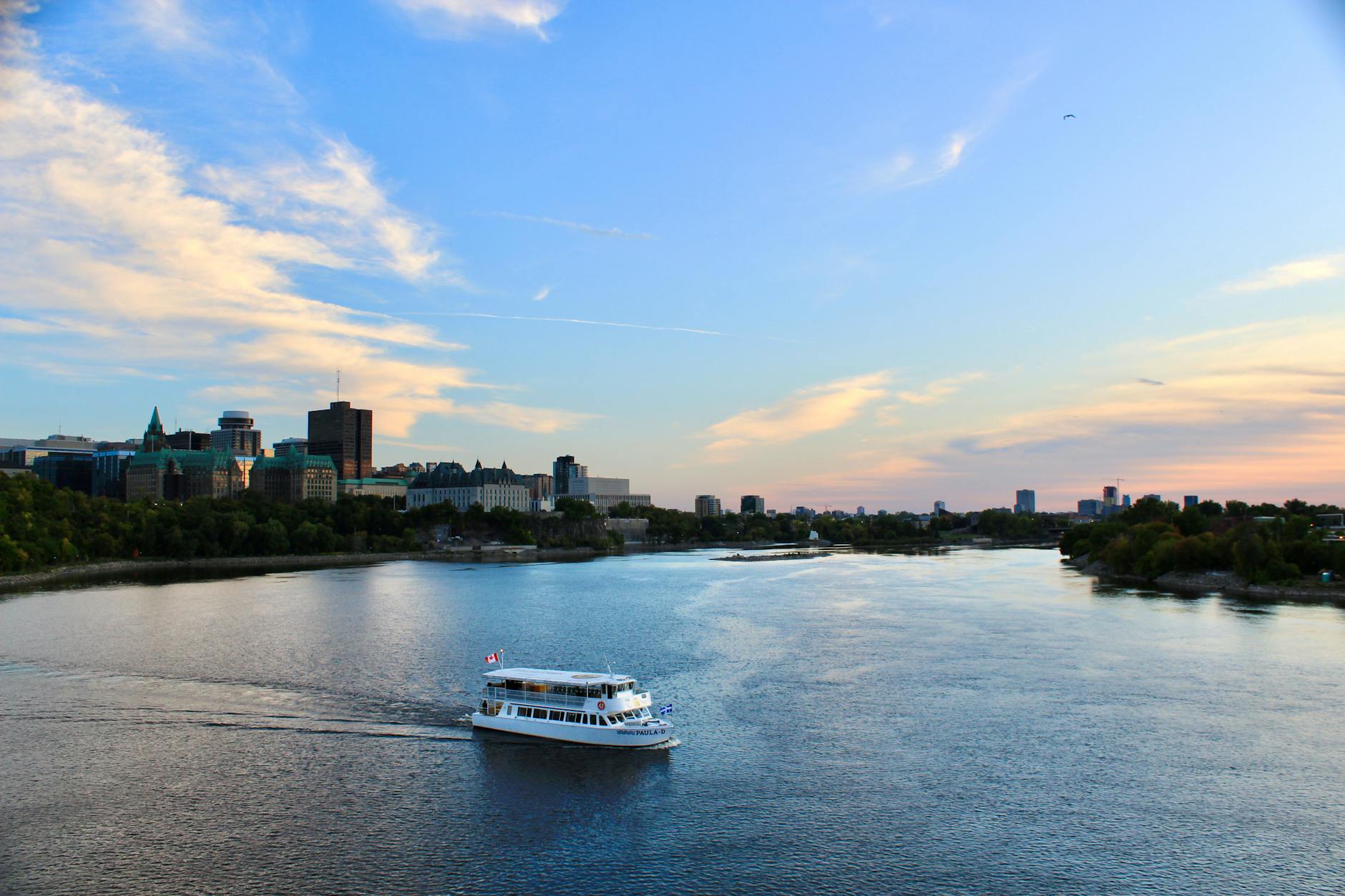
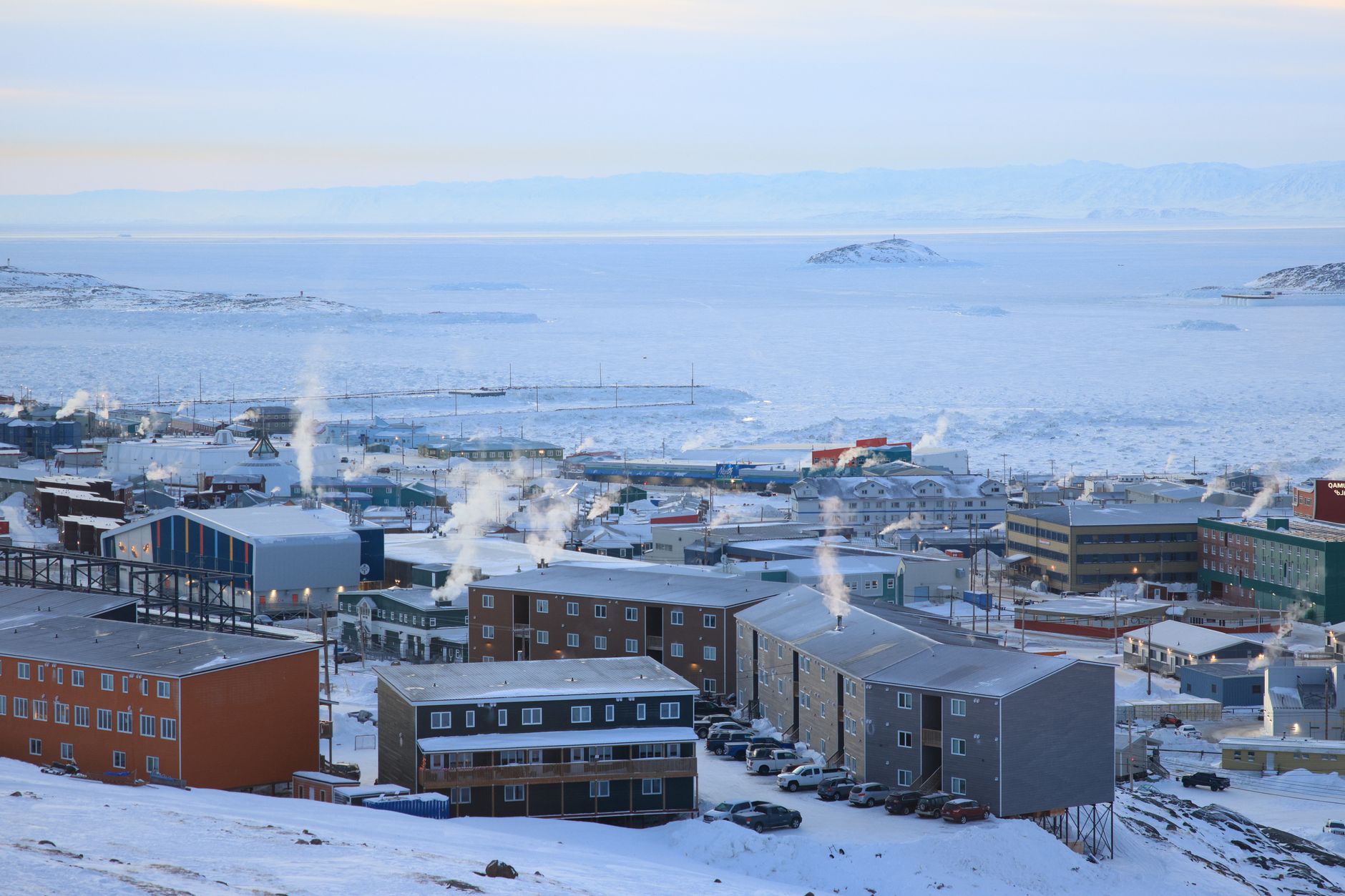
Breathtaking Rocky Mountains, Niagara Falls, cosmopolitan Toronto and the northern lights of the far north: Canada is a huge country made for getting lost in and coming back wanting more.
Canada is the second-largest country in the world and it feels like it: nature on an outsized scale, clean and safe cities, and an easy-going cultural mix that makes it simple to travel around. This is the land of the Rocky Mountains and their turquoise lakes, of Niagara Falls, of endless forests and of the northern lights up north. At the same time it has cosmopolitan cities like Toronto, Vancouver and the very European, French-speaking Montreal. For the Latin American traveller it is a comfortable, orderly and welcoming country, though an expensive one, and with a factor to keep in mind at all times: the winter cold, which across much of the country is extreme.
It is best to think of it in blocks, because crossing the whole thing takes days. The east (Toronto, Ottawa, Niagara, and French-speaking Quebec with Montreal and Quebec City) is where the history, the cities and the Great Lakes are. The west (Vancouver, the island of Victoria, Whistler and above all the Rockies: Banff, Lake Louise, Jasper) is the realm of mountains and postcard scenery. The north (Yellowknife) is northern lights and polar adventure territory. Almost every itinerary picks east or west and uses a flight for the jump between the two.
The honest catch: getting there and getting around is very expensive, the distances are enormous and winter shapes everything. But few countries offer such a combination of grand nature, safety and quality of life. And there is good news on the entry front: for Chileans getting in is as simple as an electronic authorisation, and for several other Latin Americans the paperwork has eased considerably in recent years.
A tip for the traveller: in Canada cards are accepted almost everywhere and contactless payment is the norm, so there is no need to carry much cash. Let your bank know before you travel and, if you are going to withdraw money, stick to ATMs belonging to the big banks to avoid steep fees. Remember that many prices are displayed without tax, and that the tip (15-20%) is usually added on top.
Full converter for CAD →The main entry hubs are Toronto Pearson International Airport (YYZ), Vancouver (YVR) and Montreal-Trudeau (YUL). Pearson is the best connected, with direct flights from South America, Europe, the United States and Asia; Vancouver is the natural gateway to the west and the Rockies, and Montreal handles a good share of the traffic heading to the French-speaking east. The flag carrier is Air Canada, with the widest domestic and international network. WestJet is the main alternative and often has good prices, while low-cost airlines such as Flair and Lynx cover domestic routes. For long distances (Toronto-Vancouver, more than 4,000 km, for example) flying is all but compulsory: the country is immense. On the ground, VIA Rail trains connect the main cities of the Quebec-Windsor corridor and offer scenic routes, although they are slow. Long-distance buses are cheap but limited in some areas. Within the cities, Toronto, Montreal and Vancouver have good public transport (metro, tram and buses). To explore the Rockies or the outdoors, renting a car is the way to go. Uber and other apps work in the big cities; traditional taxis are available too.
Canada has a long, very cold winter across almost all of its territory, so the time of year completely defines the kind of trip you get. Summer (June to September) is high season and the best window for most plans: it is when the lakes of the Rockies have thawed and turned their turquoise colour, the national parks are fully accessible, the cities buzz with festivals and the weather is pleasant (although up north the days are extremely long). Autumn (September-October) delivers the spectacle of red and gold foliage, above all in Quebec and Ontario, with fewer people and good prices. Spring is short and all about the thaw.
Winter (December to March) is a season in its own right, not an obstacle: it is when you ski in Whistler and the Rockies, when Quebec and Ottawa turn into a snow-covered fairy tale with Christmas markets and skating, and — crucially — the best time for the northern lights in Yellowknife and the north, which are visible from late August to April and peak in winter. That said, you have to arrive prepared for extreme cold (below -20°C in many places) with proper technical cold-weather clothing. In short: summer for nature and cities, autumn for the foliage, winter for snow and the aurora.
Canadian cooking blends British, French and Indigenous roots with the enormous diversity of its immigrants. The national dish par excellence is poutine (fries with cheese curds and gravy), born in Quebec and thoroughly addictive. Try maple syrup in all its forms too — Canada produces most of the world's supply — along with Pacific salmon and Atlantic seafood (Nova Scotia lobster), Montreal smoked meat and bagels, the butter tart and, for the cold, a good 'Caesar' (the Canadian bloody mary). In the cities you will find food from all over the planet at a very high standard.
Reference prices (verified July 2026): a coffee runs C$4–6 (about US$3–4.50); a casual lunch or a poutine, C$12–20 (US$9–15); a meal at a mid-range restaurant, C$25–40 per person before tax and tip; a pint of beer, C$8–12. Two things that surprise the Latin American traveller: menu prices almost never include tax (it is added when you pay and varies by province, between ~5% and ~15%), and a tip is expected, between 15% and 20% at table-service restaurants. Eating from supermarkets and food courts is how you save.
Canada is one of the safest countries in the world and one of the most relaxed for travellers: violent crime is low even in the big cities, and you can get around normally taking the usual precautions with your belongings. As everywhere, there are neighbourhoods in the larger cities best avoided at night, but the risk to visitors is low. The real challenge in Canada is nature: the extreme cold of winter (with a genuine risk of hypothermia and frostbite if you are not properly dressed), the wildlife in the parks (bears, moose: keep your distance and follow the park rangers' advice) and the enormous distances when driving through empty country, where you have to plan your fuel and watch for snow and ice on the road.
On health, this is a first-world country. No special vaccinations are required to enter (only a yellow fever certificate if you are coming from a risk area, worth checking if you have passed through parts of South America). Tap water is drinkable everywhere in the country. The health system is excellent but free only for residents: for foreigners, care is very expensive, so travel insurance with solid medical cover is essential. The emergency number is 911 (police, ambulance and fire), the same as in the United States.
Canada is an expensive destination, though generally a bit cheaper than the United States and, for Latin Americans, with the advantage of a Canadian dollar that stretches further than the US one. Reference daily budgets per person, excluding the international flight (verified July 2026): tight backpacker, about US$70–110 a day (hostel bed, self-catering or cheap food, public transport); mid-range traveller, US$150–260 a day (hotel or Airbnb, eating out, the odd tour or car rental); comfortable traveller, US$320 or more a day. The Rockies (Banff, Lake Louise) and the big cities are considerably more expensive than the Atlantic provinces in the east.
Concrete examples: a hostel dorm bed costs C$35–50 (US$26–37), more in Banff (C$50–75); a casual meal, C$12–20 (US$9–15) before tax and tip; a coffee, C$4–6; city transport in Toronto or Vancouver, about C$3.50 a ride; entry to a national park such as Banff, about C$11 per adult per day (or the annual Discovery Pass, useful if you are visiting several); a northern lights tour in Yellowknife, from C$150. The big expense is the international flight from South America and, once inside the country, the domestic flights (WestJet, Flair and Lynx as the low-cost options) to hop between east and west. Tip: renting a car for the Rockies, cooking at the hostel and travelling in shoulder season (May or September) brings the cost down a lot. These are reference figures; they vary by region and season.
Canada is officially bilingual: English and French. English works almost everywhere in the country, but in Quebec French is the dominant, everyday language (although in tourist areas you will be served in English). Spanish is not in general use, so basic English is worth having. Canadians have a well-earned reputation for being friendly, polite and respectful ('sorry' and 'thank you' at every turn); they are tolerant, multicultural, and they value punctuality and respect for the rules and for nature. Tipping (15-20% in restaurants) is a firm custom, just as in the United States.
Practical details: the plug is type A and B, at 120V/60Hz (the same as the United States and half the voltage of much of Latin America and Europe: 220V devices need a transformer, although almost all modern chargers are dual voltage — check the power supply). Connectivity is very good in cities and towns, but it vanishes in remote areas and parks; mobile data is notoriously expensive, so a local SIM or eSIM is worth it, from carriers such as Public Mobile, Fido or Koodo, which have tourist plans. You drive on the right (unlike Australia and New Zealand). And a tip from someone who has been there: if you travel in winter, do not underestimate the cold or skimp on technical cold-weather clothing, gloves and a hat; it is the difference between enjoying the trip and suffering through it.
The history of Canada is the history of a country-continent —the second largest in the world after Russia, with nearly ten million square kilometers— whose territory was inhabited for more than fifteen thousand years by hundreds of First Nations peoples, Métis and Inuit before the first European arrived. Onto that millennia-old foundation two imperial ventures were laid: that of France, which founded New France on the banks of the St. Lawrence River in 1608, and that of Great Britain, which conquered it in 1759 and inherited a French-speaking, Catholic population it never managed to assimilate. From that double root came a singular country, bilingual and federal, forged not by a revolution or a war of independence but by a pact negotiated among colonies: the Confederation of July 1, 1867.
That Dominion of barely four provinces set out to build a state from ocean to ocean. It bought half the continent from the Hudson's Bay Company, laid a transcontinental railway whose last spike was driven in 1885, settled the prairies with millions of immigrants and added, one by one, ten provinces and three territories. In the 20th century, the trenches of Vimy Ridge and the beaches of Normandy tempered its national identity; the Statute of Westminster of 1931 and the constitutional patriation of 1982 completed its sovereignty; and multiculturalism, adopted as state policy in 1971, made it one of the great migration destinations on the planet.
Read the full history of Canada →Pick a region and open each destination to see what to do, prices and how to get there.
These are the sources we cite most across this country's guides, with how many times each appears. Hard data —tickets, opening hours, requirements, transport— comes from the official source and carries the date we checked it. Restaurant and hotel picks come from guides and reviews, and we say so on each page.