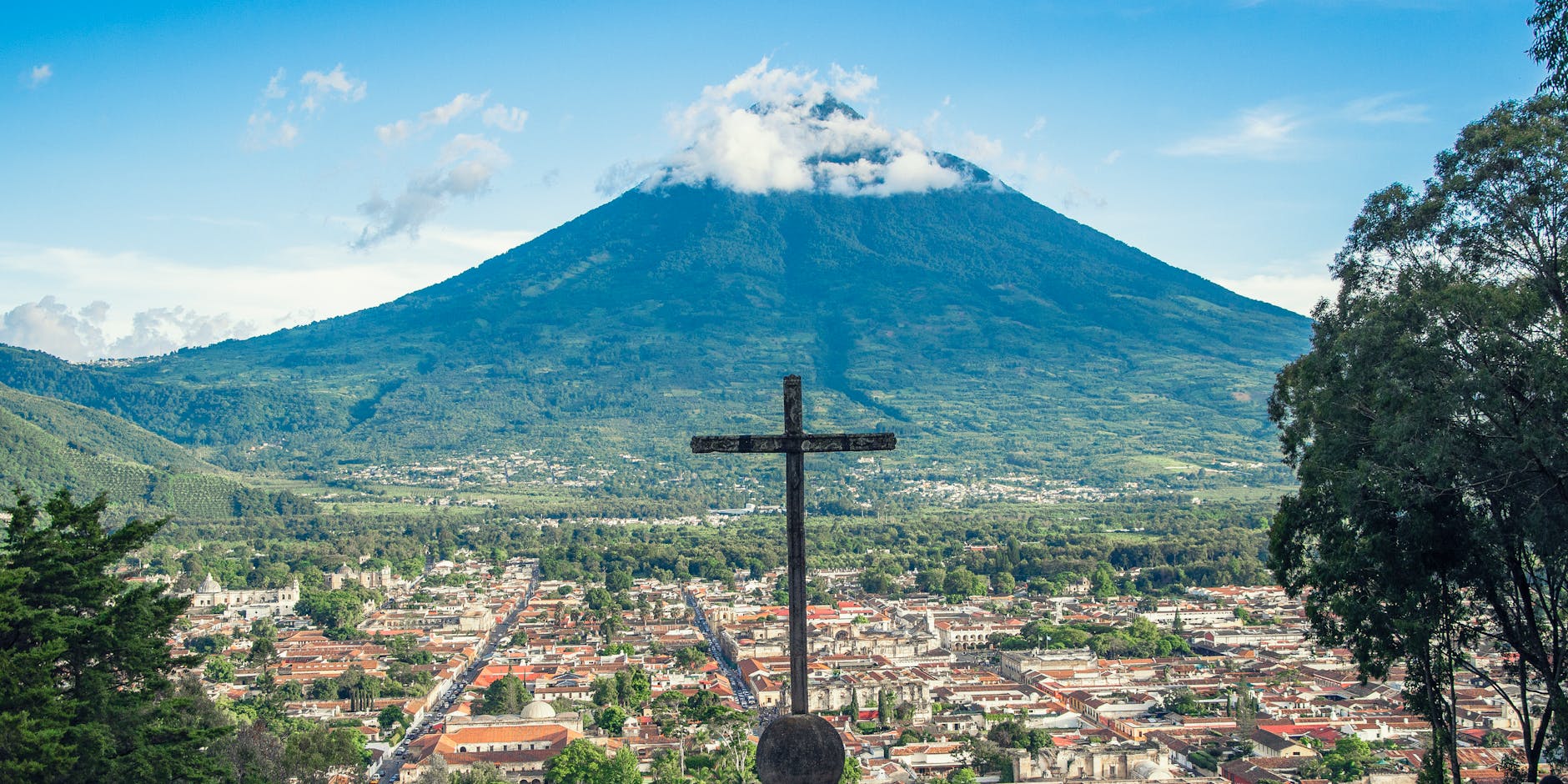
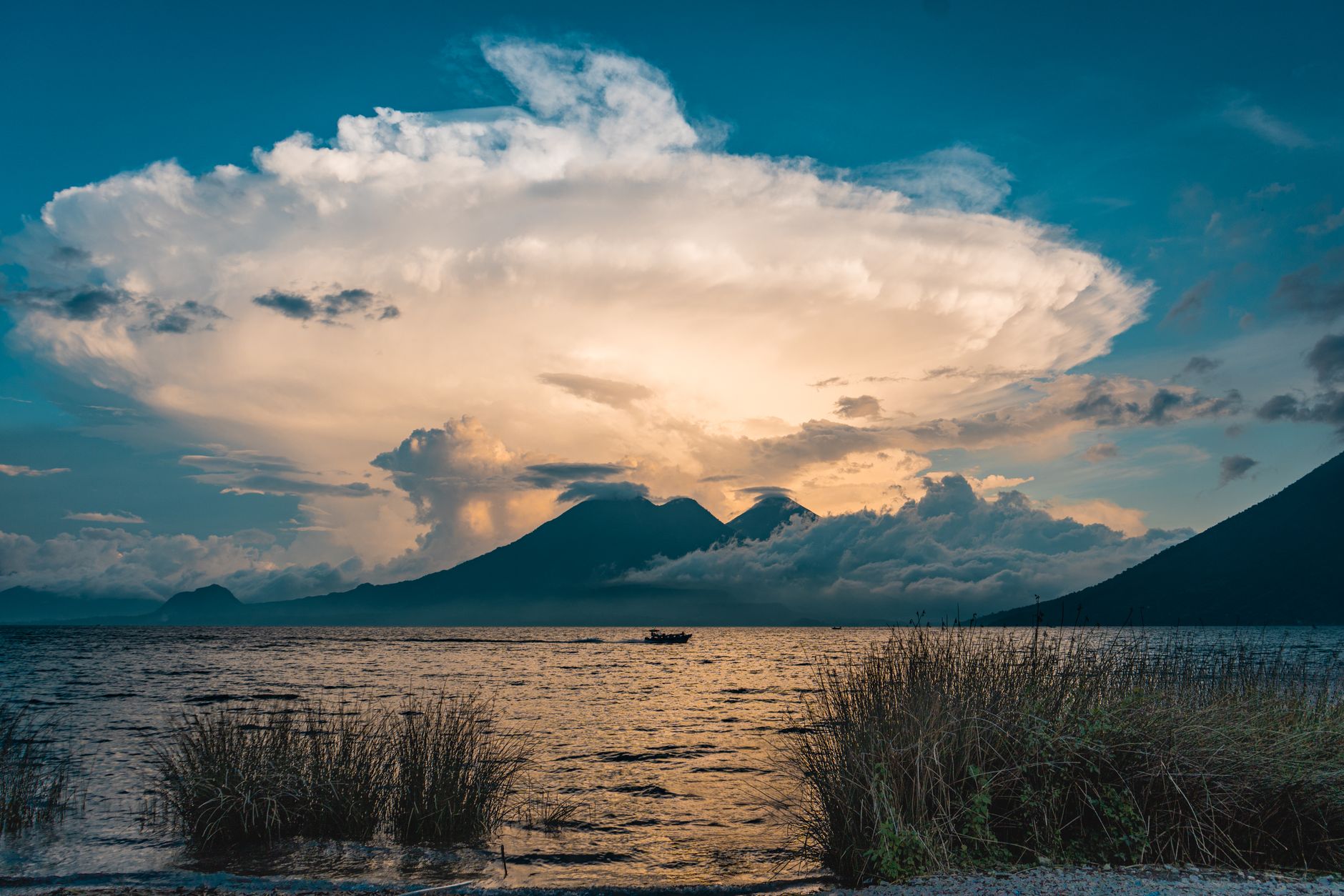
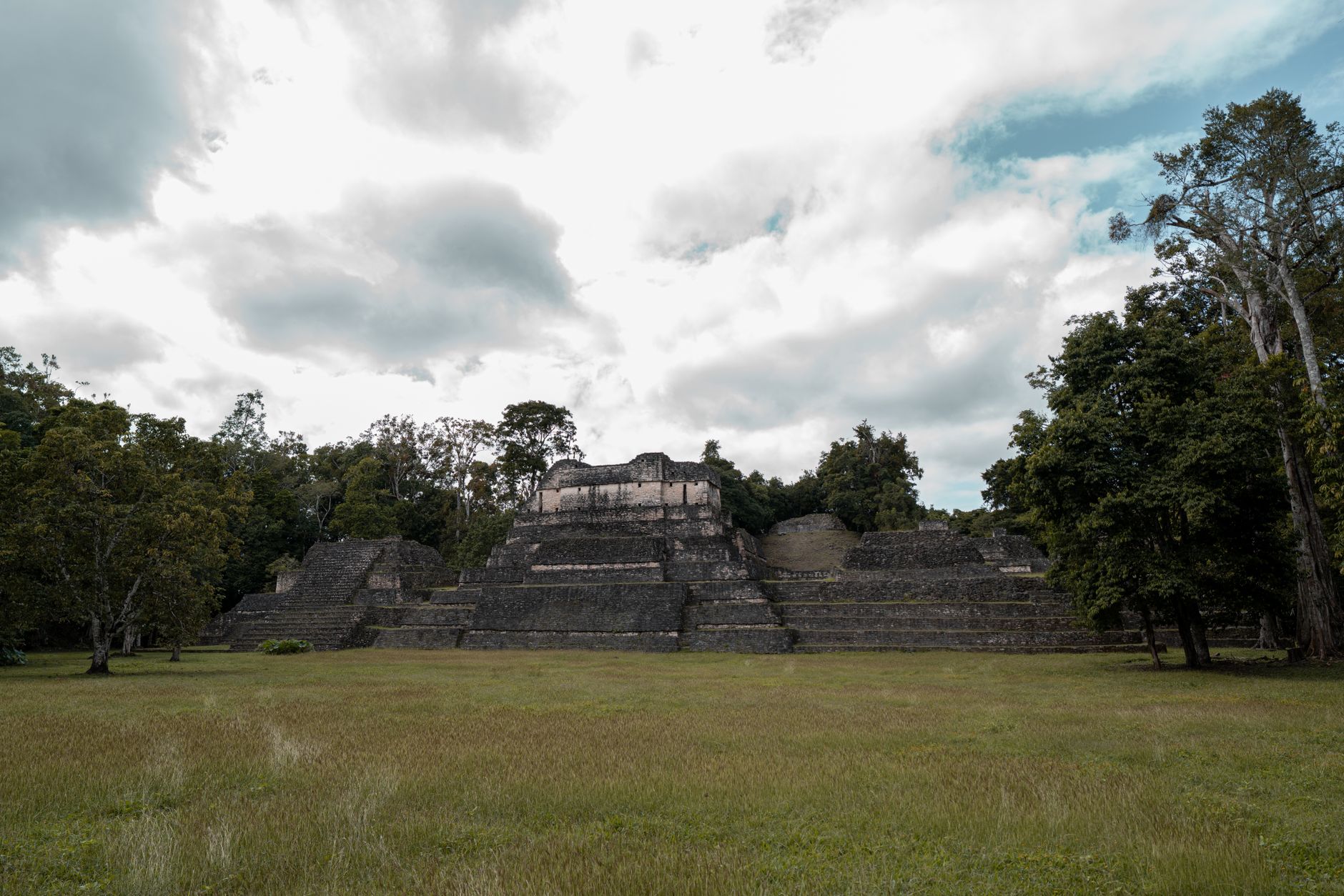
The heart of the Maya world: cobbled colonial Antigua, Lake Atitlán ringed by volcanoes, the jungle temples of Tikal and the colour-soaked markets of Chichicastenango. Land of eternal spring, high-altitude coffee and living culture.
Guatemala is the heart of the Maya world and, for most people, the doorway into Central America. In a country about the size of Tennessee you get cobbled colonial cities, more than thirty volcanoes, jungle covering thousand-year-old pyramids, a lake sitting in a volcanic caldera at 1,500 metres, and an Indigenous Maya culture that is not a museum exhibit but daily life, visible in every market and in the hand-woven clothing people actually wear. It is cheap, intense and photogenic, and it packs more into a short trip than almost anywhere else in the Americas.
The classic route is built on the western highlands: Antigua Guatemala as the colonial base, Lake Atitlán ringed by volcanoes and Maya villages, and the market at Chichicastenango. From there most travellers add the overnight trek up Acatenango to watch neighbouring Volcán de Fuego erupt, and then the northern Petén with Tikal, Flores and the turquoise pools of Semuc Champey. The Afro-Caribbean Garífuna coast around Lívingston and Río Dulce, and the black-sand Pacific, fill out the map. Two things pull people here specifically: Antigua is one of the most popular places on earth to study Spanish, and the Maya archaeological circuit rivals Mexico's in importance.
What people take home is the sense of having been somewhere genuinely alive rather than staged, at prices that leave room to stay longer. What catches them out is the geography: distances that look trivial on a map take half a day on winding mountain roads, so pick three or four places rather than trying to see everything. And expect the English to run out quickly — it is reliable in Antigua, around Atitlán and in hotels, and patchy to non-existent elsewhere.
Traveller's tip: the quetzal (GTQ) is the local currency, and cash is what really works here, above all in markets, in the villages around Lake Atitlán and on transport. Carry small notes, because a lot of places simply cannot break a big one. There are ATMs in the main cities and in Antigua, but they thin out fast in rural areas, so withdraw before heading into the countryside. US dollars are accepted at hotels and for tours, though the rate is usually worse than paying in quetzales.
Full converter for GTQ →The main gateway is La Aurora International Airport (GUA) in Guatemala City, which handles the great majority of international flights. From the United States it is a short hop: nonstop services run from several gateways, Miami, Houston and Los Angeles among them, and most of the country is three to five hours from the door of the plane. The airlines flying international routes into Guatemala include Avianca, Copa Airlines, American Airlines, United, Aeroméxico and Volaris, with connections from the United States, Mexico, Panama and other points in Central and South America. There are no nonstop flights from Europe or Australia: you connect through a US hub, Mexico City or Panama City, which usually means one long leg plus a short one. In the north of the country, Mundo Maya International Airport (FRS) in Flores takes travellers within striking distance of the Tikal ruins. Domestic flights are scarce and concentrated on the Guatemala City-Flores route, which is worth the money if you want to skip the long bus ride to the Petén. On the ground, the standard option for visitors is the tourist shuttle, a shared door-to-door minivan linking Antigua, Lake Atitlán, Chichicastenango and Flores. Then there are the famous chicken buses, the brightly repainted former US school buses that serve as public transport: cheap, chaotic and perfect for short hops. For long distances there are more comfortable line buses. Taxis work in the cities, and in Guatemala City and Antigua apps such as Uber operate, which makes the fare predictable.
The best window is the dry season, November to April, with clear skies and the settled weather you want for volcano hikes and jungle ruins. March and April are the warmest and driest months. The rainy season, May to October, brings heavy afternoon downpours, rougher roads and volcanoes hidden in cloud, though the landscape turns brilliant green and there are far fewer visitors. Note that June to October is also Atlantic hurricane season, which mainly affects the Caribbean side but can bring days of rain nationwide.
Altitude matters more than season here. The highlands — Antigua, Atitlán, Xela — are cool all year because of the elevation, and the nights are genuinely cold, so bring a fleece and a warm layer even in what you think of as summer; the Acatenango campsite drops close to freezing. The Petén around Tikal and both coasts are hot and humid year-round. Peak tourist season is December to January and Holy Week: Antigua's Semana Santa, with its sawdust carpets laid in the streets and enormous processions, is among the most spectacular religious festivals in Latin America, and accommodation books out many months ahead.
Guatemalan food is savoury, filling and remarkably cheap, and it is worth knowing what to order because almost none of it appears on menus abroad. The national dish is pepián, a thick, dark stew of chicken or beef whose sauce is built on toasted seeds, chillies and spices — closer to a Mexican mole than to anything in a taquería. Kak'ik is a spiced turkey broth of Q'eqchi' Maya origin, red with achiote and served with tamalitos. Tamales here are corn dough steamed in banana leaf rather than corn husk, softer and larger than the Mexican version, and chuchitos are their small, firmer cousins. Breakfast means black beans, eggs, fried plantain, fresh cheese and tortillas made minutes earlier. On the street, look for tostadas piled with guacamole or beans, rellenitos (sweet plantain balls stuffed with black bean paste) and dobladas. Atol is the everyday drink most visitors have never had: a warm, thick corn-based beverage sold from street pots, in versions from plain atol blanco to atol de elote made with sweetcorn. And the coffee is exceptional — Guatemala grows some of the best high-altitude beans in the world, and it is finally easy to drink the good stuff in the country that produces it.
Reference prices (verified July 2026): a plate at a local comedor or from a street stall costs US$3 to US$5, a set lunch runs US$4-6, and dinner at a tourist restaurant in Antigua US$10-15. Eating at comedores and market stalls is where the savings are, and usually where the better food is too. Tap water is not drinkable, so build bottled or filtered water into the budget — many hostels and hotels have refill stations, which saves both money and plastic. In sit-down restaurants tip around 10% if it is not already on the bill; at street stalls and comedores, tipping is not expected.
Guatemala carries a difficult reputation, and it is worth being straight about it: the country has real problems with violent crime, but almost all of it is concentrated in specific urban neighbourhoods and gang territories that have nothing to do with the visitor circuit. Antigua, Lake Atitlán, Flores and Tikal are calm places where the overwhelming majority of travellers have no trouble at all. The sensible precautions are ordinary ones: keep valuables out of sight, do not walk unlit streets at night, use ATMs during the day and inside banks or shopping centres, and in Guatemala City take Uber rather than walking — Zone 1 and the outer zones of the capital are best avoided on foot. Long-distance overnight buses have a poor record for armed robbery, so use the tourist shuttles instead, and avoid driving highways after dark. Before you book, read your own government's current advice, which is written for your nationality and updated regularly: the US State Department, the UK Foreign Office, Global Affairs Canada or Australia's Smartraveller all publish region-by-region guidance for Guatemala.
For health: do not drink the tap water anywhere in the country — buy bottled or use a filter bottle, and be careful with ice outside established restaurants. No vaccinations are required to enter, but hepatitis A and typhoid are recommended, and a yellow fever certificate is only needed if you are arriving from a country with active transmission, which does not apply to travellers coming from North America, Europe or Australia. Dengue is present in the Petén and the lowlands and there is a low malaria risk in some rural areas, so pack repellent. Altitude is the underestimated one: Antigua sits at about 1,500 metres and the Acatenango camp near 3,900, high enough that unacclimatised hikers regularly get headaches and nausea. Take out travel insurance with medical cover, because private clinics are the realistic option in an emergency and they expect payment. Emergency numbers: 110 (national police), 122/123 (fire and ambulance) and 1500, the dedicated tourist assistance line run by PROATUR/ASISTUR, which has English-speaking operators. Verified July 2026.
Guatemala is one of the cheapest countries in the Americas, and the gap with home is the thing North American and European visitors notice first. A backpacker can travel on around US$30-40 a day; a mid-range traveller spends roughly US$50-70 daily; and comfortable travel with good hotels and private tours starts around US$90 and up. Concrete figures (verified July 2026): a hostel dorm bed US$6-15, a simple private room US$20-35, a plate of local food US$3-5, a specialty coffee US$2-3. Rooms with a lake or volcano view that would be a splurge elsewhere are routine here, which is why a lot of people quietly upgrade after the first few nights.
Transport is what really shapes the daily spend. A chicken bus for a short hop costs under US$2, while the door-to-door tourist shuttles between the main destinations — Antigua to Atitlán, Antigua to Flores — run US$15 to US$30 depending on distance. Entry to Tikal is around US$25, and the two-day guided Acatenango trek US$45-70 including gear. The one place worth spending more is the Guatemala City to Flores flight, which trades an overnight bus for an hour in the air. Spanish classes are the other standout value: a week of one-on-one tuition plus a homestay with meals typically costs less than a couple of nights in a mid-range hotel back home. All of these are reference values and will shift with the season and with how you negotiate.
Spanish is the official language, and this is a country where knowing some genuinely changes the trip. English is dependable in Antigua, around Lake Atitlán and in hotels and tour agencies, and it disappears quickly outside them — in markets, on buses and in highland villages you will be working in Spanish or with gestures. That is also the opportunity: Guatemala is one of the cheapest and most popular places in the world to learn the language, and a week or two of classes at the start of a trip pays for itself. Beyond Spanish, the Indigenous Maya population is enormous, close to half the country by most counts, and more than twenty Mayan languages are spoken as first languages, among them K'iche', Kaqchikel, Mam and Q'eqchi'. In some highland communities Spanish itself is a second language. Guatemala is socially conservative and formal in its manners: greet people before asking a question, dress modestly in Maya villages and churches, and always ask before photographing someone, as many people will decline and others will expect a small payment. Haggling is normal in craft markets and not done in comedores, on buses or anywhere with a posted price.
The practical details work in North Americans' favour and against everyone else's: sockets are type A and B at 120 V, 60 Hz, exactly the same as the US and Canada, so American and Canadian devices plug straight in with no adapter and no voltage converter, while travellers from the UK, Europe and Australia need both an adapter and a device that handles 120 V. For connectivity, a local Tigo or Claro SIM is very cheap and sold at the airport or any corner shop with your passport; tourist eSIMs also work well. Coverage is good in the cities and thins out in rural areas and parts of the lake. Culturally, the thing to seek out is the marimba, a large wooden xylophone played by several musicians at once and named the national instrument — you will hear it in plazas, at festivals and, whether you like it or not, on long bus journeys. One last piece of advice from experience: always carry cash in small notes, because in villages and markets almost nobody can change a large bill and card payment is rarely an option.
Guatemala is the heart of the Maya world. In the jungles of the Petén rose El Mirador and Tikal, colossal cities that dominated Mesoamerica for more than a thousand years, and in the highlands more than twenty Mayan languages are still spoken —K'iche', Kaqchikel, Q'eqchi', Mam and others— making this the most Indigenous country in Central America. This is where the Popol Vuh, the great sacred book of the K'iche', was composed, and where the millennia-old heritage of the original peoples and the legacy of the Spanish conquest that Pedro de Alvarado began in 1524 coexist, often uneasily. To that Maya root are added the Xinca peoples of the east and the Garífuna of the Caribbean, who complete an ethnic and linguistic mosaic unique in the region.
Out of the colonial Kingdom of Guatemala —with its capital in monumental Antigua, ruined by the Santa Marta earthquakes of 1773— there emerged, after independence in 1821, a nation shaped by centuries of contrasts: coffee and banana companies, liberal and conservative dictatorships, the 'Democratic Spring' of Arévalo and Árbenz, the CIA-orchestrated coup of 1954 and a thirty-six-year civil war that left some 200,000 dead and disappeared and ended only with the Peace Accords of 1996.
Read the full history of Guatemala →Pick a region and open each destination to see what to do, prices and how to get there.
These are the sources we cite most across this country's guides, with how many times each appears. Hard data —tickets, opening hours, requirements, transport— comes from the official source and carries the date we checked it. Restaurant and hotel picks come from guides and reviews, and we say so on each page.