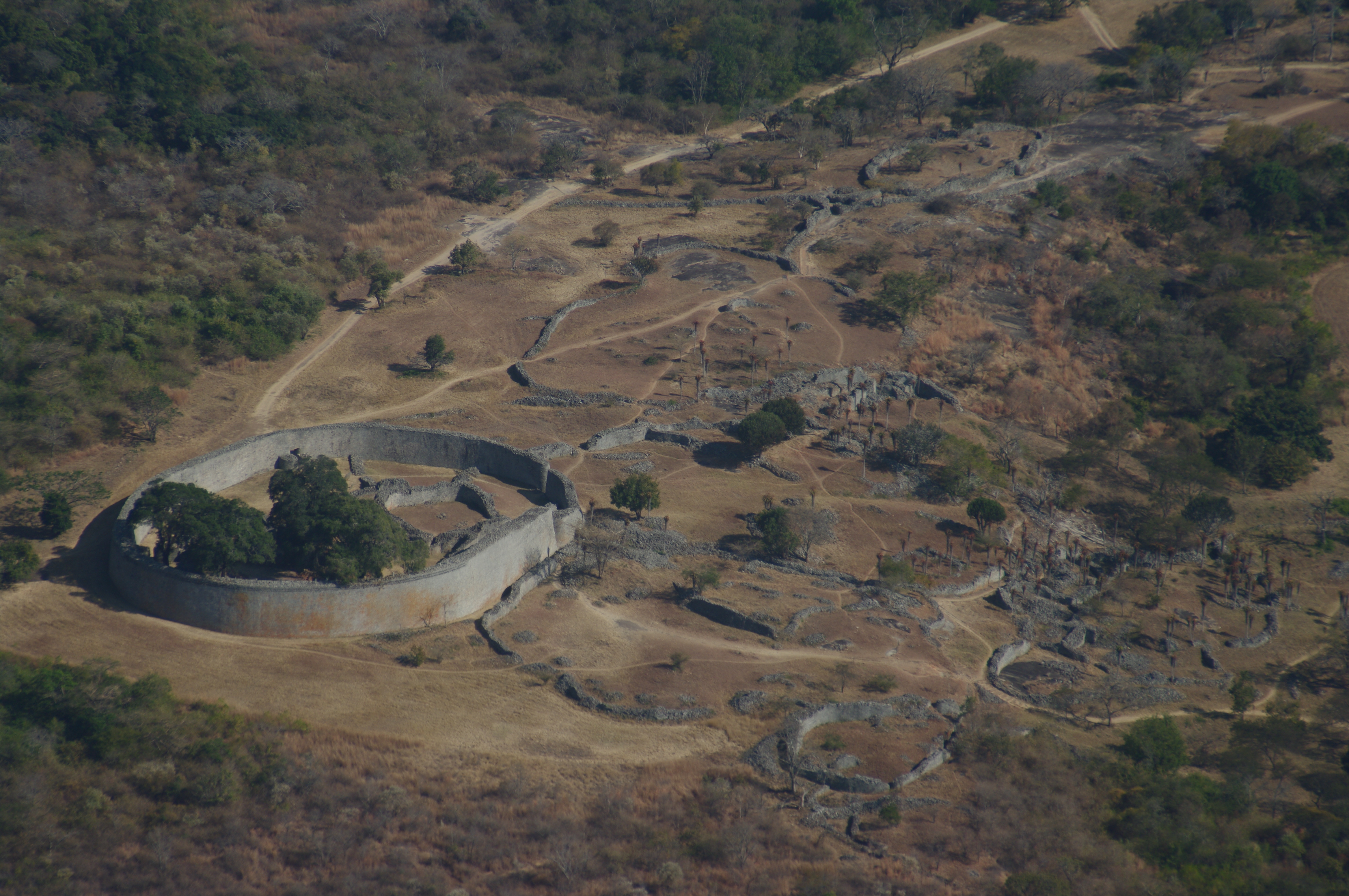
The roar of Victoria Falls, the elephants of Hwange and the ancient ruins of Great Zimbabwe: a country of authentic safaris and smaller crowds than its neighbours.
Zimbabwe is one of African safari's best-kept secrets: less crowded than Kenya or South Africa, with guides considered among the best on the continent and nature that ranges from Victoria Falls to the Zambezi valleys. It's a destination that rewards travellers looking for real wildlife, vast landscapes and a sense of exclusivity without the crowds.
The country combines natural icons —the falls, the elephants of Hwange, the lions of Mana Pools, the immense Lake Kariba— with a unique historical heritage: Great Zimbabwe, capital of a medieval kingdom, and the granite hills of Matobo with rock art thousands of years old. Add to that laid-back cities like Harare and Bulawayo and the green Eastern Highlands, which look more like the Scottish countryside than the savannah.
Go well informed: the economy has been unstable and the monetary system is unusual (the dollar is used above all, with the local ZiG in the background). But for well-prepared tourists, with dollar cash and a planned itinerary, Zimbabwe is safe in its tourist areas, welcoming and offers value for the experience that's hard to match. The best time is the dry season, from May to October.
Zimbabwe runs on a dual-currency system. In practice, for tourists the US dollar (USD) is what counts: lodges, park fees, activities, hotels and many restaurants quote and charge in dollars. The local currency is the ZiG (Zimbabwe Gold), backed by gold and launched in April 2024; as of July 2026 it sits at around 25 ZiG to 1 USD (verified July 2026), though it's worth checking the rate on the day you travel. Most importantly: bring US dollar cash in clean, untorn notes, preferably issued after 2006, and plenty of small bills ($1, $5, $10), because getting change is a constant problem and you'll sometimes be given the difference in ZiG or in sweets. ATMs are scarce, and cards are accepted at hotels and larger operators, but don't count on them outside tourist areas. Usual tipping: 10% in restaurants and a few dollars a day for guides and lodge staff.
There are no direct flights from Latin America: the usual route is to fly to Johannesburg (South Africa) or Addis Ababa (Ethiopia) and then take a short hop to Zimbabwe. The entry airports are Robert Gabriel Mugabe in Harare (the capital) and, very handy for the safari circuit, Victoria Falls (VFA), minutes from the falls. For Argentines, Chileans, Brazilians, Mexicans and most Latin Americans, Zimbabwe is Category B: you get a visa on arrival, paying cash in USD, or in advance through the official e-Visa (evisa.gov.zw). If you're combining Zimbabwe with Zambia (the other side of the falls), the KAZA UniVisa at USD 50 is the way to go: it covers both countries and even day trips to Botswana via Kazungula. Within the country, people usually get around by light aircraft between parks, on operator transfers or by renting a 4x4; the main roads are paved, but public transport is slow and informal.
The best time to visit Zimbabwe is the dry season, from May to October. That's when the vegetation thins out, animals gather at the few waterholes and safari sightings peak: in Hwange, September and October are spectacular for seeing elephants; in Mana Pools, July to September combine good weather and few people. For Victoria Falls, visibility is best from June to September, when the water level drops and the spray doesn't block the view.
The rainy season runs from November to March (the southern summer): it's hot and humid, the landscape turns green and it's the best season for birdwatching and seeing young animals, but some safari lodges close (especially between January and March) and certain dirt roads become impassable. April and May are a lovely transition, with everything green and fewer tourists. October is the hottest month before the rains. The Eastern Highlands are cool all year round and can get frost in winter.
The national dish is 'sadza', a thick maize-meal porridge eaten by hand and used to 'scoop up' stews and sauces; it is to Zimbabwe what rice is to China or pasta to Italy. It comes with 'nyama' (meat, often grilled), leafy greens such as 'muriwo' or 'muboora' (pumpkin leaves), and 'dovi', a creamy peanut-based stew (similar to a peanut sauce) with chicken or vegetables. Barbecued meat ('braai', a South African legacy) is a social institution.
For the more adventurous, a local classic is 'mopane worms' (dried caterpillars, rich in protein) and, at safari lodges, game cuts such as impala or kudu. To drink, the local Zambezi or Bohlingers beer goes down well, and there's traditional sorghum beer ('chibuku'). In tourist areas you can eat well for USD 8–15 at a simple restaurant; at lodges, meals are usually included in the package. Bring small-denomination dollar cash: outside the big hotels, cards don't always work.
Zimbabwe is generally safe for tourists on the usual circuits (Victoria Falls, Hwange, Kariba, Matobo, Great Zimbabwe): violent crime against travellers is rare. Do use urban common sense in Harare and Bulawayo —avoid walking at night, don't flash cash or electronics— and watch out for police checkpoints on the road. The economic situation causes occasional shortages (fuel, cash), so plan ahead and bring dollars. The emergency number is 999 (also 112 from Econet mobiles or 114 from NetOne). Take out good travel insurance that covers medical evacuation, which is key in remote safari areas.
Health-wise, malaria is present in much of the country, especially in the Zambezi valley (Kariba, Mana Pools), Hwange and low-lying areas during and after the rains: see a doctor about antimalarial prophylaxis and use repellent and long sleeves at dusk. There is no vaccine against malaria. The yellow fever vaccine isn't required for entry unless you arrive from a country with risk of transmission (this applies to travellers coming, for example, from parts of Brazil, Bolivia or Peru: bring the international certificate). Hepatitis A and B, typhoid and an up-to-date tetanus shot are recommended. Don't drink tap water: use bottled or purified water.
Zimbabwe can be expensive if you do a classic safari and more affordable if you backpack through the cities and the falls. A very frugal day (hostel, local food, shared transport, no premium safari) can come to around USD 40–60. Mid-range, with comfortable hotels, the odd excursion and good meals, runs at USD 100–180 per day. Adventure activities in Victoria Falls add up: rafting or bungee jumping, roughly USD 150–170 each; a helicopter flight, around USD 150 (verified July 2026).
Safari is the big expense. Budget packages (camping, in a group) start at around USD 150–350 per person per day all-inclusive (accommodation, meals, park fees and guided activities); mid-to-upper-range private lodges go from USD 400 to 700 per person per day, and luxury ones considerably more. On top of that, add the visa: a single-entry visa for Latin Americans is around USD 30 (double entry ~USD 45), or the KAZA UniVisa at USD 50 if you're combining with Zambia. Also budget for tips in dollars and a bit of a cushion in case cash runs short.
Zimbabwe has 16 official languages, but in practice English is the lingua franca and is used in tourism, business and signage, so a Latin American with basic English will get by without trouble; Spanish is hardly spoken. The most widely spoken languages are Shona (the majority) and Ndebele (in the south-west, around Bulawayo). People are famously warm and polite: greeting before asking for something, courtesy and patience are all appreciated. Photographing people: always ask permission, and avoid photographing government, military or police buildings.
The plug is type G (British, with three flat pins) at 220–240V, so bring an adapter. Connectivity works well in cities and tourist areas with a local SIM (Econet has the best coverage); you buy the SIM by showing your passport. Remote lodges may have limited wifi. Dress casually but respectfully in villages and religious sites. A practical tip: because change is scarce, always keep small dollar bills. And an important cultural point: topics like politics, the economy or the figure of Robert Mugabe are handled with care; better to listen than to give your opinion.
Few countries in the world are named after a monument, and fewer still after one built by their own ancestors. Zimbabwe takes its name from Great Zimbabwe, the largest stone city in sub-Saharan Africa from before colonisation: in Shona, dzimba dza mabwe means "houses of stone", and those curved granite walls, raised without mortar more than seven hundred years ago, are proof set in stone that a rich, trading and sophisticated African civilisation flourished here long before any European arrived. For centuries the colonisers refused to believe that Africans could have built it; archaeology finally gave the Shona the credit that history had denied them.
This is the full story of Zimbabwe: from the San hunters who painted the rocks of Matobo thousands of years ago and the spread of the Bantu-speaking Shona peoples, through the gold of Great Zimbabwe, the Mutapa and Rozvi kingdoms, the arrival of Mzilikazi's Ndebele and the conquest by Cecil Rhodes, who renamed the land after himself —Rhodesia—, to the long liberation war (the Chimurenga), independence in 1980, the decades of Robert Mugabe with his bright side and his dark side, and the Zimbabwe of today. A country of thundering waterfalls, herds of elephants, ancient ruins and resilient people who carry a history that is both grand and painful.
Read the full history of Zimbabwe →Pick a region and open each destination to see what to do, prices and how to get there.
These are the sources we cite most across this country's guides, with how many times each appears. Hard data —tickets, opening hours, requirements, transport— comes from the official source and carries the date we checked it. Restaurant and hotel picks come from guides and reviews, and we say so on each page.