Viajá con Gus
HomeCanadaIqaluit
Iqaluit
🇨🇦 Canada · North / Territories

Iqaluit

Jump to what you need
📌Province/Territory
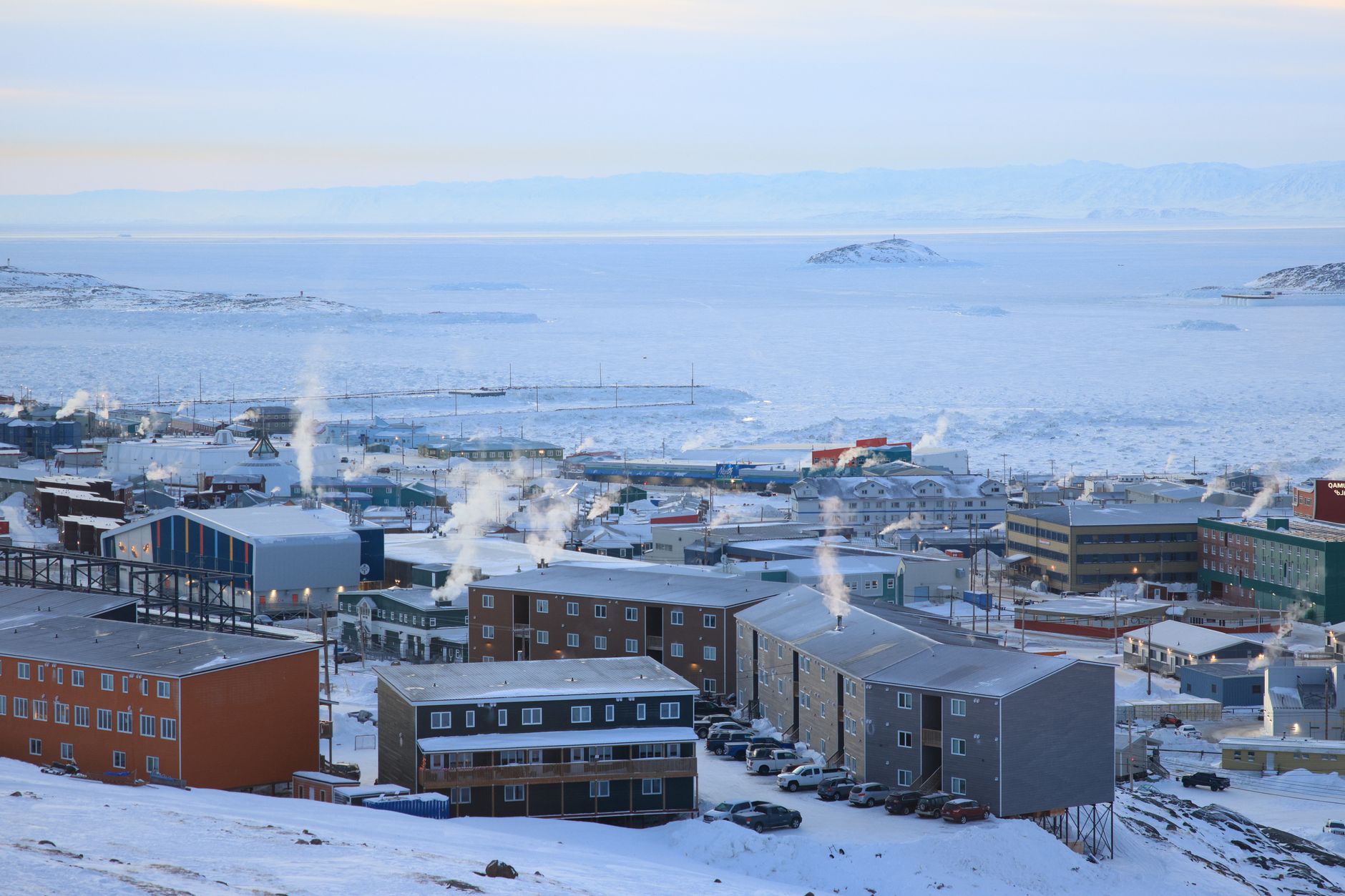
Nunavut, Canada (territorial capital). Iqaluit is on the southeast of Baffin Island, on the shore of Frobisher Bay, in the eastern Arctic. It is the largest city and the capital of the vast territory of Nunavut, and the political and cultural heart of the Inuit people
📌Best time to go
Summer (July-August) for the midnight sun, milder temperatures (5-15 °C) and access to the tundra; spring (March-May) for reliable snow, snowmobiles and light; winter for the northern lights and extreme cold (down to -30 °C or lower)
📌Suggested days
2 to 3 days to see the city, its Inuit culture, Sylvia Grinnell Park and a trip out onto the tundra. More days if you plan to reach the remote national parks of Baffin
📌Currency
Canadian dollar (CAD). Cards are accepted, but everything is expensive because of the cost of shipping goods to the Arctic. It is worth carrying cash for taxis and crafts. Tipping is as in the rest of Canada (15-20%)
📌Language
Inuktitut (an official language alongside English and French), with English very widespread. Inuktitut is present in the signage, the names and daily life. Learning a greeting ('Ai' = hello) is welcome
📌Getting there
By plane only: Iqaluit is not connected by road to the rest of Canada. There are direct flights from Ottawa (about 3 h), Montreal and other cities, with Canadian North. Tickets are expensive (often C$ 950–1,600 one way; verified July 2026); book well in advance
💱 CAD exchange rate
Loading rate…
🌤️ Weather in Iqaluit
Loading weather…

Iqaluit is the capital of Nunavut, Canada's vast Arctic territory, and the gateway to Baffin Island. Set at the head of Frobisher Bay, in the eastern Arctic, it is a small, remote city — not connected by road to the rest of the country — but with a powerful identity: it is the political and cultural centre of the Inuit people, where the Inuktitut language, northern traditions and modern life sit side by side in a setting of tundra, ice and extreme light.

More than a classic postcard destination, Iqaluit is a cultural experience and a starting point into the grandeur of Arctic nature. Here you can learn about Inuit culture in museums and art centres, try northern food, see local art and craft (world famous), and, depending on the season, head out onto the tundra, watch Arctic wildlife, see the northern lights in the dark months or enjoy the midnight sun in summer. It is also the base for reaching remote national parks in the region.

This guide covers Iqaluit with a practical eye: what to see and do in the city and around it, what life is like in the Canadian Arctic and how to reach this unique corner, accessible only by air. Visiting Iqaluit means looking into the heart of the Inuit world and into one of the most extreme and fascinating environments in Canada.

📖 History of Iqaluit

The Iqaluit region has been inhabited by Arctic peoples for thousands of years: first Paleo-Eskimo cultures and then the Thule, ancestors of today's Inuit. The name 'Iqaluit' means 'place of many fish' in Inuktitut. The modern settlement grew out of the Second World War and the Cold War, when the United States built an air base here (known then as Frobisher Bay), around which the population gathered. In 1987 it officially recovered its Inuit name, Iqaluit. The great milestone came in 1999, with the creation of the territory of Nunavut — the result of the largest Inuit land claim agreement in Canadian history — of which Iqaluit became the capital. The full story is on our history page.

Read the full history ↓

🏛️ Iqaluit is in Nunavut

The Inuit territory of the Arctic, created in 1999: Canada's largest administrative division and its youngest, a land of ice, tundra and polar bears, governed by its Inuit majority from Iqaluit.

Read the history of Nunavut →

🗺️ What to see

1
Nunatta Sunakkutaangit Museum (Inuit culture and art)
Iqaluit's museum, in a former Hudson's Bay Company warehouse, devoted to Inuit art and history.
The Nunatta Sunakkutaangit Museum is Iqaluit's main museum and the best starting point for understanding Inuit culture. It occupies a historic building in the beach neighbourhood (a former Hudson's Bay Company warehouse, recognizable by its distinctive red roof) and holds a collection of art, tools, archival documents, photographs and books centred on the Iqaluit community and the Qikiqtani region. In its permanent gallery, visitors find a general exhibit on Inuit life and history; upstairs, pieces from the permanent collection highlight the different carvings and styles of the region's communities. There is also a temporary gallery with changing shows and a shop selling art, jewellery, books and music by local artists. Inuit art — sculptures in stone (soapstone), ivory and bone, prints and tapestries reflecting Arctic wildlife, myths and life — is famous worldwide, and here you can appreciate it in its cultural context. Getting there: in the beach neighbourhood, on Sinaa Street, next to other attractions; on foot or by taxi. Best time to go: year-round (it is indoors). Tips: entry is free (a donation is appreciated); check the opening hours, which can be limited; buy art from legitimate places that benefit the artists.
ℹ️ Distance: Beach neighbourhood, on Sinaa Street; on foot or by taxi · Best time to go: Year-round (indoors) · Entry: Free (a donation is appreciated; verified July 2026; check opening hours when you visit) · Duration: 1 to 2 hours
2
Unikkaarvik Visitor Centre
Iqaluit's visitor centre, with exhibits on Nunavut and the natural starting point for your visit.
The Unikkaarvik Visitor Centre is Iqaluit's tourist information centre and a highly recommended stop on arrival. Next to the museum and the cathedral, on Sinaa Street, it works as a gateway to the culture and nature of Nunavut: the friendly, knowledgeable staff will point you to attractions, events and activities, and offer maps, brochures and advice for getting around this corner of the Arctic. Besides its information role, the centre has exhibits on Inuit history, wildlife and traditions, and it is usually where trips with local guides are arranged or recommended. It is the ideal place to plan your stay, understand the conditions of the season (light, ice, weather) and get ready for any outing to the tundra or the bay. Getting there: on Sinaa Street, next to the museum and the cathedral; on foot or by taxi. Best time to go: year-round (at the start of your visit). Tips: entry is free; come here first to get your bearings and ask about available operators and activities.
ℹ️ Distance: On Sinaa Street, next to the museum and the cathedral; on foot or by taxi · Best time to go: Year-round (ideal at the start of your visit) · Entry: Free (verified July 2026; check opening hours when you visit) · Duration: 30 min to 1 hour
3
St. Jude's Anglican Cathedral
The remarkable igloo-shaped Anglican cathedral, an architectural symbol of Iqaluit.
St. Jude's Anglican Cathedral is one of the most recognizable buildings in Iqaluit and a symbol of the city: a cathedral shaped like a white igloo, a unique design that pays tribute to traditional Inuit architecture. The original, put up in the 1970s, burned down in 2005, but the community rebuilt it, keeping its distinctive igloo silhouette. It is the cathedral of the Anglican Diocese of the Arctic, one of the largest in the world, and inside it keeps details that fuse the Christian faith with Inuit culture: an altar shaped like a sled (qamutiik), locally inspired pews and Inuit art. Visiting it, for its unusual architecture and its atmosphere, is a must on a walk through the centre, alongside the museum and the visitor centre. Getting there: downtown, near Sinaa Street; on foot or by taxi. Best time to go: year-round (check opening hours and services). Tips: respect it as a place of worship; combine the visit with the museum and the Unikkaarvik Visitor Centre, all very close by.
ℹ️ Distance: Downtown, near Sinaa Street; on foot or by taxi · Best time to go: Year-round (check opening hours and services) · Entry: Free (open access; a donation is suggested; check opening hours when you visit) · Duration: 20 to 40 minutes
4
Sylvia Grinnell Territorial Park and Frobisher Bay
Tundra, waterfalls and extreme tides at the city's doorstep, the most accessible contact with the Arctic.
At the city's doorstep, Sylvia Grinnell Territorial Park, beside the river of the same name, is the easiest place to make contact with Arctic nature. It offers trails, lookouts, waterfalls and the chance to walk across treeless tundra — rock, lichen, moss and water — watch birds and, in season, see traditional Inuit fishing. It is a landscape of stark, powerful beauty, unlike anywhere else in Canada. Iqaluit also looks out over Frobisher Bay, famous for its extreme tides, among the largest in the world, which at low tide lay bare enormous stretches of shore. Walking the shoreline, seeing the sea ice through its different seasons and taking in the sweep of the Arctic horizon is an essential part of the experience. Beyond that, the region offers trips onto the tundra, wildlife watching (seals, birds and, with luck, other Arctic animals) and, in winter, outings by snowmobile or dog sled. Getting there: the park is a short distance from the city; other trips require local guides. Best time to go: summer for trails and the midnight sun; spring for reliable snow. Tips: proper clothing and protection for the season; hire Inuit guides for trips onto the tundra; respect the wildlife and the environment; watch the tides in the bay.
ℹ️ Distance: Park a short distance from the city; tundra and bay in the surroundings · Best time to go: Summer (trails, midnight sun); spring (snow) · Entry: Free (open access to the territorial park; verified July 2026) · Duration: 1 hour to half a day
5
Midnight sun and northern lights
The extreme light of the Arctic: days without night in summer and auroras in the dark months.
Because of its Arctic latitude, Iqaluit lives through the spectacular phenomenon of extreme light. At the height of summer, around the solstice (June-July), the sun barely sets and the city enjoys very long days, with light almost 24 hours a day: this is the midnight sun, which allows outdoor activities at unlikely hours and bathes the landscape in a long, golden light. At the other extreme, during the dark months of winter, the long Arctic nights offer the chance to watch the aurora borealis (the northern lights) when the sky is clear and solar activity cooperates. The cold is intense, but the show of curtains of light over the snow and the tundra is unforgettable. Spring, with more light and snow still on the ground, is also a good time to combine activities. Getting there: both phenomena are experienced in the city and around it; getting away from the lights helps with the auroras. Best time to go: summer for the midnight sun; winter (and the dark parts of autumn/spring) for the auroras. Tips: for auroras, clear sky and darkness; extreme cold-weather clothing in winter; a sleep mask in summer because of the constant light.
ℹ️ Distance: In the city and around it (get away from the lights for auroras) · Best time to go: Summer (midnight sun); winter (auroras) · Entry: Free to watch them; guided aurora tours approx. C$ 100–200 per person (local operators, verified July 2026) · Duration: Variable / at night (auroras)
6
Gateway to the Arctic national parks (Auyuittuq and Sirmilik)
Base for reaching remote parks on Baffin Island, with fjords, glaciers and granite mountains.
Iqaluit works as a base and gateway to some of the most remote and spectacular national parks in Canada, on Baffin Island and in the High Arctic. Although visiting them requires extra flights, planning and, as a rule, guides, these are extreme nature destinations for experienced adventurers. Among them stands out Auyuittuq National Park, whose name means 'the land that never melts', with fjords, glaciers and imposing granite mountains like Mount Thor and Mount Asgard, meccas of Arctic climbing and trekking. Further north, Sirmilik National Park protects glaciers, seabirds and Arctic wildlife. These parks, managed by Parks Canada in partnership with the Inuit, offer experiences of tundra, ice and absolute solitude. Getting there: from Iqaluit you fly to the gateway community for each park (such as Pangnirtung or Pond Inlet) and from there you go in with guides. Best time to go: summer for access. Tips: these visits demand a lot of preparation, budget and experience; get informed and coordinate with Parks Canada and authorized operators; they are not improvised destinations.
ℹ️ Distance: Flights from Iqaluit to Pangnirtung / Pond Inlet, then access with guides · Best time to go: Summer (park access) · Entry: Parks Canada fee approx. C$ 25–35 per day/person (free from 19/6 to 7/9/2026 under the Canada Strong Pass), plus flights and guides (source: Parks Canada, verified July 2026) · Duration: Several days (expedition)
Advertisements
What nobody tells you

💵 Prices

Tickets

TypePrice
Nunatta Sunakkutaangit MuseumFree (a donation is appreciated; verified July 2026; check opening hours)
Unikkaarvik Visitor CentreFree (verified July 2026; check opening hours)
St. Jude's CathedralFree (open access; donation suggested; check opening hours)
Sylvia Grinnell Territorial ParkFree (open access to the territorial park; verified July 2026)
Guided trips to the tundra / wildlifeApprox. C$ 150–400 per person depending on length and operator (local Inuit operators, verified July 2026)
Northern lights tour (dark season)Approx. C$ 100–200 per person (local operators, verified July 2026)
Arctic national parks (Auyuittuq, Sirmilik)Parks Canada fee approx. C$ 25–35 per day/person (free from 19 June to 7 September 2026 under the Canada Strong Pass), plus flights and guides (source: Parks Canada, verified July 2026)
🔄 updated monthlyOfficial / reference values · double-check when buying

Activities and tours

ActivityPriceDurationOperator
Cultural visit (museum, visitor centre, cathedral, galleries)Museums and centres free (donation); Inuit art priced by piece (verified July 2026)Half a dayNunatta Sunakkutaangit Museum, Unikkaarvik Visitor Centre and local galleries
Hiking in Sylvia Grinnell ParkFree (open access)1 h to half a dayOn your own
Tundra trip / wildlife watchingApprox. C$ 150–400 per person depending on length (Inuit operators, verified July 2026)Half a day to a full dayInuit guides and operators (e.g. Inukpak Outfitting)
Snowmobile or dog sled outing (winter/spring)Approx. C$ 150–350 per person (local operators, verified July 2026)Half a day to a full dayLocal operators
Northern lights tour (dark season)Approx. C$ 100–200 per person (local operators, verified July 2026)At nightLocal operators
🔄 updated monthlyOfficial / reference values · double-check when buying
Advertisements

🚌 How to get there and distances

Getting around

ModePriceDurationNotes
On footFreeVariableThe centre of Iqaluit is compact and many points (museum, cathedral, visitor centre) can be covered on foot, with clothing suited to the season
TaxiFlat fare of C$ 9.75 per ride within the city (C$ 8 seniors' fare; increase effective 1 May 2026; source: City of Iqaluit, verified July 2026)VariableTaxis are heavily used in Iqaluit; they charge a flat fare per person and per ride within the city, and are usually shared with other passengers
Rental carApprox. C$ 90–150 per day (limited supply; verified July 2026)VariableAvailable, but the road network is very limited: Iqaluit is not connected by road to the rest of Canada. Useful only for getting around the city and its access roads
Guided tripsApprox. C$ 150–400 per person depending on the outing (Inuit operators, verified July 2026)VariableTo head out onto the tundra, the bay or the wilderness, the usual and safe way is to go with local Inuit guides
🔄 updated monthlyOfficial / reference values · double-check when buying

How to get there

RouteAirlines / operatorsAvg. priceDuration
Ottawa → Iqaluit (direct flight)Canadian NorthApprox. C$ 950–1,600 one way depending on season and how far ahead you book (Canadian North, verified July 2026)Flight of approx. 3 h
Montreal → Iqaluit (flight)Canadian NorthApprox. C$ 1,000–1,700 one way depending on season (Canadian North, verified July 2026)Direct flight of a few hours
Iqaluit → Baffin communities (Pangnirtung, Pond Inlet, etc.)Canadian North and regional flightsApprox. C$ 300–900 one way depending on destination (Canadian North, verified July 2026)Short flights depending on destination
Iqaluit airport (YFB) → downtownTaxiFlat fare of C$ 9.75 per person (source: City of Iqaluit, verified July 2026)5 to 10 min (the airport is in the city)
🔄 updated monthlyOfficial / reference values · double-check when buying

🏨 Where to stay

No exact prices: a scale from $ (budget) to $$$$$ (luxury), with 2-3 options per category.

CategoryPriceRecommended options
The city's main hotel$$$$$The Frobisher Inn, the largest hotel in Nunavut, with full services: approx. C$ 240–310 a night (sometimes up to C$ 400 in season; verified July 2026). Aimed above all at business and government travellers
Mid-range hotels and inns$$$$$Mid-range options like the Discovery Hotel or Capital Suites: approx. C$ 200–290 a night (verified July 2026). Supply is limited, so book ahead
B&Bs and local accommodation$$$$$Guest houses and local accommodation (including some on booking platforms): approx. C$ 150–250 a night (verified July 2026), a way to get closer to everyday life in the north. Book well in advance

🍴 Where to eat

TypePriceOptions / signature dish
Northern cooking and 'country food'$$$$$Some restaurants and events serve Arctic produce and the fruits of Inuit hunting and fishing (caribou, seal, Arctic char): dishes approx. C$ 25–50, a one-of-a-kind eating experience (verified July 2026)
Hotel restaurants and international cooking$$$$$The hotels (e.g. the Frobisher Inn restaurant) and a few other places serve international cooking: mains approx. C$ 25–45; prices are high because of the cost of shipping food to the Arctic (verified July 2026)
Cafés and casual food$$$$$Cafés, bakeries and casual food (e.g. Black Heart Cafe): coffee and pastry approx. C$ 6–12; casual lunch approx. C$ 12–22 (verified July 2026)
Advertisements

📖 History of Iqaluit

Origins, formation and what the sources say.

Millennia of presence in the Arctic

The Iqaluit region, on Baffin Island, has been inhabited by Arctic peoples for thousands of years. First came Paleo-Eskimo cultures, adapted to life in one of the most extreme environments on the planet, and later, around a millennium ago, the Thule, direct ancestors of today's Inuit, who spread across the Canadian Arctic with technologies such as kayaks, dog sleds and the hunting of marine mammals.

The head of Frobisher Bay, where the city sits today, was a traditional fishing and provisioning place. The name 'Iqaluit' itself means 'place of many fish' in Inuktitut, a reference to the richness of the waters here. For the Inuit, the land, its tides, its wildlife and its seasons were a known and named world, the basis of a culture deeply tied to the Arctic land and sea.

Contact with Europeans at these latitudes came early but intermittently: as far back as the 16th century the English explorer Martin Frobisher sailed the bay that bears his name, in search of the Northwest Passage and of gold. For centuries, however, Inuit life carried on, and the region stayed apart from the great movements of the south, until the 20th century brought rapid change.

From Frobisher Bay to the air base era

Modern Iqaluit was born, in large part, out of the strategic needs of the mid-20th century. During the Second World War, the United States built an air base in the area, as part of the routes for ferrying aircraft to Europe. The settlement that grew up around it came to be known as Frobisher Bay, after the name of the bay.

The Cold War reinforced that importance: the Arctic became a militarily sensitive region, and the presence of facilities and personnel around the base drew more population, including many Inuit who moved in from scattered camps to the new centre in search of work, services and, later, housing, schooling and health care. So a traditional fishing spot turned into a village and then into an administrative centre for the eastern Arctic.

This process of settlement and concentration had deep consequences for Inuit society, altering ways of life that were thousands of years old. The community kept growing and gaining weight as the de facto regional capital. In 1987, in a gesture reasserting Inuit identity and language, the place officially recovered its original name: Iqaluit, leaving behind the colonial designation of Frobisher Bay.

Iqaluit, capital of Nunavut

The great milestone in the recent history of Iqaluit and of the whole eastern Canadian Arctic came in 1999, with the creation of the territory of Nunavut ('our land', in Inuktitut). This new territory, split off from the Northwest Territories, was the result of the largest Inuit land claim agreement in Canadian history, the fruit of decades of negotiation so that the Inuit people would have their own government over their ancestral land.

Iqaluit was chosen as the capital of the new territory, which cemented its role as the political, administrative and cultural centre of Nunavut. The city is home to the territorial Legislative Assembly, the institutions of government and the main services, and it became the symbolic heart of a project unique in the world: a majority-Inuit territory, self-governing and with Inuktitut as an official language alongside English and French.

Today Iqaluit combines its character as a small, remote Arctic city with the weight of being the capital of an enormous territory. Inuit tradition — the language, the art, the hunting, the community ties — lives here alongside modern life, with its distinctly northern challenges: the cost of living, the isolation and the extreme climate. For the visitor, it is a privileged window onto the contemporary Inuit world and the Canadian Arctic.

Martin Frobisher and the first European contacts

European contact with this Arctic region came early, though it was intermittent and, for a long time, left no permanent trace. In 1576, the English navigator Martin Frobisher reached the bay that today bears his name, as part of the search for the legendary Northwest Passage to Asia. Frobisher believed he had found gold in these lands and came back on later expeditions (1577 and 1578) carrying tonnes of an ore that, once in England, turned out to be worthless: it was pyrite, 'fool's gold'.

Those voyages also produced one of the first documented — and conflict-ridden — encounters between Europeans and Inuit in the Canadian Arctic, with skirmishes, captures and cultural misunderstandings. Frobisher took Inuit back to England, where they died soon after, and several of his men vanished in murky circumstances. For the Inuit of the bay, the memory of these strangers lasted for generations in oral tradition.

After Frobisher's failure, the region fell outside European interests again for centuries. Whalers and, later, fur traders of the Hudson's Bay Company came through these waters sporadically, but Inuit life carried on, tied to hunting, fishing and the seasons, until the 20th century brought rapid change with the arrival of the air base.

Iqaluit today: an Arctic capital between tradition and modernity

Since the creation of Nunavut in 1999, Iqaluit has grown quickly, passing 7,000 residents and becoming one of the smallest but most singular capitals in Canada. The city concentrates the territory's institutions of government, the main health and education services, the regional airport and the commercial activity of Baffin Island, in a setting of tundra, ice and extreme tides where almost everything has to arrive by air or by ship during the short open-water season.

Life in Iqaluit combines Inuit tradition — the Inuktitut language, the art of carving, hunting and fishing, community ties — with the challenges of a modern society in the Arctic: the high cost of living, food insecurity, housing and the effects of climate change on the sea ice and the traditional routes. The city is also an internationally recognized centre of artistic creation, home to Inuit sculptors, printmakers, musicians and filmmakers.

For the visitor, Iqaluit is a privileged window onto the contemporary Inuit world: a capital where government is conducted in Inuktitut, where northern art and culture are alive, and where the grandeur of Arctic nature — the midnight sun, the auroras, the tundra and the remote national parks — is right on the doorstep. It is the everyday expression of a project unique in the world: a majority-Inuit territory with self-government over its ancestral land.

📚 Bibliography

  • Wikipedia (EN) — «Iqaluit»: https://en.wikipedia.org/wiki/Iqaluit
  • Wikipedia (EN) — «Nunavut»: https://en.wikipedia.org/wiki/Nunavut
  • Wikipedia (EN) — «Frobisher Bay»: https://en.wikipedia.org/wiki/Frobisher_Bay
  • Wikipedia (EN) — «Martin Frobisher»: https://en.wikipedia.org/wiki/Martin_Frobisher
  • The Canadian Encyclopedia — «Iqaluit»: https://www.thecanadianencyclopedia.ca/en/article/iqaluit
  • The Canadian Encyclopedia — «Nunavut»: https://www.thecanadianencyclopedia.ca/en/article/nunavut
  • The Canadian Encyclopedia — «Martin Frobisher»: https://www.thecanadianencyclopedia.ca/en/article/sir-martin-frobisher
  • Travel Nunavut (oficial): https://travelnunavut.ca/
  • Government of Nunavut (oficial): https://www.gov.nu.ca/
  • Nunatta Sunakkutaangit Museum (official): https://www.nunattasunakkutaangit.ca/

❓ Frequently asked questions

What is Iqaluit?+
It is the capital of Nunavut, Canada's great Arctic territory, on Baffin Island, on the shore of Frobisher Bay. It is a small, remote city, the political and cultural centre of the Inuit people, and the gateway to the eastern Canadian Arctic. Its name means 'place of many fish' in Inuktitut.
How do you get to Iqaluit and how much is the flight?+
By plane only: Iqaluit is not connected by road to the rest of Canada. There are direct flights from Ottawa (about 3 h), Montreal and other cities, with Canadian North. Tickets are expensive, often between C$ 950 and C$ 1,600 each way (Canadian North, verified July 2026), so it pays to plan and book well ahead.
What is there to do in Iqaluit?+
Above all, immerse yourself in Inuit culture: the Nunatta Sunakkutaangit Museum (free), the igloo-shaped St. Jude's Cathedral, the art and craft galleries, and northern food. Also head out into Arctic nature (Sylvia Grinnell Park, trips onto the tundra and wildlife watching), see the midnight sun in summer or auroras in winter, and use it as a base for remote Baffin parks.
When is the best time to go?+
It depends what you are after. Summer (July-August) brings the midnight sun, milder temperatures and access to the tundra and the parks. Spring offers reliable snow, light and good conditions for snowmobile or sled outings. Winter, with extreme cold and long nights, is northern lights season.
Is Iqaluit expensive, and how do I get around?+
Yes, it is one of the most expensive destinations in Canada: flights, accommodation (the Frobisher Inn runs about C$ 240–310 a night) and food are markedly higher than in the south, because almost everything is shipped in by air or sea. Within the city, taxis charge a flat fare of C$ 9.75 per ride (verified July 2026) and are shared; many points are walkable. Budget generously and book ahead.
Can you reach the Arctic national parks from Iqaluit?+
Iqaluit is the base, but getting to parks like Auyuittuq or Sirmilik requires extra flights to communities such as Pangnirtung or Pond Inlet, plus guides and a lot of planning. These are extreme nature destinations for experienced adventurers, coordinated with Parks Canada and Inuit operators. The Parks Canada fee runs about C$ 25–35 per day/person (and from 19 June to 7 September 2026 entry to the national parks is free under the Canada Strong Pass), not counting flights or guides (verified July 2026).
Sources consulted (9)
Still planning?
Explore more destinations in Canada
See all destinations →
Advertisements