GO! Assistance has 50% off in October and, with our link, you get an extra 20%.
Pick origin, destination, dates and ages and see the price of your travel assistance in a minute.
The Tom Thumb of the Americas: world-class surf along the Pacific coast, smoking volcanoes, colonial towns on the Ruta de las Flores and a compact country where you can have pupusas for breakfast and end the day watching the sunset over the ocean.
El Salvador is the smallest country in mainland Central America — about the size of New Jersey — and that is its great practical advantage: you can go from a world-class surf break to a colonial coffee town in the mountains in roughly an hour of driving. It has used the US dollar as its official currency since 2001, so there is no exchange step, no conversion fees and no mental arithmetic; prices are quoted in dollars and dollars are what you hand over. In a few years it has gone from a country most foreigners knew only from headlines to one of the fastest-growing destinations in the region, built on surf, coffee, volcanoes and a young, unusually welcoming travel scene.
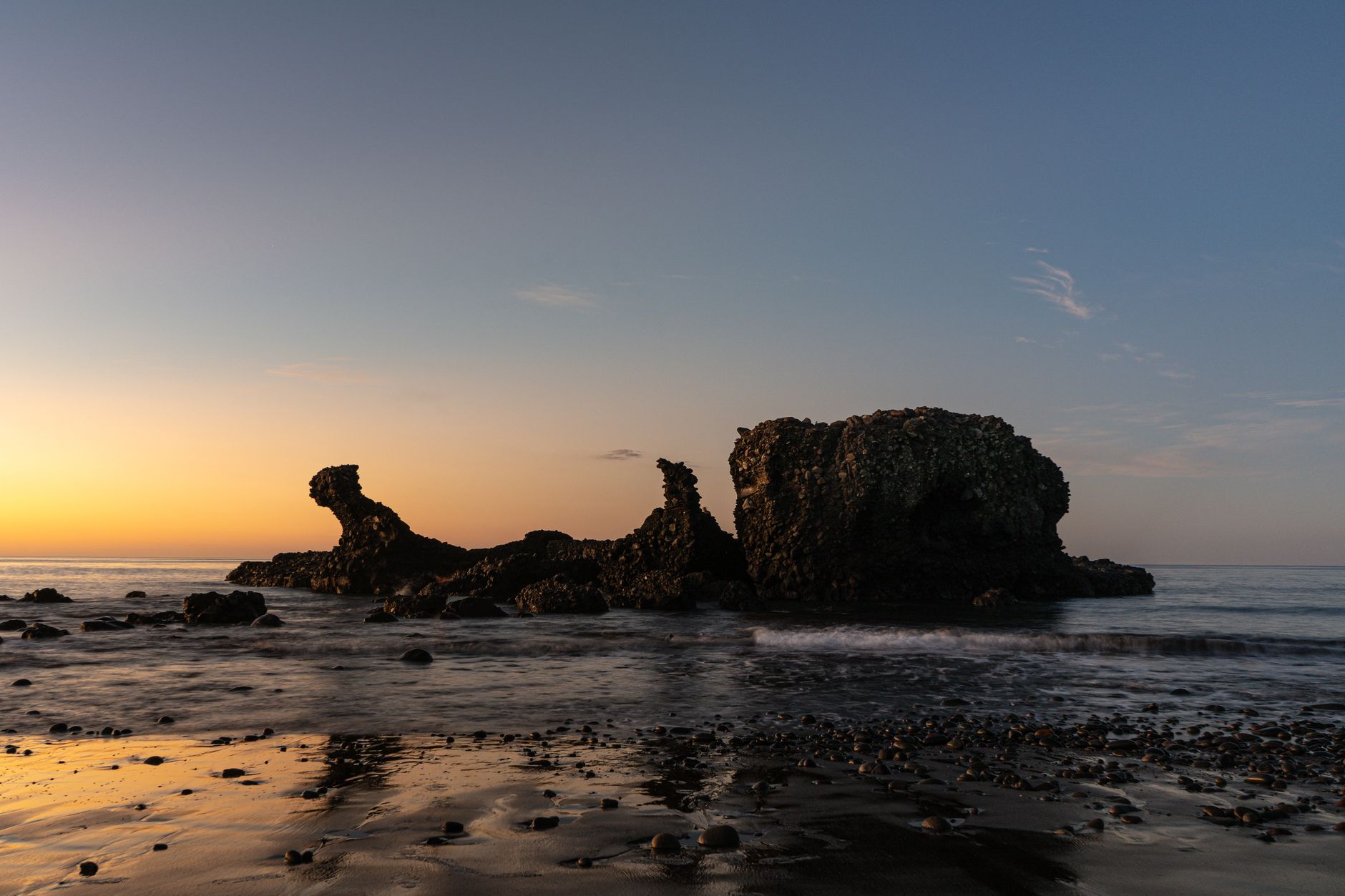
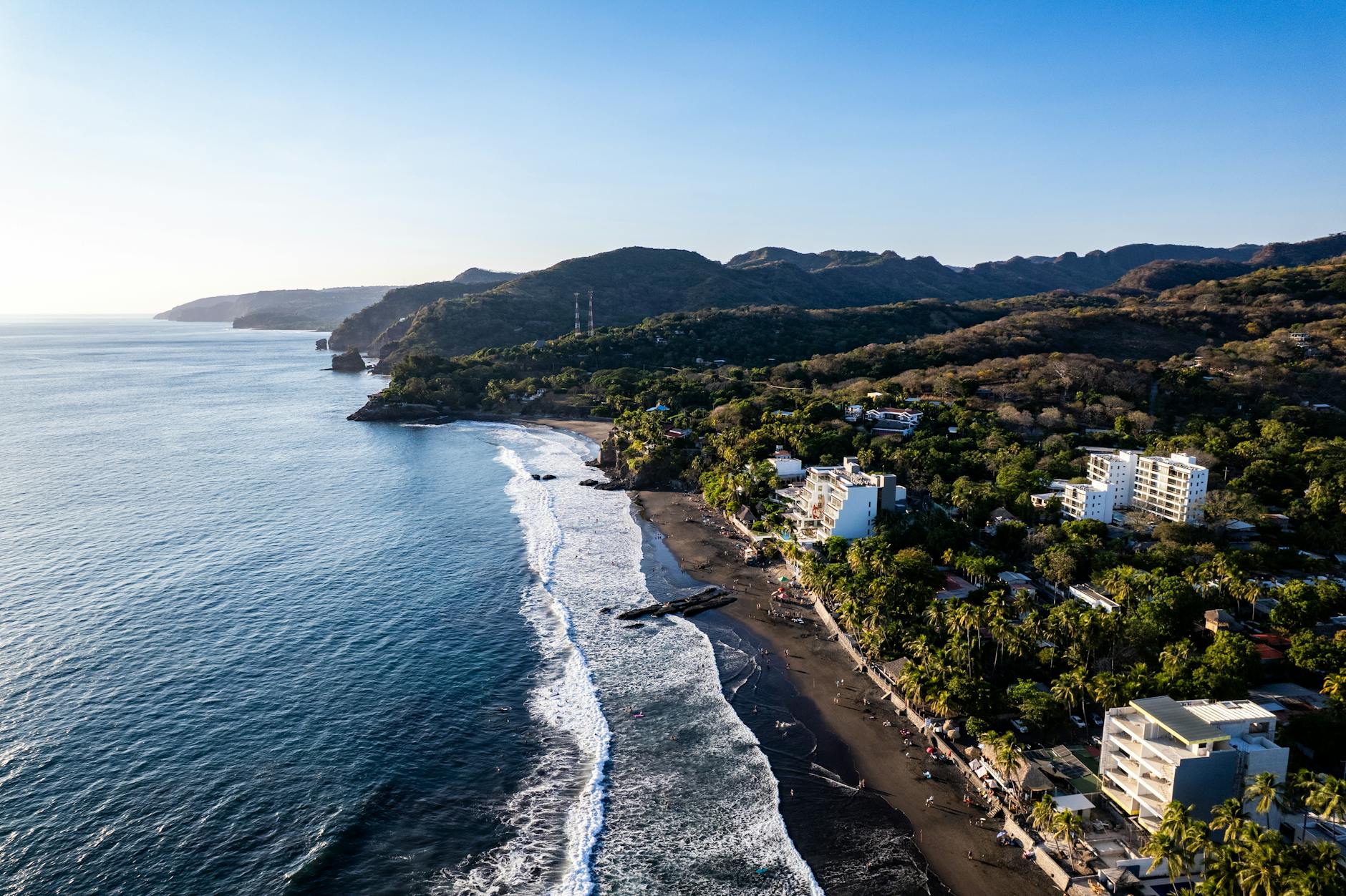
The trip organises itself around three areas that sit close together. The Pacific coast, branded Surf City, holds El Tunco and El Zonte — the backpacker surf capital and the village known worldwide as Bitcoin Beach — plus the long rights of El Sunzal, Punta Roca at La Libertad and Las Flores in the east. The west has the Ruta de las Flores, a mountain road linking painted coffee towns such as Concepción de Ataco and Juayúa, with Lago de Coatepeque in a volcanic crater and the Santa Ana volcano above it. The centre has San Salvador and colonial Suchitoto on the shore of a lake.
What you get is a great deal to see in a very small country, warm and genuinely inexpensive, with surf accessible to complete beginners and direct flights from a number of US cities. What surprises most visitors is how completely the security picture has changed from the one they remember reading about — a shift worth understanding properly, covered further down.
Traveler's tip: El Salvador uses the US dollar, so you don't need to exchange any local currency. Bring small bills (1, 5 and 10 dollars): at markets, on buses and at pupusa stands it can be hard for them to break large notes. Cards are accepted at hotels and restaurants in the cities, but in the towns and along the coast it's best to always keep cash on hand.
The gateway to the country is El Salvador International Airport San Óscar Arnulfo Romero (SAL), located in Comalapa, about 45 km southeast of San Salvador. It is the most important hub in Central America for Avianca, which operates the largest number of routes and connections from South America, North America and the rest of the region. Copa Airlines (via Panama), United, American, Volaris and other low-cost carriers also fly in. Because of its size, El Salvador has no significant domestic commercial flights: everything is covered by land and the distances are short. Comfortable, affordable buses run between the major cities, along with a network of urban and rural buses that connects practically every town (they're usually old, colorful "camionetas", cheap but slow). For the coast and the tourist destinations there are private shuttles and vans that leave from San Salvador. In the cities you'll find taxis and apps like Uber and InDrive, very handy in San Salvador and the surrounding area. For more flexibility, renting a car is a good option: the main roads are in good condition and let you combine coast, volcanoes and towns at your own pace. As everywhere in the region, it's best to travel during the day and avoid driving at night on secondary roads.
The best window is the dry season, November to April, with clear skies for volcanoes, towns and beach days — and it lines up neatly with winter in North America and Europe, which is part of why it works so well as an escape. The rainy season runs May to October, known locally as invierno, or winter, even though it is the hot half of the year; expect heavy afternoon downpours and some risk of tropical storms. Even then, mornings are usually clear and the countryside is at its greenest, so the rains limit you far less than the calendar suggests.
Surfers should invert that advice. There are rideable waves all year, but the big Pacific swells arrive precisely in the wet months, from around March or April through October. Climate here is a matter of altitude rather than season: the coast is hot whatever the date, while the Ruta de las Flores towns, Alegría and Santa Ana stay fresh. High season is Semana Santa — Easter week — and late December to January, when Salvadorans fill the beaches themselves, so book ahead for those dates. Note also that the country stays on UTC-6 all year with no daylight saving: it matches US Central Time in winter and sits an hour behind Chicago in summer.
The national dish is the pupusa: a thick corn or rice flatbread patted by hand, stuffed with cheese, refried beans, chicharrón (crispy pork) or loroco (an edible flower bud with a green, artichoke-like flavour), griddled and served with curtido, a tangy pickled cabbage slaw, and a thin tomato sauce. You eat them with your hands, mostly in the evening, at open-fronted pupuserías. Beyond that: tamales wrapped in banana leaf, fried yuca (cassava) with chicharrón, pastelitos, and drinks like horchata de morro, a spiced seed-based horchata that tastes nothing like the Mexican rice version. Salvadoran coffee, grown on the volcanic slopes, is excellent and rarely exported under its own name.
Reference prices (verified July 2026): a pupusa costs between US$0.50 and US$1, so dinner can genuinely run to a couple of dollars; lunch at a local comedor is US$3–5, and dinner at a tourist restaurant in El Tunco or San Salvador US$8–14. Because the country runs on the dollar, those are the real numbers — no conversion, no card foreign-transaction fee. Two things differ from home: tap water is not safe to drink, so buy bottled, and tipping is around 10% and often already printed on the bill as a suggested charge, so check before adding the 18 to 20% you would leave in the United States.
El Salvador's security situation has changed radically. After the state of exception against the street gangs launched in 2022, violence indicators collapsed and the country is now widely perceived as one of the calmest in Central America for visitors, with a visible police and military presence in tourist areas. Two caveats. The state of exception involves that heavy security presence and the suspension of certain legal guarantees; it does not affect tourism in practice, but it is the context you are travelling in. And this is a fast-moving picture rather than a settled fact, so check your own government's current travel advice before booking — the US State Department, the UK Foreign Office or your national equivalent. Ordinary city sense still applies: keep valuables out of sight, use Uber or InDrive in San Salvador and avoid secondary roads after dark.
For health: do not drink the tap water, buy bottled. No vaccinations are required, though hepatitis A and typhoid are recommended, and dengue is present, so use repellent. Good medical care is private and concentrated in San Salvador, which makes travel insurance with medical cover genuinely important — US health plans and Medicare generally do not cover you outside the country, and there is no reciprocal arrangement for UK travellers either. Emergency numbers: 911, the same three digits as at home, for police and general emergencies, 913 for fire and 132 for medical emergencies (SEM). Verified July 2026.
El Salvador is inexpensive, in line with the rest of Central America, with the added benefit that using the dollar means you lose nothing to exchange spreads or card conversion fees. Budget roughly US$25–40 a day as a backpacker, US$50–70 for mid-range travel and from US$90 upwards for comfort. Concrete figures (verified July 2026): a hostel dorm bed runs US$10–15, from US$10 in El Tunco, and a basic private room US$20–35. With street food at under a dollar a pupusa, eating is close to a rounding error on most days.
Transport is remarkably cheap: urban and rural buses cost less than US$1 a ride, and tourist shuttles between San Salvador and the coast or the Ruta de las Flores run US$10–25. An Uber across San Salvador is a few dollars. A surf lesson at El Tunco is about US$20–30, and a guide for the Santa Ana volcano costs a few dollars more plus the park entrance. The one line item that changes the maths is a rental car, worth it if you want to combine coast, volcanoes and towns at your own pace. These are reference values rather than fixed prices.
Spanish is the only language, and this is where El Salvador asks more of an English-speaking visitor than most Caribbean or Mexican destinations do. English turns up in surf towns, hostels and the better San Salvador hotels, but it thins out fast in the mountains, on buses and at market stalls, so a translation app and fifty words of Spanish will change your trip. Salvadorans — guanacos, as they call themselves — are warm, helpful and visibly proud of their country's tourism revival. The dollar is the everyday currency; bitcoin is accepted voluntarily, mainly along the coast at El Zonte and El Tunco and in a handful of tourist businesses, but you never need it to travel.
Practical details that make this an easy country for North Americans: sockets are types A and B at 110–120 V and 60 Hz, identical to the United States, so your chargers work with no adapter and no converter; people drive on the right; and the main highways are in good condition. For data, buy a local Tigo or Claro SIM with your passport at the airport or any shop — it costs very little and coverage is good almost everywhere, given how compact the country is — or check whether your existing plan already includes El Salvador. One tip from experience: carry small dollar bills, 1s, 5s and 10s, because buses, markets and pupuserías rarely have change for anything larger.
El Salvador is the smallest and most densely populated country in mainland America —barely 21,000 square kilometers— yet its history distills all the intensity of the Central American isthmus. It was the heartland of the Pipil dominion of Cuzcatlán, 'the land of precious things', a world of Nahuat roots that flourished on a land of active volcanoes, frequent earthquakes and extraordinarily fertile soils. Before the Pipil, the Maya and Lenca inhabited the territory for millennia, leaving behind such testimonies as Joya de Cerén, the village buried in ash that is today the 'Pompeii of the Americas'. Upon that indigenous foundation there arose, after the conquest by Pedro de Alvarado in 1524, a modest province of the Captaincy General of Guatemala that grew rich first on cacao and indigo, and later on coffee.
From that land of volcanoes and coffee emerged a tenacious and contradictory nation. The coffee republic of the 19th and early 20th centuries concentrated wealth in a handful of families —the famous and somewhat mythical 'oligarchy of the fourteen families'— and sowed an inequality that erupted in the Matanza of 1932, in the military dictatorships and, finally, in the civil war that between 1980 and 1992 left some 75,000 dead and disappeared. The Chapultepec Peace Accords ended the conflict and opened a still-young democracy, marked by mass emigration, remittances, the violence of the maras and, in recent years, by the profound shifts of the Nayib Bukele era.
Read the full history of El Salvador →Pick a region and open each destination to see what to do, prices and how to get there.
These are the sources we cite most across this country's guides, with how many times each appears. Hard data —tickets, opening hours, requirements, transport— comes from the official source and carries the date we checked it. Restaurant and hotel picks come from guides and reviews, and we say so on each page.
I have never been left without internet on a trip. I land and my phone connects to the strongest network in the country I am visiting: I can let people know I arrived, sort out transport, book tours and keep posting content at a super affordable price (really cheap!). I always use the Maya Mobile eSIM, check out its plans by clicking the banner. See Maya Mobile plans →
Affiliate link: we earn a commission.