Viajá con Gus
HomeCanadaTofino
Tofino
🇨🇦 Canada · West / British Columbia and the Rockies

Tofino

Jump to what you need
📌Country
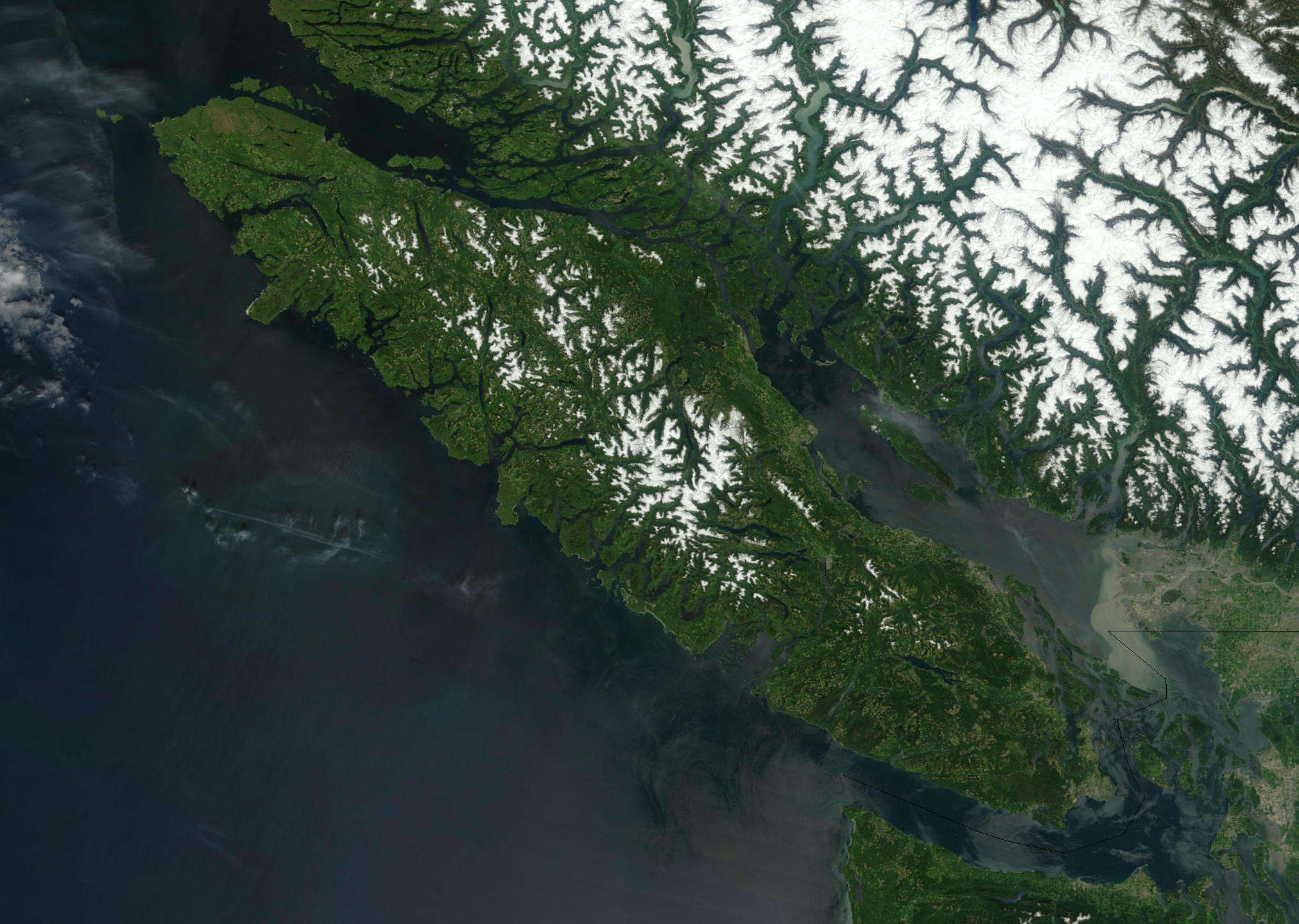
Canada. Tofino is a small town at the far western edge of Vancouver Island, in the province of British Columbia, facing the open Pacific and surrounded by temperate rainforest and long sand beaches.
📌Best time to go
Summer (June to September) is high season: drier weather, long days, beginner-friendly surf and every service open. Winter has its own draw: 'storm watching' (watching the big Pacific storms roll in from oceanfront hotels) and powerful waves for experienced surfers. Spring brings the gray whale migration.
📌Language and currency
English. Currency: Canadian dollar (CAD).
📌Getting there
Across Vancouver Island: Highway 4 crosses the island all the way to Tofino. From Victoria it is about a 5–6 h drive; from Vancouver, a BC Ferries crossing to the island (to Nanaimo) and then the road. There are also direct flights to Tofino/Long Beach Airport (YAZ) from Vancouver and Victoria.
📌Suggested days
3 to 4 days to surf, walk the Pacific Rim beaches, go whale or bear watching, visit the hot springs and enjoy the town's food scene.
📌Profile
World-famous surf and ecotourism town, considered Canada's surf capital. It mixes bohemian surf culture, first-rate cooking, old-growth rainforest and the wild ocean; the gateway to Pacific Rim National Park Reserve.
💱 CAD exchange rate
Loading rate…
🌤️ Weather in Tofino
Loading weather…

At the end of the road, where Highway 4 stops and the land gives way to the open Pacific, sits Tofino: a tiny town that became one of Canada's most coveted destinations. Wedged onto the west coast of Vancouver Island, between forests of thousand-year-old trees and kilometers of wind-swept beaches, Tofino is Canada's surf capital and, at the same time, a sophisticated refuge of ecotourism, food and wild nature.

Its great treasure is the combination of landscapes: the temperate rainforest, with its moss-covered cedars and firs; the long sand beaches of neighboring Pacific Rim National Park Reserve, led by the famous Long Beach; and a cold, powerful ocean where you learn to surf in a wetsuit year-round. Add gray and humpback whales, black bears foraging at low tide, hot springs you can only reach by boat, and a food scene that is surprising for such a small town.

This guide gathers the practical side: how to get there by road, ferry or plane, how and where to surf depending on the season, which nature trips to take (whales, bears, hot springs), what to expect from lodging and food prices — Tofino is not cheap — and how to combine it with Pacific Rim. Tofino is the destination for anyone after waves, old-growth forest and wild ocean in a single trip, with the comfort of a town that has a soul.

📖 History of Tofino

The west coast of Vancouver Island has been, for thousands of years, the territory of the Nuu-chah-nulth First Nations, ocean peoples who lived on fishing, whaling and the resources of the forest and the tides, and whose presence and culture remain very much alive in the region (the Tla-o-qui-aht and Ahousaht nations, among others, are an essential part of the area). The name 'Tofino' comes from a Spanish hydrographer, Vicente Tofiño, in whose honor the inlet (Tofino Inlet) was named during the explorations of the late 18th century. The town began as a fishing and logging port, isolated and hard to reach, until the highway across the island (completed in the 1950s and 1960s) connected it to the rest. The creation of Pacific Rim National Park Reserve in 1970 and the rise of surfing and ecotourism turned Tofino, from the 1970s and 1980s onward, into the nature-and-waves destination it is today, without entirely losing its character as a town at the end of the world. The full story is on our history page.

Read the full history ↓

🏛️ Tofino is in British Columbia

The province of the Canadian Pacific: land of the Haida and Coast Salish coastal peoples, of the Fraser gold rush and the railway, of temperate rainforests, Rocky Mountains and cities such as Vancouver and Victoria.

Read the history of British Columbia →

🗺️ What to see

1
Surfing the Pacific Rim beaches
Tofino is Canada's surf capital; on beaches like Cox Bay, Chesterman Beach and Long Beach you surf year-round in a wetsuit, with schools and waves for every level.
Surfing is what put Tofino on the world map and it is still its soul. The peninsula holds three big surf beaches: Cox Bay (the most powerful and consistent, a favorite of more experienced surfers), Chesterman Beach (long, with gentle waves, ideal for learning) and Long Beach, inside the park. The water is cold all year, so you always surf in a thick wetsuit, gloves and sometimes a hood in winter. The town's schools (Surf Sister, Pacific Surf Co, Tofino Surf Adventures, Swell) run 2.5 to 3 hour group lessons for beginners with all the gear included; more advanced surfers rent a board and wetsuit by the day and chase the winter storms, when the big waves arrive.
ℹ️ Group beginner lesson: CAD 95–115 with gear. Summer = gentle waves for learning; winter = big waves for experts. Water at 10–14 °C year-round.
2
Long Beach (Pacific Rim National Park Reserve)
The most famous beach on the coast: kilometers of sand between Tofino and Ucluelet, ideal for walking, surfing and feeling the power of the Pacific; inside the park (a pass is required).
Long Beach is Vancouver Island's signature beach: more than 15 km of unbroken sand open to the Pacific, backed by temperate rainforest and swept by waves and fog. It sits inside Pacific Rim National Park Reserve, between Tofino and Ucluelet, and to set foot on it you have to pay the Parks Canada daily pass (or enter free during the Canada Strong Pass, from June 19 to September 7, 2026). It is a place for surfing as much as for very long walks at sunset, watching seabirds and taking in the sheer scale of the ocean. Several boardwalk trails start in the park section (Rainforest Trail, Schooner Cove) and lead into the ancient forest.
ℹ️ Parks Canada daily pass: adult CAD 12.25, family CAD 24.50 (free June 19–September 7, 2026). About a 15–20 min drive from downtown Tofino.
3
Chesterman Beach and Cox Bay
Two of the favorite beaches, steps from town and from the big resorts; perfect for learning to surf, walking and watching the sunset.
These two beaches lie outside the national park, closer to town, and are free and open to the public. Chesterman Beach is long and gently sloped, the best place to take your first steps on a surfboard and for family walks; at low tide you can cross to the little Frank Island. Cox Bay, a bit further south, has the strongest and most consistent waves in the area and is where the luxury resorts and the serious surfers gather. Both are ideal for sunsets and for winter 'storm watching'.
ℹ️ Free access. Chesterman = learning and walking; Cox Bay = more powerful waves. A few minutes from town.
4
Whale watching
Boat or Zodiac trips to see gray whales (on migration, mainly in spring) and humpbacks, plus sea lions, seals and seabirds.
One of the great Pacific gray whale migration routes passes right off Tofino: every spring (March to May) thousands of them travel north and many stop to feed close to shore. Humpback whales also show up in summer. Tours run in boats with an enclosed, heated cabin or in faster, more adrenaline-fueled open Zodiacs; along the way you also see Steller sea lions, seals, sea otters and birds. The season runs from March to October/November. Operators such as The Whale Centre, Jamie's, Remote Passages and Adventure Tofino offer 2.5 to 3 hour trips.
ℹ️ CAD 130–170 per adult, 2.5–3 h. Best time for gray whales: March to May; humpbacks in summer. Book ahead in high season.
5
Bear watching tour at low tide
Boat trips through the inlets to watch black bears turning over rocks for crabs and shellfish when the tide goes out; very popular.
The black bears along the Clayoquot Sound shoreline come down to the water's edge when the tide pulls back, to flip rocks and eat crabs, mussels and other shellfish. Tours are scheduled around the tides and cruise the calm inlets around Tofino, keeping a respectful distance. It is one of the safest and most reliable ways to see bears in the wild on Vancouver Island, and it is usually combined with bird and seal watching. They last about 2 to 2.5 hours.
ℹ️ CAD 130–170 per adult, 2–2.5 h. Departure times follow the tides. Available most of the year.
6
Hot Springs Cove (hot springs)
Natural hot springs reachable only by boat or floatplane, inside Maquinna Marine Park; a walk along a wooden boardwalk leads to the hot pools beside the sea.
Hot Springs Cove is the only natural hot spring on Vancouver Island and an unforgettable full-day trip. It lies inside Maquinna Marine Provincial Park, about 45 min–1.5 h by boat (or a few minutes by floatplane) north of Tofino. Once there, you walk some 2 km along a cedar boardwalk through the old-growth rainforest to the pools: geothermal water at around 50 °C that falls as a waterfall and cools down through a series of stepped pools until it mixes with the cold Pacific. This is Hesquiaht Nation territory, and the Nation takes part today in managing the site and in the tours (Ahous Adventures). Bring a swimsuit and footwear you don't mind getting wet, and book well in advance.
ℹ️ Full-day trip (6–7 h): CAD 209–239 per adult by boat; more by floatplane. About a 2 km boardwalk walk to the pools.
7
Meares Island and the Big Tree Trail
An island across from Tofino, in Tla-o-qui-aht territory, with a trail through old-growth forest among giant thousand-year-old cedars; reached by water taxi.
Meares Island sits right across the water from town and is the territory of the Tla-o-qui-aht Nation, which declared it a Tribal Park in 1984 to stop the logging. The Big Tree Trail is a wooden boardwalk that runs into an ancient forest of red cedars and huge firs, some over a thousand years old with enormous trunks; it became one of the symbols of the fight for the old-growth forest in the 1980s and 1990s. It is a few minutes by water taxi from Tofino and the trail is short and flat, suitable for almost anyone.
ℹ️ Reached by water taxi (a few minutes from town). Short boardwalk trail. Tla-o-qui-aht territory (Tribal Park).
8
Temperate rainforest (Rainforest Trail)
Boardwalk trails that lead into the coast's ancient rainforest, among huge trees, ferns and moss; in the Pacific Rim area.
The Rainforest Trail, inside Pacific Rim National Park Reserve, is two short wooden boardwalk loops that let you get into the coastal temperate rainforest without ending up covered in mud: giant ferns, moss-covered cedars and firs, fallen trunks acting as 'nurse logs' for new trees, and a very particular damp silence. It is one of the best ways to understand why these forests are so valuable and why people fought so hard over them. Requires the park pass.
ℹ️ Inside Pacific Rim (pass required). Two short boardwalk loops, suitable for the whole family.
9
Storm watching (winter)
A classic Tofino experience: watching the big Pacific storms hammer the coast, warm and dry from an oceanfront hotel or cafe, between November and February.
In Tofino, bad weather is an attraction. Between November and February the big Pacific storms arrive, with enormous waves, wind and heavy rain, and the town invented 'storm watching': taking them in from the comfort of a hotel or cafe with picture windows facing the sea, hot drink in hand. The resorts at Chesterman and Cox Bay specialize in this and offer winter packages. It is the most dramatic season and, for many people, the coast at its most beautiful.
ℹ️ Season: November to February. Oceanfront resorts offer storm watching packages. Best combined with big-wave surfing.
10
Nuu-chah-nulth culture
Tours and cultural experiences led by the local First Nations (Tla-o-qui-aht, Ahousaht), who share their history, their relationship with the forest and the sea, and their art.
The Tofino coast has been the ancestral territory of the Nuu-chah-nulth peoples for thousands of years, and the Tla-o-qui-aht and Ahousaht nations remain very present in the region. Today they offer first-hand cultural experiences: guided walks through the old-growth forest with stories about medicinal plants and spirituality, trips in a traditional canoe, visits to communities, and art galleries with local carving and weaving. It is the best way to understand the landscape not just as nature, but as living territory with thousands of years of history.
ℹ️ Experiences guided by the Tla-o-qui-aht and Ahousaht. They include old-growth forest walks, canoeing and traditional art.
Advertisements
What nobody tells you

💵 Prices

Tickets

TypePrice
The town of Tofino and the beaches outside the park (Chesterman, Cox Bay)Free (public access; the resorts may charge for parking)
Pacific Rim National Park Reserve (daily pass, for Long Beach and the park trails)Adult (18–64) CAD 12.25; senior (65+) CAD 10.75; youth 6 to 17 free; family/group (up to 7 people in one vehicle) CAD 24.50 (source: Parks Canada, official park site, verified July 2026)
Note — Canada Strong PassFrom June 19 to September 7, 2026, free admission to Parks Canada national parks and 25% off camping (source: Parks Canada, verified July 2026)
🔄 updated monthlyOfficial / reference values · double-check when buying

Activities and tours

ActivityPriceDurationOperator
Beginner surf lesson (wetsuit and board included)CAD 95–115 per person in a group lesson (~2.5–3 h); private lessons cost more (source: Tofino Surf Adventures, Tofino Surf School, Swell Tofino, verified July 2026)~2.5–3 hTofino surf schools
Board + wetsuit rentalCAD 40–70 per day (full kit; source: Tofino surf shops, verified July 2026)Per daySurf shops in town
Whale watching tourCAD 130–170 per adult (source: The Whale Centre Tofino and local operators, verified July 2026)2.5–3 hTofino boat operators
Bear watching tour at low tideCAD 130–170 per adult (source: Tofino boat operators, verified July 2026)2–2.5 hTofino boat operators
Trip to Hot Springs Cove (boat or floatplane)CAD 209–239 per adult by boat; more by floatplane (source: Ahous Adventures, The Whale Centre, verified July 2026)6–7 h (full day)Tofino operators
🔄 updated monthlyOfficial / reference values · double-check when buying
Advertisements

🚌 How to get there and distances

Getting around

ModePriceDurationNotes
Own or rental carRental from CAD 60–110 per dayVariesThe most practical way to move between town, the beaches and the Pacific Rim trailheads; the town is small but the beaches are spread out.
Tofino Bus / local shuttlesDepends on the service and the seasonVariesBus and shuttle services connect the town with the beaches and with Ucluelet, mainly in summer; limited frequency.
BicycleRental from CAD 25–45 per dayVariesA good way to get around town and out to nearby beaches like Chesterman; there are stretches of bike path.
Water taxiDepends on the destination (Meares Island, communities, etc.)VariesEssential for reaching islands and places with no road access, such as Meares Island or Hot Springs Cove.
🔄 updated monthlyOfficial / reference values · double-check when buying

How to get there

RouteAirlines / operatorsAvg. priceDuration
Victoria → Tofino (by car on Highway 4)Own or rental carFuelApprox. 5 h to 6 h
Vancouver → Tofino (BC Ferries to Nanaimo + road)BC Ferries (Tsawwassen/Horseshoe Bay to the island) + carFerry depending on vehicle/passengers + fuelFerry ~1.5–2 h + 3 h of driving
Direct flight to Tofino/Long Beach (YAZ)Pacific Coastal Airlines, Air Canada, WestJet (from Vancouver/Victoria)Depends on the flight and the season~45 min to 1 h flight
Bus across the island (via Nanaimo)Tofino Bus / island servicesDepends on the routeSeveral hours depending on where you start (from Victoria, ~7 h with connections)
🔄 updated monthlyOfficial / reference values · double-check when buying

🏨 Where to stay

No exact prices: a scale from $ (budget) to $$$$$ (luxury), with 2-3 options per category.

CategoryPriceRecommended options
Camping and hostels$$$$$Campgrounds (several near the beaches) and hostels: camping from CAD 30–60 per site; a hostel bed from ~CAD 45–70; in high demand in summer, book ahead.
Mid-range motels and B&Bs$$$$$Motels, cabins and B&Bs in town and near the beaches: roughly CAD 180–350 per night in summer.
Oceanfront hotels and lodges$$$$$Lodges and hotels looking out over the ocean and the rainforest: roughly CAD 350–600 per night in high season.
Luxury resorts (Chesterman/Cox Bay)$$$$$Luxury resorts right on the beaches, also famous for 'storm watching' (such as those at Chesterman Beach and Cox Bay): from CAD 600 to over CAD 1,200 a night depending on the season.

🍴 Where to eat

TypePriceOptions / signature dish
Food trucks and casual (fish tacos)$$$$$CAD 12–25 a dish: the famous fish taco food trucks, fish and chips and surf food; a Tofino classic.
Cafes, bakeries and brunch$$$$$CAD 8–22: specialty coffee shops, bakeries and generous breakfasts, deeply rooted in the town's surf culture.
Seafood restaurants and bistros$$$$$CAD 25–45 a dish: fresh Pacific seafood, oysters, salmon and West Coast cooking.
Fine dining$$$$$CAD 45–90 a dish, or pricier tasting menus: chef-driven restaurants that gave Tofino its culinary reputation, several of them in the oceanfront resorts.
Advertisements

📖 History of Tofino

Origins, formation and what the sources say.

The Nuu-chah-nulth: thousands of years of ocean culture

Long before the word 'surf' meant anything in Tofino, when these freezing waters were crossed only in cedar canoes carved from a single trunk, the Nuu-chah-nulth were already one of the few peoples on the planet who went out into the open ocean to hunt whales. From canoes with eight paddlers, a harpooner of noble lineage — trained through fasting and secret rituals — drove the harpoon into a gray whale, and the whole community depended on his return. That whaling culture, almost unique in the world, flourished for thousands of years on the west coast of Vancouver Island, where Tofino stands today.

The Nuu-chah-nulth ('people along the mountains and the sea') built a culture deeply tied to the ocean, the rivers, the rainforest and the tides: they lived on salmon fishing, shellfish gathering, marine hunting and forest resources, in villages set along the inlets and islands. In the Tofino area, nations such as the Tla-o-qui-aht and the Ahousaht are an essential part of the territory, with living communities, language, art and traditions that continue to this day. Their relationship with the old-growth forest and the sea is not only economic but spiritual: places like Meares Island, just across from Tofino, hold enormous sacred value for them.

That Indigenous presence remains central to the region's identity. Today many of Tofino's nature and culture experiences — old-growth forest tours, boat trips, stories about the coast — are offered by the local First Nations, and the defense of the forest and the sea has historically been led by them.

The name Tofino and the arrival of the explorers

The name 'Tofino' has a curious and little-known origin: it comes from the surname of a Spanish naval officer. In the late 18th century, at the height of the exploration of the Pacific Northwest, Spanish and British expeditions surveyed and charted this coast. During that hydrographic work, one of the area's inlets (Tofino Inlet) was named in honor of Vicente Tofiño, a leading hydrographer and cartographer of the Spanish Navy of the time. The town later took its name from that inlet.

The west coast of Vancouver Island was the setting for the encounter — and the conflicts — between the European powers and the First Nations, driven by the lucrative sea otter fur trade. The region, however, remained remote and hard to reach for a long time, dominated by the open ocean, the rainforest and a climate of fierce storms.

The settlement of Tofino itself grew slowly as a small port tied to fishing and, later, to logging. For decades it was an isolated place, reached mostly by sea, at the island's true 'end of the road'.

The origin of the name 'Tofino'
The accepted explanation is that Tofino Inlet, and later the town, were named in honor of the Spanish hydrographer Vicente Tofiño, as part of the late 18th-century explorations of the Pacific Northwest. The exact details of the expedition that named it vary between sources.
Source: https://en.wikipedia.org/wiki/Tofino

The highway, the park (1970) and the end of isolation

For most of its history, Tofino was a town with virtually no land connection to anywhere. The big change came with the construction of the highway that crosses Vancouver Island from east to west — today's Highway 4 — which linked Tofino and neighboring Ucluelet to the rest of the island in the mid-20th century. That long, winding road through the mountains and the rainforest opened Tofino to the world and laid the groundwork for its tourism future.

The second decisive milestone was the creation, in 1970, of Pacific Rim National Park Reserve, which protected long stretches of this wild coast, including the famous Long Beach, right next to Tofino. The park's opening ceremony was held in 1971 and was even attended by Princess Anne of the United Kingdom. Protecting these beaches and forests turned the area into a recognized nature destination.

From the 1970s and 1980s onward, Tofino began drawing surfers, naturalists, artists and people looking for an alternative way of life beside the ocean. Surfing — done in wetsuits in the cold Pacific — and ecotourism kept growing and gave the town a new identity, part fishing community, part bohemian refuge, part mecca for nature lovers.

The fight for the old-growth forest and Tofino today

A key chapter in the region's recent history was the fight to protect the old-growth forests. In the early 1990s, logging plans in Clayoquot Sound — the system of inlets, islands and rainforest that surrounds Tofino — set off one of the largest environmental protests in Canadian history. In 1993, during what became known as the 'Clayoquot summer', thousands of people demonstrated and hundreds were arrested in peaceful blockades to stop the logging of the ancient forests, in a campaign largely led by the First Nations and environmentalists.

That mobilization had a lasting impact: Clayoquot Sound was declared a UNESCO biosphere reserve in 2000, and protecting the old-growth forests became a defining cause in the area. That environmental history runs deep in Tofino's identity, a town that sees itself as a guardian of the temperate rainforest and the ocean.

Today Tofino holds several souls at once: the fishing town, the First Nations community, the surf mecca and the refuge of fine food and high-end ecotourism. It is a small destination with an international reputation, where fish taco food trucks sit alongside upscale oceanfront resorts, and the freezing Pacific waves meet thousand-year-old cedars. The challenge now is still the balance between growing tourism, local life and the conservation of an exceptional natural setting.

How Tofino became Canada's surf capital

That a town lost in the Canadian northwest, with water under 15 degrees almost all year, became the country's surf capital is part improbable and mostly romantic. Local lore places the first surfers on Long Beach in the late 1960s: young people who showed up with boards strapped to the car roof, camped right on the sand and took on the cold Pacific waves in wetsuits that were still crude. For years Long Beach was an informal community of surfers, hippies and people chasing a different way of life, until the creation of the park in 1970 forced them to move from the beach into town.

Over the years, surfing went from the pursuit of a few eccentrics to Tofino's economic and cultural identity. Schools appeared — among them Surf Sister, a pioneer in teaching women — along with surf shops, cafes and a culture of its own that blends ocean, forest and slow living. Unlike tropical surf destinations, here the appeal is precisely the extremes: thick wetsuits, fog, thousand-year-old forest meters from the water, and the chance to surf winter storms with huge swell. Today Tofino receives hundreds of thousands of visitors a year, many drawn by the promise of learning to stand on a board in one of the most spectacular natural settings in the country.

That tourism boom comes with real tensions: housing prices have soared, the tiny town fills up in summer, and the community argues over how to grow without ruining what made it special in the first place. But the mix is still intact: fish taco food trucks next to fine-dining restaurants, luxury resorts and campgrounds, surfers at dawn and bears at low tide. Tofino managed to become world-famous without entirely ceasing to be the town at the end of the road.

📚 Bibliography

  • Wikipedia (EN) — «Tofino»: https://en.wikipedia.org/wiki/Tofino
  • Wikipedia (EN) — «Pacific Rim National Park Reserve»: https://en.wikipedia.org/wiki/Pacific_Rim_National_Park_Reserve
  • Wikipedia (EN) — «Clayoquot Sound»: https://en.wikipedia.org/wiki/Clayoquot_Sound
  • Wikipedia (EN) — «Nuu-chah-nulth»: https://en.wikipedia.org/wiki/Nuu-chah-nulth
  • Wikipedia (EN) — «Vicente Tofiño»: https://en.wikipedia.org/wiki/Vicente_Tofi%C3%B1o
  • The Canadian Encyclopedia — «Pacific Rim National Park Reserve»: https://www.thecanadianencyclopedia.ca/en/article/pacific-rim-national-park-reserve
  • The Canadian Encyclopedia — «Clayoquot Sound»: https://www.thecanadianencyclopedia.ca/en/article/clayoquot-sound
  • Tourism Tofino — «Getting Here»: https://tourismtofino.com/plan-your-trip/getting-here/
  • Tourism Tofino — «Surfing»: https://tourismtofino.com/things-to-do/surfing/
  • National Geographic — «Pacific Rim National Park Reserve»: https://www.nationalgeographic.com/travel/article/pacific-rim-canada-park
  • Parks Canada — Pacific Rim National Park Reserve: https://parks.canada.ca/pn-np/bc/pacificrim

❓ Frequently asked questions

How do I get to Tofino from Vancouver?+
There is no direct land route because Tofino is on Vancouver Island. The usual way is to take a BC Ferries sailing from Tsawwassen or Horseshoe Bay to Nanaimo (a ~1.5–2 h crossing) and then drive Highway 4 for about 3 hours to Tofino. The other option is to fly: there are seasonal flights to Tofino/Long Beach Airport (YAZ) from Vancouver, about 45 min to 1 h. From Victoria it is a 5–6 hour drive on Highway 4.
How many days do I need for Tofino?+
Three to four days is enough for the essentials: a surf lesson or a day on the Pacific Rim beaches, a whale or bear tour, a day of rainforest trails (Rainforest Trail, Big Tree Trail on Meares Island) and time for the town's food. If you want to add the full-day trip to Hot Springs Cove, a 5th day is worth it. Many travelers combine Tofino with Ucluelet and the rest of Vancouver Island.
How much does entry to Pacific Rim National Park cost?+
The daily pass costs CAD 12.25 per adult (18–64), CAD 10.75 for seniors (65+), and it is free for anyone under 18; the family/group pass (up to 7 people in one vehicle) is CAD 24.50 (verified July 2026). On top of that, between June 19 and September 7, 2026, entry to Canada's national parks is free under the Canada Strong Pass. The pass is required for Long Beach and the park trails; Chesterman and Cox Bay beaches, closer to town, are free.
Can you surf year-round in Tofino?+
Yes, but always in a wetsuit: the Pacific here is cold all year (10–14 °C). Summer (June to September) is ideal for beginners, with more manageable waves and better weather; winter brings big waves for experienced surfers and the spectacle of 'storm watching'. A group beginner lesson costs around CAD 95–115 with gear included.
When can you see whales and bears in Tofino?+
Gray whales are seen above all during their spring migration (March to May), when thousands pass along the coast, and humpbacks show up in summer; the tour season runs from March to October/November. Black bears are watched on low-tide tours through much of the year, when they come down to the shore looking for crabs and shellfish. Book trips ahead in high season.
Is Tofino expensive, and where should I stay?+
Yes, it is one of the most expensive destinations in Canada, especially lodging in summer. The oceanfront resorts at Chesterman and Cox Bay easily go over CAD 600 a night; there are mid-range motels and B&Bs for CAD 180–350 and budget options in camping (from CAD 30–60) and hostels (from CAD 45–70), which fill up fast. Book well in advance, above all between June and September.
Sources consulted (9)
Still planning?
Explore more destinations in Canada
See all destinations →
Advertisements
Image credits
Photos from Wikimedia Commons, each under its own licence (CC BY, CC BY-SA or public domain). Open each file to see its author and licence.
VancouverIsland.A2003154.1930.250m.cropped