GO! Assistance has 50% off in October and, with our link, you get an extra 20%.
Pick origin, destination, dates and ages and see the price of your travel assistance in a minute.
Uruguay: Quiet beaches, mate on the waterfront, asado with friends and the old town of Colonia: Uruguay is the country you experience without rushing.
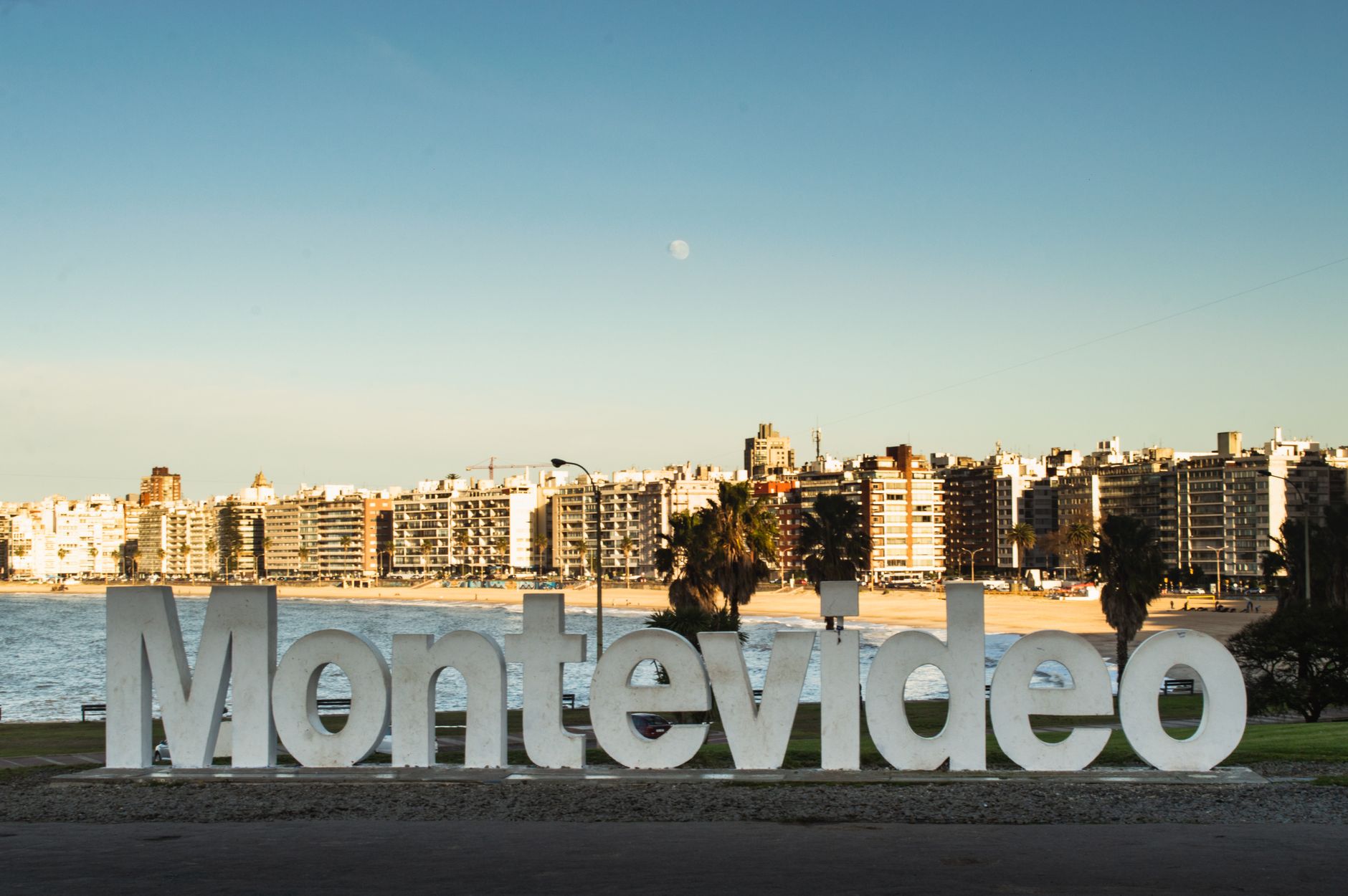
Uruguay is the country you visit without rushing. It is small, safe, calm and has a quality of life you can feel: endless Atlantic beaches, a colonial old town in Colonia del Sacramento, Montevideo's seemingly infinite waterfront promenade, and fishing villages where nothing much has changed in decades. Slow weekends, long barbecues and a thermos of tea tucked under everyone's arm are close to a national philosophy.
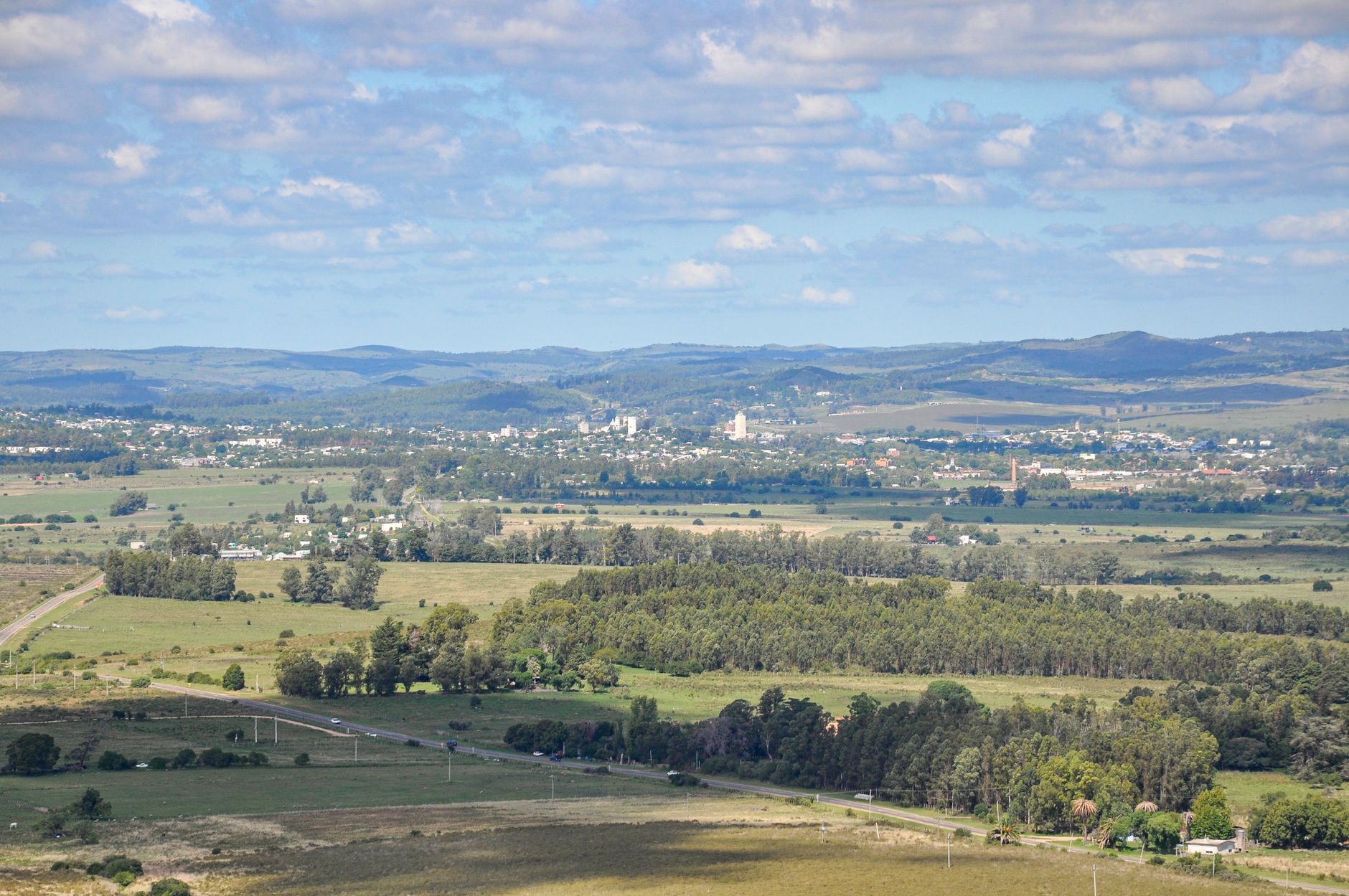
It is easy to cover because of its size. Montevideo is the capital and the natural starting point; the coast runs east from the Costa de Oro to Punta del Este, José Ignacio and the wilder Rocha region with Cabo Polonio and Punta del Diablo; the Uruguay River side holds Colonia and Carmelo; and inland you will find hot springs around Salto and Paysandú and deep cattle country in Tacuarembó. There are no domestic flights, so everything happens by bus or car — distances are short and the roads are in good shape.
What people take home is the sense of safety and calm, which is genuinely hard to find elsewhere in the region. What surprises them, unpleasantly, is the cost: Uruguay is one of the most expensive countries in South America, and Punta del Este in high summer is in a category of its own.
Traveler's tip: Uruguay is one of the pricier countries in the region, so it pays to use a card whenever you can: foreign tourists usually get a VAT refund on dining and lodging when paying with international cards. Carry some cash in pesos for markets, buses and small towns, and remember that many tourist spots accept US dollars.
Full converter for UYU →The main gateway is Carrasco International Airport (MVD), about 20 km from Montevideo, modern and very comfortable. In the summer season, Punta del Este Airport (Laguna del Sauce, PDP) also runs at full swing, ideal if you're heading straight to the coast. The airlines that connect Uruguay most with the region and the world are Aerolíneas Argentinas, LATAM, Gol, Azul, American Airlines, Iberia and Copa Airlines, among others. Since it's a small country, there are virtually no domestic flights: you get everywhere easily overland. The bus is king of transport: the network of companies such as COT, CUT, Copsa and Agencia Central connects every city from Tres Cruces, Montevideo's central terminal, with frequent, punctual and affordable services. To get around within the cities there are urban buses and plenty of taxis; in Montevideo and Punta del Este, apps like Uber and Cabify also operate. If you want total freedom to explore the coast and the interior, renting a car is an excellent option: the roads are in good shape and the distances are short.
Uruguay is in the southern hemisphere, so summer runs from December to March. That is beach season: warm days, swimmable water and the whole coast at its best. It is also peak season, and prices in Punta del Este and along the coast climb steeply from late December to late January, when Argentine and Brazilian holidaymakers arrive. If you want the beach without the crowds or the inflated prices, aim for early December or March.
Spring (October–November) and autumn (March–April) are ideal for Montevideo, Colonia and the interior: pleasant weather and far fewer people. Winter (June–August) is cool and damp and no good for swimming, but it is the right time for the western hot springs, which are more enjoyable in the cold. One thing worth planning around: Uruguay hosts the longest carnival in the world, running through January and February, with the murga street-theatre troupes and the Llamadas parade of candombe drumming, which is UNESCO-recognised.
Beef is the centre of everything. The asado — a slow wood-fired barbecue — is closer to a ritual than a meal, and the chivito is the national dish: a very large sandwich of thin-sliced steak, ham, cheese, egg, bacon and more, usually served with chips. Bakeries sell tortas fritas, a fried dough eaten on rainy days by tradition. Dulce de leche is everywhere, alfajores are the standard sweet, and chajá — a meringue, cream and peach cake — is the classic dessert. The coast has good fish and seafood.
The national drink is mate, a bitter herbal tea drunk through a metal straw from a shared gourd. Uruguayans carry it constantly, thermos under one arm, and it is more visible here than anywhere else in South America — including places it is more famous for. If someone hands you one, drink it and hand it back; passing it on is the whole etiquette. Also worth trying: grappamiel, a honeyed grape spirit, and tannat wine. Eating out is expensive by regional standards: a chivito with chips runs roughly 12 to 18 USD, and dinner at a mid-range restaurant 25 to 40 USD per person (verified July 2026). Tipping is around 10%.
Uruguay is among the safest and most stable countries in Latin America, with solid institutions and very little of the friction travellers encounter elsewhere in the region. In Montevideo, normal city sense applies: avoid outlying neighbourhoods at night, do not display valuables and stay alert in crowds. The coast and the interior towns are extremely quiet. There is no widespread tourist-scam culture here, which is itself unusual and makes it a relaxing place to travel.
No vaccinations are required to enter and the health system is good. Tap water is drinkable throughout the country, including small towns, so bottled water is unnecessary. In summer the sun is strong and the ozone layer over the southern cone is thinner than most visitors expect — sunscreen and shade matter more than they would at the same latitude up north. Travel insurance is still worth having. Emergency numbers: 911 for police and fire, 105 for public ambulances (verified July 2026).
Uruguay is one of the most expensive countries in South America, typically 30 to 50% above Argentina or Peru, which catches out travellers moving through the region. Budget on roughly 50 to 70 USD a day as a backpacker and 80 to 120 USD for mid-range travel; Punta del Este in January has no practical ceiling (verified July 2026). Outside the summer months the coast becomes dramatically cheaper.
For reference (July 2026): a hostel dorm bed costs 18 to 28 USD; a chivito with chips 12 to 18 USD; a city bus ticket in Montevideo around 1.20 USD; and an intercity bus 10 to 25 USD depending on the route. One genuinely useful detail that saves real money: foreign visitors paying with a non-Uruguayan card generally receive an automatic VAT refund on restaurants and accommodation, applied at the point of sale. It is worth paying by card wherever possible rather than in cash.
The language is Rioplatense Spanish, effectively the same as Buenos Aires. If you have studied Spanish elsewhere, expect a shock: 'll' and 'y' are pronounced like the 's' in 'measure', and the informal 'you' is vos rather than tú, with its own verb forms. It is worth knowing this before you arrive so you do not assume your Spanish has failed you. Near the Brazilian border, Portuguese is widely spoken and understood. Uruguayans are warm, calm and direct, and mate is a social ritual rather than just a drink.
Uruguayan society is among the most secular and socially liberal in the Americas, and tends to be quietly proud rather than demonstrative about it. Practical details: power is 220 V, 50 Hz with type C, F, I and L sockets, so most European plugs fit and North American devices need an adapter. Connectivity is good — you can buy a prepaid SIM from Antel, the state operator, with your passport, or use an eSIM. And one thing worth planning around: outside summer, the coastal towns empty out almost completely and many businesses close for the season, so check what is open. The trade-off is deserted beaches and far friendlier prices.
The history of Uruguay is that of a narrow strip of land wedged between the Río de la Plata, the Uruguay River and the Atlantic Ocean, which for almost three centuries was a frontier disputed between the Spanish and Portuguese empires. That 'Banda Oriental' —so called because it lay to the east of the Uruguay River—, peopled by Charrúas, Minuanes, Chanás and Guaraníes, and roamed by enormous herds of feral cattle, never formed an administrative unit of its own under the crown: it was nobody's land and everybody's land, without cities for two hundred years, the base of an early hide economy and the cradle of the gaucho. It became a nation only in the nineteenth century, driven by the epic of José Gervasio Artigas, the Crusade of the Thirty-Three Orientals of 1825 and the Treaty of Montevideo of 1828, which recognized it as an independent state between its two giant neighbors, Argentina and Brazil.
From a nineteenth century of caudillos, white and red badges, long civil wars and the endless Guerra Grande, the country went on in the twentieth century to become a pioneering social laboratory under the reformism of José Batlle y Ordóñez: the 'Switzerland of the Americas', secular, democratic, urban and middle class, with the eight-hour day, divorce and free education decades before much of Europe. That Arcadia broke apart in the middle of the century with the fall in the price of beef and wool, and blew up in the sixties and seventies with economic crisis, the Tupamaro guerrilla and the civic-military dictatorship of 1973-1985, overcome by one of the most solid democracies in Latin America.
Read the full history of Uruguay →Pick a region and open each destination to see what to do, prices and how to get there.
These are the sources we cite most across this country's guides, with how many times each appears. Hard data —tickets, opening hours, requirements, transport— comes from the official source and carries the date we checked it. Restaurant and hotel picks come from guides and reviews, and we say so on each page.
I have never been left without internet on a trip. I land and my phone connects to the strongest network in the country I am visiting: I can let people know I arrived, sort out transport, book tours and keep posting content at a super affordable price (really cheap!). I always use the Maya Mobile eSIM, check out its plans by clicking the banner. See Maya Mobile plans →
Affiliate link: we earn a commission.