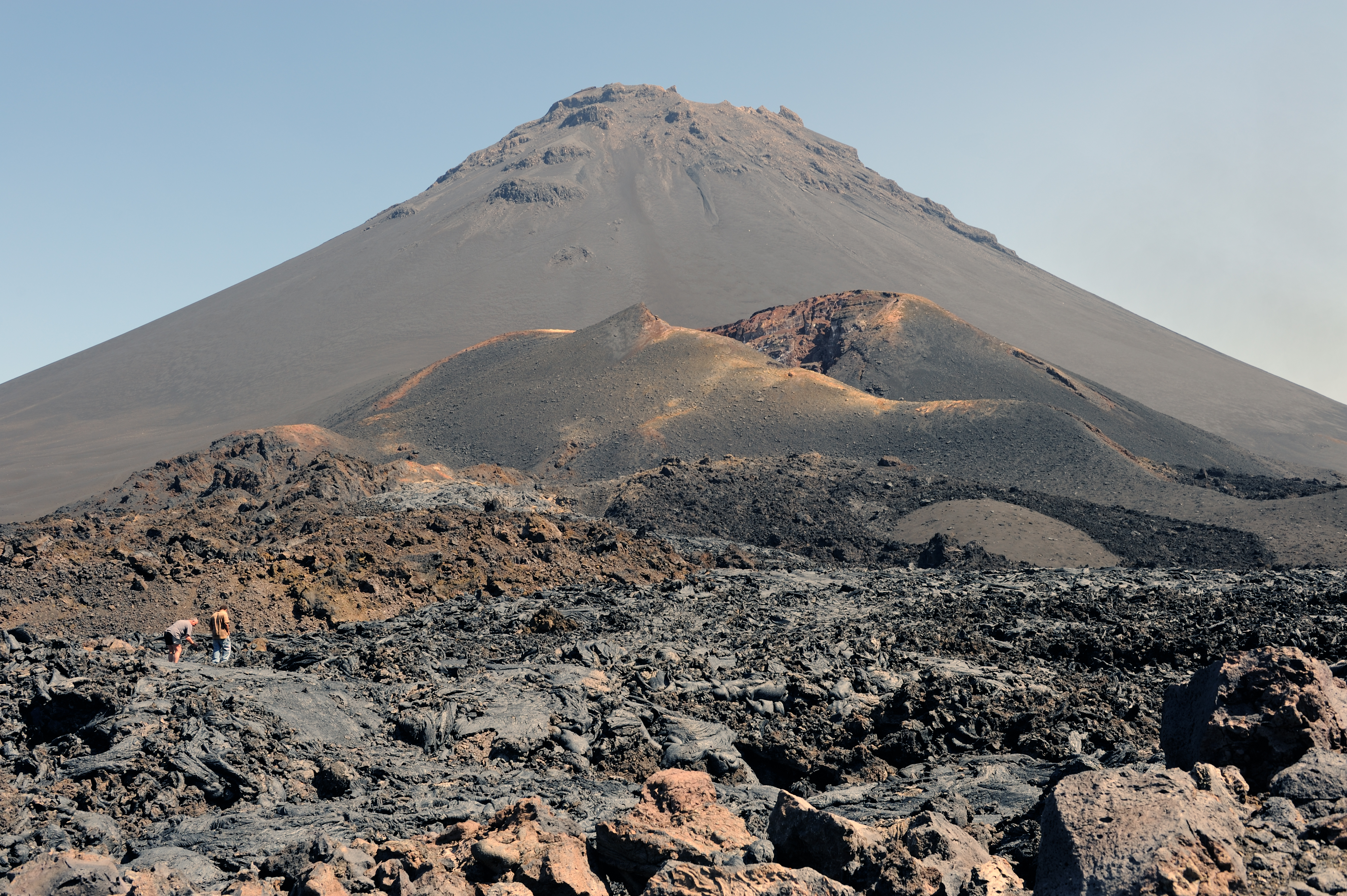
Ten volcanic islands in the middle of the Atlantic, birthplace of Cesária Évora's morna: Cape Verde mixes white-sand beaches, volcanoes you can climb and hiking valleys, all with a Creole rhythm locals call morabeza.
Cape Verde is an archipelago of ten volcanic islands in the Atlantic, about 600 km off the coast of Senegal, with a warm, dry climate almost all year round. It's a destination you can enjoy in two very different ways: on one hand, the 'sand' islands —Sal and Boa Vista— with resorts, endless white-sand beaches and water sports; on the other, the 'mountain' islands —Santo Antão, São Nicolau, Fogo— made for hiking, Creole villages and dizzying landscapes.
The country has a very strong cultural identity, unique in Africa: a blend of African and Portuguese roots, with Cape Verdean Creole as the everyday language and a soundtrack all its own —morna, coladeira, funaná, batuque— that you hear in every bar. Mindelo, on São Vicente, is the capital of that music and of the most Brazilian-style carnival in the archipelago.
For a Latin American traveller it's a relatively accessible destination via Lisbon, safe and friendly (the famous 'morabeza', that relaxed hospitality). It's not about safaris or big wildlife: you come here for the sea, the hiking, the volcano and the island rhythm. With a week you see two or three islands; with two, you get a full picture of the country.
The currency is the Cape Verdean escudo (CVE), pegged to the euro at a fixed rate of 110,265 CVE per euro since 1999, so its value is very stable. Against the dollar, in July 2026 it was around 95–96 CVE per USD (verified July 2026), though it's worth checking the day's rate because it moves with the euro-dollar pair. The euro is accepted almost everywhere in tourist areas (Sal, Boa Vista) and is the most practical currency to bring; the dollar is less useful. There are ATMs (Caixa, BCA) on the main islands, but on the small ones (Brava, Santo Antão, São Nicolau) they can fail or run out of cash, so withdraw money before you cross over. Cards work in hotels and larger restaurants, but for taxis, aluguer (the shared minibuses), markets and guesthouses you need cash. Tipping isn't mandatory: 5–10% in good restaurants is more than enough.
Full converter for CVE →There are no regular direct flights from Latin America, so you almost always go through Lisbon: TAP Air Portugal connects the main Latin American capitals with Lisbon and from there flies to Sal (Amílcar Cabral airport), Praia (Nelson Mandela), São Vicente and Boa Vista in about 4h30. Brazil also has shorter options across the Atlantic (historically there were flights from Fortaleza to Sal; check availability when planning). Another route is via Dakar or Casablanca. As for paperwork, a new scheme has been in force since January 2026: Brazilians and citizens of the EU, UK, US and Canada don't need a visa for tourist stays of up to 30 days, but EVERY traveller must register on the online EASE platform (ease.gov.cv) at least 5 days in advance and pay the Airport Security Fee (TSA) of 3.400 CVE (about 35 USD); if you don't, from July 2026 you may pay double at the border. Nationals of several Latin American countries not on the exempt list do need to apply for a visa in advance, so check your case on the official site. Once there, you hop between islands by plane (BestFly/TACV) or by ferry (the most used: Praia–Fogo, and São Vicente–Santo Antão, the latter a short and very cheap crossing).
Cape Verde has a warm, dry climate almost all year round, with temperatures of 24 to 30 °C. The best time to travel is the dry season, from November to June: clear skies, a gentle sea and the best conditions for hiking and kiting. The windiest months (December to March) are ideal for windsurfing and kitesurfing on Sal and Boa Vista, although on the mountain islands that wind can be a nuisance on the summits.
The short rainy season runs from August to October and is irregular: on the mountainous islands (Santo Antão, Santiago, Fogo) it turns everything green and is beautiful for hiking, but it can bring downpours and blow in Saharan dust (the 'dry haze') that reduces visibility. For nature there are two special windows: humpback whale watching from March to May, and turtle nesting on Boa Vista and Sal from June to October. And if you're after a party, Mindelo's carnival falls in February.
The national dish is cachupa, a slow stew of corn, beans, cassava, sweet potato and meat or fish that every household cooks its own way (the 'cachupa rica' has more meat; the 'pobre', more vegetables). The next day it's reheated, fried with egg and chorizo: that's 'cachupa guisada', the Creole breakfast par excellence. Being islands, fish and seafood take centre stage: super-fresh tuna, cabra (a fish), limpets, octopus and excellent lobster at reasonable prices. For snacks, don't miss pastéis (small fried tuna pasties) and the queijo de cabra (goat's cheese) from Fogo island.
To drink, the flagship is grogue, a strong sugarcane spirit distilled by hand, especially on Santo Antão; it's used to make ponche, sweeter and smoother, with cane syrup and lemon. The local beer is Strela, and the wine from Chã das Caldeiras (Fogo), grown in volcanic ash, is a rarity worth trying. Eating well is cheap: a fish dish in a tasca costs around 6–10 USD, and a full meal in a tourist area, 12–20 USD.
Cape Verde is one of the safest and most stable countries in Africa: there are no conflicts, democracy is solid and tourists are treated kindly. The risks are petty crime —pickpockets and theft in Praia (especially in the Sucupira district and at night) and in the tourist areas of Santa Maria— so the usual city precautions are enough. When hiking on the mountain islands, hire a guide for the long routes on Pico do Fogo or Santo Antão and bring plenty of water: the sun is strong and there's little shade.
Health-wise it's straightforward. There's no yellow fever and the certificate isn't required, unless you arrive from a country with active transmission. There's no malaria in practice (only isolated, sporadic cases on Santiago; check with your doctor if you're going in the rainy season). It is worth being up to date with routine vaccines and considering hepatitis A and typhoid. Tap water isn't reliable on many islands: drink bottled water. Medical care is basic outside Praia and Sal, so good travel insurance with evacuation cover is highly recommended. Emergencies: police 132, ambulance (INEM) 130, fire brigade 131.
Cape Verde is more expensive than the neighbouring African mainland, but it's still affordable. A backpacker gets by on about 45–60 USD per day (guesthouse, meals in tascas, transport by shared aluguer). A mid-range trip runs around 80–130 USD a day (simple hotel or apartment, the odd excursion, restaurant meals). And a comfortable full-board resort stay on Sal or Boa Vista starts at 150–250 USD per person per day, more in high season.
Concrete examples (verified July 2026): an aluguer ride between villages costs 1–3 USD; a short taxi in Praia or Mindelo, 3–6 USD; the São Vicente–Santo Antão ferry, about 8 USD each way; an inter-island flight, 60–120 USD; the guided climb up Pico do Fogo, 30–50 USD per person; a turtle excursion on Boa Vista, 40–60 USD; and a day of kitesurfing with gear, around 60–90 USD. Don't forget to add the mandatory TSA fee of about 35 USD on entry.
The official language is Portuguese, but on the street everyone speaks Cape Verdean Creole (kriolu), a language of its own with a Portuguese base and African influences. With Spanish you'll be half understood thanks to its closeness to Portuguese, and in tourist areas some people speak English or French, but a few words of Portuguese open a lot of doors. The culture revolves around music (morna, coladeira, funaná, batuque) and 'morabeza', that relaxed, unhurried hospitality that defines how locals treat you. The pace is island time: things happen when they happen, and that calm is part of the charm.
It's a peaceful society, mostly Catholic but very tolerant, where it makes sense to dress with common sense (on beaches and in resorts anything goes; in villages and churches, a bit more modestly). For connectivity, buy a local SIM from CVMóvel or Unitel T+ as soon as you arrive (cheap, with decent data on the big islands; patchy signal on the small ones and in the mountains); many hotels have wifi. The plug is the European two-round-pin type (types C and F), 220V, so bring an adapter. And one piece of advice: don't try to see it all. Cape Verde is best enjoyed slowly, picking two or three islands and letting its music carry you along.
Few countries in the world can say they were born from nothing. When Portuguese navigators reached this handful of volcanic islands lost in the Atlantic, off the westernmost tip of Africa, around 1460, they found no one: Cape Verde was an uninhabited archipelago, with no indigenous peoples and no earlier human history. Everything Cape Verde is today (its people, its language, its music, its morna that moves listeners to tears) was created on these islands. It came from the encounter, almost always brutal, between Portuguese settlers and enslaved Africans brought from the coast of Guinea. Here, on the island of Santiago, Ribeira Grande was founded in 1462 as the first European colonial city in the tropics, and here the first Creole society on the planet took shape.
This is the full story of Cape Verde. It is the story of an archipelago that was both womb and way station of the Atlantic slave trade. It is the story of a Creole people, born of pain, who invented a language and a culture of their own, and of the droughts and famines that pushed millions to emigrate. And it is the story of a small nation that won its independence in 1975, led by the movement Amílcar Cabral founded, and is today one of the most stable democracies in Africa. A country of ten islands where more Cape Verdeans live abroad than at home, it is the birthplace of the morna (World Heritage), of the Fogo volcano and of a saudade sung barefoot.
Read the full history of Cape Verde →Pick a region and open each destination to see what to do, prices and how to get there.
These are the sources we cite most across this country's guides, with how many times each appears. Hard data —tickets, opening hours, requirements, transport— comes from the official source and carries the date we checked it. Restaurant and hotel picks come from guides and reviews, and we say so on each page.