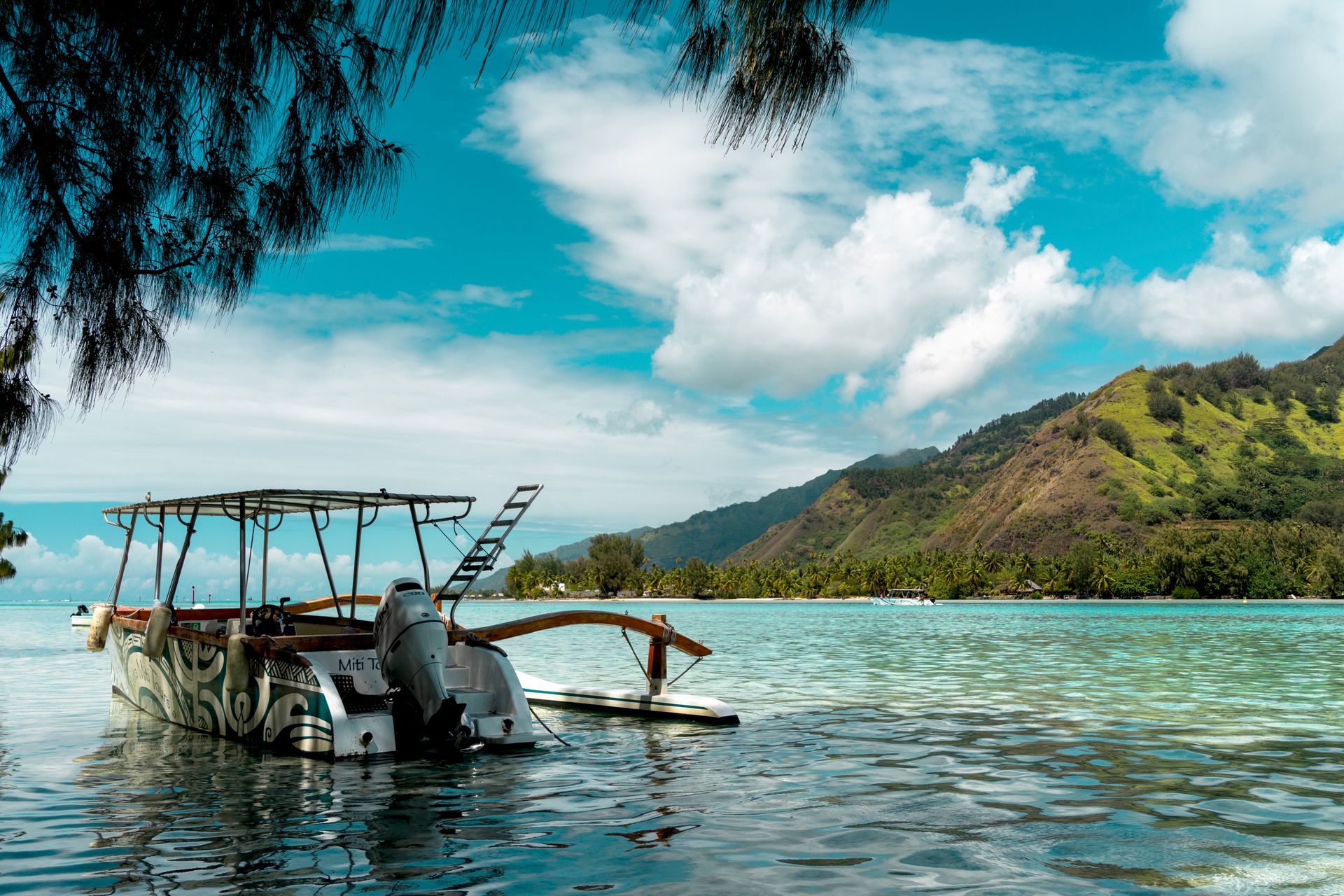
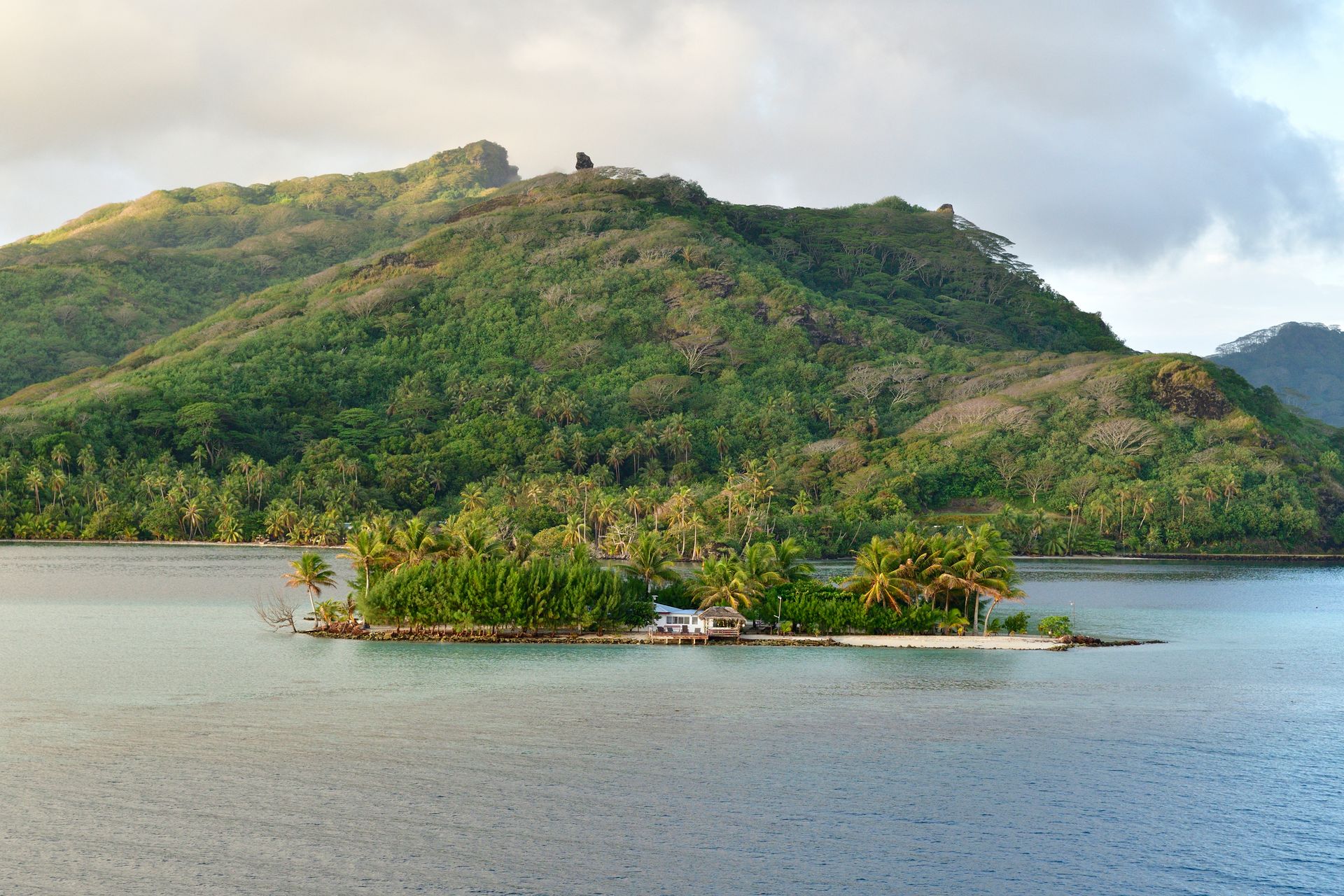
Bora Bora and its overwater bungalows, the turquoise lagoon of Moorea, the green volcano of Tahiti: for many people, French Polynesia is the ultimate paradise. But behind the postcard lies a huge and varied country: 121 islands and atolls scattered across the South Pacific over more than 2,000 kilometres, grouped into five archipelagos where movie-set lagoons, volcanic mountains, reefs teeming with life and one of the most fascinating seafaring cultures on the planet all live side by side. Beyond the Society Islands — the best known, led by Tahiti, Moorea and Bora Bora — travellers find the atolls of the Tuamotu, world-class diving meccas such as Rangiroa and Fakarava, and the remote, wild Marquesas, the land that inspired Gauguin and Jacques Brel. It's a destination of turquoise water and black pearls, but also of ancestral tattoos, dance, mana and a warm hospitality you feel as much in the big resorts as in the family-run guesthouses. Getting here takes effort — almost every flight lands in Papeete after long hours in the air — and travelling here isn't cheap, but few places give back so much. You pay in CFP francs, people speak French and Tahitian, and the best time to go is the southern dry season, from May to October. What you really need to bring is time: for the crossings between islands, for the island pace of life and to let yourself be swept up by an ocean that changes everything.
French Polynesia is a vast territory of 118 islands and atolls scattered across the South Pacific, halfway between the Americas and Oceania. For many, it's the ultimate paradise: lagoons of an impossible turquoise, overwater bungalows, volcanic mountains covered in jungle and a warm, living Polynesian culture. Bora Bora, Moorea and Tahiti are the names everyone knows, but there are entire archipelagos that see far fewer visitors. It's a honeymoon and dream destination, and it's best to be honest: it's one of the most expensive and most distant places a Latin American can travel to.
The territory is made up of five archipelagos. The Society Islands are the most famous and touristy: Tahiti (the largest, with the international airport and the capital, Papeete), Moorea (a short hop from Tahiti, mountainous and more affordable), and Bora Bora (the postcard of overwater bungalows and luxury resorts). Further away and wilder are the Tuamotu (coral atolls and diving meccas such as Rangiroa and Fakarava), the Marquesas, the Austral Islands and the Gambier Islands. Getting around between islands means flying (Air Tahiti) or taking a boat, and it adds to the cost.
The best of Polynesia is its lagoons and marine life: swimming with rays and reef sharks, diving in crystal-clear water, and the sheer beauty of the landscape. What surprises people, beyond the luxury postcard, is that you can travel more cheaply than it seems if you stay in family guesthouses (pensions de famille) instead of resorts: it won't be the overwater bungalow, but you get to experience the real, authentic Polynesia for a fraction of the price.
The local currency is the CFP franc (code XPF), used in France's Pacific territories. It is pegged to the euro at a fixed rate (1 € is worth about 119,33 CFP francs), so its value is stable and easy to plan around. Hotels, resorts, restaurants and excursions accept cards without any problem, but it's worth carrying some cash for family guesthouses, markets, roulottes (the local food trucks) and the smaller islands, where ATMs are scarce. Let your bank know before you travel, use cards with no foreign transaction fees and bear in mind that Polynesia is an expensive destination: food, transport and accommodation prices are high. Tipping isn't mandatory and isn't part of local custom.
Full converter for XPF →Almost every trip starts at Faa'a International Airport in Papeete (code PPT), the country's only major gateway, on the island of Tahiti. The flights are long: Air Tahiti Nui, the flag carrier, links Papeete with Paris, Los Angeles, Tokyo and Auckland; French Bee offers a cheaper option from Paris (via San Francisco) and direct from San Francisco; and Air France, United, Hawaiian Airlines, Air New Zealand and LATAM (via Easter Island/Santiago, the shortest route from South America) round out the options. From Latin America and Europe you'll usually have one or two stopovers. Once in Tahiti, you hop between archipelagos and islands with Air Tahiti (the domestic airline, not the same as Air Tahiti Nui), while frequent ferries run between nearby islands such as Tahiti and Moorea. Don't mix up Air Tahiti Nui (international) and Air Tahiti (inter-island): they're different companies.
French Polynesia has a tropical climate with two seasons. The dry, cooler season (May to October, the southern 'winter') is the best time to travel: less humidity, less rain, pleasant temperatures of 24-28°C and the sea at its best. It's high season, with the best days for snorkelling and diving, but also the highest prices. July and August are the peak, coinciding with the Heiva festival and the holidays.
The hot, humid season (November to April, the southern summer) brings more heat, humidity and tropical downpours (usually short and intense), and it's the season of possible cyclones, although they're not frequent. In return, there are fewer tourists and better prices, and the landscape is greener. If diving is your priority, aim for the dry season; to see humpback whales around Moorea and Tahiti, the season runs from August to October/November, a show in its own right.
Polynesian cooking revolves around the sea and coconut. The star dish is poisson cru (raw fish, usually tuna, marinated in lime juice and coconut milk, similar to ceviche but with coconut), fresh and delicious. There's also grilled fish, uru (breadfruit), po'e (a fruit and starch dessert) and the French influence in bakeries and baguettes. The cheapest and most authentic way to eat is at les roulottes, the food trucks that set up at sunset at the port in Papeete: a full plate costs around 15-20 USD.
In the resorts and restaurants on the tourist islands, eating out is very expensive: a dinner can run to 60-100 USD per person or more, because almost everything is imported. Supermarket products are also pricey (a consequence of the remoteness). The trick to not going broke is to cook if your accommodation allows it, shop at the Papeete municipal market and make the most of the roulottes. Baguettes, on the other hand, are subsidised and very cheap. Tipping isn't customary. Verified July 2026.
French Polynesia is a very safe destination: violent crime is low and people are hospitable. The precautions are more about nature: respect the flags and currents in the sea, watch out for coral (it's sharp) and walking barefoot, and wear water shoes. There are stonefish and sea urchins in some areas. The tropical sun is very strong: sunscreen (ideally reef-safe so it doesn't harm the coral), a cap and shade. The emergency numbers are 15 (medical/SAMU), 17 (police) and 18 (fire brigade); 112 works from mobile phones.
Important health note for Latin Americans: Polynesia requires a yellow fever vaccination certificate from anyone who has been in risk areas of South America or sub-Saharan Africa in the days before arrival. Since many travellers from the region come from or pass through those areas, it's best to get vaccinated in advance (the vaccine must be given at least 10 days before) and carry the international certificate. Check ahead of time based on your itinerary. There's no malaria. Tap water is drinkable in Papeete and tourist areas, but on atolls and small islands it's better to drink bottled or boiled water. Dengue and other mosquito-borne viruses are present: use repellent. Good travel insurance with broad medical and evacuation cover is essential given how remote it is.
French Polynesia is expensive, there's no point sugar-coating it: almost everything is imported and the resorts are luxury ones. A classic one-week honeymoon for two, with an overwater bungalow, easily starts at 10,000-12,000 USD not counting flights, and goes up from there with no ceiling. The flight from South America is already a big expense (usually around 1,200-2,500 USD return depending on the season). Verified July 2026.
BUT you can travel much more cheaply if you skip the resorts. Pensions de famille (family guesthouses) cost between 80 and 180 USD a night, sometimes with breakfast or half board, and give you the authentic Polynesia. By eating at the roulottes (15-20 USD a plate), cooking some meals, using the cheap ferries (Tahiti-Moorea is around 15-18 USD) and choosing Moorea or Tahiti over Bora Bora, a couple can get by on 150-250 USD a day on the ground. Domestic flights between islands with Air Tahiti are the biggest expense (100-300 USD per leg). The currency is the CFP franc (XPF), pegged to the euro. Reference figures from July 2026.
The official language is French, along with Tahitian (reo tahiti) and other Polynesian languages. Some English is spoken in tourist settings, but much less than in other destinations: knowing a bit of French helps a lot, and Spanish won't get you far. Polynesians are warm, relaxed and live at an easy pace (the 'Polynesian time' thing is real: nothing is rushed). Respect for local culture and nature is valued. The voltage is 220-230V with type E plugs (French, two round pins with an earth pin): bring a European/French adapter.
Connectivity has improved, but don't expect big-city speeds, especially on atolls and remote islands; there's wifi in accommodation, and a local SIM (Vini or Vodafone) or an eSIM helps. The currency is the CFP franc (XPF), not the euro or the dollar, although it's pegged to the euro at a fixed rate; it's worth having some cash for guesthouses, roulottes and markets on small islands, where cards aren't always accepted. Tips from someone who's been: buy reef-safe sunscreen (mandatory in several lagoons to protect the coral) and don't try to see 'all' the islands in one trip: pick two or three and enjoy them without rushing, because domestic flights eat up a lot of time and money.
The history of French Polynesia is the story of an ocean civilisation: 118 islands and atolls spread across five archipelagos, over an expanse of sea as large as Europe, reached a thousand years ago by the Mā'ohi navigators, perhaps the boldest in human history. With no compass or charts, guided by the stars, the flight of birds, the swell and the colour of the sky, those seafarers crossed the Pacific in great double-hulled canoes, the va'a, and peopled the immense triangle that runs from Hawaii to Rapa Nui and New Zealand. At its spiritual centre, on the island of Raiatea, they built Taputapuātea, the most sacred marae in all of Polynesia, the point of departure and return for that oceanic epic.
From the 16th century onwards, European history crashed down on that ancient foundation: Mendaña naming the Marquesas in 1595, Wallis and Bougainville "discovering" Tahiti in 1767 and 1768, Cook and his Tahitian navigator Tupaia, the Protestant missionaries, the Pomare dynasty, the French protectorate of 1842 and the annexation that would piece together, island by island, today's French Polynesia. Then came the diseases that emptied entire archipelagos, the myth of paradise that captivated Gauguin, Melville and Brel, the soldiers of the Bataillon du Pacifique in the Second World War and, above all, the open wound of the nuclear tests at Moruroa and Fangataufa. Travelling through French Polynesia today, from the turquoise lagoons of Bora Bora to the pearl-farming atolls of the Tuamotu, from the tiki of the Marquesas to the Heiva in Papeete, means moving through these layers of history: those of a seafaring people with ancient roots who, after centuries of colonisation, are now living through a vibrant cultural revival.
Read the full history of French Polynesia →Pick a region and open each destination to see what to do, prices and how to get there.
These are the sources we cite most across this country's guides, with how many times each appears. Hard data —tickets, opening hours, requirements, transport— comes from the official source and carries the date we checked it. Restaurant and hotel picks come from guides and reviews, and we say so on each page.