GO! Assistance has 50% off in October and, with our link, you get an extra 20%.
Pick origin, destination, dates and ages and see the price of your travel assistance in a minute.
Honduras: Coral reefs off the Bay Islands, the Maya ruins of Copán, coffee-covered mountains and a Caribbean coast that steals your heart. Honduras is pure nature and living culture, without the crowds.
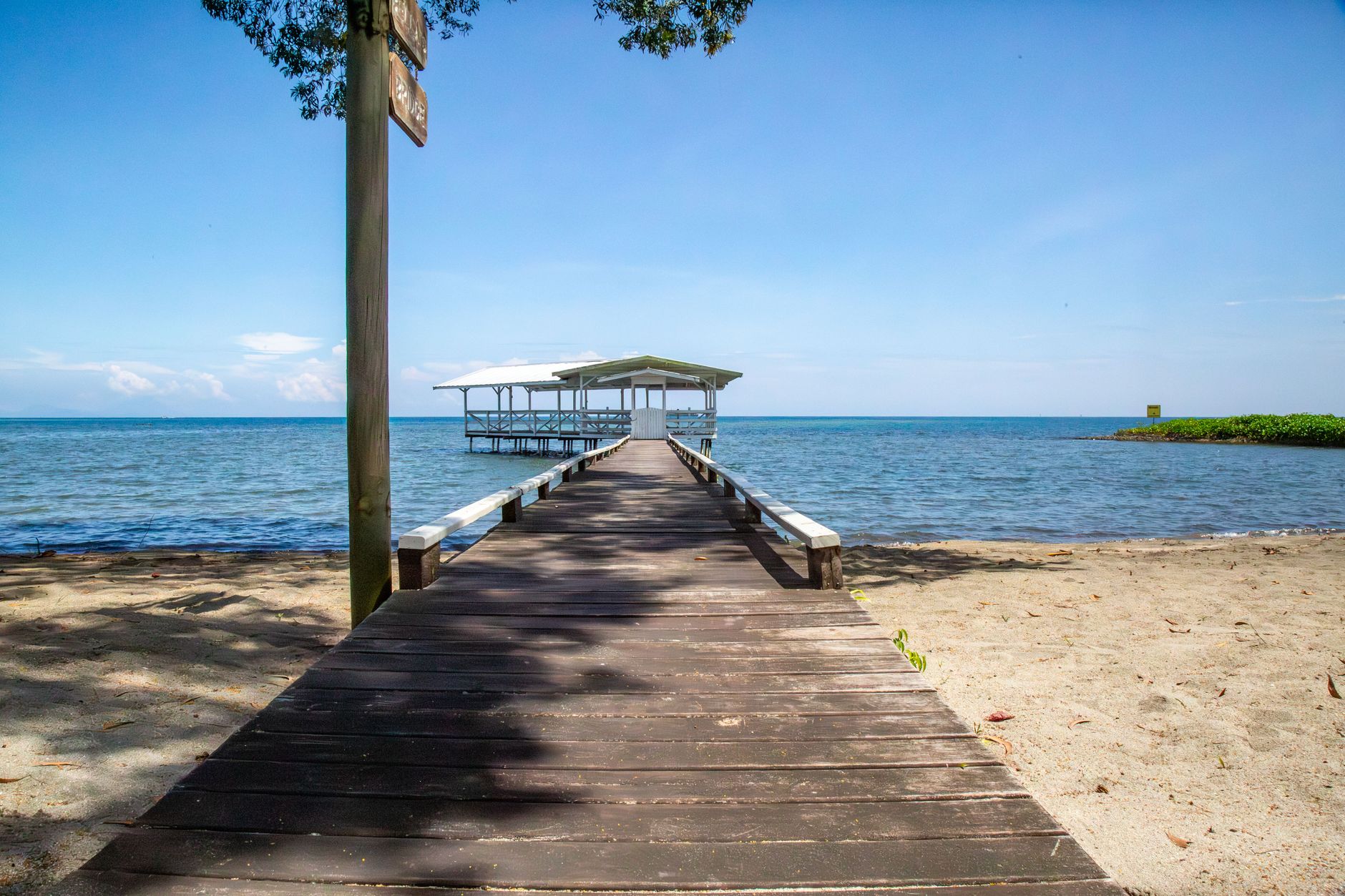
Honduras is where the Caribbean stops being expensive. The Bay Islands — Roatán, Utila and Guanaja — sit on the Mesoamerican Barrier Reef, the second-largest coral reef system on the planet after Australia's Great Barrier Reef, and here the reef starts a few metres off the beach. Utila is one of the cheapest places in the world to learn to dive: a PADI Open Water course runs US$250 to 300 and often includes accommodation (verified July 2026), a fraction of what the same certification costs in Florida, the UK or Queensland. Between February and April whale sharks move through. The rest of the country is mountains, coffee and Maya ruins, and hardly anyone goes.
The trip has two halves, and most foreign visitors only do one of them. The Caribbean side is the three islands plus the coastal towns of La Ceiba, Tela and Trujillo, where the culture is Garífuna and Afro-Caribbean rather than Latin American. The west, near the Guatemalan border, is Copán, the most artistically accomplished city of the Maya world, ringed by colonial towns, cloud forest and coffee country around Gracias and Santa Rosa de Copán. Roatán has direct flights from several US cities and is a regular cruise call, so a large share of arrivals never set foot on the mainland at all.
What people take home is living coral for very little money, a major Maya site with no queue, and the surprise of islands where the everyday language is English. What you should think about before booking is security. Honduras carries a reputation earned mainly in its two big mainland cities, San Pedro Sula and Tegucigalpa, where real care is needed; the islands and Copán Ruinas are calm and thoroughly used to visitors. Government advisories on Honduras vary by department and are revised regularly, so read your own government's current page — the US State Department, the UK FCDO, Global Affairs Canada or Smartraveller — rather than any guidebook's snapshot, this one included.
Traveler's tip: carry cash in lempiras for markets, buses and small towns, where cards aren't always accepted. In Roatán and other tourist areas the dollar circulates without any trouble, but you're better off paying in lempiras to avoid unfavorable exchange rates. Withdraw cash from ATMs in the larger cities and let your bank know before you travel.
Full converter for HNL →By plane. The main international airports are Ramón Villeda Morales (SAP) in San Pedro Sula, the country's best connected; Toncontín (TGU) in Tegucigalpa; and Juan Manuel Gálvez (RTB) in Roatán, the gateway to the Caribbean. Airlines such as Avianca, American, United, Copa and the regional CM Airlines operate international and domestic routes. Domestic flights. CM Airlines and other operators connect San Pedro Sula, Tegucigalpa, Roatán and La Ceiba. They're a good way to save hours of road travel between the coast and the interior. By bus. The bus is the backbone of transport in Honduras. Companies like Hedman Alas and Pullmantur offer comfortable, direct services between the major cities. For shorter hops there are local buses and rapiditas (minibuses), cheap but slower.
The dry season runs November to April and is the best all-round window for the mainland and the coast. It also lines up with the northern winter, which is convenient if you are travelling from the US, Canada, the UK or Ireland. Divers work off a different calendar: visibility on the Bay Islands is generally best from March to September, and the whale shark season at Utila concentrates between February and April. The rainy season, May to November, brings heavy downpours, and the Caribbean carries hurricane risk, highest from September to November — a reason to book flexibly and check what your insurance covers.
Geography matters more than the calendar here. The Caribbean coast and the islands are hot and humid all year; the mountainous interior around Gracias, Santa Rosa de Copán and Tegucigalpa is cooler, with genuinely cold nights at altitude, so pack a layer if you head inland. Copán sits in a pleasant temperate pocket almost year-round. Domestic high season is Semana Santa, the week before Easter, and the December to January holidays, when Hondurans fill the islands and prices rise. Book ferries and internal flights ahead for those dates.
The national staple is the baleada: a thick flour tortilla folded over refried beans, crumbly white cheese and cream, with egg, avocado or meat added if you want it. It costs almost nothing and Hondurans eat it at any hour. Beyond that, the plato típico is grilled beef with rice, beans, chismol (a fresh tomato and onion relish) and tajadas, fried plantain slices. The coast does excellent soups, including one made with conch and coconut, and Garífuna kitchens make tapado, a seafood stew with coconut milk and plantain. Honduran coffee is among the most awarded in Central America.
Reference prices (verified July 2026): a street baleada is US$1 to 2, lunch at a local comedor US$3 to 5, and dinner at a tourist restaurant in Roatán or Copán US$8 to 14, with set menus in West End from US$5. Do not drink the tap water anywhere in the country; buy bottled or use a filter bottle. On tipping, this is not the United States: around 10% is normal and it is often already added to the bill as a service charge, so check before adding a US-style 18 to 20% on top.
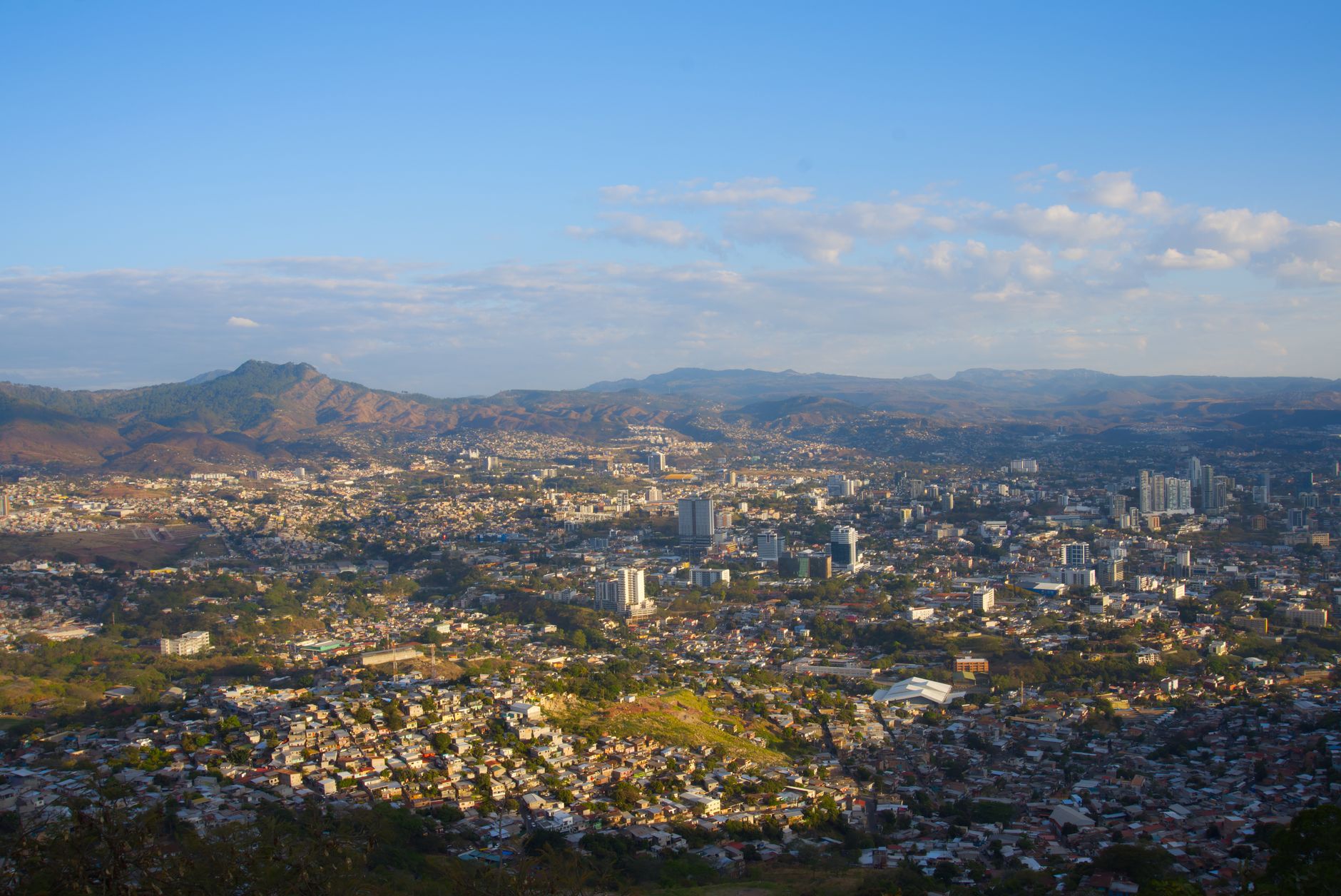
Be clear about the geography, because it does most of the work. The reputation Honduras carries comes from San Pedro Sula and Tegucigalpa, where you should take real care: do not walk at night, move by registered taxi or rideshare, keep valuables out of sight. The islands and Copán Ruinas are a different proposition: small, dependent on tourism and calm. Elsewhere: use ATMs in daylight in secure locations, avoid overnight long-distance buses, and take the comfortable coach lines such as Hedman Alas or an internal flight between coast and interior. Advisory levels for Honduras are set department by department and revised regularly, so check the current guidance from your own government — the State Department, the FCDO, Global Affairs Canada or Smartraveller — close to your departure date.
For health: no vaccinations are compulsory, but hepatitis A and typhoid are commonly recommended, so see a travel clinic several weeks before you fly. Dengue is present in the lowlands and there is some malaria risk in La Mosquitia, so bring repellent. Take travel insurance that genuinely covers treatment abroad — domestic cover from the US, Canada, the UK or Australia does not follow you here, and neither Medicare nor the NHS applies. If you are diving, confirm the policy covers recreational diving and consider DAN membership; there are hyperbaric chambers on both Roatán and Utila, a real advantage over cheaper dive destinations elsewhere. Emergency number: 911 (verified July 2026).
Honduras is cheap, in line with the rest of Central America and well below Costa Rica, Belize or anywhere in the English-speaking Caribbean. Budget roughly US$30 to 40 a day as a backpacker, US$50 to 70 mid-range, and from US$90 for real comfort. Concrete figures (verified July 2026): a hostel dorm bed US$8 to 15, a simple private room US$20 to 35, a plate of local food US$3 to 5, a street baleada under US$2. Roatán is the priciest corner of the country, and even there the numbers stay modest by Caribbean standards.
The headline value is the diving: a PADI Open Water certification on Utila is US$250 to 300, often with accommodation included, one of the lowest prices anywhere in the world. On transport, local buses cost very little, comfortable intercity coaches such as Hedman Alas run US$15 to 25, and an internal flight to Roatán is US$70 to 100 and saves a long road journey plus a ferry. Entry to the Copán ruins is around US$15. These are reference values, not fixed prices, and cruise-port day tours on Roatán are priced on a different scale from everything else in the country.
Spanish is the official language and on the mainland you should expect it to be the only one, so a translation app and a few phrases go a long way in Copán, Gracias or a bus terminal. The Bay Islands are the exception, and it genuinely surprises people: Britain held them as a colony until the Wyke-Cruz Treaty of 1859 handed them to Honduras, and island English, a Caribbean Creole variety, is still a first language there, with a largely Protestant culture closer to Belize or the Cayman Islands than to the mainland. On Roatán and Utila you can dive, eat and organise a whole week without a word of Spanish. Hondurans, catrachos as they call themselves, are friendly and unhurried; ask before photographing people.
Practical details: sockets are type A and B at 110 to 120 V, 60 Hz, identical to the United States and Canada, so North American chargers work with no adapter at all, while British, Irish, Australian and European travellers need both an adapter and a dual-voltage device. Driving is on the right. Buy a local Tigo or Claro SIM with your passport at the airport or any phone shop — it costs little and beats roaming — with decent coverage in the cities and on the islands, patchy in the rural interior and La Mosquitia. And one thing worth planning for: on the islands almost everything works in US dollars and dive prices are quoted in dollars, but on the mainland you need lempiras in cash, in small denominations, because buses, markets and small-town restaurants take nothing else.
The history of Honduras is that of a mountainous isthmus between two seas, where the Maya flourished, where Christopher Columbus came ashore on his final voyage, and where the indigenous resistance of the chieftain Lempira was waged. The geographic heart of Central America, with coasts on the Caribbean Sea and on the Gulf of Fonseca in the Pacific, this land of cloud forests, fertile valleys and coral reefs was home to the Maya-Chortí, Lenca, Tolupán, Pech, Tawahka, Miskito and Garífuna peoples before the Spanish conquest turned it into the peripheral mining province of Comayagua within the Captaincy General of Guatemala. From its independence in 1821 and the short-lived Central American Federation presided over by the Honduran Francisco Morazán emerged a republic that endured nearly a century of civil wars before reinventing itself, in the 20th century, as the quintessential 'banana republic'.
Coups d'état and caudillos, the long dictatorship of the 'Cariato' (1933-1949), the historic banana strike of 1954, the Football War with El Salvador in 1969, the military governments and the bloody Battalion 3-16 of the 1980s, the devastation of Hurricane Mitch in 1998, the 2009 coup against Manuel Zelaya, and the 'narco-dictatorship' that led former president Juan Orlando Hernández to a 45-year sentence in New York all left their mark on a poor and unequal country, battered by gang violence and mass emigration, yet possessed of extraordinary cultural and natural riches.
Read the full history of Honduras →Pick a region and open each destination to see what to do, prices and how to get there.
These are the sources we cite most across this country's guides, with how many times each appears. Hard data —tickets, opening hours, requirements, transport— comes from the official source and carries the date we checked it. Restaurant and hotel picks come from guides and reviews, and we say so on each page.
I have never been left without internet on a trip. I land and my phone connects to the strongest network in the country I am visiting: I can let people know I arrived, sort out transport, book tours and keep posting content at a super affordable price (really cheap!). I always use the Maya Mobile eSIM, check out its plans by clicking the banner. See Maya Mobile plans →
Affiliate link: we earn a commission.