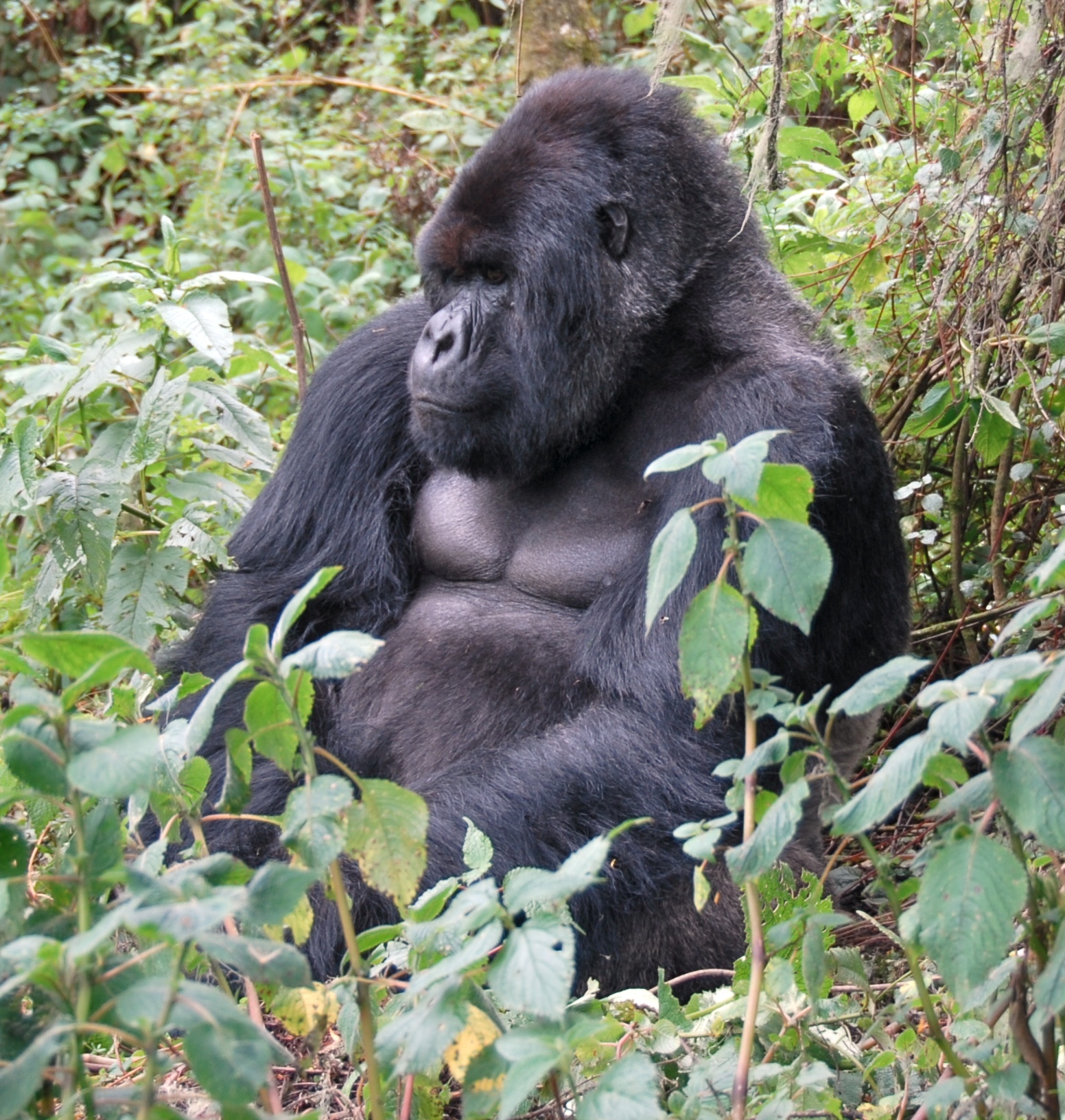
Mountain gorillas in the Bwindi forest, the source of the Nile at Jinja and safaris with fewer crowds than anywhere else in East Africa: Uganda is the continent's green jewel, the one Churchill called "the pearl of Africa".
Uganda is a landlocked country in the heart of East Africa, wedged between Kenya, Tanzania, Rwanda, the DR Congo and South Sudan, and bordering a large part of Lake Victoria. Despite its modest size it packs in an overwhelming natural diversity: montane forests with gorillas and chimpanzees, savannahs with elephants and lions, the great River Nile, crater lakes, wetlands full of birds and the snow-capped peaks of the Rwenzori. For many, it's the most complete and least crowded safari destination on the continent.
The headline act is mountain gorilla trekking in Bwindi Impenetrable National Park: walking through the misty forest until you come face to face with a gorilla family is one of the most intense wildlife experiences there is. Add to that the chimpanzees of Kibale, the classic safaris of Queen Elizabeth and Murchison Falls, and the adrenaline of rafting in Jinja, where the Nile begins.
For Latin American travellers, Uganda combines world-class nature with warm people, English as an official language (which makes everything easier) and friendlier prices than its neighbours on several fronts (the gorilla permit costs half what it does in Rwanda). It takes planning (permits booked in advance, vaccinations, long distances on dirt roads) and it isn't a destination for improvised backpacking, but it more than rewards those who take the plunge.
The currency is the Ugandan shilling (UGX). In July 2026, 1 USD is worth about 3.700 UGX (verified July 2026); it's worth checking the day's rate because the shilling moves around. The US dollar is king for anything big (gorilla permits, lodges, vehicle hire, park entry) and many tourist prices are quoted directly in USD, so bring notes in good condition, untorn and from series issued after 2013 (older ones aren't accepted). For day-to-day spending (street food, boda-bodas, markets, local transport) you'll need shillings in cash. There are ATMs in Kampala, Entebbe and mid-sized towns, but they're scarce near the parks, so withdraw money before you hit the road. Change money at forex bureaus (better rates than banks or the airport) and let your bank know before you travel. Visa/Mastercard cards work in upmarket hotels and restaurants, but assume much of the trip will be paid in cash. Tipping isn't mandatory but is appreciated: around 10.000–20.000 UGX per day for your safari guide/tracker, and rounding up in restaurants.
Full converter for UGX →There are no direct flights from Latin America: you fly into Entebbe International Airport (EBB), about 40 km from Kampala, with one or two stopovers. The most common routes connect via Europe (Amsterdam, Istanbul with Turkish, or Doha/Dubai with Qatar/Emirates) or via Addis Ababa with Ethiopian Airlines, which tends to be one of the smoothest connections from the region. Allow 20 to 30 hours of total travel time. Uganda no longer issues visas on arrival: you must apply for the e-visa online before you travel (about 50 USD for a single-entry tourist visa, plus a 3% electronic payment surcharge). A very handy alternative if you're combining countries: the East Africa Tourist Visa (100 USD) covers Uganda, Kenya and Rwanda with multiple entries for 90 days. A yellow fever certificate is required to enter. Within the country, the classic way to get around is by 4x4 with a driver-guide (the parks are far apart and the dirt roads get tough in the rainy season); Aerolink runs domestic flights to Bwindi and other parks to save hours on the road, and there are buses and matatus (minibuses) for travellers with more time and less of a rush.
Uganda sits on the Equator, so the climate is tropical and warm all year round, with no distinct summer or winter: what changes is the rain. There are two dry seasons (June to September and December to February) and two rainy ones (March to May and October to November). The dry seasons are the best overall time to travel: the dirt roads are passable, animals gather at waterholes and, above all, gorilla and chimpanzee trekking is much more comfortable with a less muddy forest.
That said, Uganda is a year-round destination. In the rainy seasons, rain usually comes in short, heavy downpours rather than whole days of rain, and the landscape turns a spectacular green. April, May and November are also the low season, with cheaper gorilla permits (600 USD instead of 800) and fewer people in the parks. Daytime temperatures sit comfortably around 24–28 °C in most of the country, but watch out for altitude: in Bwindi, at Lake Bunyonyi and especially in the Rwenzori it gets cool at night, so always bring a light warm layer and a rain jacket, whatever the month.
Ugandan food is simple, hearty and largely based on tubers and cooking bananas. The national dish is matoke: green bananas peeled, boiled and mashed, served alongside meat stews or the ever-present peanut sauce (groundnut sauce), creamy and delicious. Other staples are posho (a thick maize-flour porridge similar to polenta), beans, rice, cassava and luwombo, a royal stew from the Buganda kingdom slow-cooked wrapped in banana leaves, served at celebrations and special occasions.
The street-food star is the rolex: a chapati (a roti-style flatbread) rolled up with an omelette, tomato and onion. It's cheap (usually 3.000–5.000 UGX, about 1 USD), made to order on any street corner and the traveller's best friend. For snacks there are meat skewers (muchuomo), chicken and fresh tilapia from Lake Victoria. Eating at a simple local spot costs about 3–6 USD; at a tourist restaurant in Kampala or Entebbe, 10–20 USD. To drink, try chai (spiced milky tea), Ugandan coffee (excellent quality and exported worldwide), the local beers Nile Special or Bell, and the potent waragi (local gin). Water: always bottled.
Uganda is generally a safe and very welcoming country for tourists, and the safari circuits are calm. The most common risks are opportunistic crimes in Kampala (pickpockets, theft in crowded areas and at night): use big-city common sense, don't flash valuables and get around by taxi or trusted ride-hailing apps after dark. It's best to avoid the northern border areas with the DR Congo and South Sudan, and always check up-to-date official travel advisories before leaving, as occasional alerts can come up (disease outbreaks, political tension). The emergency number is 999 (112 also works), although medical response outside Kampala is limited.
When it comes to health, take prevention seriously. A yellow fever vaccination certificate is required to enter (get the jab at least 10 days beforehand) and without it you can be refused entry. Malaria is present all year round and throughout the country, including Kampala: antimalarial prophylaxis is essential (atovaquone/proguanil, doxycycline or mefloquine, as your doctor advises), as are DEET repellent and sleeping under a mosquito net. Vaccinations for hepatitis A and B, typhoid, tetanus and, depending on your case, rabies are also recommended. Don't drink tap water (only bottled or boiled) and make sure you get good travel insurance with medical and evacuation cover, because specialist care outside the capital is scarce.
Uganda can be surprisingly cheap day to day and very expensive for the star experiences, so your budget depends on how many permits you buy. Backpacking, staying in hostels and guesthouses, eating local and using public transport, you can get by on 30–50 USD a day. A mid-range traveller (comfortable lodges, private driver-guide, restaurant meals) spends more like 150–250 USD a day, and all-inclusive organised safaris start at around 200–300 USD a day on a budget and 400–600 USD mid-range (verified July 2026).
What blows any budget is the permits, which are paid separately: gorilla trekking costs 800 USD per person (600 in the low season of April, May and November), and chimpanzee trekking in Kibale 250 USD (200 in the low season; 300 from 01/01/2027). These amounts are set by the Uganda Wildlife Authority and directly fund conservation. Even so, it's much cheaper than Rwanda, where the gorilla permit costs 1.500 USD. Add park entry fees (about 40 USD per day per park for foreigners) and 4x4 hire with a driver (150–250 USD per day). A realistic example: an 8–10 day trip combining gorillas, chimpanzees and a couple of safaris comes to around 2.500–4.000 USD per person, not counting international flights.
Uganda is a mosaic of more than 50 peoples and languages, with the Buganda kingdom (which gives the country its name) the largest and most influential. English is an official language and is spoken everywhere tourism is involved, which makes things much easier for Latin American travellers; Swahili is co-official and Luganda is the most widely spoken language in the centre and the capital. You'll get by fine in English; learning a couple of words of Luganda ("webale" means thank you) always goes down well. People are warm, chatty and very respectful, and religion (mostly Christian, with a Muslim minority) plays an important role in daily life.
It's best to dress modestly outside lodges and lake beaches, especially in villages and at religious sites. Uganda has very harsh laws against homosexuality, so LGBTQ+ couples should be extremely discreet. Ask permission before photographing people and avoid photographing military or police installations. On the practical side: plugs are type G (the British three flat-pin kind), at 240 V, so bring an adapter; cheap local SIMs from MTN or Airtel can be bought with your passport and give good data coverage in towns and many parks; and wifi is decent in hotels but patchy in remote areas. Traffic drives on the left. And a golden rule of safari: be patient and get up early, as the best light and the best sightings come at dawn.
Winston Churchill called it "the Pearl of Africa" in 1908, and the nickname has stuck ever since. It's easy to see why: a medium-sized country holds the source of the Nile, half a dozen centuries-old kingdoms, glaciers on the equator in the Mountains of the Moon, almost half of the mountain gorillas left on the planet and the shores of Lake Victoria, the largest lake in Africa. But behind all that abundance lies a dense and often painful history: that of the interlacustrine kingdoms of Buganda, Bunyoro, Toro and Ankole, which already had royal courts, armies and bureaucracies when the first European explorers arrived in search of the longest river in the world.
This is the full history of Uganda: from the herders and farmers who built the kingdoms of the Great Lakes, through John Hanning Speke's arrival at the court of kabaka Mutesa I, the British protectorate, independence in 1962 and the terrible years of Idi Amin's dictatorship, to the long recovery under Yoweri Museveni and the Uganda of today. A country that bore colonialism, civil wars and state terror, yet managed to rebuild itself and remains one of the great natural and cultural hearts of East Africa.
Read the full history of Uganda →Pick a region and open each destination to see what to do, prices and how to get there.
These are the sources we cite most across this country's guides, with how many times each appears. Hard data —tickets, opening hours, requirements, transport— comes from the official source and carries the date we checked it. Restaurant and hotel picks come from guides and reviews, and we say so on each page.