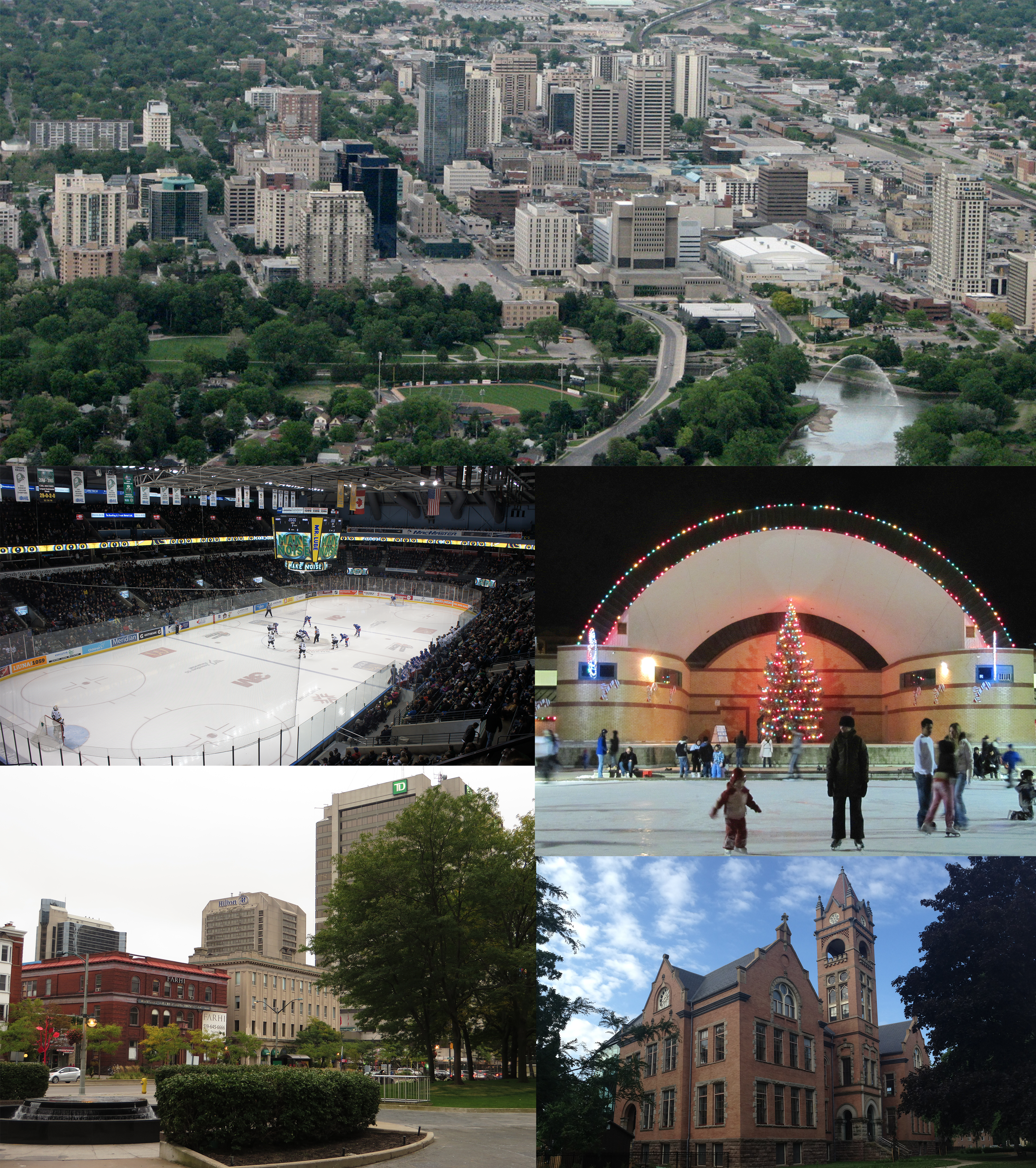
London is one of those mid-sized Canadian cities that surprise you with their quiet quality of life, abundant green and university atmosphere. Set in the heart of southwestern Ontario, halfway between Toronto and the United States border, it owes its name —like its river, the Thames— to a deliberate homage to London, England, decided by the British settlers who dreamed of making it a regional center. They fondly call it 'The Forest City' for the enormous number of trees, parks and trails that run through it.
It's not a city of great tourist landmarks but of quieter pleasures: walking by the river, browsing the Covent Garden Market, strolling its tree-lined neighborhoods, enjoying its rising food and beer scene, and breathing the young air that Western University, one of Canada's most prestigious, gives it. London also holds an important chapter in the history of world medicine: here, at Banting House, the physician Frederick Banting had the idea that would lead to the discovery of insulin, one of the great advances of the 20th century.
This guide covers London from a practical angle: what to see downtown and in its parks, how to get around, where to eat and sleep, and how to use it as a base or a stop on a route through southwestern Ontario, between Toronto, Niagara Falls and the US border. It's an ideal city for anyone who wants to see the more everyday, green and easygoing face of Ontario Canada, far from the bustle of the big metropolises.
London was conceived almost as a desk project. In 1793, John Graves Simcoe, first lieutenant governor of Upper Canada (today Ontario), toured the area and proposed founding the new province's capital there, drawn by its central location and by the river he named the Thames, in homage to London, England. The idea of making it the capital didn't prosper —that honor went first to Newark and then to York (the future Toronto)— but the name and the plan stuck. The actual settlement was only established in 1826, and London grew fast as the administrative and commercial center of southwestern Ontario. In 1845 a great fire destroyed much of the town, which was rebuilt. Through the 19th century it consolidated as the district's judicial seat, a railway hub and the center of a prosperous farming region. Its British character was reflected in the names of its streets and neighborhoods, many copied from London (Oxford Street, Piccadilly, Covent Garden Market). In the small hours of October 31, 1920, in a house in the city —today the Banting House National Historic Site— the physician Frederick Banting hurriedly jotted down the idea that would lead to the discovery of insulin in Toronto in 1921-1922, which won him the Nobel Prize and made London a key place in the history of medicine. In the 20th century, the founding and growth of Western University (1878) and of a large hospital hub gave it its current profile as a university, health and services city, while it kept its fame as the 'Forest City' for its parks and groves. The full story is on our history page.
Read the full history ↓Canada's economic and demographic heart: land of the Iroquoian and Algonquian nations, refuge of the Loyalists, cradle of Upper Canada and the country's industrial engine, home to Toronto, to the national capital Ottawa and to Niagara Falls.
Read the history of Ontario →No exact prices: a scale from $ (budget) to $$$$$ (luxury), with 2-3 options per category.
Origins, formation and what the sources say.
London's history begins, curiously, as a project on paper rather than as a real town. In 1793, John Graves Simcoe, first lieutenant governor of the newly created Upper Canada (the province that would in time become Ontario), toured the southwest of the colony looking for a central, defensible spot far from the United States border on which to establish the province's capital. The region of today's London, at the confluence of two branches of a river, struck him as ideal.
Simcoe, steeped in strong British feeling, named the site 'London' in homage to the capital of England, and called the river running through it the 'Thames', after London's Thames. His idea was to reproduce, in the heart of Upper Canada, a new London beside a new Thames. He even went as far as imagining the layout of the future capital.
The plan to make London the capital, however, didn't prosper. The higher authorities preferred first Newark (Niagara-on-the-Lake) and then, for strategic reasons, today's Toronto (then York). London was left, for decades, as a name and a project with no settlement. But the British place name —and that of the river— took root and would mark the identity of the future city forever.
London's permanent settlement was only established in 1826, more than three decades after Simcoe imagined the city. That year the town was founded as the administrative seat of the London District, a vast region of southwestern Upper Canada. Being chosen as the district's judicial and government center gave it a decisive push: courts, a jail and the administration buildings soon went up, and the settlement grew around them.
London prospered as a service center for an expanding farming region, settled by British and other colonists who cleared the forests and opened up farmland. The town grew fast through the 19th century, laying out streets that, true to the founding spirit, took their names from London, England: Oxford Street, Piccadilly, Pall Mall, and the Covent Garden market, among others.
In 1845, a great fire devastated much of the wooden town, a frequent catastrophe in the cities of the era. London was rebuilt, this time with more brick and stone buildings, and kept growing. The arrival of the railway in the mid-19th century consolidated its role as a communications hub and commercial center of southwestern Ontario, and in 1855 it officially gained city status.
One of London's most singular features is the way it reproduced, almost as an echo, the geography and naming of the British capital. Beyond the name of the city and the Thames River, the settlers and planners sowed references to London, England, all over the urban map. Downtown has its Covent Garden Market, streets like Oxford Street, Pall Mall, Piccadilly and Cheapside, and neighborhoods and bridges that evoke those of the original London.
This deliberately British character reflected the identity of the settlers of Upper Canada, mostly loyal to the Crown, many of them descendants of the United Empire Loyalists who had emigrated after the independence of the United States, and of immigrants who arrived from the British Isles through the 19th century. London thus became one of the most 'English' cities in Canada in its naming and its spirit.
Through the 19th and early 20th centuries, the city built the institutions of a regional center: courts, schools, churches of various denominations, newspapers, banks, a prosperous commercial trade tied to the countryside and the first industries. Its profile as an orderly, tree-filled city with a strong British stamp took hold, and with it the fame of 'Forest City' for the abundance of trees that characterized it.
The most far-reaching chapter in London's history is neither political nor military but scientific, and it played out in a modest brick house. In the early twenties, the young physician and surgeon Frederick Banting, a First World War veteran, settled in London to practice medicine and, at the same time, teach at Western University. His private practice wasn't going well, which left him time to think about medical problems.
In the small hours of October 31, 1920, while preparing a class on the pancreas, Banting woke with an idea he hurriedly wrote down: a hypothesis about how to isolate the internal secretion of the pancreas, linked to diabetes. That idea, conceived in his London bedroom, was the spark that took him the following year to the University of Toronto, where, together with the student Charles Best and under the direction of John Macleod —and with the collaboration of the biochemist James Collip— he managed to isolate insulin in 1921 and apply it successfully in patients in 1922.
The discovery of insulin was one of the great milestones of 20th-century medicine: it turned diabetes, until then a death sentence, into a treatable disease, saving millions of lives worldwide. Banting and Macleod received the Nobel Prize in Medicine in 1923. The London house where Banting had the idea is today the Banting House National Historic Site, a museum devoted to his figure and to the history of insulin, in whose garden burns the 'Flame of Hope', lit by Queen Elizabeth II in 1989, which will only be put out when a cure for diabetes is found.
Through the 20th century, London consolidated the profile that defines it today: a mid-sized city centered on education, health, services and administration rather than on heavy industry. The founding of Western University (officially the University of Western Ontario) in 1878 was key: over time it became one of Canada's most prestigious universities, drawing thousands of students and giving the city its characteristic youthful atmosphere and cultural life.
Alongside the university came the growth of a major health hub, with top-tier hospitals and medical research centers (today grouped in the London Health Sciences Centre and other institutions), which made the city an important healthcare center for all of southwestern Ontario. London also hosted industry and insurance, food and technology companies, diversifying its economy.
The city grew by absorbing neighboring communities and spreading through the Thames valley, always true to its 'Forest City' fame, with big parks like Springbank and an extensive network of riverside trails. Without great tourist landmarks but with a solid quality of life, London established itself as a quiet, green and cultured city, representative of everyday Ontario Canada, and as a logical stop on the routes crossing the southwest of the province between Toronto and the United States border.