Last updated: October 2026
My name is Gustavo Nicolás Ledesma, though everyone calls me Gus. I was born in Posadas, Misiones, on the Paraná River. I'm twenty-nine and a Pisces.
I write this site myself. It isn't a newsroom or an agency: it's one person who has been obsessed with airplanes and travel since he was a kid, and who ended up building the guide he wishes he'd had.
I was in fourth grade when my school took us to the Jesuit missions of San Ignacio. For a kid from Posadas that's close by, an hour down the road, but it was the first time I had ever seen anything like it: enormous ruins of red stone in the middle of the Misiones forest.
On the way back from that trip I got talking with my fourth-grade teacher, Gladis. I told her two things: that I loved traveling and that I loved languages. The second one wasn't a pose — I had started English at eight, in third grade, so by fourth grade I was already in my second year at the language institute.
She told me she had a nephew who worked as a tour guide at Iguazú Falls. That he spoke English, that he earned good tips, and that the tips came in dollars and euros. And then she said the sentence that set the course of my whole life:
You should study tourism.
I was eight years old. I had no idea what studying tourism even meant: I didn't know there were different degrees, different diplomas, universities that taught it. But it stuck with me and never left. By seventh grade I had made up my mind.
Around that time I learned that a private school in Posadas had a tourism track. And I did nothing with that information, because it never even crossed my mind that it could be an option.
It wasn't just about money. It was simply outside my way of thinking. I come from a humble neighborhood and a humble family: my whole family went to public school, my cousins went to public school, I was at my neighborhood's public school. A private school wasn't on the map of things that could happen to me. I didn't even rule it out: I never got as far as considering it.
When seventh grade came it was time to pick a high school for real, and I had exactly one condition: not in my neighborhood.
The reason was very concrete. Three times a week, on English days, I took the bus from my neighborhood to downtown Posadas to get to the institute. An hour each way, as a little kid. I wanted to walk out of school and get there on foot, a few blocks and done. The problem was that downtown had very few public high schools.
My aunt took charge of the search. She asked around, compared, and took me to enroll at C.E.P. No. 4, right downtown. I didn't even question it: it was the option there was.
There was no room.
So she walked two more blocks — it was right there, on the other side of the block — and enrolled me at Colegio Provincial Superior No. 1 Martín de Moussy, which everyone in Posadas simply calls el Nacional. She came home and told us: there were no places at the first one, so I signed you up at this other one.
El Nacional didn't have the best reputation in town. But some time later I found out something that still strikes me as too much of a coincidence: it was the only public school in Posadas with a tourism track.
Think it through with me. All of primary school talking about tourism. A teacher who plants the idea in my head at age eight. A private school with a tourism track I knew I couldn't attend. A downtown public school with no places left. And ending up, by elimination and by two blocks, at exactly the one public school that had the track I wanted.
If there had been one free seat at C.E.P. No. 4, my life would be a different one.
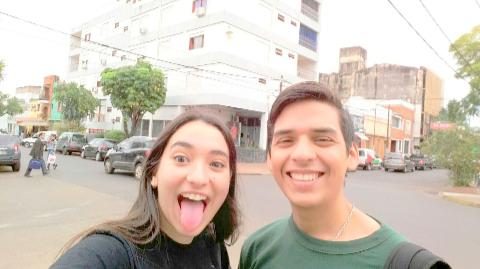
I kept up English until the institute's sixth year, which I finished while in my fourth year of high school. I could have gone on, but I decided to stop: in my fifth year of high school I signed up for Italian. It sounds like a minor detail and it isn't, because that habit is what later saved me in Brazil.
When I started university I didn't enroll in one degree: I enrolled in two, and kept the Italian going. I had the Bachelor's in Tourism Monday through Friday, Italian twice a week, and the Technical Degree in Political Science and Government Administration on Saturdays from eight in the morning to five in the afternoon, straight through.
That left Sunday for the technical degree's coursework, and during the week I couldn't fall a single day behind in tourism. Which is exactly what happened: I fell behind and lost my social life. I lasted one semester. In the second half of the year I dropped the technical degree, stretched Italian to November and dropped that too.
In third year I learned that the Tour Guide program, though a different thing, shared a pile of subjects and credited you several. I signed up and took both in parallel. This time it worked, and for a reason that has nothing to do with schedules: I had two friends taking it with me. We finished the entire first year of the guide program.
Of the bachelor's I completed the coursework of all four years, in full. What I didn't do was the thesis workshop, which is in the fifth.
In first year I also started working, and it was in tourism from day one. A friend, Facundo, had a hostel in Posadas and offered my friend Marcela and me jobs as receptionists. It was half volunteering — it paid something, not much — but it was our first work experience in our own field.
That hostel explains everything that came after. When a few months later I went to Brazil alone to knock on hostel doors, I wasn't making anything up: I was offering the only thing I knew how to do.
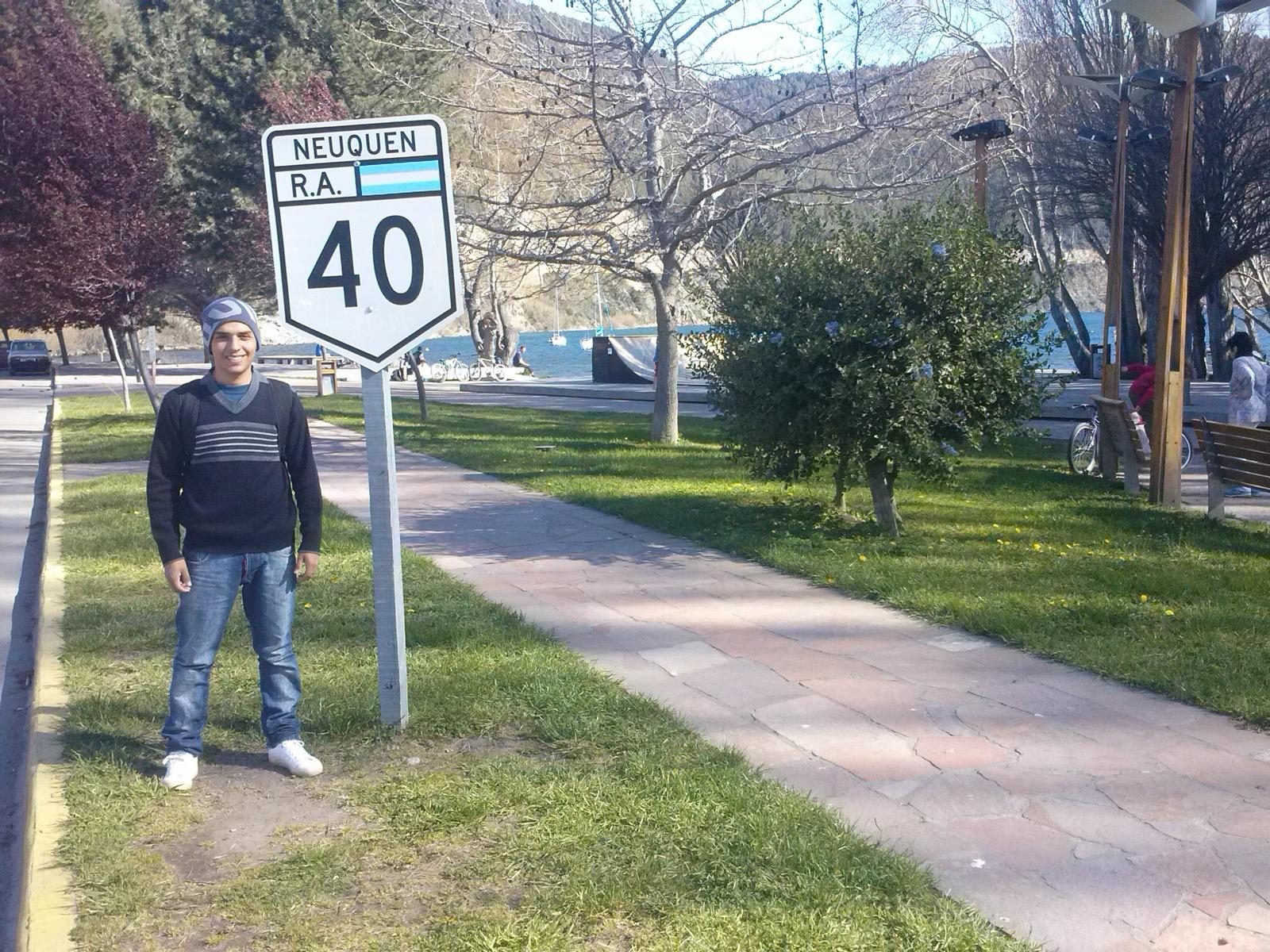
Before I went anywhere far, the degree made me travel Argentina. In 2015 I went with my classmates to the Feria Internacional de Turismo de América Latina, the FIT, Latin America's big annual travel trade fair, held at La Rural in Buenos Aires. I already knew Buenos Aires — I have aunts and uncles there and first went at eight years old — but visiting family as a kid is one thing and walking the city with a guide and a degree in your head is another: the Recoleta Cemetery, downtown, the Casa Rosada, the Bicentennial Museum right behind it.
From there we went to the hot springs of Federación, in Entre Ríos, and I drank the best orange juice of my life. I mean that literally: Entre Ríos is citrus country, and the vendors squeeze the oranges in front of you and sell it by the litre, in a bottle. I don't know if it's the best in Argentina, as everyone there says, but I never had another like it.
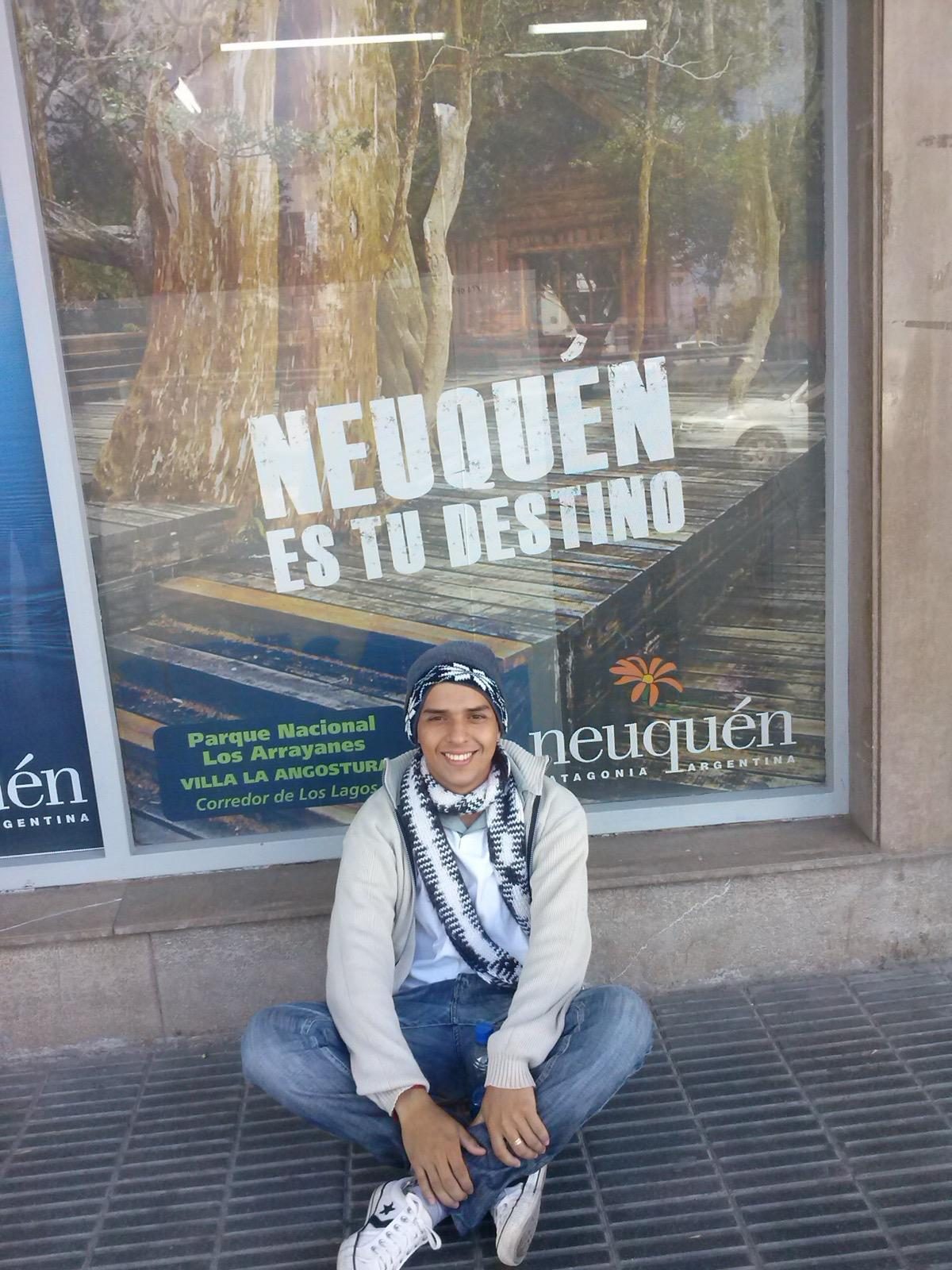
Then came the international tourism congress, and that was my first time in Patagonia. We left Posadas by bus and travelled something like forty hours. In Argentina that is not unusual: the country is enormous and long-distance buses are how most people cross it.
The first part was in Neuquén, two or three days. I'll be honest: it didn't dazzle me. It's a small city and I remember a market and the town centre and not much else. What I do remember is taking the train to Cipolletti, across the provincial line into Río Negro, purely to cross over and see another province.
The second part was in San Martín de los Andes, and that one is beautiful. We walked inside Lanín National Park, which reaches the town itself, and the lakeshore has a lovely little beach. It was September — spring in the southern hemisphere — and it hadn't snowed yet but it was already cold. Years later I got to know South Lake Tahoe, in California, and I still think about it: the two are remarkably alike. A small town against a mountain, with a big lake in front.
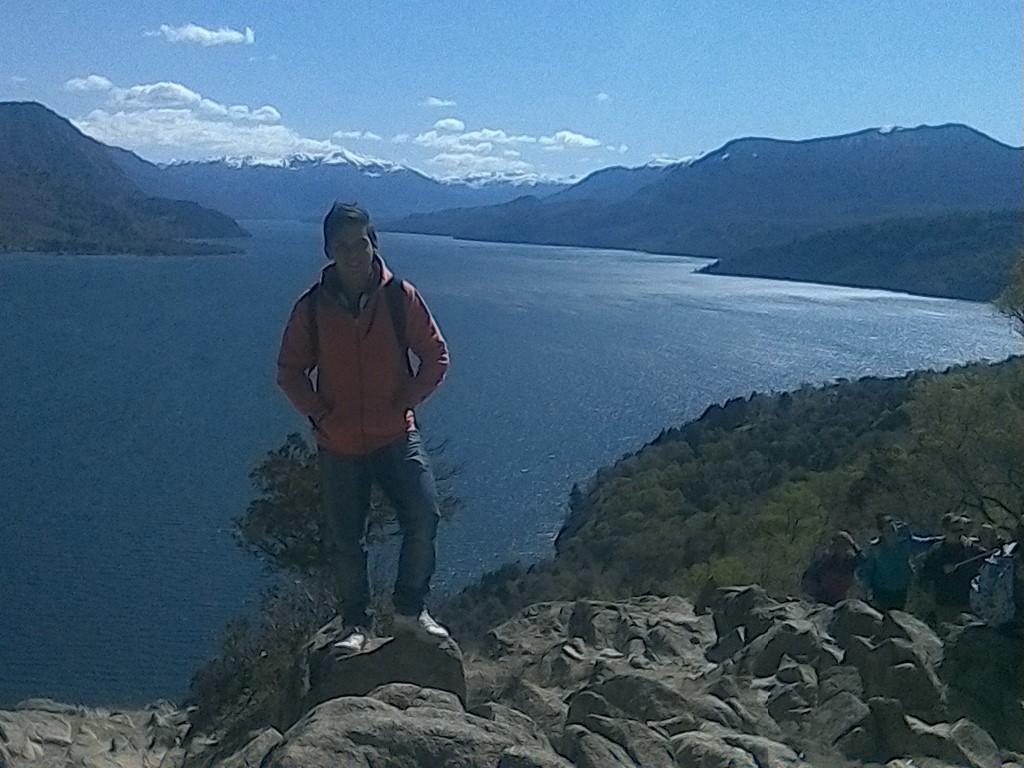
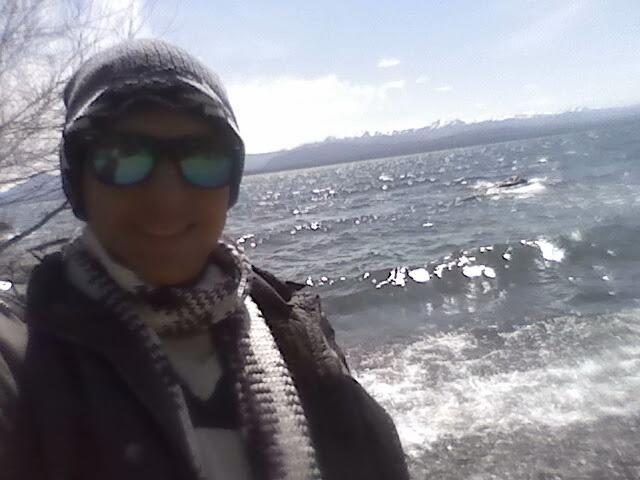
From the San Martín bus terminal I took a bus to Bariloche for the day. I left around ten in the morning and by four in the afternoon I was heading back: the old town, Lake Nahuel Huapi, a couple of sandwiches and away. On the way back the bus stopped at Villa La Angostura and I got off just to photograph the sign.
What I missed was the Seven Lakes Road, which is exactly that stretch. I want to drive it so I can stop at every lake, which you can't do on a bus.
And there is something about that day I would rather tell than hide. In the centre of Bariloche I had my photo taken with one of the Saint Bernard dogs that are kept there for that purpose. At the time I didn't think about it. Today I know those dogs spend the whole day in the sun posing for photographs and are not enjoying it, and that photo is not going on this site. I'd rather say it plainly: if you go to Bariloche, that photo isn't worth what it costs the dog.
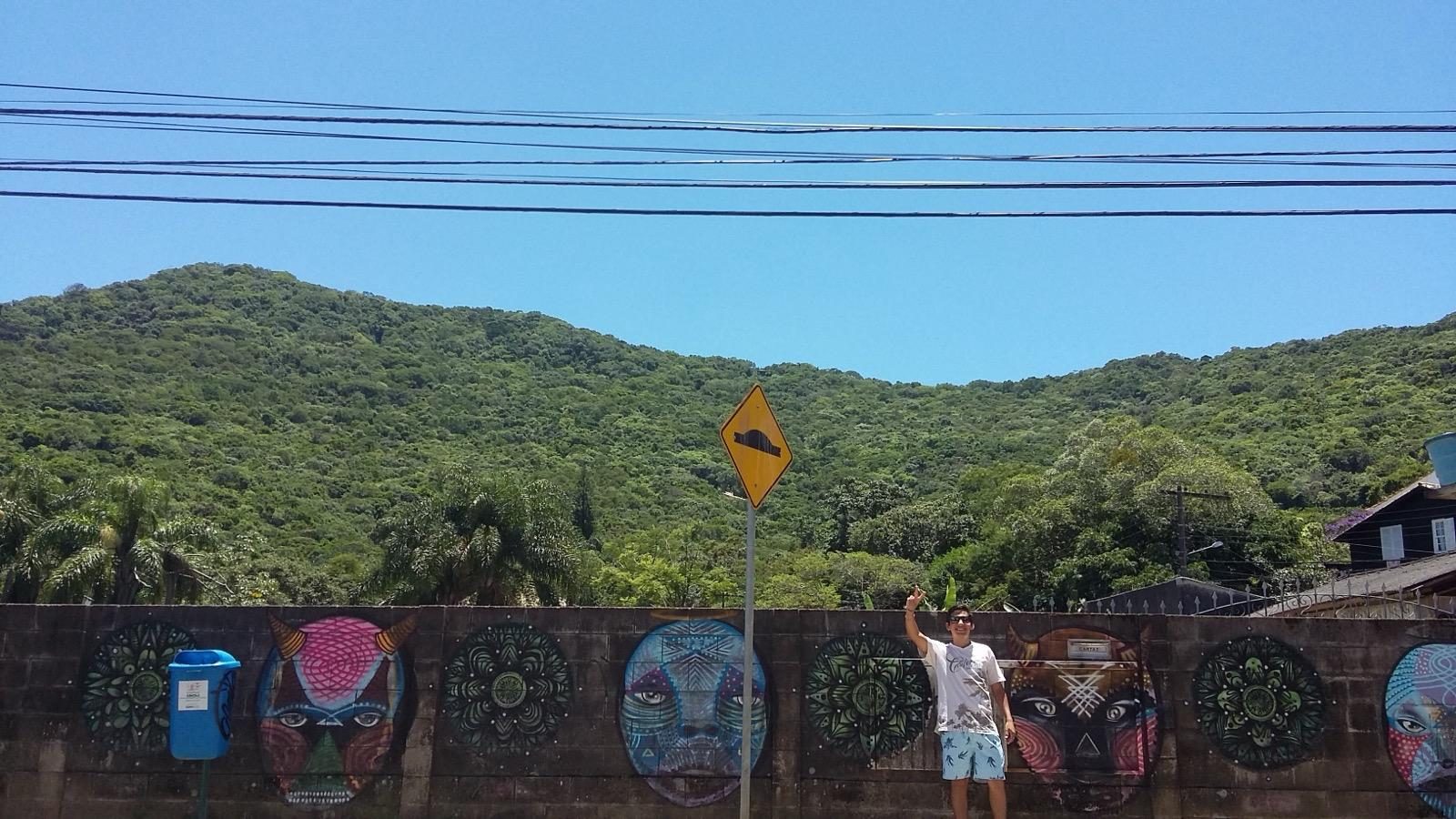
At the end of first year I went to Brazil alone with a one-way ticket and a thousand pesos. I got fired from a hostel for looking at the sun, a stranger gave me fifty reais when I had no money for food, I crashed a motorbike into a pickup truck three days after arriving, and I came home speaking Portuguese.
In 2016 I got a call from the only resort in Posadas to work Easter week as a temp. I got in on the strength of my Brazil experience. The following summer they called me back, this time for the whole season, on rotating shifts: mornings, afternoons and nights.
In my degree, an internship at a hotel is compulsory in third year. There is no travel agency internship at all. So in second year, when I took the agency module, it occurred to me to arrange one anyway. I sent more than twenty emails to agencies in Buenos Aires saying I studied tourism and wanted to do a placement. It was exactly the method that had got me a job in Brazil by knocking on fifty hostel doors: send a lot and hope one answers.
Two or three answered and I landed at an agency in central Buenos Aires. I moved in with my uncle — my godfather — who covered my room and food, because the placement was unpaid. I learned how a travel agent actually works, but where they most needed help was the website: it was out of date, and I ended up loading holiday packages and answering emails.
That was where I took the Rail Expert course from Rail Europe, which you can only do if you are attached to an agency. I got a good mark and was invited to the certificate ceremony, an event in Buenos Aires hosted by a well-known Argentine television presenter with a general-knowledge quiz. The prize was a trip to Europe for two with a rail pass. They asked me one question, I got it wrong, and I was the first person eliminated. Everyone else there was from another generation and knew the show by heart; I had never seen a single episode.
The following year came the compulsory one, the hotel placement, and I refused to do it in Posadas. I had already worked at the resort, and the other four-star in town belongs to the same chain: I wasn't going to learn anything new. I sent about fifty emails to hotels in Buenos Aires and landed at a boutique hotel in Palermo Soho.
I asked them to focus me on the front desk, which is my thing, but I also worked food and beverage serving breakfast. And I specifically asked to spend two or three days with the housekeepers, which was not in the plan. It seemed to me you can't run a hotel without ever having made up a room. One morning the maintenance team walked me through their work. The chain's food and beverage manager had a fearsome reputation and people were scared of her; she was demanding, that's all. On my last day she sat down with me in the restaurant, congratulated me and offered to write me a reference.
I was earning seventeen thousand pesos a month and paying in instalments for a Work and Travel programme to go and work the ski season in Park City, Utah. It wasn't enough for the airfare. I ended up paying for it with the severance from a job I was fired from, and I arrived in New York throwing up on a plane over the Caribbean.
I landed with a broken suitcase, slept for free in Manhattan thanks to a stranger, carried the suitcase up and down subway stairs, and paid for exactly two tickets in two days. In Times Square I wrote that it was the most important day of my life, and it was.
I reached Utah with two hundred dollars and a jacket from Misiones. The staff cafeteria saved me, I hurt myself the first day I skied properly, and I ended the season speaking better Portuguese than English.
I paid my uncle back in one go, bought a laptop and worked double shifts at ten dollars an hour, which in Utah is legal. We planned the farewell trip by train to Chicago in a Word document. And one Sunday in March the chef came down from a meeting and told us, right in the kitchen, that we were closed.
An earthquake woke me up shaking the bunk, Salt Lake City airport closed, the pilot did not show up, Chile closed its border while we queued to board, and in São Paulo our flight was cancelled with the suitcase already tagged. We entered Argentina through Foz do Iguaçu four days before it shut completely.
2020 with no work and no flights: the Wanda mines the first week travel reopened, the falls with no one around, and a Working Holiday in Portugal that did not happen.
A birthday post, an interview in a car, and almost two years running the Moconá Virgin Lodge: from twelve to twenty-two people, eleven days in the jungle for every four at home.
The ski rental desk at Deer Valley, a basement in Prospector, and a message about a new programme in Croatia.
The pilot of a programme, a road trip from Madrid to Barcelona and arriving in Dubrovnik without knowing where we would sleep.
The largest of the Elafiti islands, two ferry companies, a Croatian labour logic that was not ours and an agency that gave us our money back.
A five a.m. ferry, the lakes of Plitvice on the way and the police in Zagreb for the work permit.
Interviews disguised as shopping trips and what changes with fixed hours, days off and paid overtime.
The Old Bridge that fell in 1993, the call to prayer and the waterfalls of the Trebižat.
The Café Sacher queue, the tower of St Stephen's, the Heldenplatz balcony and Sisi's gymnastics room.
Turkish Airlines' free hotel for long connections, its small print, and the email that saved us.
The longest flight I have taken, the outside cameras that closed an old loop, and why downtown São Paulo surprised us.
A café job I landed before flying, colleagues whose contracts read 2.25 an hour plus tips, four lawyers, and what the law actually says about tips.
A lake town with a mountain behind it, the friends who kept arriving, and the dachshund we flew over from Misiones.
What others have published about me, so you do not have to take only my word for it:
I don't copy from other blogs. Every guide is built by reading the official source and citing it, and every figure that can change carries the date I verified it. When a source doesn't confirm something, I say so instead of making it up.
Where I've been, I tell it in the first person. Where I haven't, I don't invent the experience.
If you spot an outdated figure or something that changed, write to me at viajacongus@gmail.com. I read everything.
