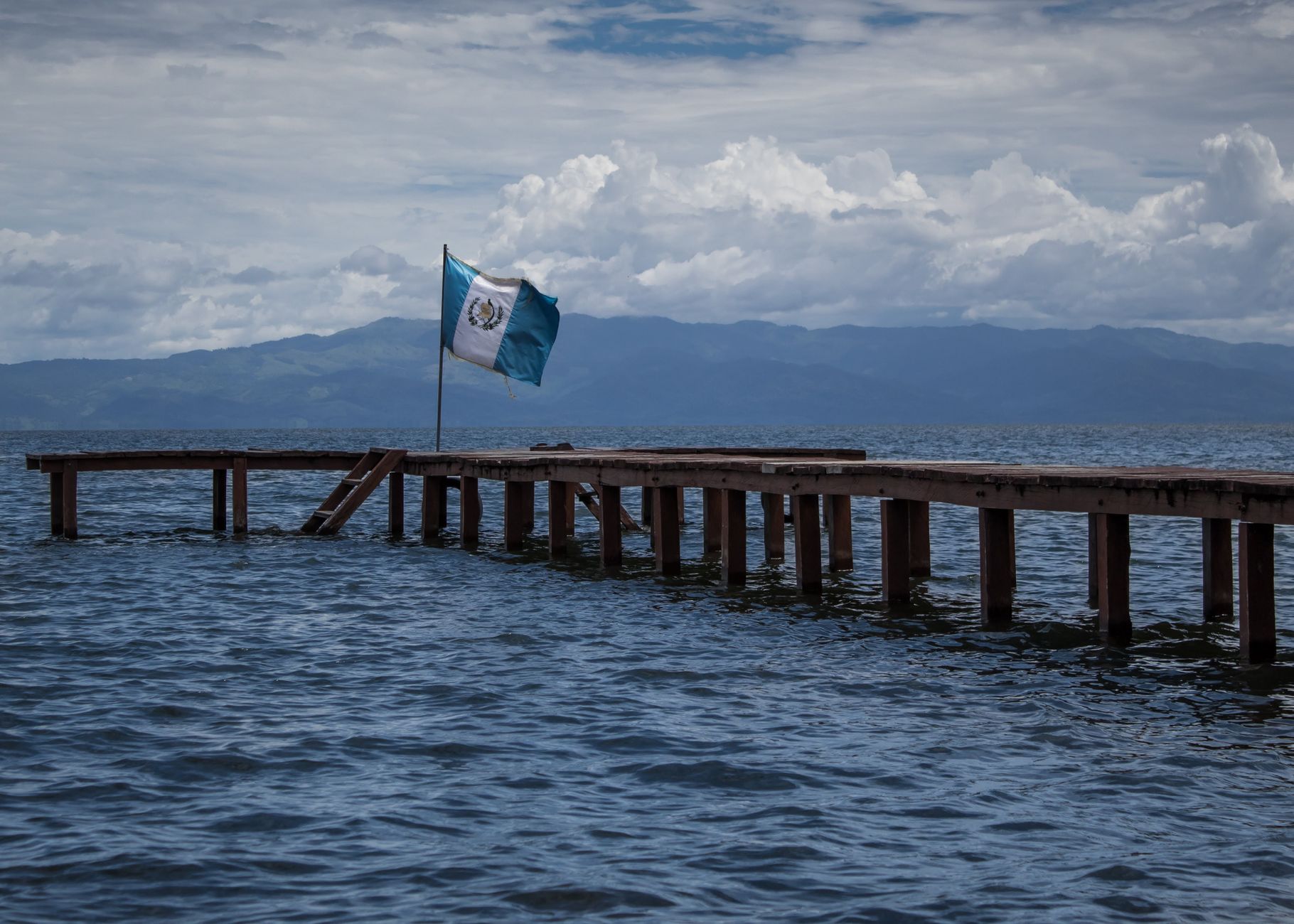
Lívingston is one of those places that seem not quite to belong to the country that contains them. Here, at the Caribbean edge of Guatemala, where the Río Dulce gives itself to the sea in the Bay of Amatique, you don't arrive by road: you have to take a boat. And on stepping ashore, the traveler discovers another Guatemala, one that sounds of Garifuna drums, smells of coconut and fish, and moves to the slow, warm rhythm of the Caribbean. It's an Afro-descendant, mestizo and Q'eqchi' Maya town all at once, unique in the country.
Lívingston's great treasure is its people: the Garifuna, descendants of Africans and Carib Indigenous people who arrived on these shores in the early 19th century. Their language, their music (punta, the drums) and their rituals were declared Intangible Cultural Heritage of Humanity by UNESCO. Eating a tapado —that stew of fish and seafood in coconut milk with plantain and cassava—, hearing the drums roll at dusk and walking down the Calle Principal toward the sea are experiences you won't have anywhere else in Guatemala.
This guide covers Lívingston with a practical and warm eye: how to get there (always by water, whether from Puerto Barrios across the sea or by navigating the spectacular Río Dulce canyon), what to see and eat, how to slip away to the Siete Altares and Playa Blanca, and how to enjoy Garifuna culture with respect. Lívingston is not a destination of great monuments but of atmosphere, of flavors and of a human encounter that leaves its mark.
Lívingston has a history that mixes sea, rivers and peoples who came from far away. Before the Europeans arrived, the Izabal region was inhabited by Maya peoples, above all Q'eqchi', who still today live alongside the Garifuna in the area. Lívingston's great peculiarity is the Garifuna presence: the Garifuna are descendants of enslaved Africans and Carib Indigenous people (Arawak and Black Carib) who mixed on the island of Saint Vincent, in the Antilles. After resisting the British, they were deported in the late 18th century to the island of Roatán (in present-day Honduras), from where they spread along the Caribbean coast of Central America. In the early 19th century, Garifuna groups reached the mouth of the Río Dulce and founded, around 1802-1806, the settlement that would give rise to Lívingston (which they call 'La Buga', 'the mouth' in Garifuna, for its position at the river's mouth). The official name, Lívingston, was adopted later in honor of the US jurist Edward Livingston, author of a legal code that inspired 19th-century Guatemalan legislation. For a long time, Lívingston was the main port of the Guatemalan Caribbean and the gateway for goods, until that role passed to Puerto Barrios. Today, its isolation by land has preserved its unique character, and Garifuna culture —its language, music and cooking— was recognized in 2001 by UNESCO as Intangible Cultural Heritage of Humanity. The full history is on our history page.
Read the full history ↓The only department with a Caribbean coast: Garífuna and Q'eqchi' country, home to the country's largest lake, to the Río Dulce and its colonial pirate castle, to United Fruit's bananas and Puerto Barrios, to jungle, to the giant stelae of Quiriguá and to the gateway to Copán.
Read the history of Izabal →They depart from San Pedro Sula, 87 km away. If you book from this link we earn a commission and you pay no more.
No exact prices: a scale from $ (budget) to $$$$$ (luxury), with 2-3 options per category.
Origins, formation and what the sources say.
Lívingston is the only town in Guatemala you can't reach by car: you have to cross by boat, either by sea from Puerto Barrios or by navigating the jungle canyon of the Río Dulce. That isolation isn't a logistical detail but the key to everything this place holds. On stepping ashore, the traveler finds African drums, a language that resembles neither Spanish nor Maya, and a fish stew in coconut milk: a Caribbean culture unlike anything else in the heart of Central America. To understand how all of that reached the mouth of the Río Dulce, you have to go a long way back, long before the town even existed.
The Izabal region —in the far northeast of Guatemala, between Lake Izabal, the Río Dulce and the Bay of Amatique— was inhabited for centuries by Maya peoples. In the area and around it lived, and still live, Maya-speaking groups, above all Q'eqchi', who to this day form an important part of the region's population and live alongside the Garifuna in the Lívingston and Río Dulce area.
The geography of this Caribbean coast, with its humid tropical rainforest, its rivers, lagoons and mangroves, was for centuries a territory of passage and of resources: fishing, hunting, gathering and, later, trade routes. The Río Dulce, which connects the great Lake Izabal with the Caribbean Sea through a spectacular canyon, was a natural line of communication between the interior and the coast.
During the colonial era, this region had strategic importance for the Spanish, who built defenses such as the Castillo de San Felipe de Lara, at the entrance to Lake Izabal, to protect river trade from pirate attacks. The mouth of the Río Dulce, where Lívingston stands today, was the point where the river opened onto the Caribbean: a key place, but still without the town that would make it famous.
To understand Lívingston you have to travel first to the Antilles, to the eastern Caribbean, and to the 18th century. The Garifuna (also called 'Garinagu' in the plural, or historically 'Black Caribs') are an Afro-descendant people born on the island of Saint Vincent, from the mixing of Carib and Arawak Indigenous people with Africans. There are different versions of the origin of the African population: the most widespread speaks of survivors of slave-ship wrecks and of escaped enslaved Africans who joined the island's Indigenous peoples.
From that fusion a new culture was born, with its own language (Arawak in root with Carib, African and European contributions), its own music, dance and religion. The Garifuna of Saint Vincent resisted the European colonial advance for decades, especially the British, in what became known as the Carib Wars. Their most celebrated leader, Joseph Chatoyer, became a hero of that resistance.
After their final defeat by the British, in 1797 the Garifuna were deported en masse from Saint Vincent. They were carried by sea to the island of Roatán, off the coast of present-day Honduras. Many died in the crossing, but the survivors managed to establish themselves and, from Roatán and the Honduran coast, began to spread along the Caribbean shoreline of Central America, giving rise to the Garifuna communities that exist today in Honduras, Guatemala, Belize and Nicaragua.
From Roatán and the Honduran coast, the Garifuna kept moving along the Caribbean shoreline in search of land and better conditions. In the early 19th century, Garifuna groups reached the mouth of the Río Dulce, on the coast of what is now Guatemala, and settled on the spot where Lívingston stands today. The sources place the founding of the settlement in the first years of the 19th century (around 1802-1806, depending on the version).
The Garifuna called the place 'La Buga', which in their language means 'the mouth', for its position right at the mouth of the Río Dulce, where the river opens onto the Caribbean Sea. The site was ideal: it offered access to the sea and the river, abundant fishing, forest with resources and a natural harbor. There the Garifuna community maintained and developed its language, music, cooking and traditions, in relative isolation from the rest of the country, to which it had no land connection.
Over time, other populations joined the Garifuna settlement —Q'eqchi', ladinos and, later, some foreigners—, producing the cultural mix that characterizes Lívingston to this day. But its identity was marked forever by the Garifuna imprint, which made it a unique place within Guatemala: an Afro-Caribbean town with roots from the other side of the sea.
The town's official name, Lívingston, is neither Garifuna nor Maya in origin but a 19th-century tribute. It was chosen in honor of Edward Livingston, a distinguished US jurist and politician (who was, among other things, Secretary of State of the United States) and author of an influential penal code. That 'Livingston Code' inspired the legal reforms driven in Guatemala by the government of Dr. Mariano Gálvez in the 1830s. In recognition, his surname was given to the Caribbean town.
Through much of the 19th century and the early 20th, Lívingston played a prominent role as a port. Situated at the entrance to the Río Dulce, it was the main port of the Guatemalan Caribbean and a key point for goods entering and leaving the east of the country, before that role passed to Puerto Barrios, founded in the late 19th century and better connected by rail and road.
The development of bananas and of the great fruit companies on the Caribbean coast, together with the construction of Puerto Barrios, gradually displaced Lívingston's commercial importance. But that 'decline' as a port had an unexpected and positive effect: left outside the main routes and without road access, Lívingston kept its quiet character and its strong cultural identity, which in time made it a singular tourist destination.
Lívingston's identity is explained above all by its Garifuna culture, one of the richest and most singular in the Central American Caribbean. The Garifuna language is Arawak in root, with contributions from Carib, from African languages and from the European tongues (French, English, Spanish) the people encountered through their history. Curiously, the language preserves a difference between men's and women's speech, a legacy of its mixed Carib-Arawak origin.
Music is the heart of Garifuna culture. The drums —the 'primero' and 'segundo' drums, accompanied by maracas and turtle shells— set rhythms such as punta, paranda and other traditional genres, tied both to celebration and to ritual. Punta is the best known: a rhythm and dance of rapid hip movements performed at celebrations. From these roots came, in the 20th century, 'punta rock', the modern and popular version of the genre.
Garifuna cooking, based on fish, seafood, coconut, plantain and cassava, has in tapado its most emblematic dish. Garifuna religion and spirituality combine Catholic elements with ancestral African and Indigenous beliefs, with ceremonies such as the 'dügü' dedicated to the ancestors. This whole body of culture —language, music and dance— was proclaimed by UNESCO in 2001 a Masterpiece of the Oral and Intangible Heritage of Humanity, a recognition covering the Garifuna communities of Belize, Guatemala, Honduras and Nicaragua.
The isolation that cost Lívingston its commercial prominence through the 20th century ended up, paradoxically, being the key to its appeal. Not being connected by road to the rest of the country, the town kept an unhurried pace of life, a genuine Caribbean atmosphere and, above all, its strong Garifuna cultural identity, far more diluted in better-connected cities.
From the last decades of the 20th century, Lívingston began to appear on the tourism map, drawing travelers in search of something different within Guatemala: an Afro-Caribbean destination, with drum music, cooking of its own, jungle, river and sea. The boat ride through the Río Dulce canyon —part of Río Dulce National Park— became one of the country's most celebrated routes, and excursions such as the Siete Altares and Playa Blanca rounded out the offering.
Today, Lívingston faces the challenges of many small and singular destinations: preserving its culture and its natural setting against tourism pressure, keeping the Garifuna language and traditions alive among the younger generations, and improving its services without losing its essence. For the traveler, it remains one of the most distinctive and memorable experiences in Guatemala: a place where the country sounds, tastes and moves differently, to the rhythm of the Caribbean and the Garifuna drum.