Viajá con Gus
HomeGuatemalaTotonicapán
Totonicapán
🇬🇹 Guatemala · Highlands and the west

Totonicapán

Jump to what you need
📌Location
Totonicapán (San Miguel Totonicapán) is the capital of the department of the same name, in the heart of Guatemala's western highlands, at some 2,500 meters above sea level. It lies about 25-30 kilometers east of Quetzaltenango (Xela) and a little over 200 km from Guatemala City. Its population is overwhelmingly K'iche' Maya, and the city is a major center of traditional craftwork (textiles, pottery, musical instruments, candle-making, wooden toys). Its surroundings are mountainous, with a valuable high-altitude communal forest, pine landscapes and K'iche' villages. The famous rock formations of the Riscos belong to neighboring Momostenango, not to Totonicapán, though the two are often combined on the same highland itinerary.
📌Service city
Totonicapán has basic services for travelers (a few hotels and simple guesthouses, comedores, a market, banks, transport), but the tourist offering is more limited than in Quetzaltenango. Many travelers use Xela as a base and visit Totonicapán on a day trip, by minibus, bus or tour. It's a destination that's more cultural and authentic than touristy: it shines for its craft tradition, its K'iche' life and its community tourism initiatives, rather than for big infrastructure. It's worth arranging visits to craft workshops and the communal forest in advance, often through local initiatives.
📌Best time to go
It can be visited year-round. The dry season (November to April) brings clearer days, better for exploring the city, the workshops and the communal forest. The rainy season (May to October) brings afternoon rain and trickier roads in rural areas. Being at high altitude, the climate is cool to cold almost all year, especially at night. To catch the craft and commercial atmosphere, go on a market day. Some traditional festivities (such as the feast of San Miguel, in late September) are moments of great cultural richness.
📌Suggested days
Totonicapán is a half-day to full-day visit from Xela, spent getting to know its center, the market, some craft workshops and, if arranged, a trip out to the communal forest. Anyone with a special interest in K'iche' culture and craftwork can give it more time, adding visits to workshops in different trades (textiles, ceramics, instruments, masks, toys) and community tourism experiences. The usual approach is to combine it with other highland destinations (Momostenango, Quetzaltenango) on the same trip through the region, using Xela as a base camp.
📌Currency
Guatemalan quetzal (GTQ). Bring cash for the market and the craft workshops; there are banks and ATMs in the center
💱 GTQ exchange rate
Loading rate…
🌤️ Weather in Totonicapán
Loading weather…

Totonicapán is one of those Guatemalan highland destinations that rewards the curious traveler more than the one after easy postcards. Capital of a department whose population is largely K'iche' Maya, it is above all a great center of traditional craftwork: here textiles are woven, pottery is thrown, masks and wooden toys are carved, musical instruments are built and candles and ceramics are made in family workshops that pass their trades down through the generations.

Rather than spectacular monuments, what Totonicapán offers is authenticity: the daily life of a K'iche' town that proudly keeps its language, its dress, its traditions and a strong communal organization. The city is also known for its historic defense of the high-altitude communal forest that surrounds it, a remarkable example of collective management of natural resources, and for its place in Guatemala's indigenous history, with episodes such as the 1820 rebellion led by Atanasio Tzul.

This guide gathers the essentials for approaching Totonicapán with respect and making the most of what makes it special: how to get there from Quetzaltenango, what to see and which workshops to visit, how to get to know the communal forest through community tourism and how to combine the visit with other highland destinations. Totonicapán is a genuine immersion in the K'iche' heart of Guatemala.

📖 History of Totonicapán

Totonicapán (in K'iche', linked to the idea of a 'place of hot waters') is an ancient K'iche' Maya center in the western highlands, part of the territory of the K'iche' lordship before the Spanish conquest of 1524. During the colonial era it consolidated as a pueblo de indios and a regional seat, keeping a largely indigenous population. Its most celebrated historical episode is the indigenous rebellion of 1820, when, amid protests against colonial tributes and abuses, the K'iche' of Totonicapán rose up and proclaimed the leader Atanasio Tzul their 'king', in a brief but symbolic challenge to Spanish power; the movement was crushed, but it endures as a landmark of indigenous resistance. Totonicapán is also known for its extraordinary craft tradition —it's one of the main craft centers in Guatemala— and for the historic defense and communal management of its high-altitude forest, run by the 48 Cantones of Totonicapán, one of the oldest and strongest indigenous community organizations in the country, which still exercises functions of authority and protection over the territory. The full history, with the K'iche' origins, the rebellion of Atanasio Tzul and the organization of the 48 Cantones, is on our history page.

Read the full history ↓

🗺️ What to see

1
The traditional craft workshops
Totonicapán's great attraction: family workshops for textiles, pottery, masks, wooden toys, instruments and candle-making.
Totonicapán is one of Guatemala's great craft centers, and visiting its family workshops is the best way to get to know the city. Numerous traditional trades are kept alive here, passed down through the generations: weaving textiles on backstrap and foot looms, with the designs and colors characteristic of K'iche' dress; pottery and glazed ceramics; carving the wooden masks used in traditional dances; making hand-painted wooden toys; candle- and wax-making; and building musical instruments such as the marimba, Guatemala's national symbol. Many of these workshops can be visited, often through community tourism initiatives that organize tours of the different trades and let you watch the artisans at work, understand the processes and, if you wish, buy pieces directly from the people who make them. It's an educational and very authentic experience, far from the industrial souvenir, that supports craft families directly. The diversity of trades concentrated in Totonicapán is remarkable and reflects the creativity and skill of its K'iche' population. For anyone interested in Maya and Guatemalan material culture, it's an unmissable destination. Getting there: the workshops are scattered around the city and nearby villages; arrange the visit through local community tourism initiatives. Best time: any day (check workshop availability). Tips: arrange the visit in advance, respect the artisans' work, ask permission to photograph and buy directly to support the families. Bring cash, since electronic payment isn't always an option.
ℹ️ Distance: Workshops in the city and villages of Totonicapán · Best time: Any day (arrange with community initiatives) · Admission: Guided workshop tour Q80–150 per person (2025; check when visiting) · Duration: Half a day
2
The communal forest and the 48 Cantones
The historic high-altitude forest managed communally, a remarkable example of K'iche' conservation and organization.
One of Totonicapán's great sources of pride is its high-altitude communal forest, an extensive stand of Guatemalan fir, pine and oak in the mountains surrounding the city, considered one of the best preserved in Guatemala. What's remarkable is its management model: the forest is administered and protected communally by the 48 Cantones of Totonicapán, one of the strongest, oldest and most respected indigenous community organizations in the country, which exercises functions of traditional authority and safeguards the territory and its natural resources. This collective management, heir to centuries-old K'iche' forms of organization, has kept the forest intact against the deforestation affecting other regions, while also protecting the water sources that supply the population. It's an internationally cited example of indigenous governance and community conservation. Through ecotourism and community tourism initiatives it's possible to visit parts of the forest, take walks, see the springs and learn about the organizational system of the 48 Cantones. It's an experience that combines high-altitude nature, fresh pine air and a lesson in how an indigenous community manages its natural heritage. Getting there: the forest surrounds the city; access to the visitable areas is arranged with the 48 Cantones or with local ecotourism initiatives. Best time: dry season for walking; cool to cold high-altitude climate. Tips: arrange the visit and respect community rules (this is territory managed by the indigenous authority), bring warm clothing, suitable footwear and water, and leave no litter. Ask locally about trails and permits.
ℹ️ Distance: Mountains surrounding Totonicapán (access arranged with the 48 Cantones) · Best time: Dry season; cold high-altitude climate · Admission: Visit arranged with a community guide Q100–200 per person (2025; check when visiting) · Duration: Half a day to a day
3
The historic center and the church of San Miguel
The central plaza, the colonial church and the town center, heart of K'iche' life in Totonicapán.
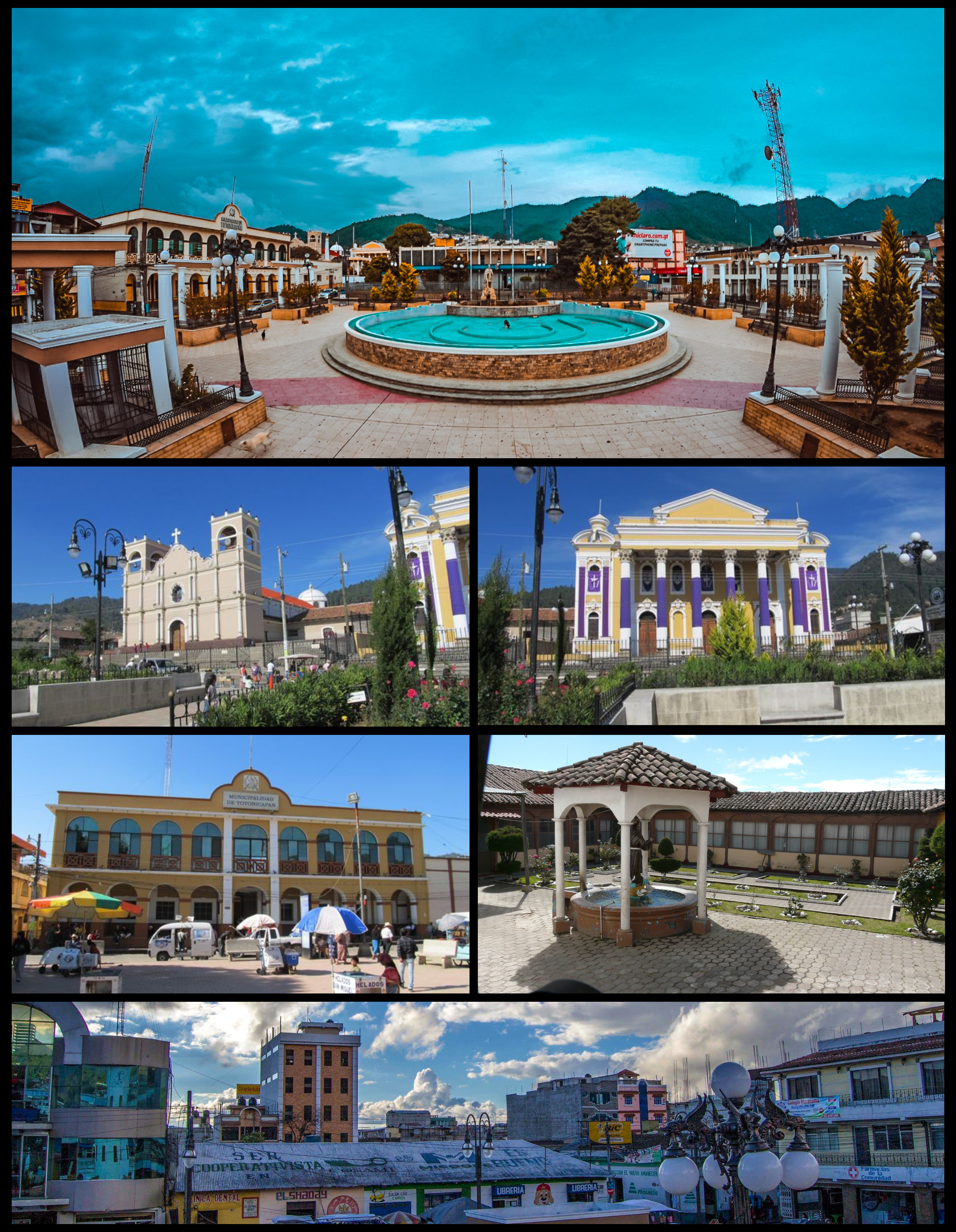
The center of Totonicapán preserves its colonial layout around the main plaza, where the parish church dedicated to Saint Michael the Archangel, the city's patron, stands (hence its full name, San Miguel Totonicapán). The church, colonial in origin, is the heart of local religious life, where Catholicism coexists with elements of Maya spirituality in the syncretism characteristic of the highlands. Around the plaza beats the life of the city: public buildings, the market, shops and the comings and goings of a largely K'iche' population that keeps using the language and, in many cases, traditional dress. Walking the center, looking in on the market and watching daily life is the best way to take Totonicapán's pulse, a city more devoted to its cultural authenticity than to tourism. Some local institutions and the Casa de la Cultura usually offer information about the region's history, crafts and traditions, and are a good starting point for understanding the place before visiting workshops or the communal forest. Getting there: the center is the core of the city, easy to cover on foot. Best time: market days and the feast of San Miguel (late September) for more atmosphere. Tips: enter the church respectfully (there may be prayers or ceremonies), ask permission before photographing people and use the Casa de la Cultura or local initiatives to get your bearings on what to visit.
ℹ️ Distance: Center of the city of Totonicapán · Best time: Market days; the feast of San Miguel (late September) · Admission: Free (plaza and working church) · Duration: 1 to 2 hours
4
The market and K'iche' life
Totonicapán's busy market, a window onto the culture, produce and dress of the K'iche' highlands.
The Totonicapán market is one of the most important and lively in the western highlands, and an essential stop for feeling the life of the city. On its busiest days it fills with traders and shoppers from Totonicapán and from neighboring villages and municipalities, who come to sell and buy farm produce, crafts, textiles, food, clothing and goods of every kind. It's a nerve center of regional commerce. Among the stalls you'll find the area's celebrated crafts —textiles, ceramics, wooden toys, candles— and see K'iche' women in their colorful traditional dress, which turns the market into a spectacle of color and cultural vitality. It's also a good place to try highland food at the stalls and to buy at good prices. The market reflects the commercial and historical importance of Totonicapán, which since colonial times has been a highland trading center. Walking it slowly, with respect and attention, is one of the best ways to connect with the real life of the city. Getting there: in the center, near the plaza and the church. Best time: market days for maximum atmosphere (ask which they are). Tips: ask permission before photographing people, mind your belongings in the bustle, bring small notes and haggle respectfully if you buy. It's an experience to live, not just to watch.
ℹ️ Distance: Center of Totonicapán, next to the plaza · Best time: Market days (ask which they are) · Admission: Free (public market) · Duration: 1 to 2 hours
5
The Municipal Theater and the Casa de la Cultura
An elegant neoclassical theater and the city's cultural center, a window onto the K'iche' traditions of Totonicapán.
Totonicapán has a notable neoclassical Municipal Theater, built in the early 20th century, whose elegance comes as a surprise in a city of modest profile. It's one of the few historic theaters of this kind preserved in Guatemala's interior, and it's still used for cultural events, school performances and community occasions. Nearby, the Casa de la Cultura of Totonicapán works as a center for information about and promotion of local traditions: it displays samples of craftwork and textiles and, at times, material on the city's history, including the rebellion of Atanasio Tzul. It's a good starting point for anyone who wants to better understand what they'll see afterwards in the workshops and the market. Getting there: in the city center, near the main plaza. Best time: any day; check opening hours and whether anything is scheduled at the theater. Tips: ask at the Casa de la Cultura for recommendations on which craft workshops to visit that day; they sometimes organize guided visits.
ℹ️ Distance: City center, near the main plaza · Best time: Any day (check hours and performances) · Admission: Free to look around (theater performances may charge separately, ask) · Duration: 30 to 45 minutes
6
Villages and viewpoints in the surrounding area
The mountainous pine landscape around Totonicapán, with K'iche' villages and views over the highlands.
Beyond the town center, the municipality of Totonicapán spreads across mountainous terrain of pine forest and K'iche' villages, where farming and craft life follow their traditional course. Heading out to these villages, even briefly, lets you see another face of the region: hillside maize fields, adobe-and-tile houses, and communities where K'iche' dress and language are used entirely naturally. Some high points in the surrounding area offer viewpoints over the Totonicapán valley and the neighboring mountains, much appreciated on clear dry-season days. Arranging this outing with a local guide or a community tourism initiative also lets you visit meaningfully, avoiding simply turning up in communities that don't regularly receive tourists. Getting there: by minibus, pickup or hired transport from the center of Totonicapán out to the municipality's villages. Best time: dry season, clear days. Tips: coordinate with local guides to choose a destination that makes cultural sense, bring warm clothes (the high-altitude climate is cool) and always respect the customs of the communities you visit.
ℹ️ Distance: Villages and mountains of the municipality, around the town center · Best time: Dry season, clear days · Admission: Free; transport and guide separate (ask, check when visiting) · Duration: Half a day
Advertisements
What nobody tells you

💵 Prices

Tickets

TypePrice
Craft workshop tour (community tourism)Q80–150 per person (source: Totonicapán community tourism initiatives, verified July 2026)
Visit to the communal forest (arranged with the 48 Cantones)Q100–200 per person with a community guide (source: community ecotourism / 48 Cantones, verified July 2026)
Historic center, church and plazaFree
MarketFree (public market)
Minibus Xela → TotonicapánQ10–15 per person, cash only (source: local transport, verified July 2026)
🔄 updated monthlyOfficial / reference values · double-check when buying

Activities and tours

ActivityPriceDurationOperator
Tour of craft workshops (textiles, ceramics, masks, toys)Q80–150 per personHalf dayTotonicapán community tourism initiatives
Ecotourism walk in the communal forestQ100–200 per personHalf a day to a day48 Cantones / community ecotourism
K'iche' cultural and culinary experienceQ80–150 per person (meal + cultural explanation)VariableLocal community initiatives
Visit during the feast of San MiguelFree (to attend); food and shopping separateVariableThe community of Totonicapán
🔄 updated monthlyOfficial / reference values · double-check when buying
Advertisements

🚌 How to get there and distances

Getting around

ModePriceDurationNotes
Minibus / bus Xela → TotonicapánQ10–15 per person; paid ONLY in cash, in quetzales, to the conductor on board (source: highland local transport, verified July 2026)About 45 min to 1 hourFrequent and cheap, it connects Quetzaltenango with Totonicapán, often via the Cuatro Caminos junction. There is NO fixed timetable: they leave when full. No travel card or QR: bring small notes. The option most used by budget travelers
App / how to plan transport--The western highlands do NOT have a real-time public transport app (no Moovit, no Transit, no travel card with live minibus data): you catch transport in the street, at the terminal or at the Cuatro Caminos junction, and pay in cash. To locate Totonicapán, Xela and Momostenango and estimate travel times, use Google Maps or Waze, though the exact minibus routes aren't mapped. In the city there are banks and ATMs to withdraw cash before heading out to the villages (verified July 2026)
Organized tour from XelaQ150–300 per person, half day with a guide (source: Xela agencies, verified July 2026)Half a day to a daySome agencies and community tourism projects offer tours that include workshops and, sometimes, the communal forest
Taxi / private transportQ100–200 per trip; cash (source: local operators, verified July 2026)VariableMore comfortable for moving between the city, the villages with workshops and the communal forest, especially if you're short on time
On foot (in the center)FreeVariableThe center of Totonicapán (plaza, church, market) is covered on foot; for the forest and the villages you'll want transport
🔄 updated monthlyOfficial / reference values · double-check when buying

How to get there

RouteAirlines / operatorsAvg. priceDuration
Guatemala City → TotonicapánLine busesQ40–70 per personAbout 4 to 5 hours
Quetzaltenango (Xela) → TotonicapánMinibus, bus or tourQ10–15 per personAbout 45 min to 1 hour
Cuatro Caminos (junction) → TotonicapánPassing buses and minibusesQ5–10 per personShort trip
Totonicapán ↔ Momostenango (combinable)Minibus / local busQ10–15 per personAbout 30 min to 1 hour
🔄 updated monthlyOfficial / reference values · double-check when buying

🏨 Where to stay

No exact prices: a scale from $ (budget) to $$$$$ (luxury), with 2-3 options per category.

CategoryPriceRecommended options
Hotels and guesthouses in Totonicapán$$$$$US$ 15–35 a night (Q115–270); Totonicapán has a few hotels and simple guesthouses in the center, enough for an overnight stay and a taste of local life, with basic services
Community lodging / homestays$$$$$Q80–150 a night; through community tourism initiatives you can stay with K'iche' families, an immersive way to get to know the local culture
Higher-end hotels in Xela (recommended base)$$$$$US$ 50–95 a night (Q385–730); many travelers prefer to stay in Quetzaltenango, with more choice and comfort, and visit Totonicapán on a day trip
Hostels and budget lodging in Xela$$$$$Q60–200 a night (dorm to private); hostels and cheap lodging in Xela, a cheap and well-connected base for highland excursions, Totonicapán included

🍴 Where to eat

TypePriceOptions / signature dish
Comedores and the Totonicapán market$$$$$Q25–50 per dish; simple comedores and market stalls with typical K'iche' highland food (broths, tamales, recados) at cheap prices
Traditional K'iche' cooking$$$$$Q50–100 per person; some community initiatives offer culinary experiences with traditional regional dishes, an authentic way to try local cooking
Restaurants and cafés in Xela$$$$$Q60–150 per dish; for a wider choice, Quetzaltenango (the usual base) has highland cooking, specialty coffee shops and international options
Advertisements

📖 History of Totonicapán

Origins, formation and what the sources say.

K'iche' origins and the meaning of the name

In July 1820, a year before Central America won independence from Spain, the K'iche' of Totonicapán did something unheard of: they stopped paying tribute, threw out the colonial authorities and crowned their own king, an elder principal named Atanasio Tzul, placing on his head a saint's crown taken from the church. Their indigenous kingdom lasted barely twenty-six days, but it turned this highland town into an enduring symbol of Maya resistance. That audacity didn't come from nowhere: Totonicapán is an ancient K'iche' Maya center in Guatemala's western highlands, part of the territory of the powerful K'iche' lordship that dominated much of the region before the Spanish arrived. The area, mountainous and cold, at some 2,500 meters, was settled from pre-Hispanic times by K'iche' communities devoted to farming, especially maize, and to crafts that even then were part of their economic and cultural life.

The name 'Totonicapán' is of Nahuatl origin —the language of the Mexican indigenous allies who accompanied the Spanish conquistadors— and is usually translated as 'place of hot waters' or 'place of the hot water', in reference to the region's thermal springs. In K'iche', the area had its own names, and the Nahuatl place name took hold, as happened in so many parts of Guatemala, from the conquest onward. The full name of the municipal seat, San Miguel Totonicapán, adds the Christian patron saint imposed in colonial times.

That double root —K'iche', and, in the name, Nahuatl-Spanish— sums up the character of Totonicapán: a town deeply Maya in its people, its language and its traditions, marked by the layers of colonial history. Understanding that K'iche' substrate is the key to understanding a city that, above all, remains the heart of one of the most vibrant indigenous regions in the country.

The Nahuatl meaning of 'Totonicapán'
The sources agree that the place name 'Totonicapán' is of Nahuatl origin and relates to the idea of a 'place of hot waters', in reference to thermal springs in the region. The name was imposed in the context of the conquest, on territory whose population was K'iche'. Exact translations vary slightly between sources.
Source: https://es.wikipedia.org/wiki/Totonicap%C3%A1n

The conquest and the colonial era

The conquest of the K'iche' highlands by the forces of Pedro de Alvarado, in 1524, transformed the Totonicapán region as it did all of western Guatemala. After the military defeat of the K'iche' —whose capital, Q'umarkaj (Utatlán), was taken and destroyed— the Spanish reorganized the territory under the colonial system, grouping the indigenous population into 'pueblos de indios' around churches and plazas, and imposing Christianity, tribute and forced labor.

Totonicapán consolidated as an important regional seat and as a town with a largely indigenous population, with its church dedicated to Saint Michael the Archangel. Throughout the colonial period, the region kept its K'iche' character and its craft and commercial vocation, becoming a center of textile production and other trades, and a highland trading hub. Evangelization, far from erasing Maya beliefs, gave rise to the religious syncretism characteristic of the region.

The colonial era was, however, also one of growing tensions: the tribute system, the repartimientos and the abuses of the authorities weighed on indigenous communities. That accumulated pressure, together with the strong K'iche' communal organization, would be the breeding ground for the episode that gave Totonicapán its historical fame at the start of the 19th century: the rebellion of 1820.

Totonicapán as a colonial seat with a K'iche' population
The historiography describes Totonicapán as a regional highland seat during the colonial era, with a largely K'iche' population and strong craft and commercial activity. The pressure of the colonial tribute system on these communities is cited as one of the underlying factors behind the later rebellion of 1820.
Source: https://es.wikipedia.org/wiki/Totonicap%C3%A1n

The 1820 rebellion and Atanasio Tzul

Totonicapán's most celebrated historical episode is the indigenous rebellion of 1820, one of the great landmarks of Maya resistance in Guatemala. The conflict had been brewing since 1816, when the Spanish Crown, after the return of absolutism, tried to reinstate tribute payments by indigenous people, tributes the Cortes of Cádiz had abolished in 1811. The K'iche' communities of San Miguel Totonicapán, Santa María Chiquimula, Momostenango, San Andrés Xecul and San Francisco El Alto flatly refused to pay again. On 17 March 1820, hundreds of people led by the principal Lucas Aguilar appeared before lieutenant Ambrosio Collado to accuse the authorities of theft, and the tension kept building until it boiled over.

On the night of 12 July 1820, the principals and leaders of the rebellion recognized as monarchs Atanasio Tzul —a respected K'iche' principal of about 60— and his wife, symbolically placing on them the crowns of San José and Santa Cecilia taken from the church. A brief autonomous state with its own indigenous government was thus established in Totonicapán. It lasted barely twenty-six days: on 3 August 1820, a ladino militia of nearly a thousand men from Quetzaltenango, Salcajá and San Carlos Sija put down the uprising, and its leaders were captured and punished.

Beyond its brief duration, the rebellion of Atanasio Tzul and Lucas Aguilar was etched in memory as a symbol of the dignity and resistance of indigenous peoples against oppression, and as an important precedent in the history of Maya struggles in Guatemala, barely a year before independence in 1821. Today, Atanasio Tzul is remembered as a heroic figure —his face even appeared on a commemorative one-quetzal coin minted for the Bicentenary of Independence (1821-2021)— and his name is bound forever to Totonicapán, which takes pride in this episode of its past.

Atanasio Tzul, 'king' for a few days
Historical tradition holds that during the 1820 rebellion Atanasio Tzul was proclaimed 'king' by the indigenous people of Totonicapán, accompanied by Lucas Aguilar, in a movement against colonial tributes that was suppressed. Some details (the scope of the 'reign', the figures, the duration) come from sources that mix documentation with tradition, so they should be taken with some caution.
Source: https://es.wikipedia.org/wiki/Atanasio_Tzul

The 48 Cantones and the communal management of the forest

One of the most remarkable and admired features of Totonicapán is its system of communal organization, embodied in the 48 Cantones of Totonicapán. This is one of the strongest, oldest and most respected indigenous community organizations in Guatemala: a structure of traditional K'iche' authority, with roots reaching back to ancestral forms of organization, that brings together the municipality's various cantones (communities) and exercises functions of communal government, conflict resolution and, very especially, the safeguarding of the territory and its natural resources.

Its great historical achievement is the conservation of the high-altitude communal forest that surrounds the city, an extensive stand of Guatemalan fir, pine and oak considered one of the best preserved in the country. Through collective management, with strict community rules and patrols, the 48 Cantones have managed to protect the forest from deforestation and safeguard the water sources that supply the population. This model of indigenous governance and community conservation is cited internationally as a success story.

The 48 Cantones remain, today, a living and recognized authority, defending the rights and heritage of the community and playing a prominent role at key moments in Guatemala's recent history. For the visitor, getting to know this organization through community ecotourism is a glimpse of a form of indigenous self-government that combines tradition, identity and an exemplary commitment to nature.

The 48 Cantones as a model of community governance
The sources describe the 48 Cantones of Totonicapán as a long-standing indigenous community authority, responsible for the collective management and conservation of the high-altitude communal forest, cited as a notable case of indigenous governance of natural resources. The organization's exact age is tied to K'iche' community traditions that are hard to date precisely.
Source: https://es.wikipedia.org/wiki/48_Cantones_de_Totonicap%C3%A1n

The craft tradition: the living heart of Totonicapán

If one thing defines Totonicapán's identity across its history, it's its extraordinary craft tradition. From pre-Hispanic times and throughout the colonial and republican eras, the region has been one of Guatemala's main craft centers, with an uncommon diversity of trades concentrated in a single place: weaving textiles on the loom, pottery and ceramics, carving wooden masks for traditional dances, making wooden toys, producing candles and wax goods, and building musical instruments such as the marimba.

These trades are passed down through the generations in family workshops, and they constitute not only a fundamental economic activity for many K'iche' families but also a living cultural heritage that preserves ancestral techniques, designs and knowledge. Totonicapán's products supply markets throughout Guatemala and are prized for their quality and authenticity.

This craft vocation is deeply intertwined with the city's K'iche' Maya identity: many of the pieces —the textiles with their traditional designs, the masks for the dances, the instruments for the festivals— are part of the community's cultural and ceremonial universe. That's why getting to know the craftwork of Totonicapán isn't only about appreciating beautiful objects, but about approaching the soul of a people that has known how to preserve, through its hands, centuries of culture. Today, community tourism seeks to give value to this richness, benefiting directly the craft families who keep it alive.

Totonicapán, a great Guatemalan craft center
Tourism and historical sources present Totonicapán as one of the country's leading craft centers, with a great diversity of traditional trades (textiles, ceramics, masks, toys, instruments, candle-making) passed down in family workshops and tied to K'iche' Maya cultural identity.
Source: https://visitguatemala.gt/

📚 Bibliography

  • Wikipedia (ES) — «Totonicapán»: https://es.wikipedia.org/wiki/Totonicap%C3%A1n
  • Wikipedia (ES) — «Departamento de Totonicapán»: https://es.wikipedia.org/wiki/Totonicap%C3%A1n_(departamento)
  • Wikipedia (ES) — «Atanasio Tzul»: https://es.wikipedia.org/wiki/Atanasio_Tzul
  • Wikipedia (ES) — «Levantamiento indígena de Totonicapán de 1820»: https://es.wikipedia.org/wiki/Levantamiento_ind%C3%ADgena_de_Totonicap%C3%A1n_de_1820
  • Prensa Libre — «Atanasio Tzul gobierna en Totonicapán, 12 de julio 1820»: https://www.prensalibre.com/revista-d/atanasio-tzul-gobierna-en-totonicapan-12-de-julio-1820/
  • Wikipedia (ES) — «48 Cantones de Totonicapán»: https://es.wikipedia.org/wiki/48_Cantones_de_Totonicap%C3%A1n
  • Wikipedia (ES) — «Reino k'iche' de Q'umarkaj»: https://es.wikipedia.org/wiki/Reino_k%27iche%27_de_Q%27umarkaj
  • Wikipedia (ES) — «Pedro de Alvarado»: https://es.wikipedia.org/wiki/Pedro_de_Alvarado
  • Wikipedia (ES) — «Artesanía de Guatemala»: https://es.wikipedia.org/wiki/Artesan%C3%ADa_de_Guatemala
  • INGUAT (Instituto Guatemalteco de Turismo): https://visitguatemala.gt/
  • CONAP (Consejo Nacional de Áreas Protegidas de Guatemala): https://conap.gob.gt/

❓ Frequently asked questions

What makes Totonicapán special?+
It's one of Guatemala's great centers of traditional craftwork (textiles, ceramics, masks, wooden toys, instruments, candles) and a place of strong K'iche' Maya identity. It also stands out for its historic high-altitude communal forest, managed by the indigenous organization of the 48 Cantones, and for its place in the history of indigenous resistance (the rebellion of Atanasio Tzul in 1820). It's a destination that's more cultural and authentic than touristy.
How do I get there from Quetzaltenango (Xela)?+
It's very easy: it's about 45 minutes to 1 hour by minibus or bus (Q10-15, frequent and cheap), or you can go on a tour (Q150-300) or by private transport. Many travelers use Xela as a base and visit Totonicapán on a day trip, sometimes combining it with nearby Momostenango.
Can you visit the craft workshops?+
Yes. Many family workshops can be visited, ideally through community tourism initiatives that organize tours of the different trades (Q80-150 per person), let you watch the artisans work and buy pieces directly. It's best to arrange the visit in advance, respect the artisans' work and bring cash to support the families.
What is the communal forest and can you visit it?+
It's an extensive high-altitude forest, one of the best preserved in Guatemala, managed communally by the 48 Cantones of Totonicapán, a historic indigenous organization. Through ecotourism initiatives you can visit parts of the forest (Q100-200 per person with a community guide) and learn about its communal management system. Access must be arranged with the community and its rules respected.
Where should I stay to visit Totonicapán?+
There are a few hotels and simple guesthouses in the city (US$15-35 a night), and community lodging options with K'iche' families (Q80-150). That said, many travelers prefer to stay in Quetzaltenango (Xela), with more choice and comfort (US$50-95), and visit Totonicapán on a day trip as part of a highland circuit.
When is the best time to go for more cultural atmosphere?+
Market days, when the city fills with traders, produce and traditional K'iche' dress, and during the feast of San Miguel (late September) and other traditional festivities, which bring dances, music and great cultural richness. Check the dates before planning your visit.
How do I get around Totonicapán and how do I pay for transport?+
From Quetzaltenango (Xela) you get there by minibus or bus for Q10-15, in about 45 minutes to 1 hour, often via the Cuatro Caminos junction. Highland transport is paid ONLY in cash to the conductor on board (there's no travel card or QR, and no real-time transport app like Moovit). The city center is covered on foot; for the villages with workshops and the communal forest you'll want a taxi or arranged transport. There are banks and ATMs in the center, so withdraw cash before heading out to the rural areas. To find your way, use Google Maps or Waze.
Sources consulted (11)
Still planning?
Explore more destinations in Guatemala
See all destinations →
Advertisements
Image credits
Photos from Wikimedia Commons, each under its own licence (CC BY, CC BY-SA or public domain). Open each file to see its author and licence.
Totonicapán Ciudad