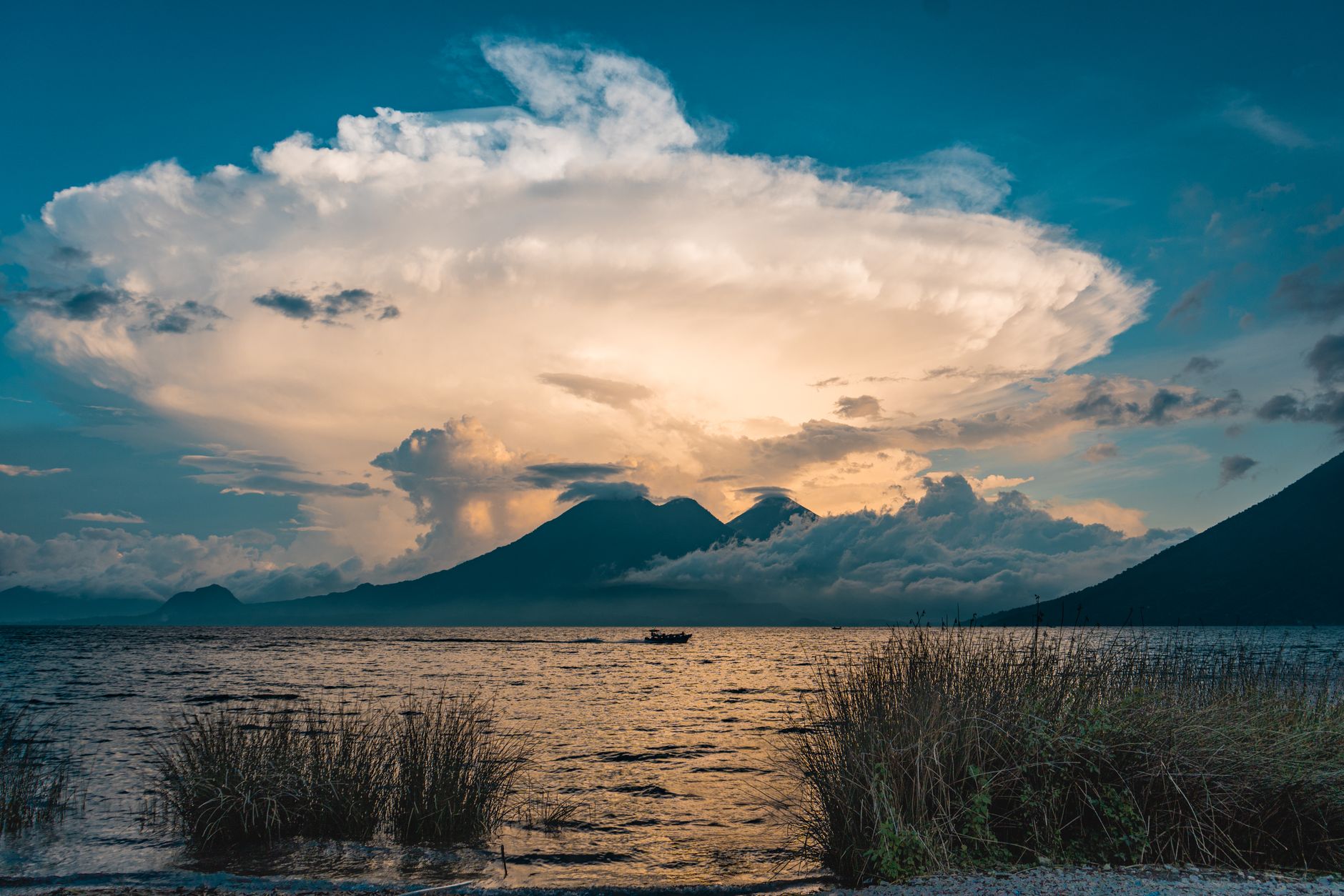
San Marcos La Laguna is, without doubt, the most singular village on Lake Atitlán. In this small corner of the northern shore, surrounded by lush vegetation that runs down to the water, an international community devoted to yoga, meditation, holistic therapies and spirituality flourished in recent decades, turning San Marcos into one of the great wellness destinations of Central America.
Walking through San Marcos is like entering a world apart: narrow paths between tropical gardens and fruit trees connect the holistic centres, the vegetarian cafés, the yoga spaces and the guesthouses hidden among the greenery. People come here for meditation retreats, yoga courses, ceremonies and therapies of every kind, in a calm atmosphere with a special energy that many describe as healing. All of it on the base of a Kaqchikel Maya community that keeps its own life and traditions.
This guide covers San Marcos La Laguna with a practical and warm eye: how to get here by boat, what to see and do —from the nature reserve and the Cerro Tzankujil diving platform to the yoga centres—, what the village atmosphere is like, where to eat and how to enjoy its unique feel with respect for the local community. It's a place for slowing down, connecting with yourself and with nature, and letting yourself be wrapped in the calm of Guatemala's most beautiful lake.
San Marcos La Laguna is a municipality in the department of Sololá, on the northern shore of Lake Atitlán, inhabited mainly by the Kaqchikel Maya people (unlike the Tz'utujil villages on the south of the lake). Lake Atitlán, formed in a great volcanic caldera, was from pre-Hispanic times a territory shared and at the same time disputed by the Maya lordships of the highlands —Kaqchikel, Tz'utujil and K'iche'. After the Spanish conquest of 1524, led by Pedro de Alvarado, the area came under colonial rule and the population was reorganised and evangelised by the friars into 'pueblos de indios'; San Marcos took its name from the evangelist Saint Mark. For centuries it was a small and relatively isolated Kaqchikel farming community, growing coffee, maize and fruit on the slopes running down to the lake. Like the whole region, it lived through the impact of Guatemala's internal armed conflict in the 20th century. San Marcos's great transformation came in the last decades of the 20th century and the beginning of the 21st, when the village became a magnet for an international community of travellers, therapists and spiritual seekers, who developed centres for yoga, meditation, holistic therapies and retreats. San Marcos thus went from Kaqchikel village to world-famous wellness destination, where the traditional Maya community lives alongside that new alternative, international scene. The full history —pre-Hispanic, colonial and contemporary— is on our history page.
Read the full history ↓The department of Lake Atitlán, considered one of the most beautiful lakes in the world: a volcanic caldera ringed by three volcanoes and by Kaqchikel and Tz'utujil Maya villages that keep their traditional dress, their brotherhoods and Maximón, marked by the massacre of 1990 and the tragedy of tropical storm Stan in 2005.
Read the history of Sololá →They depart from Panajachel, 17 km away. If you book from this link we earn a commission and you pay no more.
No exact prices: a scale from $ (budget) to $$$$$ (luxury), with 2-3 options per category.
Origins, formation and what the sources say.
Today the world knows San Marcos La Laguna as a mecca for yoga, cacao ceremonies and spiritual retreats; a village where seekers from all over the planet come to 'reconnect'. But long before the first meditation class, this corner of the lake already held a history of more than two thousand years: that of a Kaqchikel Maya village in the shadow of three volcanoes. To understand today's San Marcos, you have to start with the water and the rock. San Marcos La Laguna sits on the northern shore of Lake Atitlán, a natural wonder formed tens of thousands of years ago in an enormous volcanic caldera, a gigantic depression created by the collapse of the ground after a colossal eruption. Ringed by the San Pedro, Tolimán and Atitlán volcanoes, the lake is considered one of the most beautiful in the world and was, from remote times, the centre of life for the Maya peoples of the western highlands.
Unlike the villages on the south of the lake, whose people are Tz'utujil, San Marcos is mainly Kaqchikel, one of the great Maya groups of the Guatemalan highlands. In pre-Hispanic times, the Lake Atitlán basin was a territory shared and at the same time disputed by the Kaqchikel, Tz'utujil and K'iche' lordships, whose borders and rivalries shaped the region's history.
The local Kaqchikel lived from farming —maize, beans and other crops— and from the resources of the lake, on fertile slopes of volcanic origin. The lake was not only a source of food and a route of communication, but also a space charged with sacred meaning in the Maya worldview.
The details about the lake's geological origin and about the borders of the Maya lordships come from geology and archaeology, and are best taken as scientific reconstructions subject to revision.
The Spanish conquest of the Guatemalan highlands in 1524, led by Pedro de Alvarado, transformed life in the villages of Lake Atitlán. Curiously, the Kaqchikel were at first allies of Alvarado against their K'iche' and Tz'utujil rivals, though they later rebelled against the Spanish. After the fighting, the whole region came under colonial rule.
The friars took charge of evangelisation and of reorganising the Maya population into 'pueblos de indios', with their churches, authorities and confraternities. In that process the village of San Marcos La Laguna took shape, taking its name from the evangelist Saint Mark, following the custom of placing settlements under a saint's patronage.
As elsewhere around the lake, evangelisation gave rise to a syncretism between Maya and Catholic religiosity, while the community kept its Kaqchikel language, its dress and many of its customs. San Marcos was for centuries a small farming community, growing coffee, maize and fruit on the slopes running down to the lake.
The exact circumstances of the conquest of the area and the chronology of the colonial village's founding appear with variations in the sources; there is agreement on Alvarado's role, the shifting Kaqchikel alliances and the subsequent colonial organisation.
Through the colonial period and much of the republican era, San Marcos La Laguna was a small Kaqchikel farming community, relatively isolated on the northern shore of the lake. Life revolved around growing coffee, maize and fruit on the slopes, and around fishing and the resources of the lake. Access by land was difficult, and the boat was the natural means of communication with the other villages and with the rest of the country.
That isolation helped the community hold firmly to its Kaqchikel language, its dress and its traditions, handed down from generation to generation. Everyday life followed the rhythm of the harvests and the religious festivals, in a setting of great beauty but limited resources.
Like the whole Guatemalan highlands, the lake region lived through the impact of the long internal armed conflict in the second half of the 20th century, which hit indigenous communities hard. The Peace Accords of 1996 ended the conflict and opened a new chapter for the country and for the lakeside villages.
San Marcos has also lived with the natural risks typical of the area: the slopes running down to the lake are vulnerable to landslides during heavy rains, as happened during weather events that struck the region. The details of these events and of the village's social history are known only in general terms.
San Marcos La Laguna's great transformation came in the last decades of the 20th century and, above all, in the first decades of the 21st. The extraordinary beauty of the setting —the lake, the volcanoes, the lush vegetation— and the mild climate attracted a growing number of foreign travellers looking for a quiet, special place to stop.
Little by little, San Marcos began to stand out from the other lakeside villages for its alternative, spiritual character. Therapists, yoga teachers, meditators and spiritual seekers arrived from all over the world, founding yoga centres, meditation schools, retreat spaces and holistic therapy venues. Vegetarian cafés, natural product shops and an international community with a lifestyle of its own also appeared.
San Marcos thus went from a small Kaqchikel village to a world-famous wellness destination, known on yoga, retreat and spirituality circuits across the planet. Many travellers arrive for a few days and end up staying weeks or months, drawn by the 'energy' of the place and its unhurried pace.
The exact chronology and the protagonists of this transformation are not precisely documented; it was a gradual process, driven by travellers and private initiatives, rather than a single milestone.
Today's San Marcos La Laguna is a place where two very different worlds live side by side in the same small territory. On one hand, the long-standing Kaqchikel Maya community, which keeps its language, its dress, its church and its traditions in the upper part of the village, largely devoted to farming and to the everyday life of any highland settlement. On the other, the international, alternative community, concentrated down towards the lakeshore, with its holistic centres, its cafés and its cosmopolitan lifestyle.
That coexistence is San Marcos's hallmark, but it also raises challenges: how to share out the benefits of tourism, how to preserve local culture in the face of outside influence, and how to look after a fragile natural setting as activity grows. These are tensions common to many lakeside destinations, which in San Marcos take on a particular colour because its profile is so pronounced.
For the traveller, San Marcos offers the chance to combine wellbeing and nature with respect for a living Maya community. Enjoying its retreats, its nature reserve and its unique atmosphere, supporting local businesses and initiatives and treating its people with respect, is the best way to honour the dual soul of this corner of Lake Atitlán.
San Marcos thus sums up a singular history: that of a Kaqchikel village which, without ceasing to be one, became one of the best-known wellness destinations in the world, a place where the ancestral and the new meet on the shore of Guatemala's most beautiful lake.