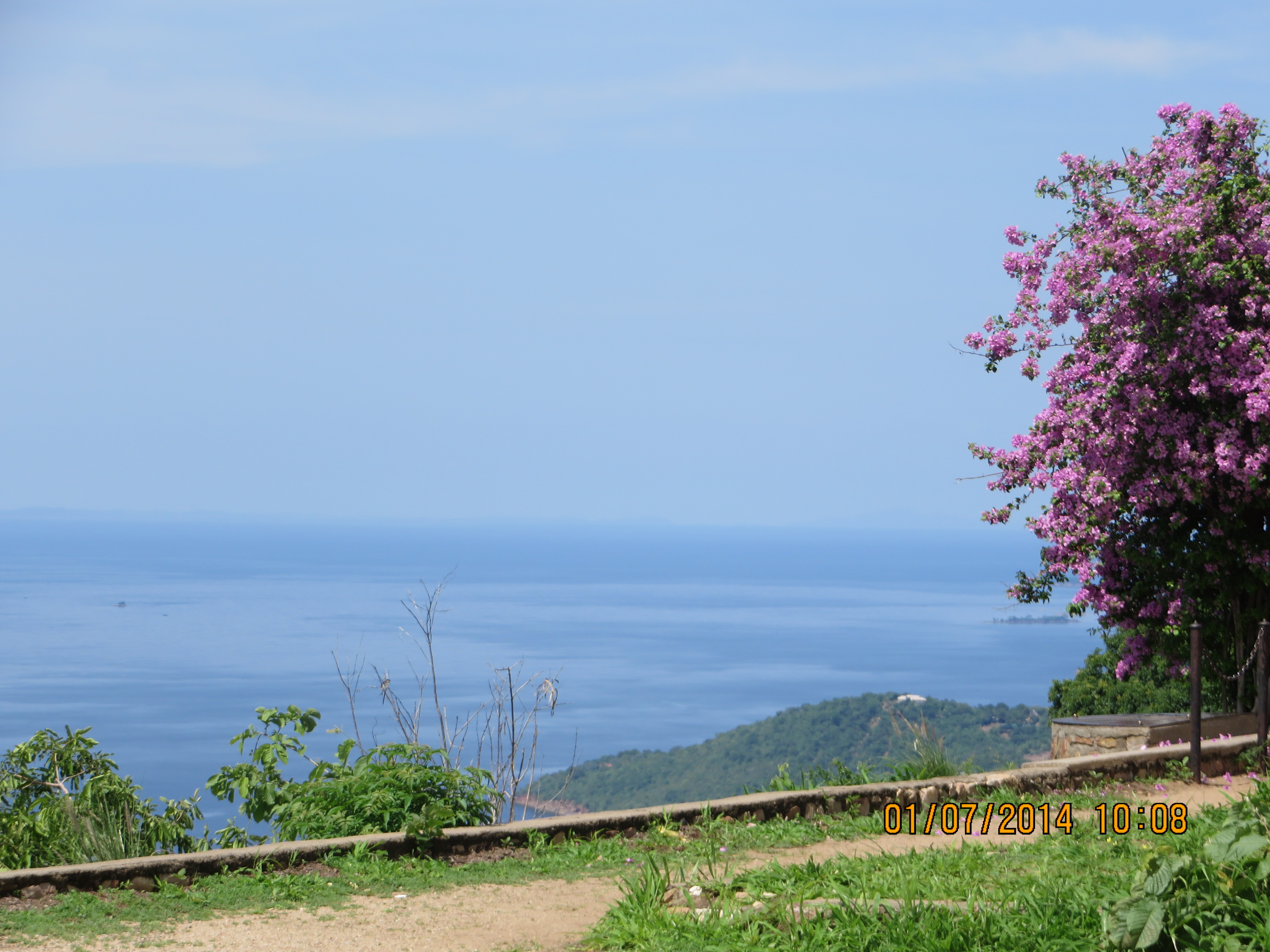
Lake Kariba is one of those wonders that look natural but are human-made: an inland freshwater sea of more than 5,000 km², born in the late 1950s when the mighty Zambezi River was dammed to generate electricity. It is one of the largest man-made lakes in the world, so vast that it has waves, islands, storms and its own aquatic life, and so beautiful that its sunsets —the red sun sinking among the petrified trunks of trees drowned by the water— have become legendary.
On the Zimbabwean side, Kariba stands for a different and delightfully slow way of travelling: the houseboat safari. Instead of crossing the savannah in a 4x4, you cruise the lake aboard a floating hotel, watching elephants and buffalo come down to drink at the shore, hippos snorting, crocodiles basking and flocks of birds, while you fish for the hard-fighting tigerfish, swim in the deck pool or simply gaze at the water. On the southern shore, Matusadona National Park adds game drives and walking safaris to the experience.
This guide explores Lake Kariba with a practical eye: how a houseboat safari works and what it costs, when to go depending on the weather and the fishing, how to get to Kariba and Matusadona, where to stay and what to do, plus the extraordinary and controversial history of the lake: the building of the dam, the displacement of the Tonga people, the legend of the serpent god Nyaminyami and the epic Operation Noah, which rescued thousands of animals from the rising waters. A serene destination steeped in history.
Lake Kariba did not exist until a few decades ago: it was created between 1955 and 1959, when the Federation of Rhodesia and Nyasaland dammed the Zambezi River at the Kariba Gorge to build a large hydroelectric power station. The reservoir flooded the valley and forced the resettlement of some 57,000 Tonga, the 'river people', who believed the project would anger Nyaminyami, the serpent god of the Zambezi. As the water rose, the famous Operation Noah (1958-1964), led by Rupert Fothergill, rescued more than 6,000 animals trapped on the islands that were forming. The full story is told on our history page.
Read the full history ↓Southern Africa's great river: from the man-made lake that drowned the land of the Tonga people and their god Nyaminyami to the walking safaris of Mana Pools, a World Heritage Site.
Read the history of The Zambezi Valley →They depart from Lusaka, 132 km away. If you book from this link we earn a commission and you pay no more.
No exact prices: a scale from $ (budget) to $$$$$ (luxury), with 2-3 options per category.
Origins, formation and what the sources say.
Before the lake existed, where that inland sea of more than 5,000 km² now stretches there was a valley: the middle valley of the Zambezi River, a warm, fertile gorge through which the great river ran east, away from the Victoria Falls it had left behind and on towards the Indian Ocean. On its banks, for centuries, lived the Tonga people, who called themselves 'basilwizi', 'the people of the river'. For the Tonga, the Zambezi was not just a source of water, fish and farmland: it was the core of their identity, their culture and their religion.
The Tonga had developed a way of life perfectly suited to the valley: they farmed the fertile riverbanks, fished the river, kept ceremonial sites and had a cosmology bound up with water. At the heart of those beliefs was Nyaminyami, the serpent god of the Zambezi, a deity with the body of a snake and the head of a fish who, according to tradition, lived in the Kariba gorge and watched over his people. Nyaminyami and his wife lived in the river, and the balance of the Tonga world depended on keeping them content.
It was an isolated, self-sufficient world, little known to outsiders, and by the mid-20th century it was about to vanish under water for good. The decision that would change everything was not made in the valley but in the colonial offices of the Federation of Rhodesia and Nyasaland, which needed energy for its development and had set its sights on the Zambezi's huge hydroelectric potential.
In the 1950s, the Federation of Rhodesia and Nyasaland —which brought together today's Zimbabwe, Zambia and Malawi— decided to build a large hydroelectric dam in the Kariba gorge, on the Zambezi, to generate the electricity that would drive the region's industry and mining. Tenders were invited in August 1955 and, in 1956, the contract for the main works was awarded to the Italian consortium Impresit. Excavation of the foundations began in September 1956.
The construction was an engineering feat and a titanic struggle against the river itself. The untameable Zambezi unleashed devastating floods: in 1957 and above all in 1958, exceptional floods destroyed cofferdams and part of the works, delaying the project and claiming lives. For the Tonga, those floods were no accident: it was Nyaminyami, furious because the dam would separate him from his wife, punishing those who dared to rein in his river. The works cost the lives of dozens of workers, many of them Italian; the Chapel of Saint Barbara in Kariba was built in their memory.
Despite everything, the dam was completed in 1959: an imposing concrete arch wall some 128 metres high that closed off the gorge and began holding back the Zambezi. Behind the wall the water started to rise, slowly flooding the valley, and Lake Kariba was born, though it would take years to fill completely. At more than 220 km long, it would become one of the largest man-made lakes in the world and the largest on the planet by volume of water stored.
The birth of the lake came at an enormous human cost, one that for decades stayed in the shadow of the celebrations over the dam. As the waters rose and flooded the valley, some 57,000 Tonga people —spread across both banks, in Southern Rhodesia (Zimbabwe) and Northern Rhodesia (Zambia)— were forced to leave their ancestral lands and were resettled by force in higher, drier and less fertile areas, far from the river that had been the centre of their lives.
The displacement was traumatic. The Tonga lost their best farmland, their fishing grounds, their ceremonial sites and, above all, their physical and spiritual bond with the Zambezi and with Nyaminyami. They were taken to places where the soil was poor and water scarce, and where they had to rebuild their lives in very hard conditions. Many resisted; in some cases, as at Chisamu, there were clashes with the colonial authorities that left people dead. Compensation was meagre and consultation almost non-existent.
More than six decades after that exodus, the Tonga people are still calling for recognition of what they lost and for redress for an uprooting that marked generations. The story of Lake Kariba is therefore a double one: that of a technical triumph that gave energy to two countries, and that of an African community sacrificed in the name of progress. Nyaminyami, everywhere today in Kariba's carvings and crafts, is also the living memory of that wound.
While the waters rose and flooded the valley, another epic was unfolding, this one with a brighter ending: Operation Noah. As the lake grew, the valley's wildlife became trapped on the hilltops, which were turning into ever smaller, more isolated islands surrounded by water. Thousands of animals were doomed to drown or starve on those shrinking islets.
Between 1958 and 1964, a team of game rangers and volunteers led by the conservationist Rupert Fothergill carried out an unprecedented rescue operation. With boats, nets, ropes and huge physical effort, they captured the animals stranded on the islands and moved them to the mainland, mostly to what is now Matusadona National Park, on the southern shore. They rescued more than 6,000 animals of dozens of species: antelope, zebra, wildebeest, monkeys, leopards, rhinos, snakes and even elephants, in exhausting and often dangerous work.
Operation Noah became an early symbol of wildlife conservation in Africa and one of the great stories of the place. It helped populate Matusadona and laid the foundations for the area's role as a protected area. It is a beautiful paradox: the same lake that drove out the Tonga people and drowned their valley also prompted one of the most famous wildlife rescues in history, whose legacy can be seen today in the animals grazing on the shores of the lake that nearly swallowed them.
More than six decades after its birth, Lake Kariba serves several vital purposes. Its dam still generates, through power stations on both banks, a large share of Zimbabwe's and Zambia's electricity, although increasingly frequent droughts linked to climate change have pushed the water level dangerously low in several years, cutting generation and raising alarms about both countries' energy future. The dam has also needed major rehabilitation work to guarantee its long-term safety.
The lake also supports a fishing economy: the introduction of 'kapenta', a small freshwater sardine, created a commercial fishery that employs thousands of people, while tigerfish and bream draw sport anglers. And, above all, Kariba has established itself as a one-of-a-kind destination: houseboat safaris, the Matusadona lodges, tigerfishing and legendary sunsets have made it one of Zimbabwe's best-loved places, with an unhurried pace that contrasts with the intensity of the falls or the big safaris.
Today, when travellers watch from a boat deck as the red sun sinks among the petrified trunks poking out of the water, they are seeing, without knowing it, a summary of this whole story: the dead trees are those of the forest left beneath the lake; the water is what drove out the Tonga and prompted Operation Noah; and the serenity of the landscape is that of a man-made giant that gave energy and life at the cost of an entire valley. Kariba is beauty and memory at once.