Viaja con Gus
Home › Zimbabwe › Chinhoyi Caves
Chinhoyi Caves
🇿🇼 Zimbabwe · Harare and the centre

Chinhoyi Caves

🪪 What do I need to enter Zimbabwe?Pick your citizenship and we tell you the visa, the days and the paperwork, with the official source.

By leaving your email and citizenship you agree to receive the documents you asked for and weekly travel news. You can unsubscribe whenever you want. How we handle your data.
Jump to what you need
📍Region
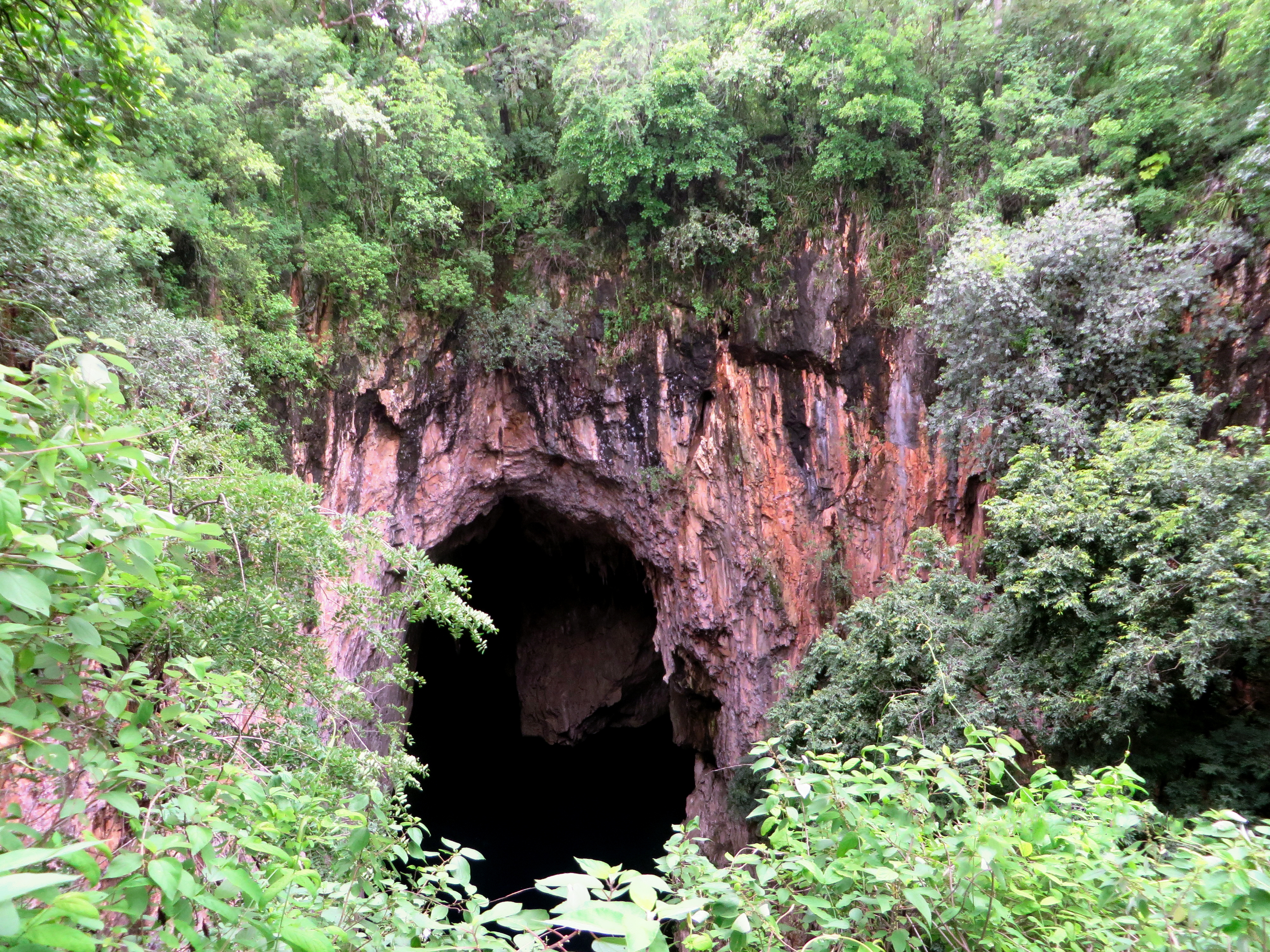
The Chinhoyi Caves are in north-central Zimbabwe, in Makonde district, Mashonaland West province, on the banks of the Manyame River. They lie about 9 km northwest of the town of Chinhoyi, on the A1 highway, and about 120-135 km from Harare. They are a system of dolomite and limestone caves protected as a recreational national park, famous across the country for the 'Sleeping Pool', an underground natural pool of an almost unreal cobalt blue. They are one of the classic day trips from the capital.
📌Best time
You can visit the caves all year round because the main attraction, the colour and temperature of the water, stays the same: the 'Sleeping Pool' is always around 22-24 °C and deep blue, whatever the season. The best time to pair the visit with good weather is the cool dry season, from May to August (sunny days, no mud on the trails). In the rainy season (November to March) the surroundings are greener, but paths can be muddy and afternoon storms are common. The blue is at its brightest when the midday sun shines into the cavern.
📌Suggested days
You can comfortably see the caves in 1 to 2 hours, so they make an ideal half-day or full-day trip from Harare (an hour and a half by car). The walk to the 'Sleeping Pool' viewpoint and the descent into the 'Dark Cave' is short but spectacular. If you want to stay longer, you can spend the night at the park's campsite or motel, and add technical diving (only with a licence and a registered club). Most people visit as a stop on the way between Harare and Kariba or as a day trip.
📌Getting there
From Harare, take the A1 highway northwest (towards Chinhoyi and Kariba): it's about 120-135 km, roughly 1,5 hours by car. The park entrance is signposted about 9 km past the town of Chinhoyi. You can go in your own or a rental car, on an organised day trip from Harare, or by long-distance bus to Chinhoyi and then a local taxi to the caves. It's a natural stop on the route to Lake Kariba.
📌Getting around
Inside the park you get everywhere on foot along short, well-marked trails: from the car park it's a few minutes' walk to the 'Sleeping Pool' viewpoint, and a stairway/passage leads down into the 'Dark Cave'. You don't need any transport inside. The path is easy but has some stretches of steps and rock, so wear comfortable shoes with good grip. Rangers and local guides can walk with you and tell you the history and legends of the caves.
📌Language and currency
English is an official language and widely spoken; Shona is also spoken in the area. The main currency for tourism is the US dollar (USD): park admission and services are paid in cash in dollars, so bring small notes in good condition. The ZiG (Zimbabwe Gold) has been the local currency since 2024, but as a visitor you'll hardly need it. At a spot like the caves, don't count on ATMs or card payments: bring the cash you need from Harare or Chinhoyi.
💱 USD exchange rate
Loading rate…
🌤️ Weather in Chinhoyi Caves
Loading weather…

The Chinhoyi Caves are one of those places that look photoshopped but are completely real: at the bottom of a dolomite cavern, just over an hour from Harare, lies a natural pool of such intense cobalt blue and such clear water that it's hard to believe. It's called the 'Sleeping Pool' or, in Shona, 'Chirorodziva', 'the pool of the fallen', and it's the star attraction of this small national park in the north-centre of the country.

The cave system formed over millions of years as the dolomite rock dissolved: slightly acidic rainwater ate away at the limestone, carving out caverns and flooded galleries. The result is a pool of exceptionally pure water, at 22-24 °C all year round, with visibility that can exceed 50 metres and depths that draw technical divers from all over the world. Hanging over all this natural beauty is also a dark history of massacres and legends that gave the place its name.

This guide explains how to visit the Chinhoyi Caves as a day trip from Harare or as a stop on the way to Kariba: what you'll see along the route, how much admission costs, what precautions to take, where to stay and eat nearby, and the fascinating story of the outlaw Nyamakwere and of Chief Chinhoyi, who gave his name to the neighbouring town. A short but unforgettable stop, perfect for breaking up the drive or for a nature escape from the capital.

📖 History of Chinhoyi Caves

The pool's Shona name, 'Chirorodziva' ('the pool of the fallen'), comes from a tragedy: around 1830, Ngoni (Angoni) warriors raiding the region are said to have thrown their victims into the cavern's pool. Before that, according to local legend, the caves were the hideout of an outlaw called Nyamakwere, who killed his victims by throwing them into the water, until a chief called Chinhoyi defeated him; the neighbouring town takes its name from him. The explorer Frederick Courtney Selous described the caves in 1888, and in 1955 they were declared a national park. The full story is on our history page.

Read the full history ↓

🏛️ Chinhoyi Caves is in Harare and the centre

The heart of Zimbabwe: the capital grew out of a Pioneer Column fort, among jacaranda-lined gardens, and just a short trip away lies the impossible blue of the Chinhoyi Caves.

Read the history of Harare and the centre →

🗺️ What to see

1
Sleeping Pool (Chirorodziva)
The underground pool of cobalt-blue water, crystal clear and 22-24 °C all year round, at the heart of the caves.
Leer más ↓
The 'Sleeping Pool', Chirorodziva in Shona, is the jewel of Chinhoyi and one of the most astonishing natural sights in Zimbabwe: a pool of glowing cobalt-blue water, enclosed by walls of dolomite rock, so incredibly clear that you can see silver fish and rock formations many metres below the surface. The water stays at a constant temperature of around 22-24 °C all year and visibility can exceed 50 metres. The colour comes from the depth, the purity of the water and the way light enters the cavern: at midday, when the sun shines straight in, the blue is at its most intense. From the raised viewpoint you can take in the whole pool, with the rock walls dropping sheer to the water. It's a place of almost sacred stillness, made all the more powerful by the tragic legends behind its name. Getting there: a few minutes' walk from the park car park. Best time: midday for the most intense blue; all year round. Tips: bring a camera and stay behind the railings; the pool is extremely deep.
ℹ️ Distance: A few minutes' walk from the park car park · Best time: Midday (bluest water); all year round · Admission: Included in the daily conservation fee (US$ 12 for international day visitors, US$ 5 if you stay inside the park; ZimParks 2026 tariff) · Duration: 30 to 60 min
2
Dark Cave
The descent through a rock passage to see the pool from below, in the half-light of the cavern.
Leer más ↓
The 'Dark Cave' is the other half of the Chinhoyi experience. From the upper viewpoint, a trail with steps and a rock passage leads down into the hillside, where the cavern turns dark and cool and you see the same 'Sleeping Pool' from a lower, more mysterious angle. It's a short but atmospheric descent between dolomite walls, with light filtering in and the blue water shining below. This part of the system also includes the 'Bat Cave' and flooded galleries that connect to other underground chambers, such as the 'Blind Cave', through underwater passages that only divers explore. The walk as far as the general public can go is safe and guided, and its shade and coolness are the perfect counterpoint to the dazzling blue at the surface. Getting there: continue along the trail from the 'Sleeping Pool'. Best time: all year round. Tips: wear shoes with good grip for the steps; some stretches may be wet and slippery.
ℹ️ Distance: Continuation of the trail, next to the Sleeping Pool · Best time: All year round · Admission: Included in the daily conservation fee (US$ 12 for international day visitors; ZimParks 2026 tariff) · Duration: 30 to 45 min
3
Cave diving (licensed divers only)
One of Africa's great cave-diving destinations, with flooded galleries of extreme visibility and great depths.
Leer más ↓
The Chinhoyi Caves are an internationally renowned destination for cave diving and technical diving. The purity of the water, visibility of more than 50 metres and flooded galleries that plunge beyond 100 metres deep, linking the 'Sleeping Pool', the 'Dark Cave', the 'Bat Cave' and the 'Blind Cave' through underwater passages, put it on a par with the best cave-diving sites in the world. Ultra-deep technical diving expeditions have been carried out here. It's an activity strictly for certified divers and, by regulation, it must be done with a dive club registered in Zimbabwe. This is no dive for beginners: the depth, the darkness and the confined space call for specific cave-diving training. For the ordinary visitor, the experience is limited to admiring the pool from the viewpoints, and that's more than enough. Getting there: inside the park; arranged through authorised dive clubs. Best time: all year round (constant water temperature). Tips: only with certification and a registered club; the fee for international divers is much higher.
ℹ️ Distance: At the Sleeping Pool / Dark Cave, inside the park · Best time: All year round; water at 22-24 °C · Admission: Diving charged separately (international divers ~USD 100; locals much less), only with a licence and a registered club (check, 2025) · Duration: Depends on the dive
4
Chinhoyi town and surroundings
The neighbouring town that gives the caves their name, a service base and the starting point towards Kariba.
Leer más ↓
The town of Chinhoyi, about 9 km from the caves, is the capital of Mashonaland West province and a handy service base: fuel, banks, shops, accommodation and restaurants. It's a farming town in the tobacco and maize belt, without major tourist attractions of its own, but useful for stocking up before or after the caves or on the way to Lake Kariba. The name of the town, and of the park, comes from the Shona chief Chinhoyi, who according to tradition defeated the outlaw Nyamakwere, who terrorised the region from the caves. There are farms in the surrounding area, and it's a good place to get a feel for rural highveld Zimbabwe. For travellers, Chinhoyi works mainly as a logistics stop on the country's northwest route. Getting there: on the A1 highway, 9 km from the caves and 1,5 h from Harare. Best time: all year round. Tips: fill up with fuel and withdraw cash before heading on to Kariba.
ℹ️ Distance: 9 km from the caves; 120-135 km from Harare · Best time: All year round · Admission: Town with free access; service base · Duration: As long as you like (logistics stop)
5
Park recreation area, campsite and wetland
The green area around the caves, with a campsite, picnic spots and a wetland ecosystem protected as a Ramsar site.
Leer más ↓
Beyond the caves themselves, the Chinhoyi Recreational Park offers a pleasant green area around the karst system, with picnic spots under the trees, a ZimParks campsite and trails that let you stretch the visit beyond a quick look at the 'Sleeping Pool'. If you stay overnight, you can enjoy the quiet outside peak hours and see the pool in different light throughout the day. The site also has ecological value: in 2013 the Chinhoyi Caves were declared a wetland of international importance (Ramsar site) for their underground water system. The surroundings are home to vegetation and wildlife typical of highveld miombo woodland, and it's a good place for a relaxed walk, taking in the contrast between the underground world of blue water and the wooded savannah above. Getting there: within the park grounds, next to the caves. Best time: dry season for comfortable camping and walking. Tips: if you want to enjoy the place at a slower pace, consider staying overnight; bring everything you need because facilities are basic.
ℹ️ Distance: Within the park grounds, next to the caves · Best time: Dry season (May-September) for camping · Admission: With the conservation fee; ZimParks camping US$ 8 for locals and US$ 12 for international visitors per person per night (2026 tariff) · Duration: As long as you like (picnic or overnight)
6
The Dark Cave, the Bat Cave and the underground world
The system of connected underground galleries and chambers, with the bat cave and flooded passages.
Leer más ↓
Beyond the 'Sleeping Pool' and the main descent, the Chinhoyi Caves are in fact an underground system of interconnected galleries and chambers that gives a sense of the scale of the karst phenomenon. The 'Bat Cave', a sub-chamber of the 'Dark Cave', is home to bat colonies, and from it run passages, some of them flooded, that connect with other chambers such as the 'Blind Cave', through underwater conduits that only divers explore. For the general visitor, this underground world can be sensed from the accessible routes: the half-light, the dripping water, the coolness and the echo make you feel you're inside the hillside, in contrast to the dazzling blue at the surface. A good guide explains how the whole system formed and what lies beyond what you can see, helping you grasp the true scale of the caves and why they are so famous among cave divers. Getting there: part of the park route, next to the Sleeping Pool. Best time: all year round. Tips: wear shoes with grip; some stretches may be wet. Ask your guide about the geology of the system.
ℹ️ Distance: Inside the cave system, next to the Sleeping Pool · Best time: All year round · Admission: With the ZimParks daily conservation fee (US$ 12 for international day visitors; 2026 tariff) · Duration: Part of the general route
📶I have never landed without internet. I arrive and my phone connects to the strongest network in the country I am visiting: I can say I landed, sort out transport, book tours and keep posting, at a seriously good price. I always use the Maya eSIM — check their plans by clicking the banner.See plans →Maya Mobile eSIM — skip roaming fees, unlimited data
What nobody tells you

💵 Prices

Tickets

TypePrice
Entrada al parque, no residente / internacional (adulto)Chinhoyi Caves daily conservation fee: US$ 12,00 per person per day for international visitors not staying overnight in the park and US$ 5,00 if staying inside. Source: ZimParks «De-Gazetted Tariff 2026» (zimparks.org.zw/media/2026/02/De-Gazetted-Tariff-2026.pdf, verified 10/08/2026)
Entrada, residente SADCUS$ 10,00 per person per day for SADC residents not staying overnight in the park and US$ 5,00 if staying inside. Source: ZimParks «De-Gazetted Tariff 2026» (zimparks.org.zw/media/2026/02/De-Gazetted-Tariff-2026.pdf, verified 10/08/2026)
Entrada, residente localUS$ 5,00 per person per day for local residents not staying overnight in the park and US$ 2,00 if staying inside. Source: ZimParks «De-Gazetted Tariff 2026» (zimparks.org.zw/media/2026/02/De-Gazetted-Tariff-2026.pdf, verified 10/08/2026)
Buceo, buceador internacionalAbout USD 100, only with a licence and a registered club (travellers' reports, 2025; check when visiting). ⚠️ The ZimParks 2026 tariff does not list diving among its fees: only conservation fees, accommodation, vehicles and events
Buceo, buceador localAbout USD 10, only with a licence and a registered club (travellers' reports, 2025; check when visiting); not listed in the official tariff either
Camping en el parqueZimParks camping at the caves: US$ 8 for local residents and US$ 12 for international visitors per person per night, the same for basic and equipped pitches. The daily conservation fee is charged separately. Source: ZimParks «De-Gazetted Tariff 2026» (zimparks.org.zw/media/2026/02/De-Gazetted-Tariff-2026.pdf, verified 10/08/2026). Bookings at https://book.zimparks.org.zw/
🔄 updated monthlyOfficial / reference values · double-check when buying

Activities and tours

ActivityPriceDurationOperator
Day trip to the caves from Harare (with transport and refreshments)From about USD 80-150 per person depending on group size (2026; check when booking)Full dayDay-tour operators in Harare
Guided walk through the Sleeping Pool and the Dark CavePark admission + tip for the guide (2025)1 to 2 hoursRangers / local guides
Technical / cave diving (certified divers only)Diving charged separately (~USD 100 for international divers); with a registered club (2025)Depends on the diveRegistered dive clubs in Zimbabwe
Camping and overnight stays in the parkZimParks camping: US$ 8 for locals and US$ 12 for international visitors per person per night (2026 tariff)1 night or moreZimbabwe Parks and Wildlife (ZimParks)
🔄 updated monthlyOfficial / reference values · double-check when buying

🚌 How to get there and distances

Getting around

ModePriceDurationNotes
Own or rental carFuel + rental from ~USD 40-80/day (2026)1,5 h from HarareThe most convenient option; the A1 is paved. Driving is on the left. Fill up with fuel in Chinhoyi
Organised trip from HarareUSD 80-150 per person depending on group size (2026)Full dayIncludes transport, a guide and sometimes refreshments; the simplest option if you don't drive
Long-distance bus Harare-Chinhoyi + local taxiBus from ~USD 5-10 + taxi to the caves (2026)2 to 3 h in totalBudget option; in Chinhoyi, take a local taxi for the 9 km to the park
On foot inside the parkFree (with admission)1 to 2 hShort trails with steps; shoes with good grip. Guide recommended for the history
🔄 updated monthlyOfficial / reference values · double-check when buying

How to get there

RouteAirlines / operatorsAvg. priceDuration
Harare → Chinhoyi Caves via the A1Own car/rental, tour, bus + taxiTour USD 80-150 p/p; bus from USD 5-10 (2026)1.5 h (120-135 km)
Chinhoyi Caves → Lake Kariba (Kariba town) via the A1Own car/rental, long-distance busesDepends on mode; fuel/fare (2026; check)3 to 4 h further northwest
Chinhoyi ↔ Harare by long-distance busIntercity buses (several companies)From about USD 5-10 (2026; check)1.5 to 2 h
🔄 updated monthlyOfficial / reference values · double-check when buying

🏨 Where to stay

No exact prices: a scale from $ (budget) to $$$$$ (luxury), with 2-3 options per category.

In the park (camping and motel)
Price$$$$$
Recommended options
ZimParks campsite (rate per person) and the historic Chinhoyi Caves Motel/Hotel, with basic facilities, next to the park entrance; ideal if you want to wake up at the caves
Lodges and guesthouses in Chinhoyi
Price$$$$$
Recommended options
From about USD 30-70 a night; budget lodges and guesthouses in the town of Chinhoyi, 9 km away, with the essentials for an overnight stay
Base in Harare (recommended for a day trip)
Price$$$$$
Recommended options
Most people visit the caves as a day trip from Harare and sleep there; see the Harare guide for the full range of hotels

🍴 Where to eat

TypePriceOptions / signature dish
Restaurante/refrigerio del parque$$$$$USD 5-15 per person; simple food and drinks at the motel/service area by the caves (check availability)
Comedores y takeaways en Chinhoyi$$$$$USD 5-15 per person; sadza with meat or chicken, fish and popular dishes in the nearby town
Picnic (recomendado)$$$$$Cost of whatever you bring; many visitors bring their own food and water for the day from Harare or Chinhoyi

📖 History of Chinhoyi Caves

Origins, formation and what the sources say.

Millions of years of water and stone

The story of the Chinhoyi Caves begins long before any human story, at the bottom of a shallow sea that covered this part of Africa hundreds of millions of years ago. In those waters, layer upon layer of calcium and magnesium carbonate sediments built up. Over time they were compressed and transformed into dolomitic rock, a kind of limestone, which makes up the ground of the area today.

When the sea disappeared and the rock was exposed, the slow work of sculpting the caves began. As rainwater seeps through the soil, it absorbs carbon dioxide and becomes slightly acidic. This acidic solution gradually dissolves the calcium carbonate in the dolomite and opens cracks. Over thousands of years those cracks widen into underground galleries, chambers and shafts. That is how the whole Chinhoyi cave system was carved out, drop by drop.

The most spectacular result of this process is the 'Sleeping Pool', a very deep flooded shaft of astonishingly pure water. The water filters through the rock so slowly that it arrives almost crystal clear. Its cobalt-blue colour, its constant temperature of 22-24 °C and its visibility of more than 50 metres all come directly from this geology. Nature took millions of years to paint the blue that leaves visitors breathless today.

The outlaw Nyamakwere and Chief Chinhoyi

A dark story hangs over the calm beauty of the caves. It is a mix of fact and legend, passed down through Shona oral tradition. According to the tale, in ancient times the caverns were the hideout of a feared outlaw named Nyamakwere, who terrorised the communities of the region. Nyamakwere killed his victims and threw their bodies into the cave's pool, whose deep, silent waters swallowed every trace.

The terror lasted until a brave Shona chief named Chinhoyi (or Chinhoi) confronted Nyamakwere, defeated him and killed him, freeing the region from the threat. To thank him and remember the deed, the community honoured his name, which became tied to the place forever: both the caves and the nearby town of Chinhoyi are named after him. In colonial times the town was called Sinoia, a distortion of the name. After independence it took back its original form, Chinhoyi.

Shona oral tradition presents Nyamakwere as a historical outlaw and Chinhoyi as the chief who defeated him and gave the place its name. The details vary from one version to another and blend with legend.

Chirorodziva, 'the pool of the fallen'

The Shona name for the 'Sleeping Pool' is 'Chirorodziva', usually translated as 'the pool of the fallen' or 'of those who fell'. The name does not come from the Nyamakwere legend. It comes from a more specific and equally tragic historical event that took place around 1830, during the great upheavals that shook southern Africa in the 19th century.

In those years, waves of Ngoni warriors (known locally as 'Angoni') were moving north and destroying communities as they went. They had been displaced by the wars and migrations of the 'Mfecane' that followed the expansion of the Zulu kingdom. According to tradition, a group of these warriors attacked the local people around Chinhoyi and threw their victims into the cave's pool. The name Chirorodziva comes from that massacre, from those bodies that 'fell' into the water.

So the same place that fascinates people today with its beauty also carries the memory of violence in its name. That contrast between the almost sacred calm of the blue water and the echo of the tragedies that happened there is part of what makes the Chinhoyi Caves so meaningful for the Shona communities of the region, beyond their appeal to tourists.

From European exploration to national park

Local communities had known the caves since time immemorial. They entered the European written record in the late 19th century, at the height of British colonial expansion into the interior of southern Africa. The famous hunter and explorer Frederick Courtney Selous described and documented the Chinhoyi caves in 1888 and made them known to the outside world. A few years later, Selous guided the Pioneer Column that founded Salisbury (Harare).

In the colonial era of Southern Rhodesia, the caves became well known as a natural curiosity and a destination for day trips. Their geological value, their scenery and their impossibly blue water led the authorities to protect them. In 1955 they were declared a national park under the country's parks authority, now the Zimbabwe Parks and Wildlife Management Authority (ZimParks). Over time, a campsite and a motel were built next to the caves for visitors.

Recognition of their natural importance kept growing. In May 2013 the Chinhoyi Caves were designated a Ramsar site, a wetland of international importance, because of the value of their groundwater system. Today the park is both a protected area and a tourist destination, as well as a magnet for cave divers.

Chinhoyi today: natural beauty and world-class diving

After Zimbabwe became independent in 1980, colonial place names were changed. The town of Sinoia took back its African name, Chinhoyi, and the park's identity grew stronger with it. Today the caves are one of the most popular trips in the centre of the country, especially as a day trip from Harare or as a stop on the way to Lake Kariba. They are also a symbol of Zimbabwe's natural heritage.

In recent decades, the Chinhoyi Caves have also earned a place on the world diving map. Flooded passages descend beyond 100 metres and link the Sleeping Pool with the Dark Cave, the Bat Cave and the Blind Cave underwater. Together with the purity of the water and the exceptional visibility, they attract technical divers and cave-diving expeditions from many countries, who compare them with the best sites on the planet. Diving is only allowed with certification and through clubs registered in Zimbabwe.

For most travellers, though, the magic is still in the simplest things. You walk a few minutes from the car park, look out from the viewpoint and find, in the middle of the Mashonaland plateau, a pool of unreal blue that is full of history and legend. Geological beauty millions of years old, the memory of ancient tragedies and modern underwater adventure all share one place: the Chinhoyi Caves, Zimbabwe's blue wonder.

📚 Bibliography

  • Wikipedia (EN) — «Chinhoyi Caves»: https://en.wikipedia.org/wiki/Chinhoyi_Caves
  • Zimbabwe Field Guide — «Chinhoyi Caves Recreational Park»: https://zimfieldguide.com/mashonaland-west/chinhoyi-caves-recreational-park
  • Great Zimbabwe Guide — «A guide to Chinhoyi Caves: Deep blue wonder»: https://www.greatzimbabweguide.com/guide-chinhoyi-caves/
  • Zimbabwe Parks and Wildlife Management Authority (ZimParks): https://www.zimparks.org.zw/
  • This is Africa — «Greetings from Zimbabwe's Deep Blue Wonder»: https://thisisafrica.me/arts-and-culture/greetings-zimbabwes-deep-blue-wonder/
  • Atlas Obscura — «Chinhoyi Caves»: https://www.atlasobscura.com/places/chinhoyi-caves
  • Ramsar Convention — Zimbabwe sites: https://www.ramsar.org/
  • Wikipedia (EN) — «Frederick Selous»: https://en.wikipedia.org/wiki/Frederick_Selous

❓ Frequently asked questions

Can you swim in the Sleeping Pool?+
Not the general public. The 'Sleeping Pool' is viewed from the lookouts: it is extremely deep, its walls drop sheer, and it carries strong symbolism because of the tragic legends tied to it. The water is used only for technical and cave diving, and only by certified divers operating with a club registered in Zimbabwe. For the ordinary visitor, the experience is visual: gazing at that impossible cobalt blue from above and from the Dark Cave.
Is it worth going from Harare just for the caves?+
As a half-day or day trip, yes: it is one of the most impressive natural getaways near the capital, just 1.5 hours away. The visit itself is short (1-2 hours), so many people combine it with the road to Lake Kariba —it's on the way— or add a stop in Chinhoyi. If you're after a multi-day plan, the caves are more a spectacular add-on than a destination in their own right.
How much is admission and how do you pay?+
ZimParks publishes the daily conservation fee for the caves in its official tariff «De-Gazetted Tariff 2026»: US$ 12 per person per day for international day visitors and US$ 5 if staying overnight inside the park; US$ 10 and US$ 5 for SADC residents; US$ 5 and US$ 2 for local residents. Camping costs US$ 12 per person per night for foreigners and US$ 8 for locals. Payment is in cash, in US dollars, so bring small notes in good condition from Harare or Chinhoyi: don't count on ATMs or card payment at the caves. Diving has a separate, much higher cost for foreigners.
Why is the water so blue?+
Because of a combination of factors: the great depth of the sinkhole, the extreme purity of the water (which filters slowly through the dolomite) and the way light enters the cavern. The cleaner and deeper the water, the more it absorbs warm colours and reflects blue, and at midday, when the sun shines straight in, the colour reaches its peak intensity. Visibility can exceed 50 metres, which is exceptional.
Is the walk safe?+
Yes. The route to the Sleeping Pool lookout and the descent into the Dark Cave is short and safe, with paths and stairs, although there are stone sections and steps that can be damp and slippery: comfortable shoes with good grip are a good idea. Going with a ranger or local guide adds safety and, above all, the story of the place's history and legends. As in any park, stick to the railings and don't lean too far over the pool.

More places in Zimbabwe

Gran ZimbabweHarareLago KaribaMasvingoNyangaParque Nacional Gonarezhou
See every place in Zimbabwe →The history of Zimbabwe →
Sources consulted (5)
Still planning?
Explore more destinations in Zimbabwe
See all destinations →
Image credits
Photos from Wikimedia Commons, each under its own licence (CC BY, CC BY-SA or public domain). Open each file to see its author and licence.
Chinhoyi caves, Zimbabwe