Viajá con Gus
HomePuerto RicoOld San Juan
Old San Juan
🇵🇷 Puerto Rico · San Juan metropolitan area

Old San Juan

Jump to what you need
📌What it is
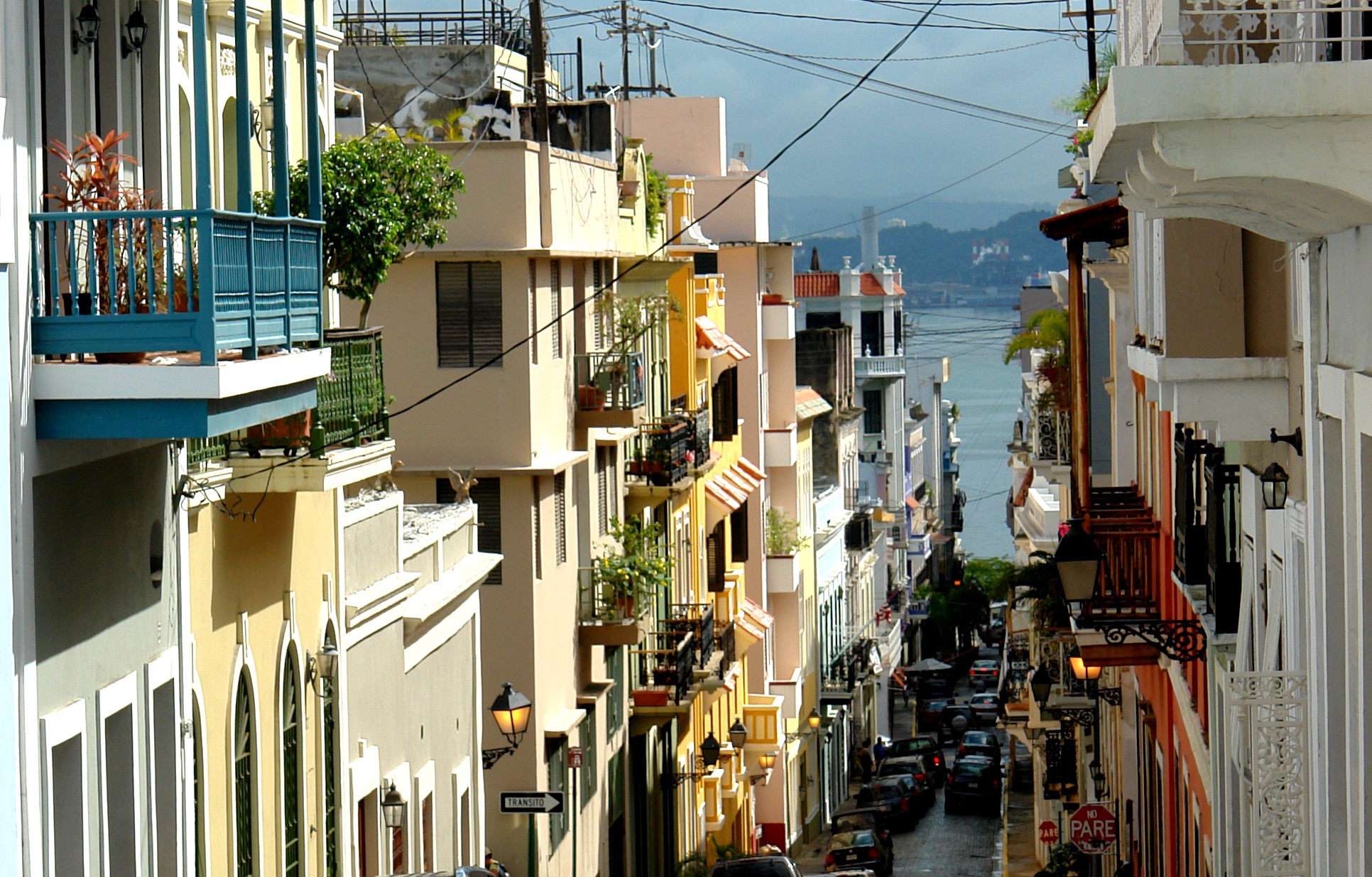
Old San Juan is the historic quarter of the capital of Puerto Rico, occupying the small islet at the mouth of San Juan Bay. It's one of the best-preserved colonial quarters in the Americas and the core of the ensemble declared a UNESCO World Heritage Site in 1983 (La Fortaleza and San Juan National Historic Site, site no. 266). Its seven blocks of cobbled streets, colorful houses, plazas and churches are ringed by walls and watched over by two enormous castles: El Morro and San Cristóbal
📌Service town
Old San Juan is itself a neighborhood within the city of San Juan, so it has every service at hand: boutique hotels, restaurants, cafés, shops and the busiest cruise terminal in the Caribbean, at its own piers. Luis Muñoz Marín International Airport (SJU) is about 15 km away. It connects with the rest of the city (Condado, Santurce, Isla Verde) and the island by taxi/app (Uber works in the metro area), the AMA urban bus, the Cataño ferry and the road; the historic free trolley of the quarter has intermittent/suspended service
📌Best time to go
It can be enjoyed year-round thanks to San Juan's tropical climate. The dry season (December to April) is the most pleasant for walking, though it coincides with the heaviest arrival of cruise ships and tourists; at Christmas and during the Fiestas de la Calle San Sebastián (mid-January) the quarter fills with music and people. Summer brings more heat and short afternoon showers. The best time to walk it is early in the morning or at sunset, when the heat drops, there are fewer people and the light gilds the cobblestones
📌Suggested days
Old San Juan can be covered in 1 intense day, visiting the El Morro and San Cristóbal castles, the Cathedral, La Fortaleza, the plazas and the Paseo de la Princesa. But 2 days are ideal, to stroll its streets unhurried, step into museums and galleries, enjoy its food and experience the nightlife of Calle San Sebastián. Since it's part of San Juan, it's usually combined with the beaches of Condado and Isla Verde and day trips to the rest of the island
💱 USD exchange rate
Loading rate…
🌤️ Weather in Old San Juan
Loading weather…

Old San Juan is, without question, one of the colonial jewels of all the Americas. Enclosed on the small islet that guards the mouth of the bay, this historic quarter of streets paved with bluish cobblestones seems stopped in time: houses from the 16th to the 19th century painted in pastel colors, wrought-iron balconies, monumental doors, plazas with fountains and centuries-old churches, all embraced by walls that for centuries made San Juan the most feared stronghold in the Caribbean.

Walking Old San Juan is traveling through five centuries of history in barely seven blocks. It's climbing El Morro and San Cristóbal, two of the largest fortresses Spain built in the Americas; it's looking out over the bay from the Paseo de la Princesa and the old Puerta de San Juan; it's getting lost along Calle del Cristo and Calle Fortaleza with its colored umbrellas; it's hearing salsa and bomba playing at night on Calle San Sebastián. And it's also eating a good mofongo or having the piña colada the city claims to have invented.

This guide covers the essentials of Old San Juan with a practical and warm eye: its castles and walls, its plazas and churches, its most photographed streets and its corners with sea views, plus tips for getting around, eating and enjoying it without missing a thing. It's the historic heart of Puerto Rico and the best way to start understanding the island.

📖 History of Old San Juan

Old San Juan was born around 1521, when the Spanish settlers moved to this islet the first settlement, Caparra, founded by Juan Ponce de León in 1508 on the mainland and abandoned as unhealthy. The new location, next to the port and easy to defend, turned the city into the key to the Caribbean. For its strategic value, the Spanish Crown heavily fortified it from the 16th to the 18th century: it raised the Castillo San Felipe del Morro (from 1539), the walls with their gates, La Fortaleza (from 1533) and the Castillo San Cristóbal. The walled city withstood the attacks of Drake (1595), of Cumberland's English (1598), of the Dutch (1625) and of the British (1797), earning a reputation as impregnable. In 1898, after the Spanish-American War, Puerto Rico passed into US hands under the Treaty of Paris. Through the 20th century, the city grew far beyond the walls, while the old quarter went through a process of restoration that culminated in 1983 with the declaration of La Fortaleza and the San Juan National Historic Site as a UNESCO World Heritage Site. The full history is on our history page.

Read the full history ↓

🏛️ Old San Juan is in San Juan

The capital and one of the oldest cities founded by Europeans in the Americas: born at Caparra, walled against the Atlantic and crowned by El Morro and San Cristóbal, it blends five centuries of colonial history with the most intense cultural life in the Caribbean.

Read the history of San Juan →

🗺️ What to see

1
Castillo San Felipe del Morro (El Morro)
The great six-level fortress looking out to sea at the tip of the islet, the symbol of San Juan.
The Castillo San Felipe del Morro, 'El Morro', is the most emblematic monument of Old San Juan and one of the most recognizable images of the Caribbean. Spain began building it in 1539 on a rocky promontory at the northwest end of the islet, to command the entrance to the bay, and kept enlarging it for over two centuries until it became a citadel of six levels descending in steps toward the sea, with walls up to 5.5 meters thick, sentry boxes (a symbol of the city) and cannon batteries. El Morro withstood Francis Drake's attack in 1595 and the Dutch siege of 1625, and lived through the US bombardment of 1898. Today it forms part of the San Juan National Historic Site, run by the US National Park Service, and it's a UNESCO World Heritage Site. Walking its ramps, tunnels, dungeons, sentry boxes and esplanades, leaning out of the embrasures with the ocean behind, is to immerse yourself in the era when this fortress was the key to the New World. In front of the castle stretches an enormous grass esplanade, the old field of fire, today turned into a popular park where San Juan residents fly chiringas (kites), picnic and stroll at sunset, with the lighthouse and the sentry boxes cut against the sky: one of the city's most beautiful postcards. Admission includes San Cristóbal (valid the same day for both castles). Getting there: on foot from the quarter, up Calle Norzagaray or across the Morro field esplanade. Best time and hours: early in the morning or at sunset, to avoid the midday sun. Tips: bring sunscreen, water, a cap and comfortable footwear; the esplanades have little shade and there's a lot of walking.
ℹ️ Distance: Northwest end of the islet; on foot via Calle Norzagaray or the esplanade · Best time to go: Early morning or sunset (avoid the midday sun) · Admission: US$ 10 adults (includes San Cristóbal the same day); under-15s free (source: National Park Service, nps.gov/saju, verified July 2026) · Duration: 2 to 3 hours
2
Castillo San Cristóbal
The largest Spanish fortress in the Americas, which defended the city from the land side, with tunnels and the legendary Garita del Diablo.
The Castillo San Cristóbal is the other great fortress of Old San Juan and, in area, the largest Spain built anywhere in the Americas. While El Morro defended the entrance from the sea, San Cristóbal protected the city on the landward side, its weakest flank. It was built between the 17th and 18th centuries, resulting in a complex system of walls, bastions, moats, tunnels and stepped levels, designed according to the best European military engineering of the era. Touring it means losing yourself among ramps, parade grounds, barracks, powder magazines and underground tunnels. One of its jewels is the Garita del Diablo (the Devil's Sentry Box), an isolated watchtower at one end, surrounded by legends (the most famous tells of the mysterious disappearance of a sentry), reached through a tunnel. From the top of its walls, the views of the Atlantic, of the city entrance and of the quarter itself are magnificent. Along with El Morro and the walls, San Cristóbal forms part of the San Juan National Historic Site and of the UNESCO World Heritage ensemble. It's the best way to understand how San Juan came to be one of the most impregnable strongholds in the Caribbean. The same US$ 10 ticket gives access to both castles on the same day. Getting there: it's at the eastern end of the quarter, on Calle Norzagaray. Best time and hours: in the morning or late afternoon. Tips: combine both castles on the same day, bring water and sun protection, and save energy for the ramps.
ℹ️ Distance: Eastern end of the islet, on Calle Norzagaray (on foot) · Best time to go: Morning or late afternoon · Admission: Included in the US$ 10 El Morro ticket (valid the same day for both castles; source NPS, verified July 2026) · Duration: 1 to 2 hours
3
Calle del Cristo and Calle Fortaleza (the most photographed streets)
The two most picturesque streets of the quarter, with blue cobblestones, colorful houses and the 'Umbrella Street'.
If two streets sum up the charm of Old San Juan, they are Calle del Cristo and Calle Fortaleza. Calle del Cristo is a narrow, steep cobbled lane, one of the oldest and most beautiful in the city, lined with colonial houses painted in pastel colors, shops, galleries and cafés. It runs down from the Cathedral area to the small Capilla del Cristo, attached to the wall, with the Parque de las Palomas to one side and views of the bay: a short but lovely walk, ideal for photos. Calle Fortaleza, for its part, connects the Plaza de Armas with La Fortaleza (the governor's residence) and has become world-famous for its installations of colored umbrellas suspended over the street, the 'Umbrella Street', which change with the seasons and events and have become one of the most photographed places on the island. Restaurants, bars and shops line both sides. Beyond these two, the whole quarter invites you to get lost: Calle San Sebastián (the epicenter of the night), Calle San Francisco, the Caleta de San Juan that runs down toward the old city gate. Every corner offers a flower-filled balcony, a colorful facade or a sea view. Getting there: both streets are right in the historic quarter, steps from the Plaza de Armas and the Cathedral. Best time and hours: early in the morning for photos without crowds; the umbrellas look best in daylight. Tips: wear comfortable footwear for the slopes and the cobblestones, and check whether the umbrella installation is up on the date of your visit (it changes periodically).
ℹ️ Distance: Right in the historic quarter, steps from the Plaza de Armas and the Cathedral (on foot) · Best time to go: Early morning (fewer people, better light for photos) · Admission: Free (public streets) · Duration: 1 to 2 hours
4
Cathedral of San Juan Bautista
One of the oldest churches in the Americas, where the remains of Juan Ponce de León rest.
The Cathedral of San Juan Bautista is one of the oldest churches on the American continent and a central monument of Old San Juan. Its first version, of wood and thatch, dates from the 1520s; the current stone structure was raised in the 18th century and combines late Gothic elements with later additions. Inside, sober and light-filled, rest the remains of Juan Ponce de León, the conquistador who began the island's colonization and its first governor, moved here in the 20th century. The cathedral also keeps the relic of Saint Pio, a Christian martyr displayed in a case, and preserves an atmosphere of quiet in the middle of the historic center. Its chapels, its altarpiece and its colonial architecture make it a must-stop. It's open to visit (with a suggested donation) and a cool refuge from the heat of the streets. The cathedral rises on Calle del Cristo, one of the prettiest in the quarter, in a setting full of history: steps away are the old Dominican Convent, plazas and colonial mansions. It is also the seat of the Archdiocese of San Juan. Getting there: it's on Calle del Cristo, in the heart of Old San Juan, on foot from anywhere in the quarter. Best time and hours: in the morning, to visit it in peace and while respecting Mass times. Tips: dress respectfully as it's a church in use, keep quiet inside and combine the visit with Calle del Cristo and the Capilla del Cristo, very close by.
ℹ️ Distance: Calle del Cristo, Old San Juan (on foot) · Best time to go: In the morning, respecting Mass times · Admission: Free, with a suggested donation of US$ 1–3 (check visiting hours outside Mass) · Duration: 30 to 45 minutes
5
Plaza de Armas and Plaza de Colón
The quarter's two main plazas, the heart of everyday life and a meeting point for locals and visitors.
The plazas are the social heart of Old San Juan, and two stand out above the rest. The Plaza de Armas is the quarter's main square, its nerve center since colonial times. Surrounded by important buildings like the Alcaldía (San Juan City Hall) and the old Intendencia, it has at its center a fountain with four statues representing the seasons of the year. It's a place of constant coming and going, with shaded benches, cafés, piragua sellers, musicians and the flow of everyday life: a good spot to sit and watch the city's pulse. The Plaza de Colón, at the eastern end of the quarter (next to the entrance by San Cristóbal), is presided over by a statue of Christopher Columbus on a column, erected on the fourth centenary of the 'discovery'. It's a more open plaza, a connecting point with the rest of the city and close to the Teatro Tapia, one of the oldest theaters still in operation in the Americas. Other charming plazas in the quarter are the Plaza del Quinto Centenario, with its great ceramic totem and views of El Morro, and the Plazuela de la Rogativa, with its commemorative sculpture and a lookout over the bay. Touring the plazas is a great way to take the neighborhood's pulse. Getting there: the Plaza de Armas is in the center of the quarter; the Plaza de Colón, at the eastern end; both on foot. Best time and hours: in the morning or at sunset; weekends usually have more atmosphere and music. Tips: use the Plaza de Armas as a landmark to orient yourself (the main streets radiate from here) and rest in the shade of its trees between visits.
ℹ️ Distance: Plaza de Armas in the center of the quarter; Plaza de Colón to the east (on foot) · Best time to go: Morning or sunset; weekends have more atmosphere · Admission: Free (public plazas) · Duration: 30 to 60 minutes
6
Paseo de la Princesa, the city wall and the Puerta de San Juan
The tree-lined promenade at the foot of the wall, with the Fuente Raíces and the old red gate of the walled city.
The Paseo de la Princesa is one of the most pleasant corners of Old San Juan for an unhurried walk. It's an elegant tree-lined 19th-century esplanade that runs along the outside of the southern wall, facing the bay. It takes its name from the old La Princesa building, which was a jail in colonial times and today houses tourism offices and an art gallery. The promenade is dotted with benches, lampposts, palm trees and stalls of artisans and piragua sellers. Its most photographed spot is the Fuente Raíces, a large bronze fountain representing the three peoples that gave rise to Puerto Rican identity: the Taíno, the Spanish and the African. From there you can keep walking alongside the wall to the Puerta de San Juan, the old red gate through which those arriving by sea entered the walled city (including the authorities and the bishops), one of the few still preserved. Going through it and following the path beside the bay, toward El Morro, gives beautiful views of the water, the cruise ships and the sentry boxes. Very close by is the Plazuela de la Rogativa, with its sculpture recalling the legend that a nighttime torchlight procession made the besieging British believe reinforcements were arriving, saving the city. Getting there: the promenade starts near the entrance to the quarter, next to the cruise area and the La Princesa building. Best time and hours: at sunset, when the heat drops and the light gilds the wall; on weekends there's more atmosphere and music. Tips: combine it with the Puerta de San Juan and the Cathedral, bring small cash for the stalls and take the chance to walk the stretch beside the bay toward El Morro.
ℹ️ Distance: At the foot of the southern wall, next to the cruise area (on foot) · Best time to go: Sunset (best light and less heat) · Admission: Free (open promenade) · Duration: 1 to 2 hours
7
Calle San Sebastián (the quarter at night)
The epicenter of Old San Juan nightlife, with bars, salsa and the famous January festival.
By day, Calle San Sebastián is one more cobbled street in Old San Juan, lined with colonial houses, restaurants and galleries. But at night, above all on weekends, it turns into the heart of San Juan's nightlife: its bars and venues fill with people, salsa, bomba, plena and Caribbean music play, and the atmosphere spills into the street in a lively and very local party. Its moment of greatest fame comes in mid-January, with the Fiestas de la Calle San Sebastián (the 'SanSe'), one of the most important popular celebrations in Puerto Rico, which close the Christmas season (which on the island is very long). For several days, Old San Juan fills with live music, cabezudo troupes, artisans, food and crowds in a festive, family atmosphere by day that turns more party-like at night. Outside those dates, Calle San Sebastián and its surroundings remain the best place in the quarter to go out for a drink, hear live music and experience the boricua night, with a mix of locals and visitors. Getting there: it's right in the quarter, steps from the Plaza de Armas and the Cathedral. Best time and hours: weekend nights for the scene; mid-January for the Fiestas de la Calle San Sebastián (book lodging well in advance). Safety tips: go out with little cash, look after your phone in the crowd and come back by taxi/app; during the SanSe, expect lots of people and heat.
ℹ️ Distance: Right in the historic quarter, steps from the Plaza de Armas (on foot) · Best time to go: Weekend nights; mid-January (Fiestas de la Calle San Sebastián) · Admission: Walking the street is free; drinks at bars US$ 6–14 (market range, verified July 2026) · Duration: One night
8
Casa Blanca and the museums of the quarter
The fortified house of the Ponce de León family and the network of museums that tell the island's story.
Old San Juan is full of museums and historic houses that let you go deeper into the history and culture of Puerto Rico. The oldest is Casa Blanca, built in the 16th century as a residence for the family of Juan Ponce de León (though he died before living in it). Inhabited by his descendants for more than two centuries, it's one of the oldest buildings in the quarter; today it's a museum with period furniture and terraced gardens with fountains and views of the bay, a haven of calm. A few steps away there are numerous cultural spaces: the old Ballajá Barracks, which houses the Museum of the Americas (devoted to the art and culture of the continent); the Museum of San Juan, on the city's history; the Casa del Libro; the Children's Museum; and various art galleries scattered along the quarter's streets. The Teatro Tapia, next to the Plaza de Colón, is one of the oldest theaters still in use in the Americas. Many of these museums have cheap admission, so it's worth checking before the visit. They're an excellent option for very hot or rainy days, and for better understanding what you see while walking the quarter. Getting there: they're all inside Old San Juan, on foot. Best time and hours: Casa Blanca opens Wednesday to Sunday, from 8:00 to 11:45 and from 13:00 to 16:00. Tips: Casa Blanca and its gardens are ideal for a mid-afternoon break; check which museums are open on the day of your visit (museolasamericas.org for the Museum of the Americas' hours and costs).
ℹ️ Distance: Scattered around Old San Juan (on foot) · Best time to go: Wednesday to Sunday, daytime (Casa Blanca closes Monday and Tuesday) · Admission: Casa Blanca about US$ 5 (verified July 2026); Museum of the Americas, cheap admission (check museolasamericas.org) · Duration: 1 to 2 hours (per museum)
Advertisements
What nobody tells you

💵 Prices

Tickets

TypePrice
Castillo San Felipe del Morro (El Morro)US$ 10 adults, includes San Cristóbal the same day; under-15s free (source: National Park Service, nps.gov/saju, verified July 2026)
Castillo San CristóbalIncluded in the same US$ 10 El Morro ticket (source: NPS, verified July 2026)
Walking the quarter (streets, plazas, Calle del Cristo, Calle Fortaleza)Free (open access)
Cathedral of San Juan BautistaFree, with a suggested donation of US$ 1–3
La Fortaleza (guided tour)Free, subject to advance booking through the government's official agenda (check availability)
Paseo de la Princesa and Puerta de San JuanFree (open promenade)
Casa Blanca (museum and gardens)About US$ 5 adult (verified July 2026; closes Monday and Tuesday)
Museum of the Americas (Ballajá Barracks)Cheap admission, check the current rate at museolasamericas.org
Fiestas de la Calle San Sebastián (January)Free (street festival; food and drink separate)
🔄 updated monthlyOfficial / reference values · double-check when buying

Activities and tours

ActivityPriceDurationOperator
Walking tour of Old San Juan history and legendsUS$ 25–45 per person (market range, verified July 2026)2-3 hLocal guides and agencies of the quarter
Guided tour of the castles (El Morro and San Cristóbal)US$ 35–60 per person + NPS admission (market range, verified July 2026)3-4 hCertified local guides
Food tour around the quarterUS$ 75–120 per person (market range, verified July 2026)3 hLocal San Juan food tours
Rum and piña colada tastingUS$ 30–55 per person (market range, verified July 2026)1-2 hBars and distilleries of the quarter
Nighttime ghost and legends tourUS$ 25–40 per person (market range, verified July 2026)1.5-2 hSpecialized local guides
Ferry ride across the bay to Cataño (Bacardí)US$ 0,50 the ferry + distillery tour from US$ 20–35 (market range, verified July 2026)Half a dayAcuaExpreso and Casa Bacardí
Art and gallery walk around the quarterUS$ 20–35 per person (market range, verified July 2026)2 hCultural guides of the quarter
🔄 updated monthlyOfficial / reference values · double-check when buying
Advertisements

🚌 How to get there and distances

Getting around

ModePriceDurationNotes
On footFreeVariableThe best way to tour Old San Juan: it's compact and entirely walkable. Comfortable footwear for the cobblestones and the slopes
Free Old San Juan trolley (variable status)Free when it runsVariableIMPORTANT (verified July 2026): the quarter's historic free trolley has had its service suspended/intermittent for some time, so do NOT count on it when planning. When it runs, they are free tourist buses with stops at El Morro, the Paseo de la Princesa, La Fortaleza and the plazas. As a paid alternative there are private hop-on-hop-off tourist trolleys. Confirm the status on the day of your visit
Taxi and apps (Uber)About US$ 6–15 within the metropolitan area (verified July 2026)VariableUber works well in the San Juan metropolitan area (unlike the island's interior). For connecting with Condado, Santurce, Isla Verde and the airport. Recommended at night. There are also tourist taxis with fixed fares by zone from the cruise area
AMA urban guagua (metro area)US$ 0,75 per fare; paid with an ATI card, credit/ATH card or exact cash on boarding (verified July 2026)VariableTo see the guagua in real time and plan your route, the app that works best in San Juan is Moovit (it tracks the AMA lines live); the AMA Móvil app and Transit, officially integrated by the Integrated Transport Authority (ATI), also work. The guaguas connect Old San Juan with Santurce, Río Piedras and the Tren Urbano. Note: the system has left the 'free' stage behind and now charges; the ATI card gives free transfers between train and guagua within 2 hours
Cataño ferry (AcuaExpreso / Lanchas de Cataño)US$ 0,50 per trip (US$ 1 round trip), leaves every 30 minutes (verified July 2026)About 15 min crossingIt crosses the bay from pier 2 of the Old San Juan port to Cataño; much used for visiting the Bacardí distillery (Casa Bacardí) and for its view of the quarter from the water. You pay at the terminal (cash/ATI card); it's the cheapest crossing in the Caribbean
Private car / parkingParking lots from about US$ 3–6 an hour (verified July 2026)VariableInside the quarter parking is scarce and expensive and the streets are narrow; it's best to leave the car in a parking lot (like the one at Paseo de Covadonga or Doña Fela) and walk
🔄 updated monthlyOfficial / reference values · double-check when buying

How to get there

RouteAirlines / operatorsAvg. priceDuration
Luis Muñoz Marín Airport (SJU) → Old San Juan (taxi or app)Tourist taxis with fixed fares by zone and apps (Uber)About US$ 21 fixed taxi fare (US$ 17 + US$ 3-4 airport charge; source: san-juan-airport.com, verified July 2026)20 to 40 min depending on traffic (about 15 km)
Arriving by cruise at the Old San Juan terminalCaribbean cruise linesDepending on the cruise packageThe piers are in the quarter itself, on foot
From Condado / Isla Verde / Santurce (taxi, app or bus)Taxis, apps and AMA guaguasUS$ 6–15 by taxi/app (market range, verified July 2026); US$ 0,75 by AMA guagua10 to 25 min depending on traffic
From Cataño by ferry (AcuaExpreso)Autoridad de Transporte Integrado (ATI)US$ 0,50 per trip (verified July 2026)About 15 min crossing the bay
By car from the rest of the island (highways)PR-22 / PR-26 highwaysTolls US$ 1–3 per stretch + fuel (market range, verified July 2026)Depending on origin (Ponce ~1.5 h, Fajardo ~1 h)
🔄 updated monthlyOfficial / reference values · double-check when buying

🏨 Where to stay

No exact prices: a scale from $ (budget) to $$$$$ (luxury), with 2-3 options per category.

CategoryPriceRecommended options
Luxury boutique in colonial mansions$$$$$US$ 300–600+ a night; high-end boutique hotels set in restored mansions and convents of the quarter, with courtyards, period decor and an unbeatable location (market range, verified July 2026). For high season and holidays, book well in advance
Charming hotels in the quarter$$$$$US$ 180–320 a night; hotels with character in historic buildings of Old San Juan, ideal for those who want to sleep inside the quarter and live its atmosphere by day and by night (market range, verified July 2026)
Mid-range and apartments$$$$$US$ 110–190 a night; mid-range hotels and tourist apartments in the quarter and just outside it, with a good balance of location and price (market range, verified July 2026)
Budget / hostels$$$$$US$ 35–80 a night; hostels and budget lodgings in Old San Juan, much chosen by backpackers and travelers on a tight budget (market range, verified July 2026)

🍴 Where to eat

TypePriceOptions / signature dish
Puerto Rican criollo cuisine$$$$$US$ 15–35 per dish; criollo restaurants in the quarter where you can try mofongo, lechón, rice with pigeon peas, tostones and fritters, several of them in historic buildings with colonial courtyards (market range, verified July 2026)
Signature cuisine and fine dining$$$$$US$ 45–90 per dish or set menus from US$ 80–150; Old San Juan concentrates several of the island's most acclaimed signature restaurants, which reinterpret Caribbean cooking with contemporary technique (market range, verified July 2026)
Tapas bars, rum and piña colada$$$$$US$ 8–20 per tapa or drink; bars and tapas places where you can pair a Puerto Rican rum or the piña colada (which San Juan claims to have invented, and two venues in the quarter dispute the origin) with Caribbean tapas and snacks (market range, verified July 2026)
Cafés, ice cream parlors and boricua fast food$$$$$US$ 4–12 per order; cafés with views of the plazas, mantecado ice cream parlors in tropical flavors, piraguas (shaved ice), empanadillas and cheap street food (market range, verified July 2026)
Advertisements

📖 History of Old San Juan

Origins, formation and what the sources say.

From Caparra to the islet: the birth of the quarter (1508-1521)

The Old San Juan we know today was not the colony's first settlement. In 1508, Juan Ponce de León founded the first town, called Caparra, on the mainland, near the bay. Caparra was the initial capital and seat of government, but it soon revealed serious drawbacks: it was a swampy, unhealthy place, plagued with mosquitoes and poorly connected to the port, which hampered trade and made the settlers ill.

Faced with those problems, around 1519-1521 it was decided to move the population to the small islet at the entrance to the bay, a far healthier and breezier site and, above all, easy to defend and right by the port. There the new city was raised, and 1521 is usually taken as the year of its founding on the site it occupies to this day. That makes Old San Juan one of the oldest European-founded quarters in all of the Americas.

From those early times Casa Blanca survives, the fortified house built in the 16th century for the family of Ponce de León. The choice of the islet, surrounded by water, with a single connection to the mainland and commanding the entrance to one of the best bays in the Caribbean, would shape the city's whole destiny: that of a walled stronghold, the key to the New World.

Caparra and the move to the islet
The sources agree that the original settlement of Caparra (1508) was abandoned as unhealthy and badly located, and that the population moved to the islet around 1519-1521. The exact date varies slightly, but 1521 is the most-used reference for the founding of the quarter at its present site.
Source: https://es.wikipedia.org/wiki/San_Juan_(Puerto_Rico)

The walled city: La Fortaleza, El Morro and the walls (16th-18th centuries)

The strategic position of Old San Juan, at the mouth of the bay and on the route of the Spanish fleets, made it a place that had to be defended at all costs. Over three centuries, the Spanish Crown transformed the islet into one of the most complete fortresses in the Americas. The first great defensive work was La Fortaleza (Palacio de Santa Catalina), begun in 1533 to protect the entrance to the bay; it soon became clear that its location was not ideal for naval defense, and in 1539 construction began on the Castillo San Felipe del Morro, at the tip of the islet, far better placed to command access to the port.

Over the years came the walls that ringed the whole city, with their gates (like the Puerta de San Juan, through which one entered from the sea), the small forts and, by the 17th and 18th centuries, the imposing Castillo San Cristóbal, to defend the city on the landward side, its most vulnerable flank. The ensemble turned San Juan into a first-rate stronghold.

La Fortaleza, meanwhile, gradually lost its military function and turned into the governors' residence, a role it plays to this day: it's the oldest continuously used seat of government in the Western Hemisphere. This defensive system, walls, castles and La Fortaleza, is what gives Old San Juan its unique appearance and what UNESCO would recognize centuries later as World Heritage.

Why El Morro was built after La Fortaleza
The sources note that La Fortaleza (1533) turned out to be badly located for defending the entrance to the bay, which prompted the construction of the Castillo San Felipe del Morro (from 1539) at the tip of the islet, better positioned. La Fortaleza then shifted toward being a government residence.
Source: https://en.wikipedia.org/wiki/La_Fortaleza

Sieges and attacks: Drake, Cumberland, the Dutch and the reputation of impregnability

The fortifications of Old San Juan were tested in several famous sieges that forged its reputation as an impregnable stronghold. In 1595, the English corsair Sir Francis Drake attacked the city with his fleet, but he was repelled by El Morro's cannons and the harbor defenses. Three years later, in 1598, another English expedition under George Clifford, Earl of Cumberland, managed to land and take the city by land; however, a dysentery epidemic decimated his troops and forced them to abandon it a few weeks later.

In 1625 it was the turn of the Dutch, under Boudewijn Hendricksz, who besieged the city and even burned part of the quarter, but could not force El Morro to surrender and ended up withdrawing. After that episode the defenses were reinforced further, completing the ring of walls. The last great European attack came in 1797, when a powerful British force under Ralph Abercromby besieged San Juan, also without success: the city held. Associated with that siege is the legend of the Rogativa, according to which a nighttime procession of women with torches made the besiegers believe reinforcements were arriving.

Out of these victories came San Juan's nickname as the 'key to the Indies' or 'key to the Caribbean', and the image of a fortress-city that for centuries guarded the gateway to the New World. That military history is written into every sentry box, tunnel and wall of Old San Juan.

The legend of the Rogativa (1797)
Tradition says that during the British siege of 1797, a rogativa (a nighttime religious procession) with torches and bells made the besiegers believe reinforcements were arriving, contributing to their withdrawal. Historians consider it more legend than documented fact, though it inspired the sculpture at the Plazuela de la Rogativa.
Source: https://en.wikipedia.org/wiki/Old_San_Juan

Colonial life, capital status and the change of sovereignty (1898)

Through the colonial centuries, Old San Juan was, literally, the whole city: within its walls lived the governors, the merchants, the clergy, the soldiers and the people, in a dense quarter of houses, churches, convents, plazas and government buildings. It was the capital of the Spanish colony of Puerto Rico, the island's political, military and religious center, with its cathedral (where Ponce de León rests), its convents and its City Hall on the Plaza de Armas.

At the end of the 19th century, Puerto Rico obtained a charter of autonomy within the Spanish monarchy (1897). But the course of history changed with the Spanish-American War of 1898: in May of that year the United States fleet bombarded San Juan, and US troops landed on the island. The war ended with the signing of the Treaty of Paris (December 1898), by which Spain ceded Puerto Rico to the United States.

Old San Juan thus stopped being the capital of a Spanish colony and became the historic heart of a Puerto Rico under US sovereignty. The walls, which had already lost much of their military meaning, even began to be seen as an obstacle to growth: at the start of the 20th century a stretch was demolished (the old land gate) to better connect the quarter with the city that was growing eastward. A new era was beginning for the old walled enclosure.

The partial demolition of the walls
The sources mention that at the start of the 20th century part of San Juan's eastern wall was demolished (the area of the old land gate, near the present-day Plaza de Colón) to make the city's expansion easier. Most of the walled ring, however, was preserved.
Source: https://en.wikipedia.org/wiki/Old_San_Juan

Restoration and UNESCO World Heritage (1983)

For much of the 20th century, while San Juan expanded toward Santurce, Condado and Hato Rey, Old San Juan risked deterioration and abandonment. Many families moved to the new neighborhoods and part of the colonial housing stock aged without maintenance. By mid-century, however, a determined effort of restoration and conservation of the historic quarter began, driven by the government and by cultural institutions like the Institute of Puerto Rican Culture, which recovered mansions, plazas, churches and the fortifications themselves.

That effort gave Old San Juan its present well-kept appearance and made its international recognition possible. In 1983, UNESCO inscribed on its World Heritage list the ensemble of 'La Fortaleza and San Juan National Historic Site' (site no. 266), which includes La Fortaleza, the castles of San Felipe del Morro and San Cristóbal, the small El Cañuelo fort and a good part of the walls. The distinction recognizes the exceptional value of these fortifications as an outstanding example of European military architecture adapted to a strategic Caribbean port, between the 16th and 20th centuries.

Today Old San Juan combines that carefully preserved heritage with an intense life: it's a first-rate tourist destination, a compulsory stop for the cruise ships, the setting for festivals like the Calle San Sebastián ones and a living neighborhood of restaurants, galleries, museums and residents. Walking its blue cobblestones is to travel through five centuries of history, from the founding of 1521 to the vibrant Caribbean capital of today.

What UNESCO recognizes (1983)
The 1983 inscription corresponds to 'La Fortaleza and San Juan National Historic Site in Puerto Rico' and includes La Fortaleza, the castles of El Morro and San Cristóbal, the El Cañuelo fort and stretches of the walls. It is valued as an outstanding example of defensive military architecture for a Caribbean port.
Source: https://whc.unesco.org/en/list/266/

Legends, sentry boxes and the soul of Old San Juan

Beyond the dates and the monuments, Old San Juan has a soul made of stories, legends and everyday life. Its garitas, the little watchtowers that crown the walls, are the city's symbol and the protagonists of popular tales, like that of the Garita del Diablo, at the Castillo San Cristóbal, where legend says a sentry vanished without a trace one night on watch, supposedly carried off by the devil (or, in more romantic versions, run away with his beloved).

The quarter is full of these tales: the legend of the Rogativa that saved the city, the stories of the Capilla del Cristo and its miracle, the ghost stories that haunt the old mansions and convents. Added to them is a rich cultural tradition: the music pouring out of Calle San Sebastián, the festivals that close the boricua Christmas, the artisans of the Paseo de la Princesa and the criollo cooking made in its restaurants.

Old San Juan is also a deeply identity-laden place for Puerto Ricans. Here is the Fuente Raíces, celebrating the three roots, Taíno, Spanish and African, of the nation; here Ponce de León rests; here the battles that defended the island were fought. Strolling its cobbled streets, among colorful houses, centuries-old walls and the murmur of the sea, is the best way to understand where Puerto Rico comes from and why its historic capital keeps winning over everyone who visits it.

The legend of the Garita del Diablo
The Garita del Diablo, at the Castillo San Cristóbal, is at the center of one of San Juan's most popular legends: the disappearance of a sentry during his watch. There are several versions (abduction by the devil, desertion for love) and it is considered folklore rather than documented historical fact.
Source: https://www.discoverpuertorico.com/profile/castillo-san-cristobal/
The three roots and the Fuente Raíces
The Fuente Raíces on the Paseo de la Princesa symbolizes the three roots of Puerto Rican identity, Taíno, Spanish and African, an idea widely accepted in boricua culture, though the weight of each contribution in different areas is a matter of study.
Source: https://es.wikipedia.org/wiki/Cultura_de_Puerto_Rico

📚 Bibliography

  • Wikipedia (ES) — «Viejo San Juan»: https://es.wikipedia.org/wiki/Viejo_San_Juan
  • Wikipedia (EN) — «Old San Juan»: https://en.wikipedia.org/wiki/Old_San_Juan
  • Wikipedia (ES) — «San Juan (Puerto Rico)»: https://es.wikipedia.org/wiki/San_Juan_(Puerto_Rico)
  • Wikipedia (ES) — «Historia de Puerto Rico»: https://es.wikipedia.org/wiki/Historia_de_Puerto_Rico
  • Wikipedia (EN) — «La Fortaleza»: https://en.wikipedia.org/wiki/La_Fortaleza
  • Wikipedia (EN) — «Castillo San Felipe del Morro»: https://en.wikipedia.org/wiki/Castillo_San_Felipe_del_Morro
  • Wikipedia (EN) — «Castillo San Cristóbal (San Juan)»: https://en.wikipedia.org/wiki/Castillo_San_Crist%C3%B3bal_(San_Juan)
  • National Park Service — «San Juan National Historic Site»: https://www.nps.gov/saju/learn/historyculture/index.htm
  • UNESCO — «La Fortaleza and San Juan National Historic Site in Puerto Rico» (1983): https://whc.unesco.org/en/list/266/
  • Discover Puerto Rico — «Old San Juan»: https://www.discoverpuertorico.com/region/old-san-juan

❓ Frequently asked questions

How much time do I need to see Old San Juan?+
In one intense day you can see the essentials: El Morro, San Cristóbal, the Cathedral, La Fortaleza, the plazas and the Paseo de la Princesa. But 2 days are ideal, to walk its streets unhurried, step into museums and galleries, enjoy the food and experience its nightlife. Since the quarter is part of San Juan, it's worth combining it with the beaches of Condado or Isla Verde.
How do I get around the historic quarter?+
Old San Juan is perfectly walkable: it's compact and everything is close. The quarter's historic free trolley has its service suspended/intermittent (check whether it's running on the day of your visit); don't count on it when planning. To get there from other parts of San Juan or from the airport, the most comfortable option is taxi or Uber (from about US$ 6), which work well in the metropolitan area; there's also the AMA urban guagua (US$ 0,75) and the Cataño ferry (US$ 0,50).
What app do I use for public transport in San Juan and how do I pay for the guagua?+
In the San Juan metropolitan area the urban guagua is the AMA and the app that tracks it best in real time is Moovit (you see where the guagua is and how long it will take); there are also the official AMA Móvil app and Transit, integrated by the Integrated Transport Authority (ATI). The fare costs US$ 0,75 and is paid on boarding with an ATI card, a credit/ATH card or exact cash (the system has left the free stage behind). The ATI card gives free transfers between the Tren Urbano and the guagua within 2 hours. The Cataño ferry (AcuaExpreso) costs US$ 0,50 per trip and is paid at the terminal.
What's the best time of day to walk around and take photos?+
Early in the morning or at sunset: the heat drops, there are fewer people and the light gilds the cobblestones and the colorful facades. On days with many cruise ships the quarter fills up, so getting up early helps you enjoy it more calmly. Calle Fortaleza with its umbrellas and Calle del Cristo look especially good in morning light.
Do I have to pay to see the castles?+
Yes, El Morro and San Cristóbal form part of the San Juan National Historic Site, run by the US National Park Service. Admission costs US$ 10 per adult and gives access to both castles the same day; under-15s enter free. Check current rates at nps.gov/saju. Walking the streets, plazas and the Paseo de la Princesa is free.
Is it safe to walk around Old San Juan?+
Yes, the quarter is a tourist area that's calm to walk by day with the usual precautions. At night, the busy streets (San Sebastián, Fortaleza) have plenty of atmosphere; it's best to go out with little cash, look after your phone in the crowd and get around by taxi/app. As in any city, avoid lonely alleys in the early hours.
Should I take the car to Old San Juan?+
It's not the most practical: the streets are narrow and cobbled and parking is scarce and expensive (parking lots from US$ 3-6 an hour). If you go by car, it's best to leave it in one of the parking lots at the entrance to the quarter (like the one at Paseo de Covadonga or Doña Fela) and walk everywhere. To get there, many prefer taxi/app and save the car for trips outside the city.
When are the Fiestas de la Calle San Sebastián?+
They're held in mid-January and are one of the most important popular festivals in Puerto Rico, closing the island's long Christmas season. For several days, Old San Juan fills with live music, cabezudo troupes, artisans and crowds, all free. If you want to experience them, book lodging well in advance, because the city fills up.
Sources consulted (22)
Still planning?
Explore more destinations in Puerto Rico
See all destinations →
Advertisements
Image credits
Photos from Wikimedia Commons, each under its own licence (CC BY, CC BY-SA or public domain). Open each file to see its author and licence.
Puerto Rico 01