Viajá con Gus
HomePuerto RicoAguadilla
Aguadilla
🇵🇷 Puerto Rico · West and Central

Aguadilla

Jump to what you need
📌Municipality
Aguadilla is a municipality on the northwest coast of Puerto Rico, in an area known as 'Porta del Sol'. Its population is around 50,000-55,000. It's famous for its surf beaches (like Crash Boat and Wilderness/Surfer's Beach), its sunny climate, its international airport (one of the island's main ones), an ice rink that's unusual for the Caribbean, and for its mix of attractions: beaches, surf, history and nature. Along with neighboring Aguada, it lays claim to the memory of the first European landings on the island
📌Service town
Aguadilla is one of the west's service towns, with Rafael Hernández International Airport (BQN) — which receives flights from the United States and connects with San Juan — plus hotels, restaurants, a hospital and shops (including outlets). It's about 30-40 minutes from Rincón and Mayagüez, and about 2-2.5 hours from San Juan by car on the highway. The way to get around is by car (your own or a rental)
📌Best time to go
Sunny tropical climate year-round (24-31 °C). Winter (November to March) is surf season, with the best waves; summer brings calmer seas, ideal for swimming and snorkeling at beaches like Crash Boat. The sunsets over the sea are spectacular (the coast faces west). Hurricane season runs from June to November; follow the forecast
📌Suggested days
Aguadilla is best enjoyed in 1 to 2 days: a day of beach and surf (Crash Boat, Wilderness), a walk along the boardwalk and the historic area, and the quirky attractions like the ice rink or the water park. It's usually combined with Rincón and the rest of the west (Porta del Sol) on a regional trip, or used as a gateway if you arrive by plane at its airport
📌Getting around
Car (your own or a rental), essential because the beaches and attractions are spread out. On the highways, tolls are paid only with the AutoExpreso electronic system (rental cars usually come with the tag; tourist alternative: MóvilCash). Uber operates but with very limited coverage; there are taxis and carros públicos (cash). There's no real-time city bus app (source: AutoExpreso/Uber, verified July 2026)
💱 USD exchange rate
Loading rate…
🌤️ Weather in Aguadilla
Loading weather…

Aguadilla is the sunny, varied face of northwest Puerto Rico. Bathed by the Atlantic Ocean in the tourist region the island named 'Porta del Sol', it combines what you'd expect from the Caribbean — beautiful beaches, surf, sunsets over the sea — with a few unexpected attractions, like an ice skating rink (uncommon in the tropics) and a natural harbor of turquoise water that's one of the island's most photogenic spots. It's a less crowded destination than San Juan, but with plenty to offer.

Its beaches are among the best in the west: Crash Boat, with its colorful fishing boats, its pier and its turquoise water, is one of Puerto Rico's most beloved; and Wilderness (Surfer's Beach) is a prestigious surf spot. Add to that a rich history: the northwest area (Aguadilla and neighboring Aguada) lays claim to the memory of the first European landings on the island, and preserves sites like El Parterre Park, built around a historic spring. And its international airport makes Aguadilla a convenient gateway to the west.

This guide covers the essentials of Aguadilla with a practical, warm eye: its beaches and its surf, its sunsets, its history and its quirky attractions, and its role as a sunny base for discovering the 'Porta del Sol'. It's an ideal destination for anyone who wants to combine the sea, nature and a relaxed vibe on the western side of Puerto Rico, far from the bustle of the capital.

📖 History of Aguadilla

The Aguadilla region, in the island's northwest, was inhabited by the Taíno before colonization. Its main historical prominence comes from the dispute over the first European landings: both Aguadilla and neighboring Aguada claim to have been the place where Christopher Columbus is said to have landed and taken on water during his second voyage, in 1493 (hence the names tied to water). The area of the spring known as Ojo de Agua / El Parterre is central to that tradition. The town of Aguadilla was formally founded in the late 18th century (around 1775, with variations depending on the source), splitting off from Aguada. During the colonial era it lived off agriculture (sugarcane, coffee) and fishing. After 1898 it passed to the United States. In the 20th century, a key milestone was the establishment of Ramey Air Force Base by the US air force, important during the Cold War; after its closure, its facilities were repurposed, giving rise to today's Rafael Hernández International Airport and to residential and tourist developments. Today Aguadilla is a sunny destination of beaches, surf and varied attractions in the Porta del Sol region. The detailed history is on our history page.

Read the full history ↓

🗺️ What to see

1
Crash Boat Beach
Aguadilla's most emblematic beach: turquoise water, colorful boats, a pier and a festive atmosphere.
Crash Boat Beach is the jewel of Aguadilla and one of the most popular and beloved beaches in Puerto Rico. Its name comes from the era of Ramey Air Force Base: this is where the rescue launches ('crash boats') that recovered pilots in case of an accident were kept. Today it's a beach of incredibly clear turquoise water, golden sand and a lively, festive atmosphere, especially on weekends. The most characteristic scene at Crash Boat is its colorful fishing boats bobbing in the water and its wooden pier, from which many leap into the sea (carefully) and beneath which a rich marine life gathers, making it an excellent snorkeling spot. The waters are usually calm and crystal-clear, ideal for swimming, snorkeling and diving, with colorful fish among the pier's pilings. The beach has services: food and drink kiosks (fritters, fried fish, piña colada), shaded areas and a cheerful atmosphere with music. It's a perfect place to spend the day enjoying the sea and the local food, with the postcard of the colorful boats in the background. Getting there: by car, north of Aguadilla; well signposted. Best time and hours: in the morning for a calmer sea and fewer people; on weekends there's plenty of atmosphere. Tips: bring snorkel gear for the pier, reef-safe sunscreen, and be careful jumping off the pier (check the depth and conditions); enjoy the kiosks but watch your belongings.
ℹ️ Distance: North of Aguadilla (car, well signposted) · Best time to go: Morning for a calm sea and fewer people; weekends for more atmosphere · Admission: Free (public beach); private parking US$5-10 per vehicle (2025; confirm when you visit) · Duration: Half a day or more
2
Surfing at Wilderness (Surfer's Beach) and other beaches
Prestigious surf spots on the Aguadilla coast, with winter waves and beaches for all levels.
Aguadilla shares with Rincón the surf fame of northwest Puerto Rico, and it has several prestigious spots. The most famous is Wilderness (also known as Surfer's Beach), a beach with powerful, quality waves, especially in winter (November to March), when North Atlantic swells generate the best breaks. It's a spot highly valued by the surf community, in a somewhat wild, natural setting. The Aguadilla coast also offers other beaches and surf spots, like Gas Chambers (a powerful break near Crash Boat) and other points along the shoreline that get waves in season. There are options for both experienced surfers and those looking to start out, with schools and board rentals in the area (here and in neighboring Rincón). In summer, when the sea calms down, many of these beaches become suitable for swimming and snorkeling. Surf culture, just like in Rincón, permeates the area, with its relaxed vibe and its community of sea lovers. Aguadilla thus combines quality surf with beaches for swimming, depending on the season and the spot. Getting there: the surf beaches are spread along the Aguadilla coast; reached by car. Best time and hours: winter for surf (best waves); summer for swimming. Safety tips: winter surf can be dangerous for the inexperienced (currents, strong waves); take lessons if you're a beginner, respect the state of the sea and ask the locals about each spot.
ℹ️ Distance: Beaches along the Aguadilla coast (car) · Best time to go: Winter (Nov-Mar) for surf; summer for swimming and snorkeling · Admission: Free (public beaches); surf lesson US$50-100 per person, 1-2 h with equipment included (2025) · Duration: Half a day or more
3
El Parterre and the history of the first landings
The historic park around the spring tied to the first European landings on the island.
El Parterre Park is one of the most history-laden places in Aguadilla. It's a park that surrounds and protects an old freshwater spring (the Ojo de Agua), which for centuries supplied water to ships that put in along the coast. It's precisely around this vital resource that one of the most famous historical traditions of northwest Puerto Rico revolves: that of the first European landings on the island. Both Aguadilla and neighboring Aguada lay claim to the memory of having been the place where Christopher Columbus is said to have landed and taken on water during his second voyage, in 1493 (hence the names of both towns, tied to water). Beyond the controversy over the exact spot, what's certain is that the northwest area was one of the first settings for the contact between Europe and the island, and the El Parterre spring is a symbolic witness to that past. The park, now restored, is today a public space with historical and heritage value, a place to learn about this founding chapter of Puerto Rican history. It rounds out a visit to Aguadilla with a dose of memory, beyond its beaches and its surf. Getting there: it's in the urban area of Aguadilla; by car or on foot from the center. Best time and hours: during the day, to explore it at leisure. Tips: combine it with a stroll through the center and the Aguadilla boardwalk; keep in mind that the dispute with Aguada over Columbus's landing is part of the region's historical folklore.
ℹ️ Distance: Urban area of Aguadilla (car or on foot from the center) · Best time to go: During the day, to explore it at leisure · Admission: Free (public park) · Duration: 30 to 60 minutes
4
Aguadilla boardwalk and sunsets
The town's coastal promenade and the sunsets over the sea, with the coast facing west.
The Aguadilla boardwalk is a pleasant coastal promenade at the water's edge, a spot much frequented by locals for walking, exercising, sitting to watch the ocean and, above all, enjoying the sunset. Since the Aguadilla coast faces west, the sun sets directly over the sea, delivering spectacular sunsets, just like in neighboring Rincón. The promenade connects with the town center and with a few urban beaches, and usually has a lively atmosphere, with families, couples and groups enjoying the cool of the evening and the spectacle of the sky ablaze over the Atlantic. It's a simple and very local plan for ending the day. Aguadilla thus combines its great beaches (Crash Boat, the surf spots) with these more everyday coastal public spaces, where you can feel the pulse of the town. The sunset is, without a doubt, one of the loveliest moments of the day along the entire west coast of Puerto Rico, and the boardwalk is a good place to experience it. Getting there: in the coastal area of downtown Aguadilla; on foot or by car. Best time and hours: at sunset, for the sundown. Tips: arrive with time to spare for the sunset, combine it with a fresh-fish dinner in the area, and enjoy the local atmosphere of the promenade.
ℹ️ Distance: Coastal area of downtown Aguadilla (on foot or by car) · Best time to go: Sunset (sundown over the sea) · Admission: Free (public promenade) · Duration: 1 to 2 hours
5
Quirky attractions: ice rink and water park
Aguadilla surprises with an ice skating rink in the tropics and a water park, plans for families.
Aguadilla holds some unexpected attractions that set it apart from other beach destinations in Puerto Rico, ideal for families or for days of variety. The most curious is the Aguadilla Ice Skating Arena, an ice skating rink (part of a sports complex), the only one of its kind in the Caribbean: something truly extraordinary in the middle of the tropics, since being able to skate on ice just minutes from turquoise-water beaches is one of those paradoxes only Aguadilla offers, and a fun plan especially with kids or on a day of extreme heat. The area also has the Las Cascadas water park (with slides and pools) and other leisure facilities that make it a complete family destination. Many of these amenities emerged in the area of the former Ramey Air Force Base, whose grounds were repurposed after its closure for civilian, residential and leisure uses. Add to that attractions like outlet shopping areas, golf courses (also a legacy of the base) and coastal lookouts. Aguadilla thus combines its beaches and its surf with a varied leisure offer, which makes it appealing to different types of travelers, especially families looking for options beyond the sea. Getting there: the attractions are spread across Aguadilla and the area of the former Ramey base; by car. Best time and hours: during the day; the ice rink and the water park, ideal for very hot days or with children. Tips: check the hours and availability of the ice rink and the water park (they can vary), and take advantage of Aguadilla to combine beach with family plans.
ℹ️ Distance: Aguadilla and the former Ramey base area (car) · Best time to go: During the day; ideal for hot days or with kids · Admission: Ice rink: US$10 per hour during the day, US$13 from 7 pm (skates included; non-skating companions free); Las Cascadas water park: US$25 adults, US$20 children 3-12 years, taxes included (verified July 2026) · Duration: Half a day
6
Lookout and Colón Park / Punta Borinquen Lighthouse
A historic lighthouse beside cliffs and a coastal park with spectacular views over the Atlantic.
At the far northwest of Aguadilla, atop cliffs overlooking the ocean, is the area of the old Punta Borinquen Lighthouse, one of the historic lighthouses of the Puerto Rican coast, built in the 19th century and rebuilt after the 1918 earthquake and tsunami that destroyed much of the original structure. The site, within what was once part of the grounds of Ramey Air Force Base, offers spectacular views of the Atlantic and of the cliff-cut coast. The area includes coastal trails and natural lookouts from which you can watch the ocean, and in season (roughly December to March) it's a good spot to try to sight humpback whales on their migration. The area combines nature, history and scenery, and is a good complement to Aguadilla's better-known beaches, offering a different perspective of the northwest coast. Near the lighthouse there's also a golf course (a legacy of the former Ramey base) and green areas open to the public. The whole makes it ideal for an outdoor walk, landscape photography and, if the weather cooperates, very striking sunsets over the sea. Getting there: by car, in the northern part of Aguadilla, near the airport. Best time to go: clear days; whale season from December to March. Tips: bring comfortable shoes for the coastal trails, sunscreen and water; be careful on the cliffs, which don't always have railings.
ℹ️ Distance: North of Aguadilla, near the airport (car) · Best time to go: Clear days; December to March for possible whale sightings · Admission: Free (open access to the lookouts and coastal trails) · Duration: 1 to 2 hours
Advertisements
What nobody tells you

💵 Prices

Tickets

TypePrice
Crash Boat BeachFree (public beach); private parking US$5-10 per vehicle (source: CrashBoatBeach.com, verified July 2026)
Surf beaches (Wilderness, Gas Chambers)Free (public beaches) (verified July 2026)
Surf lesson / board rentalUS$50-100 for a lesson with equipment (1-2 h); board rental separate, about US$20-30/day (source: west-side surf schools, verified July 2026)
El Parterre Park (historic spring)Free (public park)
Aguadilla boardwalkFree (public promenade)
Ice skating rink (Aguadilla Ice Skating Arena)US$10 per hour during the day, US$13 from 7 pm, skate rental included; non-skating companions enter free (source: TripAdvisor/Ice Skating Arena, verified July 2026)
Las Cascadas water parkUS$25 adults, US$20 children (3-12 years), taxes included; discounts for Aguadilla residents and seniors (source: official Las Cascadas Water Park site, verified July 2026)
Snorkeling/diving at Crash BoatFree with your own gear; guided dive trips from US$70-100 (source: west-side dive centers, verified July 2026)
🔄 updated monthlyOfficial / reference values · double-check when buying

Activities and tours

ActivityPriceDurationOperator
Beach and snorkel day at Crash BoatFree (your own gear); parking US$5-10Full dayOn your own (confirm)
Surf lesson for beginnersUS$50-100 per person (1.5-2 h with equipment)1.5-2 hWest-side surf schools (confirm)
Diving on the northwest reefsAbout US$70-100 per dive (2025, reference)Half dayDive centers (confirm)
Ice skating (family attraction)US$10-13 per hour, skates included (source: Ice Skating Arena, verified July 2026)1-2 hAguadilla Ice Skating Arena
Las Cascadas water park (families)US$25 adults / US$20 children 3-12 years (source: official site, verified July 2026)Half day to a dayLas Cascadas water park
Outlet shoppingVaries by storeVariableLocal outlet centers
GolfGreen fee about US$40-80 depending on the course (2025, reference)Half dayGolf courses (former Ramey base) (confirm)
🔄 updated monthlyOfficial / reference values · double-check when buying
Advertisements

🚌 How to get there and distances

Getting around

ModePriceDurationNotes
Car (your own or a rental)Rental from about US$40-60/day; fuel separate (source: puertorico.com, verified July 2026)VariableThe most practical way to get around Aguadilla and the west, since the beaches and attractions are spread out. From San Juan you arrive via the PR-22 and PR-2 highways. Rental cars usually come with the AutoExpreso tag; when picking up the car, confirm it's active
Tolls (AutoExpreso)PR-22 from San Juan about US$4-6 total; rates adjusted on January 1, 2026 for inflation (source: TollGuru/AutoExpreso, verified July 2026)En routePuerto Rico uses the AutoExpreso electronic system (not compatible with E-ZPass or SunPass); stretches like the PR-22 are cashless. Without an active tag there are fines of US$25+. Tourist alternative: the MóvilCash prepaid card, in the 'R' and 'R+' lanes
Taxi and apps (Uber)App fares (Uber) by distance; traditional taxi with a fare to agree; paid in the app or in cash (source: Uber/RideGuru, verified July 2026)VariableUber DOES operate in Aguadilla (UberX and Taxi tiers), but coverage is very limited compared to San Juan: wait times are long and sometimes there are no cars. It works for occasional trips (including the BQN airport); for exploring the area your own car is better. There's no real-time city bus app
Carros públicos (shared transport)Low cash fare, varies by route (source: PR públicos network, verified July 2026)Variable, no fixed scheduleThe 'carros públicos' (shared vans) connect Aguadilla with Aguada, Isabela and Mayagüez informally; paid in cash to the driver. No app or card; not very practical for beach tourism
Flights via Rafael Hernández Airport (BQN)Varies by airline and season (flights from the US and San Juan)VariableAguadilla's international airport receives flights from the US and connects with San Juan; convenient for arriving directly in the west
On foot / by bikeFreeVariableThe center, the boardwalk and some beaches are walkable or bikeable; to connect distant points a car is better
🔄 updated monthlyOfficial / reference values · double-check when buying

How to get there

RouteAirlines / operatorsAvg. priceDuration
San Juan → Aguadilla (by car on PR-22 / PR-2)Own car or rentalAutoExpreso tolls about US$4-6 total on the PR-22 (2025)2 to 2.5 h
Flight to Aguadilla (Rafael Hernández Airport, BQN)Airlines from the US and San Juan (confirm)Varies by origin and seasonDepending on origin
Rincón / Mayagüez → AguadillaOwn car or rentalNo tolls on this stretch30-40 min
Aguadilla as part of the west route (Porta del Sol)Car on the west's roads (confirm)Fuel depending on the routeVaries by destination
🔄 updated monthlyOfficial / reference values · double-check when buying

🏨 Where to stay

No exact prices: a scale from $ (budget) to $$$$$ (luxury), with 2-3 options per category.

CategoryPriceRecommended options
Oceanfront resorts and hotels$$$$$US$180-320 a night; oceanfront hotels and resorts in Aguadilla and the former Ramey base area, with pool, golf and beach access, a comfortable option for a sunny stay in the west
Mid-range hotels and aparthotels$$$$$US$100-180 a night; mid-range hotels and aparthotels spread across Aguadilla, with good value for location, practical for exploring the beaches and the west
Guesthouses and rental villas$$$$$US$90-200 a night; guesthouses, houses and vacation rental villas, ideal for families or groups who want independence near the beaches
Budget / surfer hostels$$$$$US$40-80 a night; hostels and budget lodging, popular among surfers and travelers on a tight budget who come for the waves and the beaches

🍴 Where to eat

TypePriceOptions / signature dish
Fresh fish and seafood (Crash Boat kiosks)$$$$$US$10-20 per dish; the Crash Boat kiosks and the coastal area offer fried fish, seafood, fritters and local food with a sea view, in a festive atmosphere
Puerto Rican criollo cuisine$$$$$US$12-25 per dish; restaurants and fondas serving criollo cuisine with mofongo, rice dishes, fritters and traditional plates, in town and on the coast
International and signature cuisine$$$$$US$25-45 per dish; international and signature restaurants, partly tied to the tourist offer and the Ramey base legacy, with a varied clientele
Beach bars, food trucks and casual food$$$$$US$5-15 per portion; beach bars, food trucks and casual food stands for a drink or a light bite, especially near the beaches and at sunset
Advertisements

📖 History of Aguadilla

Origins, formation and what the sources say.

The Taíno of the island's northwest

A freshwater spring, some ships thirsty after crossing the Atlantic and a dispute between two neighboring towns that has lasted more than five centuries: that's how the history of this corner of northwest Puerto Rico begins. Long before that controversy, the region where Aguadilla stands today was inhabited by the Taíno. As in the rest of Borikén (the Indigenous name of the island), the Taíno communities lived in villages, farmed the land (cassava, corn), fished and made use of the resources of the coast and the rivers. The area, with its beaches, its climate and its freshwater springs, offered good conditions for Indigenous life.

One of the region's key resources was water. The presence of springs — like the one that would later be known as Ojo de Agua, around the present-day El Parterre Park — made this stretch of coast a resupply point, something that would prove decisive in the first contacts with the Europeans, eager for fresh water after the long Atlantic crossings.

The arrival of the Spanish from the 16th century onward brought, here as across the whole island, the subjugation of the Taíno, forced labor and the diseases that decimated the Indigenous population. But the Taíno substrate survived in the place names, in the mixed-heritage culture and in the memory of the region, which keeps the recollection of that first world in its names and traditions.

Water as a key resource
The sources highlight the importance of the northwest's freshwater springs (the Aguadilla/Aguada area) both for the Taíno and, later, for resupplying European ships, which explains the region's names tied to water.
Source: https://es.wikipedia.org/wiki/Aguadilla

The dispute over Columbus's landing (1493)

Northwest Puerto Rico is marked by one of the island's most famous historical disputes: over the place where Christopher Columbus is said to have landed during his second voyage, in November 1493, when he reached the island he named San Juan Bautista. According to tradition, the expedition members took on fresh water at some point along this coast, hence the names of the two neighboring towns that vie for the honor: Aguada and Aguadilla, both tied to the word 'agua' (water).

The controversy between Aguada and Aguadilla over which was the true point of Columbus's landing and watering is old and has never been fully resolved: both towns claim that founding prominence, with their own monuments and traditions. In Aguadilla, El Parterre Park, around the historic Ojo de Agua spring, is the symbolic place associated with that memory.

Beyond who is right about the exact detail, what's certain is that the island's northwest was one of the first settings for the contact between Europe and Puerto Rico, an encounter that would forever change the history of the island and of its Taíno inhabitants. That memory of the origins is part of the identity of Aguadilla and of the whole region.

Aguada vs. Aguadilla
The sources record the unresolved dispute between Aguada and Aguadilla over which was the place of Columbus's landing and watering in 1493. It's part of the region's historical folklore; historians give no definitive answer on the exact spot.
Source: https://en.wikipedia.org/wiki/Aguadilla,_Puerto_Rico

The founding of the town and the colonial era

The town of Aguadilla was formally established in the late 18th century. Sources place its founding around 1775, when it split off from neighboring Aguada to form its own municipality, as part of the administrative organization of the island under Spanish rule. The name 'Aguadilla' (a diminutive of 'aguada', watering place) alludes precisely to the tradition of resupplying water and to the link with its neighboring town.

During the colonial era, Aguadilla lived off agriculture — sugarcane, coffee and other crops — and fishing, like much of the island's coastal towns. Its port and its coast connected it with maritime trade, and the population grew around that agrarian and seafaring economy. The town developed its center, its plaza and its church, forming the traditional Puerto Rican town.

After the Spanish-American War of 1898 and the Treaty of Paris, Aguadilla passed — along with all of Puerto Rico — to the sovereignty of the United States. A new stage was beginning that, in the 20th century, would bring the region an unexpected and transformative protagonist: US military aviation, with the construction of a large air base.

The founding around 1775
The sources place the founding of the municipality of Aguadilla around 1775, when it split off from Aguada. The name, a diminutive of 'aguada', reflects the link with its neighboring town and with the tradition of water resupply. There may be variations in the date depending on the source.
Source: https://es.wikipedia.org/wiki/Aguadilla

Ramey Air Force Base and the Cold War era

The event that most transformed Aguadilla in the 20th century was the establishment of Ramey Air Force Base by the United States Air Force. Built around World War II and developed during the Cold War, Ramey became an important strategic base, home to the Strategic Air Command (SAC), with long-range bombers that patrolled the Atlantic and the Caribbean in that tense era.

The base had an enormous impact on the area: it occupied a vast portion of territory in the northwest, generated jobs and economic activity, and left a notable cultural mark, with facilities, housing, a golf course, beaches (like Crash Boat itself, whose name comes from the base's rescue launches) and a community tied to the US military presence. For decades, Ramey was a central part of Aguadilla's life.

Ramey Air Force Base was deactivated as an active military installation in the 1970s. After its closure, its extensive grounds and infrastructure were repurposed for civilian uses: the runway was transformed into today's Rafael Hernández International Airport (BQN), and other areas gave rise to residential, tourist, sporting and leisure developments (golf courses, hotels, recreational areas). Thus Ramey's military legacy was largely reconverted into today's Aguadilla offering.

Ramey's legacy
The sources document the importance of Ramey Air Force Base during the Cold War and its later reconversion: its runway is today the Rafael Hernández Airport (BQN), and its grounds host tourist, residential and sporting developments. The exact opening and closing dates may vary between sources.
Source: https://en.wikipedia.org/wiki/Ramey_Air_Force_Base

Surf and the tourist calling of the northwest

Like its neighbor Rincón, Aguadilla was discovered by the international surf community from the second half of the 20th century, drawn by the quality of the northwest Puerto Rico winter waves. The presence of Ramey base, with its US population, also helped spread surf culture in the area. Spots like Wilderness (Surfer's Beach) and Gas Chambers earned prestige among surfers.

Over time, Aguadilla developed its tourist calling, supported by several pillars: its beaches (with Crash Boat at the head), its surf, its sunny climate, its sunsets over the sea and, uniquely, the attractions that arose from the reconversion of the Ramey base (the airport, the golf courses, and leisure amenities like an ice skating rink and a water park, uncommon in the Caribbean).

The west region of Puerto Rico is promoted today under the tourist brand 'Porta del Sol', and Aguadilla is one of its gateways, thanks to its international airport. The city thus combines its historical heritage (the landings, the colonial era, the air base) with a contemporary offer of beach, surf, nature and family leisure.

Porta del Sol and western tourism
Puerto Rico's tourist promotion groups the west of the island under the brand 'Porta del Sol', with Aguadilla as one of its gateways thanks to its airport. Tourist development is built on beaches, surf and attractions inherited from the Ramey base.
Source: https://www.discoverpuertorico.com/region/aguadilla

Aguadilla today: sun, sea and a variety of attractions

Today Aguadilla is one of the most complete and sunny destinations in western Puerto Rico. Its mix of attractions sets it apart: nationally famous beaches like Crash Boat, with its turquoise water and its colorful boats; prestigious surf spots; spectacular sunsets over the ocean; a rich history running from the Taíno and Columbus's landings to Ramey Air Force Base; and quirky attractions like its ice rink and its water park.

The legacy of the Ramey base is still very present: its international airport makes Aguadilla a convenient gateway to the west, receiving direct flights from the United States, and its former grounds host part of the city's tourist, residential and leisure offer. That heritage, added to its climate and its beaches, makes it appealing to families, surfers and travelers looking for a varied destination.

Framed within the 'Porta del Sol' region, Aguadilla represents the sunny, relaxed and diverse face of northwest Puerto Rico, complementing neighboring Rincón (more surfy and bohemian) and the rest of the west. To visit it is to enjoy the Caribbean sea and sun with an extra dose of variety — history, family leisure and unexpected corners — far from the bustle of the capital, in one of the brightest and most welcoming areas of the island.

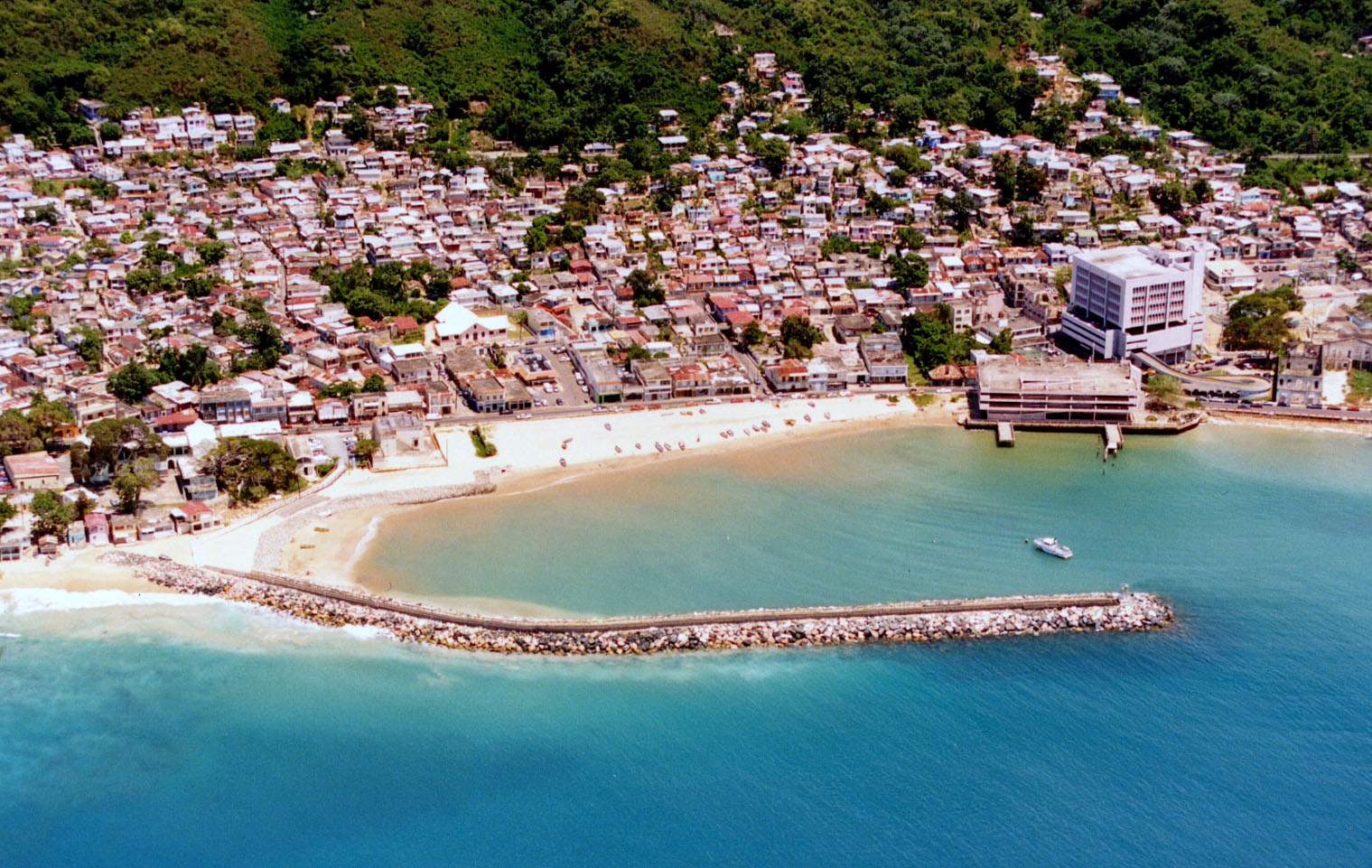
Aguadilla as a varied western destination
Tourist promotion presents Aguadilla as a sunny, varied western destination that combines beaches (Crash Boat), surf, history, sunsets and family attractions (ice rink, water park), with its airport as the gateway to the region.
Source: https://www.discoverpuertorico.com/region/aguadilla

📚 Bibliography

  • Wikipedia (ES) — «Aguadilla»: https://es.wikipedia.org/wiki/Aguadilla
  • Wikipedia (EN) — «Aguadilla, Puerto Rico»: https://en.wikipedia.org/wiki/Aguadilla,_Puerto_Rico
  • Wikipedia (EN) — «Ramey Air Force Base»: https://en.wikipedia.org/wiki/Ramey_Air_Force_Base
  • Wikipedia (EN) — «Rafael Hernández Airport»: https://en.wikipedia.org/wiki/Rafael_Hern%C3%A1ndez_Airport
  • Wikipedia (ES) — «Historia de Puerto Rico»: https://es.wikipedia.org/wiki/Historia_de_Puerto_Rico
  • Discover Puerto Rico — «Aguadilla»: https://www.discoverpuertorico.com/region/aguadilla
  • Discover Puerto Rico — «Surfing in Puerto Rico»: https://www.discoverpuertorico.com/things-to-do/surfing
  • Enciclopedia de Puerto Rico — «Aguadilla»: https://enciclopediapr.org/
  • Wikipedia (EN) — «Aguadilla Ice Skating Arena»: https://en.wikipedia.org/wiki/Aguadilla_Ice_Skating_Arena
  • Wikipedia (EN) — «Punta Borinquen Light»: https://en.wikipedia.org/wiki/Punta_Borinquen_Light
  • Wikipedia (EN) — «Taíno»: https://en.wikipedia.org/wiki/Ta%C3%ADno

❓ Frequently asked questions

Why is Crash Boat so famous?+
Because it's one of the most beautiful and beloved beaches in Puerto Rico: clear turquoise water, golden sand, its iconic colorful fishing boats and a wooden pier that's both a jumping-off point into the sea and an excellent snorkeling spot (with fish among the pilings). Its name comes from the rescue launches ('crash boats') of the former Ramey Air Force Base. It's free, though private parking usually costs between US$5 and 10. It has kiosks and a festive atmosphere, especially on weekends.
Is Aguadilla good for surfing?+
Yes, it shares with Rincón the surf fame of the northwest. Its most famous spot is Wilderness (Surfer's Beach), with quality waves in winter (November to March), plus others like Gas Chambers. A surf lesson with equipment costs between US$50 and 100 per person. In summer, when the sea calms down, many beaches are ideal for swimming and snorkeling.
Is it true there's an ice rink in Aguadilla?+
Yes, as incredible as it sounds in the middle of the Caribbean, Aguadilla has the Aguadilla Ice Skating Arena, the only ice skating rink in the Caribbean, one of its most curious attractions. It costs US$10 per hour during the day and US$13 from 7 pm, with skates included (verified July 2026); those who don't skate can enter free to accompany. It's a fun plan, especially with children or on very hot days. The city also has the Las Cascadas water park (US$25 adults, US$20 children 3-12 years) and other leisure options, many of which emerged on the grounds of the former Ramey Air Force Base.
Aguadilla or Aguada — where did Columbus land?+
It's an old dispute between the two neighboring towns of the northwest: both claim to have been the place where Christopher Columbus is said to have landed and taken on water during his second voyage, in 1493 (hence their names tied to water). There's no definitive answer, and it's part of the region's historical folklore. El Parterre Park, with its spring, is a symbolic witness to that past in Aguadilla, and admission is free.
How do I get to Aguadilla?+
From San Juan, by car on the PR-22 and PR-2 highways, in about 2 to 2.5 hours, with AutoExpreso tolls of roughly US$4-6 total. Aguadilla has its own Rafael Hernández International Airport (BQN), which receives flights from the US and connects with San Juan, making it a convenient gateway to the west. In the area it's best to get around by car, since the beaches and attractions are spread out.
Is Aguadilla worth visiting with family?+
Very much so. Aguadilla combines calm-water beaches (like Crash Boat, ideal for swimming and snorkeling) with uncommon family attractions: the ice rink, the Las Cascadas water park, golf courses and shopping areas. That variety makes it a complete destination for families looking for more than just beach, in a sunny, relaxed setting in the west.
When is the best time to visit Aguadilla?+
The climate is sunny year-round. Winter (November to March) is surf season, with the best waves; summer brings calmer seas, perfect for swimming and snorkeling at Crash Boat. The sunsets over the sea are spectacular any time of year. Hurricane season runs from June to November; it's best to follow the forecast.
How do I get around in Aguadilla and how do I pay the tolls?+
The most practical option is your own car or a rental, because the beaches and attractions are spread out. Uber does work in Aguadilla (UberX and Taxi tiers), but with much more limited coverage than in San Juan: waits are long and sometimes there are no cars, so you shouldn't rely on the app alone. There are also taxis and 'carros públicos' (shared vans that connect with Aguada, Isabela or Mayagüez), paid in cash. On the highways, tolls are paid only with the AutoExpreso electronic system — not compatible with E-ZPass or SunPass; rental cars usually come with the tag built in (confirm it's active to avoid fines of US$25+), and as an alternative tourists can use the MóvilCash prepaid card. There's no real-time city bus app for the city.
Sources consulted (15)
Still planning?
Explore more destinations in Puerto Rico
See all destinations →
Advertisements
Image credits
Photos from Wikimedia Commons, each under its own licence (CC BY, CC BY-SA or public domain). Open each file to see its author and licence.
Aguadilla Pueblo