Viajá con Gus
HomePuerto RicoVieques
Vieques
🇵🇷 Puerto Rico · East and island-municipalities

Vieques

Jump to what you need
📌Island-municipality
Vieques is an island-municipality of Puerto Rico located east of the main island, on the way to the Virgin Islands. It's about 33 km long and has close to 8,000-9,000 residents. It's famous for Mosquito Bay, considered one of the brightest bioluminescent bays in the world; for its unspoiled, uncrowded beaches; for its free-roaming horses; and for a history marked by decades of US Navy use, today turned into a large wildlife refuge
📌Service town
Vieques has two main towns: Isabel Segunda (the capital, on the north coast, with the ferry and services) and Esperanza (on the south coast, more touristy, with its seafront promenade). The connection with the main island is by ferry from the new Ceiba terminal (~1 h; the service no longer leaves from Fajardo) or by short flights (~25-30 min) from San Juan (SJU) with Cape Air, or from Ceiba with Vieques Air Link, to the small Antonio Rivera Rodríguez Airport (VQS). On the island it's best to rent a car or jeep (the beaches are scattered and some are on dirt roads)
📌Best time to go
Tropical climate year-round (24-31 °C). The dry season (December to April) is ideal for beaches and the sea. For Mosquito Bay, the best are nights without a full moon (darkness enhances the glow): check the lunar calendar. The sea is usually calmer in the morning. Hurricane season runs from June to November. Vieques is quiet year-round, with fewer crowds than the main island
📌Suggested days
Vieques deserves at least 2 nights to enjoy it calmly: a day of unspoiled beaches (Sun Bay, Caracas/Red Beach, Navío), a night at bioluminescent Mosquito Bay, and time to tour the island, its horses and its towns. With 3 to 4 days you live its unhurried pace and explore the wildlife refuge. You can do a day trip from Ceiba, but the magic is in staying
💱 USD exchange rate
Loading rate…
🌤️ Weather in Vieques
Loading weather…

Vieques is the Caribbean many people dream of: a quiet island of unspoiled, almost deserted beaches, turquoise waters, horses grazing free beside the sea and an unhurried pace of life that invites you to switch off. Located east of Puerto Rico, on the way to the Virgin Islands, this island-municipality holds some of the most beautiful and least crowded corners in the whole country, far from the bustle of San Juan.

But Vieques also has a treasure unique in the world: Mosquito Bay, recognized as one of the brightest bioluminescent bays on the planet. On its moonless nights, the water lights up with every movement in a dreamlike blue-green glow, an experience among the most magical a traveler can have. Added to that is a history as singular as it is moving: for decades, much of the island was a US Navy training ground, and after years of protests and the military's departure, those lands were transformed into an enormous wildlife refuge that today protects its most pristine beaches.

This guide covers the essentials of Vieques with a practical and warm eye: its bioluminescent bay, its unspoiled beaches, its horses and its nature, its history and its towns, and tips for getting there and getting around this special island. Vieques is a destination for anyone looking for the authentic, quiet, dazzling Caribbean, and for anyone who wants to experience the miracle of a sea that glows.

📖 History of Vieques

Vieques was inhabited by Indigenous peoples long before the Europeans arrived: there are archaeological remains of pre-Columbian cultures (Igneri, Taíno and earlier) that populated it and used it as a stopping point in the Caribbean. After the Spanish colonization of Puerto Rico, Vieques long remained disputed territory and a refuge for smugglers, until in the 19th century Spain consolidated its control and promoted its settlement and the cultivation of sugarcane, for which enslaved labor was brought in and, later, workers from other Caribbean islands (hence the Anglo-Caribbean influence in part of its culture). In 1898, along with the rest of Puerto Rico, it passed to the United States. The most decisive chapter of its modern history began in the 1940s, when the US Navy expropriated much of the island to use it as a base and a naval firing and maneuvering range, displacing the population to a central strip. For decades, practice bombing caused deep resentment; the death of a civilian in 1999 set off massive protests ('Paz para Vieques') that, in 2003, achieved the Navy's departure. A large part of the former military lands then became the Vieques National Wildlife Refuge, which today protects unspoiled beaches and ecosystems. The detailed history is on our history page.

Read the full history ↓

🗺️ What to see

1
Mosquito Bay, the brightest in the world
The bioluminescent bay considered the brightest on the planet, an unforgettable nighttime experience.
Mosquito Bay (Bahía Mosquito or Bahía Bioluminiscente) is the greatest treasure of Vieques and a wonder on a world scale: it's recognized, even by the Guinness Book, as one of the brightest bioluminescent bays on the planet. The phenomenon is due to a very high concentration of microorganisms called dinoflagellates (Pyrodinium bahamense) that, when stirred by the movement of the water, emit a blue-green light through bioluminescence. The experience is hard to describe: on a dark night, every stroke of the paddle, every passing fish and every falling drop leaves a trail of light, as if the sea were full of liquid stars. The concentration of organisms in Mosquito Bay is exceptional, which makes it glow with an intensity greater than most bays in the world, thanks to its ideal conditions (enclosed waters, mangroves, little light pollution). The way to visit it is on a nighttime guided kayak trip (swimming is prohibited to protect the ecosystem). You paddle in the darkness enjoying the spectacle. The key is to choose nights without a full moon, when the darkness enhances the glow; with a full moon it's barely visible. It's worth checking the lunar calendar when planning. Getting there: the trips leave from Vieques (the bay is on the south coast); the operators arrange the transfer. Best time and hours: at night, on dates without a full moon (check the lunar calendar). Tips: book in advance (spaces are limited to protect the bay), don't use repellents or chemical sunscreens before going in (they pollute the water), bring clothes that can get wet and follow the guide's instructions strictly.
ℹ️ Distance: South coast of Vieques; departures arranged by the operators · Best time to go: Nights without a full moon (check the lunar calendar) · Admission: US$ 50–75 per person (kayak tour; source: local operators Abe’s / Mosquito Bio Bay, verified July 2026); packages with transport from San Juan from US$ 125. Swimming prohibited · Duration: One night (1.5-2.5 h with the activity)
2
Unspoiled beaches of the Refuge (Sun Bay, Caracas, Navío)
Some of the most beautiful and pristine beaches in the Caribbean, many inside the wildlife refuge.
The beaches of Vieques are among the most beautiful and unspoiled in the whole Caribbean, largely because many of them lie inside the Vieques National Wildlife Refuge (the former military lands), which has kept them free of development, without hotels and almost deserted. They are beaches of white or golden sand, clear turquoise waters and an intact natural setting. Among the most famous is Sun Bay (Sombe), a long and beautiful sandy bay near Esperanza, with public bathing facilities, palm trees and calm waters, ideal for families. Inside the refuge there are gems like Playa Caracas (also called Red Beach or Playa Roja), with calm waters and shaded areas; Playa La Chiva (Blue Beach), long and with good snorkeling; Playa Navío, a sheltered and lovely cove; and many others, some reached by dirt roads. They used to be identified by colors (Red, Blue, Green Beach), a legacy of the military era. These beaches offer the purest Caribbean: few people, nature, snorkeling on reefs and the feeling of having paradise almost to yourself. That said, most have no services (no food, no umbrellas, no lifeguards in many cases), so you have to come prepared. Getting there: most are inside the refuge (which has opening hours) or near Esperanza; reached by car/jeep, some on dirt roads. Best time and hours: in the morning for the calmest sea; the refuge usually opens from about 6:00 to 18:00 (confirm). Tips: bring everything you need (water, food, shade, snorkel gear), leave no trash, respect the wildlife, and never go into areas marked as dangerous; some areas may have restrictions because of the former military activity.
ℹ️ Distance: Inside the Wildlife Refuge and near Esperanza (car/jeep; some on dirt roads) · Best time to go: Morning for a calm sea; refuge open from about 6 to 18 · Admission: Free (public beaches and access to the refuge at no cost) · Duration: Half a day or more
3
Vieques National Wildlife Refuge
The great nature refuge born from the former military lands, protecting beaches, lagoons and wildlife.
The Vieques National Wildlife Refuge is one of the largest wildlife refuges in the Caribbean and a story of rebirth: it occupies much of the land the US Navy used for decades, returned after the military's departure in 2003 and transformed into a protected area under federal management (U.S. Fish & Wildlife Service). Today it shelters unspoiled beaches, lagoons, mangroves, subtropical dry forest and rich wildlife. The refuge protects valuable ecosystems and species like sea turtles (which nest on its beaches), manatees, bats, birds and flora adapted to the dry climate of the island's south. Its existence is the reason the beaches of Vieques stay so pristine and undeveloped: much of the coast lies inside the protected area. Visiting it means driving its roads to reach the beaches, watching the wildlife and enjoying nature, always respecting the rules (access hours, permitted trails, ban on leaving the designated areas). It's important to know that, because of the military past, some areas remain closed for the clearing of unexploded ordnance; you must always respect the signage. Getting there: the refuge stretches across the east and west of the island; you enter by car/jeep through its gates (with set hours). Best time and hours: daytime, within opening hours; in the morning for calmer beaches. Tips: strictly respect the signage and the closed zones, don't take or leave anything, bring everything you need and check current hours at fws.gov/refuge/vieques.
ℹ️ Distance: East and west of Vieques (former military lands); access by car/jeep · Best time to go: Daytime, within opening hours; morning for calm beaches · Admission: Free (open access, managed by the U.S. Fish & Wildlife Service); respect the closed zones · Duration: Half a day to a day
4
The horses of Vieques and island life
The iconic free-roaming horses grazing beside the sea and through the towns, a symbol of the island.
One of the most endearing and characteristic images of Vieques is its free-roaming horses. All over the island, in the fields, beside the beaches, along the roadsides and even through the streets of the towns, you see horses grazing or wandering in complete calm. Descendants of the 'paso fino' horses brought in colonial times, they have adapted to a semi-wild life and are an inseparable part of the landscape and identity of Vieques. Seeing them silhouetted against the sea at sunset, or crossing paths with them as you tour the island, is one of those scenes that stay with you. Although they roam free, they're not entirely wild (many have owners), and it's best to treat them with respect and caution: don't disturb or feed them, and when driving take extra care, especially at night, because they may be on the road. The horses are the emblem of the unhurried pace and the coexistence with nature that define Vieques. Touring the island, discovering its towns (the capital Isabel Segunda in the north and the more touristy Esperanza in the south, with its pleasant seafront promenade), eating fresh fish facing the sea and letting yourself be carried by its calm is an essential part of the Vieques experience. Getting there: the horses can be seen all over the island as you tour it by car/jeep. Best time and hours: at sunset they offer the loveliest scenes; any time while touring the island. Tips: drive very carefully (especially at night, because of the horses on the road), don't feed or disturb them, and take the chance to walk around Esperanza and its promenade, the heart of the island's tourist life.
ℹ️ Distance: All over the island; the towns of Isabel Segunda (north) and Esperanza (south) · Best time to go: Sunset for the best scenes; any time while touring the island · Admission: Free (the horses roam free around the island) · Duration: Throughout the visit
5
Snorkeling, diving and the underwater Caribbean
Reefs and crystal-clear waters for snorkeling and diving, with corals, fish and turtles.
The waters around Vieques are a paradise for snorkeling and diving. Its coral reefs, its seagrass meadows and the clarity of its waters harbor rich underwater life: colorful tropical fish, corals, sea turtles, rays and a multitude of Caribbean creatures. And, as on land, the bonus of Vieques is the quiet: many snorkeling spots are almost deserted. Several beaches are excellent for snorkeling straight from shore, like Playa La Chiva (Blue Beach), with its reefs, or the rocky areas of other coves. For diving, there are centers offering trips to the best spots around the island, suitable for different levels, where you can explore reefs and, in some cases, submerged wrecks. The good visibility and the low tourist pressure make Vieques a privileged place to go under. You can also go kayaking or paddleboarding on calm waters, and even fishing trips. The sea is, along with the beaches and the bioluminescent bay, one of the great reasons to visit Vieques, and it lets you discover the other side of its nature, the one hidden below the surface. Getting there: snorkeling is done from several beaches (with your own gear); diving, with local centers that arrange the trips. Best time and hours: in the morning, with the calmest sea and best visibility. Tips: bring your own snorkel gear if you can (there's no rental at beaches without services), use reef-safe sunscreen, don't touch the corals or the wildlife, and choose dive centers with good references.
ℹ️ Distance: Beaches and reefs all over the island (La Chiva and others); diving with local centers · Best time to go: Morning (calmer sea, better visibility) · Admission: Snorkeling from the beach free (with your own gear); guided diving US$ 90–150 per person (two dives; market range, verified July 2026) · Duration: Half a day
6
Fortín Conde de Mirasol and the historic heritage
The last fort Spain built in the Americas, today a museum, a witness to the island's colonial past.
In the capital, Isabel Segunda, stands the Fortín Conde de Mirasol (Fortín de Isabel II), a small fortress with a notable historical distinction: it's considered the last fort Spain built in the New World, raised in the mid-19th century (around 1845-1855) to reinforce Spanish control over Vieques, an island that had long been disputed land and a refuge for smugglers and rival powers. The fort, restored, today houses a museum that reviews the history of Vieques: its Indigenous past (with archaeological pieces), the colonial era, sugarcane and slavery, and the events of the 20th century, including the US military presence and the population's struggles. From its walls you also get good views of Isabel Segunda and the north coast. Visiting the fort is a good way to understand the rich and complex history of this island, which combines Taíno roots, Spanish and Caribbean heritage, slavery, and the dramatic recent military chapter. It perfectly complements the beach and nature experience with a dose of historical and cultural context. Getting there: it's in Isabel Segunda, the capital, in the north of the island, near the ferry; by car or on foot from town. Best time and hours: daytime, checking the museum's hours (it usually opens Wednesday to Sunday). Tips: confirm the opening days and hours (they can be limited), combine it with a walk around Isabel Segunda and enjoy the views from the fort.
ℹ️ Distance: Isabel Segunda (capital, north coast), near the ferry (car or on foot) · Best time to go: Daytime, Wednesday to Sunday (check the museum's hours) · Admission: About US$ 2–5, cheap admission (indicative; verified July 2026, confirm when visiting) · Duration: 1 to 1.5 hours
Advertisements
What nobody tells you

💵 Prices

Tickets

TypePrice
Mosquito Bay excursion (night kayak)US$ 50–75 per person (source: local operators, verified July 2026); with transport from San Juan up to US$ 125. Swimming prohibited
Beaches (Sun Bay, Caracas, La Chiva, Navío)Free (public beaches); refuge open from about 6 to 18
Vieques National Wildlife RefugeFree (open access); respect the closed zones
Fortín Conde de Mirasol (museum)About US$ 2–5 (indicative; verified July 2026)
Snorkeling from the beachFree (with your own gear)
Guided divingUS$ 90–150 per person, two dives (market range, verified July 2026)
Ferry from CeibaUS$ 2 per adult trip (source: puertoricoferry.com, verified July 2026)
Short flight from San Juan / CeibaFrom SJU with Cape Air, about US$ 119–240 round trip (market range, verified July 2026); Vieques Air Link from Ceiba, cheaper
🔄 updated monthlyOfficial / reference values · double-check when buying

Activities and tours

ActivityPriceDurationOperator
Night kayaking in Mosquito Bay (bioluminescent)US$ 50–75 per person (source: local operators, verified July 2026)1.5-2.5 h (night)Abe's Snorkeling & Biobay Tours, Mosquito Bio Bay Tours and others
Day of unspoiled beaches (car/jeep rental)Jeep from US$ 60–100/day (market range, verified July 2026)Full dayIsland rental companies
Snorkeling and diving on the reefsSnorkeling free with your own gear; diving US$ 90–150 (market range, verified July 2026)Half a dayLocal Vieques dive centers
Tour of the Wildlife RefugeFree on your ownHalf a dayU.S. Fish & Wildlife Service (open access)
Horseback rideUS$ 50–90 per person (market range, verified July 2026)1-2 hLocal Vieques stables
Historical tour (the fort and the old quarter of Isabel Segunda)US$ 2–5 admission + optional guided tour US$ 20–35 (market range, verified July 2026)1-2 hMuseo Fortín Conde de Mirasol / local guides
🔄 updated monthlyOfficial / reference values · double-check when buying
Advertisements

🚌 How to get there and distances

Getting around

ModePriceDurationNotes
Rental car or jeepUS$ 60–100 per day (market range, verified July 2026)VariableHighly recommended: the beaches are scattered and some are reached by dirt roads. Drive carefully because of the horses. It's best to book the rental in advance. To navigate the island you use Google Maps; Vieques does NOT have an urban bus or a real-time bus-tracking app (it's a small, rural island)
Ferry from Ceiba (Puerto Rico Ferry / Hornblower)US$ 2 per adult trip (11-59); US$ 1 for those 60-74; free 75+ with ID (source: puertoricoferry.com, verified July 2026)~1 hIt connects the new Ceiba terminal with Isabel Segunda (the ferry no longer leaves from Fajardo). Tickets are bought and booked online at puertoricoferry.com or through the City Experiences app (they're released 1-2 months in advance, sometimes the last week of the previous month); you pay by card. Book ahead and arrive early; residents have priority for vehicles
Short flights (small planes)Cape Air from SJU, about US$ 119–240 round trip; Vieques Air Link from Ceiba, cheaper (market range, verified July 2026)~25-30 minFrom San Juan (SJU) with Cape Air and from Ceiba with Vieques Air Link to the Antonio Rivera Rodríguez Airport (VQS) in Vieques. Booked on each airline's website/app. Faster and more comfortable than the ferry, though more expensive
Taxis and carros públicos on the islandAbout US$ 5–15 per short trip, in cash (verified July 2026)VariableThe local 'public' transport means taxis and carros públicos (shared vans) that connect the towns, the airport, the ferry and some beaches; they're arranged by phone or at the pier, paid in cash and have no tracking app. There's no Uber in Vieques. Useful if you don't rent a vehicle, but less flexible
Bicycle / scooterRental from US$ 20–35 per day (market range, verified July 2026)VariablePossible for short distances and for getting around the towns, though the distances to the beaches can be long
🔄 updated monthlyOfficial / reference values · double-check when buying

How to get there

RouteAirlines / operatorsAvg. priceDuration
Ceiba → Vieques (ferry to Isabel Segunda)Autoridad de Transporte Marítimo (ATM)US$ 2 per adult trip (source: puertoricoferry.com, verified July 2026)~1 h crossing
San Juan (SJU) → Vieques (short flight)Cape AirAbout US$ 119–240 round trip (market range, verified July 2026)~25-30 min
Ceiba → Vieques (short flight)Vieques Air LinkCheaper than from SJU (verified July 2026; confirm the current fare)~15 min
San Juan → Ceiba (to catch the ferry)Own or rental carFuel about US$ 10–15 + tolls (market range, verified July 2026)45-60 min
Arrival in Isabel Segunda and transfer to Esperanza/the beachesRental car/jeep or local taxiAbout US$ 10–20 by taxi (market range, verified July 2026)10-20 min between towns
🔄 updated monthlyOfficial / reference values · double-check when buying

🏨 Where to stay

No exact prices: a scale from $ (budget) to $$$$$ (luxury), with 2-3 options per category.

CategoryPriceRecommended options
Boutique and luxury eco-resort$$$$$US$ 350–700+ a night; Vieques has a few high-end boutique hotels and eco-resorts, integrated into nature, for an exclusive and quiet stay (market range, verified July 2026). Book in advance, as the supply is limited
Charming inns and guesthouses$$$$$US$ 150–280 a night; small inns, guesthouses and charming hotels in Esperanza and Isabel Segunda, very much in tune with the island's unhurried pace (market range, verified July 2026)
Mid-range and vacation rentals$$$$$US$ 100–170 a night; mid-range hotels, apartments and vacation rental houses spread around the island, ideal for those who want independence and time to explore (market range, verified July 2026)
Budget / guesthouses$$$$$US$ 55–95 a night; guesthouses and budget lodgings, above all in Esperanza and Isabel Segunda, for tight budgets seeking the island's quiet (market range, verified July 2026)

🍴 Where to eat

TypePriceOptions / signature dish
Fresh fish and seafood (Esperanza promenade)$$$$$US$ 18–40 per dish; the Esperanza promenade concentrates seafront restaurants and bars where you can eat fresh fish, lobster, shellfish and Caribbean cooking, with a good atmosphere at sunset (market range, verified July 2026)
Criollo and Caribbean cuisine$$$$$US$ 14–28 per dish; Puerto Rican criollo and Caribbean restaurants in the towns, with mofongo, fritters, rice dishes and typical plates, in a relaxed island atmosphere (market range, verified July 2026)
Food trucks and casual food$$$$$US$ 8–16 per dish; food trucks, kiosks and casual food spots spread around the island, a cheap and tasty option for everyday eating (market range, verified July 2026)
Bars and island cocktails$$$$$US$ 8–16 per drink; relaxed bars where you can have a piña colada, a local rum or a beer facing the sea, especially in Esperanza (market range, verified July 2026)
Advertisements

📖 History of Vieques

Origins, formation and what the sources say.

Pre-Columbian settlement: Indigenous people on a waystation island

Vieques has a long human history that precedes the arrival of the Europeans by millennia. Archaeological research has revealed that the island was inhabited by successive pre-Columbian Indigenous cultures, from very ancient archaic groups to peoples of the Saladoid and Igneri traditions and, later, the Taíno. Its position on the arc of the Antilles, on the way between Puerto Rico and the Virgin Islands, made it a waystation and settlement point on the migration and trade routes of the Indigenous Caribbean.

Important remains of those cultures have been found in Vieques, including burials and objects that provide valuable information about the life of the first inhabitants of the Caribbean. One of the most famous finds is that of the so-called 'Puerto Ferro Man', human remains of great antiquity that bear witness to the early human presence on the island.

As in the rest of Puerto Rico, the arrival of the Spanish from the 16th century on brought the decline of the Indigenous populations, affected by subjugation, disease and displacement. But the Indigenous substrate is part of the deep roots of Vieques, an island that has been a crossroads of peoples since remote times.

The Puerto Ferro Man and the antiquity of settlement
Archaeological sources document a very ancient human presence in Vieques, with finds like the 'Puerto Ferro Man'. The datings and the interpretation of the different cultures (archaic, Igneri, Taíno) are the subject of study and scientific revision.
Source: https://en.wikipedia.org/wiki/Vieques,_Puerto_Rico

Disputed land, smuggling and Spanish colonization

During the first colonial centuries, Vieques was an island that eluded firm control by any power. Although Spain claimed it as part of its dominions along with Puerto Rico, its relative isolation and its position long made it disputed land and a refuge: smugglers, corsairs and, at various moments, the interests of other European powers (English, French, Danish) tried to take advantage of the island. For a long time it remained sparsely populated and outside formal administration.

It was in the 19th century that Spain decided to consolidate its control over Vieques for good, faced with the risk of losing it to other powers present in the eastern Caribbean. Its settlement and cultivation were promoted, and its defense was reinforced, which would culminate in the construction of a fort (the Fortín Conde de Mirasol). The island's economy turned toward sugarcane, which became its main activity.

To work the cane plantations, enslaved labor of African origin was used and, later, workers from other Caribbean islands (including English- and French-speaking ones). From that comes part of the rich cultural mix of Vieques, which combines Indigenous, Spanish, African and Anglo-Caribbean roots, noticeable in its population, its surnames and its culture.

Vieques as disputed land
The sources agree that Vieques was for centuries a scarcely controlled territory, coveted by several powers and a refuge for smugglers, until Spain consolidated its rule in the 19th century by promoting its settlement, sugarcane and its defense.
Source: https://es.wikipedia.org/wiki/Vieques

The Fortín Conde de Mirasol: Spain's last fort in the Americas

As part of its effort to consolidate control of Vieques in the 19th century, Spain built in the island's capital, Isabel Segunda, the Fortín Conde de Mirasol (Fortín de Isabel II). Raised in the mid-19th century (around 1845-1855), this small fort has a notable historical distinction: it's usually considered the last fort the Spanish Crown built in the New World, since a few decades later Spain would lose its last American colonies.

The fort was conceived to strengthen the island's defense and assert Spanish sovereignty against the claims of other powers and against smuggling activity. Its construction symbolizes the moment when Vieques stopped being marginal land and became fully integrated into Spanish colonial rule, with a population, a sugar economy and military defense.

After the 1898 change of sovereignty, the fort lost its military function and, in time, was restored and turned into a museum. Today it houses collections that cover the history of Vieques, from its Indigenous past to the 20th century, and it's one of the island's main cultural attractions. It's also a silent witness to the end of an era: the twilight of the Spanish empire in the Americas.

The 'last Spanish fort in the Americas'
The sources describe the Fortín Conde de Mirasol as the last fort built by Spain in the Western Hemisphere, around the mid-19th century. The claim is widely repeated, though the exact construction dates vary slightly between sources.
Source: https://en.wikipedia.org/wiki/Fort%C3%ADn_Conde_de_Mirasol

The US Navy and the decades of military use (1940s-2003)

The most decisive, and most painful, chapter of the modern history of Vieques began in the 1940s, when, in the context of the Second World War, the United States Navy expropriated much of the island. Roughly two thirds of the territory of Vieques ended up in military hands: the western end for ammunition storage and the east as a firing, bombing and naval maneuvering range. The civilian population was displaced and confined to a narrow strip in the center of the island.

For decades, Vieques was one of the Navy's main training grounds in the Atlantic, with exercises that included live bombing from ships and aircraft. That military activity had a strong impact on the island: it limited its development, affected the environment and the health of the population (who reported contamination and health problems), and generated growing social and political resentment.

The tension exploded in 1999, when a Vieques civilian, David Sanes, died from a misdirected bomb during maneuvers. His death set off a massive protest movement, 'Paz para Vieques', that united Vieques residents, Puerto Ricans from across the island and public figures, with civil disobedience, encampments on the firing range and enormous political pressure. After years of mobilization, the Navy stopped the exercises and left Vieques in 2003, ending more than six decades of military presence.

The 'Paz para Vieques' movement
The sources extensively document the military use of Vieques by the US Navy from the 1940s, the death of David Sanes in 1999 and the protest movement that led to the Navy's departure in 2003. The subject carries a strong political, social and environmental charge in Puerto Rico, and debates persist about contamination and health.
Source: https://en.wikipedia.org/wiki/Vieques_and_the_United_States_Navy

From firing range to wildlife refuge

The Navy's departure in 2003 opened a new chapter for Vieques, full of paradoxes. On one hand, the decades of military use had kept much of the island free of urban or tourist development, preserving, almost by accident, extraordinarily unspoiled ecosystems and beaches. On the other, those same lands were contaminated with ordnance and required (and still require) costly and lengthy work to clear unexploded explosives.

Most of the former military lands became the Vieques National Wildlife Refuge, managed by the United States Fish and Wildlife Service, one of the largest refuges in the Caribbean. Under this protection came pristine beaches, lagoons, mangroves, dry forest and rich wildlife (sea turtles, manatees, birds), which turned Vieques into an exceptional nature destination.

This transformation, from bombing range to natural sanctuary, is one of the most singular stories in the Caribbean. Today, part of the refuge remains closed while the ordnance clearing advances, and claims and debates persist about the environmental and health effects of the military past. But the open, protected and almost deserted beaches are one of the great reasons Vieques has become such a coveted destination.

The paradox of conservation
Analysts point to the paradox that military use, despite its negative impact, prevented the coastal development of Vieques and, after the Navy's departure, its lands became a large wildlife refuge with pristine beaches. Ordnance clearing and the environmental/health issues remain a matter of management and debate.
Source: https://www.fws.gov/refuge/vieques

Vieques today: nature, bioluminescence and Caribbean calm

Today Vieques is one of the most special destinations in Puerto Rico: an island of nature, quiet and untouched beauty, that has managed to turn its difficult past into a luminous present. Its unspoiled beaches, protected by the wildlife refuge, are among the most beautiful in the Caribbean, almost always deserted and undeveloped. Its clear waters are a paradise for snorkeling and diving. And its free-roaming horses, silhouetted against the sea, have become the symbol of its unhurried pace.

But its greatest jewel shines at night: Mosquito Bay, considered one of the brightest bioluminescent bays in the world, where the water lights up with every movement in a display of blue-green light that ranks among the most magical experiences the planet offers. Paddling it by kayak under a moonless sky is unforgettable.

Vieques keeps its essence as a small, authentic island: two towns (Isabel Segunda and Esperanza), fresh fish facing the sea, a rich cultural mix (Indigenous, Spanish, African, Caribbean) and the living memory of its people's struggle. It's a destination for anyone looking for the true Caribbean, away from the crowds, and for anyone who wants to connect with nature, the glowing sea and the story of resilience of an island that was reborn. Visiting Vieques is to understand that beauty and memory can coexist in the same paradise.

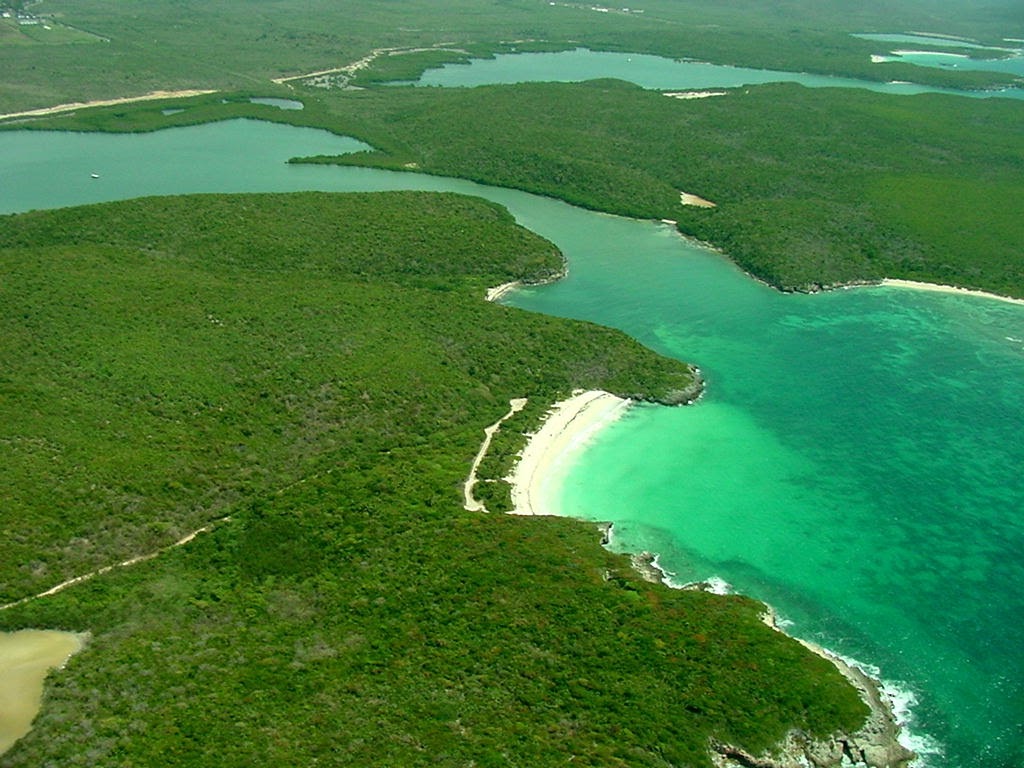
Vieques as a nature destination
Tourism promotion and guidebooks present Vieques as a destination of nature, unspoiled beaches and quiet, with bioluminescent Mosquito Bay as a world-famous attraction, partly the fruit of the conservation that came out of its military past.
Source: https://www.discoverpuertorico.com/region/vieques

📚 Bibliography

  • Wikipedia (ES) — «Vieques»: https://es.wikipedia.org/wiki/Vieques
  • Wikipedia (EN) — «Vieques, Puerto Rico»: https://en.wikipedia.org/wiki/Vieques,_Puerto_Rico
  • Wikipedia (EN) — «Vieques and the United States Navy»: https://en.wikipedia.org/wiki/Vieques_and_the_United_States_Navy
  • Wikipedia (EN) — «Fortín Conde de Mirasol»: https://en.wikipedia.org/wiki/Fort%C3%ADn_Conde_de_Mirasol
  • Wikipedia (EN) — «Mosquito Bay»: https://en.wikipedia.org/wiki/Mosquito_Bay
  • U.S. Fish & Wildlife Service — «Vieques National Wildlife Refuge»: https://www.fws.gov/refuge/vieques
  • Discover Puerto Rico — «Vieques»: https://www.discoverpuertorico.com/region/vieques
  • Wikipedia (ES) — «Historia de Puerto Rico»: https://es.wikipedia.org/wiki/Historia_de_Puerto_Rico

❓ Frequently asked questions

Why is Mosquito Bay in Vieques so special?+
Because it's considered one of the brightest bioluminescent bays in the world (recognized even by Guinness). The very high concentration of microorganisms (dinoflagellates) makes the water light up with every movement in a spectacular blue-green glow. It's visited on a guided night kayak trip (US$ 65-75 per person), on nights without a full moon, and swimming is prohibited to protect the fragile ecosystem.
How do I get to Vieques?+
There are two options: the ferry, which now leaves from the new Ceiba terminal (no longer from Fajardo), with a crossing of about an hour and a fare of only US$ 2 (the cheapest option), or short flights on small planes (25-30 minutes) with Cape Air from San Juan (SJU) or Vieques Air Link from Ceiba. For the ferry it's best to book in advance (especially if you're taking a vehicle) and arrive early. The flights are faster and more comfortable, but more expensive.
Do I need to rent a car in Vieques?+
It's highly recommended. The beaches are scattered around the island and many are reached by dirt roads, so a car or jeep (from about US$ 60 a day) gives total freedom to explore. It's best to book the rental in advance, because the supply is limited. If you don't want to drive, there are taxis and carros públicos, but they're less flexible. Note: drive carefully because of the horses on the road.
Are the beaches and the refuge in Vieques safe?+
The beaches are safe and gorgeous, but many have no services or lifeguards, so you have to come prepared (water, food, shade) and respect the state of the sea. Because of the military past, some areas of the refuge remain closed for the clearing of unexploded ordnance: you must always respect the signage and not leave the designated areas.
What are the horses roaming around?+
They're the iconic horses of Vieques, descendants of the colonial 'paso fino', which live semi-wild and are seen all over the island, beside the sea, in the fields and through the towns. Although they roam free, many have owners. It's best to treat them with respect (don't feed or disturb them) and to drive very carefully, especially at night, because they may be on the road.
How many days should I give Vieques?+
At least 2 nights is ideal: a day of unspoiled beaches, a night at Mosquito Bay and time to tour the island and its towns. With 3 or 4 days you enjoy its unhurried pace calmly. You can do a day trip from Ceiba, but the real magic of Vieques is in staying and living its quiet.
Vieques or Culebra, which do I choose?+
Both are paradises. Vieques is bigger, it has the brightest bioluminescent bay in the world, the horses and an enormous wildlife refuge. Culebra is smaller and famous for Flamenco Beach, one of the best on the planet, and for its excellent snorkeling. If you can, it's worth seeing both; if you have to choose, Vieques for the bio bay and the nature, Culebra for the postcard beaches.
How do I get around Vieques and is there a transport app?+
Vieques is a small, rural island: to move around freely it's best to rent a car or jeep (from about US$ 60/day) and navigate with Google Maps. There's no urban bus and no app that tracks buses in real time, and there's no Uber either. The 'public' transport means taxis and carros públicos (shared vans) arranged at the pier or by phone and paid in cash (US$ 5-15 per trip). To get to the island, the ferry from Ceiba (US$ 2) is booked through the puertoricoferry.com website or the City Experiences app; the flights, through the Cape Air or Vieques Air Link apps.
Sources consulted (15)
Still planning?
Explore more destinations in Puerto Rico
See all destinations →
Advertisements
Image credits
Photos from Wikimedia Commons, each under its own licence (CC BY, CC BY-SA or public domain). Open each file to see its author and licence.
Vieques Bio Bay NR