Viajá con Gus
HomePuerto RicoArecibo
Arecibo
🇵🇷 Puerto Rico · North and Karst Country

Arecibo

📌Municipality
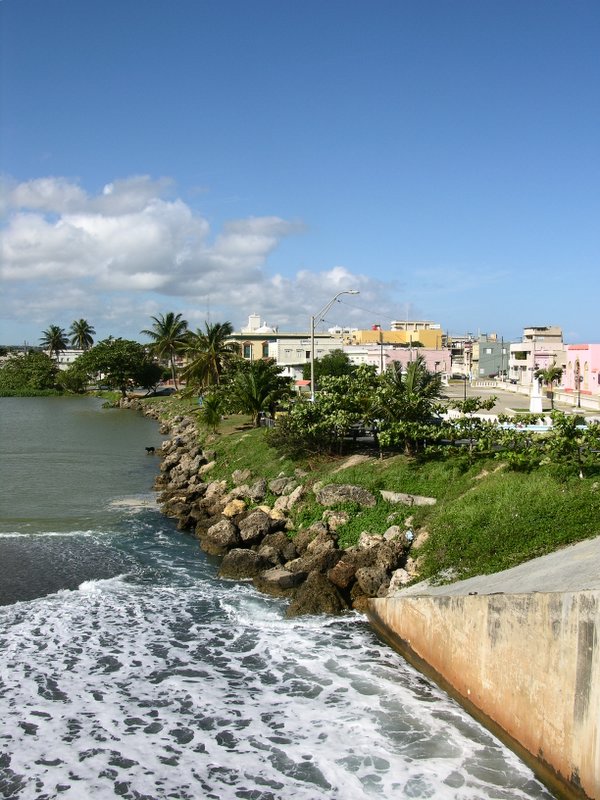
Arecibo (Puerto Rico), on the island's north coast, within the northern karst region. It's one of the oldest cities in Puerto Rico and an important northern hub, known as the 'Villa del Capitán Correa' and the 'City of Water' for its river and its coast. It combines a historic center by the sea, the famous Arecibo Observatory, the lighthouse and historical park (Los Morrillos Lighthouse / Punta Morrillos), the Cueva del Indio with Taíno rock art and the gateway to the karst cave country
📌Service town
Arecibo itself is a northern service city, with a hospital, shops, a university and shopping centers. The main airport is Luis Muñoz Marín (SJU) in San Juan-Carolina, about an hour and a half away on the PR-22 highway to the west. Arecibo is a convenient base for exploring the north and the karst: the Observatory, the Río Camuy caves, Camuy, Hatillo and the northern coast. There are gas stations, supermarkets, ATMs and lodging along the main routes
📌Best time to go
The climate is warm tropical year-round, with temperatures of around 25-30°C. The driest and sunniest season runs from December to April, the best for outdoor touring and combining coast and karst, and it coincides with high season (more demand at Christmas, Holy Week and holidays). Summer and fall (June to November) are more humid and hot and include the Atlantic hurricane season (peak August-October): it's best to follow the forecast. The caves and the karst stay cool and humid year-round
📌Suggested days
Arecibo can be seen in 1 intense day: the historic center, the lighthouse and theme park, the Cueva del Indio and a look at the Observatory. With 2 days you can add a leisurely visit to the Arecibo Observatory area, the Río Camuy Caves (in neighboring Camuy), the northern coast and beaches, and the nearby karst towns. It's an excellent base for exploring the north of the island for 2 or 3 nights
💱 Cambio de USD
Loading rate…
🌤️ Clima en Arecibo
Loading weather…

Arecibo is one of the oldest cities in Puerto Rico and one of the most interesting in the north: a place where colonial history, cutting-edge science and karst nature come together. Beside the sea and the river that gives it its nickname 'City of Water', it preserves a historic center with Caribbean flavor, and at the same time it's famous the world over for the Arecibo Observatory, which for decades housed the largest radio telescope on the planet.

Its surroundings are spectacular: the northern coast, with its historic lighthouse turned theme park and the mysterious Cueva del Indio, decorated with Taíno petroglyphs facing the ocean; and, inland, the karst landscape — that terrain of mogotes, sinkholes and caverns — that extends toward neighboring Camuy and its famous river cave system. Arecibo is the natural gateway to that whole underground and coastal world.

This guide covers Arecibo with a practical eye: what to see in its historic center and its coast, how to visit the Observatory and the Cueva del Indio, how it connects with the Río Camuy Caves and the karst towns, and how to get around and where to stay. It's a destination that combines science, history, Indigenous archaeology and nature like few others.

📖 History of Arecibo

The name Arecibo comes from the Taíno chief Arasibo (or Aracibo), leader of the yucayeque (village) of Abacoa, which covered the northern area between what are today Arecibo and Quebradillas; tradition remembers him as a peaceful and respected chief. Before colonization, this whole region was inhabited by the Taíno, who left their mark at sites like the Cueva del Indio. Spanish colonization arrived early: around the mid-16th century, several settlers established themselves near the river mouth, and sources place the origins of the settlement in 1556, while the official founding as a town by the Crown is usually dated to 1616, which makes Arecibo one of the oldest towns on the island. Its name and its coat of arms recall Captain Correa, a local hero who in 1702 repelled an English attack, hence the nickname 'Villa del Capitán Correa'. For centuries it lived off fishing, ranching and agriculture. In 1898, after the Spanish-American War, Puerto Rico passed to the United States. The Arecibo lighthouse was built around 1898 and automated in 1964. In the 20th century, the city achieved worldwide fame with the construction of the Arecibo Observatory and its gigantic radio telescope, which collapsed in December 2020. The full story is on our history page.

Read the full history →

🗺️ What to see

1
Arecibo Observatory
The legendary observatory that for decades housed the largest radio telescope in the world, now a science center.
The Arecibo Observatory is, along with its river and its lighthouse, the great symbol of the city and one of the most famous places in Puerto Rico. Set in an enormous natural sinkhole in the karst, south of the city, it housed for decades the largest single-dish radio telescope in the world: a gigantic reflector about 305 meters in diameter fitted into a depression in the terrain, with an instrument platform suspended by cables above it. Since its inauguration in the 1960s, the observatory was a leading player in world astronomy and radio astronomy, and in the search for extraterrestrial life (SETI). From here the famous 'Arecibo message' was sent into space in 1974. It appeared in films and in popular culture, and was a pride of Puerto Rican science. In December 2020, after suffering structural failures, the iconic radio telescope collapsed, which shook the scientific community and the whole island. Today the Ángel Ramos Foundation Science and Visitor Center has reopened to the public, with interactive exhibits on the history of the observatory, astronomy and the karst, an open-air display with pieces recovered from the telescope and its platform, and an observation terrace from which you can see the collapsed dish. Visits are by advance online reservation only, with limited spots. Getting there: it's south of Arecibo, on signposted mountain roads (Route 625/635). Best time and hours: open Wednesday to Sunday, from about 9:00 to 15:30 (closed Monday and Tuesday); book a time slot online in advance. Tips: bring water and a light jacket, book ahead because spots sell out, and combine it with the karst caves.
ℹ️ Distance: South of Arecibo, in the karst (signposted mountain roads) · Best time to go: Wednesday to Sunday, in the morning; book a slot online in advance · Admission: Around US$12-15 adults and US$8-10 children, by advance online reservation only (source: Arecibo Observatory / Science Center, verified July 2026); confirm the current rate when booking · Duration: Half a day (with the drive)
2
Cueva del Indio
A coastal cave with Taíno petroglyphs facing the ocean, one of the most impressive rock-art sites on the island.
The Cueva del Indio is one of the most photogenic and special places on the north coast. It's a cave and rock formation open to the Atlantic Ocean, sculpted by the sea and the wind, on whose walls the Taíno left petroglyphs and rock drawings of great archaeological value. It's one of the most notable Indigenous art sites in Puerto Rico, a direct testimony to the passage of the native peoples along this coast. The setting is spectacular: limestone cliffs battered by the waves, natural arches, blowholes (jets of water spurting from the cracks) and a rugged, dramatic landscape where the ocean crashes against the rock. Going down to the cave involves descending stairs and rocks, and from inside you can gaze at the sea through the openings, in an impressive frame. Since July 2025, after a court settlement, access to the Cueva del Indio is free and open to the public: the DRNA (Department of Natural and Environmental Resources) committed to guaranteeing free and safe access to the site, although there's still a paid private parking lot next to the entrance. Getting there: it's on the Arecibo coast, on the PR-681, with signposted access. Best time and hours: a clear day with good light to appreciate the petroglyphs and the landscape. Tips: wear shoes with good grip (the terrain is rocky and slippery), be careful approaching the edges and the sea — there are no railings — and respect the petroglyphs without touching them.
ℹ️ Distance: On the Arecibo coast, on the PR-681 (signposted access) · Best time to go: Clear day with good light; careful with the sea and the edges · Admission: Free (public access since July 2025); nearby private parking about US$5-10 per person (verified July 2026) · Duration: 1 to 2 hours
3
Arecibo Lighthouse and Historical Park (Los Morrillos / Punta Morrillos)
The historic late-19th-century lighthouse on the coast, now turned into a family theme park.
The Arecibo Lighthouse, at Punta Morrillos, rises over the north coast as one of the city's historic symbols. It was built by the Spanish around 1898, in the final years of their rule over the island, to guide navigation along this part of the Atlantic, and it was automated in 1964. Its classic silhouette and its seafront location make it a postcard of the northern coast. Today the lighthouse is part of a historical and family theme park, with exhibits, replicas and attractions aimed mostly at children: recreations of a Taíno village, a pirate ship, scenes from Puerto Rican history, animal areas and lookouts over the ocean. It's an entertaining plan for the family and, at the same time, a chance to see a historic building and enjoy the coastal views. Getting there: it's in the coastal area of Arecibo (Punta Morrillos), signposted from the PR-655 and PR-2. Best time and hours: during the day, in good weather, to enjoy the park and the views; open Monday to Friday from 9:00 to 18:00 and weekends from 10:00 to 19:00 (the main entrance and the water areas close one hour earlier). Parking separate, about US$3 + sales tax for the day. Tips: bring sunscreen, water and a cap (there are sunny areas), and confirm hours and tickets before going. It pairs very well with the Cueva del Indio and the historic center in a single day along the coast.
ℹ️ Distance: Punta Morrillos, Arecibo coast (signposted) · Best time to go: During the day, in good weather; ideal with family · Admission: US$14 adults (13-64) + sales tax; US$12 children (2-12) and seniors (65+) + sales tax; under 2 free; parking about US$3 + sales tax (source: official site arecibolighthouse.com, verified July 2026) · Duration: Half a day
4
Arecibo historic center
The heart of one of the oldest cities on the island, by the sea and the river, with a plaza, church and the memory of Captain Correa.
The historic center of Arecibo, next to the river mouth and the sea, keeps the character of one of the oldest cities in Puerto Rico, with origins in the 16th century. It's organized, like the traditional towns, around a central plaza and its parish church, surrounded by historic buildings, shops and the city's daily life. Arecibo proudly bears the nickname 'Villa del Capitán Correa', in memory of Antonio de los Reyes Correa, a local hero who in 1702 led the defense of the town against an attack by English forces, a feat etched into the identity and the coat of arms of the city. Walking the center lets you glimpse that long history and the flavor of a northern coastal city, with its people, its facades and its Caribbean rhythm. Getting there: the center is in downtown Arecibo, by the coast; it's walkable. Best time and hours: during the day and on weekdays, when the city is lively; the patron-saint festivities fill the plaza with life. Tips: combine the visit with the local food, ask about the church and the historic buildings and about the story of Captain Correa, and take advantage of the closeness of the sea and the river that earned it the nickname 'City of Water'.
ℹ️ Distance: Downtown Arecibo, by the coast and the river (on foot) · Best time to go: During the day and on weekdays; patron-saint festivities for more atmosphere · Admission: Free (streets, plaza and church open access; check church hours) · Duration: 1 to 2 hours
5
Beaches and north coast of Arecibo
The northern coast with its beaches, natural pools and rugged landscapes battered by the Atlantic.
The Arecibo coast and its surroundings offer a varied and often rugged northern shoreline, different from the gentle Caribbean of the south: here the Atlantic Ocean arrives with more force, sculpting cliffs, rock arches and natural pools. There are beaches for different tastes, from open stretches of sand to natural pools protected by rock formations, ideal for a calm dip. This northern coastal strip is also surf and dramatic-landscape territory, with the karst limestone jutting out into the sea. Combined with the Cueva del Indio and the lighthouse, the Arecibo coast makes for a nature-and-sea day with lots of character, far from the island's more touristy beaches. Getting there: the beaches and pools are spread along the Arecibo coast and neighboring municipalities like Hatillo and Camuy; it's best to check access on the spot. Best time to go: sunny days in the dry season; for surf, the northern swell season. Tips: pay close attention to the Atlantic currents and surf, which can be strong; swim in safe areas, bring everything you need (many beaches have no services) and watch your belongings.
ℹ️ Distance: Arecibo coast and neighboring municipalities (various access points; check) · Best time to go: Sunny days; surf during the northern swell season · Admission: Free (public beaches, no services in many cases) · Duration: Half a day or more
6
Río Camuy Caves (day trip from Arecibo)
One of the largest cave systems in the Western Hemisphere, in the neighboring municipality of Camuy.
20-40 minutes from Arecibo, in the municipality of Camuy, is the Río Camuy Cave Park, one of the largest cave systems in the Americas, carved by the third-largest underground river in the world. The guided tour descends to the Cueva Clara de Empalme, with giant stalactites and stalagmites, sinkholes like Tres Pueblos (one of the largest in Puerto Rico) and a biodiversity that includes bats and blind fish. It's one of the most impressive excursions in the north of the island and a natural complement to a visit to Arecibo, since both destinations share the same karst landscape. The park has had temporary closures for maintenance and for hurricane damage, so it's best to check the opening status before planning the trip. Getting there: via the PR-10 and PR-129 from Arecibo, about 20 to 40 minutes by car. Best time and hours: Wednesday to Sunday, from about 8:30 to 15:45 (check opening). Tips: book in advance (there's limited capacity), bring non-slip shoes because the cave floor is damp, and confirm the state of the park before going.
ℹ️ Distance: Camuy, 20-40 min from Arecibo via the PR-10 and PR-129 · Best time to go: Wednesday to Sunday; confirm the park's opening · Admission: US$18 adults, US$13 children, US$9 seniors + US$4 parking (verified July 2026; the park has had closures, confirm opening) · Duration: Half a day
What nobody tells you

💵 Prices

Tickets

TypePrice
Arecibo Observatory (Science Center)About US$12-15 adults and US$8-10 children, by advance online reservation only (source: Arecibo Observatory / Science Center, verified July 2026)
Cueva del IndioFree (public access since July 2025); nearby private parking about US$5-10 per person (source: local PR press / DRNA, verified July 2026)
Arecibo Lighthouse and Historical ParkUS$14 adults (13-64) + sales tax; US$12 children (2-12) and seniors (65+) + sales tax; parking about US$3 + sales tax (source: official site arecibolighthouse.com, verified July 2026)
Historic center and plazaFree (open access)
Public beachesFree (public beaches)
Río Camuy Caves (in neighboring Camuy)US$18 adults, US$13 children, US$9 seniors + US$4 parking (source: Río Camuy Cave Park / DRNA; verified July 2026 — confirm the park's opening, which has had closures)
🔄 updated monthlyOfficial / reference values · double-check when buying

Activities and tours

ActivityPriceDurationOperator
Visit to the Arecibo Observatory and its Science CenterAbout US$12-15 per adult, with advance online reservation (verified July 2026)Half a dayArecibo Observatory / Ángel Ramos Foundation Science and Visitor Center
Visit to the Cueva del Indio and its petroglyphsFree (public access); parking about US$5-10 (verified July 2026)1-2 hPublic access (DRNA)
Family day at the Lighthouse and Historical ParkUS$14 adults / US$12 children and seniors + sales tax; parking about US$3 + sales tax (verified July 2026)Half a dayArecibo Lighthouse Park (non-profit organization)
Excursion to the Río Camuy CavesUS$18 adults, US$13 children, US$9 seniors + US$4 parking (verified July 2026; confirm opening)Half a dayRío Camuy Cave Park (DRNA)
Tour of the north coast and natural poolsFree (on your own)Half a dayOn your own
🔄 updated monthlyOfficial / reference values · double-check when buying

🚌 How to get there and distances

Getting around

ModePriceDurationNotes
Own or rental carUS$45-80 per day for rental + fuel (regular gas about US$3.10-3.60/gallon) (source: rental aggregators and average fuel prices in PR, verified July 2026)VariableBy far the most practical way to get around Arecibo and the karst: the attractions (Observatory, Cueva del Indio, lighthouse, Camuy) are spread out and there's no city bus network connecting them. The PR-22 highway (De Diego) links with San Juan and the west. At tolls you pay with the AutoExpreso electronic system (transponder or tag); many rental cars already include it, so it's best to confirm when picking up the vehicle (source: AutoExpreso / Metropistas, verified July 2026)
Carros públicos (local shared transport)US$2-10 per trip depending on distance, paid in CASH to the driver (no card or payment app) (source: PR public-carrier system / DTOP, verified July 2026)VariableThese are shared vans and cars — the island's traditional public transport outside the metro area — that leave from the terminal by the plaza when they fill up, with no fixed schedule. They connect Arecibo with northern towns (Hatillo, Camuy, Barceloneta) and with San Juan. Cheap but slow and unpredictable; they don't cover the karst attractions well. Cash only
Taxi and ride appsUS$10-30 per short trip within the city (estimated, verified July 2026)VariableThere are local taxis; Uber works irregularly in Arecibo (much more supply in San Juan than in the rural north). For excursions to the Observatory or Camuy, it's best to have your own car or take a tour rather than rely on apps
On foot in the town centerFreeVariableThe historic center, the Luis Muñoz Rivera plaza and the San Felipe Apóstol church are walkable; the rest of the attractions require a vehicle
🔄 updated monthlyOfficial / reference values · double-check when buying

How to get there

RouteAirlines / operatorsAvg. priceDuration
San Juan / SJU Airport → Arecibo (by car on the PR-22 heading west)Own or rental car; taxis/appsPR-22 tolls about US$3-6 (paid with AutoExpreso, no cash) + fuel (verified July 2026)Around 1 h to 1.5 h depending on traffic
Arecibo → Río Camuy Caves / Camuy (by car)Own or rental carFuel (about US$5-8)20 to 40 min
Arecibo → Observatory (to the south, on mountain roads)Own or rental carFuel (about US$5-8)30 to 45 min
Carros públicos from northern townsLocal shared transport (confirm)US$3-8 depending on originVaries by origin
🔄 updated monthlyOfficial / reference values · double-check when buying

🏨 Where to stay

No exact prices: a scale from $ (budget) to $$$$$ (luxury), with 2-3 options per category.

CategoryPriceRecommended options
North coast hotels and resorts$$$$$US$130-220 a night; hotels and resorts along the Arecibo coast and neighboring municipalities, some oceanfront, good for using the area as a base for the north and the karst
Mid-range hotel in the city$$$$$US$100-150 a night; e.g. Arecibo Hotel 3201, mid-size hotels in Arecibo and surroundings, convenient as a service base for touring the north
Budget (Arecibo Inn and similar)$$$$$US$77-100 a night; e.g. Arecibo Inn; simple, functional options near the center and the routes toward the karst
Vacation rentals and rural houses$$$$$US$90-180 a night; vacation rental houses and apartments on the coast and in the karst countryside, chosen by families and groups who want to explore the region

🍴 Where to eat

TypePriceOptions / signature dish
Puerto Rican criollo cuisine$$$$$US$12-25 per dish; mofongo, rice and beans, meats, fish and traditional Boricua dishes at restaurants in the center and the region
Seafood restaurants and coastal food$$$$$US$15-35 per dish; fresh Atlantic fish and seafood, several spots near the coast, ideal for a meal with a sea view
Kiosks and Boricua fritters$$$$$US$2-8 per portion; alcapurrias, bacalaítos, pinchos and fritters at kiosks and stands along the coast and the northern roads, for a bite on the go
Lechoneras and mountain cuisine (karst area)$$$$$US$12-20 per person; in the neighboring karst towns, lechoneras with roast pork, rice, root vegetables and criollo mountain cuisine, very popular on weekends

❓ Frequently asked questions

What's special about Arecibo?+
Arecibo is one of the oldest cities in Puerto Rico and combines colonial history (its center by the sea, the memory of Captain Correa), cutting-edge science (the famous Arecibo Observatory), Taíno archaeology (the Cueva del Indio with its petroglyphs) and nature (the lighthouse-park, the north coast and the karst). It's the gateway to the north's cave and mogote country.
Can you visit the Arecibo Observatory?+
Yes. The iconic radio telescope collapsed in December 2020, but the Ángel Ramos Foundation Science and Visitor Center reopened to the public, with exhibits on the history of the observatory, astronomy and the karst, and a terrace from which you can see the collapsed dish. Visits are Wednesday to Sunday (about 9:00-15:30) and require advance online reservation; admission is around US$15 per adult (2025, confirm when you visit).
How much does it cost to enter the Cueva del Indio?+
Since July 2025 access is free, after a court settlement that required the DRNA to guarantee public access to the site. There's still a paid private parking lot next to the entrance (about US$5-10 per person). You need to be careful with the rocky terrain and the sea, since there are no railings.
How do you combine Arecibo with the Río Camuy Caves?+
The Río Camuy Caves are in the neighboring municipality of Camuy, 20-40 minutes away by car, so it's very common to combine them with Arecibo on the same trip through the north and the karst. Admission is around US$18 adults / US$13 children / US$9 seniors plus US$4 parking (verified July 2026). The park has had closures for maintenance and hurricane damage, so it's best to check the opening status.
How do I get to Arecibo from San Juan?+
The most convenient way is by car: from San Juan or the SJU airport you take the PR-22 highway heading west, in about an hour to an hour and a half depending on traffic (tolls about US$3-6). There are also carros públicos and taxis/apps, but since the attractions are spread out along the coast and the karst, it's best to have a car.
How many days should I spend there?+
With one intense day you see the essentials: historic center, lighthouse-park, Cueva del Indio and a look at the Observatory. With two days you can leisurely enjoy the Observatory area, the Río Camuy Caves, the north coast and beaches, and the karst towns, using Arecibo as a base.
How does public transport work in Arecibo and how do you pay?+
Arecibo doesn't have a city bus network like San Juan. The local public transport is the carros públicos — shared vans and cars that leave from the terminal by the plaza when they fill up, with no fixed schedule — and they're paid in cash to the driver (US$2-10 depending on distance); there's no card or payment app. The official metro-area bus app (AMA/Tren Urbano) is Transit, but it covers San Juan, not Arecibo. For the attractions (Observatory, Cueva del Indio, Camuy), which are spread out, the practical option is your own car, a rental or a tour. On the highways (PR-22) the tolls are paid with AutoExpreso, not cash; it usually comes with the rental car (verified July 2026).
Sources consulted (20)
Still planning?
Explore more destinations in Puerto Rico
See all destinations →