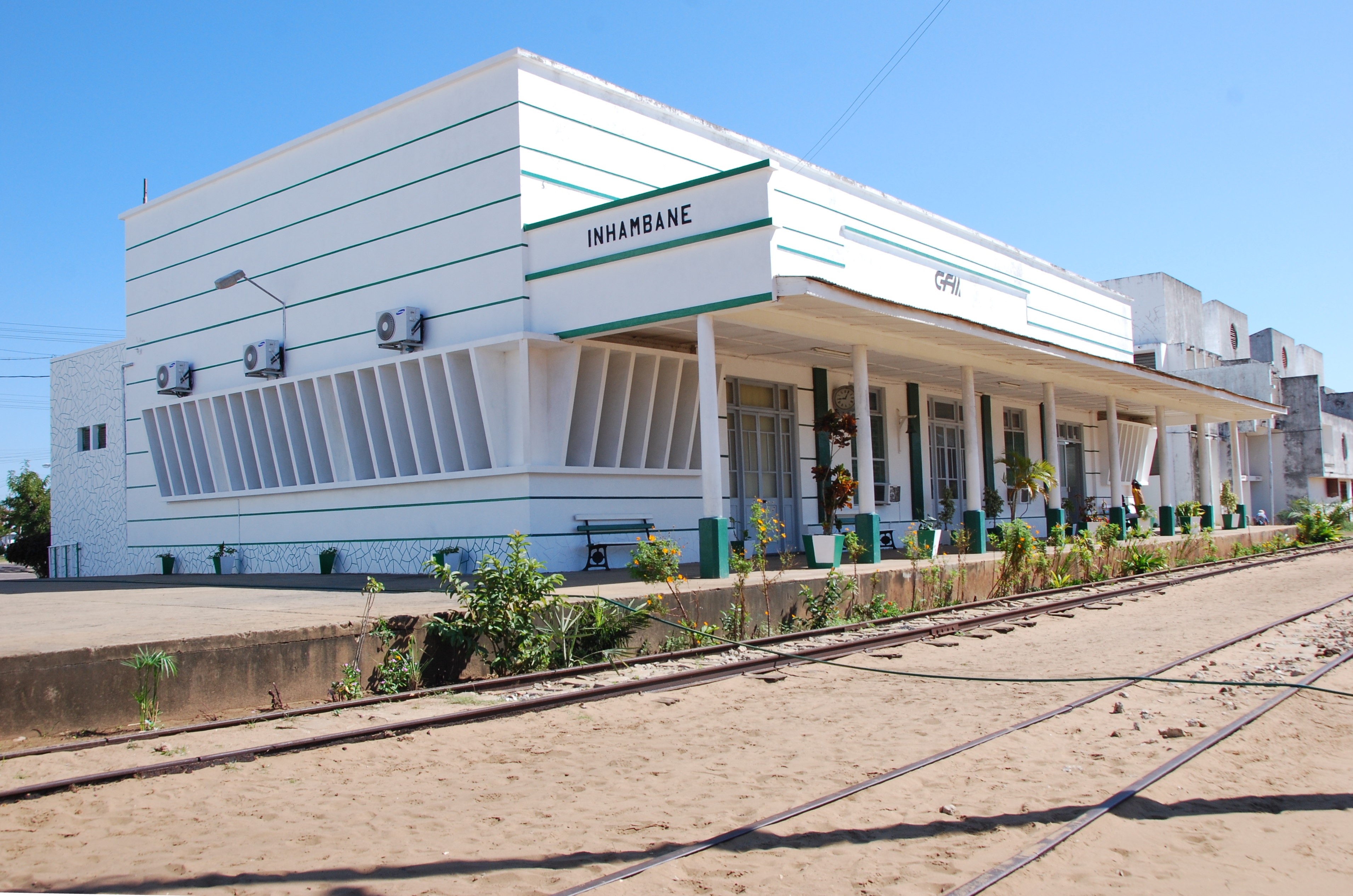
Inhambane is one of Mozambique's most charming and oldest towns: a sleepy colonial port on a turquoise bay, with streets of whitewashed houses, churches and mosques, palm-lined avenues and the endless coming and going of dhows, the triangular-sailed boats that have crossed the bay for centuries. It was one of the first places in East Africa to trade with Arabs, Persians and Portuguese, and it still keeps that air of a crossroads of cultures where time has stood still.
Vasco da Gama called it 'Terra da Boa Gente' in 1498, the Land of the Good People, and the name suits it well: it is a calm, friendly and photogenic town, ideal for strolling at an unhurried pace between its white cathedral, its bustling market, its old museum and its waterfront. Just a few kilometres away are some of the best beaches and dive sites in all of Mozambique: Tofo and Barra, where you can swim with whale sharks and manta rays.
This guide takes a practical look at Inhambane: what to see in the historic town, how to cross the bay by dhow to Maxixe, how to get there and get around, where to eat seafood and how to use the town as a cultural and logistical base for the nearby beaches. For travellers, Inhambane is the perfect combination of colonial history, Swahili culture and the tropical Indian Ocean.
Inhambane is one of the oldest towns on the East African coast: its dhows were trading with Arabs and Persians as early as the 11th century, bringing the bay into the Swahili routes of the Indian Ocean. In 1498 Vasco da Gama named it 'Terra da Boa Gente' for the hospitality of its inhabitants, and in 1534 the Portuguese founded a permanent trading post here, one of the oldest in southern Africa. It was a key port for the ivory trade and, sadly, also for the slave trade, before declining in the shadow of Lourenço Marques. Its rich five-century history is covered in detail on our history page.
Read the full history ↓The "land of good people" named by Vasco da Gama holds an old town of dhows and whitewashed houses, and around it lie the country's best diving beaches, from Tofo to Bazaruto.
Read the history of Inhambane and the southern beaches →No exact prices: a scale from $ (budget) to $$$$$ (luxury), with 2-3 options per category.
Origins, formation and what the sources say.
Inhambane is one of the oldest towns on the entire East African coast, with a history rooted in the trading world of the Indian Ocean long before the Europeans arrived. Its sheltered bay, with calm waters, was an ideal anchorage along the long Mozambican coastline, and from very early on it became part of the maritime trade network linking East Africa with Arabia, Persia, India and, beyond that, the Swahili world of the coast.
It is estimated that by around the 11th century Muslim merchants — Arabs and Persians — were already trading in the area, exchanging cloth, beads and goods from across the Indian Ocean for ivory, gold and other products brought from the African interior. These contacts left a deep mark: Islam took root on the coast, and local culture blended with Arab and Swahili influences, something you can still sense today in the town's mosques and in the traditions of its people, the Bitonga and other peoples of the region.
So when the first Portuguese turned up at the end of the 15th century, they did not find an 'untouched' coast, but a world that was already connected and commercially active, with ports, sailors and trade networks centuries old. Inhambane was one of the southernmost links in that great trading civilisation of the Indian Ocean.
The encounter with Europe came through one of the most famous expeditions in history. In 1498, on his pioneering voyage to India that opened the route around the Cape of Good Hope, the Portuguese navigator Vasco da Gama put in on this stretch of the Mozambican coast. According to tradition, he was so struck by the hospitality and kindness of the inhabitants that he named the region 'Terra da Boa Gente', the 'Land of Good People', a name that has been linked to Inhambane ever since.
The episode marks the first documented contact between Inhambane and the Portuguese, who over the following decades would gradually establish their presence along the coast of what they would call Portuguese East Africa. Unlike other violent encounters of European expansion, the memory of the 'good people' gave Inhambane a friendly image that the town still proudly cultivates.
During those first decades, however, the Portuguese did not yet found a permanent settlement: they traded on and off, competing with the Swahili merchants who already controlled trade in the bay. The shift from occasional trade to a permanent presence would come a few decades later.
In 1534 the Portuguese set up a permanent trading post in Inhambane, making it one of the first permanent European settlements in all of southern Africa. Over the following centuries the town grew into an important colonial port, a base for the ivory trade coming down from the interior and a foothold for the Portuguese Crown on the long Indian Ocean coast.
Inhambane enjoyed a period of commercial splendour, with a unique mix of Portuguese, Indian, Arab, Swahili and local African traders who gave it a cosmopolitan character. Churches, whitewashed houses, warehouses and administrative buildings went up, and many of them still stand, giving the town its colonial charm. The cathedral and the old mosques sit side by side as a testament to that diverse past.
But Inhambane's prosperity also had a dark and tragic side: like many ports on the coast, it was a major centre of the slave trade. During the 18th and 19th centuries, thousands of Africans were captured in the interior and shipped from this bay to plantations on the Indian Ocean islands, in Brazil and elsewhere, in one of the most painful chapters of its history. For a long time, ivory and slaves were the two pillars of its trade.
Throughout the 19th century and into the early 20th, Inhambane's relative importance steadily declined. Several factors came together: the gradual abolition of the slave trade — on which the town had partly depended — shifts in trade routes, and above all the unstoppable rise of Lourenço Marques (today's Maputo), further south. That city on Delagoa Bay, better connected by rail to South Africa's gold mines, became the colony's main port and its capital in 1898, leaving Inhambane in a more secondary role.
Inhambane thus became an elegant provincial town, with its coastal shipping port, its coconut and cashew plantations in the surrounding area, and the quiet life of a regional capital. That relative sidelining had an unexpectedly positive effect for today's traveller: since it neither grew rapidly nor industrialised, the town kept its historic layout, its colonial architecture and its calm atmosphere, now among its biggest draws.
During the late colonial period, the Inhambane region remained an important farming centre — famous for its coconut palms and cashew nuts — and kept its Bitonga population and cultural identity. Then, like the rest of the country, the town went through the struggle for independence and the difficult years that followed.
Like the rest of Mozambique, Inhambane lived through independence in 1975, the departure of many Portuguese settlers and the hard years of the civil war (1977-1992), which battered the economy and halted any development. The province suffered from the conflict and from isolation, and the town, far from the main front lines, sank into a long stillness.
With the arrival of peace and the country's reconstruction from the 1990s onwards, Inhambane and its province found a new engine: tourism. The extraordinary nearby beaches of Tofo and Barra, with their whale sharks and manta rays, became a magnet for divers from all over the world, and the historic town itself, with its cathedral, its market and its dhows, began to attract travellers looking for authenticity and culture as well as the sea. Inhambane's small airport, with flights from Johannesburg and Maputo, helped that revival along.
Today Inhambane brings together the three souls of its history: the old Swahili port of the Indian Ocean, the Portuguese colonial town of the 'Terra da Boa Gente', and the modern destination for cultural and diving tourism. Strolling its whitewashed streets, crossing the bay by dhow at sunset and heading out the next day to swim with whale sharks in Tofo means travelling, within just a few kilometres, through five centuries of encounters between Africa, Arabia, Europe and the sea.