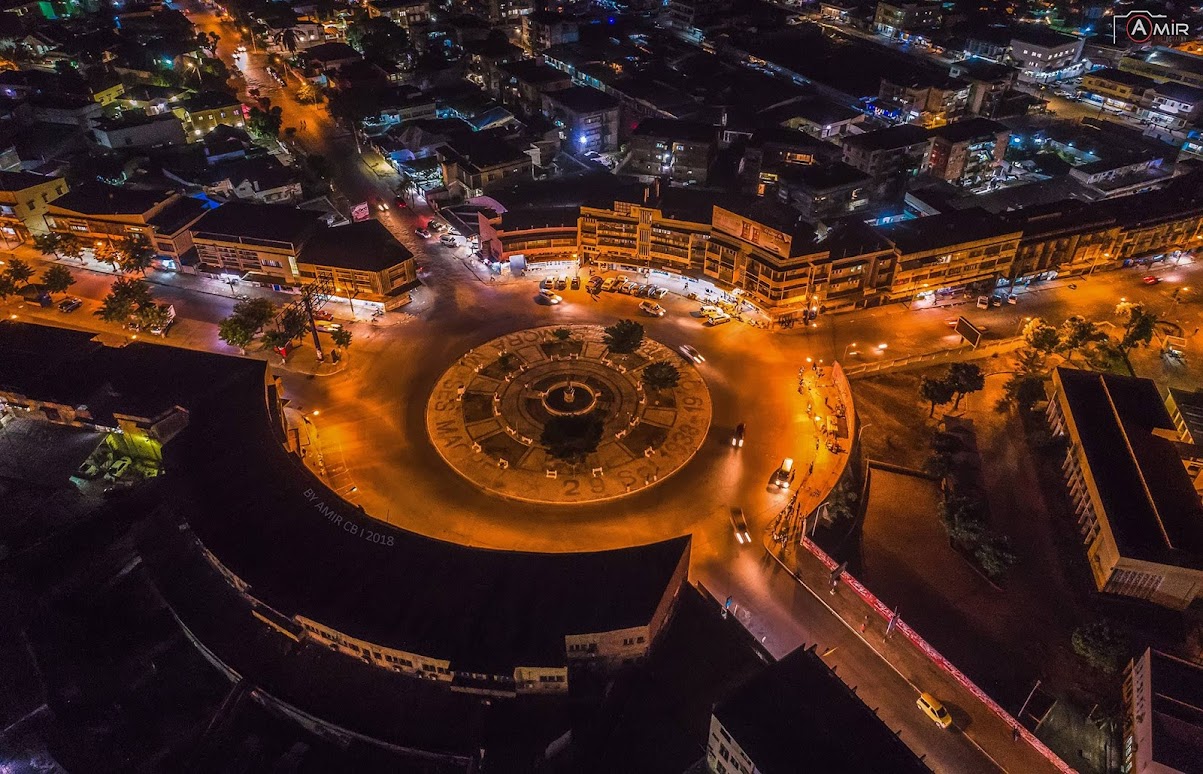
Nampula is the big city of northern Mozambique: capital of the country's most populous province, a rail and road hub, and the essential gateway to one of Africa's most extraordinary destinations, the Island of Mozambique. Surrounded by spectacular granite mountains that rise from the plain like islands of stone, it is a bustling, commercial and deeply African city, very different from the south of the country.
It is not a picture-postcard tourist city but a vibrant urban centre where you can feel the pulse of Makua culture, the majority people of the north. Its main attraction is the excellent National Museum of Ethnography, one of the best in the country for understanding the diversity of Mozambique's peoples, customs and art, with remarkable Makonde carvings. Add to that the cathedral, markets full of life and crafts, and the natural setting of the inselbergs that surround it.
This guide looks at Nampula with a practical eye: what to see in the city, how to use it as a base and connection point for the Island of Mozambique and the northern beaches, how to get around, where to sleep and eat, and what to expect from a stopover in the urban heart of northern Mozambique. More than a destination in itself, Nampula is the logistical and cultural key to one of the country's most fascinating and authentic regions.
Nampula grew in the 20th century as a Portuguese colonial administrative and military centre in the northern interior, helped by its location and by the arrival of the railway linking the port of Nacala with the interior and neighbouring Malawi. It became the great city of the north, capital of a region with a strong Makua identity. After independence in 1975 it remained the main urban and transport hub of northern Mozambique, a role it still plays today as the gateway to the Island of Mozambique. The full story is on our history page.
Read the full history ↓The north is where the country's Swahili-Portuguese past still beats: the Island of Mozambique, which gave the country its name and was its capital for centuries, and the remote wild vastness of the Niassa Reserve.
Read the history of The north: Nampula and the Island of Mozambique →No exact prices: a scale from $ (budget) to $$$$$ (luxury), with 2-3 options per category.
Origins, formation and what the sources say.
Long before the city of Nampula existed, the vast inland plain of northern Mozambique, dotted with spectacular granite mountains (the inselbergs), was, and still is, the heart of Makua (or Makhuwa) territory, home to Mozambique's largest ethnic group. The Makua are a Bantu-speaking people, traditionally farmers, with a matrilineal social organisation (kinship and inheritance pass down the mother's line), which sets them apart in the region.
Makua culture spreads across much of the north of the country and has very rich traditions: initiation rites, dances, music, traditional medicine and its own forms of art. A well-known example is 'mussiro' (or musiro), the white face mask made from a plant paste that many women in the north wear as a cosmetic and to protect their skin. You also see it on the coast and on the Island of Mozambique, and it has become an iconic image of the region.
This Makua identity, together with the presence of other peoples and the Swahili coastal influence closer to the sea, shapes the character of northern Mozambique, which is very different from the south of the country. Nampula, the big city that would grow up in the 20th century in the middle of this land, was and still is above all a Makua city, capital of the most populous province in the nation.
Nampula is a fairly young city, a product of the 20th century. Unlike the Island of Mozambique or Ibo, it has no centuries-old Swahili or Portuguese past. It grew instead as an administrative, military and communications centre for the northern interior during the Portuguese colonial period. Its growth was closely tied to the railway: the line linking the deep-water port of Nacala, on the coast, with the northern interior and with neighbouring British Nyasaland (today's Malawi) ran through Nampula and made it a strategic hub.
Over the middle decades of the 20th century, Nampula became the main city of northern Mozambique, with its street plan, its cathedral, its neighbourhoods and a mixed population of Makua, Portuguese, Indians and other communities involved in trade and administration. It was also an important military base, especially during the war of independence (1964-1974), when the north was one of the main theatres of FRELIMO's fight against colonial rule.
So while the old Island of Mozambique lost its historical role for good, Nampula took it on in a modern form. It became the real urban, economic and logistics centre of the north, the big city of a region that until then had revolved around the old ports on the coast.
When Mozambique became independent in 1975, after the fall of the Portuguese colonial regime, Nampula kept and strengthened its role as the big city of the north. Like the rest of the country, it then suffered the effects of the long and devastating civil war (1977-1992) between the FRELIMO government and the RENAMO guerrillas. The war hit the countryside and communications hard and drove people from rural areas into the cities.
Despite the hardships, Nampula kept growing until it became one of the most populous cities in Mozambique and the undisputed capital of the north. As a transport hub, it became essential to the economy and logistics of the north. It has railways to Nacala and to Cuamba and Malawi, roads to the coast, to Pemba and to the south, and the region's main airport.
Being a crossroads also had a harder side. Like any big city in a poor region, Nampula is full of sharp contrasts: commercial and middle-class neighbourhoods sit next to large working-class areas that lack basic services. Even so, its energy, its diversity and its Makua culture made it a lively urban centre, very typical of the deep north of Mozambique.
Today Nampula is the largest city in northern Mozambique and one of the main cities in the country, with around three-quarters of a million people. Above all, it is still a major centre for trade, administration and transport. Goods, people and routes pass through here, linking the coast with the interior and the north with the rest of the nation. Its airport and railway station keep it the essential hub of the region.
For travellers, Nampula is mainly the gateway to the great treasure of the north, the Island of Mozambique, and to the beaches and other spots on the Nampula coast, such as Chocas-Mar. In the city itself, the National Museum of Ethnography, one of the best in the country, offers an excellent introduction to the peoples and art of Mozambique, with a special focus on the Makua and Makonde cultures of the north. The cathedral, the busy markets and the inselbergs that frame the city round off what there is to see.
Nampula shows a different Mozambique from the one on beach postcards: that of the big African cities of the interior, with their bustle, their cultural diversity and their contrasts. Understanding it means understanding that the north of the country has its own centre of gravity, its own identity and its own rhythm, beyond the old colonial ports on the coast. It is the living city from which you reach some of the most extraordinary places in Mozambique.