Viajá con Gus
Home › Mozambique › Ibo Island
Ibo Island
🇲🇿 Mozambique · Cabo Delgado and the Quirimbas

Ibo Island

🪪 What do I need to enter Mozambique?Pick your citizenship and we tell you the visa, the days and the paperwork, with the official source.

By leaving your email and citizenship you agree to receive the documents you asked for and weekly travel news. You can unsubscribe whenever you want. How we handle your data.
Jump to what you need
📍Region
Ibo Island (Ilha do Ibo) is a small island in the Quirimbas Archipelago, in Cabo Delgado province, in the far north of Mozambique. It is part of Quirimbas National Park and, together with the Island of Mozambique, one of the country's great historical and cultural treasures: a Swahili and later Portuguese port with colonial forts, ruined churches, artisan silversmiths and streets taken over by vegetation. It is a museum-island, frozen in time, much quieter and more remote than Ilha de Moçambique.
📌Best time
The dry season from May to October is ideal: cool weather, low humidity and calm seas for sailing by dhow between the islands. From November to March it is very hot and humid, with rain and some risk of cyclones. June to September are the best months. Like the whole northern coast, Ibo is a quintessential southern-winter destination.
📌Suggested days
With 2 nights you can explore the island thoroughly: the three Portuguese forts, the old town with its ruined houses, the silversmiths' workshops and a dhow trip through the mangroves. With 3 nights you can add a snorkelling trip to islets and sandbanks, or even a dhow journey with an overnight camp to other islands in the archipelago. Ibo is best enjoyed slowly: its charm is its unhurried pace.
📌Getting there
Getting there is part of the adventure. The most comfortable option is a light-aircraft flight from Pemba to the Ibo airstrip (about 30-40 min). By land and sea: from Pemba it takes about 4-5 hours by road to the Tandanhangue jetty, and from there a dhow or motorboat crosses the mangroves with the tide (1-2 hours). The crossing depends on the tides, so schedules need to be coordinated. Important: given the security situation in Cabo Delgado, it is best to organise the trip through an operator and check official advisories before travelling.
📌Language and currency
The official language is Portuguese; on the island people also speak Kimwani (a coastal language related to Swahili) and Swahili. Lodges have English-speaking staff. The currency is the metical (MZN); in mid-2026 it is around 64 to the dollar. There are no reliable ATMs: bring all the cash you need from Pemba, in meticais plus some dollars. Upmarket lodges quote prices in dollars.
📌Safety
Ibo is in Cabo Delgado province, affected since 2017 by an armed conflict in the northern and inland districts. The island itself has generally stayed out of the fighting, but the situation is changeable. It is best to travel with an established operator or lodge, avoid the northern part of the province entirely (Palma, Mocímboa da Praia, Macomia), and check your foreign ministry's travel advisories before planning the trip.
💱 MZN exchange rate
Loading rate…
🌤️ Weather in Ibo Island
Loading weather…

Ibo Island is one of those places that seem made up: a Swahili and colonial port lost in the maze of mangroves of the Quirimbas Archipelago, with Portuguese fortresses facing the sea, grand ruined mansions swallowed by the jungle, silversmiths working silver with centuries-old techniques and an end-of-the-world silence. If the Island of Mozambique is the country's great museum-city, Ibo is its smaller, more remote and more melancholy sister: a journey back in time with hardly any tourists.

For centuries Ibo was an important trading port —gold, ivory, ambergris and, above all, enslaved people— and the second most important town in colonial northern Mozambique after the Island of Mozambique. From that grandeur remain three fortresses (São João Baptista, São José and Santo António), churches, the old customs house, elegantly decaying mansions and a unique tradition: silverwork, born from a blend of African, Arab, Indian and Portuguese influences, still practised by artisans in the São João fort.

This guide explores Ibo with a practical eye: what to see among its forts and ruins, how to visit the silversmiths, how to go out by dhow through the mangroves and sandbanks, how to reach the island (an adventure in itself) and where to stay. It also deals honestly with the question of security in Cabo Delgado, so you can plan with good information. Ibo is not an easy or mass-market destination: it is for curious travellers willing to go a long way to find one of the most evocative corners of the Indian Ocean.

📖 History of Ibo Island

An Islamic Swahili port woven into Indian Ocean trade since before the 16th century, Ibo became under Portuguese rule a key hub for the trade in gold, ivory and enslaved people, and the second town of the colonial north after the Island of Mozambique. Its three fortresses —the largest, São João Baptista, dating from 1791— defended a prosperous, slave-trading port. Decline in the 20th century left it half-abandoned and frozen in time; today it is part of Quirimbas National Park and preserves its ruins and its silversmithing tradition. The full story is told on our history page.

Read the full history ↓

🏛️ Ibo Island is in Cabo Delgado and the Quirimbas

The far north of the country, between one of the largest bays in the world and the coral archipelago of the Quirimbas, holds museum-islands with Portuguese forts and a recent history shaped by gas and conflict.

Read the history of Cabo Delgado and the Quirimbas →

🗺️ What to see

1
São João Baptista Fort
The island's largest fortress, star-shaped, from 1791; today it houses the silversmiths who work silver by hand.
Leer más ↓
Forte de São João Baptista is Ibo's most important monument: a large star-shaped fortress built by the Portuguese from 1791 to defend the port and assert their rule over the archipelago. Its low walls and angular bastions look out over the sea and the mangroves, and they offer a magnificent view, especially at sunset. What makes this fort unique is that today it is home to Ibo's silversmiths: in small workshops inside the compound, master artisans work silver using filigree techniques handed down through generations, melting, hammering and chasing delicate jewellery —earrings, bracelets, little boxes— which you can watch being made and buy. It is a living tradition, a blend of African, Arab and Indian influences, surviving in this remote corner. The fort also holds the island's darkest memory: enslaved people were locked up in its rooms and in those along the shore before being shipped off. A local guide helps you read that history. Getting there: in Ibo town, on foot. Best time: at sunset for the light. Tip: buy silver directly from the artisans to support them.
ℹ️ Distance: In Ibo town, on foot · Best time: Sunset · Admission: Token contribution / tip for the guide and silversmiths; check when visiting (2026) · Duration: 1 to 1.5 hours
2
The silversmiths of Ibo (silver filigree)
Workshops where artisans craft silver filigree jewellery by hand, a centuries-old tradition unique to the island.
Leer más ↓
Silverwork is Ibo's great living heritage. Inside São João Baptista fort and in a few workshops in town, artisans who learnt the craft from their parents and grandparents work silver with astonishing patience and skill. The signature technique is filigree: ultra-fine silver threads twisted and soldered into delicate lace with geometric and floral motifs of clear Arab and Indian origin. Watching a silversmith at work —blowing on the fire, drawing the wire, assembling an earring or bracelet piece by piece— is a hypnotic experience and a history lesson: those jewels distil the mix of cultures that shaped the Swahili coast. Buying directly from the artisans is the best way to take home a meaningful souvenir and to sustain a craft at risk of disappearing.
ℹ️ Distance: São João Fort and workshops in town · Best time: During the day, in workshop hours · Admission: Free; you only pay for what you buy (pieces from a few dollars, 2026) · Duration: 30 to 60 minutes
3
The old town and colonial ruins
Streets of elegantly ruined mansions taken over by vegetation: a ghost town of melancholy beauty.
Leer más ↓
Walking through Ibo's old quarter is like walking through a novel's set. The wide colonial avenues are lined with two-storey mansions, old merchants' houses and administrative buildings, many of them in spectacular ruin: collapsed roofs, columns covered in creepers, courtyards with trees growing in them, peeling façades of ghostly elegance. It bears witness to the island's past wealth and its long abandonment in the 20th century. Some houses among the ruins are still lived in, and the community's daily life —women with faces painted with mussiro, children playing, fishermen— mingles with the decaying buildings. A guided walk helps you understand what each building was (the customs house, the church, the residences) and uncover stories of splendour and ruin. It is, without doubt, one of the most photogenic and evocative places in Mozambique.
ℹ️ Distance: Ibo old town, on foot · Best time: Early morning or sunset, for the light · Admission: Free; local guide recommended (contribution) · Duration: 1 to 2 hours
4
São José and Santo António Forts
The island's other two smaller fortifications, which complete Ibo's colonial defensive system.
Leer más ↓
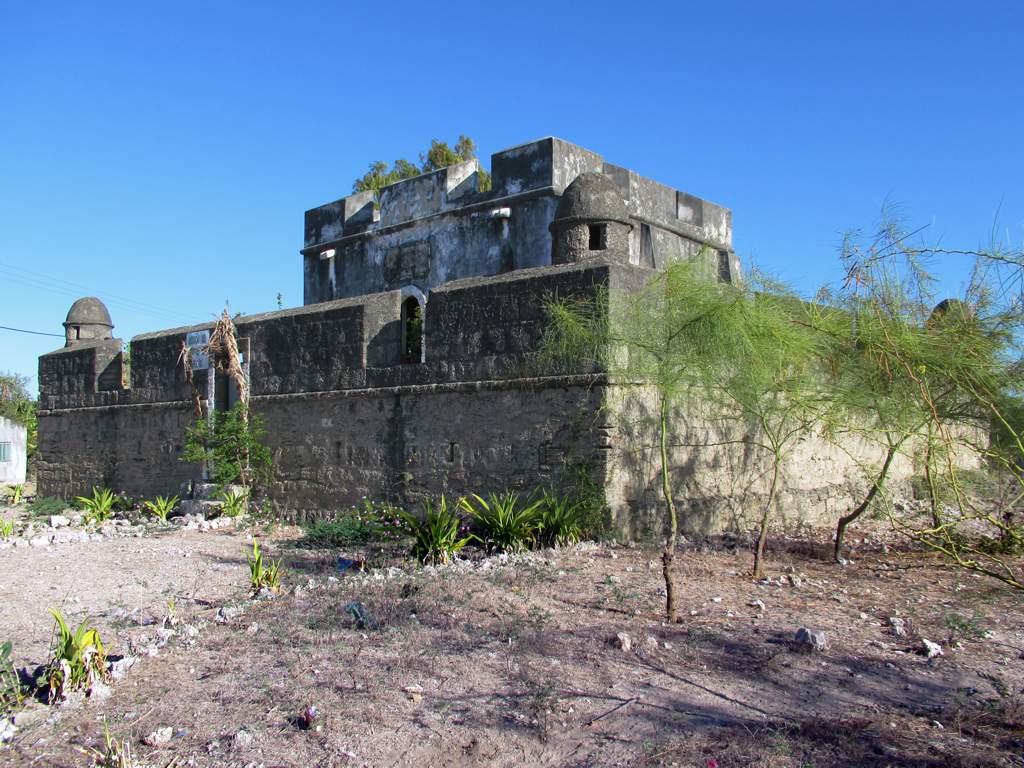
Besides the large São João Baptista fort, Ibo preserves two smaller Portuguese fortifications: Forte de São José and Forte de Santo António. They were part of the defensive system that protected the port and controlled access to the island through the channels between the mangroves. Santo António, by the sea, is a good viewpoint; São José completes the trio that gives Ibo its reputation as the 'island of three forts'. Although more modest and in varying states of preservation, they are worth visiting for their historical value and their views. Visiting all three forts helps you picture the military and commercial importance this small island had in Portugal's Indian Ocean empire.
ℹ️ Distance: On the island, on foot or by bike · Best time: With the right tide and light · Admission: Free / contribution to the guide (check when visiting, 2026) · Duration: 30 to 45 minutes each
5
Dhow trip through the mangroves
A trip by traditional sailing boat through the maze of mangroves and channels around Ibo, with birds and unique scenery.
Leer más ↓
Ibo is surrounded by one of the largest and best-preserved mangrove systems in the Indian Ocean, protected within Quirimbas National Park. Heading out by dhow —the lateen-sailed boat of the Swahili coast— to sail through the water channels and mangrove tunnels is one of the island's most magical experiences: silence, herons and flamingos, fiddler crabs in the mud and a tide that changes the landscape completely. Trips depend on the tides. Some excursions combine the mangroves with visits to fishing communities, traditional salt pans or sandbanks for a picnic. It is also the classic way to get around the archipelago and feel the ancestral rhythm of these waters.
ℹ️ Distance: Departures from the island; tide-dependent · Best time: Dry season; coordinate with the tide · Admission: Excursion from about USD 30-60 per person depending on duration (operators/lodges, 2026) · Duration: Half day
6
Snorkelling and dhow trips to islets and sandbanks
Snorkelling trips to the reefs of Quirimbas National Park, with corals, tropical fish and turtles.
Leer más ↓
The reefs around Ibo and the neighbouring islands are part of Quirimbas National Park and offer excellent snorkelling: coral gardens, shoals of tropical fish, turtles and, with luck, dolphins or even the elusive dugong. From Ibo, dhow or motorboat trips go to nearby islets and to sandbanks that emerge at low tide, true ephemeral beaches in the middle of the turquoise sea, perfect for swimming and lunch. It is a way to add nature and sea to the island's strong historical focus. Lodges and local operators arrange these trips according to the weather and tides. More advanced diving is mainly done from the lodge islands in the north of the archipelago.
ℹ️ Distance: Islets 30-60 min away by boat · Best time: Dry season, calm sea · Admission: Excursion from about USD 40-70 per person with equipment (2026); park fee extra · Duration: Half day to full day
📶I have never landed without internet. I arrive and my phone connects to the strongest network in the country I am visiting: I can say I landed, sort out transport, book tours and keep posting, at a seriously good price. I always use the Maya eSIM — check their plans by clicking the banner.See plans →Maya Mobile eSIM — turn travel mode on
What nobody tells you

💵 Prices

Tickets

TypePrice
Tasa del Parque Nacional de las QuirimbasCheck with the operator/lodge; usually included in excursions (ANAC, check when visiting 2026)
Visita guiada a los fuertes y el pueblo viejoContribution / tip for the local guide, from about USD 5-15 per tour (2026)
Talleres de plateros (fuerte de São João)Free; you pay for what you buy (filigree pieces from a few USD, 2026)
Fuertes de São José y Santo AntónioFree / contribution to the guide
🔄 updated monthlyOfficial / reference values · double-check when buying

Activities and tours

ActivityPriceDurationOperator
Historical walking tour of the forts, the town and the silversmithsFrom about USD 5-15 per group with a local guide (2026)2 to 3 hoursLocal guides / lodges
Dhow trip through the Quirimbas mangrovesFrom about USD 30-60 per person (2026)Half dayLodges and local operators
Dhow snorkelling trip to islets and sandbanksFrom about USD 40-70 per person with equipment (2026)Half day to full dayLodges and local operators
Multi-day dhow journey through the archipelago (dhow safari)Depending on itinerary, from several hundred USD (2026)2 to 5 daysSpecialist operators (e.g. Ibo Island Lodge)
Sunset from São João Baptista fortIncluded in the visit / contribution to the guide (2026)1 hourLocal guides
🔄 updated monthlyOfficial / reference values · double-check when buying

🚌 How to get there and distances

Getting around

ModePriceDurationNotes
On footFreeThe town is explored on footIbo is small and traffic-free; you can walk everywhere
BicycleRental from about USD 5-10 per day (2026)VariableHandy for reaching the more distant forts; offered by some lodges
Dhow / motorboatDepending on route and group (2026)Variable, depending on the tideTransport around the archipelago; always tide-dependent
🔄 updated monthlyOfficial / reference values · double-check when buying

How to get there

RouteAirlines / operatorsAvg. priceDuration
Pemba → Ibo by light aircraftCharter flights / operators (e.g. CR Aviation, subject to availability)From several hundred USD one way (2026)30 to 40 min flight to the Ibo airstrip
Pemba → Tandanhangue by road, then dhow to IboPrivate transfer or chapa (local minibus) + local dhowPrivate transfer from ~USD 100-150 per vehicle; dhow depending on group size (2026)4-5 h by car + 1-2 h by dhow depending on the tide
Tandanhangue–Ibo crossing through the mangrovesDhow or motorboat (arranged with the lodge/operator)Depending on the boat and the tide (2026)1 to 2 hours, depending on the tide
Ibo ↔ other Quirimbas islands (Matemo, Quirimba, Quilalea)Dhow or motorboat / charter flightsDepending on itinerary (2026)Variable
🔄 updated monthlyOfficial / reference values · double-check when buying

🏨 Where to stay

No exact prices: a scale from $ (budget) to $$$$$ (luxury), with 2-3 options per category.

Luxury boutique lodge
Price$$$$$
Recommended options
From around USD 200-400 a night (often full board); the historic Ibo Island Lodge, set in three restored colonial mansions facing the sea, is the island's benchmark
Mid-range guesthouses and inns
Price$$$$$
Recommended options
Approx. USD 50-120 a night; restored mansions and small, charming guesthouses in the village, such as Cinco Portas or Karibuni
Budget (guesthouses and local homes)
Price$$$$$
Recommended options
From around USD 15-40 a night; simple rooms in community homes and small guesthouses; an option for travellers on a tight budget
Dhow safari camping
Price$$$$$
Recommended options
Depending on the operator; nights camping on sandbanks and islands during multi-day dhow trips

🍴 Where to eat

Mariscos frescos
Price$$$$$
Options / signature dish
Around USD 8-20 per person; lobster, prawns, crab, octopus and catch of the day, at the lodges and village eateries
Cocina de la isla (kimwani/swahili-portuguesa)
Price$$$$$
Options / signature dish
USD 5-12 per person; matapa, coconut rice, fish curries and tropical fruit, with a strong coastal and spice influence
Comedores locales y comida de mercado
Price$$$$$
Options / signature dish
Very cheap (from ~USD 2-3); everyday dishes, grilled fish and cassava in the village
Restaurante de lodge (pensión completa)
Price$$$$$
Options / signature dish
At the luxury lodges meals are usually included; chef's menus with seafood and a Mozambican touch

📖 History of Ibo Island

Origins, formation and what the sources say.

A Swahili port in the archipelago

Like the whole northern coast of Mozambique, Ibo Island belonged for centuries to the Swahili world, the Islamic maritime civilisation that flourished along the coast of East Africa thanks to Indian Ocean trade. Long before the Europeans arrived, Arab, Persian and Swahili sailors travelled these waters following the monsoon winds, and the islands of the Quirimbas Archipelago were ports of call and trading points in the network that linked Africa with Arabia, India and beyond.

In fact, the name 'Quirimbas' itself comes from the island of Quirimba, and for a long time the islands of the archipelago were held by Swahili merchants and coastal sultanates tied to Zanzibar and to the coast of present-day Tanzania. Ivory, gold, ambergris, tortoiseshell, cloth and slaves were traded here. With its sheltered position among the mangroves and its access to the channels, Ibo was a natural anchorage and a trading post of growing importance.

That Swahili heritage is still alive today in the Kimwani language spoken on Ibo (related to Swahili), in the Muslim faith of much of the population, in the coral-and-lime architecture and in traditions such as mussiro (the white face mask worn by women). The first layer of Ibo's history, like that of the Island of Mozambique, is African and Islamic, older than Portugal and separate from it.

en.wikipedia.org · Ibo, Mozambiqueen.wikipedia.org · Quirimbas Archipelago

Portugal, trade and slaves

The Portuguese reached the region in the 16th century, as part of their expansion across the Indian Ocean after Vasco da Gama's voyage. They gradually pushed aside or subdued the Swahili lords of the archipelago and set up a trading and military post on Ibo. Over the 17th and 18th centuries, the island grew into the second most important town in colonial northern Mozambique, after the Island of Mozambique itself, and into the capital of the Cabo Delgado region.

Ibo's wealth was built on trade, and above all on the slave trade. Thousands of enslaved people were brought from the interior of the continent and held on the island before being shipped to the plantations of the Indian Ocean islands —Madagascar, the Comoros, the Mascarenes (Isle de France and Bourbon, today Mauritius and Réunion)— and even to the Americas. Alongside slaves, the island exported ivory, ambergris, tortoiseshell and other goods. That brutal and highly profitable trade paid for the mansions and buildings whose ruins can still be seen.

To protect this rich and contested port, the Portuguese built their fortifications. The largest, the Forte de São João Baptista, an imposing star-shaped fortress, was built from 1791 onwards. It was joined by the smaller forts of São José and Santo António. Ibo thus became the 'island of the three forts', a colonial stronghold in the maze of mangroves of the archipelago.

en.wikipedia.org · Ibo, Mozambiquelonelyplanet.com

Colonial splendour and a long decline

During the 18th century and much of the 19th, Ibo enjoyed its golden age. The island had a well-off colonial society of merchants, officials and landowners, with wide avenues, two-storey mansions, churches, a customs house and all the trappings of a prosperous imperial town. Its silverwork —the silver filigree that craftsmen still make today— was born from that mix of wealth and crossing cultures: Indian and Arab techniques applied by African hands to suit the taste of the elite.

But, like the Island of Mozambique, Ibo fell into decline in the late 19th century and throughout the 20th. The gradual abolition of slavery removed its main business. The growth of the port of Pemba (then Porto Amélia), in the neighbouring bay, better located and with deeper waters, drew trade and the administration of Cabo Delgado away. Remote and hard to reach, Ibo steadily lost population and importance until it was left half-abandoned.

That painful abandonment had the same preserving effect as on the Island of Mozambique: with no development and no demolitions, the mansions and fortresses were frozen in time, slowly crumbling and being swallowed by vegetation, yet keeping their layout and character. Decade after decade, the wealthy town turned into the melancholy, beautiful ghost town that fascinates travellers today.

en.wikipedia.org · Ibo, Mozambiquejohnnyafrica.com · Mozambique quirimbas archipelago

Quirimbas National Park and tourism

Mozambique became independent from Portugal in 1975 and then went through a long and devastating civil war (1977-1992). During those decades, Ibo and the whole north were left out of development, mired in poverty and isolation. The island remained home to a community of fishermen, silversmiths and farmers, who kept their Swahili-Mwani traditions alive in the shadow of the colonial ruins.

In 2002, the Mozambican government created Quirimbas National Park, which covers the southern islands of the archipelago —Ibo among them— and a large stretch of mainland coast and mangroves, with the aim of protecting its coral reefs, its mangroves, its marine life (turtles, dugongs, dolphins) and its cultural heritage. UNESCO later recognised the area as a Biosphere Reserve. That protection opened the door to small-scale tourism: some mansions were restored as boutique lodges —the best known, Ibo Island Lodge, in three colonial houses facing the sea— and the island began to welcome travellers drawn by its history and atmosphere.

Since 2017, however, Cabo Delgado province has suffered a serious armed conflict, a jihadist insurgency that has hit the northern and inland districts hardest, displaced more than a million people and badly hurt tourism in the region. Ibo Island has generally stayed out of the fighting, but the conflict casts a shadow over the future of a place that deserves to be known and cared for. Ibo is still there, with its three forts, its silversmiths and its ruins: a fragile treasure of the Indian Ocean waiting for better times.

anac.gov.mz · Quirimbasen.wikipedia.org · Insurgency in Cabo Delgado

📚 Bibliography

  • Wikipedia (EN) — «Ibo, Mozambique»: https://en.wikipedia.org/wiki/Ibo,_Mozambique
  • Wikipedia (EN) — «Quirimbas Archipelago»: https://en.wikipedia.org/wiki/Quirimbas_Archipelago
  • ANAC (Administração Nacional das Áreas de Conservação) — Parque Nacional das Quirimbas: https://www.anac.gov.mz/en/parques/quirimbas/
  • Lonely Planet — «Fort of São João Baptista»: https://www.lonelyplanet.com/pois/1352696
  • Getaway Magazine — «What to do on Ibo Island»: https://www.getaway.co.za/things-to-do/what-to-do-ibo-island/
  • Johnny Africa — «Ultimate Guide to the Quirimbas Archipelago»: https://johnnyafrica.com/mozambique-quirimbas-archipelago/
  • Rainbow Tours — «Ibo Island Lodge»: https://www.rainbowtours.co.uk/mozambique/quirimbas-archipelago/hotels/ibo-island-lodge
  • Wikipedia (EN) — «Insurgency in Cabo Delgado»: https://en.wikipedia.org/wiki/Insurgency_in_Cabo_Delgado
  • Discover Africa — «Ibo Island and the Quirimbas Archipelago»: https://www.discoverafrica.com/safaris/mozambique/ibo-island-quirimbas-archipelago/

❓ Frequently asked questions

Is it safe to travel to Ibo given the conflict in Cabo Delgado?+
Ibo is in Cabo Delgado province, where an armed conflict has been going on since 2017, mainly affecting the northern and inland districts (Palma, Mocímboa da Praia, Macomia). Ibo Island has generally stayed out of it, but the situation keeps changing. The advice is to travel with an established operator or lodge, avoid the northern part of the province and check your country's official travel advisories before planning the trip. This is not a destination for improvising.
How do I get to Ibo?+
There are two ways. The most comfortable is a light-aircraft flight from Pemba to the Ibo airstrip (30-40 min). The cheapest and most adventurous is overland from Pemba to the Tandanhangue jetty (4-5 hours), then across by dhow or motorboat through the mangroves (1-2 hours), always depending on the tide. Either way, it's best to coordinate with the lodge or operator, especially because of the tides and the logistics in the region.
What makes Ibo special compared with other islands?+
Ibo isn't a beach-resort island but a museum island: Portuguese forts, ruined colonial mansions taken over by the bush, silversmiths making filigree by hand and a feel of time standing still, with very few tourists. It's the historic gem of the Quirimbas, comparable to Island of Mozambique but more remote and wild. It pairs well with nature: mangroves, snorkelling and dhow sailing.
How many days should I stay?+
With 2 nights you'll see the essentials (forts, village, silversmiths, a dhow outing). With 3 nights you can enjoy it at a slower pace and add snorkelling around the islets or a trip through the archipelago. Ibo calls for time and patience: getting there takes effort, so it's not worth going for fewer than two nights.
Are there ATMs, and can I pay by card?+
There are no reliable ATMs on Ibo. You need to bring all the cash you'll need from Pemba, in meticais (plus some dollars). Upmarket lodges may quote in dollars or accept advance payment, but for guides, silversmiths, local meals and dhows you'll need cash in meticais. Plan your money ahead of time.
What souvenirs should I buy?+
The silver filigree jewellery made by Ibo's silversmiths is the star souvenir: one-of-a-kind pieces, handmade with a centuries-old technique, which you buy directly from the artisans at the Fort of São João. Buying from them supports a craft at risk of disappearing. It is, by far, the best souvenir the island has to offer.

More places in Mozambique

InhambaneIsla de MozambiqueMaputoNampulaParque Nacional de GorongosaPemba
See every place in Mozambique →The history of Mozambique →
Sources consulted (7)
Still planning?
Explore more destinations in Mozambique
See all destinations →
Image credits
Photos from Wikimedia Commons, each under its own licence (CC BY, CC BY-SA or public domain). Open each file to see its author and licence.
Fortim de Sao Antonio (33977126011)