📌Where it is
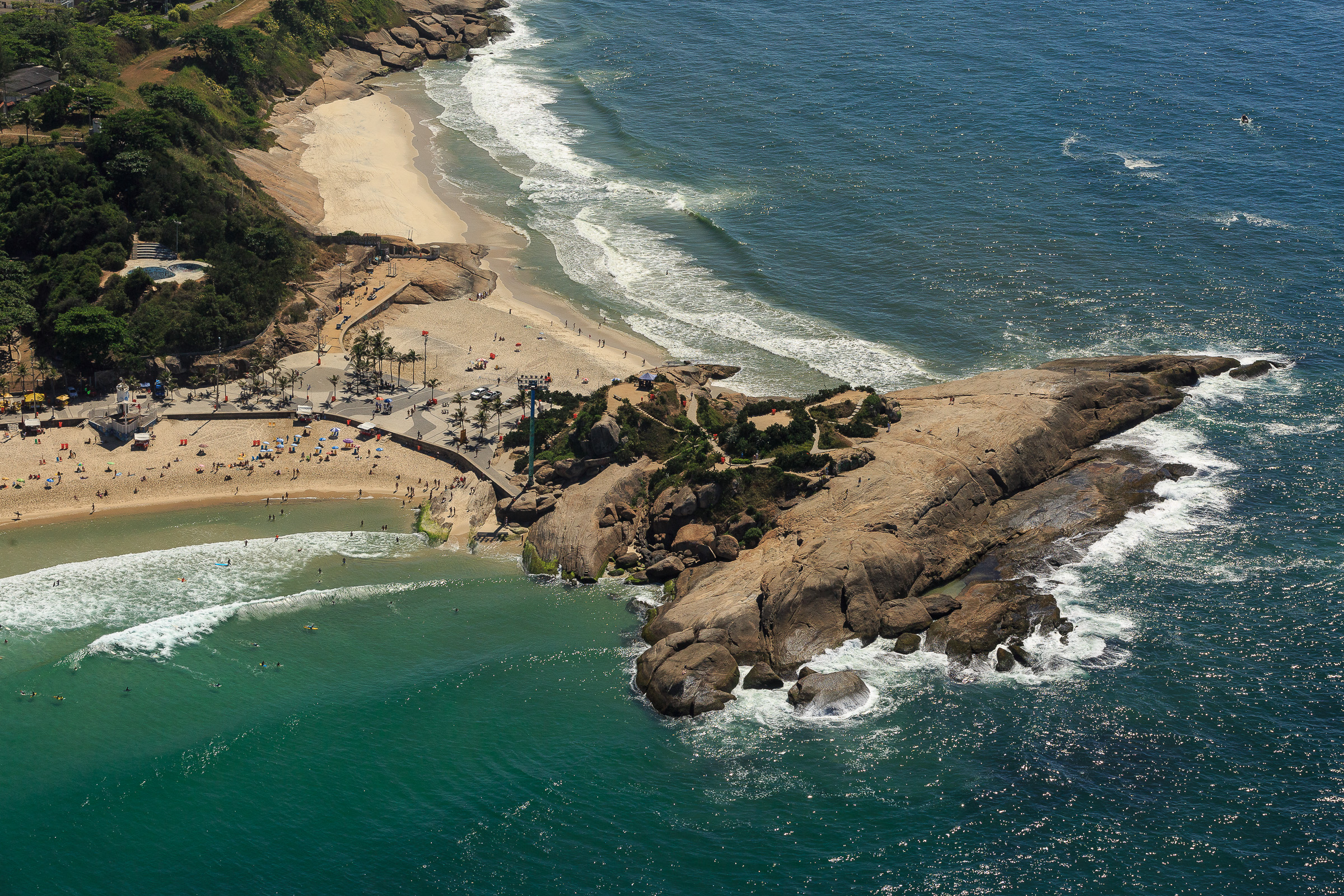
On the rocky point that separates Copacabana from Ipanema, in Rio de Janeiro's Zona Sul. It's a short beach, with Parque Garota de Ipanema and Pedra do Arpoador at the far end.
📌How to get there
Metro Line 1/4 to General Osório station, then a ten-minute walk; or on foot from Copacabana along Rua Francisco Otaviano. Buses also stop on Francisco Otaviano and Vieira Souto.
📌How much time to spend
One or two hours for the rock and the sunset; half a day if you stay on the sand or come to watch the surf.
📌Best time to go
All year round at sunset. For watching surf, the southern winter (May to September) brings the best swells. Clear, sunny days are the ones that get the full round of applause.
📌Currency and prices
Brazilian real (R$). The whole outing is free: the beach, the park and the rock. You only pay for what you buy at the kiosks.
📌Language
Portuguese; around the tourist areas, English and Spanish are widely understood.
📌The biggest surprise
The applause. When the sun drops between the Dois Irmãos, hundreds of people sitting on the rock applaud nothing in particular, every single day. It's the most carioca custom there is.
📌Watch out for
Wet rocks and the waves that sweep over the point when there's a big swell. And keep an eye on your things at sunset, when the rock fills up with people.
💱 BRL exchange rate
Loading rate…
🌤️ Weather in Praia do Arpoador
Loading weather…
The Arpoador is just a point of rock between two huge beaches, but it's the best seat in Rio. From the rock that separates Copacabana from Ipanema you can see the whole Zona Sul coastline lined up —the sand of Ipanema, Leblon further on and the Dois Irmãos peaks closing it off— and right there, between those two peaks, the sun sets almost every evening. People climb the rock, sit wherever they can and wait. When the sun disappears, they clap. It's free and it's the best show in town.
The beach itself is short and beautiful: firm sand, waves breaking to the left and one of the best urban surf breaks on the continent. It was in these waters that carioca surfing became a culture, and even today there are boards in the water at any hour, even at night under the park's floodlights. Behind it is Parque Garota de Ipanema, with lawns, shade, sports courts and an open view of the sea.
This guide covers the practical side: what time to arrive to get a spot on the rock, how to get up without any climbing, what's around to eat, where to watch the surf safely, how to walk there from Copacabana or Ipanema, and why you shouldn't leave your phone in plain sight when the rock gets crowded. It's a one-hour outing that most people end up repeating every evening of their trip.
📖 History of Praia do Arpoador
The name comes from the harpoon (arpão): in the 18th and 19th centuries, fishermen used this rocky point to harpoon whales and large fish that came close to the shore, and the place became known as 'arpoador'. For a long time it was just the rocky edge between two empty stretches of sand; urban development arrived with the expansion of Copacabana, after the Túnel Velho opened in 1892, and with the division of Ipanema into plots in the early 20th century. In the sixties and seventies, the beach became the epicentre of carioca surfing: the waves breaking on the Ipanema side are consistent and close to shore, and Pedra do Arpoador turned into a natural grandstand for watching them. The park around the rock is named Garota de Ipanema, in tribute to the song by Tom Jobim and Vinicius de Moraes written in 1962 a few blocks away. Over the years, the custom of applauding the sunset —also practised in Ipanema and Leblon— became a hallmark of the city's identity, and the Arpoador remained its main stage: it's the spot where the geography lets you see the sun going down exactly between the Dois Irmãos peaks.
🗺️ What to see
Tours nearby, in Rio De Janeiro
If you only have one day, take a guided tour on the first one: it sets up the rest of your trip and saves you a lot of walking. We look ours up on Civitatis: guided in Spanish and booked online with no fuss. They have over 50 activities in Rio De Janeiro. And there are free tours here: you book without paying and tip the guide whatever you think at the end, so trying one costs you nothing. Three are below so you get the idea: tap any of them and they all open.
They depart from Rio De Janeiro, 9 km away. If you book from this link we earn a commission and you pay no more.
1
Pedra do Arpoador at sunset
The rocky point turned grandstand: hundreds of people sitting and watching the sun set between the Dois Irmãos, with a round of applause at the end.
Leer más ↓
Pedra do Arpoador is a tongue of granite that juts into the sea between the two beaches, with steps and paths that let you reach the tip without any climbing at all. From the top you can see the whole coastline of Ipanema and Leblon, with the Dois Irmãos and Vidigal peaks closing the horizon, and on the other side, the curve of Copacabana.
The show is the sunset. In the months when the sun goes down lined up with the peaks, the rock fills up an hour beforehand, people settle wherever they can, and at the exact moment the disc disappears, the whole rock applauds. There are usually musicians, vendors selling beer and caipirinha, and a relaxed party atmosphere.
How to get there: on foot from Ipanema or Copacabana; General Osório metro is ten minutes away. Best time to go: all year round, with clear skies; arrive an hour early in summer. Tips: wear shoes with grippy soles —the rock is slippery—, keep valuables out of sight and watch out for waves sweeping the edges when the sea is rough.
2
The beach and the surf
One of the best urban waves in Brazil: a left-hander breaking next to the rock, with surfers in the water at all hours.
Leer más ↓
Praia do Arpoador is short, with firm sand and a wave that breaks close to the rock and is the historic school of carioca surfing. On days with a good swell, especially between May and September, it fills up with surfers and the rock works as a grandstand for watching the sets. The park is lit, so there are people in the water after sunset too.
If you want to swim, be careful: the sea is strong, with currents and an uneven bottom, and the surf zone is kept separate from the swimming area. Corpo de Bombeiros lifeguards are on duty during the day; when the sea is rough, it's best to just watch.
How to get there: direct access from the park or from Ipanema. Best time to go: the southern winter for the best waves. Tips: if you want to learn, there are surf schools offering lessons in the area with board included.
3
Parque Garota de Ipanema
The public park surrounding the rock: lawns, shade, sports courts, playgrounds and an open view of the sea, with free access.
Leer más ↓
Behind the beach lies Parque Garota de Ipanema, a public green space with trees, lawns, benches, sports courts and a playground for kids. It's a good base for spending the afternoon in the shade before heading up the rock, and one of the few parks in the city with a direct view of the ocean.
The name pays tribute to the song written by Tom Jobim and Vinicius de Moraes in 1962, a few blocks away. The park often hosts outdoor activities, markets and sunrise yoga classes, and it's a meeting point for skaters and music groups.
How to get there: entrance on Rua Francisco Otaviano or from the sand. Best time to go: late afternoon. Tips: it's the ideal place to wait for the sunset if the rock is already full.
4
The walk between Copacabana and Ipanema
The stroll linking the two most famous beaches in the world by way of the Arpoador: twenty minutes with the sea beside you the whole time.
Leer más ↓
One of the best urban walks in South America is also the simplest: start at Posto 6 in Copacabana, go up Rua Francisco Otaviano, skirt around the Arpoador and come down to the Ipanema calçadão. It takes about twenty minutes, with the sea always in view and the scenery shifting from one beach to the other.
Along the way you'll pass the rocky point, the park, the kiosks and the first futevôlei courts of Ipanema. It's a safe, busy route during the day and at sunset, when everyone is heading towards the rock.
How to get there: from either beach. Best time to go: late afternoon. Tips: walk it from Copacabana towards Ipanema so you end up facing the sunset.
5
The kiosks and the after-sunset hangout
Beer, caipirinha and beach food at the kiosks in the park and along the seafront, where people stay on once the sun has gone down.
Leer más ↓
When the applause ends, most people don't leave: they head down to the calçadão and stay on at the kiosks in the park and along Avenida Vieira Souto, where there's ice-cold beer, caipirinha, coconut water, snacks and sandwiches. Vendors with cool boxes walk around the rock itself, and in summer there are musicians playing at the edge of the park.
It's a cheap and very carioca night out: sitting outdoors with the sea as a backdrop, no entry fee or booking needed. From there it's easy to carry on to the bars of Ipanema —Farme de Amoedo, Barão da Torre— or the botequins of Copacabana, which are the same distance away.
How to get there: steps from the rock, in the park and along the seafront. Best time to go: after sunset. Tips: bring some cash in small notes, although many vendors now take QR payments.
💵 Prices
Tickets
| Type | Price |
|---|
| Playa, Pedra do Arpoador y Parque Garota de Ipanema | Free. The whole area is public with open access |
| Silla y sombrilla en la arena | Prices set by each stall; there's no official rate. It's a small beach, with fewer stalls than Ipanema or Copacabana |
| Clases de surf | Booked through schools in the Zona Sul; the price varies by school and includes board and rash vest |
| Guardavidas | Public service run by the Corpo de Bombeiros during daytime hours |
🔄 updated monthlyOfficial / reference values · double-check when buying
Activities and tours
| Activity | Price | Duration | Operator |
|---|
| Watch the sunset from Pedra do Arpoador | Free | 1 to 2 h | Open |
| Surf lesson on the Arpoador wave | Depends on the school; includes board and rash vest | 1.5 to 2 h | Surf schools in Ipanema and Copacabana |
| Copacabana–Arpoador–Ipanema walk | Free | 30 to 45 min | Open |
| Afternoon in Parque Garota de Ipanema | Free | 1 to 3 h | Open |
| Outdoor yoga and training | Depends on the group or instructor | 1 h | Independent instructors in the park |
🔄 updated monthlyOfficial / reference values · double-check when buying
🚌 How to get there and distances
Getting around
NotesGeneral Osório station, in Ipanema, is the closest; from Copacabana, Cantagalo also works (source: MetrôRio, verified 22/09/2026)
NotesThey stop on Rua Francisco Otaviano and along the seafront; they connect with Copacabana, the Centro and Leblon
NotesIt's the natural way to get there: almost everyone arrives walking along the calçadão
Bicycle
Hourly rental or day pass
NotesThe cycle path runs along the edge of the park and connects with Copacabana, Ipanema, Leblon and the Lagoa
Taxi and ride-hailing apps
Variable fare
NotesHandy at night; at sunset the area gets congested and it's sometimes better to walk a couple of blocks before calling the car
🔄 updated monthlyOfficial / reference values · double-check when buying
How to get there
| Route | Airlines / operators | Avg. price | Duration |
|---|
| Copacabana → Arpoador | On foot or by bus along Francisco Otaviano | Free / R$ 5,00 | 15 to 20 min |
| Ipanema → Arpoador | On foot along the calçadão | Free | 10 to 20 min |
| Historic centre → Arpoador | MetrôRio Line 1 to General Osório | R$ 7,90 | 25 to 30 min |
| Barra da Tijuca → Arpoador | Metro Line 4 or bus | R$ 7,90 / R$ 5,00 | 30 to 45 min |
🔄 updated monthlyOfficial / reference values · double-check when buying
🏨 Where to stay
No exact prices: a scale from $ (budget) to $$$$$ (luxury), with 2-3 options per category.
Recommended optionsThe Francisco Otaviano area, between Copacabana and Ipanema, has mid-range hotels and short-term rental apartments steps from the rock: it's the most convenient location for catching the sunset every day.
Recommended optionsThe neighbouring area, with mid-to-upper-range hotels and the best food scene, a ten-minute walk away.
Recommended optionsThe city's biggest concentration of hostels and budget hotels, fifteen to twenty minutes on foot along Rua Francisco Otaviano.
Recommended optionsOn Avenida Vieira Souto and the Copacabana seafront there are short-term rental apartments with direct sea views, expensive but unbeatable for location.
🍴 Where to eat
Quioscos del parque y la costanera
Options / signature dishBeer, caipirinha, coconut water, fried snacks and sandwiches, with outdoor tables and sea views.
Botequins de Francisco Otaviano
Options / signature dishNeighbourhood bars on the street linking Copacabana and Ipanema, with chopp, pastéis and simple food at local prices.
Options / signature dishTen minutes away, the food scene on Barão da Torre, Garcia D'Ávila and Prudente de Morais: contemporary Brazilian, Japanese and seafood cooking.
Options / signature dishAçaí shops, fresh juices and artisan ice cream on Francisco Otaviano and Visconde de Pirajá, a classic after getting out of the water.
❓ Frequently asked questions
What exactly is the Arpoador?+
It's the rocky point that separates Copacabana from Ipanema, with a short beach on the Ipanema side and Parque Garota de Ipanema behind it. The whole area is public and free. You can walk there from either beach, and it's Rio's most famous urban viewpoint for watching the sunset.
What time should you get there to see the sunset?+
At least half an hour before sunset, and an hour in summer or at weekends: the rock fills up. Check the exact time for the day and bear in mind that the applause only lasts a few minutes. If the rock is already full, the park and the sand of Ipanema also have a good view.
Do you have to climb to get up the rock?+
No. There are paths and steps leading to the tip with no technical difficulty, although the ground is uneven rock and gets slippery when wet. Wear shoes with good soles and stay away from the edge when the sea is rough: the waves sweep over the point.
Can you swim at the Arpoador?+
You can, but the sea here is rough, with currents and an uneven bottom, and much of the water is taken up by surfers. Go in near a lifeguard station and during daylight hours. If the sea is heavy, you're better off watching the surf from the rock.
Is it a good place to learn to surf?+
It's the historic wave of Rio surfing, and there are schools offering lessons in the area with board and rash guard included. That said, when there's a big swell the water fills up with experienced surfers and it's not the best day to start; beginners usually learn on small days or at the neighbouring beaches.
How do I get there?+
The simplest option is the metro to General Osório (Line 1/4) and then a walk of about ten minutes, or you can walk over from Copacabana via Rua Francisco Otaviano. A metro ride costs R$ 7,90 and a city bus ride R$ 5,00 (fares in force in 2026).
Is it safe at sunset with so many people around?+
It's a very busy, well-frequented spot, but the crowds also attract opportunists. Carry the bare minimum, keep your phone put away and no valuables on show, especially when coming down from the rock as lots of people move at the same time.
Sources consulted (5)
- MetrôRio — Meios e Tarifas (public fare R$ 7,90 since 12/04/2026): https://www.metrorio.com.br/ComoPagar/MeiosTarifas
- Secretaria Municipal de Transportes do Rio — bus fare history (R$ 5,00 since 4/01/2026): https://transportes.prefeitura.rio/historico-das-tarifas/
- Wikipedia (PT) — «Arpoador»: https://pt.wikipedia.org/wiki/Arpoador
- Prefeitura do Rio — Parque Garota de Ipanema: https://prefeitura.rio/
- There are no official tickets or fees to verify at this spot: the beach, park and rock are public and free. Prices for surf lessons and beach chairs are set by each provider.