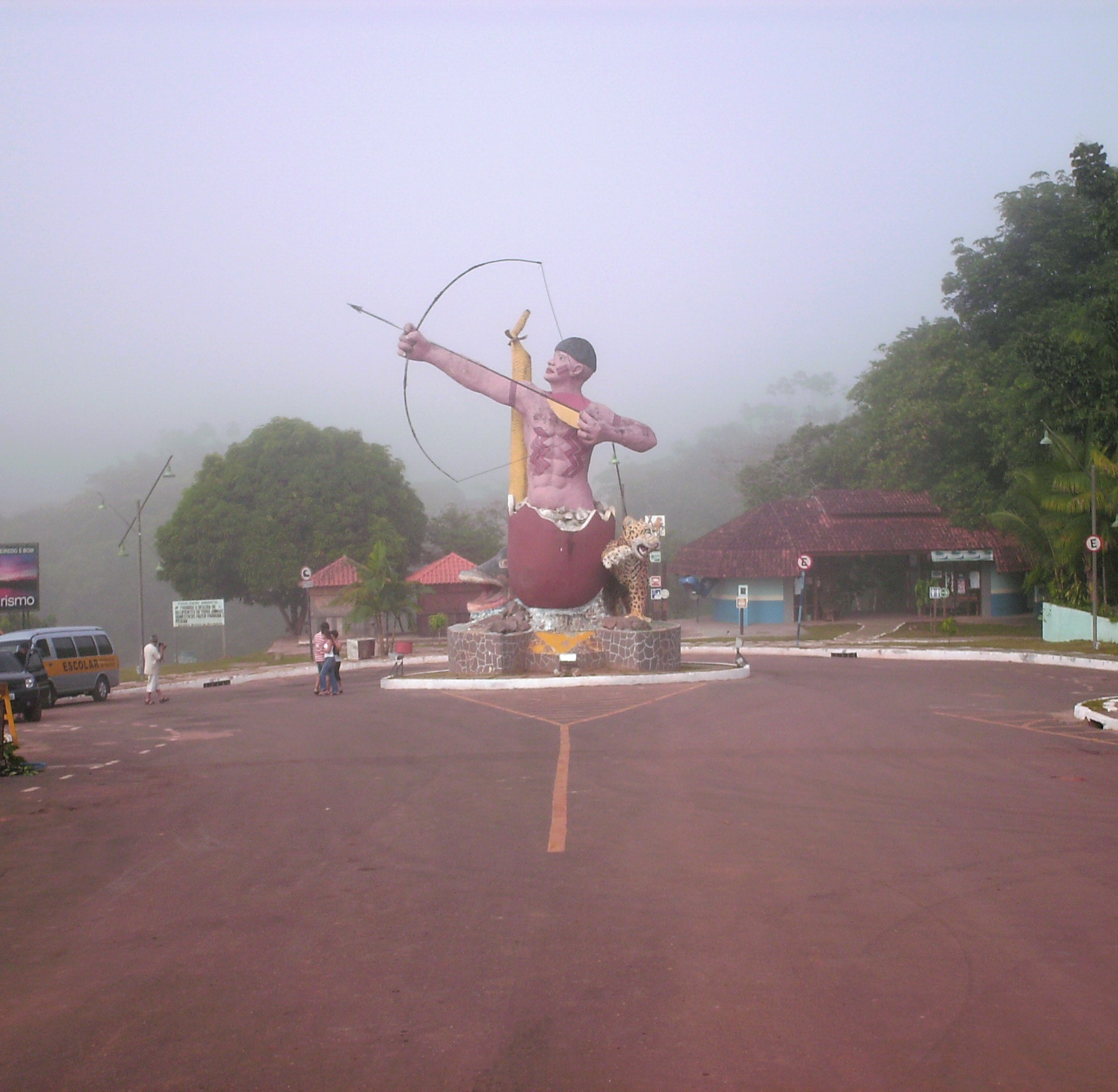
📌State
Amazonas (Manaus Metropolitan Region). A municipality known as the 'Terra das Cachoeiras' (Land of Waterfalls), with more than 100 falls, caves and river bathing spots
📌Service city
Presidente Figueiredo itself (the municipal seat on the BR-174) and/or Manaus as the usual base, some 107 km south on the same road
📌Best time to go
The drier season (June to November): waterfalls with good flow but safe for swimming, clearer water and firm trails. In the rainy season (December to May) some falls swell a great deal and certain accesses may close for safety
📌Suggested days
From 1 day (the classic bate-volta day trip from Manaus) to 2-3 days to take in several waterfalls, caves and bathing spots at a slower pace
💱 BRL exchange rate
Loading rate…
🌤️ Weather in Presidente Figueiredo
Loading weather…
Presidente Figueiredo is the great overland nature escape from Manaus, known across Brazil as the 'Terra das Cachoeiras', the Land of Waterfalls. It's a municipality in the Metropolitan Region of the Amazonas capital, set in dense forest on the federal BR-174 highway (the one linking Manaus with Boa Vista, in Roraima). Its huge territory holds more than a hundred waterfalls scattered through the forest (sources speak of between 100 and 150 falls, with several dozen catalogued and open to visits), plus caves, caverns, dark-water bathing spots and crystal-clear lagoons. Here the Amazon feels different from the river: among the roar of the falls, the sandstone walls and the trails on solid ground.
The landscape has a beautiful geological explanation. The region's rocks (very ancient sandstones from the northern flank of the Brazilian Amazon) were carved by water over millions of years, forming falls, sculpted walls, caves with galleries and those natural 'jacuzzis' that appear in some waterfalls when the flow drops. Much of this is protected within the APA Caverna do Maroaga, a state Environmental Protection Area created in 1990 covering hundreds of thousands of hectares of caverns, caves and waterfalls. It is also the historic territory of the Waimiri-Atroari indigenous people and an area with rock inscription sites.
For you, the traveller, the most practical thing is to use Manaus as your base camp: almost everyone comes on a day trip (the famous 'bate-volta') or stays one or two nights in the town itself. The drive on the BR-174 is paved and takes about 2 hours. One key point: many waterfalls sit on private property or in reserves that charge an entry or 'conservation fee', and several attractions (above all caves and more distant falls) can only be visited with an accredited guide, hired at the Centro de Atendimento ao Turista (CAT). It's not red tape: the trails are remote and sometimes difficult, and the guide is compulsory for safety. Bring footwear you can get wet, a change of clothes, insect repellent and a willingness to walk.
📖 History of Presidente Figueiredo
The land that is today Presidente Figueiredo was for millennia home to indigenous peoples, especially the Waimiri-Atroari, who left rock inscriptions and whose memory survives even in the name of the Caverna do Maroaga (after a warrior who, according to the guides, took refuge there). The region began to change with the opening of the BR-174 highway between Manaus and Boa Vista, begun in 1968 during the military dictatorship, a project with tragic consequences for the Waimiri-Atroari. The municipality was created on 10 December 1981, split off from Novo Airão and Itapiranga (with areas from Silves and Urucará), and effectively set up between 1982 and 1983. Its name doesn't honour the military president João Batista Figueiredo (who was in power at the time and who, the chronicles say, was uncomfortable with the idea), but João Baptista de Figueiredo Tenreiro Aranha, the first president of the province of Amazonas in the 19th century. Over the years, the abundance of waterfalls, caves and forest turned the municipality into one of the great ecotourism destinations of northern Brazil, the 'Terra das Cachoeiras'. The full story is on our history page.
Read the full history ↓🏛️ Presidente Figueiredo is in Amazonas
Brazil's largest state, the heart of the Amazon rainforest: land of dozens of Indigenous peoples, of the rubber boom that raised the Manaus opera house, of the Meeting of the Waters and of a Free Trade Zone that turned the capital into an industrial hub in the middle of the jungle.
Read the history of Amazonas →🗺️ What to see
Tours nearby, in Manaos
They depart from Manaos, 121 km away. If you book from this link we earn a commission and you pay no more.
1
Cachoeira da Iracema (Parque Ecológico Iracema Falls)
One of Figueiredo's postcard waterfalls, inside an ecological park with caves and forest.
Leer más ↓
The Cachoeira da Iracema is one of the most famous and most photographed falls in Presidente Figueiredo, and the image many people associate with the 'Terra das Cachoeiras'. It's a waterfall about 8 metres high set in a paradisiacal scene of forest and sandstone walls, inside the Parque Ecológico Iracema Falls. The site is a private tourist complex that, besides the waterfall, includes trails, caves, a pousada and a restaurant, which makes it easy to spend the day.
The good thing about Iracema is that it doesn't come alone. In the same park, downstream, is the Cachoeira das Araras, reached on a natural path along the river; and around the Iracema falls there are caves with evocative names such as Palácio Galo da Serra, Gruta da Onça and Gruta da Catedral, with beautiful sandstone walls carved by the water. It's a combination of waterfall, swim and a short walk through the forest, ideal for a first taste of the destination.
What to see and do: swim in the waterfall and its pools, walk the path to the Araras, see the caves and take photos on the rock walls. The park usually opens daily during daylight hours (references say 8:00 to 17:00, check).
Getting there: the park is on the BR-174 heading towards Roraima, a few kilometres from the seat of Presidente Figueiredo (references say about 13 km from the town, with a final stretch of dirt road). From Manaus you come on the BR-174 itself. The easiest way is on a tour or in your own car; you can also add a local guide.
Best time and tips: the dry season (June to November) offers clearer water for swimming; in the rains the flow rises. Bring swimwear, footwear you can get wet and insect repellent. Being a private complex, it charges a cheap entry of about R$ 10 per person for anyone not staying at the hotel (verified July 2026).
ℹ️ Distance: On the BR-174 towards Roraima, ~8-13 km from the seat of Presidente Figueiredo (~120 km from Manaus) · Best time to go: Dry season (Jun-Nov) for swimming and clear water · Entry: R$ 10 per person (non-guests); open 8:00 to 17:00 (source: local guides, verified July 2026) · Duration: Half a day (combined with the Cachoeira das Araras)
2
Cachoeira das Araras
Iracema's sister waterfall, a short path downstream inside the same park.
Leer más ↓
The Cachoeira das Araras is Iracema's natural companion: it's about 500 metres downstream, inside the same Parque Ecológico Iracema Falls, reached on a natural path that follows the river. That's why they're almost always visited together, on the same outing. It's a wide, very scenic fall, with pools where you can swim in the middle of the forest.
What to see and do: the appeal is the short walk through the woods linking Iracema with the Araras, watching the landscape change along the river and swimming at both falls on the same outing. It's an accessible and very rewarding route, perfect to add to the Iracema visit without extra effort.
Getting there: it's reached on foot from the Cachoeira da Iracema, inside the park, on the BR-174 towards Roraima. Access to the complex is the same as for Iracema.
Best time and tips: as with Iracema, the dry season (June to November) is best for swimming. Wear footwear with good grip (the path can be damp or slippery) and bring insect repellent. The park entry/fee (around R$ 20–40 per person in 2025) usually covers both waterfalls.
ℹ️ Distance: ~500 m downstream from Iracema, on a path (same park) · Best time to go: Dry season (Jun-Nov) · Entry: Included in the Parque Iracema Falls entry (around R$ 10 per person, verified July 2026) · Duration: Combined with Iracema; 1-2 h extra of walking and swimming
3
Cachoeira do Santuário
One of the loveliest in the municipality: three falls and a natural pool ringed by forest.
Leer más ↓
The Cachoeira do Santuário is, for many, the loveliest and most complete waterfall in Presidente Figueiredo, and an almost obligatory visit. It's part of an ecological reserve of the same name and consists of three falls, the largest reaching about 15 metres, dropping into a natural pool perfect for swimming, all framed by Amazon forest. The name 'Santuário' suits it: it's a serene and very photogenic spot.
What to see and do: swim in the pool at the foot of the main fall, take in all three falls and enjoy the walk through the forest. To reach the waterfall you follow a short, easy path through the forest (references say about 10 minutes), accessible to people of all ages, which also makes it ideal for families. The complex has facilities (chalets, pools, a restaurant) serving both guests and day visitors.
Getting there: it's on the AM-240 road (heading towards Balbina), with references to Km 12 of the AM-240, some 120 km from Manaus. From Manaus you come on the BR-174 to the Km 103 area / the Balbina access roundabout, and from there take the AM-240. The easiest way is on a tour or in your own car.
Best time and tips: the dry season (June to November) leaves the water clearer; in the rains the flow rises. Bring swimwear and footwear for the path. It's a private reserve with a cheap entry of about R$ 10 per person (over-8s; over-60s pay half and under-5s free), updated to January 2026 according to reviews.
ℹ️ Distance: AM-240 road (Km 12), on the way to Balbina; ~120 km from Manaus · Best time to go: Dry season (Jun-Nov) for clear water · Entry: R$ 10 per person (over-8s); over-60s half, under-5s free; open 8:00 to 17:00 (source: reviews updated January 2026, verified July 2026) · Duration: Half a day (short path + swim)
4
Cachoeira do Urubuí / Balneário do Urubuí
The most popular and accessible bathing spot, right in town, on the Urubuí river.
Leer más ↓
The Cachoeira do Urubuí, together with the Balneário do Urubuí, is the most accessible and popular water spot in Presidente Figueiredo, because it's practically inside the town. The Urubuí river, with its dark water (typical of the Amazon), forms rapids, pools and a natural bathing area that works as the municipal swimming spot. It's the ideal place to cool off without long walks or long drives.
What to see and do: swim in the river's rapids and pools, slide down the water chutes where there are any, rest in the green areas and make the most of the good facilities, which usually include restaurants, bars, craft stalls and pousadas around. It's a big favourite with families and with anyone after a quiet, easily reached plan. Some sources even describe it as a small water park with several pools and recreation areas.
Getting there: it's in the town of Presidente Figueiredo itself (the Parque do Urubuí area, with references beside the BR-174 around Km 107). From Manaus you come on the BR-174; once in town, it's very close. It's one of the easiest spots to visit on your own.
Best time and tips: the dry season (June to November) leaves the water clearer and the pools better defined. Since it gets busy, go early if you want quiet. Access to the public bathing area is generally free; entry to the Ramal do Urubuí costs around R$ 20 per vehicle (verified July 2026). Bring swimwear, a towel and small change for food and drink.
ℹ️ Distance: In the town of Presidente Figueiredo itself (Parque do Urubuí area, BR-174 Km 107) · Best time to go: Dry season (Jun-Nov); early to avoid the crowds · Entry: Public bathing area generally free; Ramal do Urubuí ~R$ 20 per vehicle (source: local guides, verified July 2026) · Duration: Half a day (a relaxed plan in the water)
5
Caverna do Maroaga (Refúgio do Maroaga) and APA Caverna do Maroaga
The region's great cavern, inside an Environmental Protection Area with dozens of attractions.
Leer más ↓
The Caverna do Maroaga, also called Caverna Refúgio do Maroaga, is the speleological jewel of Presidente Figueiredo and the heart of the APA Caverna do Maroaga, the state Environmental Protection Area created by decree in 1990 covering some 374,700 hectares of caverns, caves and waterfalls. The Maroaga rocks are among the oldest geological formations on the northern flank of the Brazilian Amazon, and the APA as a whole counts dozens of tourist attractions (caves, caverns and exposed rock).
The cavern is about 420 metres long, with tunnels and galleries forming a real labyrinth; for safety, with a guide you only cover one stretch (references say about 15 metres). The name has a story worth knowing: according to local guides, 'Maroaga' (or 'Maruaga') refers to an indigenous warrior of the Waimiri-Atroari people who is said to have taken refuge there in the 1960s and 1970s, during the building of the BR-174; in the indigenous language it is also a title given to tribal chiefs.
What to see and do: the visit combines a walk through the forest (references say about 600 metres of path) and entry to the cavern with a guide. It's usually done on the same outing as the nearby Gruta da Judéia. It's a gentle caving experience, ideal for getting to know the Amazon's underground world.
Getting there: it's inside the APA, with references to Km 06 of the road towards Balbina (AM-240), on the right. From Manaus you come on the BR-174 and then the AM-240. The visit requires an accredited guide, hired at the Centro de Atendimento ao Turista (CAT).
Best time and tips: it can be visited all year, but the dry season makes the trails easier. An accredited CAT guide is compulsory, charging around R$ 100 per group of up to 5 people (or R$ 20 per person in larger groups). Visits are limited to 60 people a day and the full route takes about 3 hours. Bring closed shoes, a torch and clothes you don't mind getting dirty.
ℹ️ Distance: APA Caverna do Maroaga, Km 06 of the AM-240 (on the way to Balbina); ~107-117 km from Manaus · Best time to go: All year; the dry season makes the trails easier · Entry: Only with a CAT guide: ~R$ 100 per group of up to 5 people (or R$ 20 p/p in large groups); capacity 60/day (source: Portal Amazônia/local guides, verified July 2026) · Duration: Half a day (combined with the Gruta da Judéia)
6
Gruta da Judéia
A cave with a crystal-clear lagoon inside, on the same circuit as the Caverna do Maroaga.
Leer más ↓
The Gruta da Judéia is one of the most magical attractions in Presidente Figueiredo and is visited on the same tour as the Caverna do Maroaga, since both are inside the APA Caverna do Maroaga. Its great surprise is a lagoon of crystal-clear water inside/at the foot of the cave, a colour that leaves you speechless, ringed by rock walls and vegetation. It's one of those corners that look like they belong to another world.
What to see and do: take in and, where it's allowed, swim in the crystal-clear lagoon; explore the cave and its rock formations; and enjoy the contrast between the lush forest outside and the cool, sheltered air of the cave. It's a perfect finish to a day of caves alongside Maroaga.
Getting there: it's inside the APA Caverna do Maroaga, in the same sector as the cavern (references to Km 06 of the AM-240, on the way to Balbina). From Manaus, on the BR-174 and then the AM-240. Like the whole protected area, it can only be visited with a guide hired at the Centro de Atendimento ao Turista (CAT).
Best time and tips: the dry season leaves the water even clearer. The accredited CAT guide is compulsory (around R$ 100 per group of up to 5 people in 2025, generally on the same outing as the Caverna do Maroaga). Respect the protected area's rules on swimming, sunscreen and behaviour, to look after the lagoon. Bring swimwear in case swimming is allowed, closed shoes and insect repellent.
ℹ️ Distance: APA Caverna do Maroaga, Km 06 of the AM-240 (next to the Caverna do Maroaga) · Best time to go: Dry season for clearer water · Entry: Only with a CAT guide: ~R$ 100 per group of up to 5 people (usually shared with the Caverna do Maroaga); verified July 2026 · Duration: Half a day (combined with the Caverna do Maroaga)
7
Cachoeira da Pedra Furada
A singular waterfall with three holes in the upper slab forming natural showers.
Leer más ↓
The Cachoeira da Pedra Furada is one of the most curious and recognizable waterfalls in Presidente Figueiredo, precisely because of its shape. In the upper rock slab there are three large holes (hence 'Pedra Furada', pierced stone) through which part of the water slips, forming a kind of natural shower falling into the pool below. That pool, with its calm water, traces a half-moon ringed by a rock wall: a lovely picture and quite unlike the rest.
What to see and do: bathe under the 'showers' formed as the water passes through the holes in the stone, swim in the half-moon pool and photograph the play of rock and water. It's a very scenic stop to add to a waterfall circuit around the region.
Getting there: it's in the municipality of Presidente Figueiredo, within the area's waterfall circuit; the most practical way is on a tour or in your own car and, depending on the access, with a local guide. Confirm the exact point and the state of the access before going, because some paths may require a guide.
Best time and tips: the dry season (June to November) leaves the water clearer and the pool more pleasant; in the rains the flow rises and the 'showers' change. Bring swimwear, footwear you can get wet and insect repellent. Being on private property, it charges a conservation fee of about R$ 10–30 per person (verified July 2026; confirm on site).
ℹ️ Distance: Municipality of Presidente Figueiredo (confirm the exact point and access) · Best time to go: Dry season (Jun-Nov) · Entry: Private property: conservation fee around R$ 10–30 per person (source: local guides, verified July 2026); confirm on arrival · Duration: 1-2 h (a stop on a waterfall circuit)
8
Cachoeira do Mutum and Cachoeira do Sossego
Waterfalls with pools and natural 'jacuzzis', part of the region's waterfall routes.
Leer más ↓
The Cachoeira do Mutum and the Cachoeira do Sossego are two much-loved falls on the waterfall routes of Presidente Figueiredo, ideal if you want to go beyond the best-known attractions. At the Mutum, during the dry season, natural 'jacuzzis' appear: hollows carved in the rock by the water over thousands of years, which turn into small natural bathtubs. The Sossego, as the name suggests (calm, quiet), is a serene corner for swimming and resting.
What to see and do: bathe in the pools and natural jacuzzis, walk the forest paths that lead to the falls and enjoy a quieter, less crowded setting. These waterfalls are usually part of the 'Rota das Cachoeiras', a tourist circuit linking several falls in the region and letting you put together a day to suit yourself.
Getting there: they're in the municipality of Presidente Figueiredo; access is via the BR-174 / local roads and, depending on the waterfall, may require a guide and a walk. The easiest option is to book a tour or go in your own car and add a local guide for the more distant ones. Confirm the accesses and the state of the trails before going.
Best time and tips: the Mutum's jacuzzis show best in the dry season, when the flow drops and the hollows in the rock stand out. Bring swimwear, footwear with good grip and insect repellent. Several of these falls are on private property with a conservation fee of about R$ 10–30 per person (verified July 2026; confirm on site).
ℹ️ Distance: Municipality of Presidente Figueiredo (Rota das Cachoeiras; confirm accesses) · Best time to go: Dry season (Jun-Nov), ideal for the Mutum's natural jacuzzis · Entry: Private properties: conservation fee around R$ 10–30 per person (source: local guides, verified July 2026); confirm on arrival · Duration: Half a day (depending on how many falls you add to the route)
9
Rock inscriptions and archaeological sites (petroglyphs)
Traces of the original peoples: rock carvings and paintings in the forest.
Leer más ↓
Beyond water and rock, Presidente Figueiredo holds a deep layer of human history: the region preserves rock inscriptions (carvings and paintings on stone) left by the original peoples who inhabited the Amazon long before the Europeans arrived. These archaeological sites are silent testimony to the Waimiri-Atroari and to earlier populations, and are part of the municipality's cultural value, not just its natural one.
What to see and do: visit, when possible and always with a guide and authorization, rock walls and caves with carvings, and understand from the guides the meaning and the age of these marks. It's a more contemplative and respectful experience that goes very well with a visit to the caves and waterfalls. Bear in mind that some sites are fragile and have suffered damage or closures for preservation reasons (for example, sites under IPHAN care), so availability can vary.
Getting there: the sites are spread across the municipality, many inside protected areas or on private land; access almost always requires an accredited guide and, in some cases, special authorization. The visit is booked with a CAT guide (around R$ 100 per group of up to 5 people, 2025); ask at the Centro de Atendimento ao Turista (CAT) which sites are open to visits, because it changes over time.
Best time and tips: the dry season makes the trails easier. It's essential to respect the preservation rules: don't touch or mark the inscriptions, don't use anything that could damage them and follow the guide's instructions. Bring closed shoes, water and insect repellent. Note that the local place names themselves (such as Maroaga) already point to that indigenous inheritance.
ℹ️ Distance: Various sites within the municipality (confirm which are open at the CAT) · Best time to go: Dry season for the trails; subject to the site's availability · Entry: Visit with an accredited CAT guide (around R$ 100 per group of up to 5 people, 2025) and, in some cases, authorization; check availability on arrival · Duration: Varies (usually combined with caves and waterfalls)
10
Lago de Balbina and its surroundings (UHE Balbina)
The great artificial lake of the hydroelectric dam, boat trips and flooded forest.
Leer más ↓
At the far end of the municipality, on the AM-240, lies the Lago de Balbina, the enormous artificial lake formed by the Usina Hidrelétrica de Balbina dam on the Uatumã river. It's a very different landscape from the waterfalls: an immense sheet of water dotted with thousands of islands (the tops of old hills that stayed above water level when the reservoir filled), with forest and plenty of wildlife around. The building of Balbina, in the eighties, is also a well-known and much-debated chapter in the environmental history of the Amazon.
What to see and do: boat trips on the lake among the islands, bird and wildlife watching, a visit to the dam area and to the village of Balbina, and contact with a wilder Amazon forest setting. It's an interesting complement for anyone with time who wants to go beyond the classic waterfall circuit. The Balbina region also has conservation initiatives (for instance, linked to Amazonian turtles).
Getting there: you come in on the BR-174 and then the AM-240 (the access road to Balbina), considerably further in than the waterfalls nearest the town; work out the drive and, depending on your plan, book a local boat trip. Boat trips run around R$ 80–200 per person depending on their length (verified July 2026); confirm distances, timetables and availability.
Best time and tips: being a lake, it can be visited all year; the dry season makes the access roads easier. Bring sunscreen, a hat, water and insect repellent for the boat trips. Since it's far, only add it if you're staying several days or making a specific outing of it.
ℹ️ Distance: AM-240 road (access to Balbina), inland in the municipality; further than the waterfalls near the town · Best time to go: All year; the dry season makes the accesses easier · Entry: Boat trips around R$ 80–200 per person depending on length (verified July 2026); check when booking · Duration: Half a day to a full day (depending on the trip)
💵 Prices
Tickets
| Type | Price |
|---|
| Cachoeira da Iracema / Parque Ecológico Iracema Falls (includes the Cachoeira das Araras) | R$ 10 per person for anyone not staying at the hotel (source: reviews and local guides, Amazonas em Mais / Ana Cassiano, verified July 2026); open 8:00 to 17:00 |
| Cachoeira do Santuário (ecological reserve) | R$ 10 per person (over-8s); over-60s pay half and under-5s free (source: TripAdvisor/reviews updated January 2026, verified July 2026); open 8:00 to 17:00 |
| Balneário do Urubuí / Cachoeira do Urubuí | Access to the public bathing area generally free; entry to the Ramal do Urubuí costs around R$ 20 per vehicle (source: local travel guides, Malas de Aventuras / Veredicto Manauara, verified July 2026) |
| Caverna do Maroaga + Gruta da Judéia (APA Caverna do Maroaga, guide compulsory) | Compulsory guide around R$ 100 per group of up to 5 people (or R$ 20 per person in larger groups); capacity of 60 visitors/day (source: Portal Amazônia / local guides, verified July 2026) |
| Cachoeira da Pedra Furada / Mutum / Sossego (private properties) | Entry/conservation fee around R$ 10–30 per person at each (source: local travel guides on the waterfalls of Figueiredo, verified July 2026); confirm on site |
| Rock inscription sites | Visit with a CAT guide (around R$ 100 per group of up to 5 people) and, in some cases, authorization; subject to availability (source: Centro de Atendimento ao Turista, verified July 2026) |
| Lago de Balbina (boat trips) | Boat trips around R$ 80–200 per person depending on length (source: local operators in the Balbina area, verified July 2026) |
🔄 updated monthlyOfficial / reference values · double-check when buying
Activities and tours
Day trip (bate-volta) from Manaus around the waterfalls of Presidente Figueiredo
PriceIn a group from around R$ 150–410 per person (with transport, guide and, depending on the package, lunch); private from around R$ 800 for up to 4 people (verified July 2026)
OperatorManaus ground operators (Iguana Tour, Nature Amazon, Figueiredo Turismo, etc.)
Waterfall tour (Iracema, Araras, Santuário and others) with a local guide
PriceAround R$ 150–410 per person in a group depending on the package (verified July 2026), plus the reserves' entry fees
Guided visit to the Caverna do Maroaga and the Gruta da Judéia (gentle caving)
PriceCompulsory guide around R$ 100 per group of up to 5 people (or R$ 20 p/p in larger groups); capacity 60/day (verified July 2026)
A day at the Urubuí bathing spot (river swimming, pools and chutes)
PricePublic bathing area generally free; Ramal do Urubuí ~R$ 20 per vehicle; food and drink extra (verified July 2026)
Adventure sports: abseiling, zip line, boia cross, rafting/kayaking, forest trails, caving
PriceAround R$ 80–250 per person depending on the activity and the operator (verified July 2026)
Visit to rock inscription sites (archaeology)
PriceWith a CAT guide around R$ 100 per group of up to 5 people; subject to availability (verified July 2026)
Boat trip on the Lago de Balbina
🔄 updated monthlyOfficial / reference values · double-check when buying
🚌 How to get there and distances
Getting around
Your own / rented car (from Manaus on the BR-174)
PriceRental around R$ 130–280 a day (verified July 2026), plus fuel; the BR-174 is paved and toll-free
NotesThe most flexible option for covering scattered waterfalls; ideal combined with a local guide for the attractions that require one
Tour with transport and guide from Manaus
NotesThe most convenient option if you don't drive: they take you there and back and sort out entries and the guide. Recommended for the bate-volta
Local taxis / mototaxis in the town
NotesUseful for getting around the town of Presidente Figueiredo (e.g. to the Balneário do Urubuí) if you don't have a car
Accredited CAT guide (for caves, distant waterfalls and archaeological sites)
NotesCompulsory in the APA Caverna do Maroaga and recommended/required for many waterfalls on remote trails, for safety
🔄 updated monthlyOfficial / reference values · double-check when buying
How to get there
Manaus → Presidente Figueiredo on the BR-174 (by bus)
Airlines / operatorsEucatur, from the Terminal Rodoviária de Manaus to the Terminal Rodoviária de Presidente Figueiredo
Avg. priceStandard from around R$ 44 each way; semi-leito ~R$ 117 and leito ~R$ 172 (source: Eucatur / deonibus.com, verified July 2026)
Manaus → Presidente Figueiredo on the BR-174 (own/rented car or tour)
Avg. priceRental car around R$ 130–280 a day; group tour from around R$ 150 per person (source: Manaus ground operators, verified July 2026)
Flight to Manaus (MAO – Eduardo Gomes) and then overland to Presidente Figueiredo
Avg. priceFlight to Manaus varies by origin (from around R$ 400–900 return domestic) + from R$ 44 by bus or tour (verified July 2026)
🔄 updated monthlyOfficial / reference values · double-check when buying
🏨 Where to stay
No exact prices: a scale from $ (budget) to $$$$$ (luxury), with 2-3 options per category.
Nature resorts / pousadas (upper category, with pools and a forest setting)
Recommended optionsNature pousadas and small resorts with pools, green areas and, in some cases, their own access to trails or bathing areas (several waterfalls have their own pousada, such as Iracema or Santuário): around R$ 300–700 a night (verified July 2026).
Pousadas and hotels in the centre / along the BR-174 (mid-range)
Recommended optionsAccommodation in central Presidente Figueiredo and along the BR-174, handy for restaurants, shops and services: around R$ 150–300 a night (verified July 2026).
Simple pousadas and budget options
Recommended optionsSimple pousadas and cheap places to stay in the town and around, aimed at backpackers and at making a quick base: around R$ 90–160 a night (verified July 2026).
🍴 Where to eat
Regional Amazonian cooking (river fish and native fruit)
Options / signature dishRegional restaurants with river fish and Amazonian side dishes, and native fruits such as tucumã, pupunha and açaí, along the BR-174 and near the Parque do Urubuí: around R$ 35–90 a dish (verified July 2026).
Churrascaria and peixaria (meat and fish)
Options / signature dishChurrascarias and peixarias on the BR-174 (e.g. Sabor na Brasa, Parque do Urubuí area, BR-174 Km 107), with a varied menu of meat and fish: around R$ 40–100 per person; all-you-can-eat buffet from around R$ 45 (verified July 2026).
Restaurants with waterfall views / in tourist complexes
Options / signature dishRestaurants inside the waterfall complexes (e.g. at Iracema or Santuário), some overlooking the falls: around R$ 40–110 per person (verified July 2026).
📖 History of Presidente Figueiredo
Origins, formation and what the sources say.
The Amazon territory, the Waimiri-Atroari and the rock inscriptions
Long before the municipality existed, this corner of the Amazon north of Manaus was home to indigenous peoples. The most important in the region is the Waimiri-Atroari people, who lived (and still live, in their demarcated territory) on the lands between the present-day states of Amazonas and Roraima. For them, as for so many Amazonian peoples, the rivers, the caves and the forest were not a tourist backdrop but the whole world: a place of life, of refuge and of memory.
Concrete traces of that millennia-old presence remain. The region preserves rock inscriptions (carvings and paintings on stone), testimony to original populations who lived here long before the Europeans arrived. These archaeological sites are fragile: some have suffered damage or have had to be closed for preservation, and several are under the care of bodies such as IPHAN. Archaeological research in the area (including work carried out around the Balbina dam in the eighties) located dozens of sites and recovered pieces with rock art, along with remains linked to the Waimiri-Atroari.
That indigenous inheritance is still alive even in the names on the landscape. The famous Caverna do Maroaga bears, according to local guides, the name of a Waimiri-Atroari warrior who is said to have taken refuge there; 'Maroaga' or 'Maruaga' is also said to be a title given to tribal chiefs. Visiting the caves, the rock-art walls and the waterfalls today also means walking over a deep human history, one best explored with respect and, whenever possible, with guides who know how to tell it.
The origin of the name 'Maroaga'
According to local guides, the name of the Caverna do Maroaga (or Refúgio do Maroaga) refers to an indigenous warrior of the Waimiri-Atroari people who is said to have taken refuge there in the 1960s and 1970s, during the building of the BR-174. In the indigenous language, 'Maruaga' is said to be a title given to tribal chiefs. It's an orally transmitted tradition, tied to the cultural value of the protected area.
Source: https://web.archive.org/web/20260417061345/https://web.archive.org/web/20260417061345/https://www.sema.am.gov.br/ferias-apa-caverna-do-maroaga-em-presidente-figueiredo-e-paraiso-das-grutas-e-cachoeiras-no-am/
The BR-174, colonization and the conflict with the Waimiri-Atroari
The great factor that opened the region to modern settlement was the BR-174 highway, linking Manaus (Amazonas) with Boa Vista (Roraima). Its construction began in 1968, in the middle of the Brazilian military dictatorship, as part of an agenda of 'integration' and 'progress' that sought to open up the Amazon with major infrastructure projects. Where you now drive for a couple of hours to reach the waterfalls, there was once only closed forest.
That opening had a tragic side that recent history has acknowledged. The building of the BR-174 cut through Waimiri-Atroari territory and led to conflict and to extremely serious violations against that people. Accounts and reports (including that of the National Truth Commission) document a brutal demographic collapse: from some thousands of indigenous people in the seventies to a few hundred in the eighties, the period of most intense work on the road. In 2018, the Federal Court of Amazonas officially recognized the violations committed against the Waimiri-Atroari during the opening of the road. It's a painful memory worth not erasing when talking about the region's 'development'.
The road, however, was also the axis along which the settlement that would give rise to the municipality took shape. The first settlements grew along the BR-174 and in the areas tied to Novo Airão and Itapiranga, from whose territories much of the future Presidente Figueiredo would be carved. The municipality's history is thus born entangled with that of this highway: the same road that takes you to the waterfalls today is the one that, decades ago, changed life in the region for ever.
The BR-174 and the judicial recognition of the violations
The building of the BR-174, begun in 1968, cut through Waimiri-Atroari territory and led to a conflict with catastrophic demographic consequences for that people. In 2018, the Federal Court of Amazonas recognized the violations carried out against the Waimiri-Atroari during the opening of the road, as part of its analysis of the impacts on indigenous lands.
Source: https://cimi.org.br/2018/02/decisao-da-justica-reconhece-violacoes-contra-povo-waimiri-atroari-na-abertura-da-br-174/
The creation of the municipality (1981) and the origin of the name
The municipality of Presidente Figueiredo was created on 10 December 1981, by Constitutional Amendment no. 12, with territory split off mainly from Novo Airão and Itapiranga (the village of Balbina and its surroundings), plus adjoining areas of Silves and Urucará. The municipality was effectively set up with the general elections of 1982 and, as a result, with the mayor (prefeito) and councillors taking office in January 1983. Being close to Manaus, then growing fast thanks to the Free Trade Zone, was decisive for the region's development.
The origin of the name is one of the municipality's most curious facts, and it's worth being clear about it. The place name does NOT honour the military president João Batista de Oliveira Figueiredo, who was governing Brazil precisely in 1981; on the contrary, local chronicles say he was uncomfortable with the idea of a municipality bearing his name. The tribute is in fact to João Baptista de Figueiredo Tenreiro Aranha, the first president of the province of Amazonas in the imperial period of the 19th century. So the 'Figueiredo' in the name looks back to the 19th century and not to the military government of the time of its founding.
This detail tends to surprise visitors and is worth getting straight, because the coincidence of surname and timing (a President Figueiredo in power when a municipality called 'Presidente Figueiredo' is created) leads many people to assume the opposite. Knowing who it really honours helps you see that the name celebrates a historical figure of the province, not a leader of the dictatorship.
Who the name really honours
The municipality's name pays tribute to João Baptista de Figueiredo Tenreiro Aranha, first president of the province of Amazonas (19th century), and not to the military president João Batista de Oliveira Figueiredo, in office when the municipality was created in 1981. According to the chronicles, the military president was even uncomfortable with the idea of the naming.
Source: https://pt.wikipedia.org/wiki/Presidente_Figueiredo
Date of creation and emancipation
The municipality was created on 10 December 1981 by Constitutional Amendment no. 12, with territory split off from Novo Airão and Itapiranga (and areas of Silves and Urucará). It was effectively set up with the 1982 elections and the authorities taking office in January 1983.
Source: https://cidades.ibge.gov.br/brasil/am/presidente-figueiredo/historico
The birth of ecotourism and the 'Terra das Cachoeiras'
Over the decades, what had been a territory opened up by a road was discovered to be a natural treasure. The combination of very ancient sandstones, dark-water rivers and forest produced an extraordinary landscape: more than a hundred waterfalls (sources speak of between 100 and 150 falls, with several dozen catalogued and open to visits), plus caves, caverns, bathing spots and crystal-clear lagoons. From that came the nickname that defines the municipality today: the 'Terra das Cachoeiras', the Land of Waterfalls.
A key milestone for conservation was the creation of the APA Caverna do Maroaga, the state Environmental Protection Area established by decree in 1990, covering hundreds of thousands of hectares (references say some 374,700 ha) of caverns, caves and waterfalls, and holding dozens of tourist attractions. The Maroaga rocks are among the oldest geological formations on the northern flank of the Brazilian Amazon, which adds enormous geological and speleological value to the destination.
Backed by its closeness to Manaus and by the paved BR-174, Presidente Figueiredo established itself as one of the great hubs of ecotourism and adventure tourism in northern Brazil. Waterfalls such as Iracema, Santuário and Urubuí, caves such as Maroaga and the Judéia, and activities such as abseiling, zip lining, rafting and caving draw travellers from all over the country, many of them on the classic one-day 'bate-volta' from the capital. Today the municipality is trying to grow while looking after that heritage: many of the attractions are on private property or in reserves that charge conservation fees, and many require an accredited guide, in a balance between opening nature to the visitor and protecting it so it stays the Land of Waterfalls.
The APA Caverna do Maroaga as a pillar of conservation
The APA Caverna do Maroaga, a state Environmental Protection Area created by decree in 1990, protects a vast set of caverns, caves and waterfalls in the municipality (references say some 374,700 ha). Its rock formations are among the oldest on the northern flank of the Brazilian Amazon, which gives it geological and speleological value central to ecotourism in Presidente Figueiredo.
Source: https://www.sema.am.gov.br/apa-caverna-do-maroaga/
📚 Bibliography
- Wikipédia (PT) — «Presidente Figueiredo»: https://pt.wikipedia.org/wiki/Presidente_Figueiredo
- IBGE Cidades — «Presidente Figueiredo | Histórico»: https://cidades.ibge.gov.br/brasil/am/presidente-figueiredo/historico
- Câmara Municipal de Presidente Figueiredo (Blog) — «História de Presidente Figueiredo» (el sitio ya no está en línea)
- Prefeitura de Presidente Figueiredo — «Conheça Figueiredo»: https://www.presidentefigueiredo.am.gov.br/prefeitura/conheca-figueiredo/
- SEMA Amazonas — «APA Caverna do Maroaga»: https://www.sema.am.gov.br/apa-caverna-do-maroaga/
- SEMA Amazonas — «Férias: APA Caverna do Maroaga é paraíso das grutas e cachoeiras»: https://web.archive.org/web/20260417061345/https://web.archive.org/web/20260417061345/https://www.sema.am.gov.br/ferias-apa-caverna-do-maroaga-em-presidente-figueiredo-e-paraiso-das-grutas-e-cachoeiras-no-am/
- Unidades de Conservação no Brasil (ISA/socioambiental) — «APA Caverna do Maroaga»: https://uc.socioambiental.org/arp/790
- CIMI — «Decisão da Justiça reconhece violações contra povo Waimiri-Atroari na abertura da BR-174»: https://cimi.org.br/2018/02/decisao-da-justica-reconhece-violacoes-contra-povo-waimiri-atroari-na-abertura-da-br-174/
- Amazônia Real — «Waimiri-Atroari sobreviventes de genocídio relatam ataques durante obra da BR-174»: https://amazoniareal.com.br/waimiri-atroari-sobreviventes-de-genocidio-relatam-ataques-durante-obra-da-br-174/
- Amazonastur — «Terra das cachoeiras: descubra os tesouros de Presidente Figueiredo»: https://web.archive.org/web/20260516024335/https://web.archive.org/web/20260516024335/https://www.amazonastur.am.gov.br/terra-das-cachoeiras-descubra-os-tesouros-inexplorados-de-presidente-figueiredo/
- Ministério do Turismo — «Presidente Figueiredo: o paraíso das cachoeiras do Amazonas»: https://www.gov.br/turismo/pt-br/assuntos/ultimas-noticia/presidente-figueiredo-o-paraiso-das-cachoeiras-do-amazonas
❓ Frequently asked questions
How do I get to Presidente Figueiredo from Manaus?+
On the BR-174 highway (Manaus-Boa Vista), paved, on a drive of around 2 hours (some 107-130 km depending on the point). You can go by bus from the Terminal Rodoviária de Manaus (Eucatur, standard from around R$ 44 each way, several departures a day), in your own/a rented car (around R$ 130–280 a day) or, most conveniently, by booking a tour with transport and guide from around R$ 150 per person in a group (verified July 2026).
Can you visit on a day trip (bate-volta) or is it better to stay?+
Both work. The 'bate-volta' from Manaus is a classic and is enough to see a few selected waterfalls or caves. But since the attractions are spread out, if you want to cover several waterfalls, caves and bathing spots at a slower pace, it's worth staying 1 or 2 nights in Presidente Figueiredo itself.
What's the best time to go?+
The drier season, June to November, is usually the best: the waterfalls keep a good flow but are safe for swimming, the water is clearer and the trails are firmer. In the rainy season (December to May) some falls swell a great deal and certain accesses may close for safety. Even so, the waterfalls don't 'close' and can be visited all year.
Do I need to hire a guide?+
For many attractions, yes. In the APA Caverna do Maroaga (Caverna do Maroaga and Gruta da Judéia) an accredited guide is compulsory, hired at the Centro de Atendimento ao Turista (CAT). Besides, many waterfalls are on remote and somewhat difficult trails, so going with a guide or an accredited company is recommended (or required) for safety. The more accessible bathing spots and parks (such as the Urubuí or the Iracema complex) can be enjoyed on your own.
Are the waterfalls of Presidente Figueiredo free or do you pay to get in?+
Most charge, but it's cheap. The most famous waterfalls (Iracema, Santuário) are on private reserves and charge around R$ 10 per person (verified July 2026); other waterfalls on private property run around R$ 10–30. The caves in the APA Caverna do Maroaga (Maroaga and Judéia) are visited with a compulsory guide, around R$ 100 per group of up to 5 people (or R$ 20 per person in large groups). The Balneário do Urubuí, in town, has generally free public access (the Ramal do Urubuí charges ~R$ 20 per vehicle). Bring small change in cash, because many reserves don't take cards.
What should I bring for a day of waterfalls?+
Swimwear and a change of clothes, footwear you can get wet that grips well (the trails can be damp or slippery), insect repellent, sunscreen, water, some food or small change for food and drink, and a bag for wet clothes. For caves, add closed shoes and a torch. And plenty of respect for the surroundings: don't leave rubbish or damage the formations or the rock inscriptions.
What does the name have to do with the military president Figueiredo?+
Nothing, however similar it sounds. The municipality, created in 1981, honours João Baptista de Figueiredo Tenreiro Aranha, the first president of the province of Amazonas in the 19th century, and not the military president João Batista Figueiredo, who was in power at the time and who, the chronicles say, was even uncomfortable with the idea of the name.
Sources consulted (23)
- https://pt.wikipedia.org/wiki/Presidente_Figueiredo
- https://cidades.ibge.gov.br/brasil/am/presidente-figueiredo/historico
- https://www.presidentefigueiredo.am.gov.br/prefeitura/conheca-figueiredo/
- https://cimi.org.br/2018/02/decisao-da-justica-reconhece-violacoes-contra-povo-waimiri-atroari-na-abertura-da-br-174/
- https://web.archive.org/web/20260516024335/https://www.amazonastur.am.gov.br/terra-das-cachoeiras-descubra-os-tesouros-inexplorados-de-presidente-figueiredo/ · archived copy from 2026
- https://www.gov.br/turismo/pt-br/assuntos/ultimas-noticia/presidente-figueiredo-o-paraiso-das-cachoeiras-do-amazonas
- https://www.sema.am.gov.br/apa-caverna-do-maroaga/
- https://web.archive.org/web/20260417061345/https://www.sema.am.gov.br/ferias-apa-caverna-do-maroaga-em-presidente-figueiredo-e-paraiso-das-grutas-e-cachoeiras-no-am/ · archived copy from 2026
- https://www.vamostrilhar.com.br/aventuras/conheca-tudo-sobre-a-cachoeira-das-araras-e-de-iracema-presidente-figueiredo-am/
- https://www.vamostrilhar.com.br/aventuras/conheca-tudo-sobre-a-cachoeira-do-santuario-presidente-figueiredo-am/
- https://www.vamostrilhar.com.br/aventuras/conheca-tudo-sobre-a-caverna-do-refugio-maroaga-e-gruta-da-judeia-presidente-figueiredo-am/
- https://www.vamostrilhar.com.br/aventuras/conheca-tudo-sobre-a-cachoeira-da-pedra-furada-presidente-figueiredo-am/
- https://www.vamostrilhar.com.br/aventuras/conheca-tudo-sobre-a-cachoeira-do-mutum-presidente-figueiredo-am/
- https://www.maladeaventuras.com/4-cachoeiras-em-presidente-figueiredo/
- https://uc.socioambiental.org/arp/790
- https://www.eucatur.com.br/comprar-passagem-onibus/manaus-am/presidente-figueiredo-am
- https://www.rome2rio.com/s/Manaus/Presidente-Figueiredo
- https://www.presidentefigueiredo.am.gov.br/portal-de-turismo-guia/
- https://veredictomanauara.com.br/guias/guia-presidente-figueiredo
- https://www.tripadvisor.com/Restaurants-g1759410-Presidente_Figueiredo_Amazon_River_State_of_Amazonas.html
- https://camaecafe.com.br/resorts-em-presidente-figueiredo-amazonas-os-melhores-com-piscina-cachoeiras-e-natureza-amazonica/
- https://www.viagensecaminhos.com/presidente-figueiredo-terra-das-cachoeiras-do-amazonas/
- https://guiaviajarmelhor.com.br/presidente-figueiredo-guia-de-cachoeiras-e-passeios-imperdiveis