Viajá con Gus
HomeArgentinaConcepción del Uruguay (Palacio San José)
Concepción del Uruguay (Palacio San José)
🇦🇷 Argentina · The Northeast

Concepción del Uruguay (Palacio San José)

Jump to what you need
📌Province/State
Entre Ríos, Argentina. Concepción del Uruguay is a historic city in the east of the province, on the Uruguay River, along the National Route 14 corridor. It is one of the oldest and most important cities in Entre Ríos, the birthplace of figures and events central to national history and tied to the caudillo Justo José de Urquiza. Near the city stands the Palacio San José, Urquiza's residence, today a national museum.
📌Best time to go
Spring and autumn (September to November and March to May) have the most pleasant weather for walking the city and its historic sites. Summer is hot and humid, good for the Uruguay River beaches. Winter is cool. The city combines history, river and beaches, and is a classic stop on the Uruguay River corridor (along with Colón, Gualeguaychú and the hot springs).
📌Suggested days
With 1 to 2 days you can cover the historic city, the Palacio San José and enjoy the river and the beaches. Anyone doing the Uruguay River corridor (with Colón, Gualeguaychú, the hot springs of Federación or Villa Elisa) will want more days. The Palacio San José is an unmissable half-day visit.
📌Currency
Argentine peso (ARS). Bring cash and/or a card for museum admissions, beaches and services.
💱 ARS exchange rate
Loading rate…
🌤️ Weather in Concepción del Uruguay (Palacio San José)
Loading weather…

Concepción del Uruguay is one of the most history-laden cities in Entre Ríos and in Argentina: the birthplace of events and figures decisive to national organization, deeply tied to the great Entre Ríos caudillo Justo José de Urquiza, the man who defeated Rosas at Caseros and opened the way to the Constitution of 1853. Set on the Uruguay River, 'La Histórica' —as it is known— combines its rich heritage with the appeal of its beaches and its riverside setting.

The great magnet in the area is the Palacio San José, the lavish residence Urquiza had built near the city: a country palace with gardens, lakes, a chapel and outbuildings, which was the setting for the caudillo's life and violent death, and which today is a National Historic Monument and one of the most impressive museums in the country. To that the city adds the national school founded by Urquiza (a cradle of presidents and distinguished figures), churches, squares and a historic center loaded with memory.

This guide covers the essentials of Concepción del Uruguay with a practical, warm eye: how to visit the Palacio San José, what to see in the historic city, how to enjoy the river and the beaches, when to go, how to combine it with the Uruguay River corridor, and where to eat and stay. 'La Histórica' is an ideal destination for lovers of Argentine history, with the bonus of the river and the nature of the Northeast.

📖 History of Concepción del Uruguay (Palacio San José)

Concepción del Uruguay was founded in 1783 on the Uruguay River and became one of the most important cities in Entre Ríos, serving as provincial capital at various moments. Its history is inseparable from Justo José de Urquiza, governor of Entre Ríos and leader of the Argentine Confederation, who defeated Juan Manuel de Rosas at the battle of Caseros (1852) and promoted the Constitution of 1853. Urquiza made the city a pole of progress, founding the historic Colegio del Uruguay (1849), and had the Palacio San José built nearby, where he was murdered in 1870. The city is known as 'La Histórica' for its role in national organization. The full history is on our history page.

Read the full history ↓

🏛️ Concepción del Uruguay (Palacio San José) is in Entre Ríos

The Mesopotamian province between the Paraná and the Uruguay: land of Charrúas and Minuanes, stronghold of the federalism of Urquiza —the victor of Caseros—, cradle of Argentina's Jewish and Swiss colonies, of hot springs, palm groves and the carnival of Gualeguaychú.

Read the history of Entre Ríos →

🗺️ What to see

1
Palacio San José (Museum and National Historic Monument)
Urquiza's lavish country residence, today a museum, the setting for his life and his violent death.
The Palacio San José is the great visit in the area and one of the most impressive historical museums in Argentina. It was the country residence that Justo José de Urquiza — governor of Entre Ríos, victor at Caseros and the country's first constitutional president — had built in the mid-19th century near Concepción del Uruguay. It is a lavish palace for its time, with 38 rooms, five courtyards, gardens, an artificial lake, dovecotes and its own chapel, all reflecting the caudillo's power and wealth. Now a National Historic Monument and museum, the Palacio San José lets you walk the rooms, see the furnishings and objects and the life of Urquiza and his family, and understand a key period of Argentine history. The place also carries a dramatic charge: it was there that Urquiza was murdered in 1870, and the room preserves the memory of that event. The visit combines history, architecture and emotion. Getting there: the palace is on Provincial Route 39 (km 128, then a 3 km turnoff), some 30 km from Concepción del Uruguay and near Colonia Caseros; you get there by car, taxi or on a tour. Best time: all year; spring and autumn for the gardens. Tips: admission and activities are free; take advantage of the guided tours (11 and 15) to make sense of the history. A must on the Uruguay River corridor.
ℹ️ Distance: About 30 km from Concepción del Uruguay, on Provincial Route 39 (car or tour) · Best time: All year; spring and autumn for the gardens · Admission: Free. Hours: Tue-Fri 8:30-18, Sat/Sun/holidays 9:30-18 (closed Monday). Guided tours at 11 and 15 · Duration: Half a day
2
Colegio del Uruguay 'Justo José de Urquiza'
The historic school founded by Urquiza in 1849, a cradle of presidents and national figures.
The Colegio del Uruguay 'Justo José de Urquiza', founded by the caudillo in 1849, is one of the most prestigious and oldest educational institutions in Argentina, a symbol of the educational, progressive push Urquiza gave the city. It was one of the country's first secular, national schools, designed to train the ruling elites of the Confederation. Its classrooms were passed through by future presidents of the nation —such as Julio Argentino Roca and Victorino de la Plaza— and by numerous prominent figures of Argentine political, intellectual and scientific life, which earned it the nickname 'cradle of presidents'. The historic building, right downtown, is a heritage landmark of 'La Histórica'. Getting there: downtown, walkable. Best time: all year. Tips: ask at the tourist office whether the historic building and its library can be visited; combine it with Plaza Ramírez and the basilica.
ℹ️ Distance: Downtown Concepción del Uruguay; walkable · Best time: All year · Admission: Access to the historic building free or on a guided tour (ask at the tourist office) · Duration: 1 hour
3
Plaza Ramírez and the Basilica of the Immaculate Conception
The historic heart of the city, with the basilica that holds Urquiza's remains.
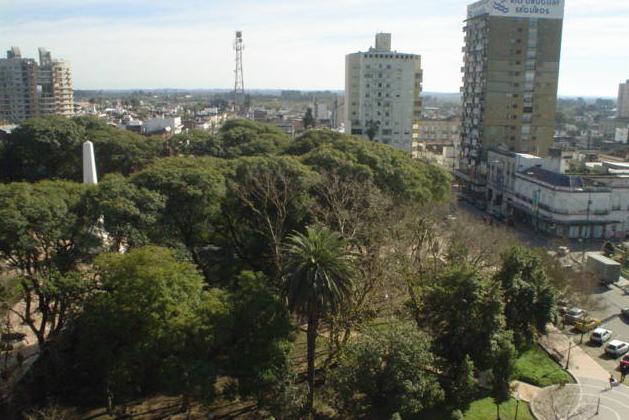
Plaza General Francisco Ramírez is the main square and the historic heart of Concepción del Uruguay, ringed by heritage buildings that speak of the city's past. It is a meeting point and a place to stroll, with its trees, its monuments and the atmosphere of a historic Entre Ríos city. Facing the square stands the Basilica of the Immaculate Conception, the city's main church, which holds inside, in a mausoleum, the remains of Justo José de Urquiza and his wife Dolores Costa. Walking the square and the basilica means stepping into the history of national organization and into the Urquiza legacy that defines the identity of 'La Histórica'. Getting there: right downtown, walkable. Best time: spring and autumn for the weather. Tips: respect Mass times when visiting the basilica; ask at the tourist office for a historic circuit linking the square, the basilica and the Colegio del Uruguay.
ℹ️ Distance: Downtown Concepción del Uruguay; walkable · Best time: Spring and autumn for the weather · Admission: Square and basilica: free, open access (respect Mass times) · Duration: 1 to 2 hours
4
Banco Pelay beach and the Uruguay River shore
The city's big river beach and the Uruguay shore, for enjoying the summer.
Concepción del Uruguay sits on the Uruguay River, and its shore offers beaches and space to enjoy the water, above all in the warm season. The best-known bathing spot is Banco Pelay, a broad sandy beach a few kilometers from downtown, with services, beach bars and a natural setting, very popular in summer for sunbathing, swimming and water sports. The Uruguay River is an axis of life and recreation all along this Entre Ríos corridor, and Concepción del Uruguay adds this draw to its historical profile. The beaches, the shoreline walks, the water sports and the fishing complement the cultural visit, making the city a destination that combines history with rest in the open air. Getting there: Banco Pelay is a few kilometers from downtown; you get there by car, taxi or, in season, by bus. Best time: summer for the beaches; spring and autumn for the shore. Tips: in summer, bring sun protection; check which bathing spots are open and what boating and fishing services are running.
ℹ️ Distance: Banco Pelay a few km from downtown; river shore in the city · Best time: Summer for the beaches; spring and autumn for the shore · Admission: Public beaches; some bathing resorts charge for services (shade, beach bar). Check · Duration: Half a day to a full day (in season)
5
Termas de Concepción del Uruguay
The city's thermal complex, with warm-water pools for relaxing.
Adding itself to the Entre Ríos thermal circuit, Concepción del Uruguay has its own hot springs complex, with warm-water pools (indoor and outdoor) designed for relaxing and for family fun. It is a good alternative to combine with the historical visit and the beaches, especially in the cold months. The hot springs of the Uruguay River region —together with those of Colón, Federación, Villa Elisa and others— are one of the great draws of the Entre Ríos Northeast, and the Concepción del Uruguay complex lets you enjoy the experience without leaving the historic city. Getting there: in the city or just outside it; by car or taxi. Best time: all year; especially pleasant in autumn and winter. Tips: check the hours and the day rate; bring what you need for the pool.
ℹ️ Distance: In Concepción del Uruguay or just outside it · Best time: All year; ideal in autumn and winter · Admission: AR$ 20,000 general, AR$ 9,000 Entre Ríos residents, AR$ 15,000 children 4-12 and retirees, under-3s free; parking AR$ 5,000 (source: Termas Concepción, May 2026 rates via La Pirámide, verified July 2026) · Duration: Half a day to a full day
6
Boat trips and fishing on the Uruguay River
Boat outings on the river and among the islands, and sport fishing for dorado, surubí and boga.
The Uruguay River makes Concepción del Uruguay a good destination for sport fishing and boat trips. Its waters yield dorado, surubí, boga, patí and other species of the basin, prized by anglers. There are guides and operators offering fishing days (half day or full day) and boat outings on the river and around the nearby islands. Getting out on the river lets you discover the islands, the streams and the riverside nature from another angle, with birdwatching and pockets of wild beach. It is a perfect complement to the history day and the city beaches. Getting there: outings leave from the city's shoreline and marina area. Best time: spring and summer; for fishing, check the closed seasons. Tips: to fish you need the relevant permit; bring sun protection and water. Book with licensed operators.
ℹ️ Distance: Outings from the shoreline area of Concepción del Uruguay · Best time: Spring and summer; fishing subject to closed seasons · Admission: Boat trip approx. AR$ 25,000–55,000 per person; guided fishing costs more (2025) · Duration: 2 to 3 h (boat trip); half a day to a full day (fishing)
Advertisements
What nobody tells you

💵 Prices

Tickets

TypePrice
Palacio San José (museum)Free, includes guided tours at 11 and 15 (source: the museum's official site, museourquiza.cultura.gob.ar, verified July 2026). Hours: Tue-Fri 8:30-18; Sat/Sun/holidays 9:30-18; closed Monday
Walking the historic city (Plaza Ramírez, the basilica, the Colegio)Free, open access (some sites have an optional guided tour)
Termas de Concepción del UruguayAR$ 20,000 general, AR$ 9,000 Entre Ríos residents, AR$ 15,000 children 4-12 and retirees, under-3s free; parking AR$ 5,000 (source: Termas Concepción, May 2026 rates via the newspaper La Pirámide, verified July 2026)
Uruguay River beaches (Banco Pelay)Public beach free; bathing-resort services (shade, beach bar) cost extra, about US$ 3–8 (range according to Uruguay River corridor blogs, verified July 2026)
🔄 updated monthlyOfficial / reference values · double-check when buying

Activities and tours

ActivityPriceDurationOperator
Visit to the Palacio San JoséFree (admission and guided tours at no charge, source: museourquiza.cultura.gob.ar); tour with transfer from the city US$ 20–40 (range according to operators in Concepción del Uruguay and Colón, verified July 2026)Half a dayPalacio San José Museum / tours from Concepción del Uruguay and Colón
Historic circuit around the cityGuided city tour US$ 15–30 per person; free on your own (range according to local guides, verified July 2026)Half a dayLocal guides / tourist office
Beach and river day (Banco Pelay)Beach free; bathing-resort services and shade about US$ 4–12 (range according to Uruguay River corridor traveler forums, verified July 2026)Half a day to a full dayBathing resorts and local operators
Boat trips and fishing on the Uruguay RiverBoat trip US$ 20–45 per person; guided fishing day US$ 50–120 per boat (range according to local boat operators and fishing forums, verified July 2026)VariableLocal boat operators
🔄 updated monthlyOfficial / reference values · double-check when buying
Advertisements

🚌 How to get there and distances

Getting around

ModePriceDurationNotes
On footFreeVariableThe historic center of the city is covered on foot
Own or rented carFrom US$ 35–65 a day; fuel not included (range according to rental comparison sites for the Northeast, verified July 2026)VariableNecessary for the Palacio San José (about 30 km away) and handy for the Uruguay River corridor
Remís and taxiUS$ 3–7 for city trips; more expensive to the Palacio San José because of the distance, about US$ 10–20 (range according to local car services, verified July 2026)VariableFor transfers to the Palacio San José, the beaches and between points in the city
🔄 updated monthlyOfficial / reference values · double-check when buying

How to get there

RouteAirlines / operatorsAvg. priceDuration
Buenos Aires → Concepción del Uruguay (National Route 14)Flechabus, Via Bariloche, Nuevo Expreso, Rápido Tata and others; carAbout AR$ 26,500–30,750 (US$ 25–39) depending on the company and how far ahead you book (source: Central de Pasajes and CheckMyBus, verified July 2026)Approx. 3:50 to 4:30 h (about 300 km)
Colón / Gualeguaychú → Concepción del Uruguay (Uruguay River corridor)Buses, carAbout US$ 4–10 (range for short legs, verified July 2026)Varies with the starting point (both nearby)
Paraná (provincial capital) → Concepción del UruguayBuses, carAbout US$ 15–25 (range according to ticket sales platforms, verified July 2026)Approx. 3 to 4 h
🔄 updated monthlyOfficial / reference values · double-check when buying

🏨 Where to stay

No exact prices: a scale from $ (budget) to $$$$$ (luxury), with 2-3 options per category.

CategoryPriceRecommended options
Budget (hostels and guesthouses)$$$$$US$ 30–50 a night; e.g. Casa del Árbol Hostel and simple guesthouses downtown (range based on Booking.com and Tripadvisor, verified July 2026)
Mid-range hotels$$$$$US$ 50–90 a night; mid-range hotels in the city, practical for the historic center, the Palacio San José and the river (range based on Booking.com, verified July 2026)
Cabins and aparthotels near the river$$$$$US$ 60–110 a night; cabins and aparthotels near the Uruguay River shore and Banco Pelay, ideal in beach season (range based on short-term rental portals, verified July 2026)
Upper-end hotels and hotels with a pool$$$$$US$ 90–150 a night; higher-category hotels with a pool and full services in the city and the coastal area (range based on Booking.com and Expedia, verified July 2026)

🍴 Where to eat

TypePriceOptions / signature dish
River fish and Northeast cooking$$$$$US$ 10–22 per dish; Uruguay River fish (surubí, dorado, boga), breaded fish milanesas and Northeast dishes in restaurants in the city and along the shore (range based on Tripadvisor reviews, verified July 2026)
Grills and Argentine cooking$$$$$US$ 9–18 per dish; asado, milanesas and classic Argentine cooking in grills and diners downtown (range based on local reviews, verified July 2026)
Cafés, ice cream shops and cheap eats$$$$$US$ 3–7 per order; cafés, ice cream shops and budget options in the historic center (range based on traveler forums, verified July 2026)
Advertisements

📖 History of Concepción del Uruguay (Palacio San José)

Origins, formation and what the sources say.

A key city on the Uruguay River

It is almost seven in the evening on 11 April 1870. On the gallery of the Palacio San José, a 68-year-old man is enjoying the quiet of his home while his daughters take music lessons and his wife nurses the youngest in the bedroom. Suddenly some 50 armed men surround the property shouting 'Down with the tyrant! Long live General Ricardo López Jordán!'. Minutes later Justo José de Urquiza — the caudillo who had defeated Rosas, turned this city into a seat of power and driven through Argentina's first Constitution — lies dead in his own palace. That same day, at the same hour, two of his sons are murdered in Concordia. That scene, as violent as it was decisive, is the key to understanding why Concepción del Uruguay calls itself, proudly and without exaggeration, 'La Histórica' — the Historic One.

But the city already existed almost a century before that tragedy. Concepción del Uruguay was founded on 25 June 1783 by Tomás de Rocamora on the bank of the Uruguay River, in the east of what is now the province of Entre Ríos. Its location, at a strategic point on the river that served as a border and as a line of communication with the Banda Oriental (present-day Uruguay) and the rest of the Northeast, gave it a particular importance from early on. The Uruguay River was a vital artery for trade, transport and communications, and the towns that settled on its banks became centers of activity.

The city grew as one of the main hubs of Entre Ríos, in a province that through the 19th century would be at the heart of the great conflicts of Argentina's national organization. Entre Ríos, land of caudillos and of a strong federalist stamp, played a central role in the struggles between the provinces and Buenos Aires, and Concepción del Uruguay was at the core of those events, serving as provincial capital at various moments.

That historical and political weight would be amplified by the figure who would mark the city's fate forever: Justo José de Urquiza. Under his influence, Concepción del Uruguay would become a pole of power and progress, the setting for decisions of national consequence. The bond between the city and the caudillo from Entre Ríos would run so deep that, to this day, you cannot tell the story of one without the other.

Urquiza, Caseros and national organization

Justo José de Urquiza, governor of Entre Ríos, was one of the decisive figures of 19th-century Argentine history, and Concepción del Uruguay was one of the centers of his power. Urquiza led the opposition to Juan Manuel de Rosas, the powerful governor of Buenos Aires who dominated the Confederation, and in 1852 he defeated him at the battle of Caseros, putting an end to his long regime. That victory opened the way to the country's constitutional organization.

Urquiza was the great driver of the process that led to the enactment of the National Constitution of 1853, the basis of Argentina's institutional order, and he became the first constitutional president of the Argentine Confederation. His leadership marked a fundamental stage in the building of the national state, amid the tensions between the Confederation (with its capital in Paraná) and the State of Buenos Aires, which remained separate for years.

From his base in Entre Ríos, Urquiza also drove the material and cultural progress of the region. In Concepción del Uruguay he founded, in 1849, the historic Colegio del Uruguay, a pioneering and prestigious school whose classrooms would be passed through by future presidents of the nation (such as Julio Argentino Roca and Victorino de la Plaza) and by numerous prominent figures. That educational, modernizing push made the city a beacon of progress, reinforcing its place in national history and earning it the proud nickname 'La Histórica'.

The Palacio San José: splendor, tragedy and legacy

The most powerful symbol of Urquiza's power and wealth is the Palacio San José, the lavish country residence he had built in the mid-19th century near Concepción del Uruguay. The palace, a stately mansion of a kind rare for the region at the time, had numerous rooms, two large courtyards, gardens, artificial lakes, a chapel and various outbuildings. It was at once a residence, a seat of power and a display of the caudillo's status; he received figures of national and international politics there.

But the Palacio San José was also the setting for a tragedy the whole country still remembers. By 1870 Ricardo López Jordán, a former ally of Urquiza within Entre Ríos federalism, was accusing him of having become useful to the power of Buenos Aires and of betraying the federal cause. On the afternoon of 11 April that year, while Urquiza was resting on the palace gallery and his daughters were taking music lessons, a group of some 50 armed men loyal to López Jordán burst into the property shouting 'Down with the tyrant!'. The caudillo was shot in the face and finished off with a blade in his wife's arms. That same day, and at almost the same hour, two of his sons — Colonel Waldino and Justo Carmelo de Urquiza, the military and political chiefs of Concordia — were murdered in that city by men of the same movement. Days later López Jordán was proclaimed governor of Entre Ríos by the legislature, setting off an open rebellion against the national government that would take years to put down.

The death of the caudillo in his own home shook the country and put a dramatic end to the life of one of its great protagonists. The room where it happened preserves the memory of that event, and for decades there were competing accounts of the final fate of his remains, which stayed hidden for a time before being identified with certainty. Today they rest alongside those of his wife, Dolores Costa, in the Basilica of the Immaculate Conception.

Over time the Palacio San José was declared a National Historic Monument and turned into a museum, becoming one of the most important and most visited historic sites in Argentina. Walking through its rooms, its furnishings and its gardens is a window into Urquiza's life and into a crucial period of national history. The palace, together with the Colegio del Uruguay, the basilica holding the caudillo's remains and the historic center of the city, form a heritage ensemble that makes Concepción del Uruguay and its surroundings essential for anyone who wants to understand the origins of modern Argentina.

From capital of the Confederation to 'La Histórica' of tourism

After Urquiza's death in 1870 and the decline of his political project, Concepción del Uruguay lost part of the national prominence it had held during the decades of constitutional organization, but it kept its enormous symbolic and historical weight intact. The city had been the capital of Entre Ríos at various points in the 19th century and one of the centers of Argentine federalism, and that legacy is written into its heritage, its institutions and its identity.

The Colegio del Uruguay went on training leaders and professionals, consolidating its reputation as the 'cradle of presidents'; the Basilica of the Immaculate Conception came to guard the remains of Urquiza and his wife; and the Palacio San José, turned into a national museum, became one of the most visited historic sites in the country. The city proudly took on the nickname 'La Histórica', which sums up its role in the origins of modern Argentina.

Today's Concepción del Uruguay combines that heritage with its status as a riverside city on the Uruguay River corridor. Along with Colón, Gualeguaychú and the hot springs of Entre Ríos, it forms part of a tourist circuit that adds up history, river beaches (such as Banco Pelay), thermal baths and nature. 'La Histórica' is thus both a destination of national memory and a place to rest and enjoy the Northeast, where Urquiza's legacy coexists with quiet life on the banks of the great river.

📚 Bibliography

  • Wikipedia (ES) — «Concepción del Uruguay»: https://es.wikipedia.org/wiki/Concepci%C3%B3n_del_Uruguay
  • Wikipedia (ES) — «Palacio San José»: https://es.wikipedia.org/wiki/Palacio_San_Jos%C3%A9
  • Wikipedia (ES) — «Justo José de Urquiza»: https://es.wikipedia.org/wiki/Justo_Jos%C3%A9_de_Urquiza
  • Wikipedia (ES) — «Batalla de Caseros»: https://es.wikipedia.org/wiki/Batalla_de_Caseros
  • Wikipedia (ES) — «Provincia de Entre Ríos»: https://es.wikipedia.org/wiki/Provincia_de_Entre_R%C3%ADos
  • Wikipedia (ES) — «Colegio del Uruguay»: https://es.wikipedia.org/wiki/Colegio_del_Uruguay
  • Palacio San José — Museo y Monumento Histórico Nacional (official): https://museourquiza.cultura.gob.ar/
  • Turismo Concepción del Uruguay (oficial): https://concepcionentrerios.tur.ar/
  • Turismo Entre Ríos (oficial): https://www.entrerios.tur.ar/
  • Infobae — El asesinato de Urquiza: https://www.infobae.com/sociedad/2021/04/11/el-asesinato-de-urquiza-un-disparo-en-el-rostro-rematado-a-cuchilladas-en-brazos-de-su-esposa-y-la-venganza-20-anos-despues/

❓ Frequently asked questions

How much does it cost to visit the Palacio San José?+
Admission to the Palacio San José is free, and it includes the guided tours (at 11 and 15). It opens Tuesday to Friday 8:30 to 18, and Saturday, Sunday and holidays 9:30 to 18 (closed Monday). It is on Provincial Route 39, some 30 km from Concepción del Uruguay; you get there by car, taxi or on a tour. Check the hours when you visit.
Why is Concepción del Uruguay called 'La Histórica'?+
For its leading role in Argentine history, especially in the national organization of the 19th century. It was one of the most important cities in Entre Ríos, provincial capital at various moments, and it was tied to the caudillo Justo José de Urquiza, who defeated Rosas at Caseros (1852) and promoted the Constitution of 1853. It is the birthplace of institutions and figures key to the country's history.
What is the Palacio San José?+
It is the lavish country residence Urquiza had built near Concepción del Uruguay in the mid-19th century, with 38 rooms, five courtyards, gardens, an artificial lake and a chapel. Today it is a National Historic Monument and a museum with free admission. Urquiza lived there and was murdered there, in 1870. It is the unmissable visit in the area.
Who was Justo José de Urquiza?+
He was a caudillo and governor of Entre Ríos, one of the most important figures of 19th-century Argentine history and the country's first constitutional president. He led the Argentine Confederation, defeated Juan Manuel de Rosas at the battle of Caseros (1852) and was key to the enactment of the National Constitution of 1853. He founded the historic Colegio del Uruguay. He was murdered at the Palacio San José in 1870.
What is there to see in Concepción del Uruguay?+
The historic center with Plaza Ramírez, the Basilica of the Immaculate Conception (which holds Urquiza's remains), the historic Colegio del Uruguay (cradle of presidents), and various heritage buildings. Some 30 km away is the Palacio San José, the unmissable visit. The city also offers Banco Pelay beach, the hot springs and the Uruguay River shore.
How do you get to Concepción del Uruguay from Buenos Aires?+
It is in the east of Entre Ríos, on National Route 14 (the Uruguay River corridor), some 300 km from Buenos Aires: approx. 4 hours by car or by bus from Retiro (Flechabus, Nuevo Expreso and others, from US$ 25–39 a ticket, verified July 2026). It is close to Colón and Gualeguaychú. The historic center is walkable, but for the Palacio San José (some 30 km away) you want a car, a taxi or a tour.
How much do the Termas de Concepción del Uruguay cost?+
General admission costs AR$ 20,000, Entre Ríos residents pay AR$ 9,000, children 4 to 12 and retirees AR$ 15,000, and under-3s get in free; vehicle parking costs AR$ 5,000 extra. Rates updated in May 2026, verified July 2026. It includes access to the pools, barbecue areas and the grounds, open every day from 9 to 20.
Sources consulted (10)
Still planning?
Explore more destinations in Argentina
See all destinations →
Advertisements
Image credits
Photos from Wikimedia Commons, each under its own licence (CC BY, CC BY-SA or public domain). Open each file to see its author and licence.
Concepcion del Uruguay plaza Ramirez