Viajá con Gus
HomeArgentinaCorrientes
Corrientes
🇦🇷 Argentina · The Northeast and Mesopotamia

Corrientes

Jump to what you need
📌Province
Corrientes (this is the provincial capital, on the Paraná River, across from Resistencia/Barranqueras, in the Chaco)
📌Service city
The city of Corrientes: Doctor Fernando Piragine Niveyro airport, bus terminal and every service you need. It is also linked to Resistencia (Chaco) by the General Belgrano bridge
📌Best time
For Carnival, January-February (summer, very hot). For milder weather, autumn, winter and spring (April-October). The Fiesta Nacional del Chamamé is in January
📌Suggested days
1 to 2 days for the city (riverfront, historic center, popular devotion); more if your trip lines up with Carnival or the Chamamé festival. It's the base for the Iberá Wetlands
💱 ARS exchange rate
Loading rate…
🌤️ Weather in Corrientes
Loading weather…

Corrientes is the capital of the province of the same name, one of the oldest cities in the Argentine Northeast and one with the most character. It sits on the left bank of the Paraná River and is joined to Resistencia (Chaco) by the General Manuel Belgrano bridge. It's a city of tree-lined streets, colonial mansions, deep popular devotion and an unmistakable musical identity: it's the cradle of chamamé.

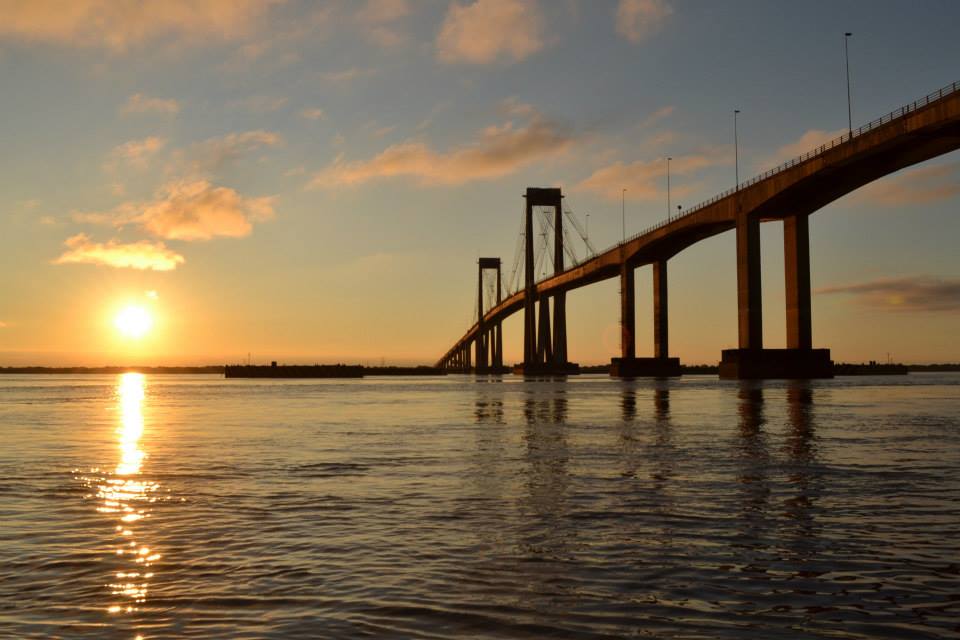
Its great riverfront promenade along the Paraná is the local pride: a wide walkway facing the water, with beaches, monuments, bars and memorable sunsets, and the outline of the Belgrano bridge against the river. Corrientes is also Argentina's National Capital of Carnival: every summer the Nolo Alías Corsódromo lights up with the Ara Berá and Copacabana comparsas in one of the biggest parties in the country.

Alongside the music and the partying runs a spirituality you can feel everywhere: the Cruz de los Milagros, the cult of the Virgin and of the Gauchito Gil, the historic churches. And, a big plus, Corrientes is the gateway and service base for one of the most spectacular wetlands in South America: the Iberá Wetlands. A warm city in every sense, ideal for diving into the culture of the Northeast.

📖 History of Corrientes

Corrientes was founded on 3 April 1588 by the adelantado Juan Torres de Vera y Aragón, under the name Ciudad de Vera, at the spot known as the Siete Corrientes (for the eddies and rock spurs of the Paraná River). Conceived as a waypoint between Asunción and Buenos Aires, its name drifted over time into San Juan de Vera de las Siete Corrientes and, finally, into Corrientes. The city's origin carries with it the legend of the Cruz de los Milagros. The full story is on our history page.

Read the full history ↓

🗺️ What to see

1
Costanera General San Martín riverfront
The city's great riverfront walk along the Paraná, with urban beaches, monuments, bars and views of the General Belgrano bridge and of the Corrientes sunset. The meeting point of the city.
The Costanera General San Martín is, no argument, the open-air soul of Corrientes and the first place locals will send you when you ask what to do. It's a promenade-avenue about two and a half kilometers long running right along the Paraná, lined with lapacho trees and palms, joining the General Belgrano bridge area with the historic Punta San Sebastián. It was built over decades (between the late 1920s and the middle of the 20th century), and the Juan Pablo II extension was added later, tacking on almost another kilometer of walkway. The charm is that it mixes everything that makes Corrientes what it is: the wide brown river, the bluff, the greenery, the music and that very Northeastern habit of heading down to the shore for tereré once the heat lets up. Once you're there, the list of things to do is long. You can walk or run the promenade, rent a bike, sit on the benches watching the river go by, or head onto the urban beaches: the best known is playa Islas Malvinas, with sand and services in season. You'll come across monuments, sculptures and the outline of the Belgrano bridge against the water, the city's classic postcard. In summer the riverfront fills with craft markets, live-music stages and food stalls; plenty of bars and breweries have their tables facing the Paraná. If the river tempts you, operators run boat trips, and with luck you'll spot howler monkeys on the islands opposite. Getting there couldn't be easier: from Plaza 25 de Mayo or the Junín pedestrian street you're a few blocks away on foot, heading down toward the river; a ten- or fifteen-minute walk and you're practically at the bluff. Several city buses also pass nearby, and by taxi or remís it's a very short ride. Given its length, it's worth deciding which stretch you want: the central section facing the old town is the liveliest, while toward the ends the walk gets quieter. The best moment is, without a doubt, sunset. Corrientes has a reputation for spectacular sunsets over the Paraná, and the riverfront is the perfect box seat: the sky lights up, the heat eases a little and people come out in force with their mate or tereré kit. In summer (December to February) come ready for hard heat and humidity; early morning and the end of the day are the kindest hours. In autumn and winter it's a comfortable walk at any time. A couple of practical tips: bring repellent, because mosquitoes turn up near the water, especially at dusk and after dark; add a cap, sunscreen and water if you're going during the day in summer. Access to the promenade is free. It pairs perfectly with going out to eat: many of the city's best places to try river fish are right on the riverfront, so you can string together a walk, the sunset and dinner without leaving the area.
ℹ️ Type: Urban riverfront promenade, free access · Length: About 2.5 km (plus the Juan Pablo II extension) · Getting there: On foot from downtown (10-15 min) or by bus/taxi · Best time: Sunset; in summer, early morning too · Tip: Bring repellent, a cap and your tereré kit
2
General Manuel Belgrano bridge
An imposing bridge over the Paraná linking Corrientes with Resistencia and Barranqueras (Chaco). The city's visual icon, spectacular at sunset from the riverfront.
The General Manuel Belgrano bridge is the great piece of engineering that changed the region's history and, along the way, became the visual icon of Corrientes. It's a viaduct over the Paraná River carrying National Route 16, connecting the city of Corrientes with Resistencia and Barranqueras on the Chaco side. It opened on 10 May 1973 and bears the name of Manuel Belgrano, lawyer, soldier and creator of the Argentine flag. Until then, crossing the Paraná meant an odyssey of ferries; the bridge ended that isolation and connected Corrientes (and Misiones) with the rest of the country in one stroke. So beyond its value to visitors, it carries enormous weight for people in Corrientes and the Chaco. What impresses is the scale. It runs about 1,700 meters and rises several dozen meters above the river so large ships navigating the Paraná can pass underneath. Seen from the riverfront, its cables and structure cut against the sky, it's a postcard that changes color with the hour. You don't have to cross it to enjoy it: most visitors admire it from the Corrientes bank, where the promenade offers several perfect spots for photos. If you like, you can cross by car or bus and take a half-day trip around Resistencia, the "city of sculptures". To see it and photograph it, the easiest thing is to head to the northern end of the Costanera General San Martín, where the bridge is almost overhead; from downtown it's a few minutes by taxi or a walk along the riverfront. If what you want is to cross it, the intercity buses to Resistencia leave from downtown and from the terminal, and the crossing itself takes only a few minutes. The star moment is, again, sunset: the sun goes down right on the river side and the bridge is backlit, with the sky in oranges and violets. It's one of the most sought-after photo plans in the city. Lit up at night, it looks very good too. Any time of year works for seeing it; in summer, just wait for the sun to drop to dodge the worst of the heat. One practical note: this isn't a "ticketed" attraction but a bridge in use, so you enjoy it mainly as a view and as a crossing. If you're thinking of walking or cycling over to the Chaco, look into it carefully, because it's a highway with heavy traffic and it's better done by vehicle. Pairing it with a stroll along the riverfront and a river-fish dinner is the classic way to close out a day in Corrientes.
ℹ️ Links: Corrientes with Resistencia and Barranqueras (Chaco) · Length: Around 1,700 meters over the Paraná River · Opened: 10 May 1973 · Best view: From the northern end of the riverfront, at sunset · Crossing to Resistencia: A few minutes by car or intercity bus
3
Church and shrine of the Cruz de los Milagros
The church that guards the historic Cruz de los Milagros, tied to the founding of the city and the focus of one of the most important popular devotions in Corrientes.
The Shrine of the Most Holy Cross of Miracles is one of those places where the identity of Corrientes clicks into focus all at once, because it mixes history, popular faith and founding legend. It guards the Cruz de los Milagros, an urunday wood cross almost four meters tall, tied directly to the city's origin. Tradition holds that shortly after the 1588 founding the first settlers raised that cross near the fort; when the settlement was attacked and set on fire, the cross was miraculously left standing, and from there came its name and one of the strongest devotions in the Northeast. Today the church is not just a parish: it's an archdiocesan shrine, and the block it stands on is a declared National Historic Site. The building you'll see is the fifth church raised in the cross's honor (there were earlier chapels and churches going back to 1720). The cornerstone was laid in 1888, during the city's third centenary, and it was consecrated in June 1897 by the archbishop of Buenos Aires, Uladislao Castellano. Inside, besides the cross in the main altarpiece, there are several altarpieces from the 1920s, pieces of sacred art and the mausoleum of Santiago Derqui, who was president of the Argentine Confederation. It's a place to enter slowly, look at the details and take in the hush, especially when the faithful are praying in front of the cross. Getting there is very simple, since it's right in the old town on Belgrano street, a few blocks from Plaza 25 de Mayo and the riverfront. From downtown it's an easy few minutes on foot; the area is compact and walkable. If you're coming from the Junín pedestrian street or Plaza Cabral, it's also a short walk. One important detail for planning your visit: the shrine tends to open mainly at Mass and celebration times, and may be closed outside them. So it's worth checking the day's service times or arranging with the parish before you go, to make sure you can get in to see the cross. Even if you find it closed, the square across the street is a pleasant place to rest in the shade and take in the facade. The big date is 3 May, the day of the Cross, when the celebrations and the crowds converge. As for practicalities: access is free and, as in most churches, donations toward upkeep are welcome. It's a place of worship, so dress respectfully and keep quiet if a service is on. Combining it with Plaza 25 de Mayo, its museums and the rest of the old town makes an ideal walking circuit to take in the founding heart of Corrientes in a morning.
ℹ️ What it guards: The Cruz de los Milagros, urunday wood, about 3.75 m · Location: Belgrano street, old town, near Plaza 25 de Mayo · Getting there: On foot from downtown, a few minutes · Hours: Mainly at Mass times; worth checking ahead · Key date: 3 May, the day of the Cruz de los Milagros
4
Plaza 25 de Mayo and the old town
The oldest and most beautiful square in the city, ringed by historic buildings, museums and colonial mansions. The heart of the founding center.
Plaza 25 de Mayo is the founding square of Corrientes and, for many, the loveliest in the Northeast. It's the civic and historic center of the city: an urban ensemble declared a National Historic Monument, where the colonial layout survives among palms, old shade trees, a bandstand, fountains, lampposts and the equestrian statue of General San Martín in the middle. Walking it is like stepping back several centuries: the most important public and religious buildings cluster around it, many of them from the 19th century, in a setting that is carefully preserved and was restored in recent works. The good thing about this square is that it works as the starting point for a walk through the old town. Around it and on the neighboring streets you'll find the Casa de Gobierno, late 19th century with an Italian Renaissance air; the church and former convent of La Merced, which holds colonial confessionals carved in cedar; the provincial Legislature and the police headquarters, which occupies the site of the old cabildo; and the Museo de Artesanías, set in a colonial house from 1806, showing silverwork, popular religious imagery and leatherwork, often with artisans working on site. It's a short walk in distance but very dense in history. Getting there is immediate, because you're right downtown: the square is a few blocks from the Junín pedestrian street, the riverfront and the Shrine of the Cruz de los Milagros, all walkable. From almost any central hotel it's minutes on foot, and several city buses pass through the area. As for when to go, it depends a bit on what you're after. To take in the architecture and shoot photos, morning or late afternoon have the best light and less heat; in summer, dodge midday. The square, with its shade and its benches, is a good refuge to rest between walks. Lit up at night, it has its charm too. Practical notes: walking the square and looking at the facades is free. The museums around it are usually free or cheap, but hours change and many close at midday or one day a week, so check opening days and times beforehand. Build the walk by stringing together Plaza 25 de Mayo, the Museo de Artesanías, La Merced and the Cruz de los Milagros, then head down to the riverfront: half a day covers the historic heart of Corrientes.
ℹ️ What it is: The founding square and historic center, a National Historic Monument · Around it: Casa de Gobierno, La Merced, Museo de Artesanías, the Legislature · Getting there: Right downtown, on foot from the pedestrian street and the riverfront · Museums: Usually free or cheap; check the hours · Best time: Morning or late afternoon, for the light and the heat
5
Junín pedestrian street
The main shopping and strolling street, starting at Plaza Cabral opposite the cathedral; it's where the shops, the cafés and everyday life in Corrientes come together.
The Junín pedestrian street is the commercial and social artery of Corrientes, the place where the city's daily life beats. It's several blocks of Junín street given over to pedestrians, right downtown, roughly between Salta and Santa Fe. This is where the shops, the clothing stores, the shoe shops, the bookstores, the cafés and the ice cream parlors are; everyone walks here, from the local running errands to the tourist looking for an air-conditioned café to escape the midday heat. If you want to take the city's pulse on an ordinary day, this is the spot. Beyond the shopping, the street is a good walk in itself. It has benches, trees and, along different stretches, that mix of old buildings and new shops typical of downtowns in the Argentine interior. It's ideal for walking without hurry, stopping for a drink, buying a souvenir or trying an ice cream, which in Corrientes is close to compulsory in this climate. On special dates and in high season there's extra bustle, decorated shop windows and sometimes music. It also starts at a key point: Plaza Cabral, opposite the cathedral. That makes the street a perfect hinge between the shopping area and the historic and religious center. From any central hotel you're minutes away on foot; it's a few blocks from Plaza 25 de Mayo and the riverfront, so it slots naturally into any walking circuit downtown. Several city buses pass nearby and many converge around Plaza Cabral. The best time depends on what you're after. For shopping and cafés, mid-morning and the afternoon are busiest, especially once the shops reopen after the siesta. Bear in mind that in Corrientes many businesses close for a good while at midday because of the heat and the siesta, and open again later; factor that in if you're going to shop. As evening comes and it cools down, it fills up again. One practical tip: the pedestrian street is completely free and walkable, but the summer heat hits hard, so make the most of air-conditioned shops, drink water and save the middle hours for something in the shade. It's the perfect complement to a visit to the cathedral and Plaza Cabral, and a good place for a break between a morning of museums and an afternoon on the riverfront.
ℹ️ What it is: The main pedestrian and shopping street downtown · Route: Several blocks of Junín street, between Salta and Santa Fe · Starts at: Plaza Cabral, opposite the cathedral · Getting there: On foot from anywhere downtown · Tip: Many shops close at midday for the siesta
6
Nuestra Señora del Rosario Cathedral and Plaza Cabral
The cathedral facing Plaza Cabral, the nerve center of downtown and the city's transport hub.
The Nuestra Señora del Rosario Cathedral and Plaza Cabral together form the commercial and civic heart of downtown Corrientes. The cathedral is the city's main church: a basilica-style building with a central nave and two aisles, a raised dome and a tower that dominates the local skyline. It was built around the middle of the 19th century and gained standing over time, becoming a metropolitan cathedral when Corrientes was raised to an archdiocese. Inside it holds the Pantheon of Corrientes Founding Figures, where several governors and historic figures of the province rest, which makes it a place of memory as well as of worship. Right across from it is Plaza Cabral, one of the most lived-in squares in the city. It bears the name of sergeant Juan Bautista Cabral, the Corrientes soldier who gave his life at the battle of San Lorenzo to save San Martín, a hero much loved in the province. The square is where the Junín pedestrian street begins, so it blends the religious, the commercial and the social in one place: people coming out of Mass, strolling, waiting for the bus or sitting to rest under the trees, with a fountain and the big Corrientes letters for the standard photo. Getting there is about the easiest thing in the city, because this is practically the geographic center and a transport hub: many city buses converge around Plaza Cabral, so you'll probably pass through even without meaning to. On foot it's a few minutes from Plaza 25 de Mayo, the Shrine of the Cruz de los Milagros and the riverfront; the center is compact and it all links up by walking. Any time of day works for a visit, but keep Mass times in mind if you want to look around the cathedral in peace or, conversely, if you'd rather be there for a service. The square is pleasant at any hour; at sunset, when the heat drops and the lights come on, it gets especially lovely and fills with people. In summer, the shade of the square is a good breather between walks. Practical notes: entry to the cathedral is free and, since it's a working church, go in respectfully, quietly and appropriately dressed, especially if Mass is on. The square is free to walk. Combine it with the Junín pedestrian street, which starts right there, and with the rest of the old town for a complete and very easy walking route.
ℹ️ What it is: The metropolitan cathedral facing Plaza Cabral · Inside: The Pantheon of Corrientes Founding Figures · Plaza Cabral: Named for sergeant Cabral, hero of San Lorenzo · Getting there: The nerve center; many city buses converge here · Access: Free; be mindful of Mass times
7
Nolo Alías Corsódromo
The stage of the Corrientes Carnival, in Argentina's National Capital of Carnival, where the Ara Berá and Copacabana comparsas parade every summer. Not to be missed if you travel in January or February.
The Nolo Alías Corsódromo is the great stage of the Corrientes Carnival, which holds the title of Argentina's National Capital of Carnival. It's a parade avenue with stands on both sides, built so the comparsas can pass showing off their costumes, floats and choreography in front of thousands of people. It holds around 30,000 spectators, so when it's full and the drums kick in, the energy is something else. If your trip falls in high summer, seeing a Carnival night here is one of those experiences you don't forget: glitter, feathers, percussion and a fervor that gets to you. The show revolves around the great Corrientes comparsas. The historic Ará Berá and Copacabana are the most famous, but others parade too, such as Sapucay and Arandú Beleza, each with hundreds of members, its own orchestra and a display of costumes and floats prepared all year long. Over several nights the comparsas compete and show off; it's a show that runs for hours, so you'll see block after block of dancers, queens and allegorical floats. The Corrientes Carnival also comes with shows at the Cocomarola Amphitheater and the crowning of the queen. The Corsódromo is outside the downtown core, in an area laid out for big events, so the easiest way to get there is by taxi, remís or the special services laid on for Carnival nights; extra buses usually run too. From downtown it's a short drive. Leave with time to spare, because parade nights draw huge crowds and traffic in the area gets messy. The 'when' is decisive here: Carnival happens in summer, mainly in January and February, on specific nights that change from year to year. Outside those dates the Corsódromo is just an empty venue and there's nothing to see, so this attraction only makes sense if you travel in Carnival season. The exact dates and the comparsa schedule are published each edition; it's worth confirming them before planning the trip. Practicalities: Carnival nights are ticketed and seats are sold by section (general stands or boxes), with prices that change every year because of inflation, so check the current fare and buy ahead, since the best spots sell out. Bring something to sit on comfortably, water, repellent and patience, because the show starts late and runs for hours. It's the most intense experience the city offers in summer and, if the timing works out, it's worth every minute.
ℹ️ What it is: The Carnival stage, in Argentina's National Capital of Carnival · Capacity: Around 30,000 spectators · Comparsas: Ará Berá, Copacabana, Sapucay, Arandú Beleza · When: Summer (January-February), on specific nights each edition · Tickets: AR$ 8,000-45,000 depending on the section (stands and boxes); source: norteticket.com, Carnaval de Corrientes 2026, verified July 2026
8
Mario del Tránsito Cocomarola Amphitheater
Home of the Fiesta Nacional del Chamamé (January), a tribute to the genre declared Intangible Heritage of Humanity by UNESCO. The heart of chamamé culture.
For the people of Corrientes, the Mario del Tránsito Cocomarola Amphitheater is the true cathedral of chamamé. It's a large open-air stage with concrete stands, taking up a whole city block, with room for several thousand people. It bears the name of Mario del Tránsito Cocomarola, the legendary bandoneón player and composer who is one of the fathers of chamamé, so from the name alone the place is a tribute to the music that defines the identity of the Northeast. Chamamé was also declared Intangible Cultural Heritage of Humanity by UNESCO, which gives this amphitheater a significance beyond the local. What happens here, above all in January, is the Fiesta Nacional del Chamamé, the genre's most important gathering. Over several nights the great names of chamamé take the stage, along with dance companies, dancers of every age and delegations from different towns. It's as much a cultural celebration as a musical one: people sing, they dance chamamé, and the sapucay (that trademark shout of joy) rings out from the stands. If you like roots music, a night at the Chamamé festival here is a deeply Corrientes experience. The amphitheater is outside the downtown core, in a residential part of the city, so the most practical way to get there is by taxi or remís, especially at night and on festival days, when things get busy. From downtown it's a short drive, and during the festival extra transport services usually run. The key date is January, when the Fiesta Nacional del Chamamé takes place; those are the nights when the place comes fully alive. Outside the festival, the amphitheater hosts other concerts and shows through the year, so it's worth checking the listings in case something coincides with your trip. Dates and programming change each edition; confirm them ahead of time. Practicalities: festival nights are ticketed and seats are sold by day; prices are updated every year because of inflation, so check the current fare and buy early. Bring something to sit on comfortably in the stands, water and repellent, since it's open-air and the shows run for hours well into the small hours. Even if you're not traveling in January, passing by and seeing the amphitheater helps you understand why Corrientes proudly feels like the cradle of chamamé.
ℹ️ What it is: An open-air amphitheater, home of the Fiesta Nacional del Chamamé · Name: For Mario del Tránsito Cocomarola, a father of chamamé · When: Fiesta Nacional del Chamamé in January; concerts all year · Getting there: Outside the downtown core; taxi or remís, a short ride from the center · Tickets: Ticketed by day during the festival; check the current fare
9
Parque Mitre and the Paraná lookouts
A park and lookouts on the river bluff, ideal for sunset and for drinking tereré facing the Paraná.
Parque Mitre is one of the best-loved green spaces in Corrientes and a privileged balcony over the Paraná River. It sits on the bluff, joined to the riverfront promenade, and combines shade trees, paths, monuments and lookouts leaning out over the water. It's a quiet spot, calmer than the bustle downtown, perfect for walking slowly, exercising or simply sitting to watch the river go by with your tereré kit, which is what people here do as soon as the heat lets up. The view of the Paraná, wide and bright, is the main draw. There are several things to see in and around the park. You reach it by crossing the historic Puente de la Batería and, walking through, you can get to Punta Mitre, one of the famous seven points of earth and rock that jut into the river and gave the city its name of the Siete Corrientes. There's a lookout, a dovecote, a bandstand and sculpture groups, among them a monument to General Mitre with reliefs evoking historic scenes. Right next door is Parque Cambá Cuá, so you can string together a good walk between the two green spaces. Getting there is easy: Parque Mitre is part of the waterfront, so you can walk along the riverfront from downtown, or take a short taxi or bus ride. It's a good addition to a walk along the shore, a little farther from the busiest stretch of the Costanera General San Martín, which makes it more peaceful. The ideal moment is, no surprise, sunset. Corrientes shows off its sunsets over the Paraná, and from the park's lookouts you get them in full, with the sky ablaze above the river. It's also lovely mid-morning for a walk or a run, before the heat sets in. In summer, avoid midday and make the most of the shade under the trees. Practical tips: access is free, ideal for a relaxed, cheap plan. Bring repellent, above all at dusk and near the water, plus water, mate or tereré to join in the local habit. It's an excellent way to close the day after touring downtown: head down to the river, grab a good spot at the lookout and stay to watch the sun drop over the Paraná.
ℹ️ What it is: A park and lookouts on the Paraná bluff · Highlights: Punta Mitre, the lookout, Puente de la Batería, monuments · Getting there: On foot along the riverfront or by taxi/bus, a short trip from downtown · Best time: Sunset; mornings too, for a walk · Access: Free; bring repellent and tereré
10
Trip to the Iberá Wetlands
From the city of Corrientes you can reach the Iberá Wetlands, one of the most important wetlands in the world, with its wildlife (capybaras, caimans, deer, birds). A great multi-day trip.
The Iberá Wetlands are probably the province's greatest natural treasure and one of the trips most worth adding if you have the days: one of the largest and most important wetlands in the world, a mosaic of lagoons, marshes, swamps and floating islands where you see wildlife up close and almost without effort. The city of Corrientes works as the gateway and service base, but the Iberá itself is deep inside the province, so think of it as a multi-day escape rather than an afternoon outing. The classic point of entry for visitors is Colonia Carlos Pellegrini, considered the heart of the Iberá, a tiny quiet village on the lagoon shore. The big draw is the wildlife. On the boat safaris across the lagoon you'll see capybaras a few meters away, caimans sunning themselves, marsh deer (the emblematic species here) and an astonishing number of birds; hundreds of species are counted in the area. Add howler monkeys, brocket deer and, with luck, one of the animals reintroduced through restoration projects. Besides the boat trips, there are horseback rides, trail walks, kayak outings and night safaris to hear and see the life of the marsh after sundown. It's nature at its purest, at a slow pace that invites you to switch off. Getting there from the city of Corrientes takes time: Colonia Carlos Pellegrini is several hours away (on the order of 350 kilometers), and the final stretch runs along Provincial Route 40, which has gravel sections. You can go in your own car, hire a transfer or shuttle van, or join an agency package that handles transport, lodging and excursions. Many people come in via the town of Mercedes, the point where the road to Pellegrini branches off. Given the distances and the state of the road, set out early and don't improvise the trip back. On the best time to go: the Iberá can be visited all year, but summer (January-February) is very hot and humid, while autumn, winter and spring offer kinder weather for being outdoors and very good wildlife watching. The best times of day for the safaris are early morning and sunset, when the animals are most active and the light is ideal for photos. The key practical points: book lodging ahead (there are few inns in Pellegrini and they fill up) and book the excursions too, especially in season; bring strong repellent, sunscreen, a cap, comfortable clothes and, if you have them, binoculars; and count on limited services in the village, so come stocked up. Prices for transport, lodging and safaris change often, so check current rates when you're organizing the trip. If you can give it at least a couple of nights, the Iberá Wetlands will hand you one of the most impressive encounters with nature in Argentina.
ℹ️ What it is: One of the largest wetlands in the world; wildlife up close · Classic entry point: Colonia Carlos Pellegrini, the visitor heart of the Iberá · Distance from Corrientes: On the order of 350 km; several hours, with gravel on Provincial Route 40 · Suggested duration: 1 to 3 days (ideally at least 2 nights) · Best time: Autumn, winter and spring; safaris at dawn and sunset · Tip: Book the inn and the excursions ahead; bring repellent and binoculars
Advertisements
What nobody tells you

💵 Prices

Tickets

TypePrice
Riverfront, squares, churches and public walksFree (open access; some churches accept donations)
Carnival — tickets for the Nolo Alías CorsódromoAR$ 8,000 stand 2; AR$ 15,000 stands 4/6/18/20; AR$ 20,000 stands 7/8/9/10; AR$ 25,000 stands 11/12; boxes AR$ 26,000-33,000; VIP AR$ 45,000 (source: norteticket.com and El Comercial, Carnaval 2026, verified July 2026)
Fiesta Nacional del Chamamé (Cocomarola Amphitheater)Around US$ 8-20 per day depending on the date and the section (estimated range based on previous editions of the festival, verified July 2026; check the current edition)
City museumsMostly free or with a token fee, around US$ 1-3 (estimated range, verified July 2026)
🔄 updated monthlyOfficial / reference values · double-check when buying

Activities and tours

ActivityPriceDurationOperator
City tour of the old town and the riverfrontUS$ 15-35 per person (range based on inbound agencies, verified July 2026)~3 to 4 hInbound agencies / local guides in Corrientes
A Carnival night at the Corsódromo (January-February)AR$ 8,000-45,000 depending on the section, stands and boxes (source: norteticket.com, Carnaval de Corrientes 2026, verified July 2026)One nightCarnaval de Corrientes organizers
Fiesta Nacional del Chamamé (January)Around US$ 8-20 per day (estimated range based on previous editions, verified July 2026)Several daysGovernment of Corrientes / Instituto de Cultura
Trip to the Iberá Wetlands (with a boat safari)Boat safari in Colonia Carlos Pellegrini around AR$ 45,000; guided trek around AR$ 25,000 (source: agencies such as La Panacea Viajes, verified July 2026); packages with transport and lodging from the capital US$ 120-300 depending on the number of days1 to 3 daysCorrientes agencies / inns in Colonia Carlos Pellegrini
Boat outing and sport fishing on the Paraná (with a guide)US$ 45-110 per day, 1-3 people, gear included (range based on local fishing guides, verified July 2026)Half a dayBoat operators / local fishing guides
🔄 updated monthlyOfficial / reference values · double-check when buying
Advertisements

🚌 How to get there and distances

Getting around

ModePriceDurationNotes
City busesAround US$ 0.6-1.2 for a city fare (estimated range, paid with a SUBE card, verified July 2026)Depends on the routeThey link downtown, the riverfront, the terminal and the neighborhoods; several converge on Plaza Cabral.
Taxi / remísAround US$ 2-5 for a ride within the city (estimated range based on local car services, verified July 2026)Plentiful downtown and on the pedestrian street; handy at night and with luggage.
On foot through downtown and the riverfrontFreeThe old town is compact and walkable; the Junín pedestrian street and the riverfront are best covered on foot.
Corrientes–Resistencia transport (Belgrano bridge)Around US$ 1-3 on the intercity bus (estimated range, verified July 2026)~20 to 30 minIntercity buses cross the General Belgrano bridge toward Resistencia (Chaco).
Own or rental carFrom US$ 30-55 a day (fuel extra) (range based on rental comparison sites, verified July 2026)Convenient for pairing the city with trips to the Iberá Wetlands and the provincial interior.
🔄 updated monthlyOfficial / reference values · double-check when buying

How to get there

RouteAirlines / operatorsAvg. priceDuration
Buenos Aires → Corrientes by airAerolíneas Argentinas, Flybondi, JetSmart (to Piragine Niveyro airport)Fares vary with how far ahead you book and with promotions, from US$ 60 on a deal up to US$ 160+ (range based on flight comparison sites, verified July 2026)~1 h 30 min flight
Buenos Aires → Corrientes by busFlecha Bus, Río Uruguay, Ersa, El Norte Bis and others (from Retiro)About AR$ 50,000-84,600 (US$ 39-75) depending on the company and how far ahead you book (source: CheckMyBus, Busbud and Central de Pasajes, verified July 2026)~11 to 14 h
Resistencia (Chaco) → Corrientes via the Belgrano bridgeIntercity buses, taxis, own carAround US$ 1-3 (estimated range, verified July 2026)~20 to 30 min
Posadas → Corrientes on National Route 12Crucero del Norte and other long-distance lines of the NortheastAround US$ 12-25 (range based on ticket-selling platforms, verified July 2026)~4 to 5 h
Corrientes → Colonia Carlos Pellegrini (Iberá Wetlands)Transfers, shuttle vans and agencies; own car on Provincial Route 40 (gravel sections)Transfer/shuttle US$ 30-60 per person each way (range based on Iberá agencies, verified July 2026)~4 h (some 350 km)
🔄 updated monthlyOfficial / reference values · double-check when buying

🏨 Where to stay

No exact prices: a scale from $ (budget) to $$$$$ (luxury), with 2-3 options per category.

CategoryPriceRecommended options
Upper end (4-5 stars, river view)$$$$$US$ 90-170 a night; upmarket hotels downtown and on the riverfront, several with Paraná views, a pool and a spa (e.g. Turismo Hotel Casino) (range based on Booking.com and Tripadvisor, verified July 2026)
Mid-range (3 stars and apart-hotels)$$$$$US$ 45-85 a night; 3-star hotels and apart-hotels downtown and on the riverfront (e.g. Costanera Hotel) (range based on Booking.com, verified July 2026)
Budget / hostels$$$$$US$ 22-45 a night or US$ 10-18 for a hostel bed; hostels and family-run lodgings downtown (e.g. Hostel Teyuí), handy for using Corrientes as a base for the Iberá (range based on Hostelworld and Booking.com, verified July 2026)

🍴 Where to eat

TypePriceOptions / signature dish
River fish of the Northeast$$$$$US$ 10-22 per dish; restaurants on the riverfront and downtown serving surubí, dorado, pacú and boga, the Corrientes specialty, grilled or pan-seared (range based on Tripadvisor reviews, verified July 2026)
Regional Corrientes cooking$$$$$US$ 4-12 per person; typical dishes of the Northeast: chipá, mbeyú, sopa paraguaya, cassava, stews and empanadas, washed down with tereré (range based on traveler forums, verified July 2026)
Grills and Argentine cooking$$$$$US$ 9-18 per dish; grill houses with asado, milanesas and pasta, a safe bet for groups and families (range based on local reviews, verified July 2026)
Bars and riverfront eating$$$$$US$ 5-13 per person; breweries, cafés and bars along the riverfront, ideal at sunset, often with live chamamé (range based on local reviews, verified July 2026)
Advertisements

📖 History of Corrientes

Origins, formation and what the sources say.

1588: the founding at the Siete Corrientes

A wooden cross the flames cannot burn. That is what Corrientes tradition holds: that in the city's first months, when Indigenous attacks threatened to wipe the precarious Spanish fort off the map, the great urunday cross the founders had planted beside the palisade came through the fire untouched, and a lightning bolt struck down the man who tried to burn it. More than four centuries later that same cross —3.75 meters of hardwood— is venerated in a shrine in the old town, and its legend is still the best way into a city where history and faith cannot be pulled apart.

It all began on 3 April 1588, when the adelantado Juan Torres de Vera y Aragón, with the help of Alonso de Vera y Aragón (nicknamed 'el Tupí') and of Hernando Arias de Saavedra, founded the city. The founding charter speaks of founding 'the city of Vera at the site they call the Siete Corrientes'. In other words, the city's original name was Ciudad de Vera, after the founder's lineage.

The place name 'Siete Corrientes' —seven currents— refers to the rough behavior of the Paraná River at that point: the rock spurs and eddies that create several 'currents' of water. The founding answered a strategic need: Torres de Vera y Aragón had to fulfill the terms of his commission as adelantado, and the city was conceived as a waypoint and intermediate port between Asunción in Paraguay and Buenos Aires, on the long river route down the Paraná.

Over the years the name shifted. Since John the Baptist was one of the saints chosen as patron of the city, it came to be known as San Juan de Vera de las Siete Corrientes, and out of that long name popular usage kept only the tail end: Corrientes.

On the city's full name
It is a common mistake to think the city was founded already bearing the name 'San Juan de Vera de las Siete Corrientes'. According to local sources, the name in the founding charter was 'Ciudad de Vera'; the addition of 'San Juan' (for the patron saint) and the extended form took hold later, eventually shortening to the plain 'Corrientes'.
Source: https://ciudaddecorrientes.gov.ar/la-ciudad/fundaci-n-de-la-ciudad-de-corrientes
ciudaddecorrientes.gov.ar · Fundaci n de la ciudad de corrienteses.wikipedia.org · Juan Torres de Vera y Aragónes.wikipedia.org · Corrientes (ciudad)

The legend of the Cruz de los Milagros

Few stories are as tied to the birth of Corrientes as that of the Cruz de los Milagros, the Cross of Miracles. Tradition holds that in the first days after the founding the Spanish raised a large wooden cross. The Indigenous people of the area, at war with the colonizers, tried several times to destroy it and set it alight, but —so the legend goes— the cross miraculously withstood the fire, and lightning struck down those who tried to burn it.

That event, taken as a miracle, gave rise to one of the deepest popular devotions in Corrientes. The cross —urunday wood, 3.75 meters— was kept first in a rough hermitage and, from 1730, in the first church built in its honor (raised in 1720); the present shrine, the fifth in the line, had its cornerstone laid in 1888, during the city's third centenary, and was consecrated in 1897. Every 3 May, the day of the Cross, thousands of the faithful gather to venerate it. Popular religion is in fact a central trait of the Corrientes character: alongside the Cruz de los Milagros are the cult of the Virgin of Itatí and the enormous devotion to the Gauchito Gil, whose red shrines can be seen all over the province.

ciudaddecorrientes.gov.ar · Fundaci n de la ciudad de corrienteses.wikipedia.org · Corrientes (ciudad)visitcorrientes.tur.ar · Sobre corrientes

A city of river, port and border

The history of Corrientes is marked by its relationship with the Paraná River. The site was chosen for its natural advantages as a port, at a key point on the river network linking the interior with the Atlantic. For centuries the city grew as a trading and port hub, and as the capital of a cattle- and yerba-producing province.

The most dramatic episode in that border history came at dawn on 13 April 1865. Five Paraguayan steamers came silently down the Paraná and appeared off the port of Corrientes, where two small Argentine ships under repair, the 25 de Mayo and the Gualeguay, lay at anchor. The Paraguayan vessels sailed past and then suddenly turned around and attacked the defenseless ships, leaving many dead on board. Two days later, on 15 April, the Paraguayan general Wenceslao Robles landed in the city at the head of some 2,000 soldiers, while another Paraguayan cavalry column arrived overland the same day. The invaders installed an interim government of three members of the Corrientes federal party, closely supervised by Paraguayan commissioners.

The attack, far from breaking the country, did the opposite: it set off a wave of patriotic outrage that briefly united Argentina's political factions behind the national government and made any neutrality politically impossible. Barely two weeks after the invasion, on 1 May 1865, Argentina, Brazil and Uruguay signed the Treaty of the Triple Alliance against Paraguay in Buenos Aires, kept secret for a time. And so the brief occupation of Corrientes turned out to be the spark that lit the War of the Triple Alliance (1865-1870), the bloodiest conflict in South American history, and left a deep wound in Corrientes' memory that the city still recalls.

That border condition —Paraguay to the north and, across the river, the Chaco to the west— shaped a culture of crossings, where Guaraní and Spanish are woven together. The Guaraní language was in fact declared an alternative official language of the province alongside Spanish (law 5598 of 2004): Corrientes is the only Argentine province where Guaraní holds that status.

es.wikipedia.org · Corrientes (ciudad)ciudaddecorrientes.gov.ar · Fundaci n de la ciudad de corrientesvisitcorrientes.tur.ar · Sobre corrientes

Cradle of chamamé and of a culture of its own

If one thing defines Corrientes in the Argentine imagination, it is chamamé. Born in the Litoral region and above all on Corrientes soil, the genre fuses Guaraní roots with European inheritance (the accordion, the guitar, the bandoneón) and sings, in Spanish and in Guaraní, to the river, the bush, love and the land. In 2020 UNESCO declared chamamé Intangible Cultural Heritage of Humanity, worldwide recognition for a deeply Corrientes form of expression.

Every January the city holds the Fiesta Nacional del Chamamé at the Mario del Tránsito Cocomarola Amphitheater, which brings together the genre's great performers. Chamamé shares the calendar with the city's other great source of festive pride: Carnival. Corrientes is Argentina's National Capital of Carnival, and every summer the Nolo Alías Corsódromo fills with feathers, glitter and comparsas such as Ara Berá and Copacabana, in one of the biggest parties in the country.

turismo.corrientes.gob.ar · Carnaval y chamame las propuestas de…visitcorrientes.tur.ar · Sobre corrienteses.wikipedia.org · Corrientes (ciudad)

Corrientes today: music, faith and the gateway to the Iberá

Present-day Corrientes keeps the charm of an old Litoral city: colonial mansions, tree-lined streets, a cathedral facing Plaza Cabral and a wide riverfront promenade along the Paraná, with the General Belgrano bridge —which links it to Resistencia, in the Chaco— as a backdrop. It is an unhurried capital, hot and welcoming, where music, faith and the river set the pulse.

Beyond its urban draws, the city of Corrientes plays a strategic role in tourism: it is the main gateway and service base for the Iberá Wetlands, one of the largest and most biodiverse wetlands on the planet, home to capybaras, caimans, marsh deer and hundreds of birds. So the city combines the best of two worlds: the living culture of the Litoral —chamamé, carnival, popular devotion— and access to one of Argentina's great natural wonders.

visitcorrientes.tur.ar · Sobre corrientesdoslunas.com.ar · Que lugares imperdibles puedo visitar en…turismo.corrientes.gob.ar

📚 Bibliography

  • Municipalidad de Corrientes — «Fundación de la ciudad de Corrientes»: https://ciudaddecorrientes.gov.ar/la-ciudad/fundaci-n-de-la-ciudad-de-corrientes
  • Wikipedia en español — «Corrientes (ciudad)»: https://es.wikipedia.org/wiki/Corrientes_(ciudad)
  • Wikipedia en español — «Juan Torres de Vera y Aragón»: https://es.wikipedia.org/wiki/Juan_Torres_de_Vera_y_Arag%C3%B3n
  • Visit Corrientes (Turismo) — «Sobre Corrientes»: https://visitcorrientes.tur.ar/en/sobre-corrientes/
  • Ministerio de Turismo de Corrientes — Carnaval y chamamé: https://turismo.corrientes.gob.ar/noticia/carnaval-y-chamame-las-propuestas-de-corrientes-para-seducir-a-los-cordobeses
  • Wikipedia (ES) — «Invasión paraguaya de Corrientes»: https://es.wikipedia.org/wiki/Invasi%C3%B3n_paraguaya_de_Corrientes
  • Wikipedia (ES) — «Guerra de la Triple Alianza»: https://es.wikipedia.org/wiki/Guerra_de_la_Triple_Alianza
  • Wikipedia (ES) — «Iglesia de la Santísima Cruz de los Milagros (Corrientes)»: https://es.wikipedia.org/wiki/Iglesia_de_la_Sant%C3%ADsima_Cruz_de_los_Milagros_(Corrientes)
  • Wikipedia (ES) — «Chamamé»: https://es.wikipedia.org/wiki/Chamam%C3%A9
  • Wikipedia (ES) — «Idioma guaraní en Corrientes» (ley 5598/2004): https://es.wikipedia.org/wiki/Idioma_guaran%C3%AD
  • El Libertador — «Cruz milagrosa: identidad correntina llena de historia, devoción y misterio»: https://www.diarioellibertador.com.ar/cruz-milagrosa-identidad-correntina-llena-de-historia-devocion-y-misterio/

❓ Frequently asked questions

Why visit the city of Corrientes?+
It's one of the oldest cities in the Argentine Northeast and one with the strongest identity: cradle of chamamé (Intangible Heritage of Humanity), National Capital of Carnival, with a great riverfront on the Paraná, deep popular devotion (the Cruz de los Milagros, the Gauchito Gil) and the best base for visiting the Iberá Wetlands.
When is the Corrientes Carnival and what does a ticket cost?+
The 2026 Corrientes Carnival runs from 31 January to 28 February at the Nolo Alías Corsódromo, led by the Ara Berá and Copacabana comparsas. Tickets range from AR$ 8,000 (stand 2) to AR$ 45,000 (VIP boxes), with intermediate stands between AR$ 15,000 and AR$ 25,000 (source: norteticket.com, verified July 2026). The main parades start at 10 p.m. Corrientes holds the title of National Capital of Carnival; exact dates and prices can vary from edition to edition.
What is chamamé and where can I experience it?+
Chamamé is the signature musical genre of the Argentine Northeast, born in Corrientes and declared Intangible Cultural Heritage of Humanity by UNESCO. Every January the Fiesta Nacional del Chamamé brings the great players together at the Cocomarola Amphitheater. Through the rest of the year there are peñas and dance halls where you can hear it live.
How do you get to Corrientes from Buenos Aires?+
By air, there are flights from Buenos Aires to Piragine Niveyro airport (around 1 h 30 min). Overland, long-distance buses from Buenos Aires (11-13 h) and services from Posadas and the rest of the Northeast. From Resistencia (Chaco) it's a few minutes across the General Belgrano bridge.
Can you reach the Iberá Wetlands from Corrientes?+
Yes, the city of Corrientes is the main service base for the Iberá. The classic entry point is Colonia Carlos Pellegrini, about 4 hours away (with gravel sections), where the boat and horseback safaris run to see capybaras, caimans, deer and hundreds of birds. Book lodging and excursions ahead.
What's the best time to visit Corrientes?+
It depends: if you want Carnival or the Chamamé festival, that's high summer (January-February), and very hot. If you'd rather have milder weather for walking the city, autumn, winter and spring (April to October) are more comfortable. In summer, bring repellent, a cap and sunscreen.
What is the Cruz de los Milagros?+
It's a historic cross tied to the founding of the city, around which one of the strongest popular devotions in Corrientes grew up. It is venerated at the Shrine of the Cruz de los Milagros. It's part of the strong religious feeling here, along with the cult of the Gauchito Gil, very present across the province.
Sources consulted (14)
Still planning?
Explore more destinations in Argentina
See all destinations →
Advertisements
Image credits
Photos from Wikimedia Commons, each under its own licence (CC BY, CC BY-SA or public domain). Open each file to see its author and licence.
Puente General Manuel Belgrano