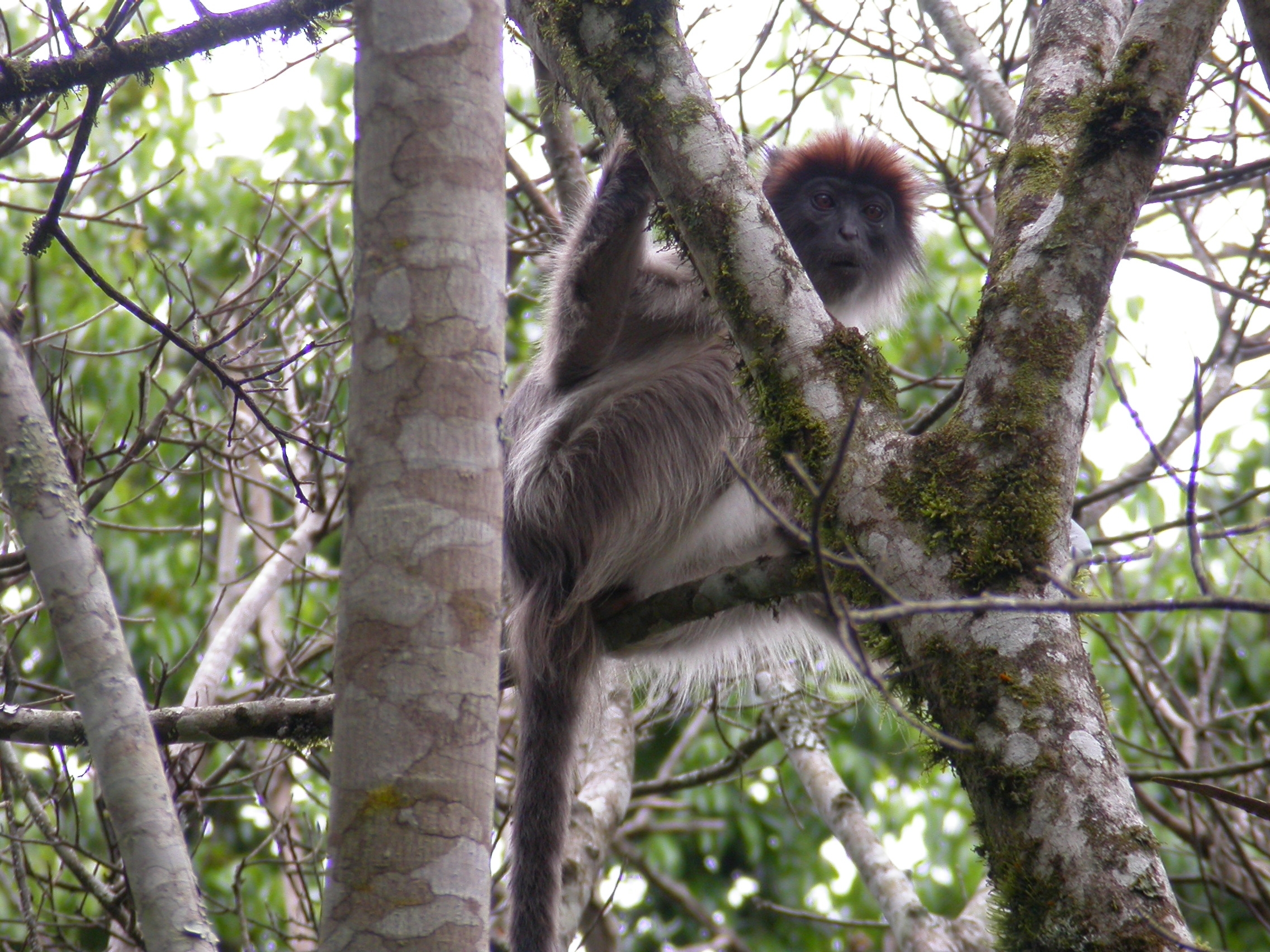
Kibale National Park is the best place in East Africa to look a wild chimpanzee in the eye. Its lush tropical forest in western Uganda holds the greatest diversity of primates on the continent (13 species) and a population of around 1.500 chimpanzees. Several of their communities are habituated to visitors, which makes trekking to see them one of the most rewarding experiences in Africa, with some of the best chances of success.
But Kibale is much more than chimpanzees. Red and black-and-white colobus, red-tailed monkeys, mangabeys, L'Hoest's monkeys and many more leap through its trees, while forest elephants, buffalo and duikers move across the forest floor and the air fills with the song of nearly 370 bird species. Right outside the park, the community-run Bigodi wetland sanctuary offers one of the best nature walks in Uganda, and the countryside around Fort Portal is dotted with beautiful crater lakes.
This Kibale guide explains how to get a chimpanzee permit and what it costs, the difference between regular trekking and the full-day habituation experience, which other primates and wildlife you can see, what the walk through the Bigodi swamp is like, when to go, how to get there from Fort Portal, and how to combine Kibale with Queen Elizabeth National Park to build the great safari-and-primate circuit of western Uganda.
The Kibale forest was first protected as a forest reserve in 1932, during the colonial era, to conserve its valuable tropical forests and timber. It became a National Park in 1993, bringing together the protection of the forest and of its extraordinary primate life. Since the 1970s its chimpanzees and other monkeys have been the subject of some of the longest-running primate studies in Africa. The park has become a world reference for primate research and tourism, and a model of conservation with local community involvement, such as the Bigodi project. That story, from forest reserve to primate sanctuary, is told on our history page.
Read the full history ↓The west of the Toro kingdom: tree-climbing lions and the Kazinga Channel in Queen Elizabeth, chimpanzees in Kibale, and the Mountains of the Moon, with glaciers on the equator in the Rwenzori.
Read the history of The west: safaris and primates →No exact prices: a scale from $ (budget) to $$$$$ (luxury), with 2-3 options per category.
Origins, formation and what the sources say.
The Kibale forest is a place of transition, and that is the key to its extraordinary richness. The park stretches across a strip of western Uganda where the high, humid lands of the Albertine Rift drop towards the drier plains of the valley. That position makes Kibale an ecological bridge: here montane rainforest from the heights mixes with lowland forest, creating a mosaic of habitats that supports exceptional biodiversity.
For thousands of years, this forest was part of a great wooded belt that covered much of western Uganda and connected with the forests of the Congo. Climate change, and later the spread of farming, gradually broke that forest apart, but Kibale kept an especially rich portion of it, with giant trees over 50 metres tall, fig trees that feed the primates and dense vegetation that is home to dozens of species of mammals, birds and insects.
That link with other ecosystems can still be seen today: a wildlife corridor connects Kibale with Queen Elizabeth National Park to the south, letting forest elephants and other animals move between the two areas. The forest is also a huge 'water factory': its woodland regulates rainfall and feeds the rivers that supply the communities and tea plantations across the Fort Portal region.
The region around Kibale is the heart of the Kingdom of Toro, one of Uganda's traditional kingdoms, which broke away from the great Kingdom of Bunyoro in the early 19th century. Centred on the Fort Portal area, the Kingdom of Toro (Tooro) has its own monarchy, language (Rutooro) and culture, and still has a king ('omukama') with a ceremonial role. The area's fertile volcanic hills, now carpeted with tea plantations, have supported a dense farming population for centuries.
For local communities, the Kibale forest was always a source of resources: timber, firewood, medicinal plants, honey, game and land to clear for crops. That relationship, both of use and of respect, shaped the forest's history for generations. At the same time, the pressure of a growing population on a forest increasingly surrounded by tea fields and farmland kept shrinking it and threatening its wildlife.
That tension between protecting the forest and meeting people's needs has been Kibale's great challenge to this day, and it has given rise to some of Uganda's most innovative community tourism initiatives, such as the Bigodi Wetland Sanctuary, run by the local association KAFRED, which aims to make sure protecting the forest benefits local people directly.
Official protection of Kibale began in the British colonial era. In 1932 the forest was declared a forest reserve, mainly to conserve its valuable woodland and timber and harvest them in a controlled way. For decades Kibale was managed above all as a timber and forestry resource, with logging and replanting zones, although its extraordinary primate population drew more and more attention from scientists.
From the 1970s onwards, Ugandan and international researchers began studying Kibale's chimpanzees and other primates in depth, setting up some of the longest-running and most respected primate research programmes in Africa. That scientific knowledge highlighted the forest's unique value: not just for its timber, but for its biodiversity, and especially for its density of primates, the highest in East Africa.
That change of outlook culminated in 1993, when Kibale was upgraded from forest reserve to National Park, with almost 795 km² set aside for the full protection of the forest and its wildlife. The new status strengthened protection against logging and poaching, and opened the door to carefully regulated primate tourism (chimpanzee trekking), which would become the main source of income and a key tool for funding the forest's conservation.
With the creation of the park and the growth of research, Kibale earned the nickname that defines it: the 'primate capital of the world'. Its 13 species, from chimpanzees to red colobus, mangabeys and the rare L'Hoest's monkeys, make up the greatest diversity and density of primates in East Africa, a biological treasure that has turned the park into a magnet for scientists, documentary makers and travellers from all over the world.
The star is the chimpanzee, our closest living relative, with which we share more than 98 % of our DNA. Decades of research in Kibale have revealed how complex their social life is: their hierarchies, alliances and conflicts; their ability to make and use tools; their cooperative hunting; and a surprisingly human range of emotions and relationships. Watching Kibale's chimpanzees is like looking into a mirror of our own species.
That scientific value has turned into a unique tourist experience. Chimpanzee trekking and the habituation experience let visitors follow these primates up close in their natural habitat, with very high chances of success. Tourism income funds the conservation of the forest and projects for neighbouring communities, in a model that aims to make the chimpanzee, like the gorilla in the south of the country, an economic ally that secures its own survival.
Today's Kibale is at once a primate sanctuary, an open-air science lab and an engine of development for its region. Managed by the Uganda Wildlife Authority, it is one of Uganda's most highly rated nature destinations and a key part of the western circuit, which combines Kibale's chimpanzees with a safari in Queen Elizabeth National Park and the gorillas of Bwindi.
The park still faces the challenges of protecting an island of forest surrounded by a dense rural population: pressure on land, occasional conflicts between wildlife (especially forest elephants) and neighbouring crops, and the need for tourism's benefits to reach local communities so that they will defend the forest. Initiatives such as Bigodi, local guides and porters, and revenue-sharing projects aim to meet that challenge.
For travellers, Kibale offers one of the most exciting experiences in Africa: walking through primary forest and coming across a family of wild chimpanzees just a few metres away. Its history, from colonial timber reserve to primate capital of the world, sums up the journey of conservation in Uganda: from seeing the forest as a source of timber to understanding it as a treasure of biodiversity and as the home of our closest relatives, whose protection is also a way of getting to know ourselves.