Viajá con Gus
Home › Somalia › Bosaso
Bosaso
🇸🇴 Somalia · The northeast: Puntland

Bosaso

🪪 What do I need to enter Somalia?Pick your citizenship and we tell you the visa, the days and the paperwork, with the official source.

By leaving your email and citizenship you agree to receive the documents you asked for and weekly travel news. You can unsubscribe whenever you want. How we handle your data.
Jump to what you need
📌Safety warning
THIS GUIDE IS FOR INFORMATION ONLY, NOT AN INVITATION TO TRAVEL. The US Department of State keeps Somalia at Level 4 “Do Not Travel”, its highest category, in the advisory renewed on 21 May 2026, citing crime, kidnapping, terrorism, civil unrest, health risks, landmines and piracy. The British FCDO advises against all travel to Somalia (4 June 2026) —Puntland is not among the partial exceptions, which are limited to the Somaliland regions of Awdal, Maroodijeh and Sahil—, warns that foreigners “are seen as legitimate targets” for kidnapping and that its consular support is “severely limited”. Spain's Ministry of Foreign Affairs (28 May 2026) states: «se desaconseja el viaje bajo cualquier circunstancia» (travel is advised against under any circumstances) and expressly advises against any maritime activity in Somali waters.
📌Area-specific risk
Bosaso is the main city of the Bari region, where the Somali branch of the Islamic State established itself in the Cal Miskaad mountains. Since December 2024 Puntland has been running Operation “Hillaac” against that network, with support from US Africa Command; in November 2025 US special forces and Puntland's counter-terrorism unit carried out a joint raid in the Baallade valley. Puntland's president, Said Abdullahi Deni, stated that the intelligence services foiled a planned attack by the group on the port of Bosaso. On top of this comes the risk of piracy in the Gulf of Aden, explicitly cited by the British FCDO, with attacks possible more than 1,000 nautical miles from the coast.
📌What Bosaso is
Puntland's great port and economic engine, on the Gulf of Aden, in the Bari region, at the far northeastern tip of Somalia. Historically it is also known as Bender Qassim. It is the main commercial hub of northeastern Somalia and one of the busiest livestock export terminals in the world: in peak seasons millions of goats, sheep and camels leave from here for the Arabian Peninsula. It also exports fish, frankincense and other goods.
📌Population
Estimates vary widely and should be treated with caution. Some sources put the population at around 700,000 people by 2020, while other data point to some 235,000-250,000 inhabitants in the urban core during the 2010s, with a large internally displaced population that makes any precise count difficult. Either way, it is the largest city in Puntland.
📅Climate and best time to go
Hot, extreme desert climate. Summer temperatures exceed 40 °C and average annual rainfall is minimal, around 20 mm according to climate sources. Summer on the Gulf of Aden is especially tough because of the combination of heat and humidity. The workable window is the northern winter, from November to March, when temperatures drop and the coast becomes liveable.
📌The port
The port of Bosaso is one of the most important pieces of infrastructure in Somalia. In 2017 its management passed to P&O Ports, a subsidiary of the Dubai company DP World, under a thirty-year concession to run and expand the terminal. It is the natural outlet for livestock from Puntland's interior and the gateway for imports to the whole northeast region, as well as the Somali end of a long-standing trade relationship with Yemen and the Persian Gulf countries.
📌Migration and tahriib
Bosaso is also a hub of irregular migration to the Arabian Peninsula. Its proximity and historical shipping ties with Yemen draw people —mostly young— to the city who are looking to escape poverty and set out on the tahriib, the undocumented and dangerous crossing over the Red Sea and the Gulf of Aden towards the Gulf States and, if possible, Europe. The war in Yemen, since 2015, disrupted established trade routes and made that corridor even more complicated.
📌Getting there and permits
Bosaso airport connects with Mogadishu, Garowe and regional destinations, and has had runway improvements in recent years. By road, the city is the coastal end of the route that runs up from Garowe. Puntland issues its own entry permits in addition to the Somali national visa. The visa situation keeps changing: specialist 2026 guides cite a visa on arrival in Mogadishu for USD 50-60 and an e-visa for USD 60, a local operator charges USD 64 for it, and other sources state that prior electronic authorisation has been required since January 2026. Check the official portal evisa.gov.so.
💱 SOS exchange rate
Loading rate…
🌤️ Weather in Bosaso
Loading weather…

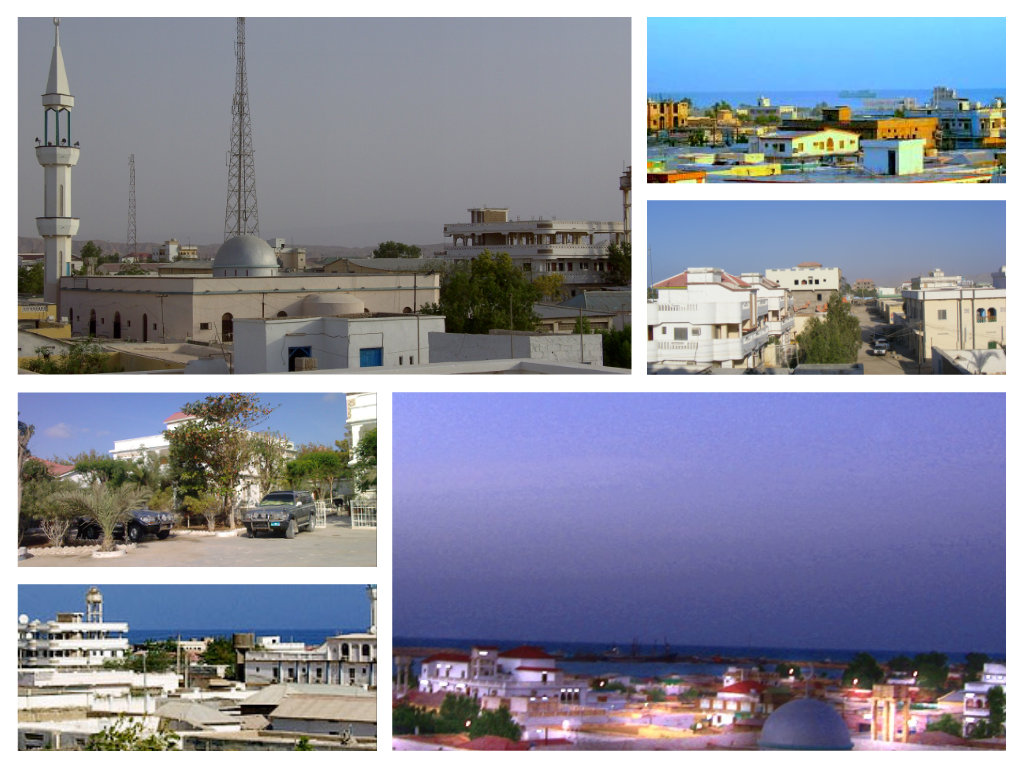
Bosaso is the port that keeps Puntland going. It sits on the Gulf of Aden, at the far northeastern tip of Somalia, where the mountains of the Horn drop straight into the sea, and it is at once a world-scale livestock terminal, a frankincense market, a fishing town and the starting point of one of the most dangerous migration routes on the planet. It is, by far, the most dynamic city in northeastern Somalia.

Its geography explains everything. Behind it, the Cal Miskaad mountains and the Karkaar and Golis ranges, on whose slopes the Boswellia and Commiphora trees grow wild, producing the frankincense and myrrh that Egypt, Arabia and Rome bought thousands of years ago. In front, the Gulf of Aden and the coast of Yemen, a short hop across the sea, which this city has traded with since the days of monsoon sailing. A few kilometres away, golden beaches and the Biyo Kulule hot spring.

This guide does not suggest travelling. All of Somalia is at the highest alert level of the United States, the United Kingdom and Spain, and Puntland is not excluded; since December 2024 the Bari region has been the scene of a military offensive against the Islamic State in the Cal Miskaad mountains, and the authorities say they foiled a planned attack on the port itself. What follows is the information —geographical, historical, economic— needed to understand one of the most important and least known cities in the Horn of Africa.

📖 History of Bosaso

The Gulf of Aden coast at the tip of the Horn of Africa has been on trade routes for millennia: merchants in Antiquity knew this shoreline for its aromatic resins, and the Bosaso area is associated with the ancient place name Mosylon. The city, historically also known as Bender Qassim, grew through Arab, Persian and Somali trade networks, and in the 19th century it was part of the Majeerteen sultanate, which controlled the coast and the trade in frankincense and livestock to Arabia. Italian colonial rule recognised its commercial importance, though it concentrated investment elsewhere in the territory. After independence in 1960 and, above all, after the collapse of the Somali state in 1991, Bosaso grew rapidly as the Harti Darod clans returned to their ancestral lands, and it became the economic lifeline of the northeast. Since the founding of the State of Puntland on 1 August 1998, it has been its main port and commercial centre. In 2017, port management passed to P&O Ports, a subsidiary of Dubai's DP World, under a thirty-year concession.

Read the full history ↓

🏛️ Bosaso is in the northeast: Puntland

The tip of the Horn of Africa: the coast of frankincense and shipwrecks, the Majeerteen sultanate, the fascist conquest, the piracy years and a federal member state that governs itself but does not declare independence.

Read the history of The northeast: Puntland →

🗺️ What to see

1
Port of Bosaso (Bender Bosaso)
The heart of the city and one of the busiest livestock terminals in the world: in peak seasons millions of goats, sheep and camels leave from its docks for the Arabian Peninsula. Container ships, wooden dhows and livestock carriers share the port. In 2017 its management passed to P&O Ports, a subsidiary of DP World, under a thirty-year concession to run and expand it.
2
Port fish market
The early-morning auctions are the liveliest scene in Bosaso: fresh catches from the Gulf of Aden, ice, shouting, loud haggling and stalls where you eat grilled fish straight off the boat. It is the place where the city's relationship with the sea makes the most sense.
3
Suuqa Weyn (central market)
A dense maze of stalls selling frankincense, spices, fabrics, dates, goods imported from the Gulf and everyday items. Bosaso is one of the world's great centres for processing and exporting high-quality frankincense, a tradition that goes back to Antiquity, and you can feel that trade in the market.
4
Bosaso beach
The urban seafront, with clear water and sand, is one of the city's most popular places to unwind and comes alive in the late afternoon, when people head down to catch the breeze and watch the sun set over the Gulf of Aden. There are no lifeguards or facilities, and Somali social conventions apply: women swim fully clothed and covered.
5
Mareero beach
About 25 km east of the city, a much quieter and emptier alternative to the urban beach, with golden sand and Gulf waters. It is the usual half-day trip from Bosaso.
6
Biyo Kulule (hot spring)
A short distance from the city, an oasis of natural hot springs in the middle of an arid landscape. Its name literally means “hot water” in Somali. It is one of the stops specialist operators include in their itineraries for the region.
7
Karkaar and Golis mountains
Bosaso sits right where the Golis mountains drop into the Gulf of Aden; to the south, the Karkaar range rises and falls steeply. It is a landscape of escarpments, gorges and plateaus that separates the coast from the inland highlands and gives the city its distinctive backdrop.
8
Frankincense and myrrh forests
On the slopes and plateaus of the interior, Boswellia trees —the source of frankincense— and Commiphora trees —the source of myrrh— grow wild. It is an industry thousands of years old, tied to trade with Egypt, Arabia and the Mediterranean, and still active: Bosaso is the world's leading centre for processing and exporting high-quality frankincense.
9
Livestock markets
The chain that supplies the port starts at the livestock markets, where herds from Puntland's interior arrive before being shipped to Arabia. It is one of the most important economic activities in all of Somalia and explains the structural link between the pastoral interior and this port city.
10
The Gulf of Aden waterfront
Bosaso faces north, towards Yemen, a short hop across the sea. That proximity explains centuries of trade, the city's cultural orientation towards the Arabian Peninsula and also the migration corridor of the tahriib, the undocumented crossing to the Gulf States.
11
Dhow building and repair
On the shore, wooden boats are still built and repaired using techniques inherited from monsoon sailing. It is the same craft that sustains small-scale fishing and coastal shipping along the Gulf of Aden.
12
The road linking the port with Puntland's administrative capital is the region's economic backbone: livestock comes down it and imports go up. In recent years road improvements have been made to connect the city with the interior. Any travel along this route requires a prior risk assessment.
📶I have never landed without internet. I arrive and my phone connects to the strongest network in the country I am visiting: I can say I landed, sort out transport, book tours and keep posting, at a seriously good price. I always use the Maya eSIM — check their plans by clicking the banner.See plans →Maya Mobile eSIM — connect before you land
What nobody tells you

💵 Prices

Tickets

TypePrice
Playas, mercados y puertoFree access, no tickets or published fees (2026)
Biyo Kulule (manantial termal)No official fee published in a verifiable way. Access is on your own or as part of an operator's itinerary (2026)
Permiso de entrada de PuntlandiaPuntland, like other Somali federal member states, issues its own entry permits in addition to the national visa. No verifiable public fee (2026)
Visado de SomaliaA local operator charges USD 64 for the Somalia e-visa within its packages (operator rate, 2026). Specialist guides from the same year cite a visa on arrival for USD 50-60 in cash and an e-visa for USD 60, with conflicting sources on whether the visa on arrival is still valid: check the official portal evisa.gov.so
🔄 updated monthlyOfficial / reference values · double-check when buying

Activities and tours

2-day Bosaso circuit
Duration2 days / 2 nights
OperatorSomali Safari Tours
Price
The operator Somali Safari Tours publishes a 2-day, 2-night package that includes the Somalia e-visa (USD 64) and invitation letter, accommodation and all meals, transfers and private transport with an English-speaking guide, and security staff. It does not publish a total price on its listing: there is no verifiable rate (2026)
Tour of the port, the fish market and the Suuqa Weyn
PriceNo access fee; would be included in the operator's package (2026)
DurationHalf a day, ideally early in the morning
OperatorLocal operators with a guide
Trip to Mareero beach
PriceNo published rate; included in operator itineraries (2026)
DurationHalf a day (about 25 km east)
OperatorHired vehicle with a local driver
Excursion to the Biyo Kulule hot spring and the Golis mountains
DurationHalf a day to a full day
OperatorLocal operators with 4x4s
Price
No published rate; listed in the itinerary of Somali Safari Tours' 2-day package (2026)
Visit to the livestock and frankincense markets
Duration1 to 2 h
OperatorArranged by the local operator
Price
No access fee; buy as you like, in cash, haggling. No verifiable price lists (2026)
Water activities (diving, sport fishing, sailing)
OperatorNot available
Price
There is no formal offer and no accredited operators. The Spanish Foreign Ministry (MAEC) expressly advises against any maritime activity, whether fishing or recreational, in Somali waters, and the British FCDO warns of a significant risk of piracy in the Gulf of Aden (2026)
🔄 updated monthlyOfficial / reference values · double-check when buying

🚌 How to get there and distances

Getting around

Hired vehicle with a local driver
PriceNo verifiable published rates (2026)
DurationDepends on the route
Notes
This is the usual option for international staff and for operator itineraries. A prior risk assessment is recommended for any trip outside the urban perimeter
Bajaj (motorbike taxi) and local taxi
PriceLow local fares, no published fare list (2026)
DurationVariable
Notes
This is the city's urban transport. It is not an option compatible with foreign ministry advice for a foreigner
Bosaso-Garowe road
No published rates (2026)
DurationSeveral hours
Notes
Puntland's economic backbone, connecting the port with the administrative capital. The European Union Agency for Asylum documents checkpoints and specific road risks in the region
Roads to the interior of Bari and the mountains
Notes
Military operations zone since December 2024 against the Islamic State in the Cal Miskaad mountains. Not an area to travel to
Local boats and coastal shipping
No published rates (2026)
DurationVariable
Notes
There is dhow and fishing boat traffic. The FCDO warns of a significant risk of piracy in the Gulf of Aden and the Indian Ocean, and advises sailing boats against entering high-risk maritime areas
🔄 updated monthlyOfficial / reference values · double-check when buying

How to get there

RouteAirlines / operatorsAvg. priceDuration
Mogadishu (MGQ) → Bosaso (BSA) by planeSomali airlines (Daallo Airlines, Jubba Airways, Halla Airlines and others)No rates published in a verifiable way (2026)Domestic flight
Garowe (GGR) → Bosaso (BSA)Somali airlines or transfer by roadNo verifiable rates (2026)Short flight or several hours by road
Djibouti or Dubai → BosasoRegional connections and Somali airlinesNo verifiable rates (2026)Short or medium-haul flight
Bosaso airport → cityHired vehicleNo published rates (2026)Short ride
By sea from YemenNot applicable for travellers——
🔄 updated monthlyOfficial / reference values · double-check when buying

🏨 Where to stay

No exact prices: a scale from $ (budget) to $$$$$ (luxury), with 2-3 options per category.

Bosaso city hotels
Price$$$$$
Recommended options
Its status as Puntland's economic capital supports a hotel offer aimed at traders, staff of international organisations, officials and the diaspora. They do not publish verifiable rates on international platforms; bookings are made through direct contact or via operators (2026)
Accommodation included in operator package
Price$$$$$
Recommended options
Somali Safari Tours' 2-day package includes accommodation, all meals, transfers and security staff, but does not publish the total price or a breakdown of the hotel component (2026)
Guesthouses and boarding houses
Price$$$$$
Recommended options
The cheapest local option, used by Somali travellers and traders, with no security protocols for foreigners and no verifiable published rates (2026)
Accommodation for international organisations
Price$$$$$
Recommended options
Compounds with their own security, used by United Nations agencies, NGOs and contractors working in the city, especially given the scale of the migration and displacement-assistance programmes. Not open to the general public (2026)

🍴 Where to eat

Pescado y marisco del golfo de Adén
Price$$$$$
Options / signature dish
Bosaso's great cuisine: tuna, grouper, snapper and lobster landed at the port and grilled over charcoal, often at small stalls next to the fish market. It is the best choice and the cheapest for the quality. No verifiable published menus or prices
Cocina somalí de carne
Price$$$$$
Options / signature dish
In a pastoral region, meat is central: hilib ari (roast goat), hilib geel (camel), suqaar, bariis iskukaris (spiced rice with meat), with canjeero and sabaayad as breads. Camel milk is an everyday part of the diet. No verifiable published prices
Influencia del Golfo y de Yemen
Price$$$$$
Options / signature dish
Centuries of trade with the Arabian Peninsula left their mark: mandi and madfun rice, spices, dates, and a tradition of bread and clay ovens shared with Yemen. Bosaso is probably the Somali city where that influence shows most. No published prices
Salones de té y shaah
Price$$$$$
Options / signature dish
Shaah cadeys —black tea with milk, cardamom, cinnamon, cloves and ginger— and Arabic-style coffee shape the city's social life. Tea houses are the place for conversation par excellence. No published prices
Puestos del mercado
Price$$$$$
Options / signature dish
Sambusa, fried fish, dates, fruit and tea at the Suuqa Weyn and along the port front. It is the cheapest and most local option. No published prices

📖 History of Bosaso

Origins, formation and what the sources say.

The frankincense coast and the ancient routes

The Somali coast of the Gulf of Aden, where Bosaso stands today, has been on the map of world trade for millennia, and the reason is botanical before it is political: in the mountains and plateaus of the interior grow wild Boswellia trees, which yield frankincense, and Commiphora trees, which yield myrrh. For millennia these two resins were luxury goods in Egypt, Arabia, Mesopotamia, Israel, Greece and Rome, used in religious worship, medicine and embalming.

That trade linked the Horn of Africa with the Mediterranean and with India long before the Christian era. Egyptian sources speak of the Land of Punt, the country of aromatic resins that Egypt traded with from the third millennium BCE, and from which Puntland took its name in 1998. Graeco-Roman sources — the “Periplus of the Erythraean Sea”, a first-century sailing manual — describe a series of trading ports along this coast, among them Mosylon, a place name traditionally associated with the Bosaso area.

Historically, the city is also known as Bender Qassim, “the port of Qassim”. It grew out of overlapping Arab, Persian and Somali trading networks operating in the Gulf of Aden, an inland sea that has always worked more as a bridge than a border: the Yemeni coast is a short hop away, and the ties between the two shores are as old as monsoon sailing.

That geography still explains the city. Bosaso faces north, towards Arabia; its economy, its food, its trade and its cultural horizon look towards the Persian Gulf and the Red Sea, not towards the African interior. It is a city of the wider Indian Ocean, not of the continental Horn.

On Mosylon and the Land of Punt: identifying the port of Mosylon in the “Periplus of the Erythraean Sea” with the Bosaso area is a traditional hypothesis, not an archaeological certainty; the place names in the Periplus have been located in different ways by different authors. The same goes for the Egyptian Land of Punt, whose exact location — the Horn of Africa, Eritrea, the Sudanese coast or the Arabian Peninsula — is still a matter of academic debate. The name Puntland is a claim of identity rather than an established identification.
en.wikipedia.org · Bosasoen.wikipedia.org · Puntland

The Majeerteen Sultanate and the colonial period

In the 19th century, the coastline of north-eastern Somalia was under the authority of the Majeerteen Sultanate, one of the Somali powers in the region, which controlled the coast and the trade in resins and livestock to Arabia. The Majeerteen are a sub-clan of the large Darod group, the majority across this part of the country, and their political structure combined the sultan's authority with the weight of traditional elders and lineages.

The sultanate controlled a strategic stretch of coast. The opening of the Suez Canal in 1869 turned the Gulf of Aden into one of the busiest shipping corridors in the world, raising both the value of these coasts and the interest of European powers in controlling them. Britain settled in Aden and British Somaliland; France in Djibouti; Italy on the eastern Somali coast.

Italian colonisation recognised Bosaso's commercial importance but concentrated its investment elsewhere in the territory, above all in the south, where water and land allowed plantations. The north-east remained a commercial and pastoral periphery of the colonial system, with less infrastructure and less administrative presence than the south of the country.

After independence on 1 July 1960, that centre-periphery relationship continued: politics, administration and investment were concentrated in Mogadishu and the south. The north-east kept living off its herds, its resins and its trade with Arabia, without any great leap in urban development.

en.wikipedia.org · Majeerteen Sultanateen.wikipedia.org · Bosaso

1991: the collapse of the state and Bosaso's boom

Paradoxically, the moment Bosaso went from secondary port to major city was when the Somali state disappeared. When Siad Barre's regime fell in January 1991, the south sank into a war between factions, and large numbers of people moved back to their clans' home territories. In the north-east, that meant a mass return of the Harti Darod clans to their ancestral lands.

Bosaso absorbed a large share of that flow and grew rapidly. At the same time, the absence of a central state removed Mogadishu's administrative competition: the port of Bosaso became the way in and out for an entire region, with no federal customs or national trade policy to constrain it. Livestock from the interior found its export terminal there for the Arabian Peninsula, and imports for the whole north-east began arriving at its docks.

That momentum rested on three pillars: livestock exports, import trade from the Gulf and remittances from the Somali diaspora, which in those years became one of the main sources of income for the whole country. Added to these were fishing, frankincense processing, tanneries and date growing, along with local companies that grew with the city, such as the telecoms operator Golis Telecom.

When the State of Puntland was established on 1 August 1998, after a three-month conference held in Garowe, Bosaso was already the region's economic engine. The new entity set up its administrative capital in Garowe, inland, but money, trade and people remained concentrated on the coast.

en.wikipedia.org · Bosasoen.wikipedia.org · Puntland

The port: from livestock terminal to international concession

The port of Bosaso is today one of Somalia's most important pieces of infrastructure and one of the busiest livestock export terminals in the world. In peak seasons — tied to the pilgrimage calendar and Islamic festivals, when demand for livestock in the Arabian Peninsula soars — millions of goats, sheep and camels leave from its docks. Container ships, wooden dhows and livestock carriers all share the harbour.

In 2017, management of the port passed to P&O Ports, a subsidiary of Dubai-based DP World, under a thirty-year concession to run and expand the terminal. It was a turning point: an international port operator arriving in a semi-autonomous region with no state recognition of its own, amid competition among Gulf powers, Turkey and China over infrastructure in the Horn of Africa. The deal also caused friction with the federal government in Mogadishu, part of the same tension that runs through the whole relationship between the centre and Somalia's federal member states.

The war in Yemen, from 2015, upset the balance. Established trade routes between the two shores of the Gulf of Aden were cut or reshaped, affecting traffic that had worked for centuries. The Yemeni conflict and maritime insecurity — the Gulf of Aden is still one of the most flagged piracy risk zones in the world — constantly shape the port's activity.

Around it, the city keeps its second great commercial calling: frankincense. Bosaso is one of the world's main centres for processing and exporting high-quality frankincense, carrying on an activity that dates back to Antiquity and that is still, quite literally, the same resin from the same trees.

theconversation.com · Somalia puntland state port is getting a…more.bham.ac.uk · Bossaso port optimising port activities and…

Tahriib: the other crossing of the Gulf of Aden

Bosaso has a second role that no port statistic records: it is one of the main departure points for irregular Somali migration to the Arabian Peninsula.

Its proximity to Yemen and long-standing shipping links draw people to the city — mostly young people — who are trying to escape poverty and set out on tahriib, the undocumented and dangerous crossing of the Gulf of Aden and the Red Sea towards the Gulf States and, if possible, Europe. The word, of Arabic origin, refers in Somali to exactly that journey: the clandestine departure, without papers and without guarantees.

It is one of the deadliest migration routes in the world. The boats are small, overloaded and in the hands of smuggling networks; shipwrecks and deaths at sea are regularly documented by international organisations. On the other side lies Yemen, a country at war since 2015, where migrants are exposed to detention, extortion and violence.

That corridor exists alongside the commercial city. On the same stretch of coast where livestock ships are loaded and goods from the Gulf are unloaded, tahriib boats leave at night. It is one of the reasons Bosaso has a significant presence of international organisations and assistance programmes for migrants and displaced people, and one of the keys to understanding the city beyond its docks.

more.bham.ac.uk · Bossaso port optimising port activities and…en.wikipedia.org · Bosaso

Cal Miskaad: the war in the mountains and Bosaso today

Puntland's most active security front is in the mountains visible from Bosaso. In the Cal Miskaad range, in the Bari region, the Somali branch of Islamic State — a splinter from Al-Shabaab — took root, taking advantage of extremely difficult terrain of cliffs, gorges and caves.

In December 2024, Puntland launched Operation “Hillaac” to dismantle that network. From January 2025, its forces, with support from US Africa Command, took a series of positions and strategic caves. In November 2025, US special forces and Puntland's counter-terrorism unit carried out a joint raid in the Baallade valley, with a helicopter-borne assault on a large cave in which several of the group's commanders were killed or captured. In December 2025, Puntland deployed fresh troops to the massif to relieve units that had spent a year on the offensive.

Puntland's president, Said Abdullahi Deni, stated that more than 2,000 fighters — mostly foreigners — based in Cal Miskaad had been largely neutralised, and that intelligence services had foiled a planned attack by the group on the port of Bosaso. In June 2026, the authorities confirmed that the leader of Islamic State's Somali branch, Abdulkadir Mumin, had fled the mountains in the midst of the offensive.

That is the frame through which any information about Bosaso has to be read: a dynamic port city, with beaches, markets and mountains in the background, in a region where an active military campaign is under way and where every foreign ministry advises against all travel at the highest level. The US Department of State keeps Level 4 “Do Not Travel” for all of Somalia; the British FCDO advises against all travel to the country, with no exception for Puntland, and warns of the risk of piracy in the Gulf of Aden; the Spanish Ministry of Foreign Affairs advises against travel «bajo cualquier circunstancia» (“under any circumstances”) and also expressly advises against any maritime activity in Somali waters.

Bosaso deserves to be told: it is the frankincense port, the livestock terminal of the Horn, the city that grew when the state disappeared and the gateway to one of the harshest migration crossings in the world. And it deserves to be told with that warning up front.

en.wikipedia.org · Puntland counter terrorism operationsgaroweonline.com · Somalia us puntland joint operation hits…gov.uk · Somalia

📚 Bibliography

  • Wikipedia (EN) — “Bosaso”: https://en.wikipedia.org/wiki/Bosaso
  • Wikipedia (EN) — “Port of Bosaso”: https://en.wikipedia.org/wiki/Port_of_Bosaso
  • Wikipedia (EN) — “Puntland”: https://en.wikipedia.org/wiki/Puntland
  • Wikipedia (EN) — “Majeerteen Sultanate”: https://en.wikipedia.org/wiki/Majeerteen_Sultanate
  • Wikipedia (EN) — “Puntland counter-terrorism operations” (Operation Hillaac since December 2024): https://en.wikipedia.org/wiki/Puntland_counter-terrorism_operations
  • Somali Ports Authority — “Bosaso Port”: https://spa.gov.so/bosaso-port/
  • The Conversation — “Somalia: Puntland state port is getting a revamp – this is key to its future” (30-year concession to P&O Ports/DP World, 2017): https://theconversation.com/somalia-puntland-state-port-is-getting-a-revamp-this-is-key-to-its-future-191159
  • University of Birmingham — “Bossaso Port: Optimising port activities and transforming circulations” (trade with Yemen, tahriib): https://more.bham.ac.uk/port-infrastructure/2022/01/13/bossaso-port-optimising-port-activities-and-transforming-circulations/
  • Garowe Online — “Somalia: US-Puntland Joint Operation Hits ISIS Stronghold, Senior Militants Killed and Captured” (November 2025): https://www.garoweonline.com/en/news/somalia/somalia-us-puntland-joint-operation-hits-isis-stronghold-senior-militants-killed-and-captured
  • Small Wars Journal (Arizona State University) — “The Puntland Model: A Somali State's Relentless War for Stability and Autonomy” (17 November 2025): https://smallwarsjournal.com/2025/11/17/puntland-model-stability-autonomy/
  • FCDO (United Kingdom) — Somalia travel advice, updated 4 June 2026: https://www.gov.uk/foreign-travel-advice/somalia
  • Ministry of Foreign Affairs, European Union and Cooperation (Spain) — Travel recommendations: Somalia, 28 May 2026: https://www.exteriores.gob.es/es/ServiciosAlCiudadano/Paginas/Detalle-recomendaciones-de-viaje.aspx?trc=Somalia

❓ Frequently asked questions

Is it safe to travel to Bosaso?+
Not according to any of the foreign ministries consulted. Somalia is at Level 4 «Do Not Travel» from the US Department of State (advisory renewed on 21 May 2026), the British FCDO advises against all travel to the country except for three regions of Somaliland, where it advises against all but essential travel —Puntland is not among the exceptions— and the Spanish MAEC advises against it «bajo cualquier circunstancia» ("under any circumstances") (28 May 2026). In addition, since December 2024 the Bari region has been the scene of a military offensive against the Islamic State in the Cal Miskaad mountains, and the Puntland authorities said they had foiled a planned attack on the port of Bosaso itself.
Why is the port of Bosaso so important?+
Because it is the gateway to the world for the whole of north-eastern Somalia. It is one of the busiest livestock export terminals on the planet: in peak seasons, millions of goats, sheep and camels leave its docks for the Arabian Peninsula. It also exports fish, frankincense and other goods, and imports for the entire region come in through it. In 2017, its management passed to P&O Ports, a subsidiary of the Dubai company DP World, under a thirty-year concession to run and expand it, in what is considered a turning point in its development.
What is tahriib?+
It is the Somali name for irregular migration, and Bosaso is one of its main departure points. Its proximity to Yemen and historic shipping links draw people to the city —mostly young people— who are trying to escape poverty and set out on the undocumented and extremely dangerous crossing of the Gulf of Aden and the Red Sea towards the Gulf States and, if possible, Europe. The war in Yemen, since 2015, disrupted established trade routes and made the corridor even more dangerous.
What is there to see in and around Bosaso?+
The port and its dawn fish auctions, the Suuqa Weyn with its frankincense and spice trade, the livestock markets, the city beach at sunset, Mareero beach about 25 km to the east and the Biyo Kulule hot spring, set in the middle of an arid landscape. In the background, the Golis mountains dropping down to the Gulf of Aden and the Karkaar range to the south, with their wild forests of Boswellia and Commiphora, the frankincense and myrrh trees.
How many people live in Bosaso?+
Estimates vary widely and none of them is a census. Some sources put the population at around 700,000 people by 2020, while other figures point to some 235,000-250,000 inhabitants in the urban core during the 2010s, with a large internally displaced population that makes any precise count very difficult. What is not in dispute is that it is the largest city in Puntland and its economic engine.
What is the climate like?+
Hot desert, and very extreme. Summer temperatures exceed 40 °C and average annual rainfall is minimal, around 20 mm. Summer on the Gulf of Aden combines heat and humidity in a particularly harsh way. The workable window is the northern winter, from November to March, when the coast becomes liveable.
What does Bosaso have to do with frankincense?+
It is one of the world's main centres for processing and exporting high-quality frankincense, a tradition dating back to Antiquity, when aromatic resins from the Horn of Africa were traded with Egypt, Arabia and the Mediterranean. Boswellia trees —the source of frankincense— and Commiphora trees —the source of myrrh— grow wild in the mountains of inland Bari and the Karkaar. That trade can still be felt today in the Suuqa Weyn, the city's central market.

More places in Somalia

Cabo Guardafui (Ras Asir)Cal Madow y el bosque de DaalloGaroweCasco antiguo de Hamar Weyne y ShanganiHargeisaKismayo
See every place in Somalia →The history of Somalia →
Sources consulted (16)
Still planning?
Explore more destinations in Somalia
See all destinations →
Image credits
Photos from Wikimedia Commons, each under its own licence (CC BY, CC BY-SA or public domain). Open each file to see its author and licence.
Bosacity