Viajá con Gus
HomePeruCutimbo
Cutimbo
🇵🇪 Peru · The Highlands and the Andes

Cutimbo

Jump to what you need
📌Location
Cutimbo is a pre-Inca and Inca archaeological complex in the Puno region, in southern Peru, on a flat-topped plateau (a mesa, or butte) out on the altiplano, at around 3,900-4,000 meters above sea level. It's some 20-25 km southwest of the city of Puno. It's a necropolis of chullpas -stone funerary towers- attributed mainly to the Colla and Lupaca cultures, and later to the Incas. It's less known and less visited than nearby Sillustani, which gives it a solitary, almost secret feel.
📌Service city
Puno is the base for visiting Cutimbo: the main city of the altiplano and the gateway to Lake Titicaca, with a bus terminal, places to stay, agencies and services. The nearest airport is Juliaca's, about an hour from Puno. Cutimbo gets far fewer visitors than Sillustani, so there are fewer organized trips; most people arrive on a tour, by private taxi or under their own steam. The site has very few services, so bring water and everything else you'll need.
📌Best time to go
The best time to visit Cutimbo is the dry season, May to October, with clear skies, plenty of sun and little rain, ideal for the climb up to the plateau and for the views over the altiplano. Mornings and nights are very cold because of the altitude. The rainy season (December to March) brings mud and downpours that make the climb harder. Whenever you go, the sun is fierce; bring sunscreen, a hat, warm layers and decent footwear for the climb.
📌Suggested days
Cutimbo is a half-day trip (about 3 to 4 hours including the drive from Puno), which includes the walk up to the plateau where the chullpas are. It's an alternative or a complement to Sillustani for anyone after something quieter and more adventurous. It fits well into a 2- or 3-day stay in Puno given over to Lake Titicaca and the archaeology of the altiplano. It doesn't need more than half a day.
📌Hours
Open Monday to Sunday, roughly 8:00 to 17:00 (source: Puno agencies and the Municipalidad de Puno, verified July 2026)
💱 PEN exchange rate
Loading rate…
🌤️ Weather in Cutimbo
Loading weather…

If Sillustani is Puno's archaeological star, Cutimbo is its lesser-known and, for many, more mysterious sister. Some 20-25 km from the city, on a flat-topped plateau that rises alone out of the altiplano, sits a necropolis of chullpas -stone funerary towers- that gets far fewer visitors than its famous neighbor. That relative solitude is exactly part of the appeal: climbing up to Cutimbo feels like finding a place that's almost secret, far from the crowds.

The chullpas of Cutimbo were raised by the cultures of the altiplano -mainly the Collas and the Lupacas, Aymara peoples- and later by the Incas, to bury their important figures. Some are circular in plan, others square, and a few are decorated with animal reliefs (monkeys, lizards, big cats), a feature that sets them apart. Reaching them means walking up to the plateau, which adds a touch of adventure and the reward of wide views over the Puno altiplano.

This guide pulls together the practical side of visiting Cutimbo: how to get there from Puno, what the chullpas are and what to see at the site, what the climb is like, when to go and what to bear in mind about the altitude. It's an ideal visit for curious travelers who want to go beyond Sillustani and take in, at their own pace, another of the great necropolises of the Aymara and Inca world of the altiplano.

📖 History of Cutimbo

Cutimbo was an important necropolis of the altiplano, attributed mainly to the Aymara cultures that dominated the Lake Titicaca region after the decline of Tiwanaku: the Collas and, above all, the Lupacas, an Aymara kingdom whose territory spread across the area. On this flat-topped hill those peoples built 'chullpas', funerary towers meant to hold the remains of their rulers and elites along with offerings, within the Andean understanding of death as a passage and the cult of the ancestors. The chullpas of Cutimbo come in both circular and square plans, and some stand out for their animal reliefs carved into the stone: monkeys, lizards and big cats. When the region was absorbed into the Tahuantinsuyo in the 15th century, the Incas left their mark on the site too, adding their characteristic stone-cutting technique. After the Spanish conquest the funerary practice was abandoned and many chullpas were damaged by looting and by time. Today Cutimbo is a protected archaeological site, less visited than nearby Sillustani, offering a more solitary experience and a valuable record of the Aymara and Inca world of the altiplano. The full history, the theories about the chullpas and the Aymara kingdoms are on our history page.

Read the full history ↓

🏛️ Cutimbo is in Puno

Folklore capital of Peru, on the shores of Lake Titicaca: Aymara and Quechua land of chullpas and floating islands, cradle of the legend of Manco Cápac and stage of the Diablada of the Candelaria.

Read the history of Puno →

🗺️ What to see

1
The chullpas of Cutimbo (circular and square)
The site's funerary towers, circular and square in plan, some with carved animal reliefs.
The chullpas are the heart of Cutimbo and what justifies the climb to the plateau. Unlike other sites, here circular and square towers stand side by side, which enriches the group and lets you compare different building traditions among the peoples of the altiplano. Inside them were buried the rulers and high-ranking figures of the Colla and Lupaca cultures, and later the Incas, along with offerings and objects for the afterlife, following the Andean understanding of death as a passage. One of the most fascinating features of the Cutimbo chullpas are the reliefs carved into some of them: animal figures such as monkeys, lizards and big cats (pumas), worked into the stone. These reliefs, uncommon elsewhere, add a symbolic and artistic layer that makes the site especially interesting for anyone who loves archaeology. Each animal probably carried a meaning in the Andean worldview, tied to fertility, power or the underworld. Several chullpas reach considerable heights and show real mastery in stonework, with the Inca-era ones standing out for their finer masonry. Some are well preserved, others partly ruined by time and looting. Walking the plateau among the towers, up high and with wide views over the altiplano, is a different experience from Sillustani: quieter, more solitary and with a strong sense of discovery.
ℹ️ Distance: At the top of the plateau, after the walk up · Best time to go: Dry season (May to October); morning or afternoon light · Admission: S/ 8-10 per person (2025; check when visiting) · Duration: 1 to 1.5 hours walking around the top
2
The climb to the plateau and the altiplano views
The walk up the flat-topped hill, with wide panoramas over the Puno altiplano.
One of the things that sets Cutimbo apart is that its chullpas aren't at the side of a road but on top of a plateau, a flat-topped butte, which means you have to walk up. The climb isn't extremely long, but it feels demanding because of the altitude (close to 4,000 m) and the gradient. That climb, though, is part of the appeal: it adds a touch of adventure and makes reaching the towers taste like a small conquest. From the top of the plateau the views open up in every direction over the Puno altiplano: an immensity of grassland, hills, scattered communities and the huge, clean altiplano sky. The sense of space and silence, broken only by the wind, is one of the great rewards of the place. It's a stark, beautiful landscape, very different from Sillustani's lakeside setting. Take the climb slowly, because of the thin air, drinking water and stopping to rest. Bring proper footwear (the ground can be uneven and slippery in the rainy season), sunscreen, a hat, something windproof and enough water, since the site has very few services. If you enjoy combining walking, landscape and archaeology, Cutimbo offers a very complete experience with hardly any crowds.
ℹ️ Distance: A walk up from the base to the top of the plateau · Best time to go: Dry season; avoid the rains because of mud on the climb · Admission: Included in general admission to the site (S/ 8-10, 2025) · Duration: A 20- to 40-minute climb
3
The reliefs and Andean symbolism
The animal carvings on the chullpas and what they meant in the altiplano worldview.
Beyond their architecture, the chullpas of Cutimbo invite a symbolic reading thanks to their reliefs. The animal figures carved into the stone -monkeys, lizards, snakes and big cats such as the puma- weren't mere decoration: in the Andean worldview animals were loaded with meaning and associated with different planes of the cosmos (the world above, the world here and the world below, or underworld) and with forces such as fertility, power or the connection to the ancestors. The puma, for instance, was an animal of great importance, a symbol of power tied to the earthly world; the snake and the lizard were associated with water, fertility and the underworld; other animals had meanings of their own. That these figures appear on elite tombs suggests a role in the passage to the afterlife and in the protection or prestige of the dead. It's a feature that makes Cutimbo especially appealing to anyone interested in Andean art and religion. A good local or tour guide helps enormously in reading these reliefs and understanding the cultural context of the chullpas, since they aren't always easy to pick out with the naked eye. Stopping to look at the details, photographing them respectfully (without touching or damaging the stone) and thinking about the world of beliefs that produced them is one of the most rewarding parts of a visit to this altiplano site.
ℹ️ Distance: On the chullpas at the top of the plateau · Best time to go: With good light to appreciate the reliefs; morning or afternoon · Admission: Included in admission to the site (S/ 8-10, 2025) · Duration: Part of the walk around the chullpas
4
Comparing and combining it with Sillustani
Cutimbo as a complement to Sillustani: two chullpa necropolises with very different characters.
For many travelers the best way to appreciate Cutimbo is to understand it in relation to Sillustani, Puno's other great chullpa necropolis. Both sites belong to the same cultural world -the Aymara kingdoms of the altiplano (Collas, Lupacas) and later the Incas- and share the same function as monumental cemeteries for the elite, but they have very different characters, which makes them complementary. Sillustani is more famous, more visited and sits beside the beautiful Umayo lagoon, with a lakeside setting and better tourist infrastructure. Cutimbo, by contrast, is more solitary, sits on top of a plateau you have to climb, gets far fewer visitors and stands out for the variety of its chullpas (circular and square) and for its animal reliefs. Visiting both gives you a fuller, more nuanced picture of the funerary architecture and culture of the altiplano. If you have time in Puno, combining Sillustani and Cutimbo (on different days or, with some organizing, on the same day) is an excellent way to dig into the archaeology of the altiplano beyond Lake Titicaca. Cutimbo, quiet and adventurous as it is, tends to be the favorite of travelers looking for less crowded experiences and more direct contact with the landscape and the history.
ℹ️ Distance: Cutimbo and Sillustani are in different areas near Puno · Best time to go: Dry season; both sites on the same trip · Admission: Each site charges its own admission: Cutimbo S/ 8-10, Sillustani S/ 15 (2025) · Duration: Half a day each
5
Vizcachas and altiplano wildlife
The wildlife living among the rocks of the plateau, an extra natural draw.
Among the rocks and outcrops of the Cutimbo plateau it's common to spot vizcachas, rodents that look rather like a long-tailed hare and sun themselves on the stones during the warmest hours. You can also see altiplano birds of prey circling overhead, riding the air currents that form over the plateau. This wildlife adds an extra natural draw to the archaeological visit, and anyone carrying a camera with a zoom usually gets good photos if they approach calmly and quietly.
ℹ️ Where: Among the rocks of the plateau, above all around midday when it's sunny · Recommendation: Bring a camera with a zoom and move quietly so you don't scare them off
6
Umayo lagoon (viewpoint from the road)
Views of the lagoon where Sillustani sits, visible from the drive or on a combined stop.
On the road between Puno and Cutimbo, or if you combine the visit with Sillustani, you can take in the Umayo lagoon, a sheet of altiplano water ringed by hills that holds, on one of its islands, a population of vizcachas and a vicuña reserve. It isn't part of the Cutimbo complex itself, but many tours include it as a photo stop or as part of the combined route, adding one more scenic draw to the trip.
ℹ️ Location: On the road to Sillustani, combinable with the trip to Cutimbo · Access: Free viewpoint from the road; the island with the wildlife reserve is separate
Advertisements
What nobody tells you

💵 Prices

Tickets

TypePrice
Admission to the Cutimbo archaeological complex (adult)S/ 8-10 per person (source: Marvelous Peru, Terandes and the Municipalidad de Puno, verified July 2026)
Admission to Cutimbo - student with cardS/ 5 per person (source: Puno agencies, verified July 2026)
Half-day trip from Puno (with guide and transport, admission separate)US$ 38-80 per person on a private tour; from US$ 20-30 on a shared tour (source: Titicaca Travel Peru / Terandes, verified July 2026)
Admission to Sillustani (to combine)S/ 15 per person (source: Turismo Liberty, verified July 2026)
🔄 updated monthlyOfficial / reference values · double-check when buying

Activities and tours

ActivityPriceDurationOperator
Guided half-day trip to Cutimbo from PunoUS$ 20-30 per person on a shared tour, US$ 38-80 on a private tour (2025)3-4 h including the drivePuno travel agencies (Titicaca Travel Peru, Terandes, 360 Explora, among others; less frequent than Sillustani)
Walking up to the plateau and around the chullpasIncluded in the tour or in general admission (S/ 8-10, 2025)2-3 hSelf-guided or with a local guide
Combined Cutimbo + Sillustani tourUS$ 40-90 per person depending on the operator (2025)Full dayPuno agencies
Archaeology and altiplano landscape photographyIncluded in admissionHalf a dayOn your own or with a guide
🔄 updated monthlyOfficial / reference values · double-check when buying
Advertisements

🚌 How to get there and distances

Getting around

ModePriceDurationNotes
Organized trip from Puno (transport included)Included in the tour price (US$ 20-80, verified July 2026)3-4 h there and backThe easiest option, though there are fewer tours to Cutimbo than to Sillustani. It includes transport, a guide and, depending on the case, admission
Taxi or private car Puno-Cutimbo (return, with waiting time)Around S/ 80-120 for the whole trip, to be agreed with the driver (source: Puno agencies and traveler forums, verified July 2026)About 40 min to 1 h each wayFlexible if you're going independently; agree the waiting time with the driver, since the site is remote. About 20-25 km from Puno. The taxi is paid in cash (soles); agree the price before getting in, because there's no meter
Combi or colectivo on the road to Laraqueri/Mazocruz, plus a stretch on footAround S/ 5-10 per person (source: independent traveler reports, verified July 2026)VariableColectivos heading for Laraqueri leave from Puno's zonal terminal; ask the driver to drop you at the Cutimbo turnoff and walk the rest of the way to the base of the plateau. You pay in cash. A cheap option, but uncomfortable and with limited departures
Urban transport and taxis within PunoCombi/micro S/ 1-1,50; city taxi S/ 5-8; mototaxi S/ 3-5 (source: local Puno fares, verified July 2026)VariablePuno is a small city you can cover on foot or by taxi. There's no rechargeable card and no bus payment app: all public transport is paid in cash, in soles. To find urban routes you can lean on Google Maps or Moovit, though real-time data coverage is limited outside Lima; to reach the tourist sites, the practical options are a taxi or a tour
🔄 updated monthlyOfficial / reference values · double-check when buying

How to get there

RouteAirlines / operatorsAvg. priceDuration
Lima → Juliaca (plane) + transfer to PunoLATAM, Sky Airline + Juliaca-Puno transportUS$ 55-215 for the flight (2025); Juliaca-Puno transfer around S/ 25-40 by combi or US$ 15-20 by taxi/transferFlight about 1 h 30 min + 45 min to 1 h transfer to Puno
Cusco → Puno by tourist bus (Ruta del Sol) or trainInka Express (tourist bus with stops) and the PeruRail Titicaca trainTourist bus from US$ 66 (includes lunch and admission at the stops); PeruRail Titicaca train US$ 80-250 depending on class (2025)Tourist bus about 10 h with stops; train about 10 h 30 min
Cusco → Puno by direct bus (no tourist stops)Cruz del Sur, Turismo Mer, Transportes LibertadUS$ 20-35 depending on the company and the departure (2025)About 7-8 h
Arequipa → Puno by busCruz del Sur and other interprovincial companies of the southUS$ 20-30 depending on the company (2025)About 5-6 h
Puno → Cutimbo (tour or taxi)Puno agencies or a private taxiUS$ 20-80 on a tour, or S/ 80-120 by taxi there and back (2025)About 40 min to 1 h (some 20-25 km)
🔄 updated monthlyOfficial / reference values · double-check when buying

🏨 Where to stay

No exact prices: a scale from $ (budget) to $$$$$ (luxury), with 2-3 options per category.

CategoryPriceRecommended options
Upmarket hotels in Puno and on the lake shore$$$$$US$ 65-140 a night (2025); e.g. Casa Andina Premium Puno (a 5-minute walk from the lake), breakfast included
Mid-range hotels in Puno$$$$$US$ 25-64 a night (2025); e.g. Casa Andina Standard Puno, Premium Plaza Hotel, well placed for the center and the terminal
Hostels and budget guesthouses in Puno$$$$$US$ 15-25 a night (2025); e.g. Hostal Los Uros and similar places, a meeting point for backpackers
Rural accommodation in nearby communities$$$$$Around US$ 15-30 a night with breakfast, on community rural tourism programs in the altiplano (2025; check availability)

🍴 Where to eat

TypePriceOptions / signature dish
Puno and Andean cooking in Puno$$$$$S/ 25-50 per dish (US$ 7-13); Titicaca trout, quinoa, alpaca, chuño and warming soups (2025)
Cheap set menus and home cooking$$$$$S/ 10-20 for the set lunch (US$ 3-5), 2025; ideal on a tight budget
Supplies to take to the site$$$$$Around S/ 15-25 per person for water, fruit and snacks bought in Puno (2025); Cutimbo has very few services, so bring everything with you
Tourist restaurants with lake views$$$$$S/ 40-70 per dish (US$ 11-19), 2025; in Puno and on the shores of Titicaca, regional and international cooking
Advertisements

📖 History of Cutimbo

Origins, formation and what the sources say.

The altiplano of the Aymara kingdoms: the context of Cutimbo

Cutimbo comes out of the same world that produced the great necropolises of the Puno altiplano. After the collapse of the Tiwanaku (Tiahuanaco) civilization, around 1000-1200 AD, the Lake Titicaca region broke up into a series of Aymara-speaking kingdoms or lordships, warlike herding societies that fought over control of the pastures, the camelid herds and the resources of the altiplano. This is the period known as that of the 'Aymara lordships' or 'altiplano kingdoms', before the expansion of the Inca Empire.

Among these lordships the Lupacas and the Collas stood out, alongside other groups. The Lupacas in particular had their center of power on the western side of the lake, with their capital at Chucuito, and controlled a large territory and numerous herds, which made them one of the most powerful Aymara kingdoms. It is to this cultural sphere -Lupaca and Colla- that the building of Cutimbo is mainly linked.

These altiplano peoples developed a hierarchical society, with elites who claimed a special status that extended beyond death. The need to honor and preserve their rulers and important ancestors, in keeping with the Andean worldview, led them to build visible, imposing funerary monuments: the chullpas. Cutimbo, on top of its plateau, was one of those great funerary centers where the elites of the altiplano were laid to rest.

Lupacas and Collas on the altiplano
The sources link Cutimbo to the Aymara cultures of the altiplano (Lupacas and Collas), which emerged after the decline of Tiwanaku. The Lupacas had their center at Chucuito, west of the lake. The precise cultural attribution of each chullpa and the chronology are still the subject of archaeological study.
Source: https://es.wikipedia.org/wiki/Cutimbo

The chullpas of Cutimbo: circular and square towers

The chullpas of Cutimbo are the most visible legacy of those altiplano peoples. These funerary towers answered a view of the world in which death was a passage, not an end, and in which important ancestors remained bound to the community and had to be honored with monuments befitting their rank. Inside the chullpas were placed the rulers and elite figures, often in a fetal position and accompanied by offerings, food and objects for the afterlife.

A distinctive feature of Cutimbo is that chullpas of circular and square plan coexist at the same site. This variety of building forms, not so common elsewhere, suggests different traditions, phases or hierarchies, and makes the group especially interesting for the study of altiplano funerary architecture. The towers are built of stone blocks, and the best-made ones show remarkable technical command, capable of raising stable structures of some height on ground exposed to the altiplano wind.

The siting of the necropolis on top of a plateau, a flat-topped butte, was no accident. High, prominent places carried strong sacred value in the Andean world, associated with the apus (mountain-deities) and the world above. Placing the elite tombs in such a visible, commanding position reinforced their prestige and their connection to the sacred. Cutimbo was thus a monumental cemetery, but also a ritual space that tied the dead to the landscape and the cosmos.

The variety of chullpas at Cutimbo
The sources point out that Cutimbo has chullpas of both circular and square plan, a feature that sets it apart from other sites. The interpretation of this variety (different traditions, phases or hierarchies) is still under study and should be taken as a hypothesis.
Source: https://es.wikipedia.org/wiki/Cutimbo

The animal reliefs and Andean symbolism

One of the most fascinating and singular aspects of Cutimbo are the reliefs carved into some of its chullpas: animal figures such as monkeys, lizards, snakes and big cats (pumas), worked into the stone. These reliefs, uncommon in the funerary architecture of the altiplano, give Cutimbo a special artistic and symbolic value and make it a site of great interest for understanding the religion and worldview of the Andean peoples.

In Andean thought, animals were not simply decorative figures but beings loaded with meaning, associated with the different planes of the cosmos: the world above (hanan pacha), the world here (kay pacha) and the world below, or underworld (uku pacha). The puma was tied to power and to the earthly world; the snake and the lizard to water, fertility and the underworld; other animals had meanings of their own. That these figures appear on elite tombs suggests a role in the passage of the dead to the afterlife, in their protection or in the assertion of their power and prestige.

The presence of monkeys is especially striking, since they aren't altiplano animals but jungle ones: their depiction could point to relations, exchanges or symbolic meanings connecting the altiplano with other regions and worlds. These reliefs are a reminder that the chullpas weren't just architecture but supports for a complex religious language. Reading them -ideally with the help of a guide- is one of the most rewarding experiences a visit to Cutimbo offers.

What the animal reliefs mean
The sources mention animal reliefs (monkeys, lizards, big cats) on the chullpas of Cutimbo. The interpretation of their symbolism rests on general knowledge of the Andean worldview (the three worlds, the value of each animal); the specific meanings of each relief are a matter of archaeological interpretation and may vary.
Source: https://es.wikipedia.org/wiki/Cutimbo

Incorporation into the Inca empire and the Spanish conquest

In the 15th century the Inca Empire (Tahuantinsuyo), then expanding into the altiplano, brought the Aymara lordships -Lupacas, Collas and others- under its rule. The conquest was neither immediate nor simple, but in the end the Titicaca region was integrated into the empire, with its road network, its administration and its cult of the Sun. The Incas, as elsewhere, didn't erase local traditions but absorbed them: they took up the custom of building chullpas and contributed their characteristic fine stone-cutting technique, leaving their mark at sites like Cutimbo too.

So at Cutimbo traditions overlap: the rougher, older chullpas of the Aymara cultures sit alongside more refined Inca work. This accumulation of phases and styles is exactly what makes these altiplano funerary sites such rich documents for reconstructing the region's history. Under Inca rule, Cutimbo remained a funerary and sacred space, folding the prestige of the local elites into the imperial order.

The arrival of the Spanish in the 16th century changed everything. The new colonial order imposed Christianity and persecuted Andean religious practices as idolatry: the cult of the ancestors, burial in chullpas and the associated rituals were banned. The necropolises of the altiplano were abandoned. On top of that came the scourge of looting ('huaqueo'), driven by the search for valuables in the tombs, which damaged many chullpas. Time, earthquakes and erosion completed the deterioration, though much of the Cutimbo complex managed to survive.

Inca work layered over Aymara
The sources note that the Incas, after incorporating the region in the 15th century, adopted and refined the building of chullpas, so at sites like Cutimbo Aymara and Inca elements coexist. After the Spanish conquest, funerary practices were banned and the sites suffered abandonment and looting. The details are reconstructed by archaeology.
Source: https://es.wikipedia.org/wiki/Cutimbo

Cutimbo today: a little-visited altiplano heritage site

Cutimbo today is a protected archaeological site and one of the most valuable records of the Aymara and Inca world of the Puno altiplano. Unlike nearby Sillustani -which became a first-rank tourist destination, beside the Umayo lagoon and with good infrastructure- Cutimbo has stayed well outside the mass circuits. Its position on top of a plateau you have to climb on foot, its remoteness and the shortage of services explain why it gets relatively few visitors.

That same condition of being little visited is, paradoxically, part of its appeal. Whoever makes it to Cutimbo usually finds it solitary and silent, which lets you walk among the chullpas and take in the immense altiplano landscape with a calm that's hard to find in busier places. For travelers after authentic, out-of-the-ordinary experiences, and for lovers of archaeology and photography, Cutimbo offers a special reward: the feeling of discovering, almost alone, a great necropolis of the past.

Visiting Cutimbo, ideally combined with Sillustani, gives you a fuller, more nuanced picture of the funerary culture of the altiplano: the different shapes of the chullpas, the symbolic reliefs, the sacred settings and the long history of the peoples -Aymara and Inca- who lived in this high land. It's an invitation to look beyond Lake Titicaca and to enter one of the deepest and most enigmatic chapters in the history of Peru's southern Andes.

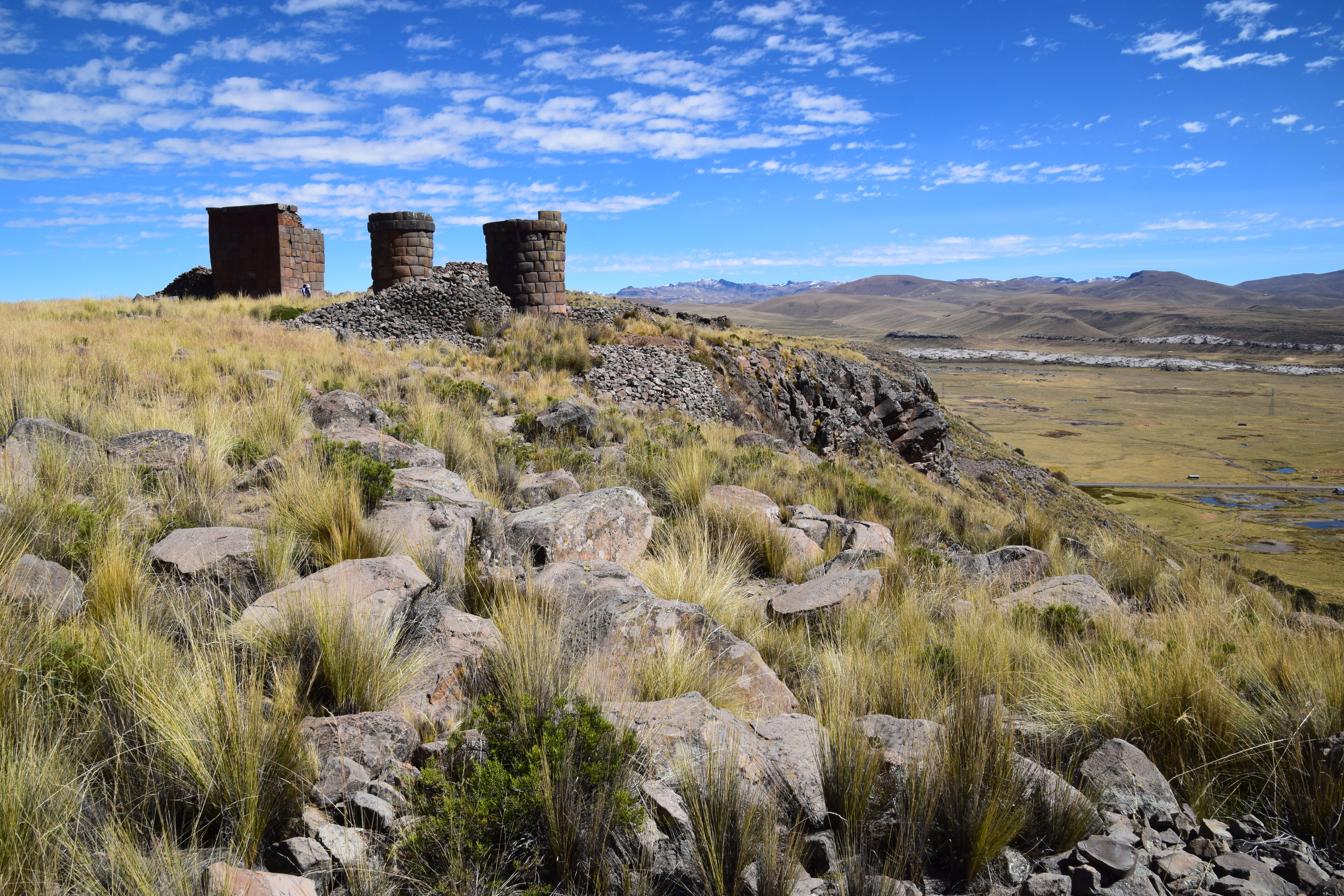
Cutimbo as a site without the crowds
Tourist sources present Cutimbo as a protected archaeological site but one far less visited than Sillustani, valued precisely for its quiet and its sense of discovery. It's a characterization widely shared among travelers and guides.
Source: https://www.peru.travel/

📚 Bibliography

  • Wikipedia (ES) — «Cutimbo»: https://es.wikipedia.org/wiki/Cutimbo
  • Wikipedia (ES) — «Chullpa»: https://es.wikipedia.org/wiki/Chullpa
  • Wikipedia (ES) — «Reino Lupaca»: https://es.wikipedia.org/wiki/Reino_Lupaca
  • Wikipedia (ES) — «Señoríos aimaras»: https://es.wikipedia.org/wiki/Se%C3%B1or%C3%ADos_aimaras
  • Wikipedia (ES) — «Imperio incaico»: https://es.wikipedia.org/wiki/Imperio_incaico
  • Wikipedia (ES) — «Cosmovisión andina»: https://es.wikipedia.org/wiki/Cosmovisi%C3%B3n_andina
  • Ministerio de Cultura del Perú: https://www.gob.pe/cultura
  • PerúTravel / PromPerú — Arqueología de Puno: https://www.peru.travel/

❓ Frequently asked questions

How much does admission to Cutimbo cost?+
General admission runs between S/ 8 and S/ 10 per person (2025), with a reduced S/ 5 rate for students with a card. Check the fare when you visit, since it can vary depending on how the site is administered.
What is Cutimbo?+
It's an archaeological complex on the Puno altiplano: a necropolis of chullpas (stone funerary towers) built by the Aymara cultures of the altiplano -mainly Collas and Lupacas- and later by the Incas, to bury their important figures. It sits on top of a flat-topped plateau some 20-25 km from Puno, and is less known and less visited than nearby Sillustani.
How is it different from Sillustani?+
Cutimbo is far quieter and more solitary than Sillustani, gets few visitors and sits on top of a plateau you have to climb on foot. It stands out for having chullpas that are both circular and square in plan and for its animal reliefs (monkeys, lizards, big cats). Sillustani, by contrast, is more famous, easier to reach (admission S/ 15) and sits beside the Umayo lagoon. They complement each other.
How do I get to Cutimbo?+
The easiest way is an organized trip from Puno (US$ 20-80 depending on the type of tour), though there are fewer tours than to Sillustani. You can also go by private taxi (around S/ 80-120 there and back with waiting time) or independently by combi plus a stretch on foot, which is cheaper but less comfortable. The site is remote and has few services, so come well supplied.
Is the climb hard?+
The climb to the plateau isn't very long, but it feels demanding because of the altitude (close to 4,000 m) and the gradient. Take it slowly, drinking water and stopping to rest, with proper footwear (the ground is uneven and slippery in the rainy season). The reward is the chullpas and wide views over the altiplano.
When is the best time to go?+
The dry season (May to October), with clear skies, sun and little rain, ideal for the climb and the views. The rainy season (December to March) makes the climb harder because of mud. Whenever you go, mornings and nights are very cold and the daytime sun is fierce; bring sunscreen, warm layers, water and walking shoes.
Is it worth it if I've already seen Sillustani?+
Yes, above all for curious travelers who like archaeology and places without crowds. Cutimbo offers a different experience: more solitary, more adventurous (with its climb) and with features of its own such as the square chullpas and the animal reliefs. Visiting both sites gives you a fuller picture of the Aymara and Inca world of the altiplano.
How do you pay for transport in Puno, and is there a bus app?+
Puno is a small city you can cover on foot or by taxi, and all public transport (combis, micros, mototaxis) is paid in cash, in soles: there's no single rechargeable card and no bus payment app. A city combi ride runs around S/ 1-1,50, a taxi within the city S/ 5-8 and a mototaxi S/ 3-5 (verified July 2026). To find urban routes you can lean on Google Maps or Moovit, but real-time information is limited outside Lima. To reach places like Cutimbo or Sillustani, the practical thing is to book a tour or a taxi with waiting time (around S/ 80-120 there and back to Cutimbo, agreed before you get in).
Sources consulted (10)
Still planning?
Explore more destinations in Peru
See all destinations →
Advertisements
Image credits
Photos from Wikimedia Commons, each under its own licence (CC BY, CC BY-SA or public domain). Open each file to see its author and licence.
Chullpas of Cutimbo in Peru