Viajá con Gus
HomePeruHuancayo
Huancayo
🇵🇪 Peru · The Highlands and the Andes

Huancayo

Jump to what you need
📍Region
Junín, in the Mantaro valley, central highlands of Peru, at around 3,270 m above sea level
📌Service city
Huancayo, capital of the department of Junín and the heart of the Mantaro valley
📌Best time to go
Dry season from May to September; the Sunday fair and the patron saint festivals run all year
📌Suggested days
2-3 days (the city, the Mantaro valley and, if it's running, the train to Huancavelica)
💱 PEN exchange rate
Loading rate…
🌤️ Weather in Huancayo
Loading weather…

Huancayo is the great city of Peru's central highlands, capital of the Junín region and the heart of the fertile Mantaro valley, at around 3,270 meters. It's a commercial, lively and very Peruvian city, less touristy than Cusco or Arequipa, which makes it ideal for anyone after a more authentic trip through the Andes. Its big draw is the valley around it: a run of craft villages, colonial churches, farmland scenery and curious rock formations.

The region is famous for its crafts -textiles, engraved gourds, Wanka silverwork, wood carving- and for its hearty cooking, with dishes such as papa a la huancaína (which was born right here), pachamanca and trout. On Sundays, the Sunday fair on Avenida Huancavelica fills the city with food stalls, produce and crafts, and it's one of the best ways to feel the local pulse. A few minutes away are attractions like the Torre Torre formations, the Parque de la Identidad Wanka and the Santa Rosa de Ocopa monastery.

Another of its emblems runs on rails. Huancayo is one end of one of the highest railways in the world (the Ferrocarril Central, which links it to Lima) and the origin of the much-loved 'Tren Macho' to Huancavelica, which crosses the valley over bridges and through tunnels. The base is always the city of Huancayo, well connected by road to Lima (about 6-7 hours on the Carretera Central). Give yourself time to acclimatize to the altitude, pack warm clothes for the cool nights and dive into Wanka cooking.

📖 History of Huancayo

Huancayo is the main center of the Mantaro valley, the historic territory of the Wanka people, who resisted Inca expansion before being absorbed into the empire. Under colonial rule the valley filled with towns and churches and became key to supplying Lima. Huancayo grew with the Ferrocarril Central, one of the highest railways in the world, opened in the late 19th century, which connected it to the capital. More detail on the history page.

Read the full history ↓

🏛️ Huancayo is in Junín

The central highlands of the Mantaro valley: setting of the battle that opened the way to independence, land of the Huancas, of the highest railway in the world, of mining and of the coffee-growing central jungle.

Read the history of Junín →

🗺️ What to see

1
The Torre Torre formations
Curious towers of clay and rock sculpted by erosion, up to around 30 m tall, very close to the city.
Torre Torre is probably the most curious sight in Huancayo's immediate surroundings: a small 'forest' of reddish clay columns that wind and rain sculpted over centuries into what look like turrets, spires and natural walls. The soft clay layer erodes easily, while a harder rock on top of each column acts as a 'hat' or umbrella that protects the base and lets the formation grow taller. Some reach around 30 meters, and the terracotta color, intense in afternoon light, earned it the fond nickname 'the Colorado of Huancayo'. It's pure geology a step from the city, and it's worth it precisely for that oddity and for how easy it is to reach. Once there, the plan is to walk among the formations, climb the dirt paths that wind between the towers and hunt for the best angles for photos. There's no heavy tourist infrastructure -it's an open, rough site- so bring comfortable shoes with good grip, because the ground is clay and gets slippery when wet. From the upper part, wide views open over the valley and the city. It's a short but photogenic walk; an hour or two is enough to take it in unhurriedly. Getting there is very simple because it's practically attached to Huancayo, in the Cerrito de la Libertad area, about 3 to 4 km from the Plaza de la Constitución. By taxi it's barely 10 to 15 minutes; many visitors combine Torre Torre with the Cerrito de la Libertad on the same outing, since they're next to each other. You can also walk up from the center if you feel acclimatized to the altitude (it's uphill), or take public transport to the Cerrito and cover the last stretch on foot. The best time is the dry season, May to September, when the paths are firm and the sky clear. Avoid rainy days in the wet season (December to March): the clay turns into sticky, slippery mud and walking gets awkward. Mid-afternoon is ideal for the golden light on the reddish towers. Bring water, a hat and sunscreen (the high-altitude sun is strong even when it's cool), and respect the formations: don't climb on them or knock material loose, because they're fragile.
ℹ️ Height of the towers: Up to around 30 m for the tallest · Distance from the Plaza: About 3-4 km (10-15 min by taxi) · Material: Eroded clay and sedimentary rock (hoodoo-type formations) · Admission: Free access or a token contribution (check on site)
2
Parque de la Identidad Wanka
A theme park with Andean stone architecture, sculptures and tributes to Wanka folklore and culture.
The Parque de la Identidad Wanka is one of those places that sum up the soul of a region in a single walk. Built between 1992 and 1996 in the district of El Tambo, it's a theme park devoted to celebrating the culture, folklore and identity of the Wanka people, with a very particular architectural design playing with curves, circles, stone walls and traditional pircas (the technique of fitting stones without mortar), in homage to the pre-Hispanic architecture of the valley. Materials like marble, quartz, pumice and colored slabs were used, many taken from the Shullcas river, which gives it that photogenic stone-labyrinth look. There's plenty to see inside: a set of sculptures paying tribute to great figures of local folk music -singers, musicians and performers much loved in the central highlands, such as 'Flor Pucarina' and the 'Picaflor de los Andes'- plus themed corners like the zodiac plaza, viewpoints, bridges, pergolas, a small lagoon, typical Andean shepherds' dwellings and even an old carriage. It's a space to walk unhurriedly, take photos, sit down and rest, and understand what people from Huancayo mean when they talk about their identity. It works very well as a family outing. It's inside the city, in El Tambo, so getting there is quick and cheap: about 10 minutes by taxi from central Huancayo, and there are also combis and urban colectivos that pass nearby. Because of its central location it's usually included in city tours along with Torre Torre and the Cerrito de la Libertad, all in half a day. You can visit all year, though clear mornings and afternoons in the dry season (May to September) are the most pleasant for walking and photographing. It's a quiet, cheap outing; an hour or a little more is enough. Bring a light warm layer because, as everywhere in Huancayo, the weather changes fast and it gets cool in the shade.
ℹ️ Construction: Between 1992 and 1996 · Location: District of El Tambo, inside Huancayo (~10 min by taxi from the center) · Theme: Wanka culture and folklore; stone architecture of the Mantaro valley · Sculptures: Tributes to figures of central highland folk music
3
Santa Rosa de Ocopa monastery
A Franciscan monastery from 1725 with a library of more than 25,000 volumes and a museum of pieces from the missions.
The Santa Rosa de Ocopa monastery is one of the most important cultural treasures in central Peru and, for many, the unmissable stop in the Mantaro valley. Founded by the Franciscan order in 1725, for centuries it was the base from which missionaries set out to evangelize the central and Amazonian jungle. That role as a 'door to the jungle' explains why the monastery accumulated an extraordinary collection: documents, objects, art and books that tell the story of the missions. It's worth it for its architectural beauty, its silence and the feeling of standing in a place where the Andes, the jungle and European culture crossed paths. What impresses most is its historic library, with more than 25,000 volumes (some pieces date back centuries, with copies of great antiquity), one of the most valuable book collections in the country. Added to that are a picture gallery with hundreds of paintings from the Cusco, Ayacucho and Quito schools, a natural history museum with pieces brought from the jungle by the missionaries, cloisters, gardens and chapels. The visit is guided -recommended, because it hugely enriches the route- and gets you into rooms you'd otherwise miss. It's a place to take your time. It's in the district of Santa Rosa de Ocopa, near the city of Concepción, about 25 km north of Huancayo. Getting there is easy: by combi or colectivo along the Mantaro valley to Concepción (transport is very frequent) and from there a short hop by mototaxi or colectivo to the monastery, or straight by taxi/tour from Huancayo in about 40 to 50 minutes. It's commonly combined in the same day with Jauja and the Paca lagoon. Go during visiting hours (it usually opens mornings and afternoons with guided tours; check the day's hours) and, since it's a religious and historic building, dress respectfully and ask before photographing interiors, as it isn't allowed in some rooms. The dry season makes the trip through the valley easier. Set aside at least an hour and a half to make the most of the guided visit.
ℹ️ Founding: 1725 (Franciscan order) · Library: More than 25,000 volumes; a historic collection of great value · Picture gallery: Hundreds of works from the Cusco, Ayacucho and Quito schools · Distance from Huancayo: About 25 km (near Concepción), 40-50 min by car
4
Plaza de la Constitución and the Cathedral
Huancayo's civic center, a meeting point and the starting point for exploring the city.
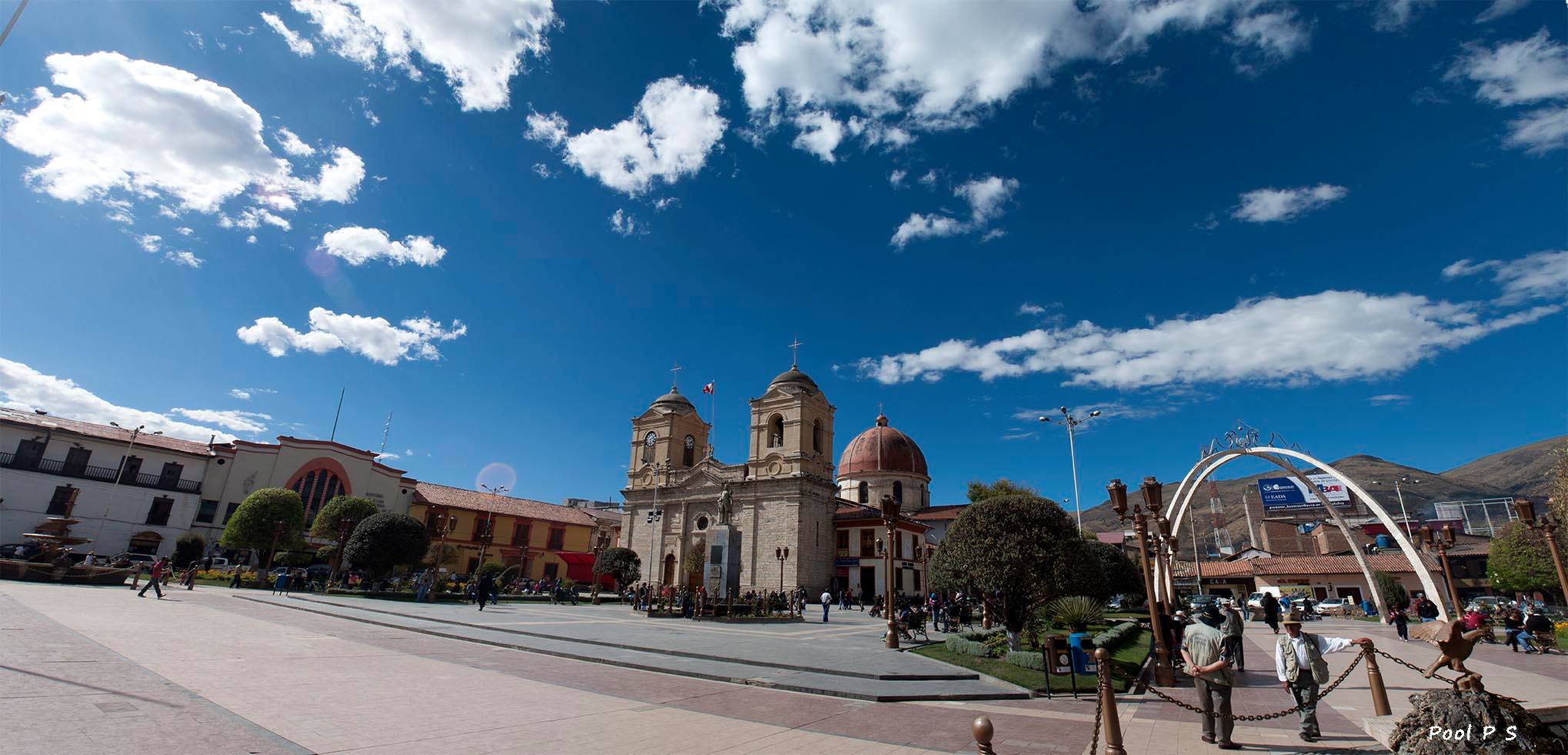
The Plaza de la Constitución is Huancayo's civic heart and the natural place to start getting to know the city. Its name has history behind it: it's linked to the swearing here of the liberal Constitution of Cádiz in the early 19th century, and to other key moments in Peruvian political life that had Huancayo as their stage. Beyond the anniversary, the plaza is worth it for what it is today: a living space, ringed by palm trees and gardens, where locals, vendors, shoe-shiners and travelers come together, and where you feel the city's tireless commercial rhythm. Facing the plaza stands Huancayo Cathedral, neoclassical in style, its construction dating from the late 18th century and the first half of the 19th, raised to cathedral status in the 20th. Inside it holds Cusco-school paintings and a calm atmosphere that contrasts with the noise outside. Around the center there are other churches and old houses, the commercial pedestrian street, cafés and restaurants; it's the ideal area for walking, getting your bearings and eating something typical before heading out to the valley. There's no 'getting there': the plaza is the center of Huancayo itself, so you reach it on foot from almost any central hotel, or in a few minutes by taxi or mototaxi if you're staying further out. City tours leave from here, and it's easy to catch combis and colectivos out to the Mantaro valley. You can walk it at any hour, but the early morning and sunset are the loveliest for photographing the cathedral and watching life in the plaza. Access is free. One tip: use the plaza as your reference point for moving around the center, take the chance to try Wanka cooking in the restaurants nearby and, if you're there on a Sunday, you're steps away from the great fair on Avenida Huancavelica.
ℹ️ Cathedral: Neoclassical style; built from the late 18th to the first half of the 19th century · Art inside: Cusco-school paintings · Location: Huancayo's civic center, the starting point for the routes · Admission to the plaza: Free access
5
Sunday fair (av. Huancavelica)
One of the biggest fairs in the Andes; food, crafts and valley produce every Sunday.
Huancayo's Sunday fair is, in itself, one of the great reasons to plan your trip around a weekend. Every Sunday, from early until late afternoon, Avenida Huancavelica (and the surrounding streets) turns into a giant market stretching over many blocks. It's considered the main fair in the city, in the department of Junín and in much of central Peru, with roots going back to colonial times. It's worth it because it's the most direct and honest way to feel the pulse of the Mantaro valley: there's no staging for tourists here, it's the people's real fair. What you'll find is everything: crafts and textiles, engraved gourds, silverwork, clothes and shoes, fresh fruit and vegetables from the valley, herbs, freshly made local food (ideal for breakfast or lunch among the stalls), small livestock, wooden furniture and a thousand other things. It's the perfect place to buy crafts straight from the makers, at good prices and with the chance to talk to whoever made them. Give yourself time, let yourself get lost among the blocks, try the food from the stalls and haggle respectfully. The fair is right in the center, on Avenida Huancavelica, a few blocks from the Plaza de la Constitución, so you can walk there from almost any central hotel. If you're staying further out, a taxi or mototaxi drops you at the edge of the fair in minutes (on Sundays traffic in the area gets snarled, so the last stretch is always on foot). The key here is the day: Sundays only. Going early has the advantage of seeing the setup and the fresh produce, with fewer people; midday is the most vibrant moment and also the busiest. Bring cash in small notes (many stalls don't take cards), watch your belongings in the crowd as at any big market, and wear comfortable shoes. If your itinerary allows, line up your stay in Huancayo with a Sunday: it's one of those experiences that justify the trip.
ℹ️ Day: Every Sunday, from morning to afternoon · Location: Avenida Huancavelica and the surrounding streets, in the center · Size: Dozens of blocks of stalls · Origin: A fair with colonial roots, one of the biggest in the Andes
6
The craft villages of the valley
Cochas (engraved gourds), Hualhuas (textiles), San Jerónimo (silverwork) and others, each with its specialty.
The Mantaro valley is a mosaic of villages where each place specialized in a craft, and touring them is one of the richest and most authentic experiences in the area. The point is to go straight to the family workshops: watch the artisans work, understand how each piece is made and buy at source, sustaining a tradition that in many cases goes back generations. It's worth it because it's grassroots travel, far from the mass circuit, with people who open the door of their home-workshop to you. There are three you shouldn't miss. In Cochas Chico and Cochas Grande it's all about mates burilados: dried gourds engraved with scenes of everyday and country life, using a fine, patient technique that made this area the great center of gourd engraving in Peru. In Hualhuas, textiles rule -rugs, tapestries, wool and alpaca garments- many dyed with natural dyes such as chilca, walnut or cochineal. In San Jerónimo de Tunán the silversmiths are in charge, famed for their filigree, that finest of lacework in silver thread. Alongside these are other villages known for wood carving, blankets and embroidery. They're all a short distance from Huancayo, spread across the valley. Getting there is very easy by combi or colectivo (transport through the Mantaro valley is frequent and cheap), though to visit several in one day the most comfortable option is a full-day tour or hiring a taxi for a few hours, because the workshops are scattered and a guide helps you find the good ones. San Jerónimo and Hualhuas lie toward the north of the valley; Cochas, to the east on the slopes, with lovely views. You can go any day, but avoid Sunday if you want to find workshops open, since many artisans are at the Huancayo fair (though some still open). The dry season makes travel on the valley roads easier. A tip: bring cash, take the time to talk to the artisans -they'll explain and show you the process- and buy at source, which is where your money really sustains the craft.
ℹ️ Cochas (Chico and Grande): Engraved gourds; the great center of gourd engraving in Peru · Hualhuas: Wool and alpaca textiles; natural dyes (chilca, walnut, cochineal) · San Jerónimo de Tunán: Silverwork and fine filigree · How to tour them: Combi/colectivo through the valley or a full-day tour; family workshops
7
Jauja and its Paca lagoon
The former first capital of colonial Peru, with old houses and churches, and the pretty Paca lagoon nearby.
Jauja holds a special place in Peruvian history: it was founded by Francisco Pizarro in 1533 as the country's first capital, before the title passed to Lima. That past left it a center with churches and old houses that are a pleasure to walk, the air of a quiet highland town and a very marked local pride. It's worth it for the combination of history, colonial architecture and a beautiful valley setting, all an hour from Huancayo. In town you can see the main church, with its carved altarpieces, and walk the streets and the square. But the great complement is the Paca lagoon, a few kilometers north of Jauja, at around 3,400 meters: a highland sheet of water ringed by reed beds and shoreline restaurants where you eat fresh trout and valley dishes. You can take a boat ride, eat looking out over the water and hear the legends that surround it -the mermaid who drags off the unwary at night, the golden bell that rings from the bottom, the llamas loaded with gold sunk during the conquest. It's a relaxed, scenic plan and very enjoyable with family. From Huancayo it's easy: there are frequent colectivos and combis that make the trip through the Mantaro valley in about an hour (Jauja is toward the north of the valley). From Jauja, the Paca lagoon is a few minutes away by mototaxi or colectivo. Many travelers build a single day combining the Ocopa monastery, Jauja and the lagoon, which all lie in the same direction. The best time is the dry season (May to September), with clear skies that set off the lagoon's scenery. If you like folklore, check the festival calendar: Jauja is famous for the Tunantada, an emblematic dance performed in January (above all around 20 January, San Sebastián and San Fabián) that fills the streets with color. Bring warm clothes -at that altitude and beside the water it gets cool- and leave time for a trout lunch on the shore, which is part of the charm.
ℹ️ Founding of Jauja: 1533, the first capital of colonial Peru · Paca lagoon: A few km from Jauja, at around 3,400 m above sea level; boat rides and fresh trout · Distance from Huancayo: About 1 hour by colectivo through the valley · Typical festival: The Tunantada, the emblematic dance, in January
8
The Tren Macho to Huancavelica
A picturesque railway crossing the valley over bridges and through tunnels, when it's running.
The 'Tren Macho' is a sentimental institution of the central highlands: the railway linking Huancayo with Huancavelica across around 128 kilometers of bridges, tunnels, ravines and small highland towns. Its nickname was born, so popular tradition says, from the idea that 'it leaves when it wants and arrives when it can', and people love it dearly all the same. It's worth it for the journey itself: slow travel, window travel, where the Mantaro valley landscape and the life of the towns the train passes through are the real show. The route leaves behind crop fields, rivers, rock formations and hamlets where passengers get on and off with their bundles, giving it the air of a village train that barely exists anywhere else now. It's more a cultural experience than a polished tourist one, ideal for anyone who enjoys traveling with local people. The line crosses demanding country, with numerous tunnels and bridges, which makes it a small feat of mountain railway engineering. Departure is from Chilca station in Huancayo, and the trip to Huancavelica takes several hours (indicatively on the order of six, depending on the service). Important: this railway's operation has been irregular and it's undergoing a full modernization, so days, times and service availability can vary a great deal. Before counting on it for your itinerary, check current operation with official sources or local agencies, because the service is sometimes suspended for works or maintenance. If you do get to take it, do so in the dry season to enjoy the scenery better and avoid delays from rain. Bring warm clothes, water, some food and cash, and take the trip in a patient spirit: it isn't a fast train or a luxury one, it's a postcard in motion. Sit on the side facing the valley for the best views and leave plenty of slack in your schedule, because timetables may not be strict.
ℹ️ Route: Huancayo - Huancavelica, about 128 km · Departure station: Chilca station, in Huancayo · Indicative duration: Several hours each way (check the service) · Status: Irregular operation, undergoing modernization; check before traveling
9
Cerrito de la Libertad
A lookout over the city, near Torre Torre, popular with locals.
The Cerrito de la Libertad is Huancayo's natural balcony and one of the favorite weekend outings for locals themselves. It's a hill laid out as a recreation complex, crowned by a lookout from which you see the whole city spread across the valley, with the mountains behind. It's worth it for the view -especially at sunset, when the city lights up- and because it's a family, lively and very local spot, where strollers, food sellers and kids playing all mix. Up top there's plenty to do besides taking in the panorama: a chapel (dedicated to the Santísima Cruz de Mayo), a large open-air amphitheater that sometimes hosts events, playgrounds, a grotto in honor of the Virgin of Lourdes and a small zoo with several species, which tends to go down well with children. It's a place to spend a couple of quiet hours, have a drink, photograph the valley and breathe. And since it's right next to Torre Torre, the obvious move is to combine the two in one outing: up to the lookout and down (or up) on foot to the clay formations. Getting there is very easy because it's east of the city, a few minutes from the center: by taxi it's about 5 to 10 minutes up Avenida Giráldez from the Plaza de la Constitución area, and for keen walkers it's about a 20-minute climb on foot (uphill, mind the altitude). There's also public transport that gets you close. It's enjoyable all year, but clear afternoons in the dry season (May to September) give the best sunsets and the cleanest view of the valley. On Sundays and public holidays it fills with families, which gives it plenty of atmosphere but also more people. Bring a warm layer for when the sun goes down, some cash for food and the stalls, and save the sunset for the end of the outing, because that's the star moment.
ℹ️ What it is: A lookout hill and recreation complex east of the city · What's there: Lookout, chapel, open-air amphitheater, grotto and a small zoo · Distance from the center: 5-10 min by taxi (or ~20 min on foot, uphill) · Ideal pairing: With Torre Torre, on the same outing
10
Ingenio and the Huaytapallana snow peak
The Ingenio trout farm in the valley and the imposing Huaytapallana snow peak with its lagoons, for nature trips.
To the east and the upper end of the valley, Huancayo offers two nature escapes that are worth it in their own right and show another side of the region: the Ingenio trout farm and the Huaytapallana snow peak. The first is a gentle, food-focused plan; the second, a more demanding and spectacular mountain outing. Either one breaks with the circuit of towns and churches and adds pure highland landscape. Ingenio is home to one of the largest and most important trout farms in Peru, spread across dozens of ponds fed by crystal-clear spring water, in a beautiful green, wooded setting. You can walk the fish farm to understand the rainbow trout's life cycle, stroll the paths beside the ponds and, above all, eat the freshest trout at the many country restaurants in the village, which have made Ingenio a kind of culinary paradise of the valley. It's a relaxed outing, ideal with family. The Huaytapallana snow peak, by contrast, is adventure and altitude: Huancayo's guardian apu, its highest summit above 5,500 meters and a set of intensely turquoise lagoons at the foot of the glaciers. It's a sacred destination for the local culture, where offerings to the earth are still made, and an imposing setting for trekking and mountain photography. Ingenio is about 28 km from Huancayo, toward the north/east of the valley; you get there by combi or colectivo and, better still, by taxi or tour, which makes it easy to combine with lunch. The fish farm has split visiting hours (morning and afternoon). Huaytapallana is about 30 km away, but the access is mountain road and ends in a walk at altitude, so go with a tour, a guide and suitable transport; it isn't an improvised outing. For Ingenio, any day in the dry season works well, and it's a perfect plan to combine with trout at midday. For Huaytapallana, the dry season (May to September) is the only really advisable window, because of the state of the roads and the high-altitude weather; you need to be well acclimatized in Huancayo before going up, wrap up warmly, bring strong sun protection, water and snacks, and set off early to avoid the afternoon bad weather. Anyone who feels the altitude should be cautious: you comfortably pass 4,500 meters.
ℹ️ Ingenio (fish farm): One of the largest trout farms in Peru; about 28 km from Huancayo · What Ingenio offers: A walk around the ponds and a fresh trout lunch at country restaurants · Huaytapallana: Snow peak and guardian apu; summit above 5,500 m, with turquoise lagoons, about 30 km away · Recommendation: Huaytapallana: go with a tour/guide, in the dry season and well acclimatized to the altitude
Advertisements
What nobody tells you

💵 Prices

Tickets

TypePrice
Santa Rosa de Ocopa monastery (guided visit, includes the library and picture gallery)S/ 10 adults; S/ 5 university students with a card; S/ 3 schoolchildren; S/ 2 children aged 4-9 (2025; check when visiting)
Parque de la Identidad WankaFree (open access)
Torre Torre / Cerrito de la LibertadFree (open access; the Cerrito zoo may ask for a token contribution, check on site)
Tren Macho Huancayo → HuancavelicaFree service (it still charges nothing since it reopened on 17 March 2023, for as long as the transition and modernization stage lasts); a subsidized fare of S/ 6,50 is planned for when charging begins (source: MTC / Gestión / La República, verified July 2026: confirm operation before traveling)
🔄 updated monthlyOfficial / reference values · double-check when buying

Activities and tours

ActivityPriceDurationOperator
Huancayo city tour (Torre Torre, Parque Wanka, Cerrito)S/ 40-70 per person (2025, depending on the agency)Half a dayHuancayo agencies
Mantaro valley and craft villages tourS/ 60-100 per person (2025)Full dayHuancayo agencies
Ocopa monastery + Jauja + Paca lagoon tourS/ 70-120 per person (2025, includes some admissions)Full dayHuancayo agencies
Riding the Tren Macho to HuancavelicaFree (subsidized service in transition; a future fare of S/ 6,50 is planned), verified July 2026About 2 h (current section, ~57 km); the full historic route used to be described as up to 6 hFerrocarril Huancayo-Huancavelica (Tren Macho). Runs Mon/Wed/Fri/Sat; departure 6:30 from Chilca, tickets on a first-come basis from 5:30
🔄 updated monthlyOfficial / reference values · double-check when buying
Advertisements

🚌 How to get there and distances

Getting around

ModePriceDurationNotes
Mototaxi in the cityS/ 2-4 minimum fare; S/ 1,20-1,70 per extra km (source: Municipalidad Provincial de Huancayo, verified July 2026)A few minutesHandy for getting around Huancayo and reaching Torre Torre or the Cerrito de la Libertad. You pay in cash (soles); agree the price before getting in.
Taxi within the city (center - El Tambo)S/ 5-10 (source: local fares, verified July 2026)10-15 minAgree the price before getting in; taxis don't use meters. You pay in cash.
Ride app (inDrive)S/ 5-10 depending on distance and time of day (source: inDrive Huancayo, verified July 2026)VariableThe most used ride app in Huancayo is inDrive (it covers the center, Chilca, El Tambo and the surrounding areas). You offer the price and pick the driver; you can pay with Yape, Plin or cash. Uber and Cabify have little presence in the city.
Combi/colectivo through the Mantaro valleyS/ 2-5 depending on the destination (Concepción, Jauja, Hualhuas; source: local stops, verified July 2026)Variable (20 min to 1 h)Frequent transport to Concepción (Ocopa), Jauja and the craft villages. You pay in cash to the conductor; there's no rechargeable card and no bus payment app in Huancayo. Bring small change.
Tren Macho Huancayo → HuancavelicaFree (verified July 2026)About 2 h (current section ~57 km)It leaves from Chilca station. It runs Monday, Wednesday, Friday and Saturday: departure 6:30 from Huancayo (Chilca) and return 13:00 from Cuenca. Ticket office from 5:30, first come first served until seats run out (there's no advance or online sale). Check current operation before planning, because the service is being modernized.
On foot around the centerFreeThe Plaza de la Constitución and the commercial center are easily covered on foot.
🔄 updated monthlyOfficial / reference values · double-check when buying

How to get there

RouteAirlines / operatorsAvg. priceDuration
Lima → Huancayo (bus, Carretera Central)Cruz del Sur, Móvil Tours, ETUCSA and othersS/ 40-80 (economy) up to S/ 150-200 (sleeper/premium bus), 2025~6-7 h (it crosses the Ticlio pass, above 4,800 m)
Lima → Huancayo (Ferrocarril Central, tourist services)Ferrocarril Central Andino (occasional tourist departures)Check the current fare with Ferrocarril Central Andino; departures are not daily and are aimed at tourists (2025)~12-14 h (one of the highest trains in the world)
Huancayo → Huancavelica (Tren Macho)Ferrocarril Huancayo-HuancavelicaFree in 2025 (service in transition; check it's still current)~2 h (current section)
🔄 updated monthlyOfficial / reference values · double-check when buying

🏨 Where to stay

No exact prices: a scale from $ (budget) to $$$$$ (luxury), with 2-3 options per category.

CategoryPriceRecommended options
Upmarket / the best in the city$$$$$US$ 45-80 a night. The highest registered category is Hotel Unu (República de Uruguay 570), followed by Qálida Hotel (Santa Teresa 281, with its own restaurant and bar; https://qalidahotel.com/, verified on 08/08/2026, no prices published), Hotel Presidente Huancayo (Real 1138), Hotel Turismo Huancayo (Áncash 729) and B&V (Ferrocarril 421). no rate published in an official source.
Mid-range$$$$$S/ 100-180 a night. Near the Plaza Constitución, with a current registration: Hotel Kiya (Giráldez 107), Hotel Bartol (Huánuco 110), Hotel Los Balcones (Puno 282), Hotel Santa Felicita (Giráldez 145) and Hotel Galio (Real 1106). Link warning: the register publishes for Hotel Huaytapallana Suite a badly entered domain (it starts with 'WWW.https://';) and for Hotel Kiya a shared-hosting subdomain whose certificate points to another company; neither works as a link (verified on 08/08/2026).
Guesthouses and inns$$$$$S/ 70-130 a night. Family-run hostales with a current registration: El Márquez (Puno 294), Gran Hostal Real (Real 1057), Hostal Orlak (Real 677), Hostal Konig (Pichis 198) and Mirador Torre Torre (Los Libertadores 202). no rate published in an official source.
Budget / backpacker$$$$$S/ 30-60 a night. Basic places to stay with a current registration: Hostal El Rey (Circunvalación 629), Hostal Angares (Arequipa 1295), Hotel Confort (Áncash 237), Hotel Piura (Piura 132) and Hotel Iquitos (Prialé 181). no rate published in an official source.

🍴 Where to eat

TypePriceOptions / signature dish
Traditional Wanka cooking$$$$$S/ 30-55 per dish. An honest warning: in the whole city of Huancayo MINCETUR has just one categorized restaurant on record, Lalos (Giráldez 363-365), half a block from the Plaza Constitución. The rest of the papa a la huancaína, pachamanca and patasca scene operates without registration in the national register, so there's no official source backing names or prices in this category.
Picanterías and regional food$$$$$S/ 18-35 per dish; picanterías of the Mantaro valley with hearty home cooking
Fair food and the set lunch$$$$$S/ 8-15 for the set menu; stalls at the Sunday fair and cheap set lunches in the center
Advertisements

📖 History of Huancayo

Origins, formation and what the sources say.

The Wankas and the Mantaro valley

Long before Huancayo was a city, the Mantaro valley was the territory of the Wanka (or Huanca) people, a warlike farming society that occupied this broad, fertile basin in the central highlands. The Wankas lived in numerous settlements scattered across the valley, many of them up on the nearby heights for defensive reasons, and they were known for their independent character and their organization into curacazgos, something that deeply marked their relationship with the great Andean powers.

When the Incas expanded into the central highlands in the 15th century, the Wankas put up prolonged resistance before being absorbed into the Tahuantinsuyo, which imposed on the valley its administration, its roads (the Qhapaq Ñan among them) and centers such as Hatun Xauxa (Jauja). That tense relationship with Cusco explains a key episode of the conquest: when the Spanish arrived, many Wankas allied with them against the Incas, seeking to shake off Cusco's rule, and contributed decisive warriors and resources in the first campaigns.

That Wanka heritage is still very much alive in the identity of Huancayo and its valley. It's celebrated in the Parque de la Identidad Wanka, in dances such as the huaylarsh -declared Cultural Heritage of the Nation in 2005- in the crafts and in a strong local pride in a culture that never stopped asserting its own personality. To get to know Huancayo is, to a large extent, to look into this Wanka world that precedes and outlasts both Incas and Spaniards.

elcomercio.pe · Descubre fascinantes atractivos huancayo…viajeronline.com · Que ver hacer visitar huancayo

The colonial valley and the Ocopa monastery

Under colonial rule the Mantaro valley filled with towns, haciendas and churches, and became key territory for supplying food to the cities of the central viceroyalty, in particular Lima, by way of the Carretera Central. Jauja, at the northern end of the valley, played a prominent part: it was one of the first settlements founded by the Spanish, in 1534, and for a brief period served as capital before that role passed to Lima the following year.

One of the region's great colonial legacies is the Santa Rosa de Ocopa monastery, founded by the Franciscans in 1725 near Concepción. From there the missions set out into the central jungle to evangelize the Amazonian peoples, an undertaking that lasted centuries and left a unique documentary record. The monastery keeps an extraordinary library, with more than 25,000 old volumes, and a museum with objects, religious art and pieces brought back by the missionaries, which make it an essential visit in the valley.

In parallel, Huancayo itself -then a minor town in the valley- grew on the back of trade: as early as 1572 the corregidor Jerónimo de Silva set up a barter fair for the indigenous people of the area, ratified in 1578 by viceroy Francisco de Toledo. That fair, the direct ancestor of today's Sunday fair, is one of the oldest and most continuous commercial traditions in Peru, and it shows that Huancayo's mercantile character has roots going back more than four centuries.

dehuancayo.com · Convento ocopaes.wikipedia.org · Feria Dominical de Huancayo

The Sunday fair and the huaylarsh: an identity built in the market and the fiesta

The Sunday fair on Avenida Huancavelica, one of Huancayo's strongest markers of identity, has a much longer history than its current location suggests. It was formally born in 1572, when the Spanish corregidor Jerónimo de Silva set up a barter market among the indigenous peoples of the valley, ratified in 1578 by viceroy Toledo as part of his policy of reducciones and colonial reordering. For its first centuries it ran in the Plaza Huamanmarca and later on the Calle Real, until in the 1980s it was moved to Avenida Huancavelica, where it grew into the giant weekly market that today draws thousands of traders.

Alongside that commercial tradition, the Mantaro valley developed one of the most celebrated dance forms in Peru: the huaylarsh. Its roots lie in the farm work of the Wanka civilization -the term comes from the Quechua huaylla or huaylluy, 'good pasture' or 'to love tenderly'- and in its traditional form it imitates the movements of sowing and harvesting potatoes, maize and other Andean crops. In the mid-20th century the musician Zenobio Dagha Sapaico, from Chupuro, gave rise to a mestizo, more agile version of the huaylarsh -premiered in 1949 with the piece 'Mi Tierra Wanka'- which spread through traditional orchestras such as the one he himself founded, Juventud Huancaína, and which is today the most widespread form of the dance.

The huaylarsh was declared Cultural Heritage of the Nation in 2005, and every Ash Wednesday (after the carnivals) the Día Nacional del Huaylarsh Wanka is celebrated, with contests and performances that fill the valley's streets with music and color. Together with the Sunday fair, it's one of the expressions that best sum up the vitality of contemporary Huanca popular culture.

es.wikipedia.org · Feria Dominical de Huancayoes.wikipedia.org · Huaylarshytuqueplanes.com · El huaylarsh la danza embajadora nacional

The train of the heights: Huancayo and the railway

Huancayo's modern history is tied to the railway. In the late 19th and early 20th centuries the Ferrocarril Central del Perú was built, an engineering feat linking Lima with the central highlands and crossing the cordillera through very high passes by way of dozens of tunnels, bridges and switchbacks, a work associated with the engineer Henry Meiggs. For a long time it was considered the highest standard-gauge railway in the world, and it was decisive in connecting Huancayo with the capital and energizing the region's mining and farming economy.

Another much-loved railway also starts in Huancayo: the Ferrocarril Huancayo-Huancavelica, popularly known as the 'Tren Macho'. Opened in stages during the 20th century, it runs along the valley parallel to the Mantaro and Ichu rivers, crossing colonial bridges, hot springs and small Andean towns on a route that originally covered around 128 kilometers. Its nickname and its fame come from its tenacity in keeping going despite the difficulties of the terrain, and it has become a symbol of the region's identity.

In recent years the service has gone through stages of suspension and relaunch: it reopened in March 2023 with free travel on a temporary basis, running on a shorter section (about 57 km, roughly two hours) while a full modernization project announced for the coming years moves ahead, with planned investment of hundreds of millions of dollars. These trains made Huancayo a communications hub of the central highlands and a meeting point between the coast, the Andes and the jungle; today, beyond their practical value, they're part of the area's tourist appeal, though it's always worth confirming the current operation of each service beforehand.

es.wikipedia.org · Ferrocarril Central del Perúes.wikipedia.org · Ferrocarril Huancayo Huancavelicalarepublica.pe · Tren macho se moderniza tras casi 100 anos…

Huancayo in the 20th century: regional capital and urban growth

Through the 20th century, Huancayo consolidated its role as capital of the department of Junín and as the great service city of the central highlands, overtaking other centers in the valley such as Jauja or Concepción in population and commercial importance. The push from the railway, the arrival of the paved Carretera Central and the growth of mining at Cerro de Pasco and La Oroya reinforced Huancayo as a hub for transport and trade between Lima, the central highlands and the jungle.

The city also went through hard times, such as the years of political violence in the 1980s and 1990s, which affected much of the Peruvian central highlands and drove migration into the city from the rural areas of the valley and the heights. That process, combined with steady commercial growth -symbolized by the enormous Sunday fair- turned Huancayo into a sprawling, dynamic city with a strong mestizo identity combining Wanka roots, colonial inheritance and a very active urban life.

Today Huancayo is one of the most important cities in Peru's central Andes, less oriented to mass tourism than Cusco or Arequipa, but with a cultural, culinary and scenic heritage of its own: the Mantaro valley with its craft villages, the Ocopa monastery, the Torre Torre formations and a Wanka identity that shows itself every Sunday at the fair and at every patron saint festival on the regional calendar.

elcomercio.pe · Descubre fascinantes atractivos huancayo…es.wikipedia.org · Huancayo

📚 Bibliography

  • El Comercio (Vamos) — «Descubre los fascinantes atractivos de Huancayo»: https://elcomercio.pe/vamos/descubre-fascinantes-atractivos-huancayo-noticia-519161-noticia/
  • Viajeronline — «Qué ver y hacer en Huancayo»: https://viajeronline.com/peru-turismo/que-ver-hacer-visitar-huancayo/
  • De Huancayo — «Convento de Santa Rosa de Ocopa»: https://www.dehuancayo.com/convento-ocopa.html
  • Wikipedia (ES) — «Feria Dominical de Huancayo»: https://es.wikipedia.org/wiki/Feria_Dominical_de_Huancayo
  • Wikipedia (ES) — «Huaylarsh»: https://es.wikipedia.org/wiki/Huaylarsh
  • Y Tú Qué Planes — «El Huaylarsh, la danza embajadora nacional»: https://www.ytuqueplanes.com/blog-viajero/junin/el-huaylarsh-la-danza-embajadora-nacional
  • Agencia Andina — «Huaylarsh: legado wanka e ícono de Junín»: https://andina.pe/agencia/noticia-danza-amor-alborozado-conoce-las-claves-del-huaylarsh-legado-wanka-e-icono-junin-972607.aspx
  • Wikipedia (ES) — «Ferrocarril Central del Perú»: https://es.wikipedia.org/wiki/Ferrocarril_Central_del_Per%C3%BA
  • Wikipedia (ES) — «Ferrocarril Huancayo-Huancavelica»: https://es.wikipedia.org/wiki/Ferrocarril_Huancayo-Huancavelica
  • La República — «Tren Macho se moderniza tras casi 100 años» (2025): https://larepublica.pe/sociedad/2025/03/02/tren-macho-se-moderniza-tras-casi-100-anos-nueva-ruta-huancayohuancavelica-con-inversion-de-us-565-millones-173088
  • Ministerio de Transportes y Comunicaciones — «Todo lo que debes saber para viajar en el Tren Macho»: https://www.gob.pe/institucion/mtc/noticias/734331-todo-lo-que-debes-saber-para-viajar-en-el-tren-macho-de-huancayo-a-huancavelica
  • Wikipedia (ES) — «Huancayo»: https://es.wikipedia.org/wiki/Huancayo

❓ Frequently asked questions

What makes Huancayo special?+
Huancayo is a very authentic Andean city, less touristy than Cusco, that works as the gateway to the Mantaro valley. Its appeal lies in the combination of Wanka culture, superb crafts (engraved gourds, textiles, silverwork), hearty and delicious cooking, valley scenery and curiosities like the Torre Torre formations and the high-altitude trains. It's ideal for a more local, genuine trip.
How do I get there from Lima?+
The usual way is the bus on the Carretera Central, which takes about 6 or 7 hours and crosses the Ticlio pass, at more than 4,800 meters, one of the highest road points in the world. There's also the Ferrocarril Central, with occasional tourist departures, one of the highest trains on the planet. There are no regular commercial flights to the city, so almost everyone arrives overland.
What is the Tren Macho?+
The Tren Macho is the railway linking Huancayo with Huancavelica, covering about 128 kilometers of bridges, tunnels and valley scenery. It's endearing and much loved by local people. Its operation has varied over time and sometimes services are free or very cheap, so check current days and times before planning your trip around it.
Is the Sunday fair worth it?+
Very much so. The Sunday fair, on Avenida Huancavelica, is one of the biggest in the Andes and an experience in itself: block after block of stalls with local food, crafts, valley produce and local life. It's the best day to visit Huancayo if you want to feel the city's pulse and buy crafts straight from the makers.
What can you see in the Mantaro valley?+
The valley is a mosaic of villages with their specialties: Cochas, home of the engraved gourds; Hualhuas, of textiles; San Jerónimo de Tunán, of silverwork; the Santa Rosa de Ocopa monastery with its historic library; and Jauja, the first capital of colonial Peru, with its Paca lagoon. A full-day tour of the valley lets you see several of these places.
Do I need to acclimatize?+
Huancayo sits at around 3,270 meters, so the altitude is noticeable, especially if you come straight up from the coast crossing even higher passes. Take the first days easy, drink plenty of water, eat light at first and don't push yourself. Nights are cool to cold all year, so warm clothes are essential.
What local food should I try?+
The star is papa a la huancaína, which was born in this area, but there's much more: pachamanca (meat and tubers cooked underground with hot stones), valley trout, patasca, mondongo and cuy. Wanka cooking is generous and full of flavor, ideal for refueling in the cold of the central highlands.
Sources consulted (12)
Still planning?
Explore more destinations in Peru
See all destinations →
Advertisements
Image credits
Photos from Wikimedia Commons, each under its own licence (CC BY, CC BY-SA or public domain). Open each file to see its author and licence.
Hyowiki