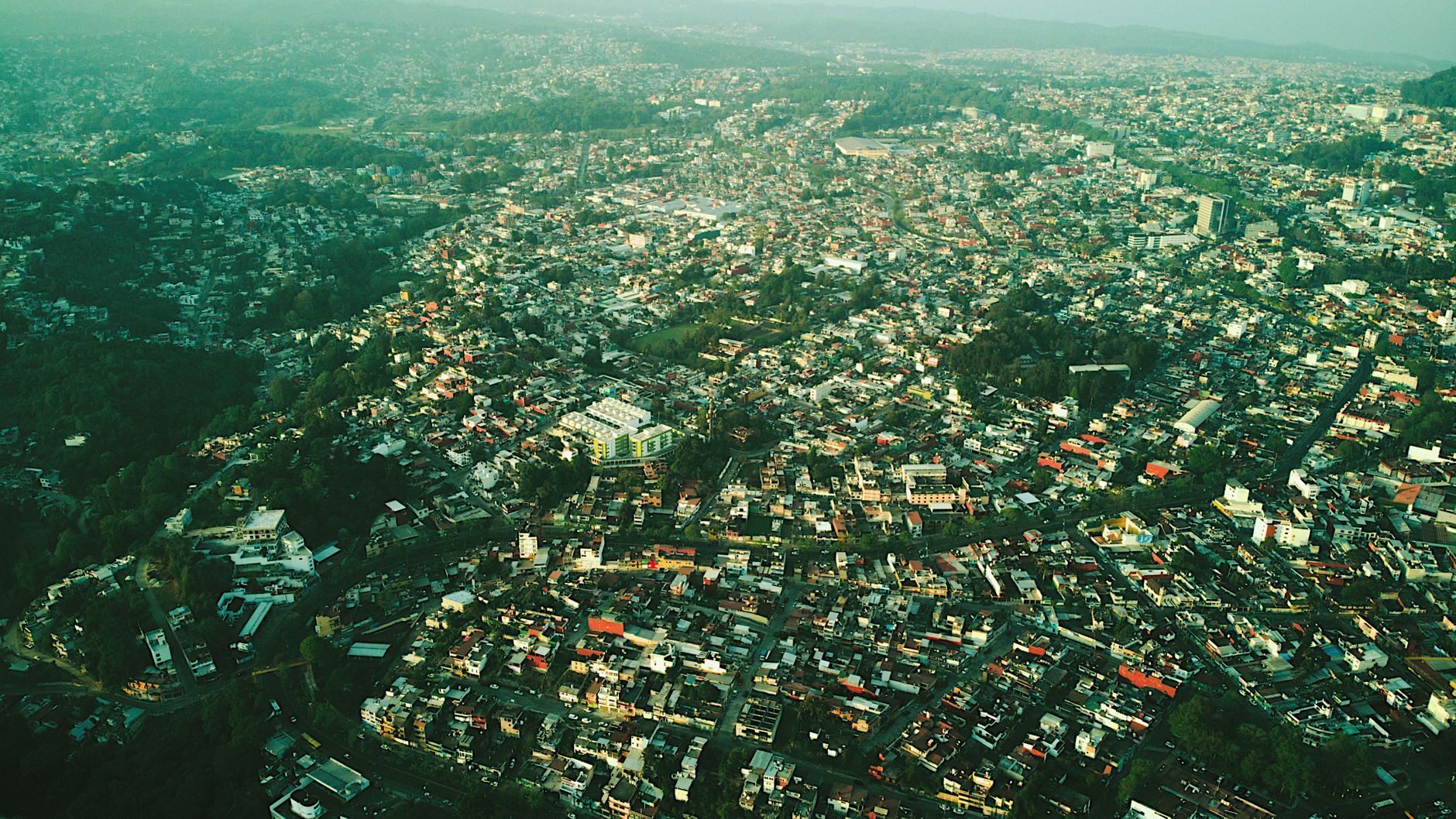
Xalapa is the green, cool, cultured face of Veracruz. The state capital, set among mountains at 1,400 meters, this university city defies the coastal Gulf stereotype: what rules here is mist, the 'chipichipi' (that fine, permanent drizzle), cloud forest and the smell of freshly brewed coffee. They call it 'the Athens of Veracruz' for its intense cultural and academic life.
Its great treasure is the Museo de Antropología de Xalapa (MAX), considered the second most important archaeology museum in Mexico after the one in the capital. Its halls and gardens display the colossal Olmec heads, Totonac and Huastec sculptures, and thousands of pieces that tell the story of the Gulf cultures. On its own, it's reason enough to visit the city.
This guide gathers the practical side of enjoying Xalapa: the MAX and its prices, the city parks and lakes, the historic center, the very rich café scene (this is coffee country) and trips out to nearby Pueblos Mágicos such as Coatepec and Xico. A city to take slowly, umbrella in one hand and cup of coffee in the other.
Xalapa has pre-Hispanic roots: its name comes from the Nahuatl 'Xallapan', meaning 'spring in the sand' or 'water in the sandy place'. Before the conquest it was a settlement formed by the union of several Indigenous districts (Totonac, Toltec, Chichimec and Mexica). After the Spanish arrived in the 16th century it sat on the Camino Real between Veracruz and Mexico City, which gave it commercial importance. In the 17th and 18th centuries Xalapa hosted the celebrated Feria de Xalapa, where the goods arriving from Europe through the port were traded, an event that made the town rich. In the 19th century, during the war against the United States, the battle of Cerro Gordo (1847) was fought nearby. In 1885 it became the capital of the state of Veracruz, and added to its name the surname of governor Juan de la Luz Enríquez. In the 20th century, the founding of the Universidad Veracruzana (1944) cemented its character as a cultural and university city, and the Museo de Antropología put it on the international map. The full story is on our history page.
Read the full history ↓Mexico's great gateway to the Gulf: where Cortés came in and the conquest set out, Totonac land of El Tajín and the flyers, of coffee, vanilla, son jarocho and the country's first port and town council.
Read the history of Veracruz →They depart from Veracruz, 91 km away. If you book from this link we earn a commission and you pay no more.
No exact prices: a scale from $ (budget) to $$$$$ (luxury), with 2-3 options per category.
Origins, formation and what the sources say.
Some cities are explained by a battle, a saint or a silver mine. Xalapa is explained by mist. At 1,400 meters, on the slopes of the Cofre de Perote and on the route that climbs from the hot tropics toward the cold highlands, this Veracruz capital lives wrapped in the 'chipichipi', that fine, perpetual drizzle that soaks you without getting you wet and that turned the city into a strange kingdom of cloud forest, high-altitude coffee and literary cafés. Nothing here looks like the Veracruz of beaches, danzón and heat that most people picture: Xalapa is the other face of the Gulf, the cultured, cold one, and its history begins —how else— with water. The name Xalapa comes from the Nahuatl 'Xallapan', made up of 'xalli' (sand) and 'apan' (place of water or river), usually translated as 'spring in the sand' or 'water in the sandy place'. That etymology speaks of the springs and abundant water that characterize this cloud forest region, on the slopes of the Cofre de Perote.
In pre-Hispanic times the settlement of Xalapa was formed by the union of several districts or towns of different origins. The chronicles mention the coming together of Totonac, Toltec, Chichimec and finally Mexica groups, who by the 15th century had brought the area under the rule of the Mexica empire. That diversity of peoples left an early mark of cultural mixing.
Xalapa's position, in the transition between the warm Gulf coast and the cold highlands, made it a natural crossing point from early on. People, goods and routes connecting the sea with the interior passed through its land, a crossroads calling that would mark its whole history.
After the Spanish conquest in the 16th century, Xalapa found itself in a strategic spot: on the Camino Real linking the port of Veracruz with Mexico City, the main line of communication between New Spain and Europe. That position gave it commercial importance and made it an obligatory stop for travelers, muleteers and merchandise.
Xalapa's great colonial moment came in the 18th century with the Feria de Xalapa. From 1720, the fleets arriving from Spain unloaded their goods in Veracruz and these were traded at a huge fair held in Xalapa, where merchants from the interior came up to stock up. For several decades this fair was one of the leading commercial events of the viceroyalty and brought prosperity and prestige to the town, which filled with grand houses and shops.
Xalapa was also the birthplace of notable figures, such as Antonio López de Santa Anna, the controversial Mexican soldier and president born here in 1794. The town kept growing in political and economic weight, foreshadowing its future role as state capital.
The 19th century brought major military episodes to the region. During the war between Mexico and the United States, in April 1847, the American troops advancing from Veracruz toward the capital defeated the Mexican army at the battle of Cerro Gordo, fought near Xalapa. It was one of the decisive battles of a war that would end with the loss of much of Mexican territory.
Despite the turbulence, Xalapa kept gaining political weight. At different points in the century it was the seat of the state government, and finally, in 1885, it was established definitively as the capital of the state of Veracruz. Shortly afterward, in honor of governor Juan de la Luz Enríquez, the city added the surname 'Enríquez' to its name, becoming Xalapa-Enríquez, its official designation.
As capital, Xalapa concentrated the state administration, educational institutions and cultural life. Its mild climate, its green surroundings and its intellectual tradition gradually forged the image of a cultured, easygoing city that sets it apart within a mostly hot, coastal state.
The 20th century cemented Xalapa's cultural calling. A key milestone was the founding of the Universidad Veracruzana in 1944, which turned the city into the state's great educational center and drew students, teachers and artists from across the region. The university presence filled city life with cafés, bookshops, theaters, cinema, music and a young, intellectual atmosphere that earned it the nickname 'the Athens of Veracruz'.
Xalapa developed a rich artistic life: it is home to the Orquesta Sinfónica de Xalapa, one of the oldest in Mexico; to festivals, book fairs, galleries and intense theatrical and musical activity. The city also became known for its coffee scene —only natural in the middle of coffee country, alongside Coatepec and Xico— and for an urban culture that prizes conversation, reading and art.
The creation of the Museo de Antropología de Xalapa (MAX), in its current building opened in 1986, put the city on the international map. The museum, considered the second most important of its kind in Mexico, holds the colossal Olmec heads and thousands of pieces from the Gulf cultures, and became Xalapa's main tourist attraction.
Today's Xalapa keeps its double identity as political capital and cultural heart of Veracruz. It's a mid-sized city, with a metropolitan area of around 700,000 inhabitants, marked by its cool, humid climate, its characteristic 'chipichipi' (the constant fine drizzle) and the cloud forests that surround it. That green, cloudy atmosphere gives it a character all its own within the Gulf.
Life in Xalapa revolves around its city parks —the Paseo de los Lagos, Los Tecajetes, the Clavijero Botanical Garden—, its historic center of steep streets, its Cathedral, its museums and, above all, its coffee culture. The city is a starting point for exploring the coffee country and mist of central Veracruz, with Pueblos Mágicos such as Coatepec and Xico a few kilometers away and the Cofre de Perote volcano dominating the horizon.
Student, cultured, rainy and ringed in green, Xalapa offers the traveler a different face of Veracruz: that of the mountains, high-altitude coffee and intellectual life. It's the perfect counterpart to the heat and music of the port, and one of the most pleasant capitals in Mexico, with the most personality.