Viajá con Gus
HomeMexicoCoatepec
Coatepec
🇲🇽 Mexico · Gulf Coast

Coatepec

Jump to what you need
📌Country
Mexico. Coatepec is a Pueblo Mágico in the state of Veracruz, in the central mountain zone, just 12 km south of Xalapa, the state capital. It's the heart of Veracruz's coffee-growing region and is known as 'the coffee capital' and 'the town of aroma'.
📌Best time to go
A mild, humid climate, cool and often wrapped in mist. The dry season (November to April) is the most comfortable, and autumn-winter is ideal for the coffee route, when the landscape is at its greenest and the air is cool. The coffee harvest runs roughly from October to March. Bring a light jacket and an umbrella all year round.
⛰️Altitude and population
It sits at around 1,200 meters above sea level, among coffee plantations and cloud forest. The town itself has around 50,000 inhabitants; the municipality tops 90,000.
📌Language
Spanish. A tourist town close to university-city Xalapa, with a welcoming feel; in tourist spots some English is understood.
📌Currency
Mexican peso (MXN). There are banks and ATMs in the center; cash is handy for coffee estates, markets and crafts.
📌Suggested duration
1 day (or a morning) for the center and a coffee; 2 days if you add a coffee estate, the Texolo waterfall and a trip to neighboring Xico. Many people visit on a day trip from Xalapa.
📌Getting there
The most practical way is from Xalapa (12 km), by bus, colectivo, taxi or app (15–25 min). On a long-distance bus (ADO) you first reach Xalapa or Veracruz and go on to Coatepec from there. By car, on the road from Xalapa or via the highway.
💱 MXN exchange rate
Loading rate…
🌤️ Weather in Coatepec
Loading weather…

Coatepec is one of those towns you remember by its smell. Just 12 km from Xalapa, this coffee-growing Pueblo Mágico greets you wrapped in mist and scented with freshly roasted coffee. Its cobbled streets, colorful houses with tile roofs and colonial arcades make up one of the prettiest ensembles in central Veracruz.

Coffee is its reason for being. Coatepec sits at the heart of one of the most prestigious coffee regions in Mexico, and here the bean is grown, processed, roasted and served with an almost religious pride. Visiting a historic estate, walking among the coffee bushes in the shade of the trees, following the process 'from plant to cup' and then sitting down to taste a good coffee is the essential experience of the town.

But Coatepec is also orchids, waterfalls and cloud forest. This guide gathers the practical side of enjoying it: what to see in town, the coffee estates you can visit, the Texolo waterfall (a step away, on the road to Xico), where to eat and where to sleep. A destination to take slowly, cup in hand and in the mist.

📖 History of Coatepec

The name Coatepec comes from the Nahuatl 'coatl' (snake) and 'tepetl' (hill), that is, 'on the hill of the snake', in reference to the Cerro de las Culebras that looms over the town. It was a pre-Hispanic settlement in the region, under Mexica influence, and after the Spanish conquest it was organized as a pueblo de indios in the 16th century, around a parish church. In the colonial period it was hacienda country. Its great transformation came in the 19th century with the introduction and spread of coffee growing, which found ideal conditions in this mild, humid climate in the shade of the cloud forest. Coatepec became one of Mexico's great coffee centers, with beneficios (processing plants), estates and grand houses built on the wealth of the bean. That coffee inheritance defines its identity, its architecture and its economy to this day. In 2006 it was named a Pueblo Mágico, in recognition of its beauty, its tradition and its aroma. The full story is on our history page.

Read the full history ↓

🏛️ Coatepec is in Veracruz

Mexico's great gateway to the Gulf: where Cortés came in and the conquest set out, Totonac land of El Tajín and the flyers, of coffee, vanilla, son jarocho and the country's first port and town council.

Read the history of Veracruz →

🗺️ What to see

1
The historic center and the church of San Jerónimo
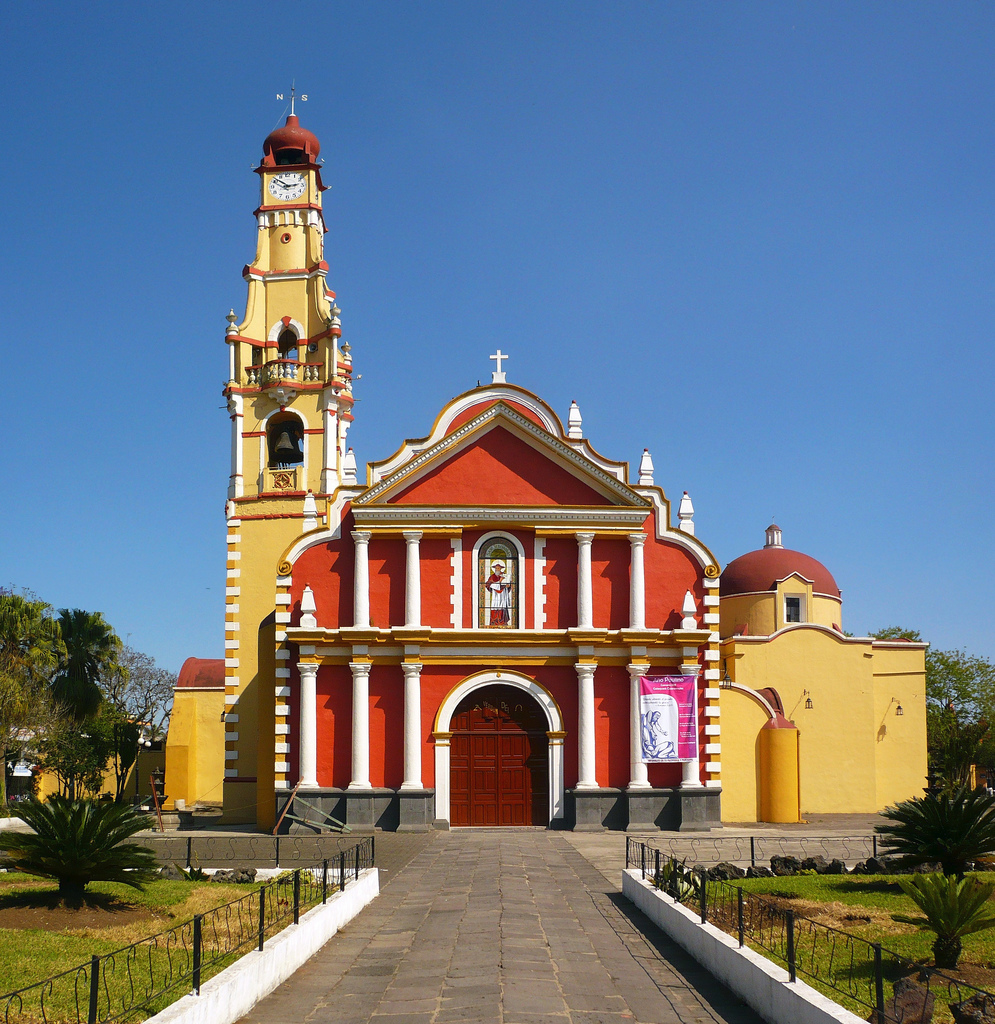
The colonial core of cobbled streets, arcades and colorful tile-roofed houses, presided over by the church of San Jerónimo. Strolling the center, among cafés and shops selling coffee and crafts, is the essential plan in town.
The heart of Coatepec is its historic center, a picturesque colonial ensemble of cobbled streets, brightly colored houses with pitched tile roofs and arcades, which in 2006 earned it Pueblo Mágico status. Everything revolves around Parque Miguel Hidalgo (the main square) and the church of San Jerónimo, the town's main temple, colonial in origin, its facade and tower rising above the rooftops. It's a compact, very walkable center, ideal for taking your time. Around the square and along the neighboring streets are historic cafés, shops selling Coatepec coffee whole bean and ground, traditional sweet shops (with the famous 'panes de Coatepec' and preserves) and craft stores. The feel is that of a quiet town, almost always cool and often wrapped in mist, with the smell of freshly roasted coffee in the air. Getting there: right in the center; it's all on foot. Best time: in the morning or at dusk, when the light is softer on the colored facades. Tips: wear comfortable shoes for the cobbles and bring an umbrella for the typical drizzle; take the chance to buy local coffee straight from the shops in the center.
ℹ️ What it is: A Pueblo Mágico colonial core (2006) around the main square and the church of San Jerónimo · Admission: Free to enter · Duration: 1 to 2 hours on foot
2
The coffee route and Finca Roma / Museo Bola de Oro
Coatepec's big draw: visiting historic estates such as Finca Roma (the Bola de Oro brand, founded in 1902), where you walk the plantation, learn how the bean is processed and taste the coffee. A 'plant to cup' experience you shouldn't miss.
The essential Coatepec experience is diving into its coffee culture by visiting an estate. The most emblematic and the most open to visitors is Finca Roma, founded in 1902 and home to the Museo Bola de Oro (the Bola de Oro brand has been known since 1910). The tour takes you through a demonstration plantation in the shade of the forest, the old industrial processing machinery, the collections room and a Coffee Lab with baristas, telling the story of five generations devoted to the bean. It ends, of course, with a tasting. There are tours of different lengths: the 'Tour Exprescafé' runs about $375 MXN per adult, and the tour with a full tasting (around 3 hours) about $525 MXN, with reduced prices for students, seniors and children (2025-2026 rates). Other estates in the region, such as Don Silvano, also run tours. It's an activity that combines landscape, history, aromas and flavor, and it explains why Coatepec is called Veracruz's 'coffee capital'. Getting there: Finca Roma is a few minutes from the center (taxi or car); it's best to book the tour. Best time: the harvest (October to March) is when the plantation is most alive. Tips: book ahead in high season; pick the tour with a tasting if you want the full 'plant to cup' experience.
ℹ️ What it is: A historic coffee estate (1902) and the Bola de Oro coffee museum · Admission: Tour Exprescafé ~$375 MXN; tour with a tasting (3 h) ~$525 MXN; discounts for students, seniors and children (source: Museo Bola de Oro official site, verified July 2026) · Duration: 1.5 to 3 hours depending on the tour
3
Texolo waterfall
A few kilometers away, on the road to Xico, a spectacular waterfall of about 80 meters surrounded by jungle, with lookouts and suspension bridges. The La Monja waterfall is nearby. It has been a film location; a natural must in the area.
The Texolo waterfall is the area's great natural attraction, a drop of some 80 meters that plunges into a canyon covered in jungle and cloud forest, between Coatepec and the neighboring Pueblo Mágico of Xico. A suspension bridge and several lookouts let you take it in from different angles, and trails lead down toward its base. Very close by is the smaller La Monja waterfall. The setting, green and humid, is cinematically beautiful: in fact Texolo was a location for films such as 'Romancing the Stone'. It's an ideal place for a short but demanding walk, with stairs and paths that can be slippery from the damp. There's also a small restaurant at the main lookout. Combined with a visit to a coffee estate and to the town of Xico, it rounds out a perfect day of nature and coffee country. Getting there: a few kilometers from the center of Coatepec, on the road to Xico; by car, taxi or tour (there's no direct public transport to the entrance). Best time: all year; in the rainy season more water comes down but the trails are more slippery. Tips: bring shoes with good grip, water and cash for the entrance; take care on the wet paths.
ℹ️ What it is: A ~80 m waterfall in a jungle canyon, with a suspension bridge and lookouts · Admission: A token entrance/parking fee, about $20-50 MXN per person (verified July 2026) · Duration: 1 to 2 hours
4
Museo El Cafetal / coffee culture
Spaces devoted to the history and processing of Coatepec coffee, where you learn about growing, processing and roasting. They round out a visit to the estates and the cafés in town perfectly.
Besides the estates, Coatepec has museum and cultural spaces devoted to coffee that help you understand why the bean defines the town. The Museo Bola de Oro at Finca Roma is the most complete, with its collections room and its historical tour, but there are also roastery-cafés and shops that work as small interpretation centers, explaining the varieties (high-altitude arabica), the wet processing, the drying and the roasting that give Coatepec coffee its reputation. For the traveler, that means almost any stop can turn into a coffee lesson: watching the bean roast, learning to tell flavor profiles apart, understanding the difference between a commercial coffee and a specialty one. It's a way of getting deeper into the town's identity beyond the cup itself. Getting there: in the center and at Finca Roma; on foot or a short taxi ride. Best time: any day; ideally combined with a visit to an estate. Tips: ask at the specialty cafés whether they run tastings or roasting demonstrations; many are happy to.
ℹ️ What it is: Museums and interpretation spaces for Coatepec coffee · Admission: The Museo Bola de Oro is included in the estate tour; at cafés, you pay for what you order · Duration: 1 hour
5
Orchid sanctuary and cloud forest
Coatepec and its cloud forest surroundings are rich in orchids. There are spaces devoted to conserving and displaying them, showing off the region's biodiversity. A more natural side of the coffee town.
The mild, humid cloud forest climate that makes coffee thrive also turns the Coatepec region into a paradise of orchids and endemic plants. In town and around it there are orchid houses and nurseries devoted to conserving and displaying these plants, where you can see dozens of species —many native to the central mountains of Veracruz— and learn about the biodiversity of the cloud forest, one of the richest and most threatened ecosystems in Mexico. It's the most nature-minded side of Coatepec, ideal for anyone who, beyond coffee, enjoys gardens, plants and nature photography. Nearby, the Reserva Ecológica La Granada and other green spaces offer trails through the misty vegetation. Getting there: orchid houses and nurseries in town and around it; on foot or a short taxi ride. Best time: flowering varies by species; spring is generally a good moment. Tips: check the opening hours and whether photography is allowed; combine it with a walk up the Cerro de las Culebras for a day out in nature.
ℹ️ What it is: Orchid houses and cloud forest, with great biodiversity · Admission: About $30-80 MXN depending on the venue (verify when you visit) · Duration: 45 min to 1.5 hours
6
Cerro de las Culebras
The hill that gives the town its name, now an ecological park. A short but steep walk leads to a lookout crowned by a monumental statue of Christ, with panoramic views of the valley, the coffee plantations and the rooftops of Coatepec.
The Cerro de las Culebras is the hill that gives Coatepec its name ('on the hill of the snake', from the Nahuatl coatl, snake, and tepetl, hill). Today it's an ecological park with trails climbing the wooded slope to the summit, crowned by a large monumental statue of Christ the King that can be seen from much of the town. The walk is short but steep and you'll feel it, though the reward is a panoramic view of the valley, the coffee plantations, the cloud forest and the sea of colonial rooftops of Coatepec. It's a good plan for stretching your legs and connecting with the natural surroundings, above all early in the morning, when the mist plays with the landscape. The park also protects cloud forest vegetation. Getting there: in town, a short distance from the center; you reach it on foot or by taxi to the base. Best time: early morning, with better light and less heat; on clear days the view is at its best. Tips: go up in proper footwear and with water; the trail can be damp and slippery.
ℹ️ What it is: An ecological park and lookout with a statue of Christ, on the hill that gives the town its name · Admission: Free or low-cost entry (verify when you visit) · Duration: 1 to 1.5 hours (there and back)
7
A trip out to the Pueblo Mágico of Xico
A few kilometers away, another coffee-growing Pueblo Mágico, famous for its mole xiqueño, its patron saint festivals and the nearby Texolo waterfall. Coatepec and Xico go together very well on the same coffee route trip.
A few kilometers from Coatepec, on the road to the Texolo waterfall, is Xico, another coffee-growing Pueblo Mágico that is Coatepec's natural partner on any coffee route trip. Xico is smaller and more rustic, with its main cobbled street on a slope, its parish church and the feel of a traditional town. It's famous above all for its food: mole xiqueño, a sweet, complex mole with dozens of ingredients that is a local point of pride, and for 'verde de Xico' and other regional dishes. Xico is also known for its patron saint festival of Santa María Magdalena (in July), with sawdust carpets, bulls and great popular devotion. And from Xico you can easily reach the Texolo waterfall. Combining Coatepec, Xico and Texolo is the classic one- or two-day itinerary in the area. Getting there: a few kilometers from Coatepec; by car, taxi or colectivo. Best time: July for the Magdalena festival; the rest of the year, quiet. Tips: try the mole xiqueño at a local restaurant; combine the visit with the Texolo waterfall, which is on the way.
ℹ️ What it is: A neighboring coffee-growing Pueblo Mágico, famous for mole xiqueño · Admission: Free to enter; food and tours extra · Duration: Half a day (combined with Texolo)
8
Traditional and specialty cafés
Drinking coffee is an activity in itself in Coatepec: historic and specialty cafés serve the local bean freshly roasted. Tasting a good coffee in the land where it grows is the town's hallmark.
In Coatepec, sitting down for a coffee isn't an errand: it's the activity. The town is full of cafés, from the lifelong traditional ones —serving the classic café de olla or the Veracruz 'lechero'— to specialty cafés and modern roasters brewing filter methods (V60, press, Aeropress) with high-altitude beans from the region. Many also sell whole bean coffee to take away, freshly roasted. Tasting Coatepec coffee on its own ground, in the mist and the smell of roasting, is the experience that defines the town and the best way to understand why it's called 'the town of aroma'. Pairing it with local sweet bread or a dessert completes the ritual. Getting there: all over the center; on foot. Best time: in the morning or mid-afternoon, the best moment for a good coffee. Tips: ask for coffee from the region and ask about its origin; buy freshly roasted beans to take home as the best souvenir from Coatepec.
ℹ️ What it is: Traditional and specialty cafés with freshly roasted Coatepec coffee · Admission: From $30-150 MXN depending on the coffee and what you have with it · Duration: As long as the conversation lasts
Advertisements
What nobody tells you

💵 Prices

Tickets

TypePrice
The historic center and the church of San JerónimoFree to enter
Texolo waterfall (entry and lookouts)About $20–50 MXN per person and/or parking; verify when you visit
Finca Roma / Museo Bola de Oro (tour with tasting)Tour Exprescafé ~$375 MXN; tour with a tasting (3 h) ~$525 MXN for adults, with discounts for students, seniors and children (source: Museo Bola de Oro official site, verified July 2026)
Orchid museum / sanctuaryAbout $30–80 MXN per person; verify when you visit
Cerro de las Culebras (ecological park)Free or low-cost entry; verify when you visit
🔄 updated monthlyOfficial / reference values · double-check when buying

Activities and tours

ActivityPriceDurationOperator
Coffee estate tour (visit + tasting)$150–400 MXN per person1.5 to 2.5 hoursLocal estates (Finca Roma, Don Silvano and others)
Coatepec + Xico + Texolo waterfall excursion$500–1,000 MXN per person depending on the operator and the transfersHalf a day to a dayAgencies in Xalapa and Coatepec
Specialty coffee tasting$120–300 MXN per person1 to 1.5 hoursLocal cafés and roasters
Texolo waterfall walk (trails and bridges)Entry about $20–50 MXN; guide optional1 to 2 hoursOn your own or with a local guide
A walk around the center and coffee shoppingFree on your own1 to 2 hoursCafés and shops in the center
🔄 updated monthlyOfficial / reference values · double-check when buying
Advertisements

🚌 How to get there and distances

Getting around

ModePriceDurationNotes
Real-time app (Moovit)Free (the app)To check routes, stops and timetables for Xalapa's city transport (SITUX) and the lines that connect with Coatepec, people use Moovit; Google Maps also works. Handy for locating the stop for the buses/colectivos to Coatepec. (source: Moovit / SITUX, verified July 2026)
On foot around the centerFreeVariableThe historic center is compact and you get around on foot. Comfortable shoes for the cobbles and an umbrella for the mist
Bus / colectivo Xalapa ↔ Coatepec (TRV) — how to payAbout $9-12 MXN each way (cash)20 to 30 minThe TRV line (Transportes Regionales Veracruzanos) links Xalapa with Coatepec, leaving every 15-20 minutes from Xalapa's bus station and from the terminals at the Los Sauces roundabout and the La Rotonda market; you can get off at points along the road. You pay the driver in cash as you board (some Xalapa city vehicles are being upgraded to take cards). (source: Somos Coatepec / Diario de Xalapa, verified July 2026)
Taxi within Coatepec$30–60 MXN a ride within town (cash)5 to 15 minCheap; handy for reaching the estates (Finca Roma) or the road out to Texolo and Xico. Paid in cash
Taxi or app (DiDi/Uber) from XalapaAbout $120–250 MXN15 to 25 minConvenient for a day trip; DiDi and Uber operate in Xalapa. You can agree a round trip with a local taxi
🔄 updated monthlyOfficial / reference values · double-check when buying

How to get there

RouteAirlines / operatorsAvg. priceDuration
Xalapa → Coatepec (TRV bus/colectivo)TRV (Transportes Regionales Veracruzanos), suburban linesAbout $9–12 MXN (cash)20 to 30 min
Xalapa → Coatepec (taxi or app)Local taxis, DiDi/UberAbout $120–250 MXN15 to 25 min
Mexico City → Xalapa + transfer to Coatepec (bus)ADO, ADO GL, AU + colectivo/taxiBus $500–800 MXN + $15–250 MXN for the transfer5 to 6 h + 20–30 min
Veracruz → Xalapa + transfer to Coatepec (bus)ADO, AU + colectivo/taxiBus $120–250 MXN + the transfer1.5–2 h + 20–30 min
🔄 updated monthlyOfficial / reference values · double-check when buying

🏨 Where to stay

No exact prices: a scale from $ (budget) to $$$$$ (luxury), with 2-3 options per category.

CategoryPriceRecommended options
Budget / guesthouses$$$$$Guesthouses and simple hotels in the center: about $500–900 MXN a night. A good base for exploring the town on foot
Characterful hotels in old mansions$$$$$Hotels set in colonial mansions in the center, with courtyards and a pueblo mágico feel: about $900–1,800 MXN a night
Haciendas and coffee estates (accommodation)$$$$$Estates and haciendas with rooms among the coffee plantations and the cloud forest: about $1,500–3,000 MXN a night, ideal for living the coffee experience
Cabins and eco-lodging$$$$$Cabins out in nature, toward Texolo and Xico: about $700–1,500 MXN a night, for waking up in the mist and the green

🍴 Where to eat

TypePriceOptions / signature dish
Cafés serving local coffee$$$$$Freshly roasted Coatepec coffee, with sweet bread and desserts, in traditional and specialty cafés: $30–150 MXN. The town's central experience
Veracruz mountain cooking$$$$$Chiles rellenos, mole (especially the local mole xiqueño), trout, garnachas and antojitos: $80–220 MXN a dish
Characterful restaurants in old mansions$$$$$Regional cooking in courtyards and restored mansions: $180–400 MXN a dish. For a special meal in the mist
The market and antojitos$$$$$Set lunches, tamales and antojitos at the market and the town's fondas: $50–120 MXN. Cheap and local
Advertisements

📖 History of Coatepec

Origins, formation and what the sources say.

The hill of the snake: pre-Hispanic origins

Some towns are remembered for a monument, a battle or a landscape. Coatepec is remembered for a smell: freshly roasted coffee soaking into its mist-wrapped cobbled streets. But long before the bean that would make it famous arrived, this corner of the Veracruz mountains already had a name, and that name spoke of snakes and sacred hills.

The name Coatepec comes from the Nahuatl 'coatl' (snake) and 'tepetl' (hill), meaning 'on the hill of the snake'. It refers to the Cerro de las Culebras, the rise that looms over the town and that in the Indigenous worldview was sacred. The place name Coatepec recurs in several parts of Mexico, all tied to that image of the hill and the snake, deeply rooted in Mexica mythology —in fact, the mythical Coatépec is the hill where, according to legend, the god Huitzilopochtli was born.

Before the Spanish arrived, the area was inhabited by peoples of the region, under the influence of the Mexica empire, which controlled much of central Veracruz. The site, high in the mild, humid mountains, with springs and fertile land, favored farming and settlement.

The region was part of the routes connecting the highlands with the Gulf coast, in a cloud forest setting rich in biodiversity. That exuberant nature, with orchids, ferns and plenty of water, would centuries later be one of the great draws of tourist Coatepec.

A pueblo de indios and hacienda country

After the Spanish conquest in the 16th century, Coatepec was organized as a pueblo de indios and evangelized by the religious orders, which built a parish church around which local life was structured. The church of San Jerónimo became the center of the town, as in so many settlements of New Spain.

In the colonial period, the Coatepec region was hacienda country, given over to farming and livestock on the fertile land of the Veracruz mountains. Its closeness to the Camino Real between Veracruz and Mexico City, which passed through neighboring Xalapa, plugged the area into the trade networks of the viceroyalty.

The colonial layout of cobbled streets, the tile-roofed mansions and the arcades that today give Coatepec its Pueblo Mágico charm date from those centuries. But the town's real transformation, the one that would define its identity forever, was still to come, and it would come with a bean: coffee.

The 19th century and green gold: coffee

The great turning point in Coatepec's history was the introduction and spread of coffee growing in the 19th century. The coffee plant, native to Africa, found in the mild, humid mountains of central Veracruz —with their cool climate, abundant moisture and the shade of the cloud forest— exceptional conditions for producing high-quality coffee.

Coatepec became one of Mexico's leading coffee centers. Estates were set up on the slopes, where coffee grew in the shade of trees, along with beneficios (processing plants) where the bean was pulped, washed, dried and prepared for export. The wealth generated by 'green gold' raised grand houses, drove trade and brought prosperity to the town.

Emblematic estates, some founded in the early 20th century —such as Finca Roma, the cradle of the Bola de Oro brand, established in 1902—, bear witness to several generations devoted to the bean. Coffee didn't just transform the economy: it shaped the architecture, the traditions, the food and the identity of Coatepec, which came to be known as 'the coffee capital' and 'the town of aroma'.

The 20th century: coffee tradition and challenges

Through the 20th century coffee remained the axis of life in Coatepec, though the business had its ups and downs, tied to international bean prices, crises in the sector and competition. Despite the difficulties, the coffee tradition stayed alive, passed from generation to generation on family estates and in cooperatives.

Coatepec also developed a strong culture of coffee as a drink and as an experience: traditional cafés, artisan roasters and, more recently, a specialty coffee scene that values origin, variety and brewing methods. Having a good coffee in Coatepec became a ritual and a draw in itself.

The closeness of Xalapa, the state capital and a university city, brought Coatepec into the cultural and tourist life of the region. The town began receiving more and more visitors drawn by its colonial beauty, its cool climate, its cloud forest surroundings and, of course, its coffee.

Pueblo Mágico: aroma, mist and tourism

In 2006 Coatepec was named a Pueblo Mágico, a Mexican government distinction that recognizes towns with beauty, cultural richness and tourist importance. The designation drove the conservation of its historic center, the promotion of its coffee tradition and the development of a tourist offer around the coffee route, the estates, the food and the natural surroundings.

Today Coatepec combines its essence as a coffee town with a growing tourist calling. Visitors walk its center of cobbled streets and colorful houses, visit estates to learn how the bean is processed, head out to the imposing Texolo waterfall, discover the wealth of orchids in the cloud forest and enjoy the regional cooking, with dishes such as the local mole, always accompanied by a good coffee.

Its closeness to the Pueblo Mágico of Xico and to the state capital, Xalapa, makes it part of a very appealing circuit in central Veracruz, far from the Gulf beaches. Coatepec remains, above all, the coffee town: a place where the smell of freshly roasted beans mixes with the mist and defines the identity of a whole community.

Flavor and ritual: the culture of coffee and mole

Coatepec's identity isn't explained by the economics of coffee alone, but by the culture the bean built around itself. Here coffee is a daily rite: the Veracruz 'lechero' —espresso cut with hot milk, served in a glass— is an institution in the Xalapa-Coatepec region, and the traditional cafés now sit alongside a new generation of roasters and baristas working with single-origin specialty coffees, cupping scores and filter methods. That double tradition, the popular one and the specialty one, is what makes Coatepec a complete coffee destination.

The local bean is mostly high-altitude arabica, grown in the shade of the cloud forest, a system that protects biodiversity —which is why coffee, orchids and cloud forest are so tightly bound together in the local story. The harvest, running roughly from October to March, still sets the town's calendar, with the picking of the ripe red cherry, the pulping, the washing and the drying in the sun or on patios, steps the historic estates now show visitors.

Alongside the coffee culture comes mountain cooking. Neighboring Xico is the birthplace of mole xiqueño, a sweet, complex mole with dozens of ingredients that is a source of pride across the region and usually accompanies the big celebrations. Sweet breads, preserves, coffee liqueurs and cold-country Veracruz dishes complete a table that, like the coffee, speaks of the history and the particular climate of this corner of Veracruz. Eating and drinking in Coatepec is, in the end, another way of reading its history.

📚 Bibliography

  • México Desconocido — Coatepec, pueblo mágico cafetalero: https://escapadas.mexicodesconocido.com.mx/de-paseo-por-coatepec-pueblo-magico-y-cafetalero-de-veracruz/
  • Programa Pueblos Mágicos — Coatepec: https://programadestinosmexico.com/pueblos-magicos/coatepec.html
  • Pueblos Mágicos de México — Coatepec: https://www.pueblosmagicosde.org/veracruz/coatepec/
  • Wikipedia — Coatepec (Veracruz): https://es.wikipedia.org/wiki/Coatepec_(Veracruz)
  • Gobierno de Veracruz — Turismo: https://www.veracruz.gob.mx/
  • México Desconocido — Qué hacer en Coatepec: https://escapadas.mexicodesconocido.com.mx/que-hacer-en-coatepec-veracruz/
  • Secretaría de Turismo (SECTUR) — Pueblos Mágicos: https://www.gob.mx/sectur
  • Finca Roma / Café Bola de Oro — Historia: https://www.cafeboladeoro.com.mx/
  • Museo Bola de Oro / Finca Roma (official): https://museoboladeoro.com/
  • INEGI — Información del municipio de Coatepec: https://www.inegi.org.mx/
  • Universidad Veracruzana — Cultura del café en Veracruz: https://www.uv.mx/

❓ Frequently asked questions

What is Coatepec famous for?+
For its coffee. Coatepec is Veracruz's 'coffee capital': it sits at the heart of one of Mexico's most prestigious coffee regions, and the whole town revolves around growing, roasting and tasting the bean. It's also famous for its colonial beauty, its orchids and the nearby Texolo waterfall. It has been a Pueblo Mágico since 2006.
How do I get to Coatepec, and how do I pay for transport?+
The most practical way is from Xalapa, just 12 km away: on the TRV bus line (Transportes Regionales Veracruzanos), which leaves every 15-20 minutes from Xalapa's bus station and the Los Sauces and La Rotonda terminals, for about $9-12 MXN paid to the driver in cash as you board; the ride takes 20-30 min. There's also a taxi or the DiDi or Uber apps ($120-250 MXN). If you're coming from further away, you take an ADO bus to Xalapa or Veracruz and go on to Coatepec from there. To locate stops and routes it's worth using the Moovit app. Many people visit on a day trip from Xalapa (verified July 2026).
Can I visit a coffee estate?+
Yes, and it's the experience not to miss. The most emblematic is Finca Roma (the Bola de Oro brand, founded in 1902), home to the Museo Bola de Oro, which runs tours of the plantations and the processing plant, explains the 'plant to cup' process and ends with a tasting. The Tour Exprescafé runs about $375 MXN and the tour with a full tasting (around 3 hours) about $525 MXN per adult, with discounts for students, seniors and children. Other estates such as Don Silvano also run tours (verified July 2026).
What is the Texolo waterfall?+
It's a spectacular waterfall of about 80 meters, surrounded by jungle, a few kilometers from Coatepec on the road to Xico. It has lookouts and suspension bridges, and the La Monja waterfall is nearby. Entry usually costs a token amount. It's one of the area's great natural attractions.
When is the best time to visit?+
Autumn and winter (November to April) are ideal: cool weather, green landscapes and the coffee harvest season (roughly October to March). Whatever the season, it's worth bringing a light jacket and an umbrella for the mist and drizzle typical of the cloud forest.
Is it worth combining Coatepec with Xico?+
Yes. Xico is another coffee-growing Pueblo Mágico a few kilometers away, famous for its mole xiqueño and for the Texolo waterfall (which is right on the way). Coatepec and Xico go together very well on the same coffee route trip, over one or two days.
How much does it cost to get into the Texolo waterfall?+
Entry to the Texolo waterfall costs a token amount, on the order of $20-50 MXN per person and/or for parking, paid in cash. It's a few kilometers from Coatepec on the road to Xico; there's no direct public transport to the entrance, so it's best to go by car, taxi or tour. Bring shoes with good grip for the wet trails (verified July 2026).
Sources consulted (10)
Still planning?
Explore more destinations in Mexico
See all destinations →
Advertisements
Image credits
Photos from Wikimedia Commons, each under its own licence (CC BY, CC BY-SA or public domain). Open each file to see its author and licence.
Catedral de Coatepec