Viajá con Gus
HomeMexicoAcapulco de Juárez
Acapulco de Juárez
🇲🇽 Mexico · Pacific Coast

Acapulco de Juárez

Jump to what you need
📌Country
Mexico. Acapulco de Juárez is the great port and historic beach resort of the state of Guerrero, on the Pacific, some 380 km south of Mexico City. It's the largest city in the state (around 780,000 people) and one of the country's most emblematic beach destinations, famous for its bay, its La Quebrada cliff divers and its glamorous past as a mecca for the international jet set in the mid-20th century.
📌Three Acapulcos
The city breaks down into three zones: Acapulco Tradicional (the historic center, La Quebrada, the beaches of Caleta and Caletilla, San Diego Fort); Acapulco Dorado (the Costera Miguel Alemán, with the classic hotels and the bay beaches); and Acapulco Diamante (the modern, upscale area to the southeast, toward Punta Diamante and Puerto Marqués).
📌Best time to go
November to May, the dry season: warm and sunny, ideal for the beach. December, Holy Week and long weekends are high season. From June to October it rains more, it is hotter and more humid, and it is cyclone season (in October 2023 Hurricane Otis hit the city). Worth checking the weather and how the tourist recovery is going.
📌Getting there
By air to General Juan N. Álvarez International Airport (ACA), southeast of the city, with flights from Mexico City, Guadalajara, Monterrey and international routes. By land, the Autopista del Sol connects with Mexico City in about 4 hours, with luxury coaches run by Estrella de Oro and other lines.
📌Currency and language
Mexican peso (MXN). Spanish; some English is spoken in tourist areas. Cards are accepted in hotels and restaurants; bring cash for taxis, beaches, tips and markets.
📌Suggested days
With 3 to 4 days you cover La Quebrada and its cliff divers, San Diego Fort, the bay beaches, Caleta and Caletilla, a boat trip and a sunset at Pie de la Cuesta. With 5 or more you add the Diamante area, Puerto Marqués, the Coyuca lagoon and the nightlife.
💱 MXN exchange rate
Loading rate…
🌤️ Weather in Acapulco de Juárez
Loading weather…

Acapulco is a name with a legend of its own. Through the 20th century it was the great mecca of Mexican tourism and the favorite resort of Hollywood and the international jet set: film stars, tycoons and politicians came to bathe in its horseshoe-shaped bay, one of the most beautiful on the Pacific. That golden age left an indelible mark on the city, a mix of retro glamour, huge beaches and intense nightlife.

But Acapulco is far older than its fame as a beach resort. For 250 years it was the port where the Manila Galleon —the 'Nao de China'— docked, the ship that linked Mexico with the Philippines and brought back the riches of Asia. You can feel that past at San Diego Fort, the star-shaped fortress that defended the port from pirates. And its most spectacular symbol is the La Quebrada cliff divers, who for decades have thrown themselves off a 35-meter cliff into the narrow waters of the Pacific, timing the exact wave so as not to smash into the rocks.

This guide covers Acapulco with a practical, honest eye: what to see in its three zones (Tradicional, Dorado and Diamante), how to take in the cliff diving show, which beaches to choose, where to feel its history, how to get around and what to keep in mind about safety and the recovery after Hurricane Otis in 2023. A destination with soul, history and a natural beauty that is still intact.

📖 History of Acapulco de Juárez

Acapulco has a pre-Hispanic past tied to the peoples of the Guerrero coast, but its great historical role came with the colonial era. After the conquest, the Spanish turned its deep, sheltered bay into the main Pacific port of New Spain. From 1565, and for 250 years (until 1815), Acapulco was the arrival point of the Manila Galleon, or 'Nao de China', which crossed the ocean from the Philippines loaded with silks, porcelain and spices; the navigator Andrés de Urdaneta had discovered in 1565 the 'tornaviaje', the return route that made the voyage home possible. The wealth of that trade drew English and Dutch pirates, and to defend against them San Diego Fort was built, a star-shaped fortress. During the War of Independence, the fort was the scene of a long siege by the forces of José María Morelos. In the 20th century, Acapulco was reborn as a beach resort: from the 1940s and 1950s it became the glamorous destination of the movies and the international jet set, with its La Quebrada cliff divers as its emblem. In October 2023, Hurricane Otis (category 5) hit the city hard, and it has been recovering ever since. The full history is on our history page.

Read the full history ↓

🏛️ Acapulco de Juárez is in Guerrero

The state of the southern Pacific, between the Sierra Madre and the sea: home of the silver of Taxco and of the Manila galleon at Acapulco, scene of the Congress of Chilpancingo of 1813 and of the 'Sentimientos de la Nación', a state that bears the name of the insurgent Vicente Guerrero and the land of the Afro-Mexican culture of the Costa Chica.

Read the history of Guerrero →

🗺️ What to see

1
La Quebrada cliff divers
Acapulco's most iconic spectacle: divers who leap from a cliff some 35 meters high into a narrow Pacific inlet, timing the wave so as not to smash into the rocks.
It is the most famous image of Acapulco and a tradition going back around 90 years. From the top of the La Quebrada cliff, in Acapulco Tradicional, professional divers —organized in an association of more than fifty members, men and women— throw themselves into the void from about 35 meters up toward a narrow inlet only a few meters wide, timing the exact instant the wave comes in so there is enough depth and they do not smash into the rocks. There are shows every day, usually at midday (around 13:00) and several in the evening (19:00, 20:00, 21:00), plus a special night show (around 22:00) in which the divers leap lit only by torches, one of the most striking moments. Before jumping, many pray at a small altar to the Virgin of Guadalupe carved into the rock, a gesture that is part of the ritual. You can watch the show from the public lookout (for a small admission) or from the terraces of the restaurants and bars at the El Mirador hotel, which charge a minimum spend but have the best view. Getting there: taxi to the La Quebrada lookout, downtown. Best time: the night show with torches is the most spectacular. Tips: get there early, confirm the times on the day, bring cash for admission and for tipping the divers.
ℹ️ Distance: La Quebrada lookout, Acapulco Tradicional (downtown) · Best time: Night show with torches (approx. 22:00); confirm the times on the day · Admission: Approx. $ 100 MXN per person at the lookout; tips for the divers on top (source: dondeir.com and local press, verified July 2026) · Duration: 30-45 min for the show
2
San Diego Fort (Acapulco Historical Museum)
The star-shaped fortress that defended the port from pirates; today it houses the city's best museum, run by INAH.
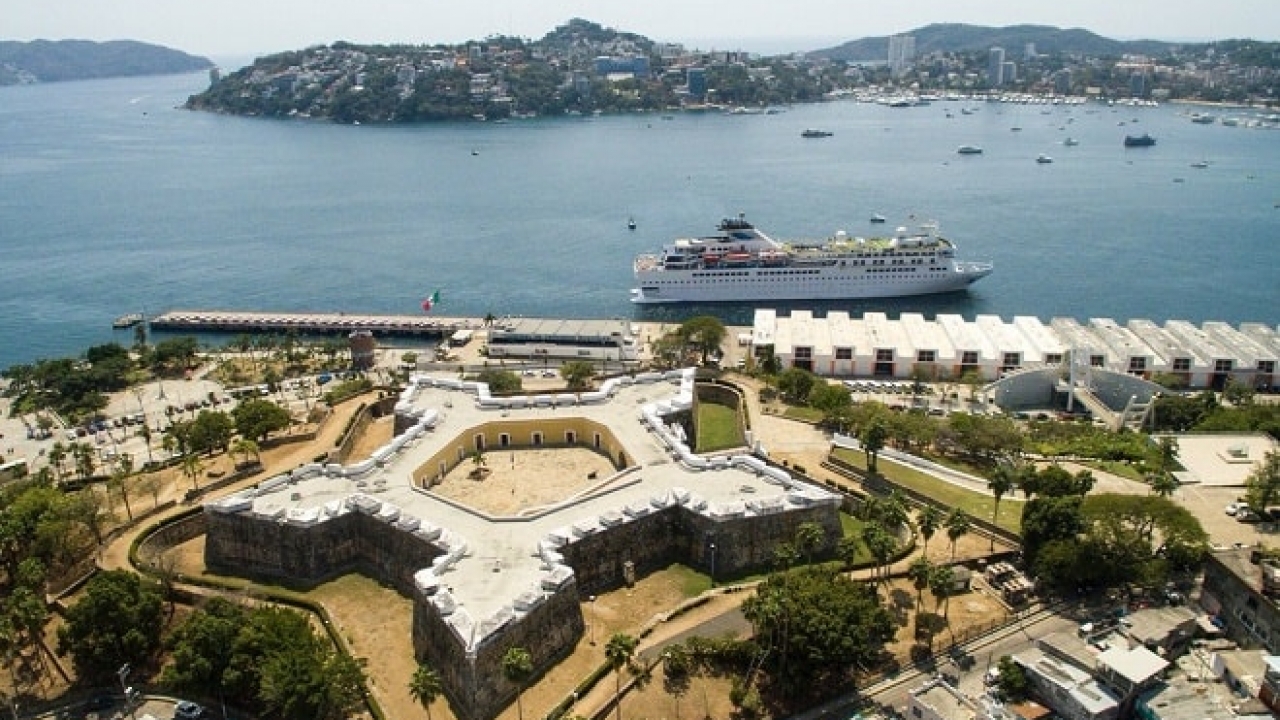
San Diego Fort is Acapulco's most important historic monument and its best cultural visit. It is a fortress with the characteristic star-shaped plan (pentagonal, with bastions), built at the start of the 17th century and rebuilt in the 18th after an earthquake, to defend the port and the treasure of the Manila Galleon from attacks by English and Dutch pirates and privateers. Today it houses the Acapulco Historical Museum, run by INAH, with beautifully mounted rooms telling the fascinating history of the port: its pre-Hispanic origins, the trans-Pacific trade with Asia through the 'Nao de China', the silver that sailed east, the pirate attacks, the Acapulco Fair and the siege the fortress endured during the War of Independence at the hands of José María Morelos's forces. It is the best way to understand why Acapulco was for centuries one of the keys to the Spanish empire. The building was damaged by Hurricane Otis in 2023; check that it is open and what its hours are before going. Getting there: it is downtown, next to the Costera, near the zócalo. Best time: in the morning, when it is cooler. Tips: on Sundays admission is free for Mexicans and residents; the museum generally closes on Mondays.
ℹ️ Distance: Downtown Acapulco, next to the Costera and the zócalo · Best time: Mornings; generally closed on Mondays (check it has reopened after Otis) · Admission: $ 155 MXN general public; $ 85 MXN nationals and residents in Mexico; free on Sundays (nationals/residents), under-13s, students and teachers with ID (source: INAH 2026 fee schedule, verified July 2026) · Duration: 1.5 to 2 hours
3
Caleta and Caletilla beaches
The historic beaches of Acapulco Tradicional, in a small bay of calm water, ideal for families and for swimming.
Caleta and Caletilla are twin beaches in Acapulco Tradicional, separated by a small peninsula, which were the fashionable beaches in the resort's first golden age, before the Costera was developed. Their great advantage is that they are sheltered in an inner bay of calm, shallow water, which makes them ideal for swimming and for going with children, unlike the more open beaches of the big bay. They are very local, family beaches, with palapas, seafood restaurants right on the sand and plenty of life at weekends. From the Caleta jetty, boats leave for Roqueta island and the glass-bottom boats that show the submerged image of the Virgin of Guadalupe. The Mágico Mundo Marino aquarium is also here, a classic family outing. This is the place to feel the Acapulco of always, popular and unpretentious. Getting there: by taxi or on the Costera buses to Caleta, at the western end of the Tradicional. Best time: weekdays for fewer people; at weekends there is a big local buzz. Tips: calm water, ideal for children; bring cash for the palapas and the boats.
ℹ️ Distance: Acapulco Tradicional, western end (Caleta peninsula) · Best time: Weekdays for fewer people; calm water year-round · Admission: Free (public beaches); palapas and boats with a minimum spend (verified July 2026) · Duration: Half a day
4
Roqueta island and the submerged Virgin
A small island off Caleta with a beach, snorkeling and a lighthouse, reached by boat; on the way you can see the submerged image of the Virgin of Guadalupe.
Roqueta island is a small islet off the beaches of Caleta and Caletilla, one of the best-loved nature outings in Acapulco Tradicional. It is a few minutes away by boat, and many of the boats are glass-bottomed, which lets you see the seabed on the way, including the famous submerged image of the Virgin of Guadalupe, a sculpture placed underwater that draws devotion and is one of the port's best-loved attractions. On the island there is a calm beach for swimming, spots for snorkeling among the fish, a historic lighthouse you can walk up to for views of the bay, and seafood restaurants. It is a good half-day plan combining a boat ride, a swim, nature and a touch of popular devotion, all a few minutes from downtown. Getting there: by boat from the Caleta jetty (round trip, in various formats). Best time: days when the sea is calm; mornings to make the most of the island. Tips: pick the glass-bottom boat to see the submerged Virgin; bring snorkeling gear if you have it, sunscreen and cash.
ℹ️ Distance: Off Caleta; a few minutes by boat · Best time: Calm sea and mornings · Admission: Round-trip boat approx. $ 100-200 MXN per person; glass-bottom boat somewhat more (verified July 2026) · Duration: Half a day
5
Bay beaches (the Costera and Acapulco Dorado)
The great horseshoe of the bay with the longest and liveliest beaches: Hornos, Hornitos, Condesa, Icacos, the heart of hotel Acapulco.
Acapulco's great bay, with its unmistakable horseshoe shape, holds the city's longest and liveliest beaches, lined by the Costera Miguel Alemán, the avenue that is the heart of 'Acapulco Dorado'. From west to east come beaches like Hornos and Hornitos (more traditional and popular), Condesa (the liveliest, with bars, restaurants and a young crowd) and Icacos (wider, toward the naval base), all facing the row of classic hotels that made the port famous. They are golden-sand beaches with varying surf —some calmer, others rougher— ideal for combining a swim with life on the Costera: palapas, water sports, vendors, banana boat rides and parasailing. In the late afternoon and at night, this area concentrates much of Acapulco's nightlife, with its restaurants and clubs. This is the most classic and boisterous Acapulco, the postcard of the bay lined with hotels. Getting there: along the Costera, reachable on foot from the hotels or on the buses that run its length. Best time: year-round; the dry season (Nov-May) is best. Tips: check the surf before swimming and respect the flags; for calmer beaches, choose Caleta or Puerto Marqués.
ℹ️ Distance: Along the Costera Miguel Alemán (Acapulco Dorado) · Best time: Dry season (Nov-May); surf varies from beach to beach · Admission: Free (public beaches); loungers and palapas with a minimum spend (verified July 2026) · Duration: Half a day or more
6
Pie de la Cuesta and the Coyuca lagoon
A long beach open to the Pacific, famous for its sunsets (with heavy surf, not safe for swimming) and, behind it, the freshwater Coyuca lagoon.
Northwest of the city, Pie de la Cuesta is a long, narrow tongue of land between the ocean and a lagoon, famous for two things: its sunsets, considered among the most spectacular in Mexico, and its heavy surf and dangerous currents, which mean it is NOT a beach for swimming. You come here to watch the sun drop into the Pacific from a hammock or a palapa, coconut or beer in hand, not to swim in the sea. Just behind the beach is the Coyuca lagoon, a large body of fresh water ringed by mangroves, coconut palms and islands, ideal for boat rides, waterskiing, birdwatching and a quiet swim (unlike the sea). Boat trips on the lagoon, among the vegetation and the birds, are one of the area's great draws, and there are fish and seafood restaurants along its shores. It is a half-day or sunset escape, very different from the bustle of the Costera. Getting there: by taxi or car to the northwest of the city (about 20-30 min). Best time: for the sunset, any clear day. Tips: do NOT go into the sea at Pie de la Cuesta (dangerous surf and currents); to swim, do it in the lagoon; bring cash for the palapas and the boat rides.
ℹ️ Distance: Northwest of the city, about 20-30 min · Best time: Sunset, any clear day · Admission: Beach and access free; boat ride on the lagoon approx. $ 150-400 MXN per person (verified July 2026) · Duration: Half a day / sunset
7
Acapulco Diamante and Puerto Marqués
The modern, upscale area to the southeast, with high-end hotels, Revolcadero beach and the calm bay of Puerto Marqués.
Acapulco Diamante is the city's most modern and exclusive area, developed from the 1980s and 1990s to the southeast, toward Punta Diamante. This is where the big high-end resorts, the luxury homes, the golf courses and the newest beaches are concentrated, in an atmosphere very different from the bustle downtown. Revolcadero beach is wide and spectacular, though the surf is heavy (more for walking and watching the sea than for a quiet swim). At the heart of the area is the bay of Puerto Marqués, a sheltered cove of calm water, ideal for swimming and for spending the day, with a long row of seafood restaurants and palapas right on the beach, very popular with locals at weekends. It is one of the best places in the port to eat fresh fish and seafood facing the sea in a quiet setting. This is contemporary Acapulco, chosen by those looking for modern resorts and a more relaxed feel. Getting there: southeast of the city, on the way to the airport; by taxi or car. Best time: year-round; Puerto Marqués is busy at weekends. Tips: to swim, choose the calm bay of Puerto Marqués; Revolcadero is more for the scenery. Make the most of the seafood by the water.
ℹ️ Distance: Southeast of the city, toward Punta Diamante and the airport · Best time: Year-round; Puerto Marqués lively at weekends · Admission: Public beaches free; food and drink at palapas and restaurants extra (verified July 2026) · Duration: Half a day or more
8
The Chapel of Peace and the bay lookouts
An ecumenical chapel high above Las Brisas, surrounded by gardens, with an enormous cross and panoramic views over the whole bay.
High up in the residential district of Las Brisas, on the hills that ring the bay, stands the Chapel of Peace, an ecumenical sanctuary surrounded by gardens with one of the best panoramic views in all of Acapulco. The complex, built at the behest of a wealthy family in memory of their children, is presided over by an enormous cross tens of meters high, visible from much of the city, and has an air of quiet contemplation rare in the busy port. From its lookouts you take in the whole horseshoe of the bay, with the Costera, the hotels and the sea stretching to the horizon; it is an especially beautiful place at sunset, when the city starts to light up. It is a quiet, free visit (a donation is appreciated) that offers a break and a different perspective on the Acapulco of beaches and partying. Getting there: by taxi up the hills of Las Brisas (best to go and come back with the same taxi or app, since there are not many up there). Best time: at sunset, for the best views and light. Tips: respect the contemplative mood of the place; bring some cash for the donation; combine it with a sunset.
ℹ️ Distance: High in Las Brisas, above the bay · Best time: Sunset, for the views and the light · Admission: Donation/token admission approx. $ 20-40 MXN (verified July 2026) · Duration: 45 min to 1 hour
9
The zócalo and the Cathedral of La Soledad
The heart of Acapulco Tradicional: the main tree-shaded square and the peculiar cathedral of blue domes with an eastern air.
Acapulco's zócalo (plaza Álvarez) is the heart of Acapulco Tradicional and of the city's everyday life, a space very different from the glamour of the Costera. It is a square shaded by enormous trees, with its bandstand, its benches, its shoeshiners, its old-time cafes and ice-cream parlors, and a genuine, day-to-day atmosphere where neighbors, fishermen and visitors mix. It is the best place to feel the pulse of the Acapulco of always. Presiding over the square is the Cathedral of Our Lady of La Soledad, a peculiar and very photogenic church: its blue domes with yellow detailing and its almost eastern, mosque-like air give it a look that is unique and unusual among Mexican churches (its design is said to have had something to do with the fact that it was originally going to be a film set or a cinema). It is one of the symbols of the historic center. Around the zócalo stretches working-class Acapulco: the malecón, the markets, the food stalls and the narrow streets of downtown. Getting there: downtown, next to the malecón; by taxi or on the Costera buses. Best time: at sunset and at night, when the square comes alive. Tips: try an ice or a coffee on the square, walk the nearby malecón and combine it with San Diego Fort, very close by.
ℹ️ Distance: Downtown Acapulco, next to the malecón · Best time: Sunset and evening, when the square comes alive · Admission: Free (public square and church) · Duration: 1 hour (more with the malecón)
Advertisements
What nobody tells you

💵 Prices

Tickets

TypePrice
La Quebrada cliff diving show (lookout)Approx. $ 100 MXN per person at the lookout; the divers also receive tips; daily shows (source: dondeir.com and local press, verified July 2026)
San Diego Fort — Acapulco Historical Museum (INAH)$ 155 MXN general public; $ 85 MXN nationals and residents in Mexico; free on Sundays (nationals/residents), under-13s, students and teachers with ID (source: INAH 2026 fee schedule, verified July 2026)
Public beaches (Caleta, Condesa, Icacos, etc.)Free (open access). Loungers/umbrella at clubs or palapas with a minimum spend (verified July 2026)
Boat to Roqueta island / submerged VirginApprox. $ 100–200 MXN per person round trip; glass-bottom boat somewhat more (source: Caleta operators, verified July 2026)
Chapel of Peace (Las Brisas)Donation/token admission approx. $ 20–40 MXN (verified July 2026)
🔄 updated monthlyOfficial / reference values · double-check when buying

Activities and tours

ActivityPriceDurationOperator
Boat trip around the bay (daytime, or at night with a party)Approx. $ 350–800 MXN per person depending on the type2 to 3 hoursBoat operators on the Costera and the malecón
Sport fishing (sailfish, mahi-mahi, marlin)Panga/boat from approx. $ 3,000–5,000 MXN; private charter $ 7,000–14,000 MXN per boat (half day; market range, verified July 2026)4 to 8 hoursSkippers and fishing clubs in the port
Boat ride on the Coyuca lagoon (Pie de la Cuesta)Approx. $ 150–400 MXN per person1 to 2 hoursBoatmen's cooperatives at Pie de la Cuesta
Snorkeling at Roqueta islandApprox. $ 300–600 MXN per person with gearHalf a dayCaleta operators
Parasailing / water sports in the bayApprox. $ 400–900 MXN depending on the activity10 to 30 minOperators on the Costera beaches
Night tour and nightlife (clubs on the Costera/in Diamante)Admission/minimum spend varies, from approx. $ 300 MXNOne nightAcapulco clubs and bars
🔄 updated monthlyOfficial / reference values · double-check when buying
Advertisements

🚌 How to get there and distances

Getting around

ModePriceDurationNotes
Taxi (the main way for visitors to get around)Rides along the Costera approx. $ 60–150 MXN; downtown or Diamante approx. $ 150–400 MXN, in cash (verified July 2026)VariableTaxis are the transport of choice in Acapulco and there are plenty of them. They do NOT use a meter: ALWAYS agree the fare before getting in. Since there are no ride-hailing apps (see below), it is best to ask your hotel or restaurant to call you a taxi from a trusted stand, especially at night. They are paid in cash.
Camiones / colectivos along the CosteraApprox. $ 10–15 MXN per ride, cash to the driver (verified July 2026)VariableThe camiones (city buses) run the whole length of the Costera Miguel Alemán between Caleta (downtown) and the Icacos/Diamante area, with the destination written on the windshield. Very cheap and frequent, though slow at rush hour. You pay in cash directly to the driver: there is no rechargeable card and no app or QR payment on Acapulco's city transport.
Ride-hailing apps (Uber, DiDi): they do NOT operate in Acapulco--Important: unlike almost all of Mexico, Uber and DiDi do NOT work in Acapulco or in the state of Guerrero. The state government blocked their entry and announced it was developing its own official app for authorized transport, which as of mid-2026 is still not in general operation. That is why visitors get around by taxi (agreeing the fare) or by camión. Source: Xataka México and El Sol de Acapulco, verified July 2026.
App for planning your routeFree (mobile data)-To find your way and work out routes and times, Google Maps works well in Acapulco; Moovit also has some coverage of the city transport. Neither replaces the taxi for door-to-door travel, since there is no ride-hailing app to order and pay for a car (verified July 2026).
Rental carFrom approx. $ 700–1,200 MXN per day (verified July 2026)Per dayHandy for moving between the three zones and for getaways to Pie de la Cuesta or the Diamante area. Traffic downtown can be heavy. Picked up at the airport or at agencies on the Costera.
🔄 updated monthlyOfficial / reference values · double-check when buying

How to get there

RouteAirlines / operatorsAvg. priceDuration
Mexico City → Acapulco (bus, Autopista del Sol)Estrella de Oro, Costa Line, FuturaApprox. $ 500–900 MXN in first class/luxury (market range, verified July 2026)Approx. 4 to 5 hours
Airport (ACA) → Costera / Diamante areaAuthorized taxis and transfers (no Uber/DiDi)Authorized taxi approx. $ 300–600 MXN depending on the area, in cash (verified July 2026)20 to 40 min
Mexico City → Acapulco (car, Autopista del Sol)Toll highwayTolls approx. $ 500–700 MXN for the trip (market range, verified July 2026)Approx. 4 hours
Zihuatanejo → Acapulco (bus)Estrella de Oro, Costa LineApprox. $ 350–550 MXN (market range, verified July 2026)Approx. 4 to 5 hours
Domestic flights to Acapulco (ACA)Aeroméxico, Volaris, VivaAerobusDepends on how far ahead you book and on the season (check)From Mexico City approx. 1 hour
🔄 updated monthlyOfficial / reference values · double-check when buying

🏨 Where to stay

No exact prices: a scale from $ (budget) to $$$$$ (luxury), with 2-3 options per category.

CategoryPriceRecommended options
Luxury (Acapulco Diamante)$$$$$Approx. US$ 250–600+ per night. High-end resorts in the Diamante area and Las Brisas, with bay views, private beaches and premium services. Contemporary, exclusive Acapulco. Worth booking well ahead.
Classic Costera hotels (Acapulco Dorado)$$$$$Approx. US$ 90–200 per night. The big traditional hotels facing the bay along the Costera Miguel Alemán, many of them with history, a pool and right on the beach. The heart of the Acapulco of always.
Mid-range hotels$$$$$Approx. US$ 45–90 per night. Mid-range hotels on the Costera and in Acapulco Tradicional, practical and well located, with good value for enjoying the beach without overspending.
Budget / guesthouses (Acapulco Tradicional)$$$$$Approx. US$ 25–45 per night. Simple hotels and guesthouses downtown, in Caleta and in the traditional districts, chosen by travelers on a tight budget. A good base for La Quebrada and San Diego Fort.
Specific establishments (verified names)$$$$$From INEGI's DENUE (data as of 20/05/2026), which lists 357 lodgings: Acapulco Princess and Palacio Mundo Imperial, both in the Mundo Imperial complex in the Zona Diamante (https://www.mundoimperial.com); Fiesta Americana Villas Acapulco; Hotel Emporio Acapulco; HS Hotsson Smart; and Mayan Palace (Vidanta). link out of service: hotelemporio.com, which publishes the listing, resolves but does not respond.

🍴 Where to eat

TypePriceOptions / signature dish
Seafood places and pescado a la talla$$$$$Main course approx. $ 150–400 MXN. Pescado a la talla, ceviches, octopus and shrimp are the stars. The seafood places on the Costera, in Caleta and in Puerto Marqués serve fresh Pacific catch.
Beach restaurants and palapas$$$$$Approx. $ 120–300 MXN per dish. Palapas right on the sand on the bay beaches and at Pie de la Cuesta, ideal for spending the day with seafood, a cold beer and your feet in the sand.
Mexican cooking and antojitos$$$$$Approx. $ 70–180 MXN per dish. Fondas, taquerías and neighborhood kitchens downtown and in the barrios, with Guerrero-style green pozole (a Thursday classic), tacos, stews and home cooking.
Restaurants with a view and fine dining (Las Brisas / Diamante)$$$$$Approx. $ 500–1,200 MXN per person. Landmark restaurants on the cliffs of Las Brisas and in the Diamante area, with signature cooking, gourmet seafood and spectacular views of the bay lit up at night.
Specific places (verified names)$$$$$Listed by name in the DENUE: Shu (https://shu.com.mx), 100% Natural (https://www.100natural.com), Noreste Grill Costera, La Casa de los Abuelos, Península Restaurante and Baby'O. no menu published on the establishment'S WEBSITE for most of them.
Advertisements

📖 History of Acapulco de Juárez

Origins, formation and what the sources say.

Pre-Hispanic origins and a privileged bay

Long before Acapulco was a colonial port or a glamorous beach resort, the region was inhabited by Indigenous peoples of the Guerrero coast, an area of great cultural and linguistic diversity. Communities of different origins lived from fishing, farming, gathering and coastal trade, making the most of one of the deepest and most sheltered bays on the whole Pacific side of Mesoamerica.

The name 'Acapulco' comes from Nahuatl and is usually read as 'place of the big reeds' or 'where the reeds were destroyed' (from 'ácatl', reed or cane, and elements indicating place or destruction). The toponym reflects the area's original landscape, with its reed beds and tropical vegetation. The bay, with its horseshoe shape and deep water, was an exceptional geographical feature that would soon catch the eye of the Spanish conquistadors.

That privileged geography —a deep bay, sheltered from the swell and easy to defend— would be precisely the reason for its historical destiny. Where the original peoples saw a good place to fish and take shelter, the Spanish saw the ideal natural port to connect New Spain with the other side of the Pacific, opening one of the most extraordinary trading chapters in world history.

The meaning of 'Acapulco'
The most widespread etymology derives 'Acapulco' from Nahuatl as 'place of the big reeds' or 'where the reeds were flattened', from 'ácatl' (reed). There are variants in the reading, as is usual with pre-Hispanic toponyms.
Source: https://es.wikipedia.org/wiki/Acapulco_de_Ju%C3%A1rez

The Manila Galleon: the 'Nao de China' and trade with Asia (1565–1815)

Acapulco's great historical moment began in 1565, when the navigator and friar Andrés de Urdaneta discovered the 'tornaviaje': the sailing route that allowed ships to return from the Philippines to the Americas by crossing the Pacific from west to east, riding the currents and the northerly winds. Until then, ships could reach Asia but did not know how to get back. Urdaneta's tornaviaje made regular trade possible and turned Acapulco into a key piece of the Spanish empire.

From that year and for 250 years, until 1815, the Manila Galleon —known in Mexico as the 'Nao de China'— crossed the ocean linking Manila with Acapulco. These enormous ships, licensed by the Spanish Crown for trade between its colonies, brought Mexico silks, porcelain, ivories, spices, fans and luxury goods from Asia, which were distributed from Acapulco across the Americas and sent on to Europe via Veracruz. In exchange, Mexican silver sailed east. It was one of the longest and richest trade routes in history.

The galleon's arrival gave rise to the famous Acapulco Fair, during which the small port filled with merchants from all over New Spain who came to buy the Asian goods. For a few weeks, Acapulco became one of the busiest trading centers in the world. The rest of the year, by contrast, it went back to its quiet life as a remote port, waiting for the next nao. This trans-Pacific trade made Acapulco a doorway between Asia and the Americas for two and a half centuries.

Urdaneta's tornaviaje (1565)
In 1565 Andrés de Urdaneta discovered the return route (tornaviaje) from the Philippines to the Americas, which made the regular Manila Galleon route between Manila and Acapulco possible. This milestone is highlighted in the Navigation Room of the Historical Museum at San Diego Fort.
Source: https://inah.gob.mx/museos/museo-historico-de-acapulco-fuerte-de-san-diego

Pirates, San Diego Fort and Independence

The immense wealth passing through Acapulco made the port a coveted target for Spain's enemies. Through the 16th and 17th centuries, English and Dutch privateers and pirates —among them Francis Drake and Thomas Cavendish— stalked the Mexican Pacific coast in search of the galleon and attacked ports and ships. Acapulco needed protection.

To defend the port and its treasure, the Spanish Crown ordered the building of San Diego Fort, a fortress with the characteristic star-shaped plan (pentagonal, with bastions), erected at the start of the 17th century. After being damaged by an earthquake, it was rebuilt in the 18th century. From its walls, the cannon watched the mouth of the bay and guarded the Asian goods and the silver. The fort is today the city's most important historic monument and houses the Acapulco Historical Museum.

During the War of Independence, at the start of the 19th century, San Diego Fort took center stage again. The insurgent forces commanded by José María Morelos laid siege to the fortress, held by the royalists, in a long blockade that is part of the epic of independence. The collapse of the galleon trade in those very years (the last nao sailed around 1815) also marked the end of the golden age of colonial Acapulco. The port then entered a long decline that would last almost a century.

San Diego Fort and what it was for
San Diego Fort, star-shaped in plan, was built in the 17th century and rebuilt in the 18th to defend Acapulco from the pirate attacks that targeted the Manila Galleon. It was the scene of a siege during the War of Independence and today it is the home of the Acapulco Historical Museum (INAH).
Source: https://inah.gob.mx/museos/museo-historico-de-acapulco-fuerte-de-san-diego

Rebirth as a beach resort: the golden age of the jet set (1940s–1970s)

After a century of relative neglect following the end of the galleon trade, Acapulco was reborn in the 20th century with an entirely new calling: tourism. From the 1930s and, above all, the 1940s and 1950s, the city turned into Mexico's great beach resort and one of the most glamorous destinations in the world. Building the highway from Mexico City brought the bay closer to the capital, and hotels, restaurants and nightclubs flourished along the coast.

Acapulco became the favorite stage of the international jet set. Hollywood stars —from Elizabeth Taylor to Frank Sinatra—, tycoons, artists and politicians came to the bay to enjoy the sun, the sea and the nightlife. The port appeared in films, in magazines and in the imagination of half the planet as a byword for luxury, romance and fun. It was the golden age of 'Acapulco Tradicional' and 'Acapulco Dorado', with its fashionable beaches at Caleta and the young Costera.

That era also gave birth to the show that would become the city's emblem: the La Quebrada cliff divers. From a cliff some 35 meters above a narrow Pacific inlet, brave young men began throwing themselves into the void, timing to the second the exact moment of the wave so as not to smash into the rocks. The tradition, kept up over generations, is still today one of Acapulco's great draws, a symbol of its daring and its singular spirit.

Acapulco and the international jet set
Between the 1940s and the 1970s, Acapulco was one of the most glamorous tourist destinations in the world, frequented by Hollywood stars and the international jet set, which cemented its fame as Mexico's legendary beach resort.
Source: https://es.wikipedia.org/wiki/Acapulco_de_Ju%C3%A1rez
The La Quebrada cliff divers
The La Quebrada cliff divers leap from a cliff some 35 meters high into a narrow Pacific inlet, timing the wave so as to enter the water without smashing into the rocks. It is a tradition decades old and the city's most iconic spectacle.
Source: https://visitacapulco.travel/experiencias/la-quebrada/

Modern Acapulco, the Diamante area and Hurricane Otis (2023)

From the 1980s and 1990s on, Acapulco kept growing and diversifying. While the 'Acapulco Dorado' of the Costera Miguel Alemán kept its pulse of hotels and nightlife, a new luxury area was developed to the southeast: 'Acapulco Diamante', toward Punta Diamante, Revolcadero and Puerto Marqués, with high-end resorts, homes and golf courses. The city consolidated as a destination with three faces —Tradicional, Dorado and Diamante— able to offer everything from colonial history to contemporary luxury.

The port, however, also faced challenges in recent decades: competition from other beach destinations, security problems tied to the dynamics of the state of Guerrero, and the difficulty of maintaining its infrastructure. Even so, Acapulco remained a destination much loved by Mexicans, especially those from the capital, and a national tourism emblem with its natural beauty intact.

In October 2023, Acapulco lived through one of the hardest episodes in its recent history: Hurricane Otis, which made landfall as a category 5 after an explosive and unprecedented intensification, hit the city with devastating winds. It caused serious damage to hotels, infrastructure, homes and services, and even historic buildings such as San Diego Fort were affected. Since then, Acapulco has embarked on a process of reconstruction and gradual reopening. The bay, the sunsets, the cliff divers and the history of the port are all still there, while the city works to recover its place as one of the great destinations of the Mexican Pacific.

Hurricane Otis (October 2023)
Hurricane Otis struck Acapulco in October 2023 as a category 5, after a rapid and unusual intensification, causing severe damage to the city and its tourism infrastructure. Recovery has been gradual in the months and years since.
Source: https://es.wikipedia.org/wiki/Hurac%C3%A1n_Otis

📚 Bibliography

  • Wikipedia (ES) — «Acapulco de Juárez»: https://es.wikipedia.org/wiki/Acapulco_de_Ju%C3%A1rez
  • Wikipedia (ES) — «Galeón de Manila»: https://es.wikipedia.org/wiki/Gale%C3%B3n_de_Manila
  • Wikipedia (ES) — «Huracán Otis»: https://es.wikipedia.org/wiki/Hurac%C3%A1n_Otis
  • INAH — «Museo Histórico de Acapulco, Fuerte de San Diego»: https://inah.gob.mx/museos/museo-historico-de-acapulco-fuerte-de-san-diego
  • Sistema de Información Cultural (Secretaría de Cultura) — «Fuerte de San Diego»: https://sic.gob.mx/ficha.php?table=museo&table_id=60
  • FIDETUR Acapulco (official tourism) — «La Quebrada»: https://visitacapulco.travel/experiencias/la-quebrada/
  • Clavadistas de La Quebrada (sitio oficial): https://www.clavadistaslaquebrada.com/
  • El Universal — «Cuánto cuesta la entrada a La Quebrada»: https://www.eluniversal.com.mx/destinos/cuanto-cuesta-la-entrada-a-la-quebrada-de-acapulco/

❓ Frequently asked questions

How is Acapulco doing after Hurricane Otis in 2023?+
Hurricane Otis (category 5) hit Acapulco in October 2023 and caused serious damage to hotels, infrastructure and the city. Since then it has been rebuilding and reopening gradually. The bay and the natural attractions are still intact, but it is worth checking the state of specific hotels and services when planning your trip, and looking for up-to-date information.
What time is the cliff diving at La Quebrada?+
There are shows every day, usually at midday (around 13:00) and several in the evening (19:00, 20:00, 21:00), plus a special night show (around 22:00) in which the divers leap lit by torches. Get there early and confirm the times on the day.
Is it safe to travel to Acapulco?+
Acapulco is a destination of contrasts: tourist activity is concentrated in specific areas (Costera, Diamante, Tradicional) that receive visitors. Guerrero has security problems in some areas. It is best to stick to the tourist zones, not to display valuables and to check up-to-date official advice before traveling. At night, since Uber and DiDi do NOT work in Acapulco, the safest thing is to have your hotel or restaurant call you a taxi from a trusted stand rather than flag one down in the street, and to agree the fare before getting in.
Are there Uber or DiDi in Acapulco, and how do I get around?+
No: unlike almost all of Mexico, Uber and DiDi do NOT operate in Acapulco or in the state of Guerrero (the state government blocked their entry and promised its own official app, which as of mid-2026 is still not working generally). Visitors get around mostly by taxi, which is plentiful but does not use a meter: you have to agree the fare before getting in and pay in cash (approx. $ 60-150 MXN along the Costera, more downtown or to Diamante). The other cheap option is the camiones along the Costera ($ 10-15 MXN, cash to the driver). To find your way you can use Google Maps or Moovit. Renting a car ($ 700-1,200 MXN/day) gives you freedom between the three zones (verified July 2026).
Which beach is best for swimming with children?+
Caleta and Caletilla, in Acapulco Tradicional, have calm, sheltered water, ideal for families. The bay of Puerto Marqués is calm too. Avoid swimming at Pie de la Cuesta and Revolcadero, which have heavy surf and dangerous currents (they are for watching the sunset, not for swimming).
Is San Diego Fort worth it?+
Yes. San Diego Fort is Acapulco's best historical visit: a star-shaped fortress that today houses a beautifully mounted INAH museum telling the fascinating history of the port, the Manila Galleon, the trade with Asia and the pirates. An unmissable cultural visit, at a very affordable price.
Sources consulted (14)
Still planning?
Explore more destinations in Mexico
See all destinations →
Advertisements
Image credits
Photos from Wikimedia Commons, each under its own licence (CC BY, CC BY-SA or public domain). Open each file to see its author and licence.
Museo Fuerte de San Diego