Viajá con Gus
HomeMexicoTepoztlán
Tepoztlán
🇲🇽 Mexico · Central Mexico

Tepoztlán

Jump to what you need
📌State
Morelos (Mexico). A Pueblo Mágico set in a valley at the foot of the Tepozteco cliffs, at about 1,700 m of altitude, just over an hour south of Mexico City and 25-30 min from Cuernavaca. It has been a Pueblo Mágico since 2002 (it lost and regained the designation over the years)
📌Best time to go
October to May (the dry season), with mild, warm weather ideal for climbing the Tepozteco. The rainy season (June to September) leaves the valley green but can make the climb harder. Weekends are busy and full of atmosphere; midweek is quieter. The big festival is on 8 September (the Nativity), along with carnival and the dance of the Chinelos
📌Suggested days
1 to 2 days. In a day you can climb the Tepozteco and walk the center, the former convent and the market; with 2 days you can add a temazcal, more food and the alternative trails along the cliffs
📌Getting there
By Pullman de Morelos bus from the Terminal Central del Sur (Taxqueña, on Line 2 of the Mexico City Metro) in 1 to 1.5 h; or from Cuernavaca by combi/bus in 30-40 min. It has no airport: people use Mexico City's (AICM) or Felipe Ángeles (NLU)
📌Language and currency
Spanish; Mexican peso (MXN). Many market stalls and the trail take cash only: bring change
💱 MXN exchange rate
Loading rate…
🌤️ Weather in Tepoztlán
Loading weather…

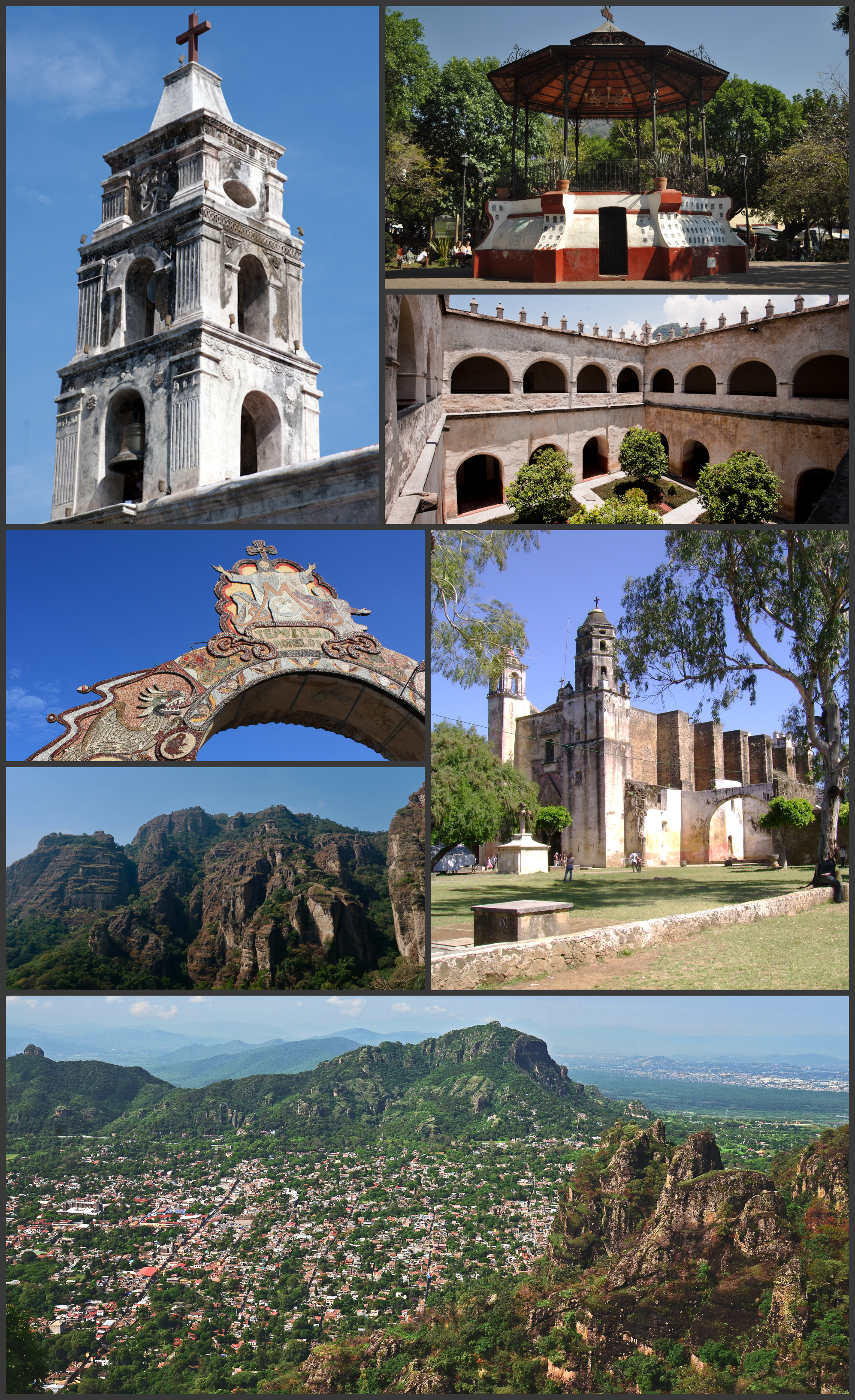
Tepoztlán is one of the most singular and charismatic Pueblos Mágicos in Mexico, set in a spectacular valley in Morelos at the foot of imposing rock cliffs, just over an hour from Mexico City. It's famous for its mix of living pre-Hispanic roots, a mystical and spiritual atmosphere, Indigenous traditions, colorful markets and a bohemian mood that draws wellness seekers, nature lovers and people escaping the capital in equal measure.

Its great icon is the Tepozteco pyramid, a pre-Hispanic temple dedicated to Tepoztécatl (the pulque deity) perched atop a hill, reached by a demanding trail rewarded with magnificent views of the valley. Down below, the town keeps its Dominican former convent (a World Heritage Site), its market, its cobbled streets and the famous tradition of 'itacates' and nieves, alongside a growing range of temazcales, therapies and healthy cooking.

This guide covers the essentials of Tepoztlán: the climb to the Tepozteco pyramid, the former convent of la Natividad, the market and the food, the mystical and wellness scene, and its natural surroundings. It's a destination for combining light adventure, culture, spirituality and good eating, ideal for a weekend break from Mexico City or as part of a route through Morelos.

📖 History of Tepoztlán

Tepoztlán is a very old town of Nahua roots, associated in mythology with the birth of Quetzalcóatl. High on a hill its people built the Tepozteco temple, dedicated to Tepoztécatl, the pulque deity. After the conquest, the Dominicans raised the convent of la Natividad in the sixteenth century, today a World Heritage Site. The town kept its Indigenous traditions and its mystical character alive, and is today a Pueblo Mágico and a wellness destination. The full story is on our history page.

Read the full history ↓

🏛️ Tepoztlán is in Morelos

The province of 'eternal spring' south of the capital: land of Xochicalco and of ancient Cuauhnáhuac, refuge of Cortés, of the mysticism of Tepoztlán and birthplace of Emiliano Zapata and his cry of 'Tierra y Libertad'.

Read the history of Morelos →

🗺️ What to see

1
Tepozteco pyramid
A pre-Hispanic temple high on a hill, with a demanding climb and spectacular views.
The Tepozteco pyramid is Tepoztlán's great symbol and its most famous draw. It's a pre-Hispanic temple built by the Nahuas towards the Late Postclassic (approx. 1150-1350 AD) on top of a steep hill, dedicated to Tepoztécatl, a deity associated with pulque and ritual intoxication, one of the so-called 'Centzon Totochtin' or 'four hundred rabbits' of Nahua mythology. To reach it you have to climb a steep, rocky trail of about two kilometers, a demanding walk that takes one to two hours depending on your fitness. The effort is more than repaid: from the site you get spectacular panoramic views of the Tepoztlán valley, the cliffs and the town below. The small restored temple crowns the summit and preserves reliefs and a platform that looks out over the whole Morelos valley. The place also carries a strong symbolic and spiritual charge, tied in local tradition to the mythical birth of Quetzalcóatl. Getting there: the trail starts near the center of town, well signposted. Best time and hours: early in the morning, to avoid the heat and the crowds; the site opens Wednesday to Sunday. Tips: bring water, shoes with good grip and sun protection, and take it slowly; there are water and walking-stick vendors along the way. The site closes on Mondays and Tuesdays.
ℹ️ What it is: A pre-Hispanic temple dedicated to Tepoztécatl, high on a hill · Trail: Approx. 2 km, steep and rocky; 1 to 2 hours up · Admission: $210 MXN foreign visitors / $105 MXN Mexicans and residents (INAH rate, source: official INAH site, verified July 2026); free on Sundays for Mexicans/residents; open Wednesday to Sunday, 9 to 16 h (last entry 15 h) · Duration: Half a day (up, visit and down)
2
Former convent of la Natividad
A 16th-century Dominican convent, a World Heritage Site, in the center of town.
The former convent of la Natividad de la Virgen María is one of Tepoztlán's great treasures and part of the group of early sixteenth-century monasteries on the slopes of Popocatépetl, declared a World Heritage Site by Unesco in 1994. Built by Dominican friars between 1555 and 1580, it's an imposing building with a carved facade, a church, a cloister and an orchard, an outstanding example of sixteenth-century evangelization architecture. Inside it houses a small museum with religious pieces and rooms that tell the story of evangelization and of the town itself. Its famous Plateresque doorway, decorated with motifs combining European and Indigenous elements, its atrium with posa chapels and its convent architecture are of great historical and artistic value. It's the essential cultural stop downtown, a few steps from the market and the square. Getting there: right in the center of town, next to the main square. Best time and hours: in the morning, when there are fewer people. Tips: go into the cloister to take in the frescoes and the architecture; combine the visit with the market, which is right next door.
ℹ️ What it is: A 16th-century Dominican convent, a World Heritage Site (Unesco, 1994) · Distance: Center of town, next to the main square · Admission: $90 MXN approx. for the former convent's site museum (INAH rate, source: INAH, verified July 2026); the atrium and exterior are free · Duration: 45 minutes to 1 hour
3
Market, square and food
The town's colorful market, its antojitos and the famous nieves and itacates.
The center of Tepoztlán, with its square, its market and its cobbled streets, is pure life and color. The market, especially lively at weekends, offers crafts, local produce, herbs and, above all, a delicious range of food: the famous 'itacates' (triangular corn gorditas filled with beans, cheese, squash blossom or rajas), quesadillas, tlacoyos, Morelos antojitos and much more. Tepoztlán is also famous for its nieves (artisanal ices) in varied and sometimes unexpected flavors (such as tequila, mezcal or wine), sold at stalls around the square. The town's culinary offering is wide and good, with restaurants ranging from traditional cooking to healthy, vegetarian and chef-driven options, reflecting the bohemian, wellness-oriented character of the place. Getting there: in the center of town, next to the former convent. Best time and hours: at weekends, when the market is at its fullest; midweek is quieter but there's still plenty on offer. Tips: try the itacates fresh off the griddle and a nieve in an unusual flavor; bring cash, since many stalls don't take cards.
ℹ️ What it is: The market and the main square, the town's culinary heart · Best time: Weekends, when the market is busiest · Admission: Free (you pay for what you eat); itacates and antojitos $20-50 MXN, nieves $35-60 MXN (source: local fares and operators, verified July 2026) · Duration: 1 to 2 hours
4
Mystical atmosphere, temazcales and wellness
The town's spiritual side, with temazcales, therapies and retreats.
Tepoztlán has a reputation as a place of strong energy and mystical character, tied to its pre-Hispanic roots and to the imposing presence of the hills around it. That has made the town a wellness and spirituality destination, with a notable range of temazcales (ritual steam baths of pre-Hispanic origin), alternative therapies, yoga, meditation, retreats and holistic centers. Going through a temazcal, an experience of physical and spiritual cleansing in a domed structure with hot stones and herbs, is one of the destination's signature activities. The rituals usually last between 45 minutes (healing baths) and 90 minutes (full ceremonies), led by a temazcalero who guides the chants, the prayers and the use of copal. The bohemian atmosphere, the galleries and the shops selling crafts and natural products round out a unique profile that sets Tepoztlán apart from other pueblos mágicos. Getting there: temazcal centers are scattered around the town and its surroundings; many include transport from the center. Best time and hours: they're offered all year, generally in the afternoon or at dusk. Tips: book ahead, choose operators with good reviews, wear comfortable clothes and bring plenty of water to rehydrate afterwards; it isn't advisable for people with heart or blood pressure conditions without checking first.
ℹ️ What it is: Temazcales, holistic therapies and wellness retreats · Length of the ritual: 45 min (healing bath) to 90 min (full ceremony) · Admission: $1,300–2,100 MXN per person for couples/groups; $3,890–3,990 MXN individually at premium centers (source: local fares and operators, verified July 2026) · Total duration: 1 to 2 hours
5
Museo Carlos Pellicer and pre-Hispanic art
A small archaeological museum with a notable collection of pre-Hispanic pieces donated by the poet Carlos Pellicer.
Facing the former convent is the Museo Carlos Pellicer de Arte Prehispánico, a compact but high-quality museum housing the collection of Mesoamerican archaeological pieces that the Tabasco poet Carlos Pellicer gathered over his lifetime and donated to the town of Tepoztlán, which he loved so much. The collection includes ceramics, figurines and sculptures from different Mexican cultures, from the Preclassic to the Postclassic. It's a short visit, but one that deepens your understanding of the region's pre-Hispanic past and complements the climb to the Tepozteco pyramid nicely. The building, sober and well kept, also offers a cool break from the bustle of the market. Getting there: downtown, next to the square and the former convent. Best time and hours: any day during museum hours; it usually closes on Mondays. Tips: combine the visit with the former convent, since they're steps apart; it's ideal as a mid-morning activity before or after the market.
ℹ️ What it is: A museum with the pre-Hispanic collection donated by the poet Carlos Pellicer · Distance: Center of town, next to the square and the former convent · Admission: $45-60 MXN general admission (source: local fares and operators, verified July 2026); free on Sundays for Mexicans/residents · Duration: 30 to 45 minutes
6
Atongo valley and the cliffs
The town's spectacular rocky backdrop, with trails, lookouts and options for climbing and abseiling.
The imposing cliffs that surround Tepoztlán —volcanic rock formations up to 2,000 meters high, with silhouettes that popular imagination has christened with names such as 'the Deer' or 'the Elephant'— are the backdrop that defines the town's landscape and one of its great natural draws. Beyond the classic climb to the Tepozteco, the area offers other trails and lookouts, such as those heading into the Atongo valley, with fewer people and views that are just as spectacular. For the more adventurous, local operators offer rock climbing and abseiling on the cliffs, a different way of connecting with the landscape that defines Tepoztlán. Walks and horseback rides around the town, among woods and rock formations, are popular too. Getting there: the access points to the alternative trails and the climbing areas are on the edge of town; for adventure activities it's best to go with a local guide. Best time and hours: the dry season (October to May), in the morning. Tips: hire certified operators for climbing or abseiling, bring trekking shoes and check the weather before setting out.
ℹ️ What it is: The rock cliffs that ring the town; trails, lookouts, climbing and abseiling · Best time: Dry season (Oct-May), in the morning · Admission: Trails, free access; guided climbing/abseiling $500-1,200 MXN per person (source: local fares and operators, verified July 2026) · Duration: Half a day
Advertisements
What nobody tells you

💵 Prices

Tickets

TypePrice
Tepozteco pyramid (archaeological site)$210 MXN foreign visitors / $105 MXN Mexicans and residents (INAH rate, source: official INAH site, verified July 2026); free on Sundays for Mexicans/residents; open Wednesday to Sunday, 9 to 16 h (last entry 15 h)
Former convent of la Natividad (museum)$90 MXN approx. (INAH rate, verified July 2026); the atrium and exterior are free
Museo Carlos Pellicer de Arte Prehispánico$45-60 MXN (source: local fares and operators, verified July 2026); free on Sundays for Mexicans/residents
Temazcal$1,300–2,100 MXN per person for couples/groups; $3,890–3,990 MXN individually at premium centers (source: local fares and operators, verified July 2026)
Antojitos and nievesItacates and antojitos $20-50 MXN; nieves $35-60 MXN (source: local fares and operators, verified July 2026)
🔄 updated monthlyOfficial / reference values · double-check when buying

Activities and tours

ActivityPriceDurationOperator
Climb to the Tepozteco pyramid$210 MXN foreign visitors / $105 MXN Mexicans and residents (INAH rate, verified July 2026)Half a day (up and down)On your own (the INAH trail)
Visit to the former convent and the center$90 MXN approx. for the convent museum (verified July 2026)Half a dayOn your own
Temazcal and wellness experiences$1,300–4,000 MXN per person depending on the center and the format (source: local fares and operators, verified July 2026)1 to 2 hLocal holistic centers (Hostal de la Luz, Luz de Jade and others)
Food walk (itacates, nieves, the market)$100-250 MXN per person (several antojitos and a nieve)1 to 2 hOn your own
Climbing or abseiling on the cliffs$500-1,200 MXN per person (source: local fares and operators, verified July 2026)Half a dayCertified local adventure operators
🔄 updated monthlyOfficial / reference values · double-check when buying
Advertisements

🚌 How to get there and distances

Getting around

ModePriceDurationNotes
On footFreeVariableThe town is walkable; the center is compact and the start of the trail to the Tepozteco is a few blocks from the square. Comfortable shoes for the cobblestones and for the climb
Local taxi$40-80 MXN for a short trip within the town (source: local fares, verified July 2026)VariableFor reaching hotels further out or the start of the trail. You pay in cash and it's best to agree the fare before getting in (there's no meter). Uber/DiDi barely operate in the town
Combis and colectivos (the Tepoztlán-Cuernavaca route)$15-30 MXN per person, cash only to the driver (source: local fares/OCC, verified July 2026)30-40 min to CuernavacaThe combis and colectivos connect Tepoztlán with Cuernavaca (an obligatory stop for many Morelos connections) and nearby towns. They leave from the center/stop on the main avenue. You ALWAYS pay in cash: there is NO rechargeable card, QR code or payment app on Tepoztlán's local transport
App for planning and getting your bearingsFree-For routes, stops and timetables of the area's combis and buses (Tepoztlán-Cuernavaca-Mexico City), Moovit and Google Maps give good coverage. Pullman de Morelos tickets are bought at the counter or at pullman.mx with a card or cash (source: Moovit/Pullman de Morelos, verified July 2026)
🔄 updated monthlyOfficial / reference values · double-check when buying

How to get there

RouteAirlines / operatorsAvg. priceDuration
Mexico City → TepoztlánPullman de Morelos (from the Terminal Central del Sur / Taxqueña)$143–200 MXN (source: local fares and operators, verified July 2026)Approx. 1 to 1.5 h
Cuernavaca → TepoztlánCar, combi or Pullman de Morelos bus$40-70 MXN by combi/bus (source: local fares and operators, verified July 2026)Approx. 30-40 min
Puebla → TepoztlánPrivate car (there's no direct bus route)Tolls approx. $150-250 MXN + fuel (source: local fares and operators, verified July 2026)Approx. 1.5 to 2 h
🔄 updated monthlyOfficial / reference values · double-check when buying

🏨 Where to stay

No exact prices: a scale from $ (budget) to $$$$$ (luxury), with 2-3 options per category.

CategoryPriceRecommended options
Boutique / luxury wellness$$$$$US$ 200–350 a night; hotels such as Amomoxtli (from $4,456 MXN + taxes) or Casa Fernanda, with a spa, a temazcal and views of the Tepozteco
Comfort with charm$$$$$US$ 80–150 a night; boutique inns in town such as the Posada del Tepozteco, with courtyards, a pool and a good location
Mid-range$$$$$US$ 40–75 a night; inns and hotels in the center, comfortable and well placed for exploring the town on foot
Budget$$$$$US$ 20–40 a night; simple hostels and inns, some with their own temazcal included in the price

🍴 Where to eat

TypePriceOptions / signature dish
Morelos cooking and antojitos$$$$$$80-180 MXN per dish; itacates, cecina from Yecapixtla, tlacoyos and antojitos from the market
Healthy and vegetarian cooking$$$$$$150-300 MXN per dish; vegetarian, vegan and health-food restaurants, in keeping with the town's wellness profile
Chef-driven cooking and restaurants with a view$$$$$$300-550 MXN per dish; restaurants with a view of the cliffs and contemporary cooking
Nieves and sweets$$$$$$35-60 MXN per nieve; the famous nieves on the square, in traditional and unusual flavors (tequila, mezcal, wine)
Advertisements

📖 History of Tepoztlán

Origins, formation and what the sources say.

Nahua roots and the myth of Quetzalcóatl

Look up from the square in Tepoztlán and you'll understand why this town has been considered a sacred place for centuries. The Tepozteco cliffs rise almost vertically above the houses, like a wall of volcanic rock carved by the wind, and at their highest point, more than 400 meters above the town, the silhouette of a pyramid stands out. That such a small town should have been, all at once, the mythical cradle of a god, an Indigenous pilgrimage sanctuary, the seat of a World Heritage convent and —centuries later— Mexico's capital of wellness and the mystical says a lot about the power attributed to this corner of Morelos.

Tepoztlán is a town with very old Nahua roots. Its name comes from the Nahuatl 'Tepoztlan', usually read as 'place of copper' or 'of the axe' (from 'tepoztli', copper or metal axe), although tradition also links it to Tepoztécatl, the tutelary deity of the place. The region was inhabited from remote times and formed part of the complex mosaic of lordships of the Central Highlands; by the Late Postclassic it was a tributary lordship within the Mexica sphere of influence.

Tepoztlán holds a prominent place in pre-Hispanic mythology: one of the most widespread traditions associates it with the birth of Quetzalcóatl, the Feathered Serpent, one of Mesoamerica's central deities. That mythical link has fed the town's fame as a place of strong symbolic and spiritual charge, a reputation it keeps to this day. Its ancient inhabitants venerated various deities, among them Tepoztécatl, god of pulque (the fermented maguey drink), of fertility and of ritual intoxication, counted among the 'Centzon Totochtin' or 'four hundred rabbits' of Nahua mythology. In his honor, the temple known as the Tepozteco pyramid was built on top of one of the hills that dominate the valley.

The Tepozteco temple

The Tepozteco pyramid is Tepoztlán's most emblematic pre-Hispanic monument. It's a temple built high on a steep hill, in a strategic position of great ritual significance, dedicated to Tepoztécatl, the pulque deity. Its location, perched above the cliffs with commanding views of the valley, reflects both the importance of the cult and the skill of the ancient Nahua builders in raising sanctuaries in hard-to-reach places.

For centuries the temple was a center of pilgrimage and devotion, drawing the faithful from different places to honor the god of pulque. The effort of the climb was part of the sacred character of the place itself, a constant in many Mesoamerican mountain sanctuaries.

After the conquest, the pre-Hispanic cult was suppressed, but the memory of the Tepozteco and of Tepoztécatl lived on in local tradition, blending with Christian elements. Today the archaeological site is one of the town's great draws, and the figure of Tepoztécatl is still present in local festivals and traditions that preserve that Indigenous substrate.

Evangelization and the convent of la Natividad

After the Spanish conquest, Tepoztlán was evangelized by the religious orders, in this case the Dominican friars. In the sixteenth century, the Dominicans raised the convent of la Natividad de la Virgen María in the center of town, an imposing monastic complex with its church, cloister and atrium, characteristic of the early monasteries built on the slopes of the Popocatépetl volcano.

This convent is part of the group of sixteenth-century monasteries that Unesco inscribed as a World Heritage Site, in recognition of their historical and architectural value and their role in the early evangelization of the region. Its carved facade, which Indigenous hands helped make, and its convent architecture make it a jewel of colonial heritage.

The imposition of Christianity did not entirely erase Indigenous traditions, which survived and mingled with Catholic practice in a syncretism characteristic of Tepoztlán. The town thus kept a strong Nahua identity, visible in its festivals, its language (Nahuatl stayed alive for a long time), its traditions and its relationship with the hills and the Tepozteco.

The golf course rebellion (1995-1996)

If Tepoztlán still has its cliffs unbuilt on and its identity as an Indigenous town, it owes that in large part to an episode that turned it, in the nineties, into a national symbol of environmental resistance. In 1995, Grupo KS —headed by the businessman Francisco Kladt Sobrino and backed by the then governor of Morelos, Jorge Carrillo Olea— pushed an ambitious project to build a luxury golf club on Tepoztlán's communal lands, with a hotel, residences and even a corporate theme park. For the government it was the 'panacea' that would set off a tourism boom; for the town, a direct threat to its land, its water and its way of life.

The response was fierce. The people of Tepoztlán formed the Comité de Unidad Tepozteca (CUT), refused to recognize the official town council, set up a 'free and popular council' and blocked access to the town for months. The conflict escalated into tragedy: on 10 April 1996, at a demonstration put down by the state police, the Tepoztlán farmer Marcos Olmedo Gutiérrez was shot dead. Far from breaking the movement, his death strengthened it and gave it national and international resonance.

The golf club project was suspended. The litigation over the land dragged on for close to two decades, until the Supreme Court finally returned the land to the community. The uprising also contributed to the political erosion of governor Carrillo Olea, who resigned in 1998. That 'victorious battle against global power', as the anthropologist Ana María Salazar Peralta called it, is today part of Tepoztlán's pride and explains why the town defends its heritage and its landscape so fiercely: it isn't a tourism talking point, it's a history that cost blood.

Pueblo Mágico, bohemia and wellness

Over the centuries, Tepoztlán kept its character as a traditional town of Indigenous roots, its festivals, its market and its strong cultural identity, remaining a place apart within the state of Morelos. Its natural beauty, framed by the spectacular cliffs, and its reputation as a place of strong spiritual energy made it attractive to artists, intellectuals and seekers of experience.

In recent decades, its closeness to Mexico City turned Tepoztlán into a very popular weekend escape, which gradually developed a bohemian, wellness-oriented profile: temazcales, alternative therapies, retreats, yoga, healthy cooking, galleries and boutique hotels came to coexist with the town's traditions, its market and antojitos such as itacates and nieves.

Its inclusion in the Pueblos Mágicos program recognized its cultural, historical and natural value. Today Tepoztlán embodies a unique mix: an ancient Nahua town of deep mythology, a World Heritage convent and a sanctuary on the hilltop, which has also become one of central Mexico's leading destinations for wellness and bohemia.

📚 Bibliography

  • Wikipedia (ES) — «Tepoztlán»: https://es.wikipedia.org/wiki/Tepoztl%C3%A1n
  • Wikipedia (ES) — «El Tepozteco»: https://es.wikipedia.org/wiki/El_Tepozteco
  • Wikipedia (ES) — «Tepoztécatl»: https://es.wikipedia.org/wiki/Tepoztecatl
  • Unesco — «Primeros monasterios del siglo XVI en las laderas del Popocatépetl»: https://whc.unesco.org/es/list/702
  • INAH — Zona Arqueológica de El Tepozteco: https://www.inah.gob.mx/zonas/zona-arqueologica-tepozteco
  • Sectur México — Pueblos Mágicos: https://www.gob.mx/sectur
  • Ana María Salazar Peralta — «Tepoztlán: movimiento etnopolítico y patrimonio cultural» (Anales de Antropología, UNAM): https://www.iia.unam.mx/publicacion/tepoztlan-movimiento-etnopolitico-y-patrimonio-cultural-una-batalla-victoriosa-ante-el
  • Región y Sociedad (El Colegio de Sonora) — «El club de golf en Tepoztlán, Morelos»: https://regionysociedad.colson.edu.mx/index.php/rys/article/view/496
  • Gobierno de Morelos — Turismo (Tepoztlán): https://morelos.gob.mx/

❓ Frequently asked questions

What is Tepoztlán famous for?+
For being a Pueblo Mágico with a strong pre-Hispanic and mystical character, at the foot of spectacular rock cliffs, just over an hour from Mexico City. It's famous for the Tepozteco pyramid high on the hill, its World Heritage former convent, its market, its food and its wellness scene.
Is the climb to the Tepozteco pyramid hard?+
It's a demanding ascent: a steep, rocky trail of about 2 km that takes one to two hours. It calls for reasonable fitness, proper shoes, water and sun protection. Go up early. Admission costs $210 MXN for foreign visitors and $105 MXN for Mexicans and residents (INAH rate 2026), free on Sundays for Mexicans/residents, and the site opens Wednesday to Sunday from 9 to 16 h (last entry 15 h). The views from the top make up for it many times over.
What is a temazcal and how much does it cost?+
It's a ritual steam bath of pre-Hispanic origin, in a domed structure where water with herbs is poured over hot stones, an experience of physical and spiritual purification lasting between 45 and 90 minutes. Tepoztlán is one of the best places in Mexico to try it; prices run from $1,300 to $4,000 MXN per person depending on the center and the format (source: local fares and operators, verified July 2026). Book with serious operators.
How do I get there from Mexico City?+
By Pullman de Morelos bus from the Terminal Central del Sur (Taxqueña); the trip costs $143-200 MXN and takes about 1 to 1.5 hours. From Cuernavaca it's barely 30-40 minutes away. It's a very popular weekend break.
What do you eat in Tepoztlán?+
The 'itacates' (triangular corn gorditas), cecina, tlacoyos and Morelos antojitos (from $20-50 MXN), plus the famous nieves on the square ($35-60 MXN). There's also a wide range of healthy, vegetarian and chef-driven cooking, in keeping with the town's wellness profile.
When is the best time to visit?+
October to May, in the dry season, with pleasant weather. Weekends are busy and full of atmosphere; midweek is quieter. The rainy season (June to September) can make the climb to the Tepozteco harder.
How much does admission to the Tepozteco pyramid cost in 2026?+
Admission to the Tepozteco archaeological site costs $210 MXN for foreign visitors and $105 MXN for Mexicans and residents with documentation (INAH rate 2026). On Sundays it's free for Mexicans and residents; children under 13, students and teachers with a card, seniors with an INAPAM card and people with disabilities also enter free. The site opens Wednesday to Sunday from 9 to 16 h, with last entry at 15 h (closed Monday and Tuesday). This fee is paid at the top, after climbing the 2 km trail (source: official INAH site, verified July 2026).
How do I get around Tepoztlán, and how do I pay for transport?+
The center is walkable and the start of the trail to the Tepozteco is a few blocks from the square. To reach hotels further out there are local taxis ($40-80 MXN for a short trip) and, to connect with Cuernavaca, combis and colectivos ($15-30 MXN, 30-40 min). All local transport is paid in CASH to the driver: there is no rechargeable card, QR code or payment app, and Uber/DiDi barely operate. To check routes and timetables use Moovit or Google Maps (verified July 2026).
Sources consulted (8)
Still planning?
Explore more destinations in Mexico
See all destinations →
Advertisements
Image credits
Photos from Wikimedia Commons, each under its own licence (CC BY, CC BY-SA or public domain). Open each file to see its author and licence.
Montaje de Tepoztlán