Viajá con Gus
HomeMexicoTequila
Tequila
🇲🇽 Mexico · Pacific Coast

Tequila

Jump to what you need
📌Location
A town and municipality in the state of Jalisco, about 60 km northwest of Guadalajara, at the foot of the Tequila volcano. It has been a Pueblo Mágico since 2003. It sits at the heart of the 'Agave Landscape and Ancient Industrial Facilities of Tequila', declared a Unesco World Heritage Site in 2006. Altitude: about 1,180 m.
📌Best time
All year round, thanks to its warm-temperate climate. The dry season (November to May) is the most comfortable. In late November and early December the Feria Nacional del Tequila, the town's big event, takes place. The jima (the agave harvest) can be seen in the fields at various times of the year.
📌Language and currency
Spanish; Mexican peso (MXN). The big distilleries run tours in English.
📌Suggested length
A full day from Guadalajara, or one or two nights to take it slowly, visit several distilleries and tour the agave fields.
📌Getting there
From Guadalajara: by car, 1 to 1.5 hours on Highway 15; by bus from the Central Vieja; or on the José Cuervo Express and Tequila Express tourist trains, which leave from Guadalajara/Zapopan.
📌Denomination of origin
By law, tequila can only be produced in areas covered by the Denomination of Origin (DO Tequila), which take in Jalisco and municipalities in four other states. Tequila, the town, is the drink's historic birthplace.
💱 MXN exchange rate
Loading rate…
🌤️ Weather in Tequila
Loading weather…

Tequila is one of those places where a town, a landscape and a drink that travelled the world blur into one. Set in Jalisco, at the foot of its volcano and surrounded by endless fields of blue agave, this Pueblo Mágico is the cradle of Mexico's most famous spirit. So much so that the drink, the plant and the place all share a name.

Its value is such that in 2006 Unesco declared the 'Agave Landscape and Ancient Industrial Facilities of Tequila' a World Heritage Site: those oceans of blue-green agave covering the hillsides, together with the historic haciendas and distilleries, form a cultural landscape unique on the planet. Walking those fields, watching the jima (harvesting the agave with the sharpened 'coa') and understanding how tequila is born from the heart of the plant is an unforgettable experience.

The town itself is a charmer: colonial streets, a lively square, the church of La Purísima, tequila museums and, above all, the great tequila houses —José Cuervo (La Rojeña, the oldest distillery in the Americas), Sauza and many others— which open their doors for tours and tastings. This guide tells you how to visit the distilleries, how to get there (including the famous tequila train), what to see and how to make the most of a destination that combines culture, landscape and, of course, good tequila.

📖 History of Tequila

The name 'Tequila' has pre-Hispanic roots and is usually linked to Nahuatl, with readings such as 'place of tributes' or 'place of work/of cutting'. Long before the Spanish arrived, the region's indigenous peoples were already making fermented drinks from agave. The great change came with the conquest: the Spanish introduced distillation, and in the 16th-17th centuries Tequila's 'vino de mezcal', the forerunner of modern tequila, began to be produced. In the late 18th century the Cuervo family obtained one of the first licenses to produce it legally, and the La Rojeña distillery, founded in 1758 and run by the Cuervo house, is considered the oldest in the Americas. Through the 19th and 20th centuries, tequila went from a regional drink to a national symbol of Mexico and a global export. In 1974 the Tequila Denomination of Origin was established, legally protecting where and how it can be produced. The town was named a Pueblo Mágico in 2003 and, in 2006, its agave landscape and industrial facilities were declared a World Heritage Site by Unesco. The full history is on our history page.

Read the full history ↓

🏛️ Tequila is in Jalisco

The cradle of all things Mexican: land of tequila, mariachi and charrería, with Guadalajara, the 'Pearl of the West', the agave landscapes that are a World Heritage Site and the beach of Puerto Vallarta.

Read the history of Jalisco →

🗺️ What to see

1
La Rojeña Distillery (José Cuervo / Mundo Cuervo)
The oldest distillery in the Americas (1758), the heart of the José Cuervo empire, with tours and tastings.
La Rojeña, founded in 1758 and run by the José Cuervo house, is considered the oldest tequila distillery in the Americas and the town's unmissable visit. It's part of the Mundo Cuervo tourist complex, which has turned the factory visit into a carefully staged experience. The tour covers the whole process of making tequila: from the agave piña cooked in ovens, through milling, fermentation and distillation in copper stills, to aging in barrels. The iconic raven figure presides over the entrance. There are different tour levels, from the classic one with a basic tasting to premium experiences with reserve tequila tastings, food pairings and visits to the barrel cellars. Admission to the La Rojeña tour runs around $345 MXN for adults and $80 MXN for children (source: local operators and rates, verified July 2026), while the fuller experiences, which include the agave fields, can cost around $1,300 MXN per adult. It's worth booking, especially in high season and at weekends. Mundo Cuervo also includes shops, restaurants and event spaces. It's the best introduction to tequila culture for anyone visiting the town for the first time.
ℹ️ Location: Downtown Tequila, the Mundo Cuervo complex · Best time: All year; book for weekends and high season · Admission: La Rojeña tour from ~$345 MXN adult / $80 MXN child; premium experiences with the agave fields ~$1,300 MXN (source: Mundo Cuervo, verified July 2026; confirm when booking) · Duration: 45 min to several hours depending on the tour
2
José Cuervo Express train
The tequila tourist train that leaves from Guadalajara, with a tasting on board and a visit to La Rojeña.
The José Cuervo Express is one of the great draws of the tequila experience: a tourist train that runs between the Guadalajara metropolitan area and the town of Tequila, crossing the World Heritage agave landscape. On board there are José Cuervo tequila tastings, cocktails and music, and the package includes the guided visit to the La Rojeña distillery, a traditional meal, a Mexican show (charrería, mariachi, folk dance) and free time in the town. The full experience lasts about 11 hours. There are several carriage categories, at rising prices (source: mundocuervo.com, verified July 2026): Express, around $3,450 MXN per adult and $2,880 MXN for young people aged 6 to 17 (the only category that admits minors); Premium Plus, around $3,670 MXN (adults only); Diamante, about $4,640 MXN (over 18s); and the Elite categories, which can run from about $4,800 to close to $6,000 MXN per person. Prices change with the date and availability. There is also the Tequila Express train (another long-running operation), so it's worth checking the official options. It's an ideal plan for anyone who doesn't want to drive and wants to enjoy the tastings properly.
ℹ️ Location: Departs from the Guadalajara metropolitan area (José Cuervo Express terminal) · Best time: Regular departures; book in advance, especially at weekends · Admission: Express ~$3,450 MXN adult / $2,880 MXN young person 6-17; Premium Plus ~$3,670; Diamante ~$4,640; Elite ~$4,800-6,000 MXN (source: mundocuervo.com, verified July 2026; subject to date and availability) · Duration: ~11 hours (full experience)
3
Agave fields and the Agave Landscape (World Heritage)
The oceans of blue agave covering the volcano's slopes, declared a World Heritage Site.
Tequila's great spectacle isn't inside the town but all around it: the endless fields of agave tequilana Weber, blue variety, covering the slopes of the Tequila volcano and the valley, forming a unique blue-green landscape. This 'Agave Landscape', together with the old haciendas and distilleries, was declared a World Heritage Site by Unesco in 2006. Many tours include a visit to the fields, where you can watch the jima: the work of the jimador, who with a sharpened tool called a 'coa' cuts back the agave leaves until only the 'piña' (the heart of the plant) is left, which is then cooked to make tequila. Watching this work up close, understanding how agave is grown (it takes years to mature) and photographing the fields at sunset is one of the destination's most memorable experiences. You can see it on distillery tours, on dedicated excursions to the fields, or even by hot-air balloon over the agave landscape. The roadside viewpoints offer spectacular views for free.
ℹ️ Location: Around the town and on the slopes of the Tequila volcano · Best time: Sunset for the best light; dry season (November to May) · Admission: Viewpoints and views free; tours of the fields and of the jima from about $300-600 MXN; balloon flight from about $2,500-3,500 MXN per person (source: local operators, verified July 2026) · Duration: 1 to 3 hours
4
La Perseverancia Distillery (Casa Sauza) and other tequila houses
Another of the great historic tequila houses, with its own tour and experiences.
Besides José Cuervo, Tequila is home to many other tequila houses open to visitors. The most famous after Cuervo is Casa Sauza, whose La Perseverancia distillery runs tours showing the production process and the history of this firm founded in the 19th century, plus the lovely gardens of the Quinta Sauza. The town and its surroundings hold dozens of distilleries, from big industrial brands to small artisanal and boutique houses, each with its own style and tours. Visiting two or three different distilleries over a stay lets you compare processes, styles and tequilas, and understand the enormous variety of the drink (blanco, reposado, añejo, extra añejo, cristalino). Tour prices vary by house and by the level of the experience, generally from about $200-400 MXN for basic tours with a tasting, up to several hundred or several thousand pesos for premium experiences (source: local operators and rates, verified July 2026). Many require booking ahead.
ℹ️ Location: The town of Tequila and its surroundings · Best time: All year; book in advance · Admission: Basic tours with a tasting from ~$200-400 MXN; premium experiences cost more (source: the tequila houses, verified July 2026; confirm with each distillery) · Duration: 1 to 2 hours per distillery
5
Main square, La Purísima parish church and the historic center
The town's colonial heart, with its lively square and the parish church.
Tequila's historic center is typically Jalisco and very pleasant to walk. Its heart is the main square (Jardín principal), shaded by trees and with its bandstand, ringed by arcades with cantinas, restaurants, ice-cream parlors and tequila shops. Facing it stands the Parroquia de Santiago Apóstol / the church of La Purísima Concepción, the town's main church, colonial in origin. The atmosphere downtown is festive and thoroughly 'tequilero': there are tasting rooms, souvenir shops, tequila stalls and bars everywhere. You'll often see the characteristic 'cantaritos' (tequila and citrus cocktails served in a little clay jug) and the themed cantina-buses cruising the streets. Walking the square, stepping into the church and having a drink under the arcades is an essential part of the visit. Access is free. It's especially lively at weekends and during the Feria Nacional del Tequila (late November and early December).
ℹ️ Location: Tequila's historic center · Best time: Weekends and the Feria del Tequila; sunset for the atmosphere · Admission: Free; food and drink extra · Duration: 1 to 2 hours
6
Museo Nacional del Tequila (MUNAT)
A museum on the history, culture and making of tequila, in an old house downtown.
The Museo Nacional del Tequila (MUNAT) is devoted to telling the history, the culture and the production process of Mexico's flagship drink. Housed in an old mansion in the town center, the visit covers the pre-Hispanic origins of agave use, the arrival of distillation with the Spanish, the evolution of the tequila industry, the traditional tools (such as the jimador's coa), the production processes and the Denomination of Origin. It's a short visit but very useful for understanding the cultural and historical context before or after visiting the distilleries. The collection includes objects, photographs, historic bottles and material illustrating the importance of tequila as a national symbol. Admission is affordable (generally a few tens of pesos, source: MUNAT, verified July 2026). It's a good educational complement to the tequila experience.
ℹ️ Location: Tequila's historic center · Best time: Daytime hours; check closing days · Admission: Affordable (a few tens of pesos, source: MUNAT, verified July 2026) · Duration: 45 min to 1 hour
7
Tequila volcano and viewpoints
The volcano that dominates the landscape, with trails and panoramic views over the agave valley.
The Tequila volcano (or cerro de Tequila), almost 2,900 meters high, dominates the landscape of the town and the agave fields. Its slopes are part of the World Heritage landscape and offer excellent views over the valley. For nature and hiking lovers, the volcano is an adventure: there are tracks and trails climbing towards the summit and towards rock formations such as 'La Tetilla', with spectacular panoramas of the blue fields. The climb on the dirt road usually calls for a four-wheel drive or a tour, and some stretches are done on foot. It's advisable to go with a guide or on an organized excursion, as the access isn't always signposted and road conditions vary. From the top, the view of the sea of agave surrounding the town is unforgettable. There's no formal admission charge, but it's worth arranging proper transport or a tour. Bring water, hiking shoes and sun protection.
ℹ️ Location: South of the town of Tequila · Best time: Dry season (November to May); early morning · Admission: No formal admission charge; a 4x4 tour/transport is advisable (from about $400-800 MXN per person depending on the operator, verified July 2026) · Duration: Half day
Advertisements
What nobody tells you

💵 Prices

Tickets

TypePrice
La Rojeña distillery tour (José Cuervo / Mundo Cuervo)From ~$345 MXN adult / $80 MXN child; experience with the agave fields ~$1,300 MXN (source: Mundo Cuervo, verified July 2026; confirm when booking)
José Cuervo Express train (full experience with La Rojeña)Express ~$3,450 MXN adult / $2,880 MXN young person 6-17; Premium Plus ~$3,670; Diamante ~$4,640; Elite ~$4,800-6,000 MXN (source: mundocuervo.com, verified July 2026; subject to date and availability)
Casa Sauza tour (La Perseverancia) and other distilleriesBasic tours with a tasting from ~$200-400 MXN; premium experiences cost more (source: the tequila houses, verified July 2026; confirm with each distillery)
Museo Nacional del Tequila (MUNAT)Affordable (a few tens of pesos, source: MUNAT, verified July 2026)
Square, parish church and historic centerOpen and free access
Viewpoints over the agave landscapeFree; tours of the fields from ~$300-600 MXN (source: local operators and rates, verified July 2026)
🔄 updated monthlyOfficial / reference values · double-check when buying

Activities and tours

ActivityPriceDurationOperator
Distillery tour with tasting (La Rojeña, Sauza or others)From ~$200-400 MXN for the basic tour; premium from ~$1,000 MXN (source: the tequila houses, verified July 2026; confirm with each distillery)1 to 2 hoursDistilleries and tequila houses
Tequila train (José Cuervo Express or Tequila Express)From ~$2,880 MXN (young person) / $3,450 MXN (adult, Express) up to ~$6,000 MXN (Elite) (source: mundocuervo.com, verified July 2026)~11 hoursJosé Cuervo Express / Tequila Express (official)
Tour of the agave fields and jima with a jimadorFrom about $300-600 MXN per person depending on the operator (source: local operators and rates, verified July 2026)1 to 3 hoursDistilleries and local tour operators
Hot-air balloon flight over the agave landscapeFrom about $2,500-3,500 MXN per person (source: local operators, verified July 2026)Half day (transfers included)Balloon companies in the region
City tour of the town on a cantina-bus or 'tequilero'From about $150-300 MXN per person (tasting included; source: local operators, verified July 2026)30 to 60 minLocal operators downtown
Guided 4x4 excursion to the Tequila volcanoFrom about $400-800 MXN per person depending on the operator (source: local operators and rates, verified July 2026)Half dayLocal guides and tour operators
🔄 updated monthlyOfficial / reference values · double-check when buying
Advertisements

🚌 How to get there and distances

Getting around

ModePriceDurationNotes
On footFreeVariableTequila's historic center is small and easy to cover on foot: the square, the church, the museums and the downtown distilleries are all close together.
Cantina-buses and tourist vehiclesFrom about $150-300 MXN depending on the route (source: local operators, verified July 2026)VariableThemed vehicles (cantina-buses, 'tequileros') that cruise the town and sometimes out to the agave fields, with a tasting included. Very popular and very festive. Paid in cash on board.
Local taxi and mototaxiShort trips from about $40-100 MXN (source: local rates, verified July 2026)Depends on the routeUseful for getting between the more far-flung distilleries or out to the edge of town. You pay the driver in CASH and it's best to agree the fare before getting in. Uber/DiDi have very limited coverage in the town (they work better in Guadalajara).
App for finding your way and getting there from GuadalajaraFree-For routes and timetables of the intercity buses Guadalajara-Tequila (the Cofradía/Rojo de los Altos line from the Central Vieja/Antigua Central Camionera) use Moovit or Google Maps. Within Guadalajara, metropolitan transport (Mi Tren, Mi Macro, city buses) is paid with the Mi Movilidad card (topped up at stations and at OXXO); but the intercity bus to Tequila is paid separately at the ticket window, in cash or by card (source: Moovit/SITEUR, verified July 2026).
Own or rental carDepends on the rental and fuelVariableHandy for touring the outlying distilleries and the agave fields at your own pace. Important: if you're going to taste tequila, name a designated driver or take tours (there are breathalyzer checkpoints).
🔄 updated monthlyOfficial / reference values · double-check when buying

How to get there

RouteAirlines / operatorsAvg. priceDuration
Guadalajara → Tequila (by car)Federal Highway 15 (Guadalajara-Nogales)Fuel + a few tolls; about $200-400 MXN one way in car costs (source: local operators and rates, verified July 2026)1 to 1.5 hours (about 60 km)
Guadalajara → Tequila (by bus)Regional lines from Guadalajara's Antigua Central CamioneraAbout $100-180 MXN each way (source: local operators, verified July 2026)1.5 to 2 hours
Guadalajara → Tequila (tourist train)José Cuervo Express / Tequila ExpressFrom ~$2,880 MXN (young person) / $3,450 MXN (adult) up to ~$6,000 MXN depending on the category (source: mundocuervo.com, verified July 2026)A ~11-hour experience (activities included)
Guadalajara Airport (GDL) → TequilaCar/taxi/private transfer; it's best to go via GuadalajaraPrivate transfer from about $1,200-2,000 MXN each way depending on the service (source: local operators, verified July 2026)1.5 to 2 hours (about 90 km)
🔄 updated monthlyOfficial / reference values · double-check when buying

🏨 Where to stay

No exact prices: a scale from $ (budget) to $$$$$ (luxury), with 2-3 options per category.

CategoryPriceRecommended options
Haciendas and luxury boutique hotels$$$$$Tequila has beautiful boutique hotels and tequila haciendas turned into luxury lodging, such as Hotel Solar de las Ánimas (owned by the Beckmann/Cuervo family) or La Cofradía. Rates of roughly $3,500 to $7,000 MXN or more a night (source: local operators and rates, verified July 2026). For a premium stay in the town.
Mid-range hotels with character$$$$$Mid-range hotels in old houses downtown, comfortable and well placed near the square and the distilleries. Rates of roughly $1,200 to $2,500 MXN a night (source: local operators and rates, verified July 2026). Good value for one or two nights.
Budget and posadas$$$$$Budget hotels, posadas and family-run guesthouses in the town, from about $600 to $1,200 MXN a night (source: local operators and rates, verified July 2026). Enough for anyone using Tequila as a base for exploring.
Day trip from Guadalajara$$$$$Many visitors don't stay in Tequila at all: they come for the day from Guadalajara (by train, car or tour) and sleep in the city. It's a convenient option if time is tight.

🍴 Where to eat

TypePriceOptions / signature dish
Jalisco and regional cooking$$$$$Traditional dishes such as birria, pozole, carne en su jugo, tortas ahogadas and antojitos, in restaurants and small eateries downtown. Dishes from about $90-220 MXN (source: local operators and rates, verified July 2026). Many are paired with tequila.
Fine dining and hacienda restaurants$$$$$High-end restaurants in boutique hotels and haciendas (such as those at Solar de las Ánimas or La Cofradía), with contemporary Mexican cooking and tequila pairings. Mains from about $250-450 MXN (source: local operators and rates, verified July 2026).
Cantinas, cantaritos and botanas$$$$$Cantinas and bars under the arcades of the square where you can try the famous 'cantaritos' (tequila with citrus in a little clay jug), micheladas and botanas. Drinks from about $60-150 MXN (source: local operators and rates, verified July 2026). The most festive plan in town.
Antojitos, ice cream and cafés$$$$$Antojito stalls, artisanal ice-cream parlors, taquerías and cheap cafés around downtown, at affordable prices (from about $30-80 MXN, verified July 2026). Ideal for a break between distilleries.
Advertisements

📖 History of Tequila

Origins, formation and what the sources say.

Pre-Hispanic origins: agave and the drinks of the peoples of the west

Think of the last time you raised a glass of tequila. Behind that shot there's a plant that takes six to eight years to mature, a volcano that gave the soil its reddish color, a technique that crossed the Atlantic on Spanish ships and thousands of years of indigenous knowledge about agave. Few drinks in the world can tell a story so long and so tied to a single place: the town, the plant and the spirit all share a name, and that place is this valley in Jalisco at the foot of the Tequila volcano.

The story of tequila begins long before the drink as we know it existed, in the ancestral use of agave by the peoples of western Mexico. In pre-Hispanic times the Tequila region was inhabited by groups of Nahua affiliation and other peoples who knew the many virtues of agave (or maguey) well: from it they got fibers for textiles and rope, food, building materials, needles, medicine and, above all, drinks.

From the cooked and fermented hearts of the agave, the indigenous peoples made sweet fermented drinks, forerunners of today's mezcal in the broad sense. The name of the place itself has a pre-Hispanic root: 'Tequila' is usually linked to Nahuatl, with readings ranging from 'place of tributes' to 'place of work' or 'place where things are cut', all tied to the activity of the area.

What was missing to reach tequila was one key technique: distillation. That piece would arrive with the Spanish conquest, and combined with the ancestral knowledge of agave it gave rise to one of the most famous spirits in the world. But the foundation —the cultivation and use of agave— had its roots in thousands of years of Mesoamerican culture.

What 'Tequila' means
The place name 'Tequila' comes from Nahuatl and admits several readings depending on the source: 'place of tributes', 'place of work' or 'place where things are cut/worked' (alluding, according to some versions, to the cutting of the agave). There is no single accepted translation, but all of them point to human activity around the plant.
Source: https://es.wikipedia.org/wiki/Tequila_(Jalisco)
Pre-Hispanic agave ferments
The sources agree that, before European distillation arrived, the peoples of western Mexico were already making fermented drinks from cooked agave. Distillation, introduced after the conquest, turned those ferments into spirits (the 'vino de mezcal' and, in time, tequila).
Source: https://whc.unesco.org/en/list/1209/

The conquest, distillation and Tequila's 'vino de mezcal'

The great transformation came with the Spanish, who introduced into New Spain the technique of distillation, already known in the Old World. Applying distillation to the agave ferments already made in the region produced something new: 'vino de mezcal', an agave spirit made in various parts of Mexico which, in the Tequila region, found particularly favorable soil and agave.

Through the 16th and 17th centuries the production of this vino de mezcal developed in the Tequila valley, drawing on the blue agave (Agave tequilana Weber, blue variety) that grew especially well in the area's volcanic soils. The activity kept growing despite the bans and taxes the Crown periodically imposed on local distilled drinks, which competed with wines and spirits imported from Spain.

A key milestone came in 1758, when the La Rojeña distillery was founded, today run by the José Cuervo house and considered the oldest tequila distillery in the Americas still in operation. In the late 18th century the Cuervo family obtained from the Crown one of the first licenses to produce vino de mezcal legally, laying the foundations of what would become one of the great tequila dynasties. Tequila's output was beginning to stand out above that of other regions.

La Rojeña, the oldest distillery in the Americas
The La Rojeña distillery, founded in 1758 and historically tied to the José Cuervo house, is widely recognized as the oldest tequila distillery in the Americas still in operation. In the late 18th century the Cuervo family obtained one of the first formal licenses to produce vino de mezcal in the region.
Source: https://mundocuervo.com/la-rojena-distillery/

From regional product to national symbol (19th and 20th centuries)

Through the 19th century, in an independent Mexico, tequila production became professional and expanded. The great tequila houses —Cuervo, Sauza and others— emerged and consolidated, modernizing production, improving processes and starting to sell the drink beyond the region. Don Cenobio Sauza, a key figure of the late 19th century, helped establish blue agave as the most suitable for tequila and pushed its export, including to the United States.

The arrival of the railway made transport and distribution easier, and tequila began to gain a national presence. During the 20th century, and especially in its second half, tequila became a symbol of Mexican identity, associated with mariachi, charrería and the country's popular culture, spread by Golden Age cinema and by ranchera music. From a regional drink it became a national emblem and, in time, an export product recognized around the world.

This growing prestige made it necessary to protect the product legally. In 1974 the Tequila Denomination of Origin (DOT) was established, defining the geographic areas where tequila can legally be produced (the whole of Jalisco plus municipalities in four other states) and the standards it must meet. Later the Consejo Regulador del Tequila (CRT) was created to oversee compliance. The denomination protects both producers and consumers and cemented tequila as one of the most famous denomination-of-origin products on the planet.

The Tequila Denomination of Origin (1974)
The Tequila Denomination of Origin was officially established in 1974 and delimits the regions where tequila can legally be produced: the entire state of Jalisco and certain municipalities in Guanajuato, Michoacán, Nayarit and Tamaulipas. The Consejo Regulador del Tequila (CRT) oversees compliance.
Source: https://www.crt.org.mx/

Pueblo Mágico (2003) and Unesco World Heritage Site (2006)

Recognition of Tequila's cultural value peaked at the start of the 21st century. In 2003 the town of Tequila was added to the Pueblos Mágicos program of Mexico's Ministry of Tourism, which singles out places with exceptional historical, cultural and natural heritage. The designation boosted tourism and the conservation of the historic center.

The most important recognition came in 2006, when Unesco inscribed on its World Heritage list the property known as the 'Agave Landscape and Ancient Industrial Facilities of Tequila'. This declaration doesn't protect an isolated monument but an entire cultural landscape: the vast blue agave fields covering the valley and the slopes of the Tequila volcano, together with the haciendas, the historic distilleries and the old industrial facilities that bear witness to centuries of tequila production. Unesco thus recognized the unique combination of cultivated nature, productive tradition and architectural heritage that defines the region.

Thanks to these recognitions, Tequila became one of the great tourist destinations in Jalisco and in Mexico. The offering diversified: tourist trains such as the José Cuervo Express, boutique hotels in old haciendas, tequila museums, tours of the agave fields and tasting experiences turned the town into an essential visit for anyone who wants to know the soul of the most Mexican of drinks, in the exact place where it was born.

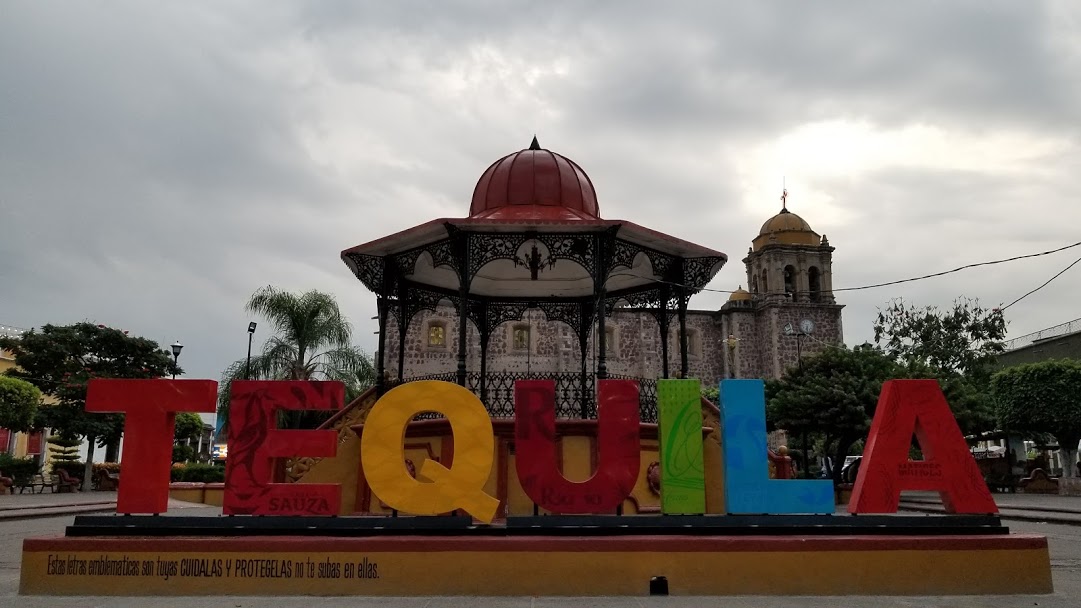
What Unesco recognizes (2006)
The 2006 inscription covers the 'Agave Landscape and Ancient Industrial Facilities of Tequila', classified as a cultural landscape. It takes in the blue agave fields, the haciendas and the historic distilleries of the region, valuing the relationship between agave farming, tequila production and the resulting landscape.
Source: https://whc.unesco.org/en/list/1209/

📚 Bibliography

  • Wikipedia (ES) — «Tequila (Jalisco)»: https://es.wikipedia.org/wiki/Tequila_(Jalisco)
  • Wikipedia (ES) — «Tequila (bebida)»: https://es.wikipedia.org/wiki/Tequila
  • UNESCO — «Agave Landscape and Ancient Industrial Facilities of Tequila» (2006): https://whc.unesco.org/en/list/1209/
  • Consejo Regulador del Tequila (CRT): https://www.crt.org.mx/
  • Mundo Cuervo — Destilería La Rojeña: https://mundocuervo.com/la-rojena-distillery/
  • Casa Sauza — Historia: https://www.casasauza.com/
  • Secretaría de Turismo de México (Sectur) — Pueblos Mágicos: https://www.gob.mx/sectur
  • Gobierno de Jalisco — Turismo: https://www.jalisco.gob.mx/
  • Enciclopedia de los Municipios y Delegaciones de México (INAFED) — Tequila, Jalisco: http://www.inafed.gob.mx/work/enciclopedia/EMM14jalisco/

❓ Frequently asked questions

What's the best way to visit Tequila from Guadalajara?+
It depends on your style. The José Cuervo Express train (or the Tequila Express) is the most comfortable and festive option if you don't want to drive and want to enjoy the tastings, though it's the priciest. By car you have more freedom to tour distilleries at your own pace (name a designated driver). By bus is the cheapest. Organized day tours are a good middle ground.
How much does it cost to visit a distillery?+
Basic tours with a tasting start at about $200-400 MXN. The La Rojeña tour (José Cuervo) runs around $345 MXN for adults (source: local operators and rates, verified July 2026); premium experiences with the agave fields, reserve tastings or food pairings can cost $1,000 MXN or more. It's worth booking in high season and at weekends.
Can Tequila be done in a day?+
Yes, it's a very common day trip from Guadalajara: there's time for one or two distilleries, the town center, a museum and a look at the agave fields. To visit several houses at leisure, explore the volcano or enjoy the nightlife, it's worth staying one or two nights.
What is the World Heritage 'Agave Landscape'?+
It's the ensemble formed by the blue agave fields, the haciendas and the old industrial facilities of Tequila, declared a World Heritage Site by Unesco in 2006. It recognizes the unique cultural value of that blue-green landscape covering the valley and the volcano's slopes, the result of centuries of agave farming.
When is the Feria Nacional del Tequila?+
It's traditionally held in late November and early December (around November 30 and December 8, the day of the Immaculate Conception, the town's patron saint). It's the big event of the year, with parades, charrería, music and, of course, plenty of tequila. Check the exact dates for the year.
How do I get to Tequila by bus from Guadalajara, and how do I pay?+
The intercity buses to Tequila (lines such as Cofradía / Rojo de los Altos) leave from Guadalajara's Antigua Central Camionera (Central Vieja), cost about $100-180 MXN each way and take 1.5 to 2 hours. You buy the ticket at the window, in cash or by card. CAREFUL: the Mi Movilidad card is not used here (that one is for Guadalajara city transport: Mi Tren, Mi Macro and the city buses). Within Tequila, taxis and cantina-buses are paid in cash. For routes and timetables, Moovit and Google Maps work well (verified July 2026).
Can local transport in Tequila be paid by card or app?+
Not for local transport in the town: taxis, mototaxis and cantina-buses are paid to the driver in CASH, and it's best to agree the fare before getting in. There's no rechargeable card or local QR system, and Uber/DiDi barely operate in Tequila (they do in Guadalajara). The distilleries and the José Cuervo Express train do take cards for tours and tickets (verified July 2026).
Sources consulted (8)
Still planning?
Explore more destinations in Mexico
See all destinations →
Advertisements
Image credits
Photos from Wikimedia Commons, each under its own licence (CC BY, CC BY-SA or public domain). Open each file to see its author and licence.
Tequila jalisco