Viajá con Gus
HomeMexicoTulum
Tulum
🇲🇽 Mexico · Yucatán Peninsula and the Caribbean

Tulum

Jump to what you need
📌State
Tulum is a destination in the state of Quintana Roo, on the Yucatán Peninsula, on the Caribbean Sea, at the southern end of the Riviera Maya, about two hours from Cancún. It is famous for a unique combination: the only walled Maya city built facing the sea, perched on a cliff with the turquoise Caribbean behind it, and a boutique beach hotel strip that became a byword for bohemian luxury, eco-chic and wellness. Tulum is, all at once, an archaeological site, a beach paradise, a wellness capital and the gateway to the cenotes and to the Sian Ka'an biosphere
📌Gateway city
Tulum has two souls: the 'pueblo' (Tulum Centro), on the highway, with services, hotels and restaurants at better prices; and the 'beach hotel strip', a long coastal stretch of boutique hotels, beach clubs and fashionable restaurants. It has its own international airport (Tulum International Airport, TQO), on top of the traditional option of flying into Cancún Airport (CUN), about 2 hours away. It is the base for the cenotes, the archaeological site, the Sian Ka'an Biosphere Reserve and the ruins of Cobá and Muyil
📌Best time to go
Tulum is warm and tropical all year. The dry season, November to April, gives the best weather: sunny, less humid and ideal sea; it is high season (peaking in winter and around events, with the highest room prices too). The rainy, hot season (May to October) brings more humidity, downpours and hurricane season (the greatest risk is between August and October), but better hotel prices (above all September to November). As across the Mexican Caribbean, between May and August sargassum (seaweed) can wash up on the beaches, in varying amounts; check how things stand for your dates
📌Suggested days
With 2 days you can see the Tulum archaeological site, the beaches and a cenote or two, and enjoy the feel of the town and the hotel strip. With 3 to 5 days you can add several outings: the Sian Ka'an Biosphere Reserve (nature and marine life), more cenotes (Gran Cenote, Dos Ojos), the ruins of Cobá (with its great pyramid in the jungle) and Muyil, a day of rest and wellness (yoga, temazcal) and, if you like, trips to Chichén Itzá or Valladolid
💱 MXN exchange rate
Loading rate…
🌤️ Weather in Tulum
Loading weather…

Tulum is perhaps the destination that best sums up the magic of the Mexican Caribbean: the place where an ancient Maya city looks out over the turquoise sea from the top of a cliff, and where, a few kilometers away, a stretch of white-sand beach filled up with boutique hotels, fashionable restaurants and an eco-chic, wellness philosophy of life that made it famous the world over. Tulum is history and nature, bohemian luxury and spirituality, thousand-year-old ruins and parties by candlelight, all wrapped in the green of the jungle and the blue of the Caribbean.

Its great icon is the Tulum archaeological site, the only Maya city built facing the sea: its stone temples on the cliff, with El Castillo standing over a postcard beach, make up one of the most recognizable images of Mexico. But Tulum is also its beach hotel strip, where the idea of 'barefoot luxury' —designer cabanas, beach clubs, signature cooking, sunrise yoga, temazcales and boho fashion— drew travelers, celebrities and wellness devotees from all over the planet. And, all around, a natural treasure: cenotes of crystal-clear water, the vast Sian Ka'an Biosphere Reserve and more Maya ruins hidden in the jungle.

This guide runs through the essentials of Tulum with a practical, warm eye: how to visit the ruins by the sea, which beaches and cenotes to choose, what the difference is between the town and the hotel strip, how to see Sian Ka'an and the ruins of Cobá, and how to get around and where to eat. A destination that combines, as few do, the weight of Maya history with the beauty of the Caribbean and a way of life all its own.

📖 History of Tulum

Tulum was an important Maya city, one of the few that were walled, and the only major city built facing the sea. Its ancient name was Zama, meaning 'dawn' (for the way it faces east, towards the sun rising over the Caribbean); 'Tulum' means 'wall' or 'fence' in Maya, referring to its walls, and it is the name by which it came to be known later. The city peaked in the Late Postclassic period (13th to 15th centuries), working as an important trading port and religious center within the Maya maritime network of the Caribbean, which linked coastal trade with the interior. Tulum was still inhabited and active when the Spanish arrived in the early 16th century; in fact it was one of the first Maya cities Europeans sighted from the sea. After the conquest of Yucatán, the city was gradually abandoned, and the whole region of present-day Quintana Roo fell into centuries of isolation. During the Caste War (from 1847 on), the area was tied to the rebel Maya. For much of the 20th century, Tulum was a remote, thinly populated spot, known above all for its ruins. The great change came with the tourism boom on the Riviera Maya, driven by the success of Cancún: from the end of the 20th century and, above all, in the 21st, Tulum was transformed at dizzying speed. Its beach strip, with its style of ecological cabanas and boutique hotels, became a worldwide phenomenon of 'bohemian luxury' and wellness, drawing travelers from all over the planet. Today Tulum combines its invaluable Maya heritage with one of the most fashionable beach destinations in the world. The full history is on our history page.

Read the full history ↓

🏛️ Tulum is in Quintana Roo

The Mexican Caribbean of white sand and turquoise water: Maya land of Tulum and Cobá, setting of the Caste War, birthplace of the great destination of Cancún and the Riviera Maya, and of the seven-color lagoon of Bacalar.

Read the history of Quintana Roo →

🗺️ What to see

1
Tulum archaeological site
The only Maya city facing the sea: temples on a cliff looking out over the turquoise Caribbean, with El Castillo as its icon.
The Tulum archaeological site is one of the most iconic images of Mexico and the star of the destination: the only Maya city built facing the sea, its stone temples perched on a cliff over an impossibly turquoise Caribbean. The mix of pre-Hispanic architecture with the natural setting —the sea, the beach below the ruins, the vegetation, the iguanas sunning themselves— makes it an utterly unique place, where history and natural beauty merge. Tulum (whose ancient name was Zama, 'dawn') was a walled city and an important Maya trading port and religious center, at its height in the Late Postclassic (13th-15th centuries) and still inhabited when the Spanish arrived. Its most famous monument is El Castillo, the main temple, right at the edge of the cliff, which also worked as a lighthouse to guide canoes coming in through the reef. Other notable buildings are the Temple of the Frescoes (or of the Paintings), with the remains of murals, and the Temple of the Descending God, with the curious figure of a deity that seems to come down from the sky. The walls that ringed the city on three sides (the fourth was the sea) give it its present name. Below the ruins there is a small, lovely beach of white sand and turquoise water, which you can sometimes go down to for a dip with the ruins behind you (when it is open). Getting there: it is a few kilometers from the town and the hotel strip; you come by car, taxi, colectivo or tour, plus a walk or a little train from the parking lot. Best time and hour: early in the morning, right at opening (8:00), to avoid the extreme heat and the crowds (a lot of people arrive from mid-morning on). Tips: bring water, a hat, biodegradable sunscreen, a swimsuit (in case the beach is open) and comfortable shoes; there is little shade. On Sundays admission is free for Mexicans and residents.
ℹ️ Distance: A few km from the town and the hotel strip (car, taxi, colectivo or tour) · Best time to go: Early in the morning, right at the 8:00 opening (less heat and fewer crowds) · Admission: 2026 total: foreigners ~$630 MXN (INAH $210 + CONANP $125 + Parque del Jaguar $295); nationals/residents ~$362.50 MXN ($105 + $62.50 + $195). On Sundays the INAH fee is free for Mexicans/residents (verified July 2026) · Duration: 2 to 3 hours (half a day with transfers)
2
Tulum's beaches and the hotel strip
Fine white sand, turquoise sea, palm trees and the strip of boutique hotels and beach clubs that made Tulum famous.
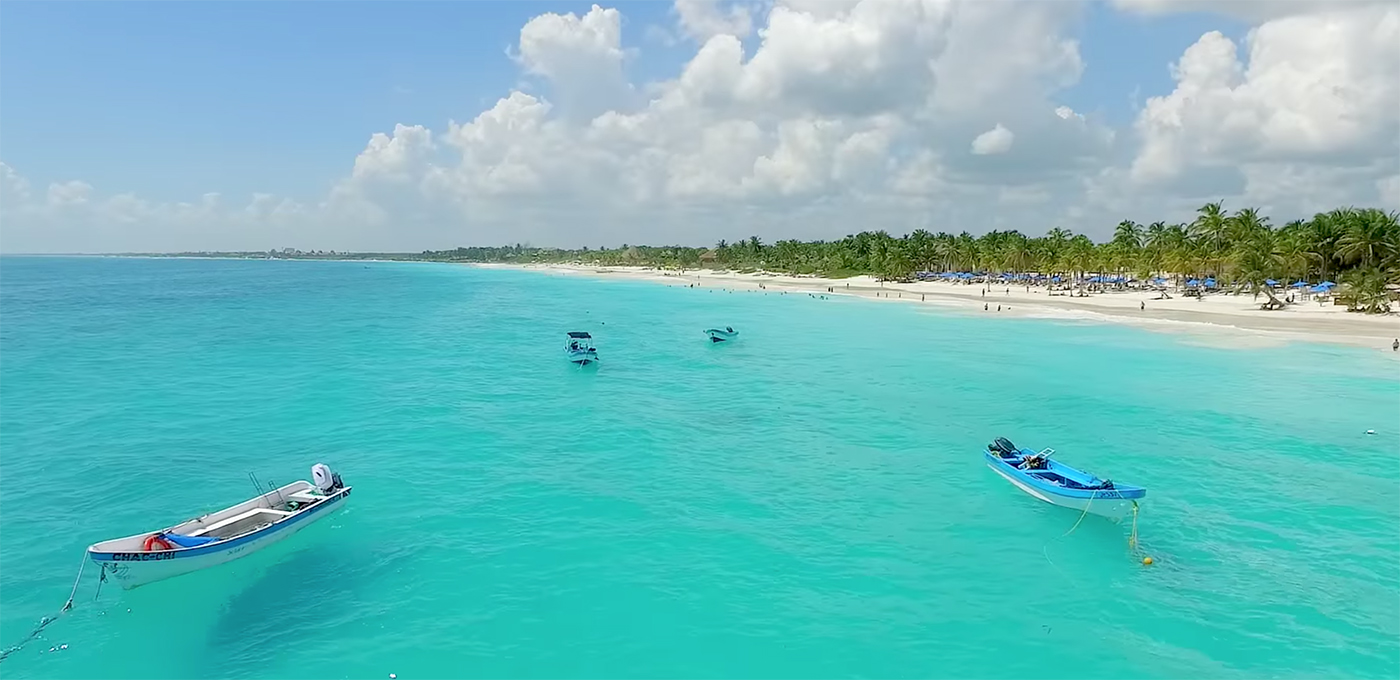
Tulum's beaches are among the most beautiful in the Mexican Caribbean: fine white sand, palm trees leaning over the sea, turquoise water and an air of tropical paradise that became world-famous. The coastal strip, known as the 'beach hotel zone' (a long road running parallel to the sea, separate from the town), is lined with boutique hotels, designer cabanas, beach clubs, restaurants and bars, in the eco-chic style that made the destination famous: wood and palm structures, natural decor, torches, and an atmosphere somewhere between luxury and bohemia. There are different stretches and moods. Tulum beach runs for kilometers, with sections in front of hotels (where access usually means spending at their beach clubs) and a few public access points. Areas like Playa Paraíso (near the ruins) are among the best known and prettiest. The southern end of the hotel strip borders the Sian Ka'an Reserve, with more untouched beaches. It is worth knowing that beach access along the hotel strip is not always simple (many stretches are effectively 'privatized' by the hotels and beach clubs, which charge for loungers and service, usually with a minimum spend of US$ 20-40 per person), even though the beaches are public. And, as everywhere in the Caribbean, sargassum can be a problem in some seasons. Getting there: the hotel strip is a few kilometers from the town; you go by car, taxi, bike (15-20 min from the town) or colectivo. Best time and hour: mornings for calm water; the beach clubs get going from midday. Tips: use biodegradable sunscreen, bring cash for the beach clubs, check the sargassum situation for your dates, and bear in mind that prices on the beach strip are high. For better prices, the town.
ℹ️ Distance: The beach hotel strip, a few km from the town (car, taxi, bike 15-20 min, colectivo) · Don't miss: The white-sand beaches, the beach clubs and the eco-chic style · Admission: Free (the beaches are public); beach clubs charge a minimum spend of US$ 20-40 per person. Check on the sargassum · Duration: Half a day or more
3
Cenotes (Gran Cenote, Dos Ojos, Cenote Calavera)
Some of the most spectacular cenotes on the Riviera Maya, crystal-clear and ideal for swimming and diving.
Tulum sits at the heart of one of the areas with the highest concentration of cenotes in the world, which makes it a paradise for swimming and diving in clear fresh water. Cenotes are natural wells and caverns giving access to the underground rivers that run beneath the whole Yucatán Peninsula; there are open, semi-open and closed ones (caverns with stalactites), and they all share water of astonishing clarity and color. For the Maya they were sacred, entrances to the underworld. Near Tulum there are cenotes famous the world over. The Gran Cenote, on the road to Cobá, is one of the most popular: it combines open sections and caverns, with turquoise water for swimming and snorkeling among little turtles and rock formations (admission approx. $500 MXN). Dos Ojos (part of one of the most extensive flooded cave systems on the planet) is a mecca for cavern diving, with spectacular underwater galleries, though it is also great for snorkeling (admission approx. $350 MXN). Cenote Calavera, near the town, has three openings in the rock that look like a skull and is popular for jumping into the water (admission approx. $200 MXN, one of the cheapest). And there are many more (Cenote Carwash, Casa Cenote, the ones in the Sac Actun system). Each cenote has its own personality and level of services. Some are ideal for a relaxed swim, others for snorkeling and others for technical cavern diving (with certification and a guide). Getting there: there are cenotes all over the area (the Cobá road, the route to Playa del Carmen); you get there by car, bike, taxi or tour. Best time and hour: mid-morning or midday (best light); early to avoid the crowds. Tips: do NOT use sunscreen or repellent before going in (most of them ban it so as not to pollute the water), shower first, bring a towel and cash, and respect the rules; if you are not a strong swimmer, wear a life jacket. For cavern diving, go with certified centers.
ℹ️ Distance: Spread across the area (the Cobá road and the route to Playa); car, bike, taxi or tour · Best time to go: Mid-morning/midday (best light); early because of the crowds · Admission: Gran Cenote ~$500 MXN; Dos Ojos ~$350 MXN; Cenote Calavera ~$200 MXN (verified July 2026) · Duration: 1 to 2 hours each (or half a day on a route)
4
Sian Ka'an Biosphere Reserve
A vast natural paradise and World Heritage Site: mangroves, lagoons, reefs, wildlife and Maya canals, just south of Tulum.
The Sian Ka'an Biosphere Reserve, which begins just south of the Tulum hotel strip, is one of Mexico's most extraordinary natural treasures: an immense protected area (more than 5,000 km²), declared a World Heritage Site by UNESCO in 1987, covering jungle, mangroves, lagoons, wetlands, untouched beaches and a stretch of the Mesoamerican reef. Its name, Sian Ka'an, means in Maya 'origin of the sky' or 'where the sky is born', which does justice to the immensity and beauty of the place. The reserve holds astonishing biodiversity: hundreds of bird species, manatees, dolphins, sea turtles, crocodiles, monkeys, jaguars (elusive) and enormous marine richness in its reefs and lagoons. One of the star experiences is floating along with the current in the ancient Maya canals, cut by that civilization through the mangroves to connect lagoons of crystal-clear water: a kind of 'river of life' you drift down in a life jacket, deep in nature. Tours from the Muyil area (the classic 1.5-2 hour outing through mangroves and canals) run around $900-1,000 MXN per person; longer tours towards Punta Allen, with sightings of dolphins, turtles and birds, cost from $3,500 MXN per boat (up to 6 people, split between you), plus the CONANP fee for the reserve: $225 MXN per person per day, or $112.50 MXN if you can prove Mexican nationality or residence in the country (art. 198 section I of the Federal Duties Law). The fee is paid only once even if you cross more than one adjoining area on the same day. Some community access points also charge a fee of their own, which the law expressly allows and which no agency publishes. Visiting Sian Ka'an means sinking into nature that is almost untouched, a world away from the tourist bustle of the coast, and understanding the ecological richness of the Mexican Caribbean. Because it is protected, it is best done with authorized operators and guides. Getting there: the reserve starts south of Tulum; you get in along the coast (Punta Allen) or through the Muyil entrance (the road to Felipe Carrillo Puerto); the usual way is on an authorized tour. Best time and hour: mornings, with better light and more active wildlife; the dry season makes access easier. Tips: hire authorized, responsible operators, bring biodegradable sunscreen (or none), repellent, water and whatever else you need; respect the nature around you.
ℹ️ Distance: Starts south of Tulum; access along the coast (Punta Allen) or via Muyil (authorized tour) · Best time to go: Mornings (better light and wildlife); the dry season for easier access · Admission: CONANP fee for the Sian Ka'an Biosphere Reserve: $225 MXN per person per day (a single fee under art. 198 section I of the LFD); $112.50 MXN for Mexican nationals and accredited foreign residents (50% discount) and $56.25 MXN for students and teachers with a card; children under 12, people with disabilities, seniors with an INAPAM card, pensioners and retirees are exempt. It is paid only once even if you cross Sian Ka'an and Arrecifes de Sian Ka'an on the same day (art. 198 LFD, adjoining protected areas). Separately, and with no official source publishing them, the tours: Muyil canals ~$900-1,000 MXN and Punta Allen from $3,500 MXN per boat (source: CONANP, official protected-area record; LFD art. 198 and Annex 4 of the RMF 2026 (DOF 28/12/2025), verified 08/08/2026) · Duration: Full day
5
Cobá archaeological site
A great Maya city deep in the jungle, with the imposing Nohoch Mul pyramid and ancient white causeways (sacbés).
About 45 minutes from Tulum, inland in the jungle, lies Cobá, one of the largest and most important Maya cities in the region, and very different from Tulum: there is no sea here, but thick jungle, lagoons and a huge site you walk through the vegetation, with birdsong and monkeys in the background. Cobá was a powerful city-state at its height in the Classic period (roughly the 6th-9th centuries) that came to dominate a vast territory, linked to other cities by a network of raised white stone causeways called 'sacbés', some of them many kilometers long. Its most famous monument is the Nohoch Mul pyramid, one of the tallest on the Yucatán Peninsula (over 40 meters). INAH closed access to the top for conservation, so it is now admired from the base; check the current rules when you visit. The site also includes ball courts, carved stelae, other temple groups and the lagoons that sustained the city. Because of its size, Cobá is walked over long distances along jungle paths, or you rent a bike (about $50-80 MXN) or a 'bici-taxi' (a tricycle with a driver) to move between the groups of monuments, which is part of the experience. It is a site that combines archaeology and nature. Getting there: about 45 min from Tulum on the Cobá road; you come by car, colectivo or tour (often combined with cenotes). Best time and hour: early in the morning, because of the heat and the crowds. Tips: bring plenty of water, repellent, sunscreen, a hat and comfortable shoes; consider renting a bike to get around; and combine it with a nearby cenote (such as the Gran Cenote).
ℹ️ Distance: About 45 min from Tulum (the Cobá road); car, colectivo or tour · Best time to go: Early in the morning (heat and crowds) · Admission: $105 MXN nationals/residents, $210 MXN foreigners (INAH 2026); bike $50-80 MXN (verified July 2026) · Duration: 2 to 3 hours (half a day with transfers)
6
The town of Tulum (Tulum Centro)
The most authentic, affordable side: local food, markets, everyday life and better prices than the beach strip.
Beyond the postcard of the beach and the ruins, Tulum has a 'pueblo' (Tulum Centro), on the federal highway a few kilometers from the coast, which is the most authentic, local and affordable side of the destination. A good share of the population lives and works here, and here are the everyday services: supermarkets, ATMs, the ADO bus terminal, hospitals and, above all, a wide choice of hotels, hostels and restaurants at far more reasonable prices than on the beach strip. The town has its own scene: along the main avenue (the highway) and the streets around it are taquerías, cheap diners, restaurants (from budget Mexican and Yucatecan food to signature places), cafes, bars, shops and markets. This is the place to eat well and cheaply, do your shopping, catch the colectivos and buses, and experience a more real Tulum, away from the exclusive feel of the beach. Yucatecan cooking (cochinita pibil, tacos, seafood) shines here. Staying in the town is the smart option for anyone on a mid-range or tight budget: you gain on price and authenticity in exchange for being a few kilometers from the beach (reached by bike, taxi or colectivo in about 15-20 minutes). It is also the most practical starting point for day trips, and taxis are cheaper than from the hotel strip. Getting there: the town is on the highway, reachable by car, bus (ADO) and colectivo; the beach is a few km away. Best time and hour: late afternoon and evening for eating and going out; the services, during the day. Tips: stay, or at least eat, in the town for better prices, try the taquerías and Yucatecan cooking, and use a bike or the colectivo to get to the beach.
ℹ️ Distance: On the highway, a few km from the beach (car, ADO, colectivo, bike 15-20 min) · Don't miss: Local and Yucatecan food, affordable prices and an authentic atmosphere · Admission: Free (you pay for what you eat or buy) · Duration: 1 to 2 hours (longer with a meal)
7
Wellness, yoga and eco-chic experiences
Tulum's side as a wellness capital: yoga, temazcales, retreats, ceremonies and a bohemian way of life.
Part of Tulum's worldwide fame comes from its transformation into one of the capitals of 'wellness' and of a bohemian, spiritual way of life. The beach hotel strip filled up with offerings centered on body, mind and connection with nature, which draw travelers from all over looking for more than sun and sand: an all-round wellness experience, wrapped in a carefully curated eco-chic aesthetic. The choice is enormous. Studios and hotels offer yoga classes (many at sunrise or sunset, facing the sea or in the jungle), at prices ranging from $120-150 MXN for a single class at local studios to US$ 25-40 at boutique hotels on the beach strip; meditation, multi-day retreats (from around US$ 1,000 a week with accommodation), spas with holistic treatments, and experiences tied to pre-Hispanic traditions such as the temazcal (a ceremonial steam bath in an igloo-like structure, led by a facilitator, with chanting, herbs and steam, intended as physical and spiritual purification), usually running from US$ 30 to US$ 70 per person depending on the center and the length. Maya-inspired and new age ceremonies and practices also abound, along with healthy eating concepts and an atmosphere that mixes the spiritual with the festive (Tulum is also famous for its parties and electronic music events in the jungle). This way of life, together with boho fashion, natural decor and conscious dining, is an essential part of contemporary Tulum's identity, for better and for worse: it made the place world-famous, but also expensive and, some would say, distant from its essence. Living it —with judgment and respect for the traditions it draws on— is part of the experience. Getting there: most of it is on the beach hotel strip and in the nearby jungle; you get there by car, taxi or bike. Best time and hour: sunrise and sunset for yoga; temazcales tend to be late afternoon or evening. Tips: choose experiences with serious facilitators who respect the traditions (above all for temazcales and ceremonies), book classes and retreats ahead, and bear in mind that prices on the beach strip are steep.
ℹ️ What it is: Tulum's wellness side: yoga, temazcal, retreats, spa and an eco-chic way of life · Don't miss: Sunrise yoga facing the sea and a temazcal ceremony with a serious facilitator · Admission: Yoga $120-150 MXN (studio) to US$ 25-40 (beach hotel); temazcal US$ 30-70 per person (verified July 2026) · Duration: From 1-2 h (a class or temazcal) up to several days (a retreat)
Advertisements
What nobody tells you

💵 Prices

Tickets

TypePrice
Tulum archaeological site (2026 total)Foreigners ~$630 MXN (INAH $210 + CONANP $125 + Parque del Jaguar $295); nationals/residents ~$362.50 MXN ($105 + $62.50 + $195); the CONANP fee is a single charge ($125) with a 50% discount on proof of nationality or residence, while the INAH fee does have two rates. On Sundays the INAH fee is free for Mexicans/residents (source: INAH / Infobae, verified July 2026)
Tulum's beachesFree (the beaches are public); beach clubs charge a minimum spend of US$ 20-40 per person. Check on the sargassum
Cenotes (Gran Cenote, Dos Ojos, Calavera and others)$200-500 MXN depending on the cenote; most are cash only (verified July 2026)
Sian Ka'an Biosphere Reserve — CONANP fee$225 MXN per person per day (a single fee, art. 198 section I of the LFD, rounded to multiples of $5); $112.50 MXN for Mexican nationals and accredited foreign residents; $56.25 MXN for students and teachers with a card; children under 12, people with disabilities, seniors with an INAPAM card, pensioners and retirees are exempt. You are not charged twice for Sian Ka'an and Arrecifes de Sian Ka'an on the same day (source: CONANP, official protected-area record; LFD art. 198 and Annex 4 of the RMF 2026 (DOF 28/12/2025), verified 08/08/2026)
Sian Ka'an Biosphere Reserve (authorized tours)Muyil canals ~$900-1,000 MXN per person; Punta Allen from $3,500 MXN per boat. no rate published in an official source: these are prices from community operators, not fees published by CONANP; the protected-area fee is paid separately
Cobá archaeological site (INAH)$105 MXN nationals/residents, $210 MXN foreigners (2026 INAH fee; verified July 2026)
Muyil archaeological site (INAH)$80 MXN for Mexican nationals and foreigners resident in Mexico; $145 MXN for foreigners (source: INAH, official site record, verified 08/08/2026)
Yoga classes, temazcal and wellness experiencesYoga $120-150 MXN to US$ 25-40; temazcal US$ 30-70 per person (verified July 2026)
The town of Tulum (streets and markets)Free (you pay for what you eat or buy)
🔄 updated monthlyOfficial / reference values · double-check when buying

Activities and tours

ActivityPriceDurationOperator
Trip to Sian Ka'an (lagoons, canals and wildlife)$900-1,000 MXN (Muyil, 1.5-2 h) to $3,500 MXN per boat (Punta Allen) (verified July 2026)Full dayCommunity Tours Sian Ka'an and the reserve's authorized operators
Cenote tour (Gran Cenote, Dos Ojos)$200-500 MXN per cenote; combined tours from $600-900 MXN (verified July 2026)Half a day to a full dayLocal Tulum operators
Trip to Cobá + a cenote$105-210 MXN admission to Cobá + $200-500 MXN for the cenote; combined tour from $900-1,400 MXN (verified July 2026)Full dayTulum agencies
Cenote diving (caverns, Dos Ojos)From US$ 80-150 per dive with gear, depending on the certified center (verified July 2026)Half a dayCertified dive centers (PADI/TDI) in Tulum
Yoga class / wellness retreat$120-150 MXN for a single class; retreats from US$ 1,000 a week (verified July 2026)1-2 h or several daysStudios and hotels on the beach strip
Temazcal ceremonyUS$ 30-70 per person (verified July 2026)1-2 hFacilitators and holistic centers in Tulum
Trip to Chichén Itzá or Valladolid$1,200-2,000 MXN per person (full day with transport and admission) (verified July 2026)Full dayTulum agencies
🔄 updated monthlyOfficial / reference values · double-check when buying
Advertisements

🚌 How to get there and distances

Getting around

ModePriceDurationNotes
Bicycle$150-250 MXN per day to rent (some operators from $130 MXN/24h; verified July 2026)VariableOne of the most popular and pleasant ways to get around Tulum, above all between the town, the ruins and the beach strip (15-20 min by bike). Many hotels lend or rent them
Colectivos (combis) on highway 307$20-40 MXN for a short leg; cash in pesos only, paid to the driver as you get off (verified July 2026)VariableShared white vans, cheap, running along the 307 and connecting Tulum with Playa del Carmen, the cenotes and other points on the Riviera Maya. In Tulum they stop on Avenida Tulum, near the ADO terminal. No cards and no apps: bring cash and small bills. For stops and routes, use Google Maps
TaxiFares by zone, no meter; town to hotel strip approx. $150-300 MXN depending on distance (verified July 2026)VariableImportant: Uber and DiDi do NOT work normally in Tulum (the taxi union blocks the apps), so a street or rank taxi is the only motorized on-demand option. Confirm the price before getting in; fares are cheaper from the town than from the beach strip
ADO busVaries by destination; Tulum-Cancún/airport approx. $280-350 MXN (verified July 2026)VariableConnects Tulum with Cancún airport, Cancún, Playa del Carmen, Mérida and other destinations, from the terminal in town. Tickets by card at ado.com.mx or on the ADO app (worth buying in advance)
Tren Maya (Tulum station)Dynamic pricing; since April 2026 there is no surcharge for foreigners and fares are up to 30% cheaper. Tickets at ventaboletostrenmaya.com.mx or at the counter (verified July 2026)VariableTulum station is south of the town, with connections to Tulum airport and to Cancún, Valladolid, Mérida and other destinations on the peninsula. A good new option for getting around Yucatán without a car
Rental car or scooterCar from US$ 30-50/day; scooter from US$ 20-30/day (verified July 2026)VariableGives you freedom to tour the cenotes, the ruins and the region. Watch out for insurance, speed bumps and, on the beach strip, the trouble finding parking
🔄 updated monthlyOfficial / reference values · double-check when buying

How to get there

RouteAirlines / operatorsAvg. priceDuration
Tulum Airport (TQO) → town / beach stripTaxis, vans and private transfersTaxi approx. $1,500 MXN to the town (about 41 km, 1h20); private transfers/vans from $600-900 MXN per person shared (verified July 2026)Approx. 1 to 1.5 hours depending on your final stop
Cancún Airport (CUN) → TulumADO (direct bus from T2/T3/T4 to the Tulum terminal), shared vans and private taxiADO $280-350 MXN; private taxi $1,800-2,500 MXN (verified July 2026)Approx. 1h45 to 2 hours (about 120 km on the 307)
Playa del Carmen → Tulum on the 307ADO, colectivos and carsColectivo approx. $60-100 MXN; ADO approx. $100-150 MXN (verified July 2026)Approx. 45 min to 1 h
Tulum → Mérida or Valladolid by roadADO and cars (toll highway)ADO Tulum-Valladolid approx. $150-250 MXN; Tulum-Mérida approx. $300-450 MXN; tolls if you drive (verified July 2026)Approx. 1.5-2 h to Valladolid; 3.5-4 h to Mérida
Tulum ADO terminal → archaeological site / hotel stripColectivo (stop opposite the terminal, marked 'Ruinas')$20-30 MXN per person (verified July 2026)10 to 15 minutes
🔄 updated monthlyOfficial / reference values · double-check when buying

🏨 Where to stay

No exact prices: a scale from $ (budget) to $$$$$ (luxury), with 2-3 options per category.

CategoryPriceRecommended options
Luxury / eco-chic boutique on the beach$$$$$US$ 200-500 per night; the beach hotel strip holds the famous boutique hotels and 'eco-luxury' designer cabanas that made Tulum famous, with natural aesthetics, a beach club, spa, yoga and signature cooking, right on the sea. Book far ahead in high season (Dec-Mar) (verified July 2026)
Mid-range (town and near the beach)$$$$$US$ 50-100 per night; mid-range hotels and guesthouses, above all in the town and around it, with good value and access to the beach by bike or colectivo. The balanced option for most travelers (verified July 2026)
Charm and design in the jungle or on the beach$$$$$US$ 100-200 per night; design boutique hotels, glamping and cabanas with charm, on the beach strip or between the jungle and the cenotes, for anyone after style and a connection with nature without the top prices of the coastal icons (verified July 2026)
Budget / hostels (town)$$$$$US$ 15-45 per night (from about $22-93 USD depending on the category); a wide choice of hostels and cheap places to stay in the town of Tulum, very popular with backpackers and young travelers, with a social atmosphere and far more affordable prices than the beach strip. Best prices Sep-Nov (verified July 2026)
Specific establishments (verified names)$$$$$From INEGI's DENUE (data as of 20/05/2026), the largest on the hotel strip: Be Tulum (https://www.betulum.com), Casa Malca (https://casamalca.com), Papaya Playa Project (it changed domain; today it is at https://www.pppfromdaytonight.mx), Dreams Tulum Resort & Spa and Ana y José Charming Hotel & Spa (https://www.anayjose.com). ⚠️ Two warnings verified in a browser on 08/08/2026: the domain the register publishes for Ana y José (anajose.com) is a personal site with nothing to do with the hotel, and the one it publishes for Nômade Tulum (nomadatulum.com) redirects to the clothing store elepanta.com. The establishments exist; the register's links do not.

🍴 Where to eat

TypePriceOptions / signature dish
Signature and eco-chic cooking (beach strip)$$$$$US$ 30-80 per person; signature restaurants and high-end cooking with a natural aesthetic on the beach hotel strip, many of them 'farm to table', conscious cooking and candlelit settings. Memorable meals, at steep prices (verified July 2026)
Yucatecan and Mexican cooking$$$$$$150-350 MXN per dish; the flavors of the peninsula: cochinita pibil, tacos, sopa de lima, panuchos and seafood, both in restaurants and in the town's cheap diners (better prices). The most authentic way to eat in Tulum (verified July 2026)
International and healthy$$$$$US$ 15-35 per dish; given its cosmopolitan, wellness profile, Tulum has plenty of international food (Italian, Mediterranean, Asian), vegetarian/vegan options, juices, bowls and healthy cooking, above all on the beach strip and in the jungle (verified July 2026)
Taquerías and cheap eating (town)$$$$$$40-120 MXN per serving; the taquerías, diners and stalls in the town of Tulum serve tasty, very affordable local food (tacos, antojitos, set lunches), the best place to eat cheaply and like the locals (verified July 2026)
Specific places (verified names)$$$$$Listed by name in the DENUE: Mia Beach Club (https://www.miatulum.com), Bagatelle, Ziggy's, Akna Restaurante and Antojitos La Chiapaneca, the last of these the cheap benchmark in town. no menu published on the establishment'S WEBSITE for almost all of them.
Advertisements

📖 History of Tulum

Origins, formation and what the sources say.

Zama, 'the dawn': a Maya city facing the sea

Tulum's original name was Zama, a Maya word meaning 'dawn'. That is no accident: the city was built on a cliff facing east, towards the Caribbean Sea, so that each day the sun rose over the sea horizon in front of its temples. 'Tulum', the name it goes by today, means 'wall' or 'fence' in Maya, and refers to the walls that ringed the city on three sides (the fourth was the cliff over the sea), an unusual feature that makes it one of the few walled Maya cities.

Tulum is remarkable, above all, for where it stands: it is the only major Maya city built directly facing the sea, on top of a cliff above a beach of white sand and turquoise water. That location made strategic and commercial sense. Its main temple, El Castillo, right at the edge of the drop, also served as a lighthouse: the arrangement of its openings guided canoes through a natural gap in the coral reef that protects the coast, letting them come in safely.

The city held other significant temples, such as the Temple of the Frescoes (or of the Paintings), which keeps the remains of murals depicting deities, and the Temple of the Descending God, with the puzzling figure of a deity that seems to come down head-first from the sky, a motif characteristic of Tulum whose exact meaning is still debated. The whole complex, with the sea behind it, bears witness to a city conceived in harmony with its spectacular natural setting.

The 'Descending God' of Tulum
The so-called Descending God, a figure that appears to come down head-first from above, is a motif characteristic of Tulum (and of other sites such as Cobá). Its identity and exact meaning are debated: it has been linked to the setting sun, to the planet Venus, to the melipona bee (important in the region) or to specific deities. There is no single definitive reading.
Source: https://www.inah.gob.mx/zonas/38-zona-arqueologica-de-tulum

A Postclassic trading port and the Maya maritime network

Tulum was at its height during the Late Postclassic, roughly between the 13th and 15th centuries, a time when many of the great Maya cities of the Classic period had already been abandoned. In that context, Tulum flourished as an important trading port and religious center, part of the busy maritime trade network that ran along the Caribbean coast by canoe, linking ports and lordships all down the shoreline.

Along the sea routes for which Tulum was a key point moved valuable goods: salt, honey, wax, cotton, textiles, cacao, jade, shells, obsidian and other items traded between the different regions of the Maya world, from northern Yucatán to the southern lands (today's Central America). The port connected that coastal trade with the overland routes inland, tying it to cities such as nearby Cobá. This commercial role explains Tulum's prosperity at a time when long-distance maritime trade took on great importance.

The city was walled, which also suggests a concern with defense, and its population clustered around the ceremonial core. Tulum was, on top of that, a center of worship, possibly linked to deities of trade and to astronomical observation. Its combination of roles —port, market, religious center and lighthouse— made it a nerve center of the Maya Caribbean coast on the eve of the Europeans' arrival.

Tulum in the Maya trading network
Archaeologists read Tulum as an important port of Postclassic Maya maritime trade, part of a network that ran along the Caribbean coast connecting goods and regions, and linked to inland cities such as Cobá. The exact reach, organization and relative importance of Tulum within that network are still under investigation.
Source: https://es.wikipedia.org/wiki/Tulum_(zona_arqueol%C3%B3gica)

The arrival of the Spanish, the abandonment and centuries of isolation

Tulum has the rare distinction of having been one of the first Maya cities Europeans saw with their own eyes. In the early 16th century, the Spanish expeditions running along the coast of Yucatán sighted the walled city on the cliff from the sea. Some chronicles by those first navigators describe a settlement that, seen from the water, impressed them with its size and its buildings, and which they even compared to European cities. At that moment, unlike many Maya ruins already abandoned, Tulum was still inhabited and functioning.

The conquest of Yucatán and its consequences, however —the diseases brought by the Europeans, which decimated the Indigenous population, and the collapse of Maya trading and social networks— led to the gradual abandonment of Tulum and of the other centers along the coast. The city emptied out and, in time, was covered by vegetation, though it kept a certain symbolic and religious importance for the region's Maya for a long while.

Through the colonial period and much of the 19th and 20th centuries, the whole eastern coast of the peninsula —today's Quintana Roo— fell into deep isolation, a remote, thinly populated jungle zone. Tulum and its ruins lay in a region outside effective control, tied during the Caste War (from 1847) to the rebel Maya. The ruins were 'rediscovered' and studied by explorers and archaeologists at various moments, but the place stayed out of the way and little visited well into the 20th century.

The first European descriptions of Tulum
The early 16th-century Spanish expeditions that sailed along Yucatán sighted Tulum from the sea, and some chronicles left admiring descriptions of the walled city. Exactly who wrote these descriptions and precisely which site the early sources identify are matters of nuance and dispute among historians, but the fact that Tulum was inhabited when the Europeans arrived is widely accepted.
Source: https://en.wikipedia.org/wiki/Tulum

The tourism boom: from remote ruins to a capital of bohemian luxury

Tulum's transformation from a remote spot, known only for its ruins, into one of the most fashionable destinations in the world is very recent and dizzyingly fast. For much of the 20th century, Tulum was barely more than an isolated archaeological site, visited by a few adventurous travelers, with an almost untouched beach and a handful of rustic cabanas. The great change came with the tourism boom across the whole Riviera Maya, driven by the success of Cancún (built from the 1970s on) and the development of the coast to the south.

From the end of the 20th century and, above all, in the first decades of the 21st, Tulum saw a spectacular boom. Its beach strip, with its particular style of ecological cabanas, design boutique hotels and a concept of 'barefoot luxury' or 'eco-chic' (wood and palm structures, natural decor, sustainability as an aesthetic), became a global phenomenon. It drew travelers, artists, celebrities, models and influencers from all over the world, and became associated with a bohemian, spiritual, wellness way of life: yoga, temazcales, retreats, conscious cooking, boho fashion and parties in the jungle.

That success put Tulum on the map of high-end international tourism, but it also brought the problems of runaway growth: soaring prices, pressure on the environment (the jungle, the cenotes, water and waste management, energy), social tensions and arguments about the loss of its original essence. The contrast between the affordable town and the exclusive beach strip is one reflection of that transformation.

The 'bohemian luxury' phenomenon in Tulum
Over the last two decades Tulum has become a global icon of 'eco-chic' or 'bohemian luxury' tourism, with boutique hotels, wellness and a bohemian-spiritual way of life. That boom brought prosperity but also criticism: high prices, environmental impact (cenotes, jungle, water, energy) and arguments over authenticity and sustainability. It is a recent phenomenon, still evolving, and judged in opposing ways.
Source: https://es.wikipedia.org/wiki/Tulum

Tulum today: between Maya heritage and the nature of Sian Ka'an

Today's Tulum is a destination of many layers, where the weight of history, the beauty of the Caribbean, the wellness way of life and exceptional natural richness all live side by side. On one hand there is its invaluable Maya heritage: the ruins facing the sea, one of the most recognizable images of Mexico, and the nearby cities of Cobá (deep in the jungle, with its great pyramid) and Muyil. On the other, its side as a fashionable beach destination, with the eco-chic hotel strip, the beach clubs and the wellness offering that made it world-famous.

But Tulum is also the gateway to one of Mexico's greatest natural treasures: the Sian Ka'an Biosphere Reserve, declared a World Heritage Site by UNESCO in 1987, which begins just south of the destination. Its more than 5,000 km² of jungle, mangroves, lagoons, wetlands, untouched beaches and reefs hold astonishing biodiversity and preserve the ancient canals cut by the Maya. Add to that the extremely dense network of cenotes in the area, among the largest in the world, offering unique swimming and diving.

That combination —unique ruins facing the sea, dream beaches, a bohemian and wellness way of life, cenotes and a World Heritage nature reserve— is what makes Tulum such a singular and sought-after destination. The great challenge of its present and its future is to make that success compatible with preserving the historical and natural heritage that made it extraordinary in the first place. Ancient Zama, the city of the dawn, still looks out to sea, now before the wonder of travelers from all over the world.

What Sian Ka'an protects (World Heritage, 1987)
The Sian Ka'an Biosphere Reserve was inscribed by UNESCO as a natural World Heritage Site in 1987. It protects a vast and diverse set of ecosystems: jungle, mangroves, wetlands, lagoons, beaches and a section of the Mesoamerican reef, along with Maya remains and the canals built by that civilization. It is one of the most important protected areas in Mexico.
Source: https://whc.unesco.org/es/list/410/

📚 Bibliography

  • Wikipedia (ES) — «Tulum (zona arqueológica)»: https://es.wikipedia.org/wiki/Tulum_(zona_arqueol%C3%B3gica)
  • Wikipedia (ES) — «Tulum»: https://es.wikipedia.org/wiki/Tulum
  • Wikipedia (EN) — «Tulum»: https://en.wikipedia.org/wiki/Tulum
  • INAH — Zona Arqueológica de Tulum: https://www.inah.gob.mx/zonas/38-zona-arqueologica-de-tulum
  • INAH — Zona Arqueológica de Cobá: https://www.inah.gob.mx/zonas/30-zona-arqueologica-de-coba
  • UNESCO — «Reserva de la biosfera de Sian Ka'an»: https://whc.unesco.org/es/list/410/
  • Wikipedia (ES) — «Sian Ka'an»: https://es.wikipedia.org/wiki/Sian_Ka%27an
  • Wikipedia (ES) — «Riviera Maya»: https://es.wikipedia.org/wiki/Riviera_Maya
  • Wikipedia (ES) — «Cultura maya»: https://es.wikipedia.org/wiki/Cultura_maya
  • Wikipedia (ES) — «Guerra de Castas»: https://es.wikipedia.org/wiki/Guerra_de_Castas

❓ Frequently asked questions

How many days do I need for Tulum?+
With 2 days you see the ruins by the sea, the beaches and a cenote or two, and get a feel for the place. With 3 to 5 days you add the Sian Ka'an Reserve, more cenotes (Gran Cenote, Dos Ojos), the ruins of Cobá and Muyil, a day of rest and wellness and, if you want, trips to Chichén Itzá or Valladolid. Tulum blends archaeology, beach, cenotes and nature very well.
What is the difference between the town of Tulum and the beach strip?+
The 'pueblo' (Tulum Centro) is on the highway, a few kilometers from the sea: it is the authentic, affordable side, with tasty, cheap local food (from $40 MXN a taco), markets and reasonably priced hotels (from US$ 15-45 a night). The 'beach hotel strip' is the coastal stretch of eco-chic boutique hotels, beach clubs and fashionable restaurants, beautiful but very expensive (hotels from US$ 200 a night). Many travelers stay or eat in the town (cheaper) and go to the beach by bike (15-20 min), taxi or colectivo.
How much is admission to the Tulum archaeological site in 2026?+
The total for foreigners comes to around $630 MXN per person, adding three charges: the INAH fee ($210, which doubled in 2026), the CONANP fee for Tulum National Park ($125) and the Parque del Jaguar fee ($295). For Mexican nationals and residents in Mexico the total is about $362.50 MXN ($105 + $62.50 + $195): the CONANP fee is a single charge and the 50% discount comes from proving nationality or residence, while INAH does publish two different rates. On Sundays the INAH fee is free for Mexicans and residents with ID, although the other two may still be charged. Verified July 2026; confirm at inah.gob.mx before you go, because the rates change every year.
Why is Tulum so famous and so expensive?+
Tulum combines two great draws: the only Maya ruins facing the sea and some spectacular beaches. On top of that came, over the last two decades, its transformation into a capital of 'bohemian luxury' and wellness, with boutique hotels, beach clubs, yoga, temazcales and an eco-chic style that made it world-famous and drew celebrities. That fame sent prices through the roof, above all on the beach strip (hotels from US$ 200-500 a night). In the town, by contrast, everything is far more affordable.
Which cenotes should I visit near Tulum, and what do they cost?+
Tulum is surrounded by spectacular cenotes. Some classics: the Gran Cenote (ideal for swimming and snorkeling, admission ~$500 MXN), Dos Ojos (a mecca for cavern diving, good for snorkeling too, ~$350 MXN), Cenote Calavera (for jumping into the water, ~$200 MXN, one of the cheapest) and plenty more (Carwash, Casa Cenote). Remember not to wear sunscreen or repellent before going in (they pollute the water), to shower first and to respect each one's rules. For cavern diving, go with certified centers (from US$ 80-150 a dive).
Is there sargassum in Tulum?+
There can be, above all between May and August, when this seaweed reaches the beaches of the Mexican Caribbean in amounts that vary a lot by year, by month and by beach. It is not constant. Check how things stand close to your travel dates. If you hit sargassum season, you can always fall back on the cenotes and on nature (Sian Ka'an) and archaeology outings, which do not depend on the state of the sea.
How do I get around Tulum, and how do I pay?+
The bike is one of the most popular options (rental from $130-250 MXN a day), above all between the town, the ruins and the beach strip. Watch out for one key detail: Uber and DiDi do NOT work normally in Tulum, so the only motorized on-demand option is the street taxi (relatively expensive, $150-300 MXN town to hotel strip, agree the fare first). The colectivos on highway 307 are cheap ($20-40 MXN) but take cash only, paid to the driver. For places further afield, ADO (tickets by card on its app) and the Tren Maya, whose station is south of the town. Renting a car (from US$ 30-50/day) or a scooter gives you more freedom for the cenotes and ruins (verified July 2026).
Sources consulted (27)
Still planning?
Explore more destinations in Mexico
See all destinations →
Advertisements
Image credits
Photos from Wikimedia Commons, each under its own licence (CC BY, CC BY-SA or public domain). Open each file to see its author and licence.
Playa de Tulum (México)