Viajá con Gus
Home › Fiji › Beqa Lagoon
Beqa Lagoon
🇫🇯 Fiji · Viti Levu (main island)

Beqa Lagoon

🪪 What do I need to enter Fiji?Pick your citizenship and we tell you the visa, the days and the paperwork, with the official source.

By leaving your email and citizenship you agree to receive the documents you asked for and weekly travel news. You can unsubscribe whenever you want. How we handle your data.
Jump to what you need
📌State
Barrier lagoon off the south coast of Viti Levu, around the island of Beqa (pronounced 'Mbengga'), about 10 km from Pacific Harbour
📌Best time to go
The dry season (May-October) brings calmer water and better visibility; shark diving runs all year, with more tiger shark activity in the warm months (Nov-Apr)
📌Suggested days
1 day if you're only doing the shark dive from Pacific Harbour; 3 to 5 days if you stay at a resort on the lagoon to dive properly
📌Getting there
Base yourself in Pacific Harbour, on the Queens Road: ~2.5 h by car or bus (Pacific Transport/Sunbeam) from Nadi airport, or ~50 min from Suva. From the jetty, a 30-45 min speedboat ride takes you to the dive sites and the Beqa resorts
📌Getting around
Everything is done by boat with the dive operator or the resort. Beqa island has no local transport or roads; you walk between the villages or use the resort boats
📌Language and currency
English, Fijian (iTaukei) and Fiji Hindi; Fijian dollar (FJD, FJ$). Resorts and operators take cards; bring cash for the villages and tips
💱 FJD exchange rate
Loading rate…
🌤️ Weather in Beqa Lagoon
Loading weather…

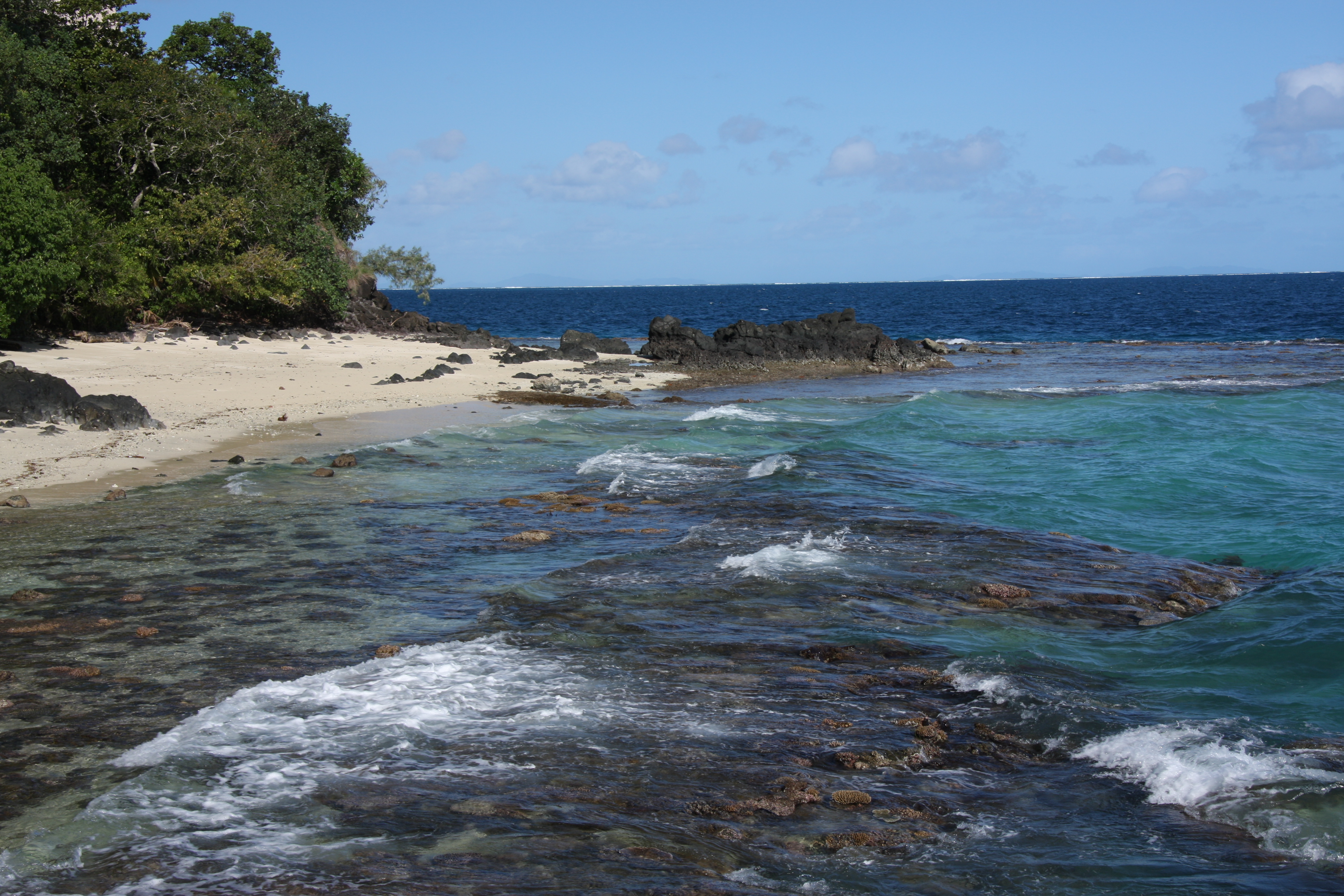
Beqa Lagoon is one of the big names in world diving and, for many, the best place on the planet to dive with sharks without a cage. This huge turquoise lagoon, enclosed by a barrier reef off the south coast of Viti Levu, surrounds the mountainous island of Beqa and hides dozens of dive sites, from soft coral gardens to the legendary 'The Cathedral', where eight species of shark -including the imposing bull sharks and, in season, the tiger shark- come within a few metres of the diver.

But Beqa is much more than underwater adrenaline. The island is the birthplace of vilavilairevo, firewalking: a sacred ceremony that only the descendants of one clan of the Sawau tribe can perform, walking barefoot over red-hot stones without getting burned. It's one of the most astonishing traditions in the Pacific, and many of the resorts in the area offer it as a cultural show.

The natural gateway is Pacific Harbour, Fiji's 'adventure capital', on the Queens Road: from there the boats leave for the shark dive and for the handful of resorts on Beqa island itself. You can come for a single day of diving from Pacific Harbour or stay on the lagoon for several days. Add rafting through the Navua canyon, right next door, and you've got one of the most complete adventure combinations in the country.

📖 History of Beqa Lagoon

Beqa island is the ancestral land of the Sawau tribe and the origin of vilavilairevo, the legendary firewalking, a gift that -according to tradition- a veli spirit-god gave the warrior Tuiqalita centuries ago and that today only certain clans (mataqali) from the village of Rukua perform. The lagoon around the island, protected by its barrier reef, became an icon of world diving in the late 20th century. The full story -of the Sawau, the sacred fire and shark conservation- is on the history page.

Read the full history ↓

🏛️ Beqa Lagoon is in Viti Levu (main island)

The heart of Fiji. The largest island in the archipelago holds both main cities: Suva, the biggest city in the South Pacific, and the tourist hub of Nadi. It also has the islet of Bau, from where King Cakobau unified the country, the sugar cane plantations of the west, and most of the iTaukei and Indo-Fijian population.

Read the history of Viti Levu (main island) →

🗺️ What to see

Tours nearby, in Suva

They depart from Suva, 42 km away. If you book from this link we earn a commission and you pay no more.

1
Shark diving at 'The Cathedral'
The world's most famous cageless shark dive, with up to 8 species
Leer más ↓
It's the jewel of Beqa Lagoon. At a site known as 'The Cathedral' or 'Shark Reef', about 18-30 m deep, advanced divers descend into a natural amphitheatre where, with controlled feeding by Fijian guides, bull, silvertip, lemon, tawny nurse, blacktip and whitetip reef, and grey sharks appear -plus, in season, the great tiger shark- alongside giant groupers and schools of fish. The pioneering operator, Beqa Adventure Divers, turned the site into the Shark Reef Marine Reserve, Fiji's first national marine reserve. It requires PADI Advanced Open Water certification (or equivalent) and experience. Trips leave from Pacific Harbour.
ℹ️ Shark dive ~FJ$500 per 2-tank dive (source: Beqa Adventure Divers / Beqa Lagoon Resort, verified July 2026). Equipment hire extra (~FJ$30-60)
2
Vilavilairevo ceremony (firewalking)
The sacred fire ritual of Beqa's Sawau tribe
Leer más ↓
Beqa is the only island in Fiji where the original vilavilairevo is practised: men from the Naivilaqata clan walk barefoot over a bed of stones heated red-hot for hours, without getting burned. Legend says the gift was given by a veli spirit to the warrior Tuiqalita in exchange for sparing its life. The firewalkers prepare for several days beforehand -fasting, isolation- to preserve their 'mana'. You can see it in Beqa villages (such as Rukua) or at the evening cultural shows many resorts on the Coral Coast and in Pacific Harbour put on. It's respectful to ask permission and not to take photos without consent.
ℹ️ Firewalking shows at resorts: usually included in cultural dinners or around FJ$40-90 per person (range; local operators and resorts, verified July 2026)
3
Snorkelling and soft coral gardens in the lagoon
Living reefs and soft coral you can reach without diving
Leer más ↓
You don't need to be a diver to enjoy Beqa Lagoon. The sheltered lagoon has dozens of shoals and soft coral reefs -the reason Fiji is the 'soft coral capital of the world'- ideal for snorkelling: reef fish, turtles, colourful corals. The Beqa resorts and many trips from Pacific Harbour include snorkel stops in calm water. Sites such as 'Caesar's Rocks' or the shoals near Yanuca are famous for their coral pinnacles. The warm water and good dry-season visibility make it perfect for beginners and families.
ℹ️ Half-day snorkel trips from Pacific Harbour around FJ$80-150 per person with gear (range; local operators, verified July 2026)
4
Rafting through the Navua River canyon
A run between waterfalls and rainforest from Pacific Harbour
Leer más ↓
A few minutes from Pacific Harbour, the Navua River cuts through an emerald canyon of jungle walls and waterfalls. Rivers Fiji offers the classic rafting trip (gentle class II-III water, suitable for almost everyone) by raft or 'bilibili' (traditional bamboo raft), with stops to swim under waterfalls and visit an inland village. It's one of the star excursions of the 'adventure capital' and pairs perfectly with a day of diving on the lagoon. The Namosi highlands scenery is some of the greenest on Viti Levu.
ℹ️ Full-day Navua rafting around FJ$250-350 per person with lunch and transfers (range; Rivers Fiji, verified July 2026)
5
Beqa island and its iTaukei villages
Traditional mountain and coastal villages within the lagoon
Leer más ↓
Beqa island itself, mountainous and covered in rainforest, is home to iTaukei villages such as Rukua, Naceva, Dakuibeqa and Soliyaga, where life follows the rhythm of fishing, yaqona (kava) and the traditions of the vanua. Visiting a village -always with a guide or the resort, and with a sevusevu (an offering of kava to the chief)- means immersing yourself in authentic Fiji: the kava ceremony, the community hall, the meke (dance). Beqa is also home to spirits and firewalking legends. The island's resorts organise these cultural visits with respect for local protocol.
ℹ️ Village visits with kava sevusevu: suggested contribution FJ$20-50 per group plus the kava bundle (range; local custom, verified July 2026)
6
The coastal hub for sport and culture on the Queens Road
Leer más ↓
Pacific Harbour, on the Queens Road between Nadi and Suva, is the land gateway to Beqa Lagoon and a destination in its own right. It's packed with dive centres, rafting operators, jet skis, ziplining (ZIP Fiji, in the rainforest of the hills), horse rides on the beach, and the Arts Village, a complex with shops, restaurants and cultural shows -firewalking included-. It's a convenient base and cheaper than sleeping on the lagoon, with seafront hotels and easy access by bus or car. Ideal for combining sea and land adventure in just a few days.
ℹ️ ZIP Fiji zipline around FJ$150-200 per person; Arts Village admission depends on the show (range; local operators, verified July 2026)
📶I have never landed without internet. I arrive and my phone connects to the strongest network in the country I am visiting: I can say I landed, sort out transport, book tours and keep posting, at a seriously good price. I always use the Maya eSIM — check their plans by clicking the banner.See plans →Maya Mobile eSIM — download, install, go
What nobody tells you

💵 Prices

Tickets

TypePrice
Buceo con tiburones (2 tanques)Approx. FJ$500 (source: Beqa Adventure Divers / Beqa Lagoon Resort, verified July 2026)
Snorkel de medio día en la lagunaFJ$80-150 with gear (range; local operators, verified July 2026)
Show cultural con firewalking (resorts)FJ$40-90 per person (range; local resorts, verified July 2026)
Rafting del río Navua (día completo)FJ$250-350 per person (range; Rivers Fiji, verified July 2026)
🔄 updated monthlyOfficial / reference values · double-check when buying

Activities and tours

ActivityPriceDurationOperator
Cageless shark diving at Shark Reeffrom ~FJ$500 (2 tanks) (Beqa Adventure Divers, verified July 2026)
Rafting or bilibili through the Navua canyon~FJ$250-350 per person (range; Rivers Fiji, verified July 2026)
Rainforest zipline (ZIP Fiji)~FJ$150-200 per person (range; ZIP Fiji, verified July 2026)
Cultural visit to a Beqa village with kava and meke~FJ$50-100 per person (range; local resorts, verified July 2026)
PADI Advanced course (required for the shark dive)~FJ$900-1200 (range; Pacific Harbour dive centres, verified July 2026)
🔄 updated monthlyOfficial / reference values · double-check when buying

🚌 How to get there and distances

Getting around

ModePriceDurationNotes
Operator/resort speedboatIncluded in dive or accommodation packages
Intercity bus to Pacific Harbour (Sunbeam/Pacific Transport)~FJ$10-15 from Nadi; ~FJ$4-6 from Suva
TaxiRegulated fares; negotiate rural journeys
On foot on Beqa islandFree
🔄 updated monthlyOfficial / reference values · double-check when buying

How to get there

RouteAirlines / operatorsAvg. priceDuration
Nadi airport → Pacific HarbourRental car, taxi, Pacific Transport/Sunbeam busBus ~FJ$10-15; taxi/private transfer ~FJ$150-200~2.5 h (149 km along the Queens Road)
Suva → Pacific HarbourBus (Pacific Transport/Sunbeam), taxiBus ~FJ$4-6; taxi ~FJ$60-80~50 min (49 km)
Pacific Harbour (jetty) → dive sites / Beqa resortsOperator or resort boatIncluded in the package~30-45 min
Nadi → Pacific Harbour by carCar hire (Queens Road)Fuel ~FJ$40-60~2.5 h
🔄 updated monthlyOfficial / reference values · double-check when buying

🏨 Where to stay

No exact prices: a scale from $ (budget) to $$$$$ (luxury), with 2-3 options per category.

Luxury
Price$$$$$
Recommended options
Beqa Lagoon Resort (seafront bures, diving included), Nanuku Resort (near Pacific Harbour); approx. FJ$700-1500+/night all-inclusive
Mid-range
Price$$$$$
Recommended options
The Pearl Resort & Spa, Uprising Beach Resort (Pacific Harbour); approx. FJ$250-500/night
Budget
Price$$$$$
Recommended options
Lawaki Beach House (Beqa, budget), Uprising Beach Resort dorms/bures; from ~FJ$80-180/night

🍴 Where to eat

TypePriceOptions / signature dish
Restaurantes de resort (frente al mar)$$$$$Dining rooms at Beqa Lagoon Resort, The Pearl, Nanuku; menus ~FJ$40-90 per dish
Casual en Pacific Harbour$$$$$Water's Edge, Oasis Restaurant, Uprising Beach Bar; dishes ~FJ$20-45
Local y aldea$$$$$Stalls and eateries in Pacific Harbour, village meals by booking; ~FJ$8-20

📖 History of Beqa Lagoon

Origins, formation and what the sources say.

The gift of the fire spirit

Some eight or ten generations ago, on the mountainous island of Beqa, a warrior named Tuiqalita went out to catch eels in a stream near the village of Navakaisese, which back then sat high up in the hills. Instead of an eel, he caught a veli, one of the little spirit-gods of the Fijian forest. The terrified veli begged him to spare its life and offered him riches, women and power in return. According to Sawau tradition, Tuiqalita turned them all down until the spirit offered the gift that would seal his people's fate: the ability to walk on red-hot stones without getting burned, and to pass that power on to his descendants.

That was the birth of vilavilairevo -literally 'jumping into the earth oven'-, the firewalking that made Beqa famous across the Pacific. It's not a heat trick or an illusion: anthropologists have documented it for more than a century without finding a complete physical explanation. For the Sawau, the answer is simple and sacred: it's mana, inherited spiritual power, and it works as long as the taboos are respected.

The gift doesn't belong to the whole island, but to a very specific kinship group: the Naivilaqata clan (mataqali) of the Sawau tribe, whose men are the only ones allowed to step on the stones. Before each ceremony, the dauvila (walkers) go into seclusion for several days, fast, abstain from sex and observe strict prohibitions -for example, they can't eat coconut, and their wives mustn't give birth during that time- so as not to lose the mana. The ceremony begins with the bete, the hereditary priest, and with the preparation of the lovo, a pit of stones heated for hours until they glow.

The Sawau and the vanua of Beqa

The island of Beqa, pronounced 'Mbengga', has been home for centuries to iTaukei communities organised under the Fijian social system of the vanua: the web of land, kinship and chiefly authority that shapes everyday life. The villages -Rukua, Naceva, Dakuibeqa, Soliyaga, Dakuni, Naiseuseu, Raviravi and Rukua- are spread along the island's coast and hillsides, and belong to different yavusa (descent groups) that recognise traditional chiefs. Above all, they follow the protocols of the sevusevu, the ceremonial offering of yaqona (kava) that opens any relationship with the community.

For generations, life on Beqa revolved around fishing in the lagoon, growing dalo (taro) and yams on the slopes, and kava. The lagoon surrounding the island -one of the largest in Fiji, enclosed by a barrier reef- was always both pantry and highway: canoes crossed its waters between villages and over to Viti Levu. The Sawau, keepers of the sacred fire, also carried a ceremonial responsibility that reached beyond the island: they were called on to perform on great occasions, and their fame spread throughout the archipelago.

Like the rest of Fiji, Beqa came under British sovereignty after the cession of 1874, when paramount chief Cakobau and other leaders handed the islands over to Queen Victoria. The British colonial system, with its policy of protecting communal iTaukei land and its indirect rule through the chiefs, in a way shielded Beqa's vanua: the land stayed in the hands of the mataqali, and traditions, including vilavilairevo, survived. When tourism discovered firewalking in the early 20th century, the Sawau began performing it off the island too, in hotels and at fairs, turning it into a cultural emblem for the whole country.

From fishermen's lagoon to diving mecca

For almost all of its history, Beqa Lagoon was known to local fishermen long before divers ever heard of it. Its barrier reef encloses a mosaic of shoals, pinnacles and channels where soft coral grows in such profusion that it earned Fiji the nickname 'soft coral capital of the world'. But it was only in the last decades of the 20th century that the diving world set its sights on these waters.

Sites like 'Caesar's Rocks', with its coral columns, or the reefs near Yanuca island began drawing divers in search of warm water, good visibility and overflowing marine life. But what launched Beqa to worldwide fame was shark diving. In the early 2000s, the operator Beqa Adventure Divers, together with the fishing communities of the villages of Wainiyabia and Galoa, which held traditional rights over those waters (qoliqoli), developed a pioneering model at 'Shark Reef': controlled shark feeding in exchange for the villages giving up fishing in the area and charging each diver a fee instead.

The result was twofold. On one hand, an underwater spectacle like no other: up to eight shark species -bull, tiger, lemon, silvertip, nurse, grey reef, blacktip and whitetip reef- sharing the same dive with giant groupers. On the other, a conservation experiment. In 2014 the site was declared the Shark Reef Marine Reserve, Fiji's first national marine reserve, funded directly by dive tourism. The villages went from living off fishing to living off protecting live sharks, a shift that became a global case study in tourism and community-based conservation.

The fire that never goes out

Today, Beqa lives where two fires meet: the sacred one of the vilavilairevo stones and the economic one of adventure tourism. The island is still home to its iTaukei villages, where kava, the vanua and ancestral protocols shape daily life. The firewalkers of the Naivilaqata clan still perform the ceremony, both on Beqa and at the big resorts of the Coral Coast and Pacific Harbour, where thousands of visitors watch it every year.

Moving the ritual onto a tourist stage has sparked debate among the Sawau themselves: how to show a sacred ceremony without emptying it of meaning, how to make sure the income and the respect flow back to the community, how to keep the taboos when the practice is commercialised. Many on Beqa insist that authentic vilavilairevo, with all its spiritual weight, only happens on the island and with the full protocols; the rest is a version for the audience. Even so, the gift is still being passed down from generation to generation.

Meanwhile, the lagoon has become a symbol of something else: the possibility that conservation and tourism can walk together. The sharks that used to be hunted are now worth more alive, and the villages that once fished Shark Reef now look after a marine reserve. In just a few kilometres of sea and one mountainous island, Beqa Lagoon brings together two of Fiji's most powerful stories: that of a people who walk on fire without getting burned, and that of a community that learned to swim with sharks in order to save them. Whoever dives here or witnesses vilavilairevo isn't watching a simple show: they're seeing Beqa's mana, the power that -according to the Sawau- stays intact as long as it is respected.

📚 Bibliography

  • Beqa Island Firewalking – Ancient Sawau Tribe Spiritual Ceremony — https://www.fijieco.com/places/culture-traditions/firewalking-ceremony-beqa-island
  • Beqa Island's unique firewalking gift — The Fiji Times — https://www.fijitimes.com.fj/beqa-islands-unique-firewalking-gift/
  • The Firewalkers of Beqa Island — thecoconet.tv — https://www.thecoconet.tv/coco-talanoa/pacific-blog/the-firewalkers-of-beqa-island/
  • Vilavilairevo, The Firewalking Legend — OceanianFolktales.com — https://oceanianfolktales.com/vilavilairevothe-firewalking-legend/
  • Beqa Adventure Divers / Shark Reef Marine Reserve — https://www.fijisharkdive.com/
  • Fiji Shark Dive — Beqa Lagoon Resort — https://beqalagoonresort.com/fiji-shark-dive/
  • History of Fiji — Wikipedia — https://en.wikipedia.org/wiki/History_of_Fiji
  • Deed of Cession (1874) — https://en.wikipedia.org/wiki/Fiji_during_the_time_of_Cakobau
  • Fire Walking — Khaled bin Sultan Living Oceans Foundation — https://www.livingoceansfoundation.org/fire-walking/
  • Fiji's Firewalkers — Beqa's Fiery Sons — Hideaway Holidays — https://www.hideawayholidays.com.au/travel-blog/fiji-firewalkers-learn-all-about-beqas-fiery-sons/

❓ Frequently asked questions

Do you need a certification to dive with sharks in Beqa?+
Yes. The shark dive at Shark Reef / 'The Cathedral' goes down to 18-30 m, so PADI Advanced Open Water certification (or equivalent) and previous experience are required. If you only have basic Open Water, some Pacific Harbour centres will get you ready with the Advanced course before you go down. For snorkelling and other shallower dives in the lagoon you don't need that level.
Can you visit Beqa Lagoon as a day trip from Nadi or the Coral Coast?+
Yes. The most common option is to come for a single day of diving from Pacific Harbour, which is about 2.5 h from Nadi and 50 min from Suva along the Queens Road. You leave early, do the dive or snorkel and head back. But if you want to make the most of the lagoon, it's worth staying 2-4 nights at a Beqa resort or in Pacific Harbour.
How much does the shark dive cost?+
It was around FJ$500 for a two-tank trip with specialist operators such as Beqa Adventure Divers, not counting equipment hire (about FJ$30-60 more). It's one of the most expensive dive experiences in Fiji, but also one of the most impressive in the world, with up to eight species of shark (verified July 2026).
What is Beqa firewalking and where can I see it?+
Vilavilairevo is a sacred ceremony in which men from one clan of the Sawau tribe walk barefoot over red-hot stones without getting burned. It originates from Beqa island. You can see it in the island's villages or, more easily, at the evening cultural shows at many resorts in Pacific Harbour and on the Coral Coast, where it usually comes with kava and meke (dance).
When is the best time to go to Beqa Lagoon?+
Diving works all year round. The dry season (May to October) brings calmer water and better visibility, ideal for snorkelling and photos. Tiger sharks are usually seen more in the warm months (November to April), which are also rainier. To combine diving, rafting and pleasant weather, May-October is the best bet.

More places in Fiji

Coral CoastDenarauIsla Malolo y Cloud 9Islas MamanucaIslas YasawaKadavu
See every place in Fiji →The history of Fiji →
Sources consulted (9)
Still planning?
Explore more destinations in Fiji
See all destinations →