Viajá con Gus
HomeUnited StatesNew Orleans
New Orleans
🇺🇸 United States · Central and South

New Orleans

Jump to what you need
📌State
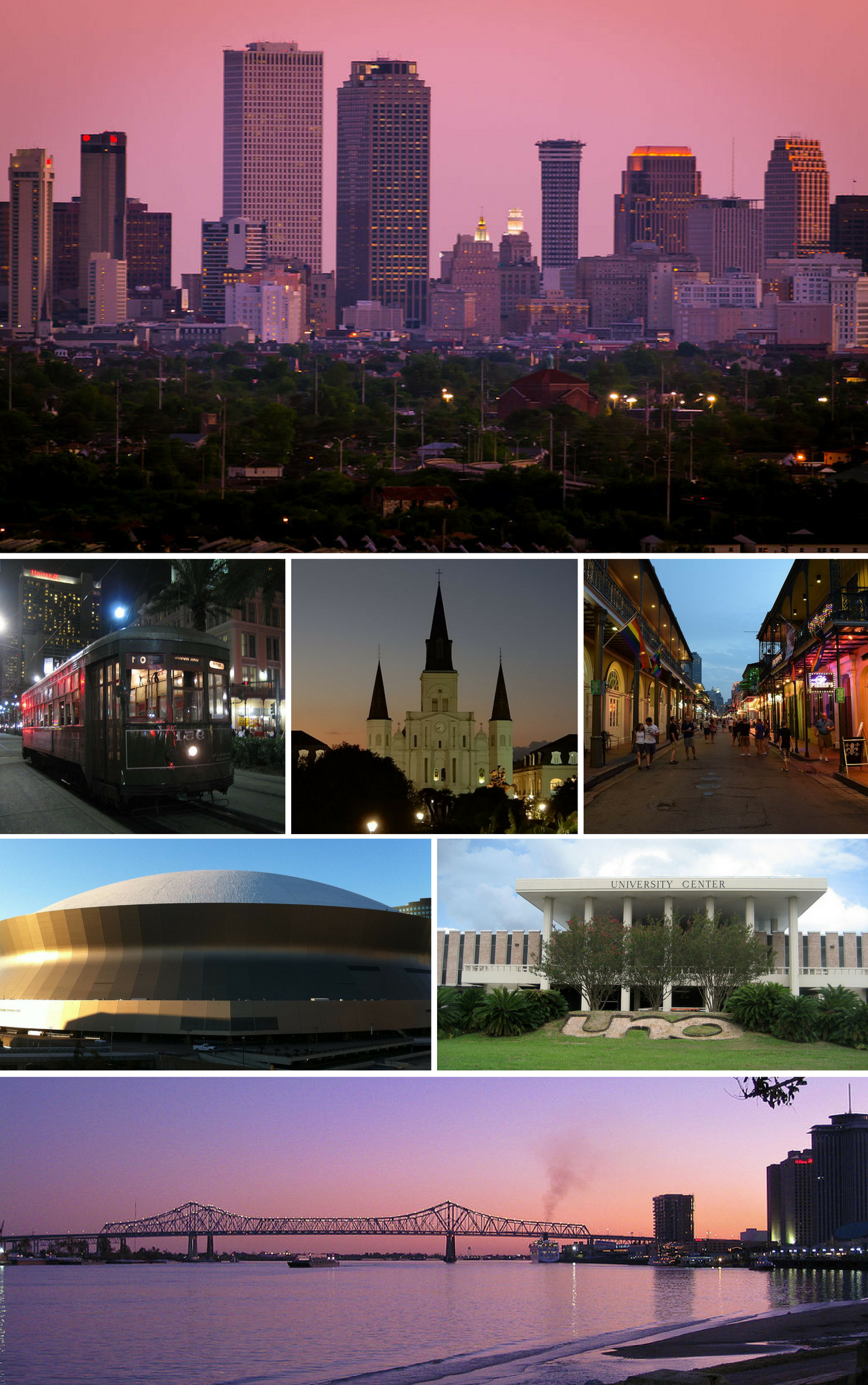
Louisiana (New Orleans, United States). It is the largest city in the state of Louisiana, on the banks of the Mississippi River, near its mouth on the Gulf of Mexico, with some 380.000 inhabitants. It is one of the most singular and festive cities in the United States: birthplace of jazz, capital of Mardi Gras (Carnival), with a unique Creole and Cajun identity born of the French, Spanish, African and Caribbean mix. They call it 'The Big Easy' for its relaxed pace of life and its passion for music and the good life
📌Service town
New Orleans itself has everything. Its airport is Louis Armstrong New Orleans International (MSY), about 20 km from downtown, connected by bus, taxi and transfers. The city has historic streetcars (an icon), buses, the Union Passenger Terminal (trains and buses), hospitals and plenty of hotels. It is the base for touring the bayou and the Louisiana swamps, the old Mississippi plantations and the Cajun region
📌Best time
The best weather is from February to May and from October to December: pleasant temperatures and less humidity. The great event is Mardi Gras (Carnival), in February or March (a movable date, tied to Lent), when the city explodes with parties, parades and crowds (you have to book very far in advance). The jazz festival (Jazz Fest) is in April-May. Summer (June to September) is very hot, humid and in hurricane season (New Orleans is vulnerable): keep an eye on the forecast
📌Suggested days
Two to three days cover the essentials: the French Quarter with Jackson Square and the cathedral, Bourbon Street and Frenchmen Street for live music, a walk along the river and the St. Charles streetcar through the Garden District. With 4 to 5 days you can add the historic cemeteries, the museums (World War II, Voodoo), a trip to the swamps (swamp tour) and to a plantation, and get deeper into the music and food scene
💱 USD exchange rate
Loading rate…
🌤️ Weather in New Orleans
Loading weather…

New Orleans is like no other city in the United States: it is a piece of Europe, Africa and the Caribbean planted on the banks of the Mississippi, with a soul of its own you can breathe on every corner. Here, in the French Quarter, the houses with wrought-iron balconies, the hidden courtyards and the cobbled streets evoke France and Spain; music floats in the air —because this is, no less, the birthplace of jazz—; and on the plates beats one of the tastiest and most singular cuisines in the country, Creole and Cajun cooking. It is a city for the senses, where partying, music and food are a way of life.

They call it 'The Big Easy' for its relaxed pace and its philosophy of 'laissez les bons temps rouler' ('let the good times roll'). It is the city of Mardi Gras, the country's most famous Carnival, with its parades, its floats and its colored bead necklaces; the city of jazz bands playing in the street, of live music clubs, of voodoo and legends, of the cemeteries with white tombs above ground (because the city is below sea level). A city cheerful and melancholy at once, resilient, which managed to recover even from the devastation of Hurricane Katrina.

This guide walks you through the essentials of New Orleans with a practical, warm eye: how to enjoy the French Quarter, where to hear the best live music, what to eat (from gumbo to beignets), how to tour the Garden District by streetcar, how to visit the cemeteries and the swamps, and how to let yourself be carried along by the city's unique rhythm. New Orleans makes its visitors fall in love: it is different, flavorful, musical and deeply human.

📖 History of New Orleans

The region was inhabited by Native peoples when the French founded the city. New Orleans (La Nouvelle-Orléans) was founded in 1718 by the French Company of the Indies, under the direction of Jean-Baptiste Le Moyne de Bienville, in honor of the Duke of Orleans, regent of France. Its strategic position beside the Mississippi, close to the Gulf, made it a key port, though its swampy, flood-prone setting was always a challenge. In 1762-1763, France ceded Louisiana to Spain, which governed it for four decades (hence the strong Spanish architectural stamp of today's French Quarter, rebuilt after the fires of the late 18th century). In 1800 it briefly returned to France and, in 1803, Napoleon sold the whole immense territory of Louisiana to the United States (the 'Louisiana Purchase'). Under American rule, New Orleans prospered as a great port and as a unique multicultural society: French, Spanish, Creoles, enslaved and free Africans (the 'gens de couleur libres'), Acadians (Cajuns) and, later, immigrants from all over the world. From that extraordinary mixture came its Creole culture, Mardi Gras, Cajun-Creole cooking and, at the start of the 20th century, jazz. In 2005, Hurricane Katrina and the failure of the levees flooded much of the city in a historic catastrophe; New Orleans rebuilt itself with remarkable resilience. The full story is on our history page.

Read the full history ↓

🏛️ New Orleans is in Louisiana

The most French state in the Union: a Creole and Cajun land of French, Spanish and African roots, cradle of the jazz born in New Orleans, of Mardi Gras, of the bayous and of the Mississippi delta.

Read the history of Louisiana →

🗺️ What to see

1
The French Quarter
The historic heart of New Orleans, with its iron balconies, courtyards, music and Jackson Square.
The French Quarter (Vieux Carré, the 'Old Quarter') is the historic heart and the soul of New Orleans, and the city's oldest neighborhood. It is one of the most charming and characterful urban ensembles in the whole United States: a grid of streets mixing the French and, above all, Spanish heritage, with colored houses, wrought-iron balconies loaded with plants and lanterns, hidden inner courtyards full of greenery and an atmosphere that feels more Caribbean or European than American. Walking it unhurried, on foot, is a constant pleasure. Its nerve center is Jackson Square, a beautiful square presided over by the equestrian statue of General Andrew Jackson and dominated by St. Louis Cathedral, one of the city's most iconic images. Around the square are street artists, musicians, tarot readers and the most typical New Orleans atmosphere. Beside the square is the Café du Monde, the historic coffee house famous for its beignets (fritters covered in sugar) and its chicory coffee, an obligatory stop. The neighborhood combines the historic and elegant (Royal and Chartres streets, with their antique shops and galleries) with the festive and rowdy (Bourbon Street). You have to walk it by day to appreciate its architecture and by night to live its music and its party. Getting there: it is the tourist center; you reach it and tour it on foot, or by streetcar and bus. Best time: any day; mornings for the quiet architecture, nights for the atmosphere. Tips: try the beignets at the Café du Monde, walk along Royal and Chartres streets to see the prettiest part of the neighborhood, peek into the inner courtyards when they are open, and combine day (architecture) with night (music). It is the number one must-see in New Orleans.
ℹ️ Distance: Historic city center; on foot, by streetcar or bus · Best time: Mornings for the architecture; nights for the atmosphere · Admission: Free (walking the neighborhood is free); cafés, museums and venues separate · Duration: Half a day to a full day
2
Live music: Frenchmen Street and Bourbon Street
The capital of jazz: live music clubs every night, from authentic jazz to full-on party.
New Orleans is the birthplace of jazz and one of the world's great musical capitals, and experiencing its live music is essential: here music is not an occasional entertainment but the city's everyday heartbeat, sounding in the streets, the bars and the clubs practically every night. There are two main areas, with very different characters. Frenchmen Street, in the Marigny neighborhood (right on the edge of the French Quarter), is the favorite of locals and of lovers of good music. In a few blocks there is a concentration of clubs and bars where you can hear jazz, blues, funk and high-quality live music every night, in a lively atmosphere that is more authentic and musical than touristy. It is the ideal place to experience real New Orleans jazz. For traditional, classic jazz, a legendary venue is Preservation Hall, in the French Quarter, a historic and austere room where old-school jazz is played. Famous Bourbon Street, by contrast, is something else: the street of the wildest and most touristy party, with bars, music at full volume, drinks to take away (in New Orleans you can walk down the street with alcohol), neon and crowds, above all at night. It is loud and excessive, but it is part of the city's folklore and worth seeing at least once. Getting there: both are in or beside the French Quarter, on foot. Best time: nights (the music starts as the sun goes down); any day, with more going on at weekends. Tips: for quality music, head to Frenchmen Street or Preservation Hall; Bourbon Street is for soaking up the party atmosphere for a while; many venues charge no admission but expect you to order something or tip the musicians. Let yourself be carried by the street music, which is everywhere and free.
ℹ️ Distance: Frenchmen Street (Marigny) and Bourbon Street (French Quarter); on foot · Best time: Nights (the music starts at dusk) · Admission: Street music free; Preservation Hall approx. US$ 25–60 per pass; clubs on Frenchmen St usually have a cover of US$ 5–15 or a drink minimum/tip (source: preservationhall.com, verified July 2026) · Duration: One night
3
Jackson Square and St. Louis Cathedral
The loveliest square and the country's oldest cathedral still in use, the neighborhood's spiritual and postcard center.
Jackson Square is the monumental heart of the French Quarter and one of the prettiest and most emblematic squares in the United States. Originally the 'Place d'Armes' of the French colonial city, it is an elegant landscaped garden with the equestrian statue of General (and later President) Andrew Jackson at its center, surrounded by historic buildings and always animated by street artists, painters selling their pictures, musicians, tarot readers and the coming and going of people. Presiding over the square rises St. Louis Cathedral, with its three elegant white towers, one of the most photographed images in the city. It is considered the oldest continuously used cathedral in the United States; the current building dates from the mid-19th century, though there have been churches on the site since the city was founded. Its serene, luminous interior can be visited. Lit up at night, with the square in front, it offers one of the most beautiful sights in New Orleans. Flanking the cathedral are two historic colonial buildings today turned into museums: the Cabildo (the former seat of the Spanish government, where the transfer of the Louisiana Purchase was signed) and the Presbytère, both part of the Louisiana State Museum. Facing the square, toward the river, is the pleasant Washington Artillery Park, with a lovely view of the whole ensemble and of the Mississippi. Getting there: in the heart of the French Quarter, on foot. Best time: any day; especially lovely in the morning (quiet) and at night (lit up). Tips: go inside the cathedral (it is free or by donation), climb up to the park viewpoint facing the river for the photo of the whole scene, enjoy the street performers and combine it with the nearby Café du Monde and the Cabildo and Presbytère museums.
ℹ️ Distance: Heart of the French Quarter, beside the river; on foot · Best time: Morning (quiet) or night (lit up) · Admission: Square and cathedral free (donation); Cabildo and Presbytère (Louisiana State Museum) approx. US$ 10–12 per building (source: louisianastatemuseum.org, verified July 2026) · Duration: 1 to 2 hours
4
The Garden District and the St. Charles streetcar
The neighborhood of stately mansions under the oaks, crossed by the historic green streetcar.
The Garden District is the elegant, serene counterpoint to the bustling French Quarter: a lovely 19th-century residential neighborhood, known for its magnificent stately mansions surrounded by gardens, under enormous century-old oaks draped in Spanish moss that shade the streets. It was built by the wealthy Americans who arrived after the Louisiana Purchase and settled upriver, south of downtown, in large houses in Southern, Victorian and plantation styles. Strolling its tree-lined streets, admiring the stately facades (some belonging to celebrities), is a quiet and very photogenic pleasure. The best way to get there and to live the experience is aboard the St. Charles Avenue streetcar line, one of the oldest streetcars in the world still running, with its classic-looking green wooden cars. The ride itself, rattling along the tree-lined avenue among the mansions, is one of the most charming experiences in New Orleans, and an icon of the city. The Garden District is also home to Lafayette Cemetery, one of the best-known historic above-ground cemeteries. And nearby Magazine Street offers shops, boutiques and restaurants in a pleasant setting. Getting there: on the St. Charles streetcar from downtown (an experience in itself). Best time: any day, in daylight; morning or dusk for the best light among the oaks. Tips: take the streetcar unhurried and get off to walk the neighborhood's streets; combine it with a historic cemetery and with Magazine Street; bring a camera for the mansions and the oaks. The streetcar ride is cheap and memorable.
ℹ️ Distance: South of downtown; on the St. Charles streetcar from the French Quarter/downtown · Best time: In daylight; morning or dusk for the light among the oaks · Admission: Walking around is free; the streetcar costs US$ 1,25 per ride or US$ 3 for the 1-day Jazzy Pass (payment with the Le Pass app or exact cash) (source: norta.com, verified July 2026) · Duration: Half a day (with the streetcar)
5
The historic cemeteries ('cities of the dead')
The singular cemeteries of white above-ground tombs, with their architecture, legends and voodoo.
The cemeteries of New Orleans are one of the city's most singular and fascinating attractions, known as the 'cities of the dead'. Their distinctive feature is that the tombs are above ground, in stone and marble mausoleums and vaults that form genuine little streets, instead of underground. The reason is practical and very New Orleans: since much of the city is at or below sea level, with the water very close to the surface, burying underground was problematic (coffins could float or emerge in floods), so raised tombs were chosen, following in addition the Spanish and French tradition. The result is cemeteries of a melancholy beauty and an air somewhere between solemn and gothic, with their rows of white tombs, their angels, their crosses and their vegetation. The most famous is St. Louis Cemetery No. 1, the oldest, near the French Quarter, where (among others) is the supposed tomb of Marie Laveau, the legendary 'voodoo queen' of New Orleans, an object of cult and legend. Others, such as Lafayette Cemetery in the Garden District, are also much visited. Because of their labyrinth of tombs and for safety reasons, many cemeteries (including St. Louis No. 1) can only be visited with an authorized guided tour, which also lets you learn the stories, legends and cultural context (including voodoo) that surround these places. Getting there: St. Louis No. 1 is beside the French Quarter; others are in different neighborhoods. Best time: in daylight; a guided tour is advisable. Tips: for several cemeteries (such as St. Louis No. 1) going with an authorized guided tour is obligatory or strongly recommended; respect the sacred character of the place; and take the chance to learn about the fascinating voodoo culture of New Orleans, which is usually part of these tours.
ℹ️ Distance: Spread across the city; St. Louis No. 1 beside the French Quarter · Best time: In daylight; with a guided tour · Admission: St. Louis No. 1 only with an authorized guided tour: approx. US$ 28–33 adults; night tours about US$ 15 more (source: authorized operators, verified July 2026) · Duration: 1 to 2 hours
6
Swamp tour and the bayou
A boat trip through the Louisiana swamps, among alligators, oaks and Spanish moss.
One of the great attractions around New Orleans is the wild, mysterious nature of the Louisiana swamps and bayous: labyrinths of dark, still water, covered in vegetation, where enormous bald cypresses rise out of the water on their roots (the 'knees'), wrapped in curtains of Spanish moss hanging from the branches. It is a landscape of strange, primeval beauty, the setting of Cajun culture and home to rich wildlife. The way to see them is a 'swamp tour', a boat excursion that heads into the swamps. There are different kinds: on larger, calmer boats, or on the thrilling flat-bottomed airboats driven by a propeller, which skim across the water at full speed. The great stars of these trips are the alligators, seen free in their habitat (more active in the warm months), but there are also herons, turtles, snakes, raccoons and a multitude of birds. Some tours include a visit to Cajun communities and explanations of their culture and their way of life tied to the water. It is an unmissable excursion for nature lovers and a total contrast to the bustle of the city: the silence of the swamp, the dark water like a mirror and the thrill of seeing alligators up close. Getting there: on an organized excursion from New Orleans (with transport included) or by car to the region's boat landings. Best time: spring to autumn, when the alligators are most active; bring repellent (mosquitoes abound). Tips: book with a serious operator; choose between a calm boat or an airboat according to your taste; bring repellent, sunscreen and water; and, if it interests you, look for tours that include something of Cajun culture. A very different and memorable experience.
ℹ️ Distance: Swamps and bayous nearby; on an excursion from the city or by car · Best time: Spring to autumn (alligators more active); bring repellent · Admission: Swamp tour from approx. US$ 42 adults with transfer (US$ 21 children); airboats US$ 65–115 depending on the boat (source: swamp tour operators, verified July 2026) · Duration: Half a day (with transfers)
7
The Mississippi River plantations (excursion)
The historic plantation houses upriver, testimony to the splendor and the slavery of the antebellum South.
Along the Mississippi River, upriver from New Orleans (in the area known as River Road), several historic plantation houses survive that make a very popular excursion and a fundamental, and at the same time painful, chapter of the history of the American South. These great mansions, sometimes surrounded by spectacular avenues of oaks, were the center of the sugarcane and cotton plantations that sustained the region's economy in the 19th century, and which were based on the labor of enslaved people. Several of these plantations can be visited today as museums. Some focus on the elegance of the mansions and the life of the owners; but the most highly regarded today are those that address honestly and centrally the reality of slavery, telling the lives of the enslaved people who lived and died there. Whitney Plantation, for example, is devoted entirely to the memory of the enslaved, while Oak Alley Plantation is famous for its impressive avenue of century-old oaks leading to the house, one of the most iconic images of the South. Visiting a plantation gives a better understanding of the history, the wealth and the tragedy that marked this region, and of the foundation on which much of its heritage was built. It is an educational and important visit, best approached in the right frame of mind. Getting there: by car along River Road or on an organized excursion from New Orleans (an hour or a bit more away). Best time: any day; spring and autumn for the weather. Tips: choose which plantation to visit according to the approach you want (Whitney for the memory of slavery, Oak Alley for the oaks and the mansion); many excursions combine a plantation and the swamps in the same day; buy tickets online. It is a historic visit of great value.
ℹ️ Distance: Upriver, along River Road; 1 h or more by car or excursion · Best time: Any day; spring and autumn for the weather · Admission: Whitney Plantation approx. US$ 25 adults; Oak Alley approx. US$ 25–28. Combos with transfer from the city from US$ 100 (source: whitneyplantation.org / oakalleyplantation.org, verified July 2026) · Duration: Half a day to a full day
8
The National WWII Museum
One of the best history museums in the country, devoted to the Second World War, immersive and moving.
The National WWII Museum is, surprisingly for many, one of the great attractions of New Orleans and one of the best museums of its kind in the world. It is in the city for a historic reason: this is where the landing craft ('Higgins boats') were built that proved decisive in operations such as D-Day in Normandy. It is an essential visit for anyone interested in history, and moving even for those who are not. The museum, very modern and extensive, tells the story of the United States' part in the Second World War in an immersive, moving and instructive way, through objects, vehicles, aircraft, recreations, personal testimonies, films and interactive displays. It covers both the European and the Pacific fronts, and focuses on the human experiences of the soldiers and of society. It has several pavilions, hanging aircraft, a cinematic experience produced by Tom Hanks and much more. It is a museum that takes time, easily half a day or more. It is one of those attractions that surprise visitors with their very high quality, and a perfect complement for balancing the days of partying and music with a first-rate cultural and historical experience. Getting there: in the Warehouse/Arts District, near downtown; on foot, by streetcar or taxi/app. Best time: any day; midweek there are fewer people. Tips: give it at least half a day (it is big and very thorough); buy the ticket online; the special experiences (such as the film) may cost extra; and combine it with a walk through the Warehouse District and its galleries. It surprises everyone with its quality.
ℹ️ Distance: Warehouse/Arts District, near downtown; on foot, streetcar or taxi/app · Best time: Midweek (fewer people) · Admission: General US$ 26–36 adults depending on the option; children, students and military discounted. 'Beyond All Boundaries' film +US$ 9 (source: nationalww2museum.org, verified July 2026) · Duration: Half a day or more
9
The bank of the Mississippi and Mardi Gras (Carnival culture)
The walk beside the great river with its paddle steamers and the world of the country's most famous Carnival.
New Orleans exists thanks to the Mississippi River, and walking along its bank, in the French Quarter area (the Moonwalk and Woldenberg Park), means enjoying the protagonist of its history: the immense 'Old Man River', on which barges, cargo ships and the nostalgic 19th-century-looking paddle steamers such as the Natchez ply, on which you can take a river cruise with jazz music on board. The river, wide and powerful, gives the city its reason for being and makes for a very pleasant walk. The other great 'institution' of New Orleans is Mardi Gras (Shrove Tuesday), the most famous Carnival in the United States and the event that defines the city's festive identity. Although its climax is Mardi Gras day itself (in February or March, a movable date), the Carnival season lasts weeks, with spectacular float parades organized by the 'krewes' (the Carnival societies), music, costumes, and the famous rain of colored bead necklaces and other objects that participants throw from the floats to the crowd. The official colors are purple, green and gold, seen all over the city. If you are not traveling during Carnival, you can still experience its culture all year at Mardi Gras World, a workshop where the giant floats are built and stored, visited on a tour. Getting there: the riverbank is beside the French Quarter, on foot; Mardi Gras World is near downtown (streetcar/taxi). Best time: for the river, any day; for Mardi Gras, February or March (book very far in advance). Tips: take a walk along the bank and, if you like, a cruise on the steamboat Natchez with jazz; if you go for Mardi Gras, book everything well in advance and prepare your patience for the crowds; if not, visit Mardi Gras World to see the floats up close.
ℹ️ Distance: Riverbank beside the French Quarter (on foot); Mardi Gras World near downtown · Best time: The river, any day; Mardi Gras, February/March (movable date, book far in advance) · Admission: Riverbank free; daytime cruise with jazz on the steamboat Natchez from approx. US$ 43,50 adults; Mardi Gras World approx. US$ 25 (source: steamboatnatchez.com / mardigrasworld.com, verified July 2026) · Duration: 1 to 2 hours (more with a cruise or Mardi Gras World)
Advertisements
What nobody tells you

💵 Prices

Tickets

TypePrice
French Quarter / Jackson Square (walking around)Free (open access); cafés, museums and venues separate
St. Louis CathedralFree (donation suggested); check opening hours
Cabildo / Presbytère (Louisiana State Museum)Approx. US$ 10–12 per building; discounts for students and seniors (source: louisianastatemuseum.org, verified July 2026)
St. Charles streetcar / streetcars (RTA)US$ 1,25 per ride; Jazzy Pass US$ 3 (1 day), US$ 9 (3 days), US$ 15 (5 days). Paid with the Le Pass app (QR) or cash with the exact amount (source: norta.com, verified July 2026)
Historic cemeteries (St. Louis No. 1, with a guided tour)Approx. US$ 28–33 adults; only with an authorized tour; night tours about US$ 15 more (source: authorized operators, verified July 2026)
Swamp tour (swamps and alligators)From US$ 42 adults with transfer (US$ 21 children); airboats US$ 65–115 depending on the boat (source: swamp tour operators, verified July 2026)
Mississippi plantations (Whitney, Oak Alley, etc.)Whitney approx. US$ 25; Oak Alley US$ 25–28; combos with transfer from US$ 100 (source: whitneyplantation.org / oakalleyplantation.org, verified July 2026)
National WWII MuseumGeneral US$ 26–36 adults depending on the option; discounts for children, students and military; 'Beyond All Boundaries' film +US$ 9 (source: nationalww2museum.org, verified July 2026)
Cruise on the paddle steamer Natchez along the MississippiDaytime with jazz from approx. US$ 43,50 adults; sunset and dinner options cost more (source: steamboatnatchez.com, verified July 2026)
Mardi Gras World (float workshop)Approx. US$ 25 adults; US$ 20 children (source: mardigrasworld.com, verified July 2026)
Live music (Frenchmen St, Preservation Hall)Preservation Hall US$ 25–60; Frenchmen St cover US$ 5–15 or a tip. Street music free (source: preservationhall.com, verified July 2026)
🔄 updated monthlyOfficial / reference values · double-check when buying

Activities and tours

ActivityPriceDurationOperator
Walking tour of the French Quarter (history, legends, voodoo)US$ 25–35 per person; there are free walking tours (tip-based)2-3 hLocal guides and agencies
Cemetery and voodoo tourUS$ 28–45 per person (source: authorized operators, verified July 2026)1,5-2 hAuthorized cemetery tour operators
Swamp tour (swamps and alligators), by boat or airboatFrom US$ 42 with transfer; airboats US$ 65–115 (source: swamp tour operators, verified July 2026)Half a dayCajun Encounters, Airboat Adventures, etc.
Excursion to a Mississippi plantationWhitney/Oak Alley from US$ 25 admission; combos with transfer from US$ 100Half a day to a full dayExcursion agencies / plantations
Mississippi cruise on the steamboat Natchez (with jazz)Daytime from approx. US$ 43,50; sunset and dinner options cost more (source: steamboatnatchez.com, verified July 2026)2 hSteamboat Natchez (official)
Food tour (gumbo, jambalaya, beignets, etc.)US$ 50–90 per person depending on the route (source: food tour operators, verified July 2026)2-3 hFood tour operators
A night of jazz and live musicPreservation Hall US$ 25–60; Frenchmen St clubs with a cover of US$ 5–15One nightFrenchmen St clubs, Preservation Hall
Visit to the National WWII MuseumGeneral US$ 26–36; film +US$ 9 (source: nationalww2museum.org, verified July 2026)Half a dayNational WWII Museum (official)
🔄 updated monthlyOfficial / reference values · double-check when buying
Advertisements

🚌 How to get there and distances

Getting around

ModePriceDurationNotes
Historic streetcars (RTA)US$ 1,25 per ride; Jazzy Pass US$ 3 (1 day), US$ 9 (3 days), US$ 15 (5 days) (source: norta.com, verified July 2026)VariesNew Orleans' iconic streetcars (the St. Charles, Canal, Riverfront and Rampart lines) are transport and attraction at once. The St. Charles one, through the Garden District, is unmissable. How to pay today: the most practical option is the RTA's Le Pass app, where you load credit, buy the pass or ticket and show/scan a QR code as you board; you can also pay cash with the exact amount (drivers give no change) or buy physical Jazzy Passes at the machines on Canal Street and at the Union Passenger Terminal. For real-time routes, RTA GoMobile, Le Pass, Google Maps and Transit all work well
City bus (RTA)US$ 1,25 per ride; included in the Jazzy Pass (US$ 3/day) (source: norta.com, verified July 2026)VariesIt complements the streetcars and reaches more parts of the city. It is paid with the same system: Le Pass app (QR), cash with the exact amount or a physical Jazzy Pass. The pass covers streetcars, buses and the river ferry alike
Walking around the French QuarterFreeVariesThe French Quarter and the nearby neighborhoods (Marigny) are compact and very walkable; the best way to tour them and live their atmosphere. Take care walking at night in quiet areas
Taxi and apps (Uber, Lyft)US$ 8–18 per trip within the city; approx. US$ 35–40 to the airportVariesConvenient at night, for getting to the airport or to outlying areas (swamps and plantations need an excursion or a car). Widely used, above all for getting back safely at night
Bike and on foot (central areas)Bike share (Blue Bikes) approx. US$ 8–15 per pass; walking is freeVariesThe central areas are flat and easy to cover by bike or on foot. There is a bike share system. Ideal for downtown, the historic neighborhoods and the riverbank
Rental car (for excursions)Approx. US$ 45–80 per day; parking limited and expensive downtownVariesNot needed for the city (better to walk and take the streetcar), but useful for self-guided excursions to the swamps and plantations. Parking in the French Quarter is expensive and scarce
🔄 updated monthlyOfficial / reference values · double-check when buying

How to get there

RouteAirlines / operatorsAvg. priceDuration
Louis Armstrong airport (MSY) → downtown / French QuarterRTA bus (route 202 Airport-Downtown Express), taxi (flat fare) or appTaxi flat fare US$ 36 (1-2 pax); Uber/Lyft US$ 35–40; RTA bus US$ 1,50 (paid with the Le Pass app or exact cash) (source: flymsy.com / norta.com, verified July 2026)25 to 45 min depending on traffic (about 20 km)
Arriving by train (Union Passenger Terminal)Amtrak (City of New Orleans, Crescent, Sunset Limited)From US$ 40–120 depending on the route and how far ahead you bookDepends on the origin
Arriving by long-distance bus (Union Passenger Terminal)Greyhound, FlixBus, MegabusFrom US$ 20–60 depending on the origin and how far ahead you bookDepends on the origin
By car from other Southern citiesOwn or rental carRental US$ 45–80 per day; fuel depending on the distanceBaton Rouge 1,5 h; Houston 5,5 h; Memphis 6 h
Caribbean / Mississippi cruises (port of New Orleans)Carnival, Norwegian, American Cruise LinesDepending on the itinerary and companyDepending on the itinerary
🔄 updated monthlyOfficial / reference values · double-check when buying

🏨 Where to stay

No exact prices: a scale from $ (budget) to $$$$$ (luxury), with 2-3 options per category.

CategoryPriceRecommended options
Luxury / historic (French Quarter, Garden District)$$$$$US$ 250–550 a night; historic and luxury hotels such as Hotel Monteleone, The Roosevelt (Waldorf Astoria) or Windsor Court. For Mardi Gras and Jazz Fest, book very far in advance and at very high prices
Charm and boutique (historic houses, Marigny)$$$$$US$ 180–350 a night; boutique hotels and guest houses in historic houses in the French Quarter or in bohemian Marigny, close to the music of Frenchmen Street
Mid-range in the French Quarter and downtown$$$$$US$ 120–220 a night; a good supply of mid-range hotels in and around the French Quarter and downtown (CBD), handy for walking to the attractions
Budget / hostels (near downtown and Marigny)$$$$$US$ 30–50 for a hostel bed (India House, Auberge NOLA); budget hotels from US$ 90–130 near downtown or on the streetcar lines. Prioritize a safe area

🍴 Where to eat

TypePriceOptions / signature dish
Creole cooking (gumbo, jambalaya, étouffée)$$$$$US$ 8–12 for a bowl of gumbo; US$ 15–28 for main courses (verified July 2026). New Orleans Creole cooking is one of the great cuisines of the U.S.: gumbo (a thick stew of seafood or meats), jambalaya (spiced rice), crawfish étouffée and the po'boy (a stuffed sandwich). Classics such as Gumbo Shop and Coop's Place, in the French Quarter, awarded for their gumbo since the 1990s.
Cajun cooking$$$$$US$ 15–30 per dish (verified July 2026). Related to Creole but with rural Acadian roots, Cajun cooking offers boiled crawfish, andouille (smoked sausage) and tasty, spicy stews. Places such as Acme Oyster House combine gumbo, jambalaya and seafood on a single tasting plate.
Beignets, chicory coffee and sweets$$$$$US$ 8–12 for a portion of 3 beignets with coffee (verified July 2026). The beignets (square fritters covered in powdered sugar) with chicory coffee at the historic Café du Monde (beside Jackson Square, open 24 h) are an institution and an obligatory stop, cheap and delicious, at any hour.
Gulf seafood and high-end Creole cooking$$$$$US$ 60–120 per person (verified July 2026). The oysters, shrimp and fresh seafood of the Gulf of Mexico are a specialty, and the city has historic restaurants such as Commander's Palace (Garden District, tasting menu from about US$ 75) and Galatoire's (Bourbon Street, since 1905) for a special dinner. Book in advance.
Advertisements

📖 History of New Orleans

Origins, formation and what the sources say.

The French founding: Bienville and La Nouvelle-Orléans (1718)

New Orleans was born as a French colonial venture in the heart of the vast territory of Louisiana, which France claimed along the whole basin of the Mississippi River. In 1718, the French explorer and colonizer Jean-Baptiste Le Moyne, Sieur de Bienville, founded the settlement of La Nouvelle-Orléans on behalf of the French Company of the Indies. The name honored Philippe, Duke of Orleans, who was then serving as regent of France during the minority of King Louis XV.

The choice of site answered an impeccable strategic logic: it lay beside the Mississippi River, near its mouth on the Gulf of Mexico, at the point controlling access to the whole immense river basin of the continent's interior. Whoever held that spot would command the trade of half a continent. But the site also had a great drawback, one that would mark the city's entire history: it was low, swampy, flood-prone ground, hemmed in between the river and Lake Pontchartrain, with much of the land at or below water level. Taming that hostile geography would be a permanent challenge.

The first years were hard, marked by floods, tropical diseases and the difficulties of colonization. But the city was laid out on an orderly grid plan —today's French Quarter or Vieux Carré—, around a central square (the Place d'Armes, today Jackson Square) and a church. In 1722, New Orleans became the capital of French Louisiana, cementing its central role in the region.

The name and the choice of site
The sources agree that New Orleans was founded in 1718 by Bienville and named in honor of the Duke of Orleans, regent of France. The choice of a low, swampy site, despite its flood risks, is explained by its strategic value for controlling Mississippi trade and access to the Gulf of Mexico.
Source: https://en.wikipedia.org/wiki/History_of_New_Orleans

The Spanish period and the great fires (1763-1803)

The colonial history of New Orleans took an unexpected turn in the middle of the 18th century. After France's defeat in the Seven Years' War, and by means of secret treaties, France ceded Louisiana (including New Orleans) to Spain in 1762-1763. For some four decades, the city was governed by the Spanish Crown, a period that left a surprisingly deep mark on its appearance.

It turns out that the look of today's French Quarter —with its inner courtyards, its wrought-iron balconies, its roofs and its layout— is largely a Spanish inheritance, not a French one, despite its name. The reason is that during Spanish rule two great fires, in 1788 and 1794, destroyed most of the wooden colonial city of the French period. The rebuilding was done under Spanish rules and with fire-resistant techniques (brick, stucco, tiles), giving the quarter the Mediterranean-colonial style that characterizes it today and gives it so much charm.

Under Spanish administration, the city kept growing as a port and as an ever more diverse society. The peculiar Creole society of New Orleans developed, and a notable community prospered: the 'gens de couleur libres' (free people of color), people of African descent who enjoyed a degree of freedom and rights, and who played an important economic and cultural role, something distinctive of colonial Louisiana compared with other slaveholding regions of the South.

The French Quarter is, in fact, Spanish
A fact that surprises many visitors: the characteristic architecture of the 'French Quarter' is mostly from the Spanish period, since the great fires of 1788 and 1794, during Spanish rule, destroyed the original wooden French city, and the rebuilding followed fire-resistant Spanish styles and rules.
Source: https://en.wikipedia.org/wiki/French_Quarter

The Louisiana Purchase and the transfer to the United States (1803)

At the start of the 19th century, New Orleans changed flags once more, in what would be the decisive turn of its history. In 1800, by a secret treaty, Spain returned Louisiana to France, now under the power of Napoleon Bonaparte. But Napoleon, facing wars in Europe and after the failure of his plans in the Caribbean (the Haitian revolution), decided he could neither sustain nor defend that enormous and distant American territory.

And so, in 1803, Napoleon sold the whole of Louisiana to the young United States in the famous Louisiana Purchase. For a relatively modest sum, the United States acquired at a stroke an immense territory —taking in far more than the present state of Louisiana, stretching across much of the center of the continent—, practically doubling the size of the country. The formal transfer ceremony was held in the Cabildo, beside the Place d'Armes of New Orleans. It was one of the most momentous events in American history.

New Orleans then became American, but it kept its French, Spanish, Creole and Caribbean soul intact, which made it a unique city within the United States. The arrival of Anglo-Saxon Americans, who settled upriver (in what would become the Garden District), even created a tension and a coexistence between two worlds: the old Creole French Quarter and the new 'American' city. Its unmistakable personality would keep drawing on that mixture. In 1815, moreover, the city was the scene of the famous Battle of New Orleans, in which General Andrew Jackson (today the statue in the square) defeated the British.

The scale of the Louisiana Purchase
The Louisiana Purchase of 1803 was one of the largest territorial acquisitions in history: for some 15 million dollars, the United States obtained a vast territory that doubled its size and stretched far beyond the present state of Louisiana, taking in parts of numerous central states of the country.
Source: https://en.wikipedia.org/wiki/Louisiana_Purchase

A melting pot of cultures: the birth of jazz and Mardi Gras

What makes New Orleans truly unique is the extraordinary mixture of peoples that came together in it, a melting pot like few in the world. To the French and Spanish base were added the Creoles (descendants of Europeans born in the colony), enslaved Africans and free people of African descent, the Acadians (the 'Cajuns', French speakers expelled from Canada who settled in the region), Caribbeans (above all refugees from the Haitian revolution), the Irish, Germans, Italians and, later, people from all over the world. Out of that fusion came a language, a cuisine, a music and a culture all their own and impossible to repeat.

The most universal fruit of that blending was jazz. At the start of the 20th century, in the African American and Creole neighborhoods of New Orleans, the mix of African musical traditions, spirituals, the blues, brass band marches and the European inheritance gave rise to a new and revolutionary genre. Places such as the legendary Congo Square, where the enslaved gathered to play drums on Sundays, sowed the rhythmic roots. From here came Louis Armstrong, one of the most influential musicians in history, and jazz spread from New Orleans to conquer the whole world.

The city's other great cultural institution is Mardi Gras (Carnival), inherited from the French and Spanish Catholic tradition, which in New Orleans reached a spectacular scale. With its 'krewes' (Carnival societies), its float parades, its costumes, its music and its bead necklaces in purple, green and gold, Mardi Gras became the most famous Carnival in the United States and one of the city's great marks of identity. Together with Creole and Cajun cooking (gumbo, jambalaya), they form the heart of the unique culture of New Orleans.

New Orleans, birthplace of jazz
Musicologists place the birth of jazz in New Orleans at the start of the 20th century, the fruit of the mix of African traditions, the blues, brass bands and the European inheritance in its multicultural society. Spaces such as Congo Square and figures such as Louis Armstrong are central to this origin, although the genre's evolution has multiple roots.
Source: https://www.nps.gov/jazz/learn/historyculture/index.htm

Hurricane Katrina and resilience (2005 onward)

The geographical vulnerability that had marked New Orleans since its founding —a city largely below sea level, protected by a system of levees— turned into tragedy on 29 August 2005, with Hurricane Katrina. The storm, one of the most devastating in United States history, struck the region, but the greater disaster was not caused directly by the wind but by the failure of the levee system protecting the city: when it gave way, the water flooded close to 80% of New Orleans, submerging whole neighborhoods under meters of water for days.

The catastrophe was immense: hundreds of thousands of people had to evacuate or were trapped, more than a thousand died, and entire neighborhoods were destroyed. The disaster also exposed deep social inequalities and failures in the authorities' response, and hit the poorest communities, mostly African American, especially hard. Many residents never returned, and the city lost a significant part of its population.

But New Orleans gave a remarkable display of resilience. In the following years, the city rebuilt itself: the levees were reinforced and redesigned, many of its residents returned, and the culture —the music, Mardi Gras, the cooking, the festive spirit— surged back, as an affirmation of the will to carry on. Tourism returned and the city recovered much of its vitality. Today New Orleans remains one of the most singular, culturally rich and best-loved cities in the United States: a place that, despite the wounds, keeps its music, its flavor and its philosophy of 'laissez les bons temps rouler' ('let the good times roll') intact.

Katrina: the levee disaster
Later analyses agree that much of the New Orleans catastrophe of 2005 was not due directly to Hurricane Katrina but to the failure of the levee system, which on breaking flooded close to 80% of the city. It was one of the greatest disasters and infrastructure failures in U.S. history, with strong social implications.
Source: https://en.wikipedia.org/wiki/Hurricane_Katrina

📚 Bibliography

  • Wikipedia (ES) — «Nueva Orleans»: https://es.wikipedia.org/wiki/Nueva_Orleans
  • Wikipedia (EN) — «New Orleans»: https://en.wikipedia.org/wiki/New_Orleans
  • Wikipedia (EN) — «History of New Orleans»: https://en.wikipedia.org/wiki/History_of_New_Orleans
  • Wikipedia (EN) — «French Quarter»: https://en.wikipedia.org/wiki/French_Quarter
  • Wikipedia (EN) — «Louisiana Purchase»: https://en.wikipedia.org/wiki/Louisiana_Purchase
  • Wikipedia (EN) — «Mardi Gras in New Orleans»: https://en.wikipedia.org/wiki/Mardi_Gras_in_New_Orleans
  • Wikipedia (EN) — «Jazz»: https://en.wikipedia.org/wiki/Jazz
  • Wikipedia (EN) — «Hurricane Katrina»: https://en.wikipedia.org/wiki/Hurricane_Katrina
  • Wikipedia (EN) — «Culture of New Orleans»: https://en.wikipedia.org/wiki/Culture_of_New_Orleans
  • National Park Service — «New Orleans Jazz»: https://www.nps.gov/jazz/learn/historyculture/index.htm

❓ Frequently asked questions

What is the best time to visit New Orleans?+
The best weather is from February to May and from October to December, with pleasant temperatures. The great event is Mardi Gras (Carnival), in February or March (a movable date), when the city explodes with partying but is packed and expensive (book very far in advance). Jazz Fest is in April-May. Summer is very hot, humid and in hurricane season (the city is vulnerable, as Katrina showed in 2005): keep an eye on the forecast.
How many days do I need?+
Two to three days cover the essentials: the French Quarter with Jackson Square, the live music of Frenchmen Street, the streetcar and the Garden District, and a walk along the river. With 4 to 5 days you add the historic cemeteries, the World War II Museum, an excursion to the swamps (alligators) and to a plantation, and time to enjoy the food and the music at a calm pace.
How do I get around the city and how do you pay for the streetcar?+
The French Quarter and the nearby neighborhoods are covered on foot. For longer distances there are the historic streetcars, which are transport and attraction at once —the St. Charles one, through the Garden District, is unmissable— as well as buses. A ride costs US$ 1,25 and the 1-day Jazzy Pass US$ 3. How to pay: the most convenient option is the RTA's Le Pass app (you load credit and show a QR code as you board), though cash with the exact amount is also accepted (no change given) or you can buy the physical Jazzy Pass at machines on Canal Street. The pass covers streetcars, buses and the ferry. At night, to get back safely, a taxi or app (Uber/Lyft) is advisable. For the swamps and the plantations you need an excursion or a car.
Why are the tombs above ground in the cemeteries?+
Because much of New Orleans is at or below sea level, with the water very close to the surface. Burying underground was problematic (coffins could emerge in floods), so above-ground mausoleums and vaults were chosen, following in addition the Spanish and French tradition. The result is the famous 'cities of the dead', usually visited with a guided tour.
Do I need a visa or authorization to enter the United States?+
It depends on your nationality. Many countries use the electronic ESTA authorization (Visa Waiver Program); others, such as Argentina, require a tourist visa (B2), applied for at the embassy or consulate in advance. Always check the requirements in force for your passport before traveling; this guide is not a substitute for official information.
Is New Orleans safe for tourists?+
The tourist areas (the French Quarter, the Garden District, Frenchmen Street, downtown) are the busiest, but New Orleans has higher crime rates than other cities, so it pays to apply extra common sense: look after your belongings, do not display valuables, move around at night by taxi/app (above all when coming back from the party), do not venture into outlying and poorly lit areas, and drink in moderation. With care, it is fully enjoyable.
Is it true you can walk down the street with alcohol?+
Yes, in New Orleans (unlike most of the United States) you are allowed to walk down the street with alcoholic drinks in plastic cups (the 'go cups'), above all in the French Quarter. It is part of its festive atmosphere. That said, glass containers are not allowed, and moderation and care are always advisable, especially at night.
Sources consulted (22)
Still planning?
Explore more destinations in United States
See all destinations →
Advertisements
Image credits
Photos from Wikimedia Commons, each under its own licence (CC BY, CC BY-SA or public domain). Open each file to see its author and licence.
New Orleans header collage