Viajá con Gus
HomeUnited StatesDenver
Denver
🇺🇸 United States · Rocky Mountains

Denver

Jump to what you need
📌Country
United States, capital of the state of Colorado. It is the largest city in the Rocky Mountain region, with some 715.000 inhabitants in the city and close to 3 million in its metropolitan area. It is nicknamed the 'Mile High City' because it sits exactly one mile (1.609 m) above sea level.
📌Airport
Denver International Airport (DEN), one of the largest and busiest in the world, about 40 km northeast of downtown. Connected to downtown by the A Line train in about 37 minutes.
📌Best time to go
Denver is sunny almost all year (it boasts some 300 days of sun). Summer (June-August): warm and dry, ideal for the mountains. Fall: golden, with the aspens changing color. Winter: cold and snowy, the base for skiing in the Rockies. Spring: changeable. Mind the altitude: it pays to hydrate and acclimatize.
📌Language and currency
English (with a growing Spanish-speaking presence); US dollar (US$).
⛰️Altitude
Exactly 1.609 m (one mile) on the 13th step of the state Capitol. The elevation can cause fatigue, dehydration and, for anyone heading straight up into the mountains, altitude sickness: take it easy the first few days.
📌Suggested days
With 2 days you can get to know the city (downtown, museums, breweries). With 3-4 days you can add a trip into the Rockies (Rocky Mountain National Park, Red Rocks, mountain towns). Denver is the great base for exploring Colorado.
📌Getting around
Downtown (LoDo, Union Station) is easy to walk. There is light rail and RTD buses (paid with contactless Tap-n-Ride, the MyRide app or Transit), plus the A Line train to the airport. For the Rockies you want a car or a tour.
💱 USD exchange rate
Loading rate…
🌤️ Weather in Denver
Loading weather…

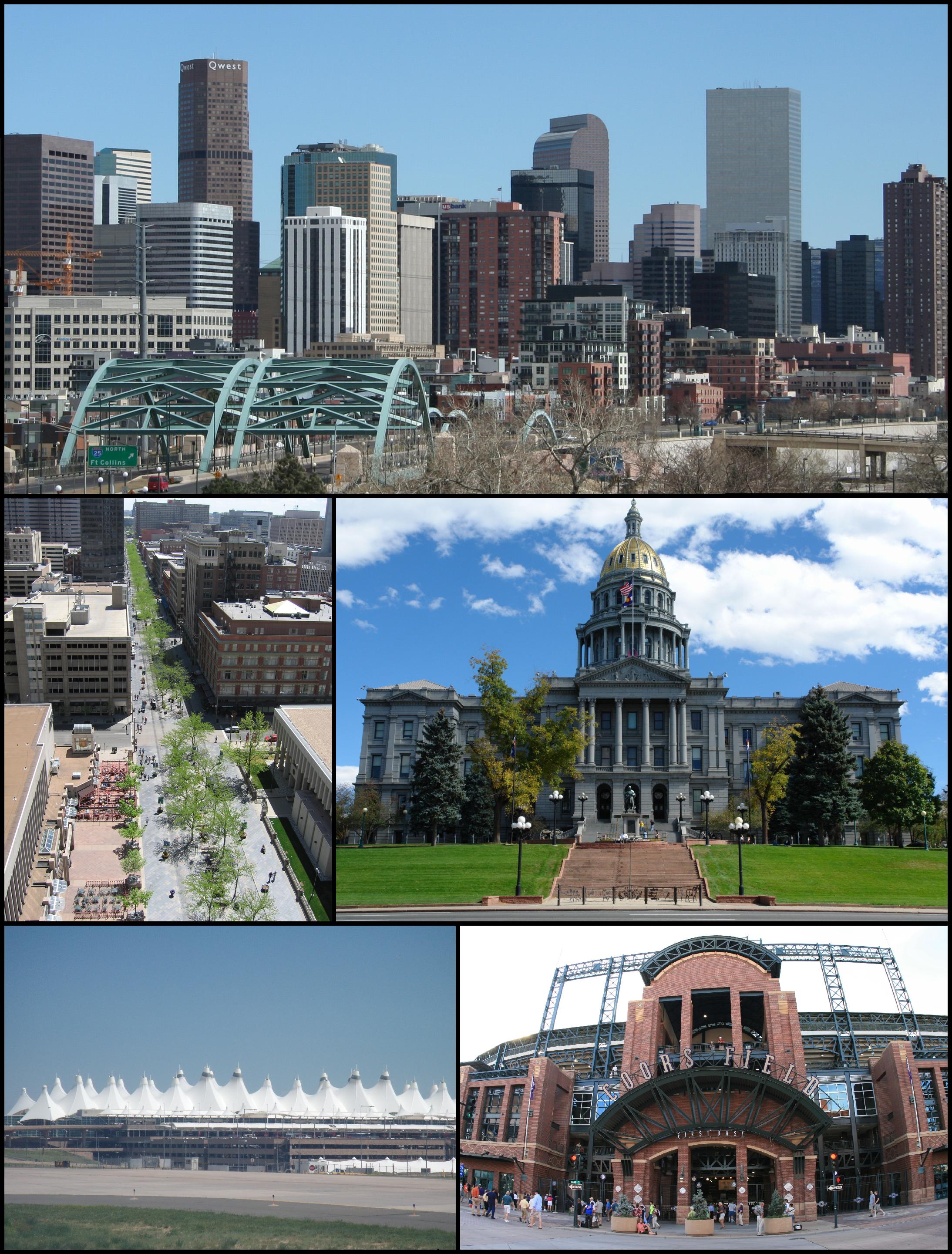
Denver is the gateway to the Rocky Mountains and one of the American cities with the best quality of life and the most relaxed atmosphere. They call it the 'Mile High City' because it sits exactly one mile up, with the spectacular Rockies cut out against the horizon to the west. It is a young, sporty, outdoorsy city, with blue skies almost all year, one of the best beer scenes in the country and a mix of Old West past and modern, tech-driven present.

The historic heart is LoDo (Lower Downtown), with its gold-era brick buildings, the beautiful Union Station turned into a dining epicenter, and the 16th Street corridor (recently renovated). Around it, neighborhoods with personality are flourishing: artsy RiNo (River North) with its murals and breweries, bohemian Highlands, the Santa Fe Arts District. And half an hour from downtown, the Red Rocks amphitheater offers one of the most impressive concert settings in the world, carved out of red rock.

This guide covers Denver with a practical eye: what to see in the city, how to combine urban life with escapes into the Rockies, where to try the best craft beer, how to handle the altitude, how to get to Red Rocks and Rocky Mountain National Park, how to pay for transport and when to go depending on whether you are after skiing or summer in the mountains. Denver is the ideal base camp for discovering Colorado.

📖 History of Denver

For centuries the area was the territory of peoples such as the Arapaho and the Cheyenne, who hunted bison on the plains at the foot of the Rockies. Denver was born all at once in 1858, when gold was found at the confluence of Cherry Creek and the South Platte River, setting off the Pikes Peak gold rush ('Pikes Peak or Bust'). A prospectors' camp founded that year was named Denver City in honor of James Denver, governor of the Kansas Territory. The city grew as a supply center for miners and, despite not being on the main line of the transcontinental railroad, managed to connect to it in 1870, securing its future. Silver and then a diversified economy established it as the great city of the Rockies and the capital of Colorado (a state since 1876, the 'Centennial State'). In the twentieth century Denver grew with industry, the federal government, energy and, later, technology. The construction of the enormous international airport in 1995 reinforced its role as a hub. In recent decades, the legalization of recreational marijuana in Colorado (2014), the craft beer boom and the appeal of the outdoor lifestyle have made Denver one of the fastest-growing cities in the country. The full history is on our history page.

Read the full history ↓

🏛️ Denver is in Colorado

The Rocky Mountain state: land of the Ute, Cheyenne and Arapaho, of the ancestral ruins of Mesa Verde, forged by the gold and silver rushes, today a skiing mecca with Aspen and Vail and home to a fast-growing Denver.

Read the history of Colorado →

🗺️ What to see

1
Union Station and LoDo (Lower Downtown)
The historic heart of Denver: the LoDo neighborhood keeps its gold-era brick buildings, now converted into bars, restaurants and lofts. Its jewel is Union Station, the old train station beautifully restored and today a vibrant food and social hub.
LoDo (Lower Downtown) is Denver's founding neighborhood and today its liveliest heart. Here, among streets of late nineteenth-century brick buildings that survived the gold and silver era, beats much of the city's social life: craft beer bars, restaurants, lofts, galleries and the Coors Field baseball stadium. The jewel of the neighborhood is Union Station, the historic rail terminal opened in its current form in 1914 and masterfully restored and reopened in 2014. It is no longer just a station: its Great Hall works as an urban living room full of tables, with the elegant Terminal Bar, top-notch restaurants, cafés, shops and the boutique Crawford hotel, all under the neon 'Travel by Train' sign. Real trains still leave from Union Station: the A Line to the airport, light rail and regional lines, and Amtrak's California Zephyr. It is also the best starting point for exploring downtown on foot. A few blocks away are the renovated 16th Street corridor, Larimer Square and the more nightlife-heavy part of LoDo. Having a coffee or a beer in the Great Hall and watching the life of the city go by is one of the most pleasant things to do in Denver, especially at sunset.
ℹ️ What it is: Historic neighborhood + restored train station (reopened in 2014) · Not to miss: The Great Hall at Union Station, the Terminal Bar and the Crawford hotel · Access: Free; rail hub (A Line to the airport, light rail, Amtrak)
2
Red Rocks Park & Amphitheatre
About 25 minutes from downtown, a natural amphitheater carved among giant red rock formations, considered one of the most spectacular concert venues in the world. Outside show days it can be visited free. Unmissable.
Red Rocks is probably the most impressive attraction in the Denver area and one of the most famous in the United States. It is a natural amphitheater seating more than 9.000 people, wedged between two giant red sandstone formations about 90 meters high ('Ship Rock' and 'Creation Rock') that formed some 290 million years ago. The combination of red rock, extraordinary natural acoustics and the view toward the Denver skyline in the distance has made it one of the most coveted concert stages on the planet: everyone from the Beatles (1964) to U2 (who recorded 'Under a Blood Red Sky' there) and practically every big contemporary artist has played it. Best of all, when there are no events the park is open to the public free of charge: you can walk among the rocks, follow the park trails, go down to the stage and climb the amphitheater's tiers. In fact it is very popular with locals for morning workouts (you will see people running the steps and doing yoga with the rocks behind them). There is also a visitor center with a small museum on the geological and musical history of the place. It is about 25 minutes by car from downtown, near the town of Morrison; go by car, since public transport does not serve it well. If you can, combine a daytime visit with the experience of a concert at sunset: it is unforgettable.
ℹ️ What it is: Natural amphitheater in red sandstone about 290 million years old · Entrance: Free outside events (source: redrocksonline.com, verified July 2026); concert tickets vary hugely by artist · Getting there: By car, ~25 min from downtown (near Morrison); public transport does not serve it well
3
16th Street (renovated central promenade)
Downtown's main artery, a commercial corridor more than a kilometer long with shops, restaurants and cafés. After a major overhaul it reopened with new sidewalks, trees and the free downtown bus running end to end.
16th Street is the backbone of downtown Denver: a corridor more than a kilometer and a half long connecting Union Station with the Civic Center, lined with shops, cafés, restaurants and historic buildings. For decades it was known as the '16th Street Mall', a classic pedestrian promenade; between 2022 and 2025 it went through a full overhaul that completely renewed sidewalks, lighting, trees and street furniture, and it reopened as a modern, bright promenade, greener and more pleasant to walk. Walking it is the best way to take the pulse of downtown. A free bus (RTD's free MallRide) runs it end to end, so you can hop on and off at no cost to cover distances. Along the way you will cross plazas, sculptures, food courts and the entrances to Larimer Square and the Denver Pavilions. It is also the starting point for many of the city's free walking tours. Ideal for a first orientation walk.
ℹ️ What it is: Downtown's central corridor, renovated and reopened in 2025 · Transport: RTD's free MallRide bus from end to end · Access: Free; connects Union Station with the Civic Center and the Capitol
4
Denver Art Museum and Civic Center
One of the best art museums in the region, famous for its collection of Native North American art and its Daniel Libeskind architecture. It sits in the civic area, next to the state Capitol (where the 13th step marks the exact mile of altitude).
The Denver Art Museum (DAM) is one of the most important art museums in the western United States and a cultural must in the city. It is celebrated for its extraordinary collection of Native North American art (one of the most complete in the country), along with pre-Columbian, Spanish colonial, Western, African, Asian and contemporary art. Its architecture is an attraction in itself: the Frederic C. Hamilton building, designed by architect Daniel Libeskind and opened in 2006, is an explosion of angular titanium volumes that break with everything around them. The museum is part of the Civic Center, Denver's civic and cultural heart, a group of monumental buildings around a park. There too are the Colorado State Capitol (with its gold dome and the famous 13th step, where a plaque marks exactly one mile above sea level), the central Public Library, city hall and several monuments. You can combine the museum with a free tour of the Capitol and a walk through the park on the same outing. Under-18s enter the DAM free, which makes it ideal for families.
ℹ️ Entrance: US$ 13 Colorado residents / US$ 18 everyone else; under 18 free (source: denverartmuseum.org, verified July 2026) · Not to miss: The Native North American art collection and the Daniel Libeskind building · Nearby: State Capitol (13th step = one mile high) and the Public Library, in the Civic Center
5
RiNo (River North Art District)
Denver's trendiest neighborhood: a former industrial zone turned art district full of spectacular street murals, breweries, distilleries, food halls and galleries. Ideal for strolling, eating and going out at night.
RiNo (River North) is the coolest neighborhood in Denver and a textbook case of urban reinvention: a former area of factories, warehouses and rail lines northeast of downtown that over the last two decades has turned into a vibrant district of art, beer and food. Its great hallmark is the murals: RiNo is practically an open-air street art museum, with hundreds of works by local and international artists that are refreshed every year during the CRUSH Walls festival. Walking its streets hunting for murals is one of the best free things to do in the city. Between one warehouse and the next there is a very high concentration of craft breweries, distilleries, food halls (such as The Source and Zeppelin Station), specialty coffee shops, chef-driven restaurants and live music venues. It is the epicenter of Denver's craft beer scene and one of the best areas for a night out. It is a few minutes from downtown and Union Station; you can get there on foot, by light rail or by bike. Worth devoting a whole afternoon and evening to.
ℹ️ What it is: District of street art, breweries and food in a former industrial zone · Not to miss: The street murals (CRUSH Walls festival) and the brewery hopping · Access: Free to walk around; a few minutes from downtown (on foot, by light rail or bike)
6
Denver Museum of Nature & Science
On the edge of City Park, a large natural science museum with dinosaurs, a space hall, a planetarium and, from its windows, a panoramic view of the skyline with the Rockies behind. Excellent for families.
The Denver Museum of Nature & Science is one of the country's great science museums and a must if you are traveling with kids (or for any curious mind). Its halls run through life on Earth with spectacular dinosaur skeletons, dioramas of North American and African wildlife, an outstanding collection of Colorado gems and minerals, an exhibition on space and the solar system, and a hall devoted to the human body. It also has a planetarium (Gates Planetarium) and a giant screen (Infinity Theater), both paid separately. The museum sits on the eastern edge of City Park, and one of its great surprises is the view: from the windows and the terrace a panorama opens over the Denver skyline with the snowy chain of the Rockies behind, one of the best postcards of the city and completely free. Allow at least half a day to go through it calmly. It is a few minutes by car or bus from downtown, and can be combined with a walk through City Park and a visit to the Denver zoo, right next door.
ℹ️ Entrance: US$ 25,95 adults / US$ 20,95 youth 3-18 / US$ 22,95 over 65 (source: dmns.org, verified July 2026); planetarium and Infinity Theater separate · Not to miss: The dinosaurs, the space hall and the skyline view with the Rockies · Location: Edge of City Park; can be combined with the Denver zoo
7
Larimer Square
Denver's oldest historic block, with restored Victorian buildings, strings of lights, restaurants and boutiques. A charming corner, especially pretty at night.
Larimer Square is Denver's oldest historic block and one of its most photogenic corners. Located on Larimer Street (the city's first street, laid out in 1858), this block preserves a set of late nineteenth-century Victorian buildings that were on the verge of demolition in the 1960s and were saved thanks to an early preservation campaign. Today it holds restaurants, bars, boutiques and cafés in an elegant setting with history. Its best-known image is the strings of lights hanging across the street from facade to facade, which at night create a warm, romantic atmosphere. It is an ideal spot for dinner, a drink or simply a stroll as evening falls. It sits right downtown, steps from Union Station and the 16th Street corridor, so it slots easily into the rest of a downtown walk. Walking through it is free; you only pay for what you order.
ℹ️ What it is: The city's oldest historic block, on the first street (1858) · Not to miss: The strings of lights and the Victorian facades at night · Access: Free; right downtown, next to Union Station and 16th Street
8
Craft breweries (craft beer)
Denver and Colorado are a craft beer mecca. The city has dozens of breweries (many in RiNo and downtown), and every October it hosts the Great American Beer Festival, one of the biggest in the country. A 'brewery hopping' run is practically compulsory.
Denver is one of the craft beer capitals of the United States, and sampling its craft beer scene is almost a compulsory ritual. The city and its surroundings hold dozens of breweries, from historic pioneers such as Wynkoop Brewing (co-founded by John Hickenlooper, who later became mayor of Denver, governor of Colorado and senator) to cutting-edge microbreweries. RiNo is the epicenter, with taprooms one next to the other, but there are good breweries all over the city. Every October, Denver hosts the Great American Beer Festival (GABF), one of the biggest beer festivals in the country, bringing together hundreds of breweries from across the nation and tens of thousands of visitors. Even if your trip does not coincide with the festival, doing a 'brewery hopping' run (going from brewery to brewery trying pints and tasting flights) is one of the best things to do in the city. There are organized tours that take you around in a group, ideal so you do not have to drive and so you see the best ones. Watch the altitude: at 1.609 m alcohol hits harder, so hydrate and take it slowly.
ℹ️ What it is: One of the craft beer meccas of the U.S.; RiNo is the epicenter · Not to miss: Great American Beer Festival (October) and the brewery hopping · Tip: At 1.609 m alcohol hits harder; drink water and do not drive (there are tours)
9
Denver Botanic Gardens and City Park
The botanic gardens are among the best in the country, with a Japanese garden, arid-climate plants and summer concerts. Nearby, the huge City Park offers lakes, the science museum and the zoo, with mountain views.
The Denver Botanic Gardens, in the Cheesman Park neighborhood, are considered among the best botanic gardens in the United States. Across nearly 10 hectares, dozens of themed gardens coexist: a delicate Japanese garden (Shofu-en) with its pond and pines, a garden of arid and steppe-climate plants (a Denver specialty, adapted to drought), a water garden with giant water lilies, a tropical greenhouse and collections from all over the world. In summer the gardens host a celebrated series of open-air concerts among the plants. A short distance away is City Park, Denver's largest urban park: 130 hectares of lawn, lakes, paths and views, with the skyline and the Rockies behind. Inside the park are the Denver Museum of Nature & Science and the Denver zoo, one of the most visited in the country. It is an ideal area for a quiet morning, a picnic, or for combining nature and museums. The gardens charge admission (with timed reservations); City Park is free to enter.
ℹ️ Gardens entrance: Around US$ 17-20 adults (source: botanicgardens.org, with timed reservation; verified July 2026); City Park free · Not to miss: The Shofu-en Japanese garden and the summer concerts · Nearby: City Park, with the science museum and the Denver zoo
10
Day trip into the Rocky Mountains
Denver is the base for exploring the Rockies: Rocky Mountain National Park (1h30 away), historic mining towns (Idaho Springs, Georgetown), ski resorts (Vail, Breckenridge) and viewpoints such as Mount Blue Sky, one of the highest paved roads in North America.
The big reason many people use Denver as a base is how close it is to the Rocky Mountains. The star is Rocky Mountain National Park, around an hour and a half away via the town of Estes Park: peaks over 4.000 meters, alpine lakes, herds of elk and Trail Ridge Road, one of the highest paved roads in the country (which in 2026 requires a timed entry reservation in high season, on top of the park entrance fee). Closer in are the historic gold rush mining towns such as Idaho Springs and Georgetown, on I-70, with their historic train and hot springs. In winter, Denver is the springboard to some of the best ski resorts in the world, such as Vail, Breckenridge, Keystone or Aspen, most of them along I-70 heading west. And for a half-day escape with dizzying views there is the road up Mount Blue Sky (formerly Mount Evans), one of the highest paved routes in North America, climbing above 4.300 meters (a timed reservation is required in summer). For almost all of these outings a rental car is best; there are also organized tours from Denver, very useful if you would rather not drive in the mountains, especially in winter.
ℹ️ Rocky Mountain NP: US$ 30 per vehicle (1 day) / US$ 35 (7 days); timed entry reservation mandatory from May 22 to Oct 15, 2026, with a US$ 2 fee on Recreation.gov (source: nps.gov/romo, verified July 2026) · Skiing: Vail, Breckenridge, Keystone, Aspen (along I-70 heading west) · How to go: Rental car or tours from Denver; in winter, watch out for the mountain roads
Advertisements
What nobody tells you

💵 Prices

Tickets

TypePrice
Red Rocks Park (visit without a concert)Free (access to the park and the amphitheater outside events; source: redrocksonline.com, verified July 2026). Concert tickets vary hugely by artist.
Denver Art MuseumUS$ 13 Colorado residents / US$ 18 everyone else; under 18 free (source: denverartmuseum.org, verified July 2026).
Denver Museum of Nature & ScienceUS$ 25,95 adults / US$ 20,95 youth 3-18 / US$ 22,95 over 65 (source: dmns.org, verified July 2026). Planetarium and Infinity Theater separate.
Denver Botanic GardensAround US$ 17-20 adults (source: botanicgardens.org, with timed reservation; verified July 2026).
Denver Zoo (City Park)Around US$ 25-30 adults / US$ 18-22 children (indicative 2026, denverzoo.org; check when you visit).
Colorado State Capitol (visit and dome)Free (free guided tours; verified July 2026; check the hours).
16th Street and the free MallRideFree (central promenade and free downtown bus).
Rocky Mountain National Park (day trip)US$ 30 per vehicle (1-day pass) / US$ 35 (7-day pass) / US$ 70 park annual pass; timed entry mandatory from May 22 to Oct 15, 2026, with a US$ 2 reservation fee on Recreation.gov (source: nps.gov/romo, verified July 2026).
🔄 updated monthlyOfficial / reference values · double-check when buying

Activities and tours

ActivityPriceDurationOperator
Brewery tour around RiNo or downtownUS$ 50-90 per person (indicative 2026; check when booking)3-4 hLocal beer tour companies
Day trip to Rocky Mountain National ParkUS$ 100-180 per person (indicative 2026; the park entrance fee is usually extra)Full dayTours from Denver
Ski/snowboard day in the Rockies (in season)Lift pass US$ 100-260; equipment rental US$ 40-60 (indicative 2025-2026, depending on resort and how far ahead you book)Full dayVail, Breckenridge, Keystone, etc.
Concert at Red Rocks AmphitheatreUS$ 50-150+ depending on the artistOne nightRed Rocks (run by the City of Denver)
Rafting or hiking on Clear Creek (Idaho Springs)US$ 60-110 per person (rafting; indicative 2026)Half dayNearby mountain outfitters
Mural and street art tour of RiNoUS$ 25-45 per person (indicative 2026)1,5-2 hLocal street art guides
🔄 updated monthlyOfficial / reference values · double-check when buying
Advertisements

🚌 How to get there and distances

Getting around

ModePriceDurationNotes
On foot (downtown, LoDo, 16th Street)FreeVariableDowntown is walkable and compact. RTD's free MallRide bus runs 16th Street end to end at no cost.
Train to the airport (RTD A Line)US$ 10 one way (source: rtd-denver.com, verified July 2026)About 37 minConnects Union Station with DEN airport. The most comfortable and cheapest way to get to and from the airport. Paid with Tap-n-Ride, the MyRide/Transit app or at machines.
RTD light rail and buses (card/app)US$ 2,75 local 3-hour pass; US$ 5,50 day pass; US$ 88 monthly (source: rtd-denver.com, verified July 2026)VariableA light rail and bus network covering downtown and the suburbs (Denver, Boulder and around). Reduced fare US$ 1,35 (over 65, people with disabilities, LiVE program); under-19s ride free with the Zero Fare for Youth program. With 'fare capping', you never pay more than the equivalent of the day or monthly pass.
How you pay for the bus/train (Tap-n-Ride, apps)--RTD launched Tap-n-Ride: you tap a contactless Visa or Mastercard (physical or in Apple Pay, Google Wallet or Samsung Pay) on the validator as you board, with no special card needed (Amex and Discover are being added in 2026). You can also buy tickets in the official MyRide app, or in the Transit and Uber apps, or with the physical MyRide card. Source: rtd-denver.com, verified July 2026.
Route and real-time appFree-To see in real time where your bus or train is and to plan routes, people use the Transit app (the most popular locally, it integrates RTD payments), Google Maps and NextRide (RTD's official system, available on its website without downloading an app). Source: rtd-denver.com / Transit, verified July 2026.
Taxi and apps (Uber, Lyft)US$ 10-25 for trips around the city (indicative 2026)VariableHandy for moving between neighborhoods and at night.
Rental carFrom US$ 40-70 a day + fuel (indicative 2026)VariableHighly recommended for the Rockies, Red Rocks and the mountain towns. In winter, mountain roads may require chains or 4x4.
🔄 updated monthlyOfficial / reference values · double-check when buying

How to get there

RouteAirlines / operatorsAvg. priceDuration
Denver airport (DEN) → downtown / Union StationRTD A Line train; Uber/Lyft; taxi; shuttlesTrain US$ 10; app/taxi US$ 40-65 (indicative 2026)Train 37 min; car 30-45 min (about 40 km)
Colorado Springs → Denver (by car, I-25)Rental car; buses (Bustang, FlixBus)Bus US$ 12-25; car + fuel (indicative 2026)About 1h15 (some 110 km)
Boulder → Denver (by car/bus)Car; RTD Flatiron Flyer busBus included in the RTD fare (US$ 2,75); car + fuelAbout 45 min (some 45 km)
Amtrak train (California Zephyr) to Union StationAmtrakVaries by route and how far ahead you bookScenic service to and from Chicago, Salt Lake City and the west coast (long and panoramic)
🔄 updated monthlyOfficial / reference values · double-check when buying

🏨 Where to stay

No exact prices: a scale from $ (budget) to $$$$$ (luxury), with 2-3 options per category.

CategoryPriceRecommended options
Luxury and historic (downtown)$$$$$The two hotels with history downtown are the Brown Palace, opened in 1892 and today part of the Autograph Collection (https://www.brownpalace.com/), and The Crawford Hotel, which occupies the upper floors of the restored Union Station, with its own dining options inside the station and a breakfast package at Snooze (https://www.thecrawfordhotel.com/). NEITHER ONE PUBLISHES A RATE: the price only appears once you pick dates in its booking engine. Indicative: US$ 250-500 a night.
Mid-range (LoDo, downtown, RiNo)$$$$$A good supply of mid-range hotels near downtown and RiNo (Marriott, Hilton, Kimpton, Hyatt): US$ 150-300 a night. The best location for walking and going out.
Budget and chains on the outskirts$$$$$Budget chains near the airport and the highways (Hampton, La Quinta, Holiday Inn Express): US$ 90-150 a night. A car is advisable if you stay far from downtown.
Boutique and neighborhood (RiNo, Highlands)$$$$$Stylish boutique hotels in trendy neighborhoods such as RiNo and the Highlands (e.g. The Source Hotel, Ramble Hotel): US$ 180-350 a night. A good base for food and nightlife.
Hostels and budget$$$$$A few hostels downtown and near the Capitol (e.g. Hostel Fish, 11th Avenue Hostel): beds from US$ 35-60. Good for backpackers and travelers on a tight budget.

🍴 Where to eat

TypePriceOptions / signature dish
Rocky Mountain cooking and meats$$$$$The place to eat this, by name, is the Buckhorn Exchange, at 1000 Osage St (five minutes from downtown, with a light rail stop across the street): Denver's oldest restaurant, opened in 1893, a National Historic Landmark and a museum of the West. It publishes its menu with prices: Rocky Mountain oysters US$ 20 for a half order and US$ 25 for a full one, fried alligator tail US$ 22, grilled duck breast US$ 22, beef, buffalo and elk sirloin tips US$ 25, smoked buffalo sausage US$ 17, cold smoked salmon US$ 18, fried artichokes US$ 17. OPEN EVENINGS ONLY: Monday to Thursday 17:00 to 21:00, Friday and Saturday 16:00 to 21:30 and Sunday 16:00 to 21:00. Reservation recommended, tel. 303-534-9505 — https://www.buckhorn.com/location/buckhorn-exchange/ and menu at https://www.buckhorn.com/menus/ (checked on 08/08/2026)
Breweries and gastropubs (craft beer)$$$$$Denver's great strength: dozens of breweries with casual food (burgers, tacos, food halls): US$ 12-25 per person plus the beer. RiNo is the epicenter.
Mexican and Latin American food$$$$$A strong Mexican heritage: tacos, burritos 'smothered' in Colorado green chile, and Latin American cooking: US$ 10-25 per person. Green chile is a local badge of identity.
Fine dining and chef-driven restaurants$$$$$A booming food scene, with well-known chefs in LoDo, RiNo and downtown: US$ 40-90 per person. Contemporary cooking with mountain and seasonal produce.
Advertisements

📖 History of Denver

Origins, formation and what the sources say.

Indigenous peoples and the gold rush (1858)

Before the gold prospectors arrived, the plains at the foot of the Rocky Mountains where Denver stands today were the territory of Indigenous peoples such as the Arapaho and the Cheyenne, who lived from hunting bison and moved across the region. For them, the confluence of Cherry Creek and the South Platte River was a place to pass through and camp.

Everything changed in 1858, when gold was found at that very confluence. The news set off a new gold rush, the Pikes Peak rush, which drew tens of thousands of prospectors with the cry of 'Pikes Peak or Bust!'. In November 1858 a group of speculators founded a camp they called Denver City, in honor of James W. Denver, governor of the Kansas Territory (to which the area then belonged), hoping to win his favor.

Denver initially competed with rival camps in the same area, such as Auraria, until the communities merged. The city did not arise because of its own gold — which soon ran out — but because of its strategic position as a supply and trading point for the miners heading up into the mountains in search of veins. That role as a 'service town' would be the key to its survival.

historycolorado.orgen.wikipedia.org · History of Denver

The railroad and its consolidation as capital

Denver's survival was in doubt in its early years. Floods, fires, conflicts with Indigenous peoples and the instability of mining all threatened the young settlement. But the most serious blow came in the late 1860s, when the transcontinental railroad, linking the east and west of the country, decided to run through Cheyenne (Wyoming), to the north, leaving Denver off the main route.

Far from giving up, Denver's leaders reacted with energy: they organized and financed the construction of a branch line, the Denver Pacific Railroad, which in 1870 connected the city to the transcontinental line at Cheyenne. That connection saved Denver and secured its future as the region's commercial and transport center.

With the railroad came growth and prosperity. Silver mining in the nearby mountains (in places like Leadville) generated great fortunes that were invested in Denver, raising mansions, hotels such as the Brown Palace (1892), theaters and commercial buildings in what is now LoDo. When Colorado became a state in 1876 — the centennial year of U.S. independence, hence its nickname the 'Centennial State' — Denver was chosen as its capital.

en.wikipedia.org · History of Denverhistorycolorado.org

The twentieth century: from silver to diversification

The silver boom ended abruptly with the financial panic of 1893, when the government stopped buying silver and prices collapsed, hitting Colorado and Denver hard. The city had to reinvent itself and diversify its economy beyond mining.

Through the twentieth century, Denver leaned on several pillars: the farming and ranching of the plains (with its famous National Western Stock Show, a big annual livestock fair), industry, and a growing role as an administrative center. The federal government installed numerous agencies and offices in Denver, making it one of the largest centers of federal employment outside Washington. The proximity of military installations and, later, the energy industry (oil and gas) and aerospace reinforced its economy.

Denver also lived through dark episodes and struggles. The Sand Creek massacre (1864), in which troops attacked a peaceful camp of Cheyenne and Arapaho, marked the tragic history of Colorado's Indigenous peoples. In the twentieth century the city was the stage for important civil rights movements, in particular the Chicano activism led by figures such as Rodolfo 'Corky' Gonzales, a reflection of its significant Mexican American community.

historycolorado.orgen.wikipedia.org · Denver

Denver today: airport, beer and lifestyle

Modern Denver transformed at a rapid pace from the late twentieth century on. One milestone was the opening, in 1995, of the new Denver International Airport (DEN), one of the largest in the world by area, which established the city as a major air hub for the interior of the country and an engine of its economy.

In parallel, downtown went through a remarkable revitalization. The historic LoDo (Lower Downtown) neighborhood, once run down, recovered with the construction of Coors Field baseball stadium (1995) and the restoration of Union Station, which reopened in 2014 as a vibrant dining and social center. Neighborhoods such as RiNo (River North) went from industrial zones to art districts full of murals, breweries and restaurants.

Two phenomena especially shaped contemporary Denver. One is craft beer: Colorado became one of the great craft beer centers of the United States, and Denver hosts the Great American Beer Festival. The other is the legalization of recreational cannabis in Colorado in 2014, a first in the country. Added to its sunny climate, its closeness to the Rocky Mountains and its outdoor culture, all of that turned Denver into one of the fastest-growing and most appealing cities in the United States in the twenty-first century, though with challenges such as the rising cost of living and pressure on housing.

denver.orgen.wikipedia.org · Denver

Cradle of craft beer and legal cannabis

Two very different revolutions helped define the identity of contemporary Denver, and both have specific dates and protagonists. The first is craft beer. In 1988 a young geologist named John Hickenlooper, who had lost his job in the oil crisis, opened the Wynkoop Brewing Company in an abandoned building in the then depressed LoDo area, one of the first brewpubs in the west of the country. The place not only thrived: it helped revitalize the whole neighborhood and lit the fuse of a beer scene that today makes Colorado one of the great craft hubs of the United States. Hickenlooper, moreover, ended up as mayor of Denver, governor of Colorado and senator. Since 1982 the city has hosted the Great American Beer Festival, the country's biggest beer competition and festival.

The second revolution came at the ballot box. In November 2012, Colorado voters approved Amendment 64, which legalized recreational cannabis use for people over 21; the world's first legal shops for recreational use opened on January 1, 2014 in Colorado, with Denver as the epicenter. The measure, a global first, transformed the city's economy and image, drew tourism and generated hundreds of millions of dollars in taxes, though it also opened debates about regulation and public health that are still going on.

en.wikipedia.org · Wynkoop Brewing Companyen.wikipedia.org · Cannabis in Coloradohistorycolorado.org

📚 Bibliography

  • History Colorado (museo y archivo estatal): https://www.historycolorado.org/
  • Visit Denver (official tourism): https://www.denver.org/
  • Denver Public Library — Western History Collection: https://history.denverlibrary.org/
  • Wikipedia — History of Denver: https://en.wikipedia.org/wiki/History_of_Denver
  • Wikipedia — Denver: https://en.wikipedia.org/wiki/Denver
  • Wikipedia — Pike's Peak Gold Rush: https://en.wikipedia.org/wiki/Pike%27s_Peak_Gold_Rush
  • Red Rocks Park & Amphitheatre (historia): https://www.redrocksonline.com/
  • Wikipedia — Sand Creek Massacre: https://en.wikipedia.org/wiki/Sand_Creek_massacre
  • Encyclopedia Staff — Colorado Encyclopedia (Denver): https://coloradoencyclopedia.org/article/denver
  • Leonard, Stephen J. & Noel, Thomas J. — 'Denver: Mining Camp to Metropolis', University Press of Colorado, 1990.

❓ Frequently asked questions

Does Denver's altitude affect you?+
It can. At 1.609 m, some visitors feel fatigue or a headache, or dehydrate faster, and alcohol hits harder. Drink plenty of water, take it slowly the first few days and use sunscreen (the sun is stronger). If you head straight up into the mountains (3.000+ m), the risk of altitude sickness is higher: acclimatize gradually.
Is Red Rocks worth visiting even without a concert?+
Yes. Red Rocks park is free and open to the public when there are no events: you can walk among the red rock formations, go around the amphitheater, work out on the tiers (it is very popular for training) and enjoy the views. It is about 25 minutes from downtown; a car is best.
How long is it worth staying?+
For the city, 2 days is enough. But Denver shines as a base for Colorado: with 3 or 4 days you can add Rocky Mountain National Park, Red Rocks, a brewery tour and, in winter, a day of skiing. Many people use Denver as the starting point of a longer trip through the Rockies.
Do I need a car in Denver?+
Not for the city: downtown is walkable, there is a train to the airport (A Line) and RTD public transport (light rail and buses). But for the Rockies, Red Rocks, the mountain towns and the ski resorts, a car is highly recommended (or take tours). In winter, watch the conditions on the mountain roads.
How do I pay for public transport in Denver and which app should I use?+
Transport is run by RTD. The local fare costs US$ 2,75 (3-hour pass), US$ 5,50 for the day pass and the train to the airport US$ 10 (2026). The easiest way to pay is Tap-n-Ride: you tap a contactless Visa or Mastercard, or your phone with Apple/Google/Samsung Pay, on the validator as you board. You can also use the official MyRide app or buy through the Transit and Uber apps. To follow the bus/train in real time, the most used app is Transit; Google Maps and RTD's official NextRide also work. Under-19s ride free.
When is the best time to visit?+
Denver gets some 300 days of sun, so almost any time works. Summer and fall are ideal for the mountains and the outdoors; fall brings the golden aspens. Winter is ski season in the nearby Rockies. Spring can bring late snowfalls.
Is marijuana legal in Denver?+
Yes. Colorado legalized recreational cannabis in 2014 and there are legal dispensaries in the city for over-21s. However, consuming it in public is banned (private property only), you cannot take it out of the state or carry it on a plane, and driving under its effects is a crime. It is worth reading up on the rules.
Sources consulted (16)
Still planning?
Explore more destinations in United States
See all destinations →
Advertisements
Image credits
Photos from Wikimedia Commons, each under its own licence (CC BY, CC BY-SA or public domain). Open each file to see its author and licence.
Montage Denver