Viajá con Gus
HomeEcuadorCuenca
Cuenca
🇪🇨 Ecuador · Sierra (Andean Highlands)

Cuenca

Jump to what you need
📌Province
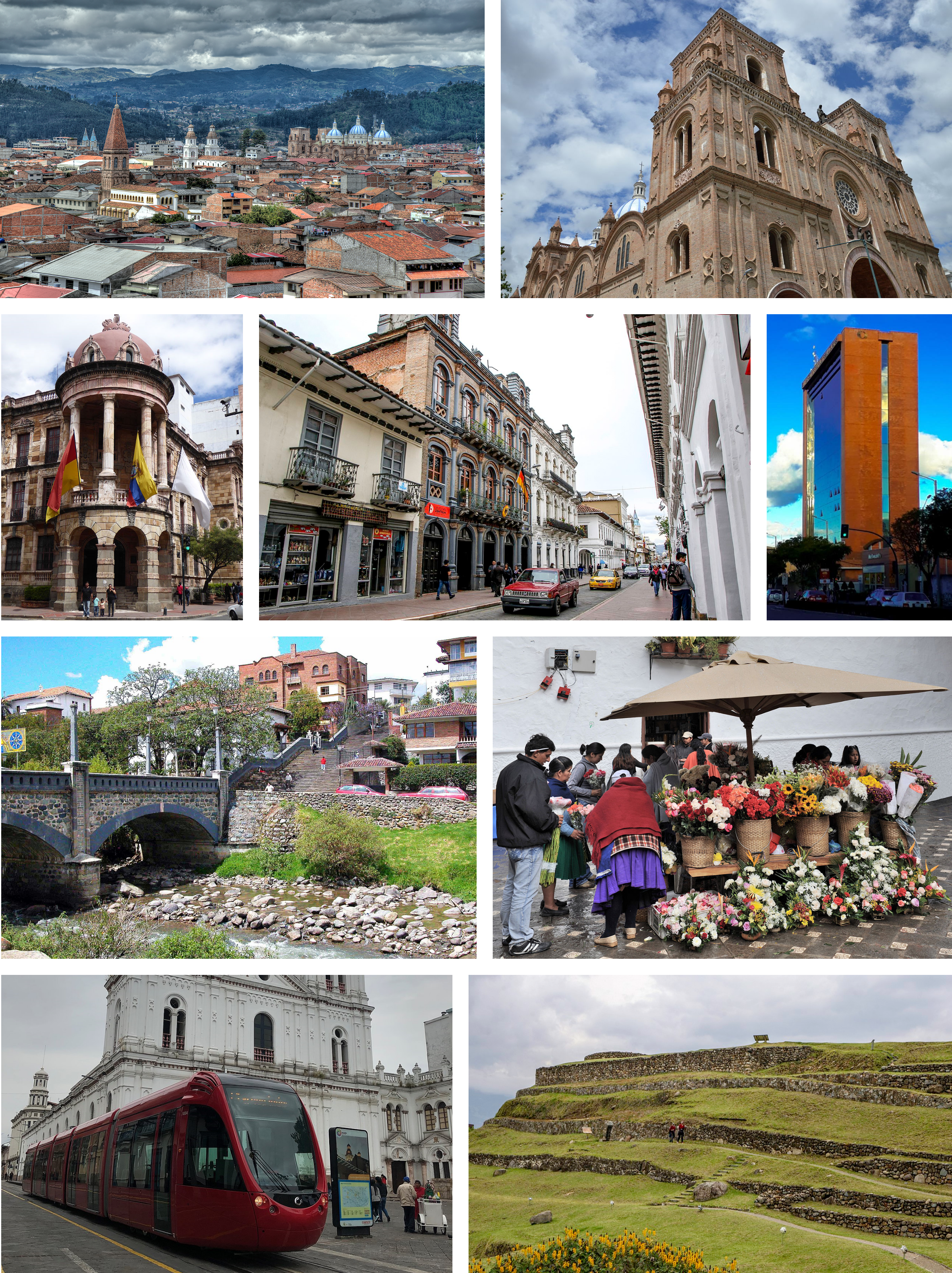
Azuay (Ecuador). Cuenca —officially Santa Ana de los Ríos de Cuenca— is the capital of Azuay province, in the southern Ecuadorian Sierra, and the country's third largest city. It sits in an Andean valley at about 2,560 meters above sea level, crossed by four rivers (the Tomebamba, the Yanuncay, the Tarqui and the Machángara), which is where its name comes from. Its historic center, colonial and republican in feel, was declared a UNESCO World Heritage Site in 1999. Cuenca is famous for its calm, its artistic heritage, its crafts and for being the home of the real toquilla straw hat, known worldwide as the 'Panama hat'.
📌Service city
Cuenca itself has all the services. It has Mariscal Lamar Airport (CUE), practically inside the city, with domestic flights (mainly to Quito and Guayaquil); many travelers also arrive by road from Guayaquil (about 3-4 h) or from Quito (about 8-10 h by bus). The intercity bus terminal connects with the whole country. The city has a wide range of hotels (many in the historic center, in restored mansions), hospitals, ATMs, exchange houses (Ecuador uses the dollar) and tourist offices. It is a very pleasant base for visiting El Cajas National Park, the Ingapirca ruins and the craft towns of Azuay.
📌Best time to go
Cuenca, at altitude and close to the equator, has a temperate and fairly stable climate all year, with cool to mild days and cold nights; people often say it has 'four seasons in one day'. There are no marked temperature seasons, only drier and rainier periods. The driest, sunniest months, ideal for walking the center and heading out to El Cajas, usually run from June to December (with June-September the best window). The rainiest go from February to May. Dress in layers and always carry something waterproof, because the weather changes fast. The national holidays (independence, 3 November) and the Pase del Niño Viajero in December are especially festive moments.
📌Suggested days
With 2 days you can take in the historic center at leisure: Parque Calderón with the New Cathedral and the Old Cathedral, the Tomebamba river and El Barranco, the Pumapungo Museum and its ruins, the markets and the toquilla straw hat workshops. With 3 to 4 days you can add the Turi viewpoint, more museums and churches, and at least one full-day trip to El Cajas National Park (lagoons and páramo) or to the Ingapirca ruins. With 5 days or more, Cuenca is an ideal base for adding craft towns such as Gualaceo, Chordeleg (jewelry) and Sígsig, and for enjoying the city's gentle pace without rushing.
💱 USD exchange rate
Loading rate…
🌤️ Weather in Cuenca
Loading weather…

Cuenca has a reputation as the prettiest and most peaceful city in Ecuador, and a short walk through its streets is enough to see why. Set in an Andean valley in the south of the country, at about 2,560 meters and crossed by four rivers, this city of sky-blue domes, mansions with flower-filled balconies and quiet squares keeps a colonial and republican charm that wins you over. Its historic center, with its perfect grid and its architecture of marble, wrought iron and pastel façades, was declared a UNESCO World Heritage Site in 1999.

The heart of Cuenca is Parque Calderón, presided over by the imposing Cathedral of the Immaculate Conception —the 'New Cathedral'— with its three enormous domes of sky-blue tiles that have become the city's symbol, facing the quiet Old Cathedral. A few steps away, the Tomebamba river runs at the foot of El Barranco, where the old houses lean out over the water in one of the country's best-loved views. And tradition beats everywhere: the markets, the ceramics, the jewelry and, above all, the toquilla straw hat —the famous 'Panama hat'— whose weaving is Intangible Cultural Heritage of humanity.

This guide covers the essentials of Cuenca with a practical eye: which churches, museums and viewpoints not to miss, how to learn the story of the hat, how to organize the trip to El Cajas National Park and to Ingapirca, where to sleep and eat, how to get around and how to look after yourself. More relaxed than the big capitals, Cuenca invites you to slow down, sit in a downtown café, walk its streets and let yourself be charmed by one of the most soulful cities in the Andes.

📖 History of Cuenca

Long before the Spanish city, this fertile valley in the southern Andes was the territory of the Cañari people, a farming and fiercely independent culture that called the place Guapondelig. Toward the end of the 15th century, the Inca Empire conquered the region after hard Cañari resistance and founded there one of its most important cities in the northern Tahuantinsuyo: Tomebamba (Tumipampa), described by the chroniclers as a second Cusco, sumptuous and sacred. Tradition links this place with none other than the Inca Huayna Cápac, who is said to have possibly been born here. The Inca civil wars and the Spanish conquest left that splendid city in ruins, and its remains can still be seen in the Pumapungo sector. On top of that past, on 12 April 1557, captain Gil Ramírez Dávalos founded the Spanish city of Santa Ana de los Ríos de Cuenca, by order of the Viceroy of Peru, giving it the name in memory of the Spanish Cuenca. During the colonial period, Cuenca grew as an agricultural and craft center of the Audiencia de Quito; later, in the 19th and 20th centuries, it lived its great republican era, when its monumental churches, its stately mansions and the New Cathedral were built, and the toquilla straw hat trade flourished, selling around the world. Cuenca also played a prominent part in independence: on 3 November 1820 it proclaimed its separation from Spain. Its exceptional urban and historic ensemble earned it, in 1999, the declaration of its historic center as a UNESCO World Heritage Site. The full story is on our history page.

Read the full history ↓

🏛️ Cuenca is in Azuay

The province of the southern Andes: Cañari land, seat of Inca Tomebamba and of Cuenca —a World Heritage Site—, cradle of the toquilla straw hat, cultural capital of the austro and guardian of the páramos and lakes of El Cajas.

Read the history of Azuay →

🗺️ What to see

1
Parque Calderón and the New Cathedral
The heart of Cuenca: the main square facing the Cathedral of the Immaculate Conception, with its three sky-blue domes, symbol of the city.
Parque Calderón is the central square and the very heart of Cuenca, the place where the city's life beats. It is a leafy, elegant park, with its old araucaria trees and its benches, surrounded by the great civil and religious buildings: the provincial government, the city hall and, above all, the two cathedrals that face each other. The great protagonist is the Cathedral of the Immaculate Conception, known as the 'New Cathedral', whose construction began in 1885 and stretched over decades. It's a mass of pink brick and marble, in a style mixing Romanesque and Gothic, crowned by three large domes clad in sky-blue tiles brought from Europe, which have become the undisputed symbol of Cuenca and appear on every postcard. Its interior, wide and luminous, impresses by its scale; it is said to have been conceived to hold much of the city's population. Curiously, the façade towers were left 'cut short' or unfinished: according to tradition, a miscalculation meant that, had they been raised to their planned height, the weight would have put the structure at risk, so they were left truncated. At certain hours you can go up to the domes or terraces for a lovely view over the historic center. Getting there: right in the historic center, easy to reach on foot from anywhere in the old town; by taxi/app from further out. Best time: during the day, with good light on the domes; sunset is lovely in the square. Entry: the park is free; entering the cathedral is usually free during services and the dome climb is paid (~US$ 2 per person, 2025). Tips: sit in the park a while and watch Cuenca life go by and, if you can, go up to the domes for the panorama.
ℹ️ Distance: Historic center; on foot from anywhere in the old town (or taxi/app) · Best time: During the day, with good light; sunset in the square · Entry: Park and cathedral free to enter during services; dome climb ~US$ 2 per person (2025; check) · Duration: 1 to 1.5 hours
2
Old Cathedral (El Sagrario)
Cuenca's first cathedral, today a museum of religious art, facing Parque Calderón.
Facing the New Cathedral, on the other side of Parque Calderón, stands the Old Cathedral, also called the church of El Sagrario. It is one of the oldest buildings in Cuenca: its origins go back to the years just after the city's founding, in the 16th century, and it was extended and reformed over the centuries. For a long time it was the city's main church, until the new cathedral replaced it in that role. With whitewashed walls, a sober façade and a bell tower, the Old Cathedral has a quiet charm that contrasts with the monumental scale of its neighbor. Today it is deconsecrated and works as a Museum of Religious Art, holding colonial altarpieces, paintings, sculptures and liturgical objects, along with the church's own architecture. It also has a singular historical value: a point installed in its tower served as a reference for the 18th-century French Geodesic Mission in its measurements of the meridian. Visiting it means stepping into the oldest Cuenca and understanding the city's religious origin. Its acoustics also make it an occasional venue for classical and choral concerts. Getting there: on Parque Calderón, in the historic center, right opposite the New Cathedral; all on foot. Best time: during the day, in museum opening hours. Entry: as a museum, it charges admission (US$ 2 foreigners, US$ 1 nationals, 2025). Tips: combine it in the same walk with the New Cathedral and Parque Calderón, since they face each other.
ℹ️ Distance: Parque Calderón, historic center (opposite the New Cathedral) · Best time: During the day, in museum opening hours · Entry: Museum of Religious Art: US$ 2 foreigners, US$ 1 nationals, US$ 0,50 children (2025; check) · Duration: 30 to 45 minutes
3
El Barranco and the Tomebamba river
Cuenca's historic balcony over the river, with hanging houses, washerwomen and the most photogenic walk in the city.
El Barranco is one of the most characteristic and best-loved corners of Cuenca: the edge where the historic center drops toward the Tomebamba river. Here, the old republican mansions look out over the drop above the river, forming a row of stepped façades, balconies and whitewashed walls that seem to float above the water. It's one of the city's most recognizable views and an unmissable walk. The Tomebamba river, which comes down from El Cajas National Park, separates the historic Cuenca to the north from the more modern city to the south. Along its banks runs a pleasant tree-lined walk, ideal for strolling, sitting to watch the water or crossing on its bridges. The area preserves traces of traditional trades: for a long time, washerwomen used the banks and spots such as the 'Plaza de las Lavanderas' (El Vado / El Vergel) to wash clothes in the river, a very Cuencan scene. Going up and down between the center and the river is done via picturesque stairways, such as those of La Condamine, and through charming neighborhoods like El Vado, full of workshops, murals and artisans' houses. At dusk, with golden light on the houses of El Barranco, the place is especially beautiful. Getting there: it runs along the southern edge of the historic center; you reach it walking down from Parque Calderón toward the river. Best time: at dusk for the light; during the day to walk the riverside at leisure. Tips: combine it with a walk through the El Vado neighborhood and the stairways; wear comfortable shoes for the slopes down to the river.
ℹ️ Distance: Southern edge of the historic center, above the Tomebamba river (on foot) · Best time: Dusk for the light; daytime for the riverside walk · Entry: Free (open access) · Duration: 1 to 2 hours
4
The toquilla straw hat (Panama hat)
Cuenca's most famous craft tradition: the workshops and museums of the genuine toquilla straw hat.
Although the world knows it as the 'Panama hat', the famous toquilla straw hat is, to a large extent, an Ecuadorian tradition, and Cuenca is one of its great centers of production and trade. The name 'Panama hat' is a historical misunderstanding: these hats, woven in Ecuador, became famous in the 19th century when they were sold to Panama Canal workers and were popularized from there, ending up tied to the name of the isthmus. The traditional weaving of the toquilla straw hat was recognized by UNESCO as Intangible Cultural Heritage of Humanity in 2012. The hat is woven by hand from the fibers of a palm (the paja toquilla or 'Carludovica palmata') that grows on the Ecuadorian coast. The process is long and delicate: the finer and tighter the weave, the more valuable the hat, up to the celebrated 'superfinos' that can take months of work and reach very high prices. In the Cuenca region and Azuay, thousands of weavers —often in nearby towns— keep this tradition alive. In the city you can see the whole process in historic workshops and factories, where you watch how the hats are shaped, bleached and finished, and where of course you can buy one. The Toquilla Straw Hat Museum (based around traditional houses of the trade) is a highly recommended visit for understanding the craft that gave Cuenca its international fame. Getting there: there are workshop-museums in the historic center and around it; many are reachable on foot or by taxi/app. Best time: during working hours, to see the process live. Entry: some workshop-museums are free to enter (with a shop); others charge a token admission (~US$ 2-4, 2025). Tips: if you buy a hat, let them advise you on the quality of the weave; a good 'Panama' is a souvenir for life.
ℹ️ Distance: Workshop-museums in the historic center and around it (on foot or taxi/app) · Best time: During working hours, to see the weaving process · Entry: Several workshop-museums free to enter (with a shop); the Hat Museum (Homero Ortega/Barranco) charges a token admission ~US$ 2-4 (2025) · Duration: 1 to 1.5 hours
5
Pumapungo Museum and Cañari-Inca ruins
Cuenca's great museum and the remains of the Inca city of Tomebamba, above the river.
The Pumapungo complex is one of the most important places in Cuenca for understanding its deep history. It stands on the site of Tomebamba (Tumipampa), the great Inca city the chroniclers described as a second Cusco, sumptuous and sacred, and which may have been linked to the birth of the Inca Huayna Cápac. The Inca civil wars and the conquest left that city in ruins, and today its foundations, terraces, walls and canals survive as testimony to its former splendor. The Pumapungo archaeological site —'puma's gate' in Quechua— includes the remains of Inca and Cañari structures, gardens replanted with native species and terraces stepping down toward the Tomebamba river. Walking it lets you imagine the scale this settlement had before the Spanish arrived. Next to the ruins is the Pumapungo Museum (of the Central Bank), one of the best museums in Ecuador. It has an outstanding archaeology section and, above all, a famous ethnography hall covering the peoples and cultures of the country, including the celebrated collection of tzantzas (the shrunken heads of the Shuar of the Amazon). The museum is usually free to enter, which makes it an unmissable visit. Getting there: on the southeastern edge of the historic center, on Calle Larga, near the river; on foot from downtown or by taxi/app. Best time: during the day, in museum hours; confirm opening days. Entry: the museum and the ruins are usually free (check). Tips: give time to the ethnography section and to the walk through the ruins and gardens down toward the river.
ℹ️ Distance: Southeastern edge of downtown, on Calle Larga, near the river (on foot or taxi/app) · Best time: During the day, in museum hours (confirm opening days) · Entry: Usually free to enter (ask/check) · Duration: 1.5 to 2.5 hours
6
Turi viewpoint
The classic balcony over Cuenca, with the white church and the best panoramic view of the city and its domes.
The Turi viewpoint is Cuenca's natural balcony: a hill south of the city, crowned by the small, bright white church of Turi, from where you get the most complete panoramic view of the city. From up there, Cuenca spreads out in the valley: the grid of the historic center, the three sky-blue domes of the New Cathedral standing out among the roofs, the rivers and, on clear days, the surrounding Andean mountains. It's a classic, unmissable outing for grasping the scale of the city and understanding its geography. The church of Turi, simple and white, is a shrine much loved by Cuencanos. Beside the viewpoint there are craft stalls and a café or two, and it's usually busiest at weekends. Sunset is one of the most magical times to go up, when the light gilds the city and, as night falls, Cuenca's lights come on in the valley. It's a hard view to forget. Getting there: it's a few kilometers south of downtown; the easiest is to go up by taxi/app or on a tour; there are also buses that reach the area. Best time: at sunset for the light and the city lights; during the day for the clear panorama. Tips: combine sunset with a taxi/app ride back down; bring a layer, because it cools off as the sun goes down. It's ideal for a photo of the whole city.
ℹ️ Distance: Hill south of Cuenca, a few km from downtown (taxi/app, tour or bus) · Best time: Sunset for the light and the city lights; daytime for the panorama · Entry: Free (open access); food and drink extra · Duration: 1 to 1.5 hours
7
El Cajas National Park
The spectacular Andean páramo of hundreds of lagoons, an hour from Cuenca, ideal for hiking and nature.
El Cajas National Park is one of the great natural treasures of southern Ecuador and the star day trip from Cuenca. It is a vast stretch of high Andean páramo (much of it above 3,000 and up to more than 4,000 meters), dotted with hundreds of lagoons and pools of glacial origin that give it a unique landscape, at once misty and awe-inspiring. The name 'Cajas' refers precisely to those hollows where the water gathers. El Cajas is a park of great natural richness: it holds the characteristic 'polylepis' or paper tree forest (one of the highest-growing forests in the world), páramo vegetation, and wildlife that includes deer, llamas, an enormous variety of birds (it's a paradise for birdwatchers) and the Andean condor. It is also a key source of water for Cuenca. The park has several signposted trails, of varying difficulty, that take you around lagoons and viewpoints. Most visitors come on a day trip from Cuenca (it's about an hour away on the road toward Guayaquil) or stop off at the park on the way to the coast. Because of the altitude and the changeable weather, come prepared: conditions can go from sun to fog and rain in minutes. Getting there: on an organized tour from Cuenca (the easiest, with a guide), in your own vehicle or on intercity buses heading to Guayaquil that stop at the park. Best time: early in the morning and on dry days (June to December is usually better); avoid stormy days. Entry: you sign in at the visitor centers; admission is usually free or low cost (check). Tips: bring warm and waterproof clothing, hiking footwear, water, sun protection and go slowly because of the altitude. Given the altitude and the weather changes, many trails are best done with a guide.
ℹ️ Distance: About 30-40 km west of Cuenca, on the road to Guayaquil (tour, own vehicle or bus) · Best time: Early morning and dry days (June to December); avoid storms · Entry: Free (open access, sign in at the La Toreadora visitor center; hours 8:00-16:30). Day tour from Cuenca: half day from US$ 35, full day US$ 49-55 per person (2025) · Duration: Half a day to a full day
8
Mercado 10 de Agosto and traditional markets
Cuenca's most typical market, with popular food, fruit, flowers and the famous energy 'limpias'.
To feel the most authentic, everyday Cuenca, there's nothing like diving into its markets, and the most emblematic is the Mercado 10 de Agosto. It's a market on several levels, full of color and movement, where Cuencanos do their daily shopping and where the traveler discovers the flavors and traditions of the region away from the tourist circuit. On the food floor they serve the typical dishes of the southern highlands at everyday prices: hornado (roast pork), fritada, mote pillo, llapingachos, broths and the famous 'cuy' (roast guinea pig) for the bolder. It's the ideal place for a cheap, tasty lunch, elbow to elbow with locals. In other sections there is fruit, vegetables, herbs, flowers and country produce. A very Cuencan curiosity of the market are the energy 'limpias': at certain stalls, traditional healers perform spiritual cleansing rituals with plants, eggs and other elements, a practice of Andean folk medicine that is still very much alive. Other interesting markets are the Mercado 9 de Octubre and the flower market beside the Carmen de la Asunción church (Plaza de las Flores), one of the prettiest sights in the city. Getting there: in the historic center, a few blocks from Parque Calderón; all on foot. Best time: in the morning and at midday, when there's more activity and fresher food. Tips: bring cash in small bills, watch your belongings in the crowd and be brave enough to try the everyday food. The Plaza de las Flores, nearby, deserves a photo.
ℹ️ Distance: Historic center, a few blocks from Parque Calderón (on foot) · Best time: In the morning and at midday (more activity and fresher food) · Entry: Free (open access); very cheap meals · Duration: 1 to 1.5 hours (with lunch)
9
Ingapirca ruins
Ecuador's most important Inca archaeological complex, with its singular elliptical Temple of the Sun, on a day trip from Cuenca.
About two hours north of Cuenca, in Cañar province, lies Ingapirca, the most important and best-preserved Inca archaeological complex in all of Ecuador. It's a classic excursion from the city for anyone who wants to see the country's Inca and Cañari legacy up close. The site was, before it was Inca, an important Cañari center, and the Incas then built on top of it during their expansion northward, in a case of superimposed cultures. Its most famous structure is the so-called Temple of the Sun or 'Castillo': an elliptical building, made with the unmistakable Inca stonework of perfectly cut and fitted blocks, raised on a hill. It is thought to have had ceremonial and astronomical functions, tied to sun worship and the farming calendar. Around it survive other remains of plazas, storehouses, dwellings and roads. Ingapirca thus brings together two worlds: the Cañari, the region's original people, and the conquering Inca, at a site that testifies to the pre-Hispanic richness of southern Ecuador. The páramo and mountain landscape around it adds beauty to the visit. Getting there: on an organized tour from Cuenca (the easiest, with a guide), in your own vehicle or on buses heading to Cañar/Ingapirca. Best time: during the day and in good weather; mornings are usually clearer. Entry: the archaeological site charges an admission of US$ 2 (the same for nationals and foreigners), US$ 1 for students and young people aged 12 to 17; free for children under 11, senior citizens and people with disabilities. Open Wednesday to Sunday, 8:00 to 16:30 (closed Monday and Tuesday); tickets online at patrimoniocultural.gob.ec or on site. Tips: bring warm layers (you're at altitude and out in the open), sun protection and comfortable footwear; a guide helps a lot in reading the site.
ℹ️ Distance: Cañar province, about 2 h north of Cuenca (tour, own vehicle or bus) · Best time: During the day and in good weather; clearer in the morning · Entry: Ingapirca Archaeological Complex: US$ 2 (the same for nationals and foreigners), US$ 1 students and young people 12-17; free for children under 11, senior citizens and people with disabilities. Open Wednesday to Sunday 8:00-16:30 (source: INPC / patrimoniocultural.gob.ec, verified July 2026) · Duration: Half a day to a full day (including travel)
10
Churches of the historic center (Carmen de la Asunción, San Blas, Santo Domingo)
Cuenca's rich religious heritage, with churches and squares dotted through the old town.
Cuenca is a city of churches, and touring its temples is one of the best ways to get to know its heritage and its historic layout. Beyond the two cathedrals on Parque Calderón, the historic center is dotted with churches and squares well worth discovering on foot. One of the most charming is the Monastery of El Carmen de la Asunción, founded in the 17th century, with its baroque façade and, above all, the picturesque Plaza de las Flores (Plazoleta del Carmen) at its feet, where a sea of fresh flowers is sold: it's one of the most photographed corners of Cuenca. The cloistered nuns of El Carmen are also famous for selling agua de pítimas and other preparations through a revolving hatch. Other notable churches are San Blas (on the square of the same name, at the eastern edge of the historic center, considered the only Latin-cross church in the city), Santo Domingo, San Francisco (next to its square and craft and textile market) and San Sebastián, around the square of the same name, another corner of the heritage grid. Each holds altarpieces, images and a piece of Cuenca's history. Getting there: all in the historic center, easily covered on foot in one walk. Best time: during the day, in service/visiting hours; the Plaza de las Flores looks best in the morning. Entry: the churches are usually free to enter during services. Tips: put together a walking circuit linking several churches and squares; each square has its own character and atmosphere.
ℹ️ Distance: Spread through the historic center (walkable) · Best time: During the day, in service/visiting hours; Plaza de las Flores in the morning · Entry: Free to enter during services; some with a paid museum (token admission ~US$ 1-2, 2025) · Duration: Half a day (church circuit)
11
Museum of Aboriginal Cultures and Cuenca's museums
Cuenca's rich museum offering, with outstanding archaeology and art collections.
Cuenca, a cultured, heritage city, offers a surprising number of museums for a city of its size, ideal for going deeper into Ecuador's history and art, above all on bad-weather days. Alongside the great Pumapungo Museum, several downtown museums deserve a visit. The Museum of Aboriginal Cultures, in a house in the historic center, displays an impressive private collection of archaeological pieces (ceramics, tools, ritual objects) covering thousands of years of Ecuador's pre-Columbian cultures, one of the most complete of its kind. It's a highly recommended visit for understanding the country's pre-Hispanic past. Among others, the Museum of Modern Art (in a beautiful historic building, with contemporary art shows), the Hat Museum and the toquilla straw workshops, the Remigio Crespo Toral Museum (city history and art) and various cultural houses and centers stand out. Many are housed in restored heritage mansions, so the visit gains the value of the building itself. Getting there: most are in the historic center, walkable; some on Calle Larga, near the river. Best time: during the day, in museum hours; ideal for an afternoon or a cloudy day. Entry: varies by museum (Aboriginal Cultures US$ 4, others free such as Modern Art and Pumapungo). Tips: confirm opening days and hours, which can change, and put together a circuit combining several nearby museums.
ℹ️ Distance: Spread through the historic center and Calle Larga (on foot) · Best time: During the day, in museum hours; ideal for a cloudy day · Entry: Varies: Museum of Aboriginal Cultures US$ 4 (US$ 2 students); Museum of Modern Art and Pumapungo free (2025; check) · Duration: 1 to 3 hours (depending how many you visit)
Advertisements
What nobody tells you

💵 Prices

Tickets

TypePrice
Parque Calderón (walking the square)Free (open access)
New Cathedral (Immaculate Conception) — dome climbFree to enter during services; climb to the domes and crypt US$ 2,25 per person, from 8:00 to 13:30 and 14:00 to 16:00 (source: Airial Travel / local operators, verified July 2026)
Old Cathedral (Museum of Religious Art)US$ 2 foreigners / US$ 1 nationals / US$ 0,50 children (verified July 2026)
El Barranco and the Tomebamba riverFree (open access)
Toquilla Straw Hat workshops and museumSeveral workshop-museums free (with a shop); Hat Museum with a token admission ~US$ 2-4 (verified July 2026)
Pumapungo museum and ruinsFree (Central Bank museum; allow about 2-3 h for the galleries and the archaeological park) (source: pumapungo.gob.ec, verified July 2026)
Turi viewpointThe viewpoint and the views are free; glass bridge US$ 3 (US$ 2 reduced) and Turi church US$ 1 (source: GAD Turi / operators, verified July 2026)
El Cajas National ParkFree (open access, sign in at the La Toreadora visitor center; hours 8:00-16:30). Camping ~US$ 2 (source: MAATE / Ecuador Travel, verified July 2026)
Ingapirca ruinsUS$ 2 (the same for nationals and foreigners); US$ 1 students and young people 12-17; free for children under 11, senior citizens and people with disabilities. Open Wednesday to Sunday 8:00-16:30 (source: INPC / patrimoniocultural.gob.ec, verified July 2026)
Traditional markets (10 de Agosto, 9 de Octubre)Free (open access); very cheap meals (US$ 2-5 for lunch, verified July 2026)
Museum of Aboriginal CulturesUS$ 4 general / US$ 2 students (verified July 2026)
Museum of Modern ArtFree (open access; check hours, verified July 2026)
🔄 updated monthlyOfficial / reference values · double-check when buying

Activities and tours

ActivityPriceDurationOperator
City tour of the historic center (cathedrals, churches and El Barranco)US$ 15-30 per person; free walking tour on a tip basis (verified July 2026)Half a dayLocal agencies and guides
Panoramic tourist bus with a stop at TuriUS$ 8-12 per person (e.g. Vanservice/Turibus; verified July 2026)2 to 3 hCuenca tourist bus operators
Day trip to El Cajas National ParkHalf day from US$ 35; full day US$ 49-55 per person (verified July 2026)Half a day to a full dayNature tourism operators
Trip to the Ingapirca ruinsUS$ 45-75 per person depending on the operator (includes guide and sometimes lunch; site admission US$ 2 extra if not included; verified July 2026)Full dayCuenca agencies
Tour of the craft towns (Gualaceo, Chordeleg, Sígsig)US$ 40-65 per person (2025; transport and guide)Full dayCuenca agencies
Visit to a toquilla straw hat factory/workshopFree (with a shop) up to ~US$ 2-4 at the hat museums (2025)1 to 2 hHistoric workshops and factories (e.g. Homero Ortega, Barranco)
Food and market tourUS$ 25-50 per person (2025)Half a dayFood tour operators
Free walking tour of the heritage old townOn a tip basis / voluntary tip (US$ 5-15 suggested)2 to 3 hCuenca free tour operators
🔄 updated monthlyOfficial / reference values · double-check when buying
Advertisements

🚌 How to get there and distances

Getting around

ModePriceDurationNotes
City bus (Movilízate card)Fare US$ 0,30; the card costs US$ 1,80 (source: Consorcio SIR Cuenca / El Mercurio, verified July 2026)VariableImportant: Cuenca's city buses do NOT accept cash, only electronic payment with the Movilízate card. Tourists buy the 'tourist card' (gray) for US$ 1,80 at ETAPA, the El Arenal station or the Terminal, and top it up in shops and kiosks with the 'Movilízate' sign (or online at usuarios.sircuenca.com). Without a card you can't board the bus
Cuenca tram (Tranvía de los Cuatro Ríos)Fare US$ 0,35 (frequent user US$ 0,30; preferential US$ 0,17); tram card US$ 1,75 (source: Tranvía Cuenca / El Mercurio, verified July 2026)Runs 10.7 km with 27 stationsA modern tram that crosses the city and skirts part of the historic center; it runs from about 6:00 to 21:00. It is also card-only (no cash); cards are bought and topped up at station machines (Feria Libre, Terminal, Airport, Centro 9 de Octubre). Today the bus and the tram use different cards; they are expected to be unified into a single card around mid-2026
App for routes, timetables and bus locationFree (Google Maps / Moovit)To plan city trips and see lines and stops, use Google Maps or Moovit; for the balance and top-up of the Movilízate card there is the portal usuarios.sircuenca.com (source: SIR Cuenca / Moovit, verified July 2026)
Taxis and appsCity ride US$ 1,50-4; to Turi US$ 4-6; to the airport/terminal US$ 2-4 (verified July 2026)VariableConvenient and cheap, above all to Turi, to the airport, to the terminal or at night. Ask for the meter or use an app; legal taxis are registered
On foot around the historic centerFreeVariableThe heritage old town, compact and mostly flat, is perfectly walkable. Bear in mind the slopes down to El Barranco and the river, and the altitude (2,560 m)
Bicycle and bike lanesRental from US$ 5-10 a day (indicative 2025)VariableCuenca has bike lanes; a pleasant way to ride along the banks of the Tomebamba river and the flat parts of the city
Airport transfer (taxi)US$ 2-4 (the airport is inside the city, 2025)A few minutesMariscal Lamar Airport (CUE) is practically in the city, so the taxi ride is very short
🔄 updated monthlyOfficial / reference values · double-check when buying

How to get there

RouteAirlines / operatorsAvg. priceDuration
Mariscal Lamar Airport (CUE) → downtown (taxi or app)Taxis and appsUS$ 2-4 (2025)A few minutes (the airport is in the city)
Guayaquil → Cuenca by road (bus or car)Coop. Turismo Oriental, Super Semería, Alpes (Guayaquil Terminal)Bus US$ 8-10 per person (verified July 2026)About 3 to 4 h (via El Cajas, spectacular scenery)
Quito → Cuenca by road (bus)Coop. Santa, Flota Imbabura, intercity lines (Quitumbe Terminal)US$ 12-16 per person (source: ecuabuses.com / busbud, verified July 2026)About 7 to 10 h through the Sierra (some 407 km)
Domestic flights to Cuenca (CUE) from Quito and GuayaquilAvianca, LATAM (domestic airlines)US$ 60-130 each way depending how far ahead you book (verified July 2026)About 30 to 45 min depending on origin
Arriving by long-distance bus (Cuenca Bus Terminal)National bus companiesDepending on origin: Loja US$ 7-9; Machala US$ 5-7 (2025)Depending on origin (Guayaquil, Quito, Loja, Machala, etc.)
🔄 updated monthlyOfficial / reference values · double-check when buying

🏨 Where to stay

No exact prices: a scale from $ (budget) to $$$$$ (luxury), with 2-3 options per category.

CategoryPriceRecommended options
Budget / hostels (historic center)$$$$$US$ 12-40 per person; hostels and budget hotels much chosen by backpackers, concentrated in the historic center, with a good atmosphere for meeting people and arranging trips to El Cajas and Ingapirca
Mid-range in the historic center$$$$$US$ 50-90 a night; a wide choice of mid-range hotels steps from the cathedrals and museums, with a good balance of location, charm and comfort (e.g. Hotel Victoria ~US$ 65 with views of the Tomebamba, Hotel Carvallo ~US$ 60 in colonial style)
Boutique in downtown mansions$$$$$US$ 80-160 a night; boutique hotels in restored colonial and republican mansions in the historic center, with patios, antiques and heritage charm (e.g. Mansión Alcázar, Hotel Santa Lucía)
Luxury / high-end hotels$$$$$US$ 150-300 a night; Cuenca's most exclusive hotels, in first-rate heritage mansions or modern properties with every service, for a premium experience of the World Heritage old town

🍴 Where to eat

TypePriceOptions / signature dish
Market food and popular snacks$$$$$US$ 2-5 a dish/lunch; hornado, mote pillo, tamales, humitas, quimbolitos and fruit juices at the 10 de Agosto and 9 de Octubre markets. The most authentic and cheapest way to eat in Cuenca
Traditional Cuencan and highland cooking$$$$$US$ 6-15 a dish; typical southern highland cooking (mote pillo, fritada, llapingachos, roast cuy, broths and figs in syrup with cheese) at picanterías and traditional houses downtown
Cafés, patisseries and downtown restaurants$$$$$US$ 4-12; Cuenca has a lovely coffee culture: cafés and patisseries in downtown mansions, ideal for a break with Ecuadorian coffee, chocolate or pastries
International and chef-driven cooking$$$$$US$ 12-30 a dish; thanks to its community of foreign residents, Cuenca has international restaurants (Italian, Asian, vegetarian) and chef-driven places that reinterpret Ecuadorian products, above all downtown and on Calle Larga
Advertisements

📖 History of Cuenca

Origins, formation and what the sources say.

The Cañari and Guapondelig, the land before the city

Long before the Spanish Cuenca existed, this fertile valley in the southern Andes was the territory of the Cañari people, one of the most important and most warlike cultures of ancient Ecuador. The Cañari had lived in the southern region —today's Azuay and Cañar provinces— for centuries, organized into chiefdoms, devoted to farming, metalwork and trade, with a rich religious life tied to the moon, the lagoons and nature.

Where Cuenca stands today there was a Cañari settlement that the sources name Guapondelig, a word usually translated as 'plain as large as the sky' or 'wide land of flowers', referring to the breadth and fertility of the valley watered by its rivers. It was a notable site within the Cañari world, in a privileged part of the southern highlands.

The Cañari left a deep mark on the region's identity. Their fighting spirit would show itself later both against the Incas and in the wars of the conquest, and their legacy lives on in the place names, the crafts and the culture of Azuay and Cañar. Knowing they were here is essential to understanding that Cuenca's history does not begin with the Spanish, but much earlier, with this Indigenous people who called this valley their own.

Guapondelig, the Cañari settlement
Sources agree that, before the Incas and the Spanish, the site of Cuenca was occupied by a Cañari settlement called Guapondelig. The exact translation of the name varies between sources ('plain as large as the sky', 'land of flowers'), so it is offered as an approximation.
Source: https://es.wikipedia.org/wiki/Cuenca_(Ecuador)
The Cañari as the Indigenous people of the southern Andes
There is consensus that the Cañari were one of the great pre-Hispanic cultures of what is now southern Ecuador, known for their resistance to Inca expansion and for their metalwork. Their exact political organization (chiefdoms, confederations) is reconstructed from chronicles and archaeology.
Source: https://es.wikipedia.org/wiki/Ca%C3%B1ari

Tomebamba, the Inca city and the birthplace of Huayna Cápac

Toward the end of the 15th century, the Inca Empire, in full expansion northward, reached Cañari territory. The conquest was not easy: the Cañari put up hard resistance before being subdued by the armies of Tahuantinsuyo. Once the region was absorbed, the Incas decided to build there, on top of Guapondelig, one of the most important cities of the empire's north: Tomebamba (Tumipampa).

The chronicles describe Tomebamba as a splendid city, conceived as a second Cusco: with temples, palaces, storehouses, acllahuasis (houses of the virgins of the sun) and buildings of fine Inca stonework, watered by the river that today bears its name, the Tomebamba. It was a political, religious and administrative center of the first order in the southern highlands, a symbol of Inca power in these newly conquered lands. Tradition also links it to the figure of the great Inca Huayna Cápac, who several sources say may have been born here, which would give Tomebamba a special prestige.

The splendor did not last long. The civil war between Huayna Cápac's sons, Atahualpa and Huáscar, hit the region hard, and the city of Tomebamba itself is said to have been razed in those conflicts, partly as Atahualpa's punishment of populations that supported his rival. When the Spanish arrived, the great Inca city was already in ruins. Today its remains survive above all in the Pumapungo sector of Cuenca, testimony to the Incas' passage through this valley.

Tomebamba as a 'second Cusco'
The chronicles present Tomebamba (Tumipampa) as one of the most important Inca cities of the north, sometimes described as a 'second Cusco' for its monumentality. The archaeological remains at Pumapungo, in Cuenca, are associated with this settlement. The exact degree of its splendor is reconstructed from chronicle sources.
Source: https://es.wikipedia.org/wiki/Tomebamba_(ciudad_inca)
Huayna Cápac and Tomebamba
Several sources link the Inca Huayna Cápac to Tomebamba, and some even hold that he may have been born there. The claim comes from chronicles and traditions and is debated, so it should be taken as a historically disputed possibility rather than an established fact.
Source: https://es.wikipedia.org/wiki/Huayna_C%C3%A1pac

The Spanish founding: Santa Ana de los Ríos de Cuenca (Gil Ramírez Dávalos, 1557)

After the conquest of Tahuantinsuyo, the southern region came under Spanish rule, within the jurisdiction of the Royal Audiencia of Quito. For the first few decades, however, there was no formally established Spanish city in this valley; the place, with its Inca ruins and its Cañari population, remained a strategic point of passage and resources on the road between Quito and the south.

The founding came by order of the Viceroy of Peru, don Andrés Hurtado de Mendoza, Marquis of Cañete, who ordered a city to be established at this site. The task fell to captain Gil Ramírez Dávalos, who on 12 April 1557 founded the city of Santa Ana de los Ríos de Cuenca, on or beside the old site of Tomebamba/Guapondelig. The name combined the patron saint, Santa Ana, a reference to the rivers that cross the valley, and the place name 'Cuenca' in memory of the Spanish city of Cuenca, where the viceroy who ordered the founding came from.

The new city was laid out on the classic Spanish model: a regular grid of streets around a central square (today's Parque Calderón), with plots distributed among the first residents, a seat for the town council and a site for the main church. That orderly layout, preserved to this day, would in time become one of Cuenca's great heritage assets. So was born, on a Cañari and Inca substrate, the colonial city that would grow into one of the centers of the southern highlands.

The 1557 founding and the origin of the name
Sources agree that Gil Ramírez Dávalos founded Santa Ana de los Ríos de Cuenca on 12 April 1557, by order of the Viceroy of Peru, the Marquis of Cañete, who chose the name 'Cuenca' in memory of his Spanish home city. The settlement was raised on or beside the old Tomebamba/Guapondelig.
Source: https://es.wikipedia.org/wiki/Cuenca_(Ecuador)

The colonial period: a farming, religious and craft city

Through the colonial centuries, Cuenca grew quietly as a regional center of the southern highlands, within the Royal Audiencia of Quito and the Viceroyalty of Peru (and later New Granada). It did not have the monumental grandeur of Quito, but it established itself as a prosperous city resting on the farming and livestock of its fertile valley, on trade and on an active craft and religious life.

The religious orders settled in the city early on and built churches, convents and monasteries —Dominicans, Franciscans, the Carmelite monastery of El Carmen de la Asunción, among others— which shaped Cuenca's spiritual and urban life and left a heritage that still defines its old town today. Colonial society was organized around the squares and the parishes, with its hierarchies of Spaniards, criollos, mestizos and Indigenous people.

The southern region also developed trades and crafts that would make it famous: ceramics, textiles, metalwork and the working of toquilla straw and other fibers. The Cañari-mestizo countryside supplied the city and kept alive traditions that mixed with Spanish ones. By the end of the colonial period, Cuenca was already a consolidated city, with its grid, its churches and an identity of its own within the mosaic of the future Ecuadorian nation, ready to join the great movement for independence.

Colonial Cuenca within the Audiencia of Quito
There is consensus that, during the colonial period, Cuenca developed as a regional farming, craft and religious center of the southern highlands, part of the Royal Audiencia of Quito. Its administrative importance grew over the colonial centuries, laying the groundwork for its later regional prominence.
Source: https://es.wikipedia.org/wiki/Cuenca_(Ecuador)

The independence of Cuenca (3 November 1820)

The 19th century brought the great independence movement to all of Spanish America, and Cuenca played its own prominent part in it. After Quito's first cry in 1809 and in the context of the wars of emancipation sweeping the continent, the cities of the future republic declared, one after another, their separation from the Spanish Crown.

Cuenca took that step on 3 November 1820. That day, the Cuencan patriots —led by figures such as José María Vázquez de Noboa and with the support of the population and local troops— proclaimed the city's independence from Spanish rule, in a move that brought the south into the cause of liberty. The feat was not without fighting against royalist forces in the days and weeks that followed, but it marked the start of the region's autonomous life.

The date of 3 November remains one of the city's most important anniversaries, celebrated every year with the great festivities of Cuenca's independence. Definitive emancipation of the whole territory would come shortly afterward, with the Bolivarian campaigns and the victory at Pichincha in 1822, which sealed the freedom of the entire former Audiencia of Quito. Cuenca then joined, like the rest of the country, Gran Colombia and, after its dissolution, the newborn Republic of Ecuador in 1830, within which it took hold as one of its main cities.

3 November 1820
Sources agree that Cuenca proclaimed its independence from Spain on 3 November 1820, a date celebrated as the city's independence holiday. Figures such as José María Vázquez de Noboa are linked to the movement. Regional independence was consolidated by the later campaigns and the Battle of Pichincha (1822).
Source: https://es.wikipedia.org/wiki/Independencia_de_Cuenca

The republican boom and the toquilla straw hat

Now part of the Republic of Ecuador, Cuenca lived through the 19th century and the early 20th one of its most brilliant eras, which would give the city much of the face it keeps today. It was the period when its great monumental churches went up —led by the imposing New Cathedral, whose construction began in 1885— along with its stately mansions with wrought-iron balconies, its squares and its republican architecture with a French air, the fruit of its families' prosperity and its society's refinement.

Much of that splendor rested on a humble yet extraordinary product: the toquilla straw hat, known worldwide as the 'Panama hat'. Through the 19th century and, above all, in the booms of the late 1800s and early 1900s, the weaving and export of these hats —made in Cuenca, Azuay and on the coast— became a major source of wealth for the region. Their worldwide fame grew when they were sold to Panama Canal workers, which gave them their misleading name.

Thousands of weavers in Cuenca and its towns made a living from this trade, which became part of the city's identity. That combination of economic boom, intense cultural life (Cuenca is known as the 'Athens of Ecuador' for its poets, musicians and intellectuals) and urban refinement crystallized in the heritage ensemble that visitors admire today. The traditional weaving of the toquilla straw hat was recognized by UNESCO as Intangible Cultural Heritage of Humanity in 2012.

The toquilla straw hat and its 'Panama hat' name
There is consensus that the toquilla straw hat is Ecuadorian in origin and that the name 'Panama hat' derives from its being traded through the isthmus (especially with Canal workers) in the 19th and 20th centuries. Its traditional weaving was inscribed by UNESCO as Intangible Cultural Heritage in 2012.
Source: https://ich.unesco.org/en/RL/weaving-of-the-ecuadorian-toquilla-straw-hat-00729
Cuenca, the 'Athens of Ecuador'
Cuenca is traditionally called the 'Athens of Ecuador' for its intense cultural and intellectual life (poets, musicians, artists) during the republican era. The nickname is in common use in the sources and reflects its cultural prestige rather than any formal title.
Source: https://es.wikipedia.org/wiki/Cuenca_(Ecuador)

UNESCO World Heritage (1999) and today's Cuenca

International recognition of Cuenca's value came at the end of the 20th century. On 1 December 1999, UNESCO inscribed the Historic Centre of Santa Ana de los Ríos de Cuenca on the World Heritage List, adding the city to the select group of sites protected on behalf of humanity. The committee valued the exceptional urban ensemble: the colonial-era grid layout preserved for more than four centuries, the harmony of its colonial and republican architecture, and the fusion of European and local traditions in an urban landscape of great beauty.

The distinction confirmed what Cuencanos always knew: that their city, with its sky-blue domes, its mansions, its churches, its Tomebamba river edged by El Barranco and its orderly grid, is one of the most valuable and best-preserved historic ensembles in the Americas. The recognition brought prestige and tourism, but also the duty to protect that heritage against the growth of a living city.

Today Cuenca is Ecuador's third city and a destination that combines its historical richness with a calm quality of life that draws travelers and a notable community of foreign residents. It keeps its unhurried pace, its culture of coffee and the arts, its markets, its traditional trades —with the toquilla straw hat at the head— and its pride as the 'Athens of Ecuador'. Walking its center means reading, in its stones and domes, the long history that runs from the Cañari of Guapondelig and the Incas of Tomebamba to the elegant republican city the world declared World Heritage.

What UNESCO recognizes in Cuenca (1999)
The 1999 inscription covers the 'Historic Centre of Santa Ana de los Ríos de Cuenca'. UNESCO highlights the grid layout preserved since colonial times, the harmony of its colonial and republican architecture and the fusion of local and European traditions as the site's outstanding universal values.
Source: https://whc.unesco.org/en/list/863/

📚 Bibliography

  • Wikipedia (ES) — «Cuenca (Ecuador)»: https://es.wikipedia.org/wiki/Cuenca_(Ecuador)
  • Wikipedia (EN) — «Cuenca, Ecuador»: https://en.wikipedia.org/wiki/Cuenca,_Ecuador
  • Wikipedia (ES) — «Cañari»: https://es.wikipedia.org/wiki/Ca%C3%B1ari
  • Wikipedia (ES) — «Tomebamba (ciudad inca)»: https://es.wikipedia.org/wiki/Tomebamba_(ciudad_inca)
  • Wikipedia (ES) — «Huayna Cápac»: https://es.wikipedia.org/wiki/Huayna_C%C3%A1pac
  • Wikipedia (ES) — «Pumapungo»: https://es.wikipedia.org/wiki/Pumapungo
  • Wikipedia (ES) — «Independencia de Cuenca»: https://es.wikipedia.org/wiki/Independencia_de_Cuenca
  • Wikipedia (ES) — «Catedral de la Inmaculada Concepción (Cuenca)»: https://es.wikipedia.org/wiki/Catedral_de_la_Inmaculada_Concepci%C3%B3n_(Cuenca)
  • UNESCO — «Historic Centre of Santa Ana de los Ríos de Cuenca» (Patrimonio Mundial, 1999): https://whc.unesco.org/en/list/863/
  • UNESCO — «Weaving of the Ecuadorian toquilla straw hat» (Patrimonio Inmaterial, 2012): https://ich.unesco.org/en/RL/weaving-of-the-ecuadorian-toquilla-straw-hat-00729

❓ Frequently asked questions

How many days do I need for Cuenca?+
With 2 days you can take in the historic center at leisure: Parque Calderón with its two cathedrals, El Barranco and the Tomebamba river, the Pumapungo Museum, the markets and the hat workshops. With 3 to 4 days you add the Turi viewpoint, more museums and churches and a full-day trip to El Cajas National Park or to Ingapirca. With 5 days or more, you can add the craft towns (Gualaceo, Chordeleg, Sígsig) and enjoy the city's gentle pace without rushing.
Is the 'Panama hat' really from Cuenca?+
Largely yes: the famous toquilla straw hat is an Ecuadorian tradition, and Cuenca and Azuay province are one of its great centers of production. The name 'Panama hat' is a 19th-century misunderstanding, from when these hats woven in Ecuador were sold to Panama Canal workers and were popularized from there. The traditional weaving was recognized by UNESCO as Intangible Cultural Heritage in 2012. In Cuenca you can watch the process at workshop-museums and buy a genuine one.
Is the trip to El Cajas National Park worth it?+
Very much so. El Cajas is a spectacular Andean páramo, with hundreds of lagoons of glacial origin, paper tree forests and rich wildlife (birds, deer, sometimes condors), about an hour from Cuenca on the road to Guayaquil. You can do it as a guided day tour or on the way to the coast. Because of the altitude (more than 3,000-4,000 m) and the changeable weather, bring warm layers, a rain jacket and hiking footwear, and go slowly.
Is it safe to travel to Cuenca?+
Cuenca has a reputation as one of the calmest and most pleasant cities in Ecuador, and the historic center is a real pleasure on foot. Even so, take the basic precautions of any city: watch your belongings in markets and on transport, don't show off valuables, carry little cash and, at night, stick to busy areas or take a taxi/app. With common sense, it's a very comfortable destination for travelers.
What currency is used and how do I pay?+
Ecuador has used the US dollar (USD) since 2000, so you don't need to change into a local currency. Bring small bills and coins for markets and small shops, where change for large notes is hard to come by. There are ATMs around the city and cards are accepted at tourist hotels and restaurants, but for the street and the markets cash is the most practical. Watch out with transport: city buses and the tram do NOT accept cash, only the electronic card (see the question on how to pay for the bus).
How do you pay for the bus and the tram in Cuenca?+
Cuenca no longer takes cash fares on public transport: you have to use an electronic card. For the city bus you use the 'Movilízate' card (fare US$ 0,30); tourists buy the gray version ('tourist card') for US$ 1,80 at ETAPA, the El Arenal station or the Terminal, and top it up in shops and kiosks displaying the 'Movilízate' sign. The tram (fare US$ 0,35) uses its own card (US$ 1,75), bought and topped up at station machines. Around mid-2026 everything is expected to be unified into a single card. To see routes and timetables, Google Maps or Moovit will do; to check your balance, the portal usuarios.sircuenca.com.
What's the best time to visit?+
Cuenca has a temperate, stable climate almost all year, with cool days, cold nights and a reputation for 'four seasons in one day'. The driest, sunniest months, best for walking the center and heading out to El Cajas, usually run from June to December. From February to May it rains more. Dress in layers and always carry something waterproof, because the weather changes fast. The independence festivities (3 November) and the Pase del Niño in December are very festive moments.
What day trips can I do from Cuenca?+
Cuenca is an ideal base for exploring the southern Andes. The classics are El Cajas National Park (páramo and lagoons, an hour away) and the Inca ruins of Ingapirca (about two hours away, the country's most important archaeological site, with US$ 2 admission; open Wednesday to Sunday). There are also the craft towns of Azuay, such as Gualaceo (textiles and food), Chordeleg (silver and gold jewelry) and Sígsig (more toquilla straw hats). All can be done as day tours from the city.
Sources consulted (26)
Still planning?
Explore more destinations in Ecuador
See all destinations →
Advertisements
Image credits
Photos from Wikimedia Commons, each under its own licence (CC BY, CC BY-SA or public domain). Open each file to see its author and licence.
Collage Cuenca