Viajá con Gus
Home › Ivory Coast › Korhogo
Korhogo
🇨🇮 Ivory Coast · The savannah north

Korhogo

🪪 What do I need to enter Ivory Coast?Pick your citizenship and we tell you the visa, the days and the paperwork, with the official source.

By leaving your email and citizenship you agree to receive the documents you asked for and weekly travel news. You can unsubscribe whenever you want. How we handle your data.
Jump to what you need
📍Region
Korhogo is the great city of northern Côte d'Ivoire, capital of the Poro region and of the Senufo people, some 600-635 km from Abidjan in the heart of the savannah. The country's third or fourth largest city, it is the heart of Senufo culture: famous for the painted cloths of the village of Fakaha, its sculptors and blacksmiths, the weavers of the Koko quarter and Kaha hill (mont Korhogo), which towers over the city. It is the cultural capital of the north and a gateway to the world of the savannah.
📌Best time to visit
The best time is the dry season, from November to February, with clear skies, more bearable heat and good conditions for touring villages and workshops. From December to February, however, the harmattan may blow: the dry, dusty wind from the Sahara that clouds the air. It is best to avoid the height of the rainy season (June to September), when humid heat and muddy roads make getting around harder. The north is the hottest part of the country.
📌Suggested days
With 2 or 3 days you can enjoy Korhogo and its region properly: one day for the city (the Koko weavers' quarter, sculptors, the market, Kaha hill at sunset), another for the trip to the village of Fakaha and its cloth painters, and a third for Senufo villages such as Niofoin, with its traditional architecture, or Waraniéné. It is also a base for exploring the north and continuing to Comoé National Park or to the borders with Mali and Burkina Faso.
📌Getting there
Korhogo is about 600-635 km from Abidjan. By car or bus it takes around 8-9 hours along the Autoroute du Nord (A3) via Yamoussoukro and Bouaké, with companies such as UTB, MVT or SBTA. The fastest option is the Air Côte d'Ivoire flight from Abidjan to Korhogo (~1 h 20 min). From Korhogo there are connections to Ferkessédougou, the Comoé and the northern borders. The city is a hub for routes to Mali and Burkina Faso.
📌Getting around
In the city, popular transport means shared taxis and motorbike taxis, very cheap and everywhere in the north. To visit the craft villages (Fakaha, Niofoin, Waraniéné), the practical choice is to hire a driver or a guide with a vehicle for the day, since they are outside the city and it helps to have someone who knows the area and local customs. A local guide greatly improves the experience in Senufo workshops and villages. Always agree on the price beforehand.
📌Language and currency
The official language is French; in Korhogo people mainly speak Senufo (Sénoufo) and Dioula as the language of trade. The currency is the West African CFA franc (XOF), pegged to the euro (1 EUR = 655,957 XOF); in 2026 it is around 600 XOF to the dollar. Payment is in cash at markets, villages and workshops, and haggling is normal; bring small notes and enough money, as ATMs are scarce outside the city.
💱 XOF exchange rate
Loading rate…
🌤️ Weather in Korhogo
Loading weather…

Korhogo is the capital of northern Côte d'Ivoire and the heart of the Senufo people, one of the richest artistic cultures in West Africa. In the middle of the savannah, far from the bustle of the coast, it is a city of red earth, mosques, markets and workshops where age-old traditions are kept alive: cloth painting, wood carving, ironwork and cotton weaving.

Its great fame comes from the Korhogo cloths, painted by hand by the Senufo artists of the village of Fakaha with motifs of animals, masks and scenes of rural life, using natural pigments on hand-woven cotton. Add to that the mask carvers, the blacksmiths, Kaha hill overlooking the city and the spiritual life of the Poro, the initiation society that shapes Senufo culture.

This guide covers Korhogo and its region with a practical focus: what to see in the city and in the craft villages, how to visit Fakaha and its painters, when to go, how to get there from Abidjan, where to sleep and eat, and how to use Korhogo as a base for the savannah north. For travellers looking for culture, art and authenticity, it is one of the most fascinating destinations in the country.

📖 History of Korhogo

Korhogo, whose name means 'heritage' in Senufo, was founded according to tradition around the 13th-14th century by the Gbon Coulibaly lineage, the historical chiefs of the region, and became established as the capital of the Senufo people of northern Côte d'Ivoire. A crossroads of trans-Saharan trade routes and a centre of Senufo culture —with its Poro initiation society, its sculptors, blacksmiths and weavers—, the city lived through French colonisation, independence and the difficult period of the civil war (2002-2011), when the north was under rebel control. Today it is the great cultural capital of the Ivorian north. The full story is told on our history page.

Read the full history ↓

🏛️ Korhogo is in the savannah north

The Côte d'Ivoire of the savannah and the Sahel: the Senufo culture of Korhogo, the old trading empire of Kong, and Comoé, the largest park in West Africa.

Read the history of The savannah north →

🗺️ What to see

1
Fakaha and the painted cloths of Korhogo
The village of the Senufo painters, where the famous Korhogo cloths are made by hand with natural pigments.
Leer más ↓
About 50 km from Korhogo, the village of Fakaha is the great centre of the painted cloths that made the region famous. There, Senufo artists weave beige cotton on traditional looms and then paint it by hand with natural pigments —dyes made from leaves, fermented mud and kola nut—, drawing animals, masks, hunters, dancers and scenes of rural life and Senufo beliefs. Each cloth is a unique work, full of symbolism. Visiting Fakaha lets you see the whole process: spinning, weaving, preparing the colours and painting the cloths, and buy authentic pieces directly from the artists. It is one of the richest cultural experiences in northern Côte d'Ivoire. According to local tradition, even the Spanish painter Pablo Picasso is said to have taken an interest in the art of the Senufo painters of this area. Getting there: about 50 km from Korhogo, by vehicle with a driver or guide. Best time: dry season, for the roads. Tips: bring cash to buy cloths, haggle respectfully, ask permission before photographing the process and consider a guide who speaks Senufo.
ℹ️ Distance: About 50 km from Korhogo (village of Fakaha) · Best time: Dry season (November-February) · Admission: Free visit; cloth purchases and tip/guide by agreement (2024; check when visiting) · Duration: Half a day including transfer
2
The Koko weavers' quarter
Korhogo's historic Muslim quarter, home of weavers and dyers, with its traditional atmosphere.
Leer más ↓
Koko is the oldest and most traditional quarter of Korhogo, historically the Muslim quarter of traders and craftspeople. It is famous for its weavers, who work cotton on narrow-strip looms, and for its atmosphere of dirt lanes, adobe houses and a small mosque. Walking through it is a dive into the Korhogo of old, where weaving and other crafts are passed down from generation to generation. In Koko and the rest of the city you can visit workshops of sculptors who carve Senufo masks and statuettes —highly prized by collectors—, and of blacksmiths who work iron into tools and ritual objects. Sculpture, ironwork and weaving are the three great crafts that define Korhogo's identity as the capital of Senufo art. Getting there: in the city of Korhogo; best with a local guide. Best time: mornings, when the workshops are busy. Tips: ask permission to enter workshops and take photos, buy directly from the artisans and hire a guide who knows the quarter.
ℹ️ Distance: In the city of Korhogo · Best time: Mornings; dry season · Admission: Free visit; tip/guide by agreement (2024) · Duration: 1 to 2 hours
3
Kaha hill (mont Korhogo)
The hill of about 549 metres that overlooks the city, with panoramic views of the savannah at sunset.
Leer más ↓
Kaha hill, also called mont Korhogo, is the highest point in the city, at about 549 metres above sea level. The climb is short —about twenty minutes on foot— and at the top awaits one of the best panoramas in the north: the rooftops of Korhogo, the mosques, the savannah stretching to the horizon and the golden light of sunset, which is the ideal time to go up. It is an easy and highly recommended walk to get an overview of the city and its surroundings. The hill also has its place in local lore. From the top you can take in the expanse of the northern savannah, so different from the forests and beaches of the country's south, and better understand the geography of this Sahelian crossroads. Getting there: from the city; a short walk to the top. Best time: at sunset, for the best light and less heat. Tips: bring water, comfortable shoes and a camera; go up towards late afternoon for the golden panorama.
ℹ️ Distance: In the city of Korhogo (549 m) · Best time: Sunset; dry season · Admission: Free access (optional tip for a guide) · Duration: 1 hour (up, summit and back)
4
Senufo villages: Niofoin and Waraniéné
Traditional villages with Senufo architecture, adobe houses, granaries and the world of the Poro.
Leer más ↓
The surroundings of Korhogo are dotted with Senufo villages that preserve the architecture and traditional life of the people. Niofoin is famous for its 'cases sacrées' (sacred houses) of adobe with conical thatched roofs, linked to the Poro, the initiation society that shapes Senufo spiritual and social life. Waraniéné is known for its weavers. Other villages in the area stand out for sculpture, ironwork or pottery. In these villages, life revolves around the rites of the Poro, the social and spiritual foundation of the Senufo: there are sacred spaces and forests forbidden to the uninitiated, and others that can be visited with a guide and the community's permission. The raised granaries, earth houses and sculptures bear witness to a very rich culture. Visiting respectfully and with a local guide is essential. Getting there: villages around Korhogo, with a driver or guide. Best time: dry season. Tips: hire a guide who speaks Senufo, respect sacred spaces and prohibitions, and always ask permission before photographing people or ritual sites.
ℹ️ Distance: Villages around Korhogo (Niofoin, Waraniéné, etc.) · Best time: Dry season (November-February) · Admission: Contribution to the village and guide by agreement (2024) · Duration: Half a day
5
The great market of Korhogo
The market of the northern capital, with savannah produce, Senufo crafts and a Sahelian atmosphere.
Leer más ↓
The Korhogo market is a good place to feel the commercial pulse of northern Côte d'Ivoire and of the Sahelian crossroads. Here you find savannah produce —cereals, shea, livestock, cloth—, Senufo crafts (painted cloths, sculptures, leather and iron objects) and goods arriving from Mali and Burkina Faso along the northern routes. It is a bustling, colourful place, very different from the markets of the south. Walking around it lets you buy authentic crafts —always haggling in good spirits— and try the local food of the north. The market reflects Korhogo's cultural mix, a Senufo city but also one of Dioula traders and diverse communities, and its historical role as a hub of trade routes between the southern forest and the Sahel. Getting there: in the centre of Korhogo. Best time: mornings; market days if there are any. Tips: bring cash in small notes, watch your belongings and haggle respectfully; a good place to buy Korhogo cloths.
ℹ️ Distance: Central Korhogo · Best time: Mornings; dry season · Admission: Free access (shopping and haggling) · Duration: 1 to 2 hours
6
The cathedral and mosques of Korhogo
The places of worship that reflect the religious coexistence of the north: the Catholic cathedral and the adobe mosques.
Leer más ↓
Korhogo, like the whole north, is mostly Muslim, and its mosques —some of adobe in the Sudano-Sahelian style, with earthen minarets— are part of the cityscape and of daily life. Alongside them stand the Catholic cathedral and places of worship of other faiths, as well as the strong presence of traditional Senufo beliefs, linked to the Poro. This religious diversity is a hallmark of the city. Visiting the surroundings of the mosques and the cathedral, respectfully and outside service times, helps you understand Korhogo's spiritual mosaic, where Sahelian Islam, Christianity and traditional Senufo religion have coexisted for generations. The earthen architecture of some mosques is especially photogenic in the northern light. Getting there: in the city of Korhogo. Best time: all year round, avoiding prayer times for exterior visits. Tips: dress modestly, ask permission before taking photos and respect places of worship.
ℹ️ Distance: In the city of Korhogo · Best time: All year round (respect service times) · Admission: Exterior visit free; interior subject to permission · Duration: 30-45 min
📶I have never landed without internet. I arrive and my phone connects to the strongest network in the country I am visiting: I can say I landed, sort out transport, book tours and keep posting, at a seriously good price. I always use the Maya eSIM — check their plans by clicking the banner.See plans →Maya Mobile eSIM — turn travel mode on
What nobody tells you

💵 Prices

Tickets

TypePrice
Visita a Fakaha (telas pintadas)Free visit; cloth purchases and guide/tip by agreement (2024; check when visiting)
Talleres de escultores, forjadores y tejedores (Koko)Free visit; craft purchases and tip by agreement (2024)
Colina Kaha (mont Korhogo)Free access (optional tip for a guide)
Aldeas senufo (Niofoin, Waraniéné)Contribution to the village (usually around 1.000-3.000 XOF) + guide (2024)
Guía/visitas en la región (estimado)Around 10.000 XOF per day of visits, according to a local reference (2024)
🔄 updated monthlyOfficial / reference values · double-check when buying

Activities and tours

ActivityPriceDurationOperator
Trip to Fakaha and its cloth paintersTransport + guide + purchases by agreement (2024)Half a dayLocal guides and drivers
Tour of craft workshops in Korhogo (sculpture, ironwork, weaving)Free visit + tip/guide (2024)Half a dayLocal guides / artisans
Visit to Senufo villages (Niofoin, Waraniéné)Transport + contribution to the village + guide (2024)Half a day to a full dayLocal guides
Climb up Kaha hill at sunsetFree (optional tip for a guide)1 hLocal guides
🔄 updated monthlyOfficial / reference values · double-check when buying

🚌 How to get there and distances

Getting around

ModePriceDurationNotes
Shared taxiCity trips from around 200-500 XOF (2024)VariablePopular transport in the city; cheap and shared
Motorbike taxiFrom around 200-500 XOF for a short trip (2024)VariableWidely used in the north; fast and cheap, less safe with luggage
Driver/guide with vehicle for the dayTypically 20.000-40.000 XOF per day (2024)Full dayIdeal for visiting Fakaha and the Senufo villages around the city
Bush taxi to other northern townsDepending on destination (Ferkessédougou, Boundiali, etc.), 2024VariableConnections with the rest of the north and the borders
🔄 updated monthlyOfficial / reference values · double-check when buying

How to get there

RouteAirlines / operatorsAvg. priceDuration
Abidjan → Korhogo via the Northern Motorway (A3)UTB, MVT, SBTA (Adjamé station)Bus from around 12,000-18,000 XOF (2024)8 to 9 h (600-635 km)
Flight Abidjan → KorhogoAir Côte d'IvoireAround 120,000-160,000 XOF one way (2024 reference; check)~1 h 20 min
Bouaké → Korhogo (north-centre)Buses and bush taxisFrom around 6,000-9,000 XOF (2024)4 to 5 h (about 280 km)
Korhogo ↔ Comoé National Park / northPrivate transport and bush taxisDepending on the route (2024)Several hours by road
🔄 updated monthlyOfficial / reference values · double-check when buying

🏨 Where to stay

No exact prices: a scale from $ (budget) to $$$$$ (luxury), with 2-3 options per category.

Upper mid-range (reference hotels)
Price$$$$$
Recommended options
From around 40,000-70,000 XOF (~US$ 65-115) per night; comfortable Korhogo hotels with air conditioning, a pool and a restaurant, a base for exploring the north
Mid-range (city hotels)
Price$$$$$
Recommended options
Approx. 20,000-40,000 XOF (~US$ 35-65) per night; functional hotels in the centre with air conditioning, good for 1-2 nights
Budget (auberges and simple hotels)
Price$$$$$
Recommended options
From around 8,000-18,000 XOF (~US$ 14-30) per night; auberges and basic guesthouses, used by travellers and passing traders

🍴 Where to eat

Maquis (parrilla del norte)
Price$$$$$
Options / signature dish
From around 2,000-5,000 XOF per person; braised chicken and fish, skewers and grilled meat with attiéké and alloco, in the city's maquis
Cocina senufo y del norte
Price$$$$$
Options / signature dish
Around 2,000-4,000 XOF; dishes based on millet, maize, rice, savannah sauces and shea, typical of the Sahelian north
Restaurantes de hotel e internacional
Price$$$$$
Options / signature dish
From around 7,000-15,000 XOF per person; more formal tables in the hotels, with Ivorian, Lebanese and international cuisine

📖 History of Korhogo

Origins, formation and what the sources say.

'The heritage': foundation and the Senufo people

The name Korhogo means 'heritage' in the Senufo language, and it sums up the city's role as guardian of one of the richest cultures in West Africa. According to tradition, Korhogo was founded around the 13th or 14th century by the Gbon Coulibaly (or Kolo Coulibaly) lineage, the historical chiefs of the region, and grew into the great centre of the Senufo people in the north of present-day Côte d'Ivoire.

The Senufo (or Senoufo) are a farming and craft people settled across a wide region that covers northern Côte d'Ivoire, southern Mali and western Burkina Faso. Their culture is deeply rooted in the land and the savannah. It is built around an intense spiritual life and one of the continent's most remarkable artistic traditions: carving masks and statues, forging iron, weaving cotton and painting cloth.

At the heart of that culture is the Poro, the initiation society that shapes the social, religious and political life of the Senufo. Through long cycles of initiation in sacred forests, the Poro trains the men, passes on knowledge and regulates the community. Places, objects and knowledge linked to the Poro are reserved for initiates, which gives Senufo culture its character of being at once visible and secret.

fr.wikipedia.org · Korhogofr.wikipedia.org · Sénoufos

A crossroads of savannah and trade

Korhogo's position in the northern savannah made it a trading crossroads from early times. Routes ran through these lands linking the Sahelian and trans-Saharan world (Mali, Burkina Faso, the great trade in gold, salt, kola nuts and slaves) with the forest regions of the south. Dioula merchants, of Muslim tradition, settled in the region and brought Islam, which has lived alongside traditional Senufo religion ever since.

That mix explains Korhogo's religious and human landscape. Neighbourhoods such as Koko, with Muslim and merchant roots, its weavers and its mud-brick mosques, sit alongside the Senufo culture of the Poro and, later, the Christianity that arrived with colonisation. The city gradually took shape as a mosaic of peoples and beliefs, held together by trade and craftsmanship.

Cotton and its processing (spinning, weaving, dyeing, painting) have always been a central activity. Weavers made strip cloth that was sewn together into garments and blankets. Senufo painters, especially in villages such as Fakaha, developed the art of decorating cotton with natural pigments, giving rise to the famous 'Korhogo cloths' that are now a national emblem.

fr.wikipedia.org · Korhogomondouxpays.com · Korhogo

French colonisation and the 20th century

In the late 19th century, the Korhogo region was caught up in the great upheavals shaking the Sahel, including the expansion of Samory Touré's empire. Soon after it fell under French colonial rule, which brought the north into the colony of Côte d'Ivoire. Traditional chiefs such as the famous Gbon Coulibaly acted as intermediaries with the colonial administration, which strengthened Korhogo's standing as capital of the north.

During the 20th century, Korhogo grew as the administrative, commercial and farming centre of the northern region, in an economy built on cotton, cereals, livestock and shea. Even so, the city kept its strong Senufo identity and its craft tradition, which set it apart from the coastal south, more focused on cocoa, coffee and the urban life of Abidjan.

After Côte d'Ivoire's independence in 1960, under the long presidency of Félix Houphouët-Boigny, the north was often left on the margins compared with the dynamic south. Over time, that gap between a poorer, Muslim north and a more prosperous south would feed political tensions and disputes over nationality ('ivoirité') that erupted forcefully in the early 21st century.

fr.wikipedia.org · Korhogoes.wikipedia.org · Korhogo

Korhogo in the civil war (2002-2011)

Northern Côte d'Ivoire, and Korhogo with it, was at the centre of the serious crisis that divided the country between 2002 and 2011. When the rebellion broke out in September 2002, the Forces Nouvelles took control of the whole north, including Korhogo, which ended up in the rebel-run half of the country while the government held the south. For almost a decade, the country was split in two by a 'zone of confidence'.

The crisis had deep roots. There was the debate over 'ivoirité', the notion of 'Ivorian-ness' that shut out part of the population from the north and of foreign origin. There were also tensions between north and south, and disputes over citizenship and land. As the great city of the north, Korhogo lived through that rift in full, with all the economic and social consequences of the conflict and of isolation.

The war had some especially dark chapters in the region. The country was only reunified after the final crisis of 2010-2011 and the victory of Alassane Ouattara, himself from the north. Since then, Korhogo has returned to normal and regained its role as the great capital of the north, in a Côte d'Ivoire that is trying to heal the wounds between its regions.

es.wikipedia.org · Guerra Civil de Costa de Marfilfr.wikipedia.org · Korhogo

Cultural capital of the north

With the crisis behind it, Korhogo has reasserted itself as the cultural capital of northern Côte d'Ivoire and one of the country's great destinations for art and tradition. Its fame rests above all on the painted cloths of Fakaha, true works of art on cotton that are sold and exhibited all over the world. It also rests on its lively community of sculptors, blacksmiths and weavers, heirs to a craft tradition that goes back a thousand years.

The city and its region still have Senufo villages with mud-brick architecture, raised granaries and 'sacred houses'. They also keep alive the rites of the Poro and the mask dances, which amaze anyone lucky enough to see them. Festivals such as the sacred arts of the savannahs festival celebrate and share this heritage, drawing visitors interested in authentic African culture.

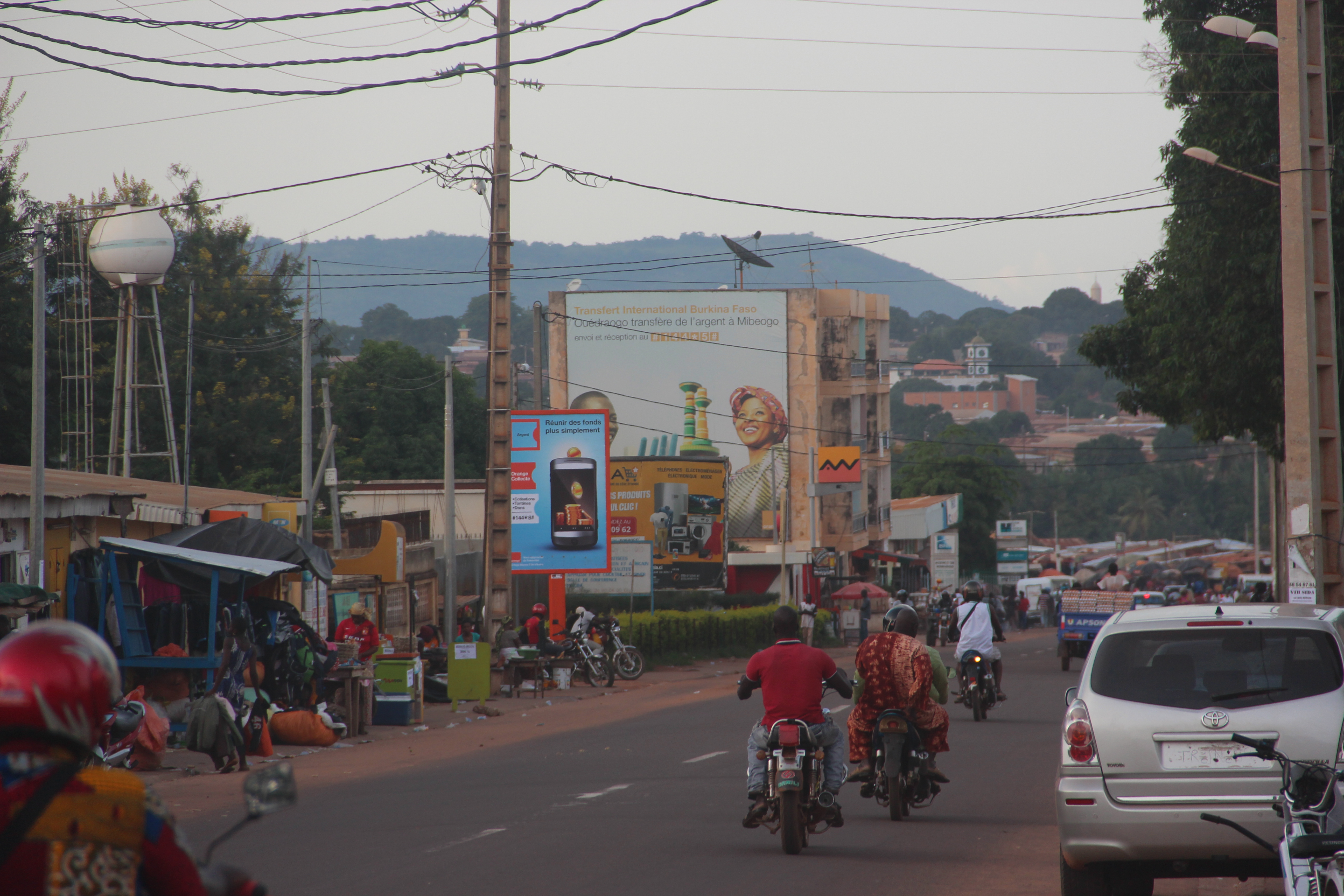
Today you can climb Kaha hill at sunset, wander through the workshops of Koko, visit the painters of Fakaha and the Senufo villages, or get lost in the city market. All of these immerse you in a world unlike the coastal south: the savannah north, Sahelian, crafted by hand and spiritual. Korhogo, 'the heritage', lives up to its name as guardian of Senufo culture.

voyagerencotedivoire.com · Korhogofr.allafrica.com

📚 Bibliography

  • Wikipedia (FR) — «Korhogo»: https://fr.wikipedia.org/wiki/Korhogo
  • Wikipedia (ES) — «Korhogo»: https://es.wikipedia.org/wiki/Korhogo
  • Wikipedia (FR) — «Sénoufos»: https://fr.wikipedia.org/wiki/S%C3%A9noufos
  • Wikivoyage (FR) — «Korhogo»: https://fr.wikivoyage.org/wiki/Korhogo
  • Wikipedia (ES) — «Guerra Civil de Costa de Marfil»: https://es.wikipedia.org/wiki/Guerra_Civil_de_Costa_de_Marfil
  • Voyager en Côte d'Ivoire — «Korhogo: visiter, que faire (guía 2026)»: https://voyagerencotedivoire.com/destinations/korhogo/
  • AllAfrica — «Festival des arts sacrés des savanes à Korhogo / peintres senufo»: https://fr.allafrica.com/stories/201501060410.html
  • Mon Doux Pays — «Korhogo»: https://www.mondouxpays.com/villes/korhogo
  • Voyage avec nous — «Korhogo, la cité du Poro»: https://voyageavecnous.com/korhogo-cote-divoire/
  • Britannica — «Korhogo»: https://www.britannica.com/place/Korhogo

❓ Frequently asked questions

What are Korhogo cloths and where can you buy them?+
They are hand-woven cotton cloths painted by Senufo artists with natural pigments (made from leaves, fermented mud and kola nut), decorated with animals, masks, hunters and scenes of rural life and Senufo beliefs. The main production centre is the village of Fakaha, about 50 km from Korhogo, where you can see the whole process and buy directly from the artists. You can also find them in the city's market and workshops. Always haggle respectfully.
How do I get to Korhogo from Abidjan?+
Korhogo is about 600-635 km north of Abidjan. By car or bus it takes 8 to 9 hours on the Northern Motorway (A3), via Yamoussoukro and Bouaké, with companies such as UTB, MVT or SBTA. The fastest option is the Air Côte d'Ivoire flight from Abidjan to Korhogo, which takes around 1 hour and 20 minutes. Korhogo is also a road hub for Mali and Burkina Faso.
Do I need a guide to visit the Senufo villages?+
It's highly recommended. Senufo villages such as Niofoin or Waraniéné have sacred spaces and forests linked to the Poro (the Senufo initiation society) that are off-limits to the uninitiated. A local guide who speaks Senufo makes it easier to get the community's permission, sorts out transport and helps you avoid being disrespectful. They also make visits to the craft workshops and to Fakaha much richer. Guides are easy to hire in Korhogo.
When is the best time to visit Korhogo?+
The dry season, from November to February, when the heat is more bearable and the roads to the villages are in good condition. Keep the harmattan in mind: the dry, dusty wind from the Sahara that blows from December to February and makes the air hazy. It's best to avoid the height of the rainy season (June to September), when the humid heat and mud make getting around difficult. The north is the hottest region in the country.
Is it safe to travel to Korhogo and northern Côte d'Ivoire?+
Korhogo today is a peaceful city and the great capital of the north. During the civil war (2002-2011) the north was under rebel control, but since the country's reunification it has been at peace. That said, check the current situation before you travel, especially in the border areas of the far north near the Sahel, and follow official advice. With the usual precautions, Korhogo is easy to visit and is one of the country's great cultural destinations.

More places in Ivory Coast

La Dent de ManManParque Nacional de la ComoéParque Nacional de TaïParque Nacional del BancoSan-Pédro
See every place in Ivory Coast →The history of Ivory Coast →
Sources consulted (6)
Still planning?
Explore more destinations in Ivory Coast
See all destinations →
Image credits
Photos from Wikimedia Commons, each under its own licence (CC BY, CC BY-SA or public domain). Open each file to see its author and licence.
Korhogo 8110