Viajá con Gus
Home › Ivory Coast › Taï National Park
Taï National Park
🇨🇮 Ivory Coast · The mountainous west

Taï National Park

🪪 What do I need to enter Ivory Coast?Pick your citizenship and we tell you the visa, the days and the paperwork, with the official source.

By leaving your email and citizenship you agree to receive the documents you asked for and weekly travel news. You can unsubscribe whenever you want. How we handle your data.
Jump to what you need
📍Region
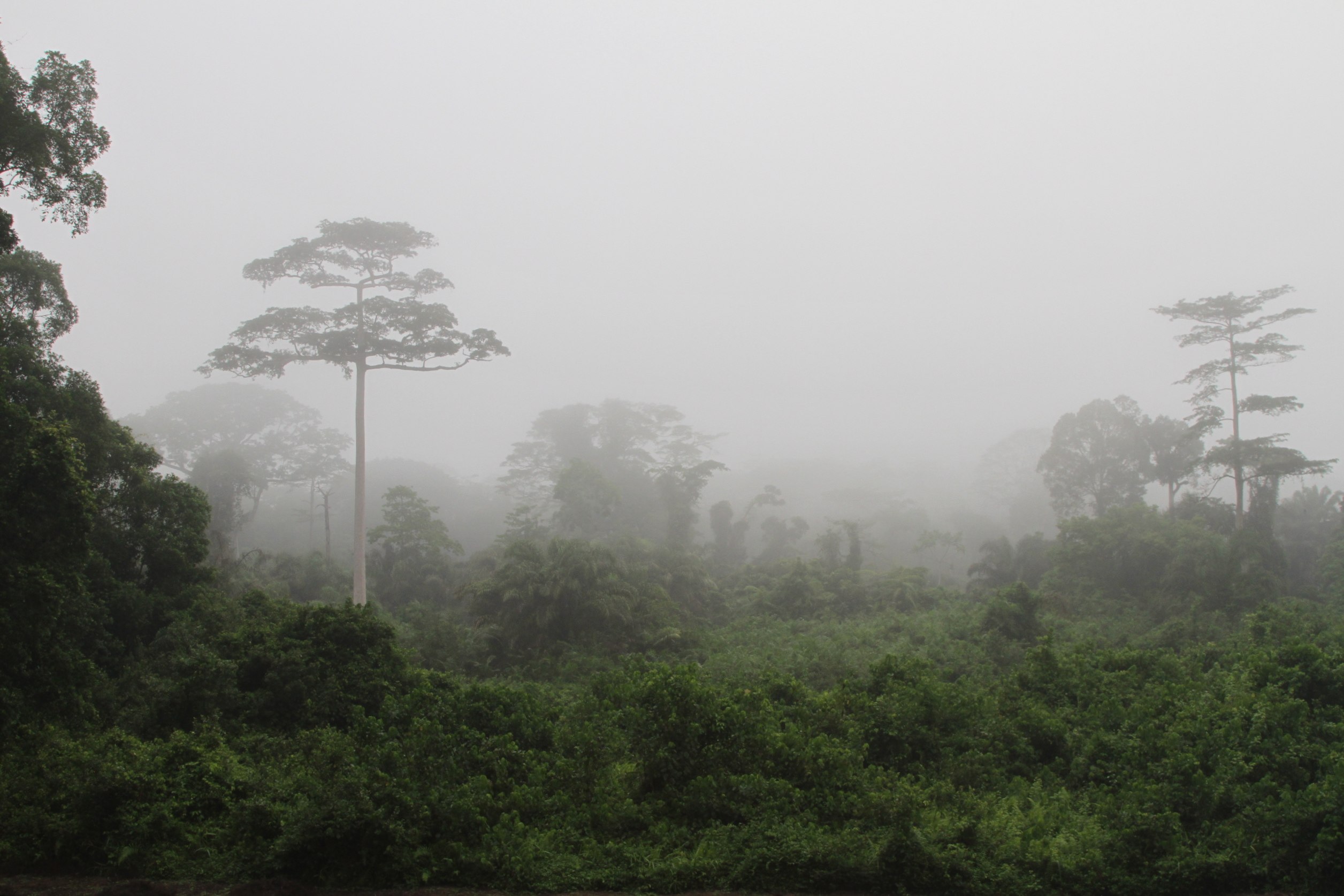
Taï National Park (Parc national de Taï) is the largest remaining block of primary rainforest in West Africa. It covers about 536.000 hectares in south-western Côte d'Ivoire, between the mountainous western regions and the border with Liberia (the Cavally River). It has been a UNESCO World Heritage Site since 1982 and is also a biosphere reserve. The park is a biodiversity sanctuary, home to tool-using chimpanzees, the rare pygmy hippopotamus, monkeys, duikers and unique wildlife and plants.
📌Best time to go
The best time to visit is the dry season, from November to March. Rain is scarce, the trails are easier to walk and chimpanzees are easier to spot, because they gather where wild fruit is plentiful. The Taï forest is very humid all year round. In the rainy season (April to October, with heavy peaks) the trails get difficult and some routes may close. Heat and humidity are always high.
📌Suggested days
To make the most of Taï, allow at least 2 or 3 days. The journey to the park is long, and wildlife walks take time, early starts and patience, especially the trek to see the habituated chimpanzees. Many visitors stay at the Ecotel de Taï, inside or next to the park, and go out on day trips with OIPR guides. Nature lovers and birdwatchers may want to stay longer.
📌Getting there
The park lies in the south-west, far from everything. From Abidjan it takes about 10-12 hours by road via San-Pédro or Man. The most common route is to reach San-Pédro (the country's second port, with an airport). From there it is about 4 hours by road to Taï or Djouroutou, the entry points to the park. You can also get in from Guiglo/Man in the north. Visits are organised through the OIPR and its ecotourism structure, which arranges guides and accommodation.
📌Getting around
Inside the park you can only move on foot, and only with a guide certified by the OIPR (Office Ivoirien des Parcs et Réserves). The guide is compulsory and you may not explore on your own. Excursions are walks along forest trails, sometimes demanding because of the heat, humidity and mud. To reach the entry points and travel between villages, people use 4x4 vehicles and motorbike taxis. Everything is arranged in advance with the park's ecotourism structure.
📌Language and currency
The official language is French, and local languages of the south-west are spoken in the region. The currency is the West African CFA franc (XOF), pegged to the euro (1 EUR = 655,957 XOF); as of 2026 it is around 600 XOF to the dollar. Park fees, guides and accommodation are paid in cash (CFA francs). Bring enough money from San-Pédro or Abidjan, because there are no ATMs or banking services near the park.
💱 XOF exchange rate
Loading rate…
🌤️ Weather in Taï National Park
Loading weather…

Taï National Park is one of the great natural treasures of West Africa. It is the last large block of primary rainforest in the region, a green ocean of giant trees that survived the deforestation that wiped out almost all the neighbouring forests. A World Heritage Site since 1982, it protects extraordinary biodiversity in south-western Côte d'Ivoire, on the border with Liberia.

The park is famous worldwide above all for its chimpanzees, studied for decades and known for using tools. They crack nuts with stones and sticks, one of the most astonishing examples of animal culture on the planet. In Taï you can walk through the forest and, with luck and a good guide, watch a group of chimpanzees used to humans from just a few metres away. It is an unforgettable experience.

This guide explains how to visit Taï responsibly: when to go, how to reach this remote corner, how walks with OIPR guides are organised and what wildlife you can see, from the rare pygmy hippopotamus to monkeys, duikers and hundreds of birds. It also covers where to stay and what to expect from a chimpanzee trek. For travellers who love nature, Taï is one of the deepest and most authentic adventures in Côte d'Ivoire.

📖 History of Taï National Park

Taï National Park protects the largest remnant of primary forest in West Africa. This forest already stood when the rest of the region was still covered in vegetation, and today it is a unique refuge. A reserve since colonial times, it became a national park in 1972 and a UNESCO World Heritage Site in 1982 for its exceptional biodiversity. Scientists know it for its nut-cracking, tool-using chimpanzees, studied for decades, and as a home of the elusive pygmy hippopotamus. Poaching and pressure from farming threaten the park, and it is the focus of intense conservation efforts. The full story is on our history page.

Read the full history ↓

🏛️ Taï National Park is in the mountainous west

The land of mountains and masks: Man, the city of 18 mountains, the liana bridges of the Dan people, and Taï National Park, the last great primary rainforest in West Africa.

Read the history of The mountainous west →

🗺️ What to see

1
The chimpanzee trek
The highlight: a walk through the forest to watch a group of habituated, tool-using chimpanzees.
Leer más ↓
Taï's big draw is the chance to see wild chimpanzees in their habitat. After years of scientific research, some groups of chimpanzees in the park are used to people. With OIPR guides and strict protocols, you can watch them from about ten metres away. The Taï chimpanzees are world-famous for their 'culture': they use more than twenty tools and, above all, crack very hard nuts by striking them with stones and sticks, used as hammer and anvil. The trek is a forest walk that calls for an early start, patience and reasonable fitness, since you have to follow the group along humid trails. Sightings are not guaranteed, as these are wild animals, but the chances are high in the dry season, when fruit is plentiful. Health rules protect the chimpanzees from disease: a minimum distance, face masks and a limited number of visitors. Getting there: organised from the park's ecotourism station with an OIPR guide. Best time to go: dry season (November-March). Tips: book ahead, follow the health rules, and bring forest footwear, insect repellent and water. There is usually a supplement on top of the admission fee for the chimpanzee visit.
ℹ️ Distance: From the park's ecotourism station (south-west of the country) · Best time to go: Dry season (November-March), early in the morning · Admission: Park admission + compulsory OIPR guide + chimpanzee visit supplement (OIPR rates; 50% discount for ECOWAS nationals; check when booking, 2024) · Duration: Half a day (several hours of walking)
2
Walks through the primary forest
Guided trails among giant trees, lianas and exceptional biodiversity.
Leer más ↓
Beyond the chimpanzees, Taï is above all a primary rainforest of immense value. It is one of the last large blocks of intact moist forest in West Africa, with trees over 40-50 metres tall, colossal lianas, giant buttress roots and an astonishing density of life. Guided walks along its trails let you immerse yourself in this ecosystem and understand why it is a World Heritage Site. OIPR guides point out plant species, animal tracks and signs, the sounds of the forest and the ecology of a forest with hundreds of tree species, many of them endemic. It is an immersive, educational experience, ideal if you want to understand how a primary forest works, something increasingly rare on the planet. The humidity and heat are intense, and that is part of the adventure. Getting there: from the park's ecotourism station, with a guide. Best time to go: dry season, when trails are easier to walk. Tips: light long-sleeved clothing, closed shoes, insect repellent and water, and always follow the guide. Walking alone in the park is not allowed.
ℹ️ Distance: Routes from the ecotourism station · Best time to go: Dry season (November-March) · Admission: Park admission + compulsory OIPR guide (OIPR rates, 2024; check when booking) · Duration: Half day to full day
3
The pygmy hippopotamus and large mammals
Taï is one of the last refuges of the rare and elusive pygmy hippopotamus, as well as leopards, duikers and buffalo.
Leer más ↓
Taï is one of the few places in the world where the pygmy hippopotamus survives. This rare, small and very elusive animal lives in the forests of West Africa and is endangered. Seeing one is extremely difficult, because it is nocturnal and shy, but knowing it lives in the park is part of the magic. The forest is also home to leopards, many duikers (small forest antelopes), forest buffalo, red river hogs and other species. Taï's wildlife is mostly forest-dwelling and discreet. This is not a savannah safari with big herds in plain view, but patient observation of a dense ecosystem where many animals hide in the vegetation. Guides help you spot tracks, signs and sounds, and with luck you will come across monkeys, flying squirrels, birds and other forest dwellers on your walks. Getting there: on guided walks in the park. Best time to go: dry season; dawn and dusk for more animal activity. Tips: keep your expectations realistic, as forest wildlife is hard to see. Enjoy the ecosystem as a whole and trust your guide's eye.
ℹ️ Distance: On the park's routes · Best time to go: Dry season; first and last hours of the day · Admission: Included in park admission with OIPR guide (2024) · Duration: Depends on the route
4
Birdwatching
A birdwatcher's paradise with hundreds of forest bird species, many of them rare and endemic.
Leer más ↓
Taï National Park is one of the best places in West Africa for birdwatching. Its primary forest is home to hundreds of species, many of them typical of the Guinean moist forest, including birds that are rare and hard to see elsewhere. For birders it is a dream destination: hornbills, picathartes, turacos, flycatchers and a huge variety of understorey and canopy birds. Birdwatching happens on guided walks, listening for calls and watching for movement in the thick vegetation. A guide who knows birds greatly improves your chances of identifying species. The wealth of birdlife is further proof of Taï's value as a reservoir of biodiversity, and one more reason for patience and silence in the forest. Getting there: on the park's routes, with a guide. Best time to go: dry season, early in the morning, when birds are most active. Tips: bring binoculars, a bird guide and plenty of patience, and ask for a guide with birding experience.
ℹ️ Distance: On the park's trails · Best time to go: Dry season; early morning · Admission: With park admission and OIPR guide (2024) · Duration: Half a day
5
Villages and culture on the edge of the park
Local communities in the south-west who live alongside the forest and take part in its conservation.
Leer más ↓
Local communities live around Taï, and their lives are tied to the forest and to farming in the south-west (cocoa, coffee, rubber). Many conservation projects aim to involve these communities in ecotourism, so that the park brings benefits to the people living on its edge and pressure from hunting and deforestation falls. Visiting the villages at the park's entry points, such as those around Taï or Djouroutou, lets you see this reality first-hand. Meeting the communities adds a human side to the visit and helps you understand the challenge of protecting a forest surrounded by people who need land and resources. The guides, often local, are a bridge between visitors and that reality. This kind of tourism supports the park's protection in the long term. Getting there: in the villages at the park's entry points, with a guide. Best time to go: all year round, best in the dry season because of the roads. Tips: buy and hire locally when you can, respect local customs and ask permission before taking photos.
ℹ️ Distance: Villages on the edge of the park (Taï/Djouroutou area) · Best time to go: Dry season (roads easier to travel) · Admission: Depends on the activity; contribution to the communities to be agreed (2024) · Duration: Half a day
📶I have never landed without internet. I arrive and my phone connects to the strongest network in the country I am visiting: I can say I landed, sort out transport, book tours and keep posting, at a seriously good price. I always use the Maya eSIM — check their plans by clicking the banner.See plans →Maya Mobile eSIM — connect before you land
What nobody tells you

💵 Prices

Tickets

TypePrice
Entrada al Parque Nacional de Taï (visitante extranjero)OIPR rate; paid together with the compulsory guide (2024; confirm the current figure when booking with the OIPR/ecotourism structure)
Descuento para nacionales de la CEDEAO (ECOWAS)50% off the standard rate (OIPR, 2024)
Guía certificado OIPR (obligatorio)Included/compulsory on every excursion, according to park rates (2024)
Suplemento por visita a los chimpancésAdditional supplement on top of admission (OIPR; confirm when booking, 2024)
Paquete de circuito (ej. 4 días, zona norte, con 4x4, guía, comidas y alojamiento)From about 250.000 XOF (~380 € / ~US$ 415) per person depending on the operator (2024-2026 reference; check)
🔄 updated monthlyOfficial / reference values · double-check when buying

Activities and tours

ActivityPriceDurationOperator
Habituated chimpanzee observation trekAdmission + OIPR guide + chimpanzee supplement (to be confirmed with the OIPR, 2024)Half a day (early start)OIPR / park ecotourism structure
Interpretive walk through the primary forestAdmission + OIPR guide (2024)Half day to full dayOIPR / certified guides
Birdwatching excursionAdmission + OIPR guide (2024)Half a dayOIPR / guides with birding experience
Organised multi-day tour (north or south of the park)From ~250.000 XOF per person (4 days, all inclusive, depending on the operator, 2024-2026)3 to 5 daysEcotourism operators (e.g. Ecotourisme Parc Taï)
🔄 updated monthlyOfficial / reference values · double-check when buying

🚌 How to get there and distances

Getting around

ModePriceDurationNotes
4x4 vehicle with driver (park access)Depends on the route; usually included in packages (2024)Several hours to the entry pointsNeeded because of the state of the tracks in the south-west, especially in the rainy season
Motorbike taxi between entry-point villagesLocal trips from about 500-2.000 XOF (2024)VariableFor getting around the edge of the park; dirt roads
Guided walk (inside the park)With compulsory OIPR guide (2024)Depends on the routeThe only way to move around inside the park; going alone is not allowed
🔄 updated monthlyOfficial / reference values · double-check when buying

How to get there

RouteAirlines / operatorsAvg. priceDuration
Abidjan → Taï National Park (via San-Pédro or Man)Buses to San-Pédro/Man + 4x4/local transportDepends on the route; long journey (2024)10 to 12 h by road
San-Pédro → Taï / Djouroutou (southern access)Private transport / 4x4 / bush taxisDepends on the vehicle (2024)~4 h by road
Man / Guiglo → park (northern access)Private transport and bush taxisDepends on the route (2024)Several hours by road
Flight Abidjan → San-Pédro + overland transferAir Côte d'Ivoire (to San-Pédro) + 4x4Subject to availability (2024)~50 min flight + ~4 h drive
🔄 updated monthlyOfficial / reference values · double-check when buying

🏨 Where to stay

No exact prices: a scale from $ (budget) to $$$$$ (luxury), with 2-3 options per category.

Park ecolodge (Ecotel de Taï)
Price$$$$$
Recommended options
Simple bungalow accommodation inside or next to the park, meals included, used as the base for excursions; package rates through the ecotourism organisation (check with OIPR/Ecotourisme Parc Taï, 2024)
Places to stay in San-Pédro (logistics base)
Price$$$$$
Recommended options
From around 25.000-60.000 XOF (~US$ 40-100) per night; hotels in San-Pédro, the starting point for the park, with air conditioning and a restaurant
Basic / village accommodation
Price$$$$$
Recommended options
Very simple lodgings in the villages at the park entrances; an immersive option, to be arranged locally with guides (2024)

🍴 Where to eat

Pensión completa del ecolodge
Price$$$$$
Options / signature dish
Meals included with accommodation at the Ecotel de Taï; simple Ivorian cooking adapted to the park's logistics (part of the package, 2024)
Maquis en San-Pédro y aldeas
Price$$$$$
Options / signature dish
From around 2.000-5.000 XOF per person; braised chicken and fish (poulet and poisson braisé), attiéké, alloco and local dishes in the area's maquis
Provisiones para las caminatas
Price$$$$$
Options / signature dish
Plenty of water, fruit and snacks bought in San-Pédro or in the villages; essential given the heat and humidity of the rainforest

📖 History of Taï National Park

Origins, formation and what the sources say.

West Africa's last great primary forest

Taï National Park protects something that is becoming rarer and rarer on our planet: a large block of primary tropical rainforest, meaning a forest that has never been logged or significantly altered by humans. Covering some 536,000 hectares in south-western Côte d'Ivoire, along the border with Liberia, Taï is the largest remnant of this kind of forest in all of West Africa, a region where the rainforest has been almost entirely wiped out by farming and logging.

These forests are part of the Guinean forest block, one of the world's biodiversity hotspots. Taï is home to hundreds of tree species, many of them endemic to the region. Some stand more than 40 or 50 metres tall, with huge buttress roots and colossal lianas, in an ecosystem of extraordinary complexity and richness. It is living proof of what much of West Africa looked like before the massive deforestation of the 20th century.

That relic character is what makes Taï an ecological treasure. While the neighbouring forests disappeared, this remote, humid corner of south-western Côte d'Ivoire kept its rainforest almost intact. It became an ark of biodiversity and a natural laboratory of incalculable value for science and conservation.

whc.unesco.orgfr.wikipedia.org · Parc national de Taï

From colonial reserve to World Heritage Site

Taï's protection began in colonial times. In 1926, the French authorities set up a forest and wildlife reserve in the area, which shows the forest's exceptional value was recognised even then. The region was remote and hard to reach, and that helped preserve it, keeping it largely clear of the intensive logging that hit other forests in the country.

After Côte d'Ivoire became independent in 1960, the State strengthened the area's protected status. In 1972, Taï was declared a national park, giving it the highest level of legal protection. The international community soon recognised its importance: UNESCO designated it a biosphere reserve in 1978, and in 1982 it was inscribed on the World Heritage List for its exceptional biodiversity and as the largest primary forest left in West Africa.

This international recognition placed Taï among the world's great natural sanctuaries and laid the groundwork for its modern management, now in the hands of the Office Ivoirien des Parcs et Réserves (OIPR). But national park status was not enough to remove the threats: for decades, poaching and farming pressure along its edges kept putting its conservation to the test.

whc.unesco.orgfr.wikipedia.org · Parc national de Taï

The chimpanzees that use tools

If Taï is famous in the scientific world, it is above all because of its chimpanzees. Researchers have studied the park's chimpanzees since the 1970s, and systematically since the 1980s. The work was led by the primatologist couple Christophe and Hedwige Boesch, and it revealed behaviours that changed how we understand animal 'culture'. The Taï Chimpanzee Project became one of the most important and longest-running studies of wild primates on the planet.

The best-known discovery is their use of tools. Taï's chimpanzees crack very hard nuts by placing them on a root or stone that acts as an anvil and striking them with another stone or a stick used as a hammer. They pass this technique on from generation to generation. Researchers have documented them using more than twenty different tools, hunting together in coordinated groups and passing on knowledge, which shows they have genuine cultural traditions.

After decades of research, some chimpanzee groups have become used to humans. Today this means visitors can watch them in their habitat, under strict health protocols and with OIPR guides. This mix of science, conservation and ecotourism made the chimpanzees the emblem of Taï and one of the reasons for its international fame.

fr.wikipedia.org · Parc national de Taïbaab.ci · Ecotourisme tai

The pygmy hippo and an ark of biodiversity

Besides chimpanzees, Taï is one of the last refuges of a rare and mysterious animal: the pygmy hippopotamus. This small, elusive, nocturnal and endangered species lives only in the forests of a handful of West African countries. Seeing one is extremely difficult, but its presence shows how important the park is as a sanctuary for threatened species that have vanished from almost everywhere else.

Taï's biodiversity is overwhelming. The park is home to leopards, many species of monkey (some of them threatened), forest buffalo, red river hogs, duikers (small forest antelopes), pangolins and a very rich array of invertebrates and amphibians. It is also a birdwatcher's paradise, with hundreds of rainforest bird species, many of them unique to the Guinean forest block. All of this life depends on the primary forest staying intact.

That concentration of rare and endemic species is why Taï is both a World Heritage Site and a biosphere reserve. Taï works as an ark that keeps the natural heritage of a region that has lost almost all of it. It is also a source of scientific knowledge about tropical forest ecosystems, which are increasingly threatened around the world.

whc.unesco.orgfr.wikipedia.org · Parc national de Taï

Threats, conservation and ecotourism

Taï's recent history is also the story of a constant fight for survival. The park is surrounded by a populated farming region (cocoa, coffee, rubber) and faces deforestation along its edges and expanding plantations. Above all, it faces poaching, which threatens species such as chimpanzees, duikers and the pygmy hippo itself. For years, the political instability and civil war that shook Côte d'Ivoire between 2002 and 2011 made it hard to patrol and manage the park.

To counter these threats, the OIPR and many international partners have put major conservation efforts in place. These include anti-poaching patrols, scientific research, awareness programmes and development projects with the communities around the park, so that protecting the forest brings local benefits and eases the pressure on it. Carefully regulated ecotourism is part of that strategy.

Today, visiting Taï responsibly is a way to help conserve this unique forest: go with OIPR guides, follow the health protocols around the chimpanzees and support local communities. Taï National Park offers travellers one of the most profound nature experiences in Côte d'Ivoire, and it stands as a symbol of the fight to save West Africa's last great primary forests.

whc.unesco.orgvoyagerencotedivoire.com · Tai national park

📚 Bibliography

  • UNESCO — Parc national de Taï (World Heritage): https://whc.unesco.org/es/list/195
  • Wikipedia (FR) — «Parc national de Taï»: https://fr.wikipedia.org/wiki/Parc_national_de_Ta%C3%AF
  • Wikipedia (EN) — «Taï National Park»: https://en.wikipedia.org/wiki/Ta%C3%AF_National_Park
  • OIPR — Circuits de visite du Parc National de Taï: https://oipr-ci.org/index.php/tourisme-pntai/visiter-le-parc/circuits-de-visite
  • OIPR — FAQ Parc National de Taï: https://oipr-ci.org/index.php/faq-pntai
  • Voyager en Côte d'Ivoire — «Visiter le Parc National de Taï (guía 2026)»: https://voyagerencotedivoire.com/en/destinations/tai-national-park/
  • Baab — «Écotourisme Taï»: https://baab.ci/articles_baab/ecotourisme-tai/
  • Taï Chimpanzee Project (Boesch) — Wild Chimpanzee Foundation: https://www.wildchimps.org/
  • Mammal Watching — «Taï National Park, Côte d'Ivoire, 2024»: https://www.mammalwatching.com/community-post/tai-national-park-cote-divoire-2024/
  • Petit Futé — «Parc National de Taï»: https://www.petitfute.co.uk/v63005-parc-national-de-tai/

❓ Frequently asked questions

Can I see chimpanzees in Taï, and what is the experience like?+
Yes. Taï is one of the few places in the world where you can watch wild chimpanzees habituated to people, famous for using tools to crack nuts. The visit is a guided trek through the forest, starting early, following a group until you can watch it from about ten metres away. Sightings aren't guaranteed, but the odds are high in the dry season. Strict health rules apply (distance, face masks, small groups) to protect the chimpanzees from human diseases, and there is usually a supplement on top of the admission fee.
Is a guide required, and how is the visit organised?+
Yes, a guide certified by the OIPR (Office Ivoirien des Parcs et Réserves), the authority that manages the park, is required; you can't go in on your own. Visits are arranged through the Taï ecotourism organisation, which coordinates guides, accommodation (Ecotel) and routes. It's best to book ahead, especially for the chimpanzee trek, which has limited places.
How do I get to Taï National Park?+
The park is in the remote south-west of the country. From Abidjan it's about 10 to 12 hours by road, via San-Pédro or Man. The most common route is to get to San-Pédro (which has an airport with flights from Abidjan) and from there drive about 4 hours to the Taï or Djouroutou entrances. You can also reach it from Guiglo/Man in the north. A 4x4 is advisable on the dirt roads of the south-west, especially in the rainy season.
When is the best time to visit?+
The dry season, from November to March, is the best: less rain, easier trails and a better chance of seeing chimpanzees, because wild fruit is plentiful and draws them together. In the rainy season (April to October) the forest is even lusher, but the paths get difficult and some routes may close. Whatever the time of year, heat and humidity are high, so come prepared.
What should I bring, and what wildlife can I expect?+
Bring light long-sleeved clothing, closed shoes suitable for the forest, insect repellent, a rain jacket, binoculars and plenty of water. Taï isn't a savannah safari: it's dense rainforest, where the wildlife (chimpanzees, pygmy hippos, duikers, birds) keeps a low profile and takes patience to spot, with the guide's help. The reward is immersing yourself in one of the last great primary forests of West Africa and, with luck, seeing the famous chimpanzees that crack nuts with tools.

More places in Ivory Coast

Parque Nacional del BancoSan-PédroSassandraYamusukroAbiyánAssinie
See every place in Ivory Coast →The history of Ivory Coast →
Sources consulted (6)
Still planning?
Explore more destinations in Ivory Coast
See all destinations →
Image credits
Photos from Wikimedia Commons, each under its own licence (CC BY, CC BY-SA or public domain). Open each file to see its author and licence.
Taï National Park (24148248710)