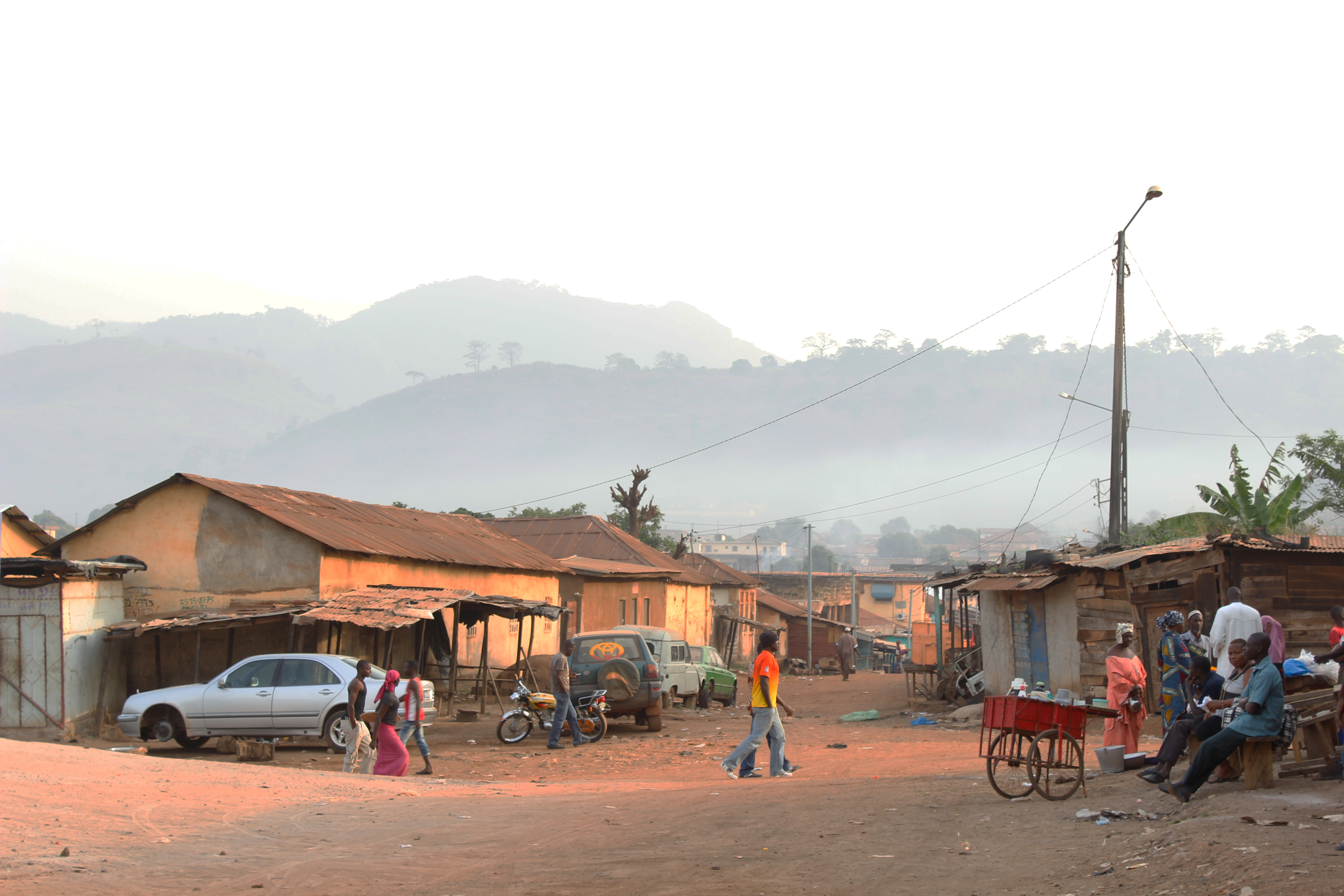
Man is one of Côte d'Ivoire's great natural secrets. Known as 'the city of 18 mountains', it sits in an amphitheatre of green peaks in the west of the country, near Guinea and Liberia. The landscape has nothing in common with the savannahs and beaches people picture for the rest of the country. Here it's all mountains, waterfalls and forest, plus a fascinating mountain culture: that of the Yacouba, or Dan, people.
The big draw is the liana suspension bridges, woven by hand over the rivers according to a sacred tradition. Crossing one gives you the dizzying feeling of walking over thin air. Add to that the Man waterfall, the climb up Mount Tonkoui (on clear days you can see as far as Guinea and Liberia), the sharp peak of the Dent de Man and the Dan mask dances, some of the most impressive in West Africa.
This guide covers Man and its region from a practical angle: what to see and which hikes to do, how to visit the liana bridges and waterfalls respectfully, how to get there from Abidjan, where to sleep and eat, and how to use Man as a base for the mountainous west and Taï National Park. For adventurous travellers and nature lovers, it's one of the most memorable experiences in the country.
Man is the main city of the Yacouba (Dan) people, highlanders of western Côte d'Ivoire famous for their sacred masks, their dances featuring acrobats and balancing performers, and their liana suspension bridges, woven according to an ancestral ritual. The town began as a crossroads of mountain villages and grew into the capital of the west under French colonial rule. The region prospered on coffee and cocoa, then suffered badly in the Ivorian civil war of 2002-2011, which hit the west hard. Today it is coming back as an ecotourism and adventure destination. The full story is on our history page.
Read the full history ↓The land of mountains and masks: Man, the city of 18 mountains, the liana bridges of the Dan people, and Taï National Park, the last great primary rainforest in West Africa.
Read the history of The mountainous west →No exact prices: a scale from $ (budget) to $$$$$ (luxury), with 2-3 options per category.
Origins, formation and what the sources say.
The Man region is, above all, the land of the Yacouba people, better known in ethnology as the Dan. Settled for centuries in the mountains of western Côte d'Ivoire and in neighbouring parts of Liberia and Guinea, the Dan developed a distinctive mountain culture, adapted to a landscape of peaks, deep narrow valleys and humid forest very different from the rest of the country. They lived from mountain farming — rice, yams, coffee, cocoa — and from an intense ritual and artistic life.
The Dan are world-famous for their masks, carved in wood and considered sacred: they are not decorations but ritual objects that embody spirits and serve religious, social and even judicial functions within the villages. Each mask has its own character and role — masks for entertainment, for war, for justice, for initiation — and only certain people may wear or guard them. Dan mask art even influenced European avant-garde artists.
Alongside this mask culture come the spectacular dances that made the region famous: acrobats, balancing performers, stilt dancers and the celebrated dance of the acrobat girl thrown into the air. And, as an expression of their ingenuity, there are the hand-woven liana bridges over the rivers, wrapped in legends of spirits and secret rituals, which became the most recognisable symbol of Man.
Among all the wonders of the region, the liana bridges stand apart. They are suspension bridges woven entirely from forest lianas, without a single nail or metal cable, strung across rivers and ravines to connect villages and fields. Building and maintaining them is an art reserved for initiates, and they are surrounded by a sacred aura that is an essential part of Dan culture.
Tradition says that a liana bridge is built in a single night, thanks to the intervention of a spirit or water genie, after a secret ritual known only to certain initiated men. The spirit is said to protect the bridge, and it will not give way as long as the rules and taboos surrounding it are respected. For the Dan, crossing it has an initiatory value: doing so barefoot amounts to a rite of passage.
The region of the 18 mountains still has around ten of these bridges, some of them very old, and they have become Man's great tourist attraction. Visiting them calls for respect: you go with a guide, pay a contribution to the village that maintains the bridge, and follow local rules, which sometimes bar women from crossing or forbid photographs. More than an attraction, they are a living heritage of the Dan people.
The town of Man as such developed during the French colonial period, growing out of the cluster of Dan villages that occupied the amphitheatre of mountains. The French, who consolidated their control over Côte d'Ivoire in the late 19th and early 20th centuries, set up an administrative post in Man and made it the seat of government for the mountainous west, taking advantage of its position near the borders with what were then Guinea and Liberia.
The cool climate and fertile highland soils favoured coffee and cocoa, which became the region's economic engine during the 20th century. Man grew into a regional capital, with its market, its services and an increasingly diverse population, though always with the Dan people as its cultural base. The town earned the nickname 'the city of the 18 mountains' for the peaks that surround it.
During Côte d'Ivoire's decades of prosperity after independence (1960), driven by coffee and cocoa, the west was a productive region that drew migrants from other parts of the country and from neighbouring countries who came to work on the plantations. That mix of populations, together with tensions over land and nationality, would later become one of the triggers of the crisis that hit the region especially hard.
Western Côte d'Ivoire, and with it the Man region, was one of the most tragic theatres of the civil war that broke out in 2002. The rebellion that split the country in two reached the west, where local militias and armed groups also emerged, some of them linked to the conflict in neighbouring Liberia. Land tensions between native populations and migrants, made worse by the debate over 'ivoirité' (Ivorian national identity), added an especially violent dimension.
The region suffered fighting, mass displacement, massacres and deep mistrust between communities. Man and its surroundings were caught on the country's fault line, with the coffee and cocoa economy battered and daily life marked by insecurity. The crisis dragged on for almost a decade, with ups and downs, until the final war of 2010-2011 that followed the disputed elections.
With the end of the conflict and the reunification of the country in 2011, the west began a slow process of pacification and reconstruction. Reconciliation between communities, the recovery of the plantations and the return of security allowed Man and its region to look to the future again, including tourism, which had come to a standstill during the war years.
After difficult years, Man has been reborn as one of Côte d'Ivoire's great nature and adventure destinations. Peace brought travellers back to the 18 mountains, and today the region is promoted for its spectacular landscapes: waterfalls surrounded by forest, Mount Tonkoui with views stretching to Guinea and Liberia, the sharp Dent de Man and, above all, the legendary liana bridges of the Dan people.
Community ecotourism has gained ground: local guides, villages that open their bridges and dances to visitors, and guesthouses that let you get to know Dan culture up close. The mask dances — with their acrobats, balancing performers and stilt dancers — remain one of the most impressive cultural expressions in West Africa, now also shared, respectfully, with travellers.
Man thus combines nature, living culture and adventure in a corner of the country that surprises anyone expecting only savannahs and beaches. A town of mountain people and masks, a land of bridges woven by spirits, shaped by coffee prosperity and by the wounds of war, Man today offers one of the most authentic and memorable experiences in Côte d'Ivoire, and is the natural gateway to the vast Taï National Park.