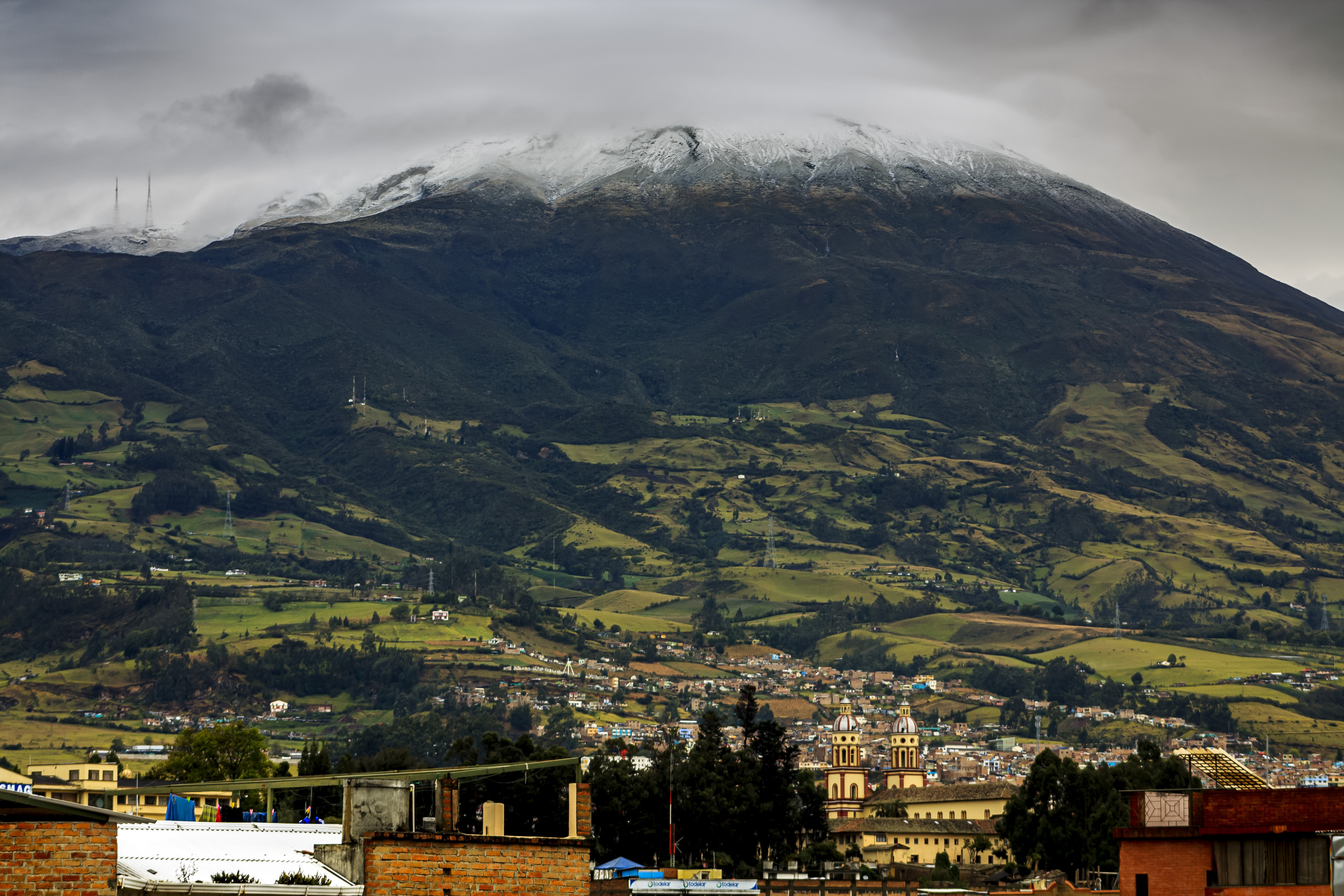
San Juan de Pasto is the capital of Nariño, at the far southwestern end of the Colombian Andes, a cold and serene city in the Atriz valley, watched over by the bulk of the Galeras volcano. Nicknamed the 'City of Surprises', it's a destination less traveled by international tourism, which makes it more authentic: a good place to discover the Andean south, its churches, its distinctive food and a character all its own, unlike the rest of the country.
Pasto is, above all, a byword for carnival. Its Carnaval de Negros y Blancos, held in early January, is one of the most spectacular festivals in Colombia and was declared Intangible Cultural Heritage of Humanity by UNESCO in 2009: days of monumental floats, dance troupes, talcum powder, black and white cosmetics, music and overflowing joy. It's also the cradle of barniz de Pasto (mopa-mopa), a unique artisan decorating technique using a plant resin, inscribed by UNESCO in 2020 on the List of Intangible Cultural Heritage in Need of Urgent Safeguarding.
This guide covers Pasto with a practical and warm eye: what to see in the city and its churches, how to experience the Carnaval, the excursions to the Laguna de La Cocha and the Galeras volcano, the route to the Las Lajas Sanctuary, what to eat (cuy, frito pastuso) and how to get around southern Nariño. Pasto is the highland gateway to Colombia's deep south.
Pasto was founded by the Spanish around 1537-1539, in the territory of the Indigenous Quillacinga and Pasto peoples, in the Atriz valley at the foot of the Galeras volcano. During the colonial era it was an important religious and administrative center of the south. In the war of independence, Pasto stood out for its firm loyalty to the Spanish Crown, which set it against Bolívar's patriot armies and cost it some very harsh episodes. Throughout its history it kept strong cultural and religious traditions, from which the Carnaval de Negros y Blancos and the art of barniz de Pasto were born. The full history is on our history page.
Read the full history ↓The Andean department of the far south, on the border with Ecuador: land of the Pasto and Quillacinga peoples, of the city of Pasto and its Carnival of Blacks and Whites, of the Las Lajas sanctuary, of Lake La Cocha and of the Pacific coast at Tumaco.
Read the history of Nariño →If you book from here we earn a commission and you pay no more. Prices and availability come from Civitatis.
No exact prices: a scale from $ (budget) to $$$$$ (luxury), with 2-3 options per category.
Origins, formation and what the sources say.
Long before the Spanish arrived, the Atriz valley and the highlands of what is now southern Colombia were inhabited by Indigenous peoples of notable culture, chiefly the Quillacinga and the Pasto. These were farming and artisan societies, skilled in goldwork, ceramics and fiber craft, who traded with other Andean peoples to the south. It is from the Pasto, in fact, that the region and the city take their name.
The Spanish conquest reached this area as part of the expansion southward from Peru and from the north. The founding of the city of San Juan de Pasto is placed around 1537-1539 (the sources vary on the date and the details, tied to the disputes between the conquistador Sebastián de Belalcázar and others), in the Atriz valley, at the foot of the Galeras volcano. Its position, on a cold and fertile plateau on the route between Quito and the interior of New Granada, gave it strategic importance from the start.
During the colonial period, Pasto consolidated as an important religious and administrative center of the south. Its relative isolation, its cold climate and its strong religiosity gradually shaped a character of its own, conservative and deeply attached to its traditions, which would mark its later history and can still be sensed in Pasto identity today.
Through the colonial centuries, San Juan de Pasto grew as a provincial center at the far south of New Granada, on the route linking Quito with Popayán and the interior. Its economy rested on cold-country farming, livestock, textile workshops and a busy transit trade. The strong presence of religious orders —Franciscans, Dominicans, Augustinians— filled the city with convents and churches and consolidated the intense religiosity that would become a hallmark of Pasto identity.
The city always lived in the shadow of the Galeras volcano, a presence at once majestic and threatening. Galeras is one of the most active volcanoes in Colombia and its eruptive history runs alongside that of Pasto: episodes of activity, ashfall and tremors are part of the city's memory, and it learned to live with the mountain. That relationship with the volcano shapes the landscape and the local character to this day.
In the Republican era, after the wars of independence, Pasto took its place as capital of the Nariño region (a department created in 1904, named after the patriot Antonio Nariño). Through the 19th and 20th centuries the city kept its profile as the highland religious and commercial center of the south, somewhat removed from the country's great centers of power, which reinforced its distinct personality and its attachment to tradition.
One of the most singular and dramatic chapters in Pasto's history is its role during the war of independence. Unlike much of New Granada, Pasto stayed firmly loyal to the Spanish Crown, becoming one of the most tenacious royalist bastions in the south. Its deeply Catholic and conservative population viewed the independence cause with distrust and resisted the patriot armies with remarkable stubbornness.
That loyalty pitted Pasto against the forces of Simón Bolívar and his generals in repeated military campaigns through the south, as they advanced toward Quito. The fighting in the region was especially harsh, and Pasto's resistance continued even after decisive battles of independence. Episodes such as the so-called 'Black Christmas' of 1822, a military reprisal against the city, left a deep and painful mark on local memory.
This past partly explains Pasto's character: a proud city with a strong identity of its own, often distant from the great national narratives of the country's center. Far from seeing it as a stain, the people of Pasto claim their history as proof of their firmness of conviction. Understanding this episode helps make sense of the highland, devout and distinctive personality of the 'City of Surprises'.
Out of Pasto's rich cultural and religious life came two expressions now recognized as Intangible Cultural Heritage of Humanity by UNESCO. The most famous is the Carnaval de Negros y Blancos, listed in 2009. Its roots go back to colonial and popular traditions that gradually blended Indigenous, African and mestizo elements: the 'Day of the Blacks' (5 January), with the play of black cosmetic, and the 'Day of the Whites' (6 January), with talc, symbolically distill the meeting of cultures. Over time, the carnival took on its spectacular floats, the fruit of master artisans' work, which today are its most recognizable signature.
The other great heritage jewel is barniz de Pasto or mopa-mopa, an artisan technique unique in the world, inscribed by UNESCO in 2020 on the List of Intangible Cultural Heritage in Need of Urgent Safeguarding. It involves decorating wood and objects with extremely fine sheets made from the resin of the buds of the mopa-mopa shrub (which grows mainly in Putumayo), which artisans heat, stretch, dye in vivid colors and apply to form gleaming designs. It's a technique with pre-Columbian roots, handed down through generations of Pasto artisan families.
These two expressions —one festive and multitudinous, the other quiet and painstaking— sum up the soul of Pasto: a city that, far from the main circuits, preserves and proudly celebrates a cultural heritage of its own and quite exceptional. Today the carnival and the barniz are, besides a source of identity, two of the main attractions that bring travelers to the capital of Nariño.
In the 21st century, Pasto has established itself as the capital and heart of Nariño, a department of enormous cultural and natural wealth in southwestern Colombia. Being a border city —a few hours from Ecuador, via Ipiales and the international bridge at Rumichaca— makes it an obligatory crossing point between the two countries and a meeting place of Andean cultures that transcend national lines.
Nariño identity is expressed in a cuisine of its own, distinct from the rest of Colombia (roast cuy, frito pastuso, trout from La Cocha, champús), in its music, its crafts and a way of speaking and being that the people of Pasto cultivate with humor and pride. Far from the stereotypes, Pasto claims its serene, hardworking character, deeply rooted in tradition.
Nicknamed the 'City of Surprises', Pasto surprises precisely by being a less crowded, authentic destination with exceptional heritage: the carnival that in January turns it into a world-class festival, the unique art of barniz de Pasto, the churches downtown, and spectacular surroundings with the Laguna de La Cocha, the Galeras volcano and the nearby Las Lajas Sanctuary. It's the highland gateway to Colombia's deep south and to the Andean world.