Viajá con Gus
HomeColombiaPopayán
Popayán
🇨🇴 Colombia · Pacific and South

Popayán

Jump to what you need
📌Department
Popayán is the capital of the department of Cauca, in southwestern Colombia, in the Andes. It's known as the 'White City' for its whitewashed colonial facades, which make up one of the best-preserved colonial centers in the country. It sits at around 1,700-1,760 meters, which gives it a mild, pleasant climate year-round. It has close to 320,000 inhabitants and is a university city, stately and deeply religious, famous for its Holy Week.
📌Service city
Popayán itself concentrates the services. It has Guillermo León Valencia airport (PPN), small, with flights mainly to Bogotá. It has a very busy bus terminal (key to getting around the southwest), hotels —many in colonial mansions downtown—, hospitals, ATMs and tourist offices. It's the natural base for visiting the Andean southwest: San Agustín and Tierradentro (archaeology), the Puracé volcano, Silvia (Guambiano Indigenous market) and the road connection with Cali to the north and Pasto to the south.
📌Best time to go
Popayán has a mild climate all year, with pleasant temperatures usually averaging 18-19 °C and cool nights. There are no marked seasons, only drier and wetter periods; the dry spells (around December-January-February and July-August) are comfortable for exploring the city on foot. The great date is Holy Week, declared Intangible Cultural Heritage of Humanity by UNESCO: the nighttime processions are the oldest and most solemn in Colombia, they draw thousands of visitors and you should book far in advance.
📌Suggested days
One or two days covers the historic center very well: Parque Caldas, the cathedral, the colonial churches (San Francisco, Santo Domingo, La Ermita, Belén), the Puente del Humilladero, the Morro de Tulcán and the museums (the Museum of Religious Art and the Guillermo Valencia house-museum). Three to five days adds the excursions that make Popayán an ideal base: Puracé National Park (volcano and hot springs), the picturesque village and Indigenous market of Silvia (the Guambiano/Misak), and the great archaeological destinations of San Agustín and Tierradentro, both World Heritage Sites.
📌Currency
Colombian peso (COP). Downtown there are ATMs and many businesses take cards, but carry cash for the empanada stalls, the buses, taxis and admissions to parks and hot springs. In 2025-2026, US$ 1 is roughly $3,900-4,300 COP (check the rate when you travel).
💱 COP exchange rate
Loading rate…
🌤️ Weather in Popayán
Loading weather…

Popayán is one of those cities that seem stopped in time. The 'White City' owes its nickname to its colonial facades whitewashed an impeccable white, spreading across a stately historic center of cobbled streets, baroque churches, wooden balconies and mansions with flower-filled courtyards. It's one of the best-preserved colonial ensembles in Colombia and one of the oldest cities on the continent, founded in 1537. Walking its center at dusk, with golden light washing the white of the walls, is hard to forget.

But Popayán is not only stone and lime: it's a city of deep religious, intellectual and gastronomic tradition. It was the cradle of presidents, poets and patriots, and keeps an aristocratic, academic air. Its Holy Week, declared Intangible Cultural Heritage of Humanity, is the oldest and most solemn in Colombia: at night, the 'cargueros' carry heavy floats on their shoulders through silent streets, in processions held without interruption since colonial times. And its cuisine, also recognized by UNESCO, is among the most refined in the country.

This guide covers the essentials of Popayán with a practical and warm eye: which churches and squares not to miss, how to use the city as a base for the Andean southwest, what excursions to make (Puracé, Silvia, San Agustín, Tierradentro), how to get around and where to eat the celebrated Popayán cooking. Popayán is at once a destination in itself and a gateway to some of the most surprising corners of Colombia.

📖 History of Popayán

The region where Popayán stands was inhabited by Indigenous peoples such as the Pubenense (from whom the Pubenza valley takes its name) and other groups of the Andean massif. Popayán was founded on 13 January 1537 by the conquistador Sebastián de Belalcázar, who was advancing from the south, from Quito, founding cities along the way. Thanks to its pleasant climate and its strategic position between Quito, Cartagena and Santafé de Bogotá, Popayán quickly became one of the most important centers of the viceroyalty: it was the seat of the Governorate of Popayán, an enormous jurisdiction covering much of the southwest, and a pole of political, religious and economic power, tied to Pacific gold mining and to the haciendas. Churches, convents and stately mansions were raised there that still stand. During the colonial era it was a rich and aristocratic city, with an elite of powerful families. At independence, Popayán was largely royalist —in contrast with the pro-independence cities of the Cauca valley, such as Cali— and the scene of fierce disputes. Despite that, it gave the country a remarkable number of presidents, patriots, intellectuals and poets, which earned it a reputation as the 'city of the patriots'. Over the centuries, Popayán suffered several earthquakes; the most devastating was that of 31 March 1983 (Maundy Thursday), which badly damaged its heritage. The city was carefully rebuilt, recovering its colonial appearance, and today keeps its traditions alive, especially its celebrated Holy Week, recognized by UNESCO. The full history is on our history page.

Read the full history ↓

🏛️ Popayán is in Cauca

The department of Popayán, the 'White City': cradle of founding fathers and presidents, of one of the most solemn Holy Week observances in the Americas, of the underground tombs of Tierradentro and of a strong Nasa, Misak and Afro-Colombian presence.

Read the history of Cauca →

🗺️ What to see

1
Historic center and Parque Caldas
The heart of the 'White City': the main square ringed by whitewashed colonial facades and the cathedral.
The historic center of Popayán is the reason for the visit: one of the best-preserved colonial ensembles in Colombia, with cobbled streets, mansions with wooden balconies, baroque churches and, above all, that impeccable white covering the facades that gave it the nickname 'White City'. Walking it unhurried is the best way to get to know the city. Its nerve center is Parque Caldas, the main square, a tree-lined block with a statue of the scholar Francisco José de Caldas (a patriot and scientist from Popayán) and benches where life passes calmly. Around it rise the Catedral Basílica de Nuestra Señora de la Asunción —rebuilt after the earthquakes, with its dome— and stately buildings such as the town hall and the departmental government offices. It's the ideal starting point for every walk. From the square, streets lead to the great colonial churches, the museums and the lookouts. The architecture is uniform and elegant, with details that reward attention: door knockers, gateways, interior courtyards. At dusk, the light on the white walls is especially beautiful. Getting there: it's the heart of the city; the whole center is walkable. Best time: morning or dusk, to avoid the midday heat and catch the light. Safety tips: the center is calm and very walkable by day; as always, carry little cash, mind your phone and at night stick to busy streets or take a taxi.
ℹ️ Distance: Heart of the city; all on foot · Best time: Morning or dusk (better light on the white) · Admission: Free (open wandering); the cathedral, free entry (check service times) · Duration: Half a day to a full day (with churches and museums)
2
Puente del Humilladero
The elegant 19th-century arched brick bridge, a symbol of Popayán and an unmissable postcard.
The Puente del Humilladero is one of Popayán's most recognizable symbols. It's a brick bridge of several arches, built in the mid-19th century (inaugurated in 1873), crossing the Molino river gorge and connecting the historic center with the El Callejón district and the northern part of town. Its name comes from the old steep slope that travelers and pilgrims had to climb 'humbling' themselves with the effort, which the bridge overcame with its elegant, level span. With its exposed brick round arches, the bridge has a serene, monumental beauty that has made it one of the city's classic images. It's an excellent spot for photos, above all floodlit at night, and a historic crossing well worth walking. Very close by are the Puente de la Custodia (older and smaller), the church of El Carmen and the climb to the chapel of Belén, which lets you combine several attractions on one walk through the northern part of the center. Getting there: it's in the historic center, a few blocks from Parque Caldas; walkable. Best time: at dusk or at night, when it's lit up. Safety tips: a central, busy area by day; at night, as throughout the center, stick to busy streets. It pairs very well with the climb to Belén.
ℹ️ Distance: Historic center, northern part (on foot from Parque Caldas) · Best time: Dusk and night (floodlit) · Admission: Free (open crossing) · Duration: 20 to 30 minutes
3
Colonial churches (San Francisco, Santo Domingo, La Ermita, Belén)
The ensemble of baroque churches that makes Popayán one of the great religious cities of the continent.
Popayán is, above all, a city of churches. Its status as a great colonial religious center is reflected in a group of baroque temples among the most beautiful in Colombia, several of them central to the Holy Week processions. Touring them is a way of understanding the city's soul. The Church of San Francisco is considered the most beautiful in Popayán: an imposing baroque facade and an interior with gilded altars and a notable collection of religious art. The Church of Santo Domingo, beside the Universidad del Cauca, stands out for its carved stone portal. The Church of La Ermita is the oldest in the city (16th century), small and endearing, with valuable wall paintings. And the chapel of Belén, atop a hill east of the center, offers —besides the church— one of the best lookouts over the 'White City', reached by climbing steps flanked by Stations of the Cross. Many of these churches hold images and 'pasos' that go out in procession during Popayán's Holy Week. Confirm opening hours, since some open mainly at service times. Getting there: all in the historic center, a few blocks from each other; walkable (the climb to Belén is fairly steep). Best time: by day for the interiors; at dusk the climb to Belén for the views. Safety tips: do the walk up to Belén by day and with company; watch your belongings and respect service times.
ℹ️ Distance: Historic center (on foot); Belén on a hill to the east · Best time: By day for the interiors; dusk for the Belén lookout · Admission: Free entry or voluntary donation at the churches (service times apply) · Duration: Half a day (several churches)
4
Morro de Tulcán
The hill with a pre-Columbian pyramid and the statue of Belalcázar, a lookout over the city.
The Morro de Tulcán is a hill north of downtown Popayán that hides an archaeological curiosity: beneath its shape lies a pre-Columbian pyramid, an earthen structure built by the Indigenous peoples who inhabited the region before the conquest. It's therefore a site that joins the pre-Hispanic past with the city's colonial history. At the top of the hill stands the equestrian statue of Sebastián de Belalcázar, the conquistador who founded Popayán, a classic monument of the city (though, as with many conquistador statues in the Americas, it has been the subject of debate). From up top you get a good panorama of the historic center and the mountains ringing the valley. It's a short, pleasant outing, ideal to combine with a walk around the center and for taking in the 'White City' as a whole. The setting is a green recreational space. Getting there: it's north of the center, a short distance away; reachable on foot (with a climb) or by taxi. Best time: in the morning or at dusk for the light. Safety tips: go up by day and with company, since it's a somewhat quieter area; watch your belongings.
ℹ️ Distance: North of the center (on foot with a climb, or by taxi) · Best time: Morning or dusk (panorama) · Admission: Free (open access) · Duration: 1 hour
5
Museum of Religious Art of Popayán
One of the most important collections of colonial sacred art in Colombia, in a mansion downtown.
The Museum of Religious Art of Popayán gathers one of the most valuable collections of colonial sacred art in the country: silver and gold work, monstrances, paintings, sculptures, liturgical ornaments and pieces that illustrate the enormous religious wealth of the city during the colonial period. It's housed in an elegant mansion in the historic center and is an essential visit for understanding why Popayán was a great ecclesiastical pole of the viceroyalty. Among its treasures is the celebrated 'Custodia de la Reina', a piece of goldwork of extraordinary value, and numerous works connected with the Holy Week processions. The visit lets you appreciate up close the quality of the colonial workshops and the devotion that shaped Popayán identity. It's an ideal stop to combine with the downtown churches and with a Holy Week visit, when many of these pieces make sense in the processions. Confirm opening hours, since the museum may close at midday. Getting there: right in the historic center, a few blocks from Parque Caldas; walkable. Best time: by day (museum hours). Tips: combine the visit with the churches of San Francisco and La Ermita.
ℹ️ Distance: Historic center (on foot from Parque Caldas) · Best time: By day (museum hours, often closes at midday) · Admission: Approx. $8,000–12,000 COP per person (verified July 2026, market range) · Duration: 1 to 1.5 hours
6
Holy Week in Popayán
The oldest and most solemn nighttime processions in Colombia, Intangible Heritage of Humanity.
Holy Week in Popayán is the city's most celebrated religious tradition and one of the most important cultural expressions in Colombia. It has been held without interruption since colonial times (its origins go back to the 16th century) and was declared Intangible Cultural Heritage of Humanity by UNESCO in 2009. What sets it apart are the nighttime processions that wind through the streets of the historic center from Holy Tuesday to Holy Saturday. In them, the 'cargueros' (mostly men, in a tradition passed from generation to generation) carry on their shoulders extremely heavy 'pasos' —platforms bearing carved religious images, many of great antiquity and artistic value— along a fixed route, in an atmosphere of deep silence and recollection, lit by candles. The white of the facades, the night and the solemnity create a unique atmosphere. During Holy Week, Popayán fills with Colombian and international visitors, and the Festival of Religious Music and other cultural events are held too. It's the busiest season of the year. Getting there: the processions run through the historic center; watched on foot. Best time: Holy Week (March or April, movable dates). Tips: book accommodation extremely far in advance (the city fills up and prices rise); take a spot along the route early, bring warm clothes for the night and respect the religious and solemn character of the event.
ℹ️ Distance: Processions through the historic center (on foot) · Best time: Holy Week (March or April, movable dates) · Admission: Free (public processions in the street) · Duration: Several days (nighttime processions)
7
Puracé National Park (volcano and hot springs)
The Puracé volcano, the San Juan hot springs and the páramo, with Andean condors, near Popayán.
Puracé National Park is one of the great nature escapes from Popayán. It protects a spectacular stretch of the Cordillera Central, dominated by the Puracé volcano (one of Colombia's active volcanoes, topping 4,600 meters) and by the Coconucos volcanic chain, in a setting of páramo, lagoons and the headwaters of great Colombian rivers (the Magdalena, the Cauca, the Caquetá and the Patía all rise here). Among its attractions are the climb up the Puracé volcano (a demanding high-mountain hike, requiring a guide and good acclimatization), the colorful San Juan hot springs (a landscape of thermal waters and fumaroles among moss and páramo vegetation, where bathing is not allowed because of the high sulfur concentration) and the chance —at certain points and with luck— of spotting the Andean condor, a symbol of Colombia. The park is the territory of the Kokonuko Indigenous people, who take part in its management. Given the altitude and mountain conditions, visit with a guide, book the excursion from Popayán, dress warmly and check the state of the volcano and the trails before going (volcanic activity can affect access). Getting there: southeast of Popayán; the most practical option is an organized excursion or going by vehicle with a guide. Best time: dry season for better mountain weather; set out early. Tips: warm clothes, waterproofs, trekking shoes, sun protection and acclimatization; altitude sickness is real. Confirm the state of the park and the volcano before traveling.
ℹ️ Distance: Southeast of Popayán, in the Cordillera Central (excursion or vehicle with a guide) · Best time: Dry season; set out early. Check the volcano's status · Admission: Puracé National Park (San Juan hot springs sector): foreigners $40,000 COP on weekdays and $50,000 COP at weekends and on holidays; Colombians $20,000/$40,000 COP. A guide is required for the volcano (source: Parques Nacionales / Mochiliante, verified July 2026) · Duration: One day (or more for the volcano)
8
Silvia and the Guambiano (Misak) Indigenous market
The picturesque mountain village with the colorful Misak (Guambiano) market, every Tuesday.
Silvia is a mountain village northeast of Popayán, famous for its Indigenous market, one of the most authentic and photogenic in Colombia. On Tuesdays, the village fills with the arrival of the Misak people (also called Guambianos), an Indigenous community of the region who come down from their reserves wearing traditional dress: women and men alike wear skirts and ruanas (cloaks) in shades of blue, fuchsia and dark tones, and felt hats, in one of the most recognizable traditional outfits in the country. At the market, farm produce, herbs, weavings, crafts and food are traded and sold, in a lively and colorful atmosphere. Beyond shopping, what's valuable is respectful contact with a living Indigenous culture that maintains its language, its dress and its customs. Visit with sensitivity, ask permission before photographing people and buy directly from the artisans. The setting around Silvia is cold, green mountain country, with beautiful Andean landscapes. The village itself, with its square and church, is calm and pleasant to walk. Getting there: northeast of Popayán; reachable by bus from the terminal or on an excursion, ideally on a Tuesday (market day). Best time: Tuesdays for the market; cool mountain climate. Tips: bring warm clothes (it's cold), cash in pesos for purchases, and above all respect and discretion with the Misak community; ask before photographing.
ℹ️ Distance: Northeast of Popayán (bus from the terminal or an excursion) · Best time: Tuesdays (market day); cold mountain climate · Admission: Free (public market); buy directly from artisans · Duration: Half a day to a full day
9
Base for Tierradentro and San Agustín (archaeology)
Popayán as the starting point for two great archaeological sites, both World Heritage Sites.
One of the great reasons to use Popayán as a base is its relative closeness to two of the most important archaeological sites in Colombia, both UNESCO World Heritage Sites. Although each deserves its own visit and time, Popayán is the natural road hub of the southwest from which these trips are organized. Tierradentro, in eastern Cauca, is famous for its hypogea: underground tombs carved into the rock by a pre-Hispanic culture, some several meters deep, with columns and walls decorated with geometric paintings in red, black and white. It's a site unique in the Americas, less visited than San Agustín, in a rural mountain setting. Access from Popayán is by road and requires careful planning of timings. San Agustín, in the department of Huila, is the largest group of megalithic statuary in South America: hundreds of stone sculptures from a mysterious culture, spread across archaeological parks in a green, mountainous landscape. It's usually combined with Tierradentro on a southern archaeological circuit. (Each destination has its own detailed guide.) Getting there: both by road from Popayán (several hours, mountain stretches); organized by bus or on an excursion. Best time: dry season for the mountain roads. Tips: plan travel times well (distances in the mountains are slow), check road conditions and consider sleeping at the destination. See our specific guides to San Agustín.
ℹ️ Distance: Tierradentro (eastern Cauca) and San Agustín (Huila), by road from Popayán · Best time: Dry season (mountain roads) · Admission: ICANH parks: San Agustín $50,000 (Colombians) / $75,000 (foreigners); Tierradentro $45,000 / $65,000 COP (source: official ICANH site, verified July 2026) · Duration: Several days (archaeological circuit)
Advertisements
What nobody tells you

💵 Prices

Tickets

TypePrice
Historic center and Parque CaldasFree (open wandering)
Cathedral and colonial churches (San Francisco, Santo Domingo, La Ermita, Belén)Free entry or voluntary donation (service times apply)
Puente del HumilladeroFree (open crossing)
Morro de TulcánFree (open access)
Museum of Religious Art of PopayánApprox. $8,000–12,000 COP per person (verified July 2026, market range)
Casa Museo Mosquera / Casa Museo Guillermo ValenciaApprox. $5,000–10,000 COP per person (verified July 2026, market range)
Holy Week processionsFree (public processions in the street)
Puracé National Park / San Juan hot springs (admission)Foreigners $40,000 COP on weekdays / $50,000 COP at weekends and on holidays; Colombians $20,000/$40,000 COP. Guide separate for the volcano (source: Parques Nacionales / Mochiliante, verified July 2026)
Silvia Indigenous marketFree (public market)
San Agustín Archaeological Park (ICANH)$50,000 COP Colombians/residents / $75,000 COP non-resident foreigners (source: official ICANH site, verified July 2026)
Tierradentro Archaeological Park (ICANH)$45,000 COP Colombians/residents / $65,000 COP non-resident foreigners (source: official ICANH site, verified July 2026)
🔄 updated monthlyOfficial / reference values · double-check when buying

Activities and tours

ActivityPriceDurationOperator
City tour of the colonial historic centerApprox. $40,000–90,000 COP per person (US$ 10–22) depending on group and lengthHalf a dayLocal guides and downtown agencies
Excursion to Puracé National Park (San Juan hot springs and páramo)Approx. $150,000–280,000 COP per person (US$ 35–65), with transport, guide and admissionFull dayNature tourism operators in Popayán
Climb up the Puracé volcano (high mountain, with a guide)Approx. $200,000–350,000 COP per person (US$ 50–85), depending on groupFull day (pre-dawn start)Certified mountain guides and the Kokonuko community
Visit to the Silvia Indigenous market (Tuesdays)Approx. $60,000–130,000 COP per person (US$ 15–32) with transport and guideHalf a day to a full dayLocal agencies or public transport (bus one way ~$12,000–18,000 COP)
Food tour (Popayán cuisine, UNESCO heritage)Approx. $80,000–180,000 COP per person (US$ 20–45)Half a dayLocal food tour operators
San Agustín and Tierradentro archaeological circuitApprox. $400,000–900,000 COP per person (US$ 100–220) depending on days, transport and accommodationSeveral daysAgencies of the southwest
Andean condor spotting (Puracé)Approx. $180,000–320,000 COP per person (US$ 45–78), combined with the park excursionFull dayLocal nature guides
🔄 updated monthlyOfficial / reference values · double-check when buying
Advertisements

🚌 How to get there and distances

Getting around

ModePriceDurationNotes
Walking around the historic centerFreeVariableThe old quarter is compact and mostly flat: the best way to explore it is on foot. Cobbled streets; wear comfortable shoes
Taxis and apps (inDrive, etc.)Approx. $6,000–12,000 COP per ride within the city; similar to the airport or the terminal (verified July 2026)VariableUseful for reaching the terminal, the airport, the Morro de Tulcán or for getting around at night. Comfortable and cheap within the city
City busesApprox. $2,500–3,000 COP per ride (city fare, verified July 2026)VariableA bus network across the city. For the center and short distances, walking is usually more practical
Bus terminal (regional buses)Depending on destination: Silvia ~$12,000–18,000 COP; Coconuco/Puracé ~$10,000 COP; Cali $20,000–30,000 COPVariableA key point for getting around the southwest: buses to Cali, Pasto, Silvia, San Agustín, Tierradentro and the national network
🔄 updated monthlyOfficial / reference values · double-check when buying

How to get there

RouteAirlines / operatorsAvg. priceDuration
Guillermo León Valencia airport (PPN) → downtownTaxis and appsApprox. $10,000–18,000 COP (the airport is very close to downtown)10 to 20 min
Flights to Popayán (PPN) from BogotáAvianca, EasyFly and othersApprox. $180,000–450,000 COP each way (US$ 45–110) depending on how far ahead you bookApprox. 1 h from Bogotá
Bus from Cali (bus terminal)Velotax, Transipiales, Coomotor, Supertaxis del SurApprox. $20,000–30,000 COPApprox. 2.5 to 3 h (138 km)
Bus from Pasto / the south of the countrySupertaxis del Sur, Transipiales and othersApprox. $45,000–70,000 COPApprox. 5 to 6 h (mountain stretch)
Bus from BogotáCoomotor, Velotax and othersApprox. $120,000–160,000 COPApprox. 12 to 14 h
Bus to San Agustín / Tierradentro (archaeological circuit)Coomotor, Sotracauca and regional companiesApprox. $40,000–80,000 COP depending on destinationSeveral hours (mountain stretches; check road conditions)
🔄 updated monthlyOfficial / reference values · double-check when buying

🏨 Where to stay

No exact prices: a scale from $ (budget) to $$$$$ (luxury), with 2-3 options per category.

CategoryPriceRecommended options
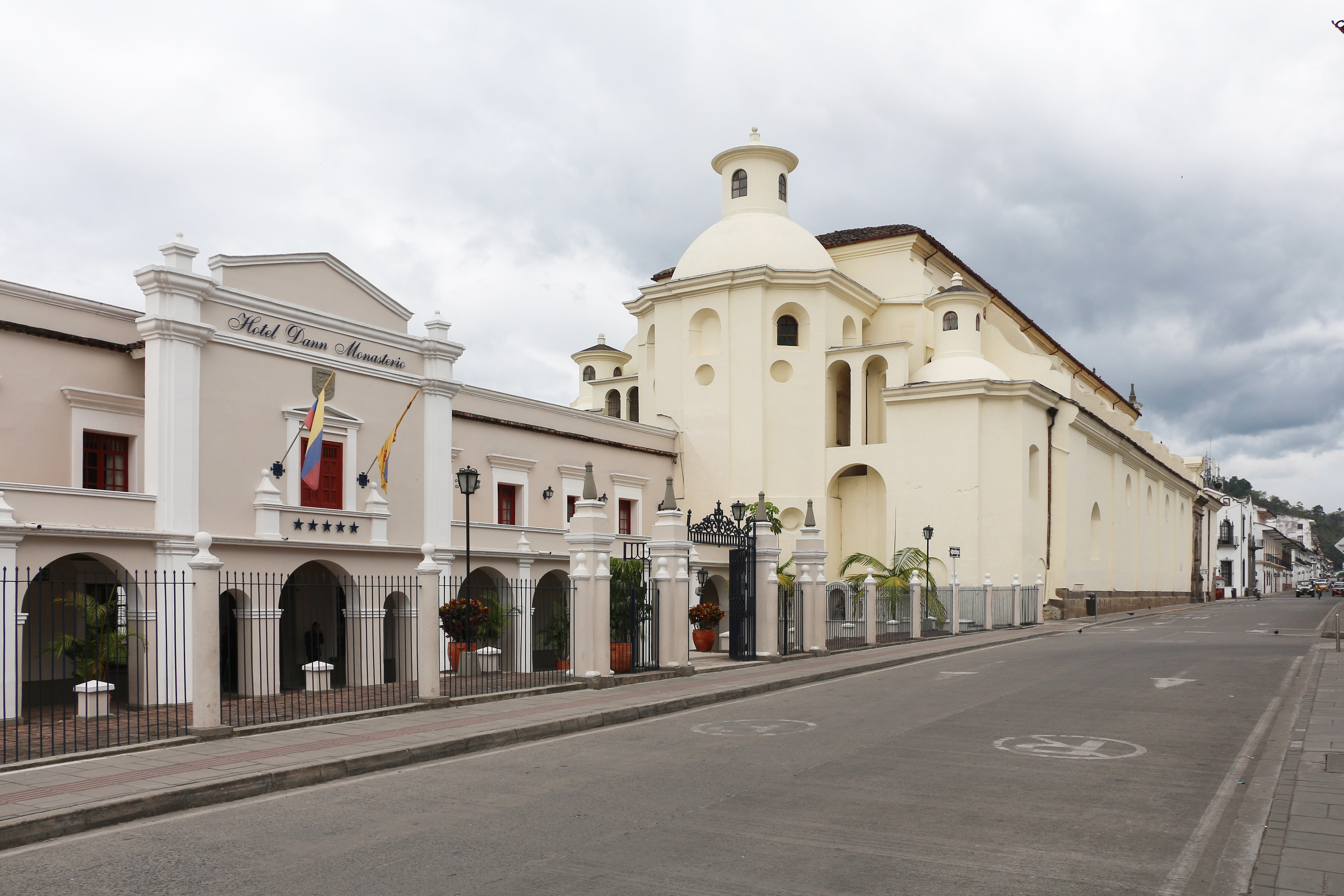
Colonial mansions / historic hotels downtown$$$$$US$ 70–150 a night (approx. $290,000–620,000 COP). Hotels installed in colonial and Republican-era mansions in the historic center, with courtyards, balconies and plenty of character; the emblematic Hotel Dann Monasterio (a former Franciscan convent of 1570) usually falls in this range. Ideal for experiencing the 'White City' from the inside
Mid-range in the historic center$$$$$US$ 35–70 a night (approx. $145,000–290,000 COP). A good supply of mid-range hotels in or near the center, steps from the churches, Parque Caldas and the restaurants. Convenient for covering everything on foot
Budget / hostels$$$$$US$ 10–30 a night (approx. $40,000–125,000 COP); a dorm bed from ~US$ 8–12. Hostels and cheap hotels downtown and nearby, chosen by backpackers and by travelers using Popayán as a base for San Agustín, Tierradentro, Puracé and Silvia
Apartments and houses (short-term rental)$$$$$US$ 30–80 a night (approx. $125,000–330,000 COP). Apartments and houses downtown and in nearby neighborhoods, useful for longer stays or families; during Holy Week prices soar and you should book months ahead

🍴 Where to eat

TypePriceOptions / signature dish
Traditional Popayán cuisine (UNESCO heritage)$$$$$$25,000–60,000 COP a dish (US$ 6–15). The refined cooking of Popayán, recognized by UNESCO: tamal de pipián, carantanta, traditional soups and convent sweets at restaurants and fondas downtown
Pipián empanadas and street snacks$$$$$$1,500–4,000 COP per empanada (US$ 0.40–1). The celebrated pipián empanadas with peanut sauce, eaten at stalls and small places downtown, are Popayán's street snack par excellence. Unmissable and cheap
Colombian and international restaurants$$$$$$18,000–45,000 COP a dish (US$ 4.50–11). Options in the historic center, from Colombian cooking to more contemporary and international offerings, many in charming old mansions
Sweets, desserts and specialty coffee$$$$$$3,000–15,000 COP (US$ 0.75–4). Popayán has a rich tradition of convent and home-made sweets (manjar blanco, fruit conserves, colaciones) and good Cauca coffee at confectioners, cafés and markets downtown
Advertisements

📖 History of Popayán

Origins, formation and what the sources say.

The Pubenza valley and its first peoples

Long before the Spanish conquistadors arrived, the fertile valley where Popayán now stands was inhabited by Indigenous peoples who gave the region much of its identity and its names. The area was known as the Pubenza valley, from which comes the demonym 'payanés' and the city's own name, usually linked to a chief called Payán or Popayán who ruled these lands when the Europeans arrived. It was a territory of mild climate, watered by rivers such as the Cauca and the Molino, in a privileged position within the Colombian massif, where some of the country's great rivers rise.

The groups inhabiting the region belonged to different Andean families and chiefdoms. Around the valley lived the Pubenense; further east and in the mountains were peoples such as the Páez (Nasa) and the Guambiano (Misak), who to this day preserve their language, their organization and their traditions in nearby territories such as Silvia and Tierradentro. They were farming and warrior societies, organized in chiefdoms, growing maize, potatoes and other highland crops, and trading with the peoples of the Pacific and the Cauca valley.

The arrival of the Spanish in the 1530s altered that world forever. The conquest of the southwest was especially violent and marked by Indigenous resistance, among whose figures are remembered the chief Payán and, above all, the legendary cacica Gaitana, an Indigenous leader of the Upper Magdalena region who led a ferocious rebellion against the conquistadors. Although Spanish domination eventually prevailed, the original peoples of Cauca never disappeared: their descendants, the Nasa and the Misak, are living communities today, with a strong political and cultural presence in the department.

The origin of the name Popayán
The most widespread explanation links the name 'Popayán' to an Indigenous chief of the region, called Payán or Popayán, who ruled the Pubenza valley when the Spanish arrived. Other interpretations link it to words in local languages associated with the idea of 'two thatched houses' or with geographic features of the valley. The exact etymology is not entirely certain, so it's best taken as an approximation.
Source: https://es.wikipedia.org/wiki/Popay%C3%A1n

The founding by Sebastián de Belalcázar (1537)

Popayán was founded on 13 January 1537 by the Spanish conquistador Sebastián de Belalcázar (or Benalcázar), one of Francisco Pizarro's captains who, after taking part in the conquest of Peru and Quito, pushed north founding cities along the way. Belalcázar was seeking both new riches —driven by the myth of El Dorado— and to secure Spanish control over the southwest of what is now Colombia. On his route he founded Santiago de Cali and, shortly afterward, Popayán, in the heart of the Pubenza valley.

The choice of site was no accident. The valley offered a mild, pleasant climate year-round, fertile land, abundant water and a strategic position midway between Quito to the south and Santafé de Bogotá and the Caribbean coast to the north. That position would make Popayán a key node of the colonial routes and a center of power of the first order. The city was laid out on the Spanish grid model, with its main square —today's Parque Caldas— at the center, and around it the church, the town hall and the houses of the leading residents.

The founding of Popayán was also the beginning of a long and conflict-ridden process of subjugating the region's Indigenous peoples, who resisted tenaciously. Consolidating the city took years of fighting and the establishment of encomiendas. In time, Popayán ceased to be a mere frontier outpost and became one of the most important and wealthiest cities of the viceroyalty.

The figure of Belalcázar and his route
The sources agree that Sebastián de Belalcázar founded Popayán on 13 January 1537, as part of his advance north from Quito after the conquest of Peru. The chronicles differ in nuance over the exact dates and the order in which Cali and Popayán were founded, as well as over the role of other captains accompanying him, so the details are best taken as historical approximations.
Source: https://es.wikipedia.org/wiki/Sebasti%C3%A1n_de_Belalc%C3%A1zar

The Governorate of Popayán: a rich and aristocratic colonial city

Through the colonial centuries, Popayán lived its era of greatest splendor. Its strategic position and its climate made it the seat of the Governorate of Popayán, an enormous jurisdiction that came to cover much of the southwest of present-day Colombia and even areas of what is now Ecuador. The city was the seat of civil and ecclesiastical authorities, and a pole of political, religious and economic power that rivaled the great capitals of the viceroyalty in prestige.

Popayán's wealth rested largely on gold mining in the Pacific and Chocó regions, worked with enslaved African labor, and on the great farming and cattle haciendas surrounding the city. That prosperity allowed an elite of powerful families to raise the monumental ensemble we admire today: baroque churches and convents such as San Francisco, Santo Domingo, San Agustín and La Ermita, alongside stately mansions with thick whitewashed walls, flower-filled courtyards and wooden balconies. The 'White City' was born of that combination of power, faith and money.

From early on, Popayán was also an important intellectual and religious center. Seminaries, colleges and, later, the Universidad del Cauca were founded, educating the elites of the southwest. The city cultivated an aristocratic, refined and deeply Catholic identity, expressed in its architecture, its cooking and its religious celebrations, particularly a Holy Week that has been held without interruption since colonial times and is among the oldest on the American continent.

The weight of slave-based mining
Historians stress that much of Popayán's colonial wealth came from gold mining in the Pacific (Chocó, Barbacoas) with the labor of enslaved Africans, alongside the valley's haciendas. That economic base explains both the city's architectural splendor and the deep social inequalities of the region, whose traces persist.
Source: https://es.wikipedia.org/wiki/Provincia_de_Popay%C3%A1n

Independence and the 'city of the patriots'

The independence process, in the early 19th century, found Popayán in a singular and contradictory position. Unlike neighboring cities of the Cauca valley, such as Cali, which leaned early toward the patriot cause, Popayán was largely royalist through much of the wars of independence. Its elite, tied to the Crown and the Church, and the presence of Spanish military forces made the city a royalist bastion, which turned it into a stage for disputes, occupations and battles as patriots and royalists took and retook the town several times.

Despite that initially royalist character, Popayán gave the emerging republic a remarkable number of first-rank figures. From its families and its Universidad del Cauca came presidents, vice presidents, jurists, scientists, poets and patriots who shaped national history through the 19th and 20th centuries. That abundance of statesmen earned the city the nickname 'city of the patriots' or 'cradle of patriots', a pride the people of Popayán still claim.

Among the figures tied to Popayán are numerous presidents of Colombia, as well as intellectuals and poets such as Guillermo Valencia, whose house is now a museum. The city retained its political and cultural weight throughout the 19th century, even as economic dynamism shifted toward other regions of the country. Popayán thus kept its stately air and its prestige as one of Colombia's great traditional centers.

Royalist Popayán versus patriot Cali
Historians agree that during independence Popayán aligned mostly with the royalist side, in contrast with the confederated cities of the Cauca valley led by Cali. The city changed hands several times between patriots and royalists. Nuances over specific dates and battles vary by source.
Source: https://es.wikipedia.org/wiki/Popay%C3%A1n

The 1983 earthquake and the rebuilding of the White City

Throughout its history, Popayán has lived with the threat of earthquakes, inherent to its position in a region of geological faults in the Andean massif. But no episode is as engraved in the city's memory as the earthquake of 31 March 1983, which struck on a Maundy Thursday, in the middle of Holy Week. The quake, of magnitude close to 5.5 but with a very shallow and nearby epicenter, hit the city as many of the faithful were preparing for the religious celebrations, and caused a significant number of victims and enormous damage.

The earthquake badly affected the colonial heritage: churches, convents, mansions and historic buildings were damaged or partly destroyed, and the cathedral tower, among other monuments, suffered serious harm. For a city whose identity rests on its architectural ensemble, the blow was devastating not only materially but symbolically. The tragedy also fell on the day and in the context most laden with meaning for the people of Popayán.

The city's response, however, was exemplary. In the following years a careful program of reconstruction and restoration returned the city to its colonial appearance, recovering facades, churches and mansions with respect for the heritage. Today, anyone walking the historic center would struggle to imagine the scale of that disaster: the 'White City' looks impeccable once more. That reconstruction is one of the great sources of pride for locals and a testament to their attachment to memory and tradition.

Why the 1983 quake was so destructive
Studies note that the earthquake of 31 March 1983, though of moderate magnitude (around 5.5), proved very destructive because its epicenter was shallow and very close to the city, which concentrated the energy on the urban core and its fragile colonial heritage. The fact that it struck on Maundy Thursday worsened the human and symbolic impact.
Source: https://es.wikipedia.org/wiki/Terremoto_de_Popay%C3%A1n_de_1983

Holy Week, the cuisine and UNESCO recognition

If anything defines Popayán's identity above all else, it's its Holy Week. Held without interruption since the 16th century, it's the oldest and most solemn in Colombia and one of the most traditional on the continent. Each night from Holy Tuesday to Holy Saturday, the 'cargueros' —local men who inherit the honor from one generation to the next— carry heavy 'pasos' (platforms bearing religious images, some of great artistic value) on their shoulders through the streets of the historic center, in processions of deep recollection that follow a fixed route between the colonial churches. The whole city gives itself over to this tradition, which combines faith, art and collective memory.

In 2009, UNESCO inscribed the Holy Week processions of Popayán on the Representative List of the Intangible Cultural Heritage of Humanity, recognizing their antiquity, their continuity and their value as a living expression of local culture. The listing consolidated Popayán as one of Colombia's great destinations for religious and cultural tourism, and visitor numbers multiply at that time of year.

The other great hallmark of Popayán is its cuisine, also internationally recognized: in 2005, Popayán was declared a UNESCO Creative City of Gastronomy, the first in the Americas to receive that title. Popayán cooking, refined and with deep colonial and mestizo roots, offers dishes such as tamal de pipián, pipián empanadas with peanut sauce, champús, carantantas and traditional sweets, many of them stars of the Popayán Gastronomic Congress held each year. Between its restored colonial heritage, its centuries-old Holy Week and its cooking, Popayán gathers all the layers of its long history into a unique identity.

The two UNESCO recognitions
Popayán holds two UNESCO distinctions: in 2005 it was named a Creative City of Gastronomy (the first in the Americas), and in 2009 its Holy Week processions were inscribed on the List of the Intangible Cultural Heritage of Humanity. Both recognitions strengthen its profile as a cultural and religious destination.
Source: https://ich.unesco.org/es/RL/las-procesiones-de-semana-santa-de-popayn-00259

📚 Bibliography

  • Wikipedia (ES) — «Popayán»: https://es.wikipedia.org/wiki/Popay%C3%A1n
  • Wikipedia (ES) — «Sebastián de Belalcázar»: https://es.wikipedia.org/wiki/Sebasti%C3%A1n_de_Belalc%C3%A1zar
  • Wikipedia (ES) — «Provincia de Popayán»: https://es.wikipedia.org/wiki/Provincia_de_Popay%C3%A1n
  • Wikipedia (ES) — «Terremoto de Popayán de 1983»: https://es.wikipedia.org/wiki/Terremoto_de_Popay%C3%A1n_de_1983
  • Wikipedia (ES) — «Guillermo Valencia»: https://es.wikipedia.org/wiki/Guillermo_Valencia
  • UNESCO — «Las procesiones de Semana Santa de Popayán» (2009): https://ich.unesco.org/es/RL/las-procesiones-de-semana-santa-de-popayn-00259
  • UNESCO — «Creative Cities Network: Popayán, Ciudad de la Gastronomía» (2005): https://www.unesco.org/en/creative-cities/popayan
  • Colombia.travel — «Popayán, la Ciudad Blanca»: https://colombia.travel/es/popayan
  • Banco de la República — Biblioteca Virtual: https://www.banrepcultural.org/

❓ Frequently asked questions

Why is Popayán called the 'White City'?+
Because of the color of its historic center: the facades of its colonial mansions and churches are whitewashed an impeccable white, maintained as a tradition, which gives the ensemble a very particular unity and beauty. It's one of the best-preserved colonial centers in Colombia, and walking between those white walls, especially at dusk, is the essence of the visit.
How much do the nearby archaeological parks cost (San Agustín and Tierradentro)?+
The ICANH rates (verified July 2026) are: San Agustín Archaeological Park, $50,000 COP for Colombians and residents and $75,000 COP for non-resident foreigners (includes Alto de los Ídolos and Alto de las Piedras); Tierradentro Archaeological Park, $45,000 COP Colombians/residents and $65,000 COP foreigners. The Museum of Religious Art of Popayán is around $8,000–12,000 COP, and admission to the San Juan hot springs sector of Puracé National Park costs $40,000 COP on weekdays and $50,000 COP at weekends for foreigners (less for Colombians). Check the official sites, as rates are updated each year.
Is it worth going during Holy Week?+
If you're interested in culture and tradition, very much so: Popayán's Holy Week is Intangible Cultural Heritage of Humanity and its nighttime processions, the oldest in Colombia, have a unique solemnity and beauty. That said, it's the busiest season: you have to book accommodation extremely far in advance, prices rise (sometimes double) and the city fills up. If you prefer quiet, avoid those dates.
How many days do I need for Popayán?+
The historic center is easily covered in 1 or 2 days (squares, churches, the Puente del Humilladero, the Morro de Tulcán, the museums). But it's ideal to stay 3 to 5 days to make the most of Popayán as a base for the great excursions of the southwest: Puracé National Park (volcano and hot springs), the Silvia Indigenous market and the archaeological sites of San Agustín and Tierradentro.
What should I eat in Popayán?+
Popayán cuisine is recognized by UNESCO. Try the pipián empanadas (potato and peanut, with peanut sauce; they cost just $1,500–4,000 COP), the tamal de pipián, carantanta and the traditional convent sweets. It's one of the most refined and historic cuisines in Colombia, enjoyed as much at downtown restaurants as at street stalls.
Is it safe to travel to Popayán?+
The historic center is calm and very walkable by day. As in any city, carry little cash, mind your phone, get around at night on busy streets or by taxi and avoid deserted areas. For mountain excursions (Puracé, the volcano) and trips into rural territory, go with a guide and check security and road conditions before setting out.
What's the climate like in Popayán?+
Mild and pleasant all year, thanks to its altitude of about 1,700-1,760 meters: average temperatures around 18-19 °C and cool nights. There are no marked seasons, only drier and wetter periods. Always bring something warm for the evening and a waterproof, especially if you're heading up to the Puracé páramo or to Silvia, where it's considerably colder.
Sources consulted (21)
Still planning?
Explore more destinations in Colombia
See all destinations →
Advertisements
Image credits
Photos from Wikimedia Commons, each under its own licence (CC BY, CC BY-SA or public domain). Open each file to see its author and licence.
Calle de San Francisco, Popayán 02