Viajá con Gus
HomeBrazilVitória
Vitória
🇧🇷 Brazil · Southeast

Vitória

Jump to what you need
📌State
Espírito Santo (capital)
📌Best time to go
All year round; summer (December to March) is hotter and more beach-focused
📌Suggested days
2 to 3 days
📌Currency
Brazilian real (BRL)
💱 BRL exchange rate
Loading rate…
🌤️ Weather in Vitória
Loading weather…

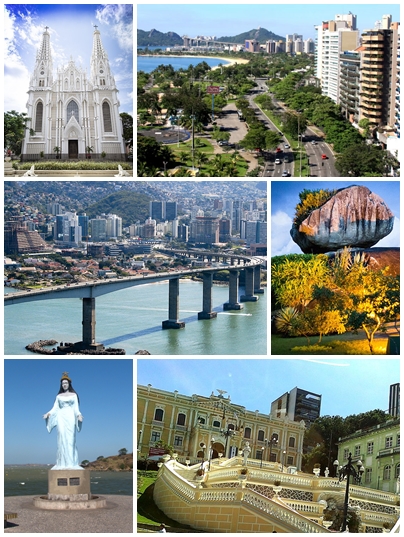
Vitória is the capital of Espírito Santo state, an island city set largely on an island in a bay, ringed by hills, mangroves and beaches. A port capital with serious economic weight, it combines town beaches such as Camburi, a historic centre of colonial origin, viewpoints over the bay and excellent capixaba cooking built on seafood, famous for its moqueca.

Its 16th-century colonial origins make it one of the oldest capitals in Brazil. The city offers the contrast between its historic past — churches, convents, the old town — and its modern profile as a capital with ports, bridges and a cultural life of its own. Nearby Vila Velha, with the Convento da Penha, and the capixaba highlands round out what the region has to offer.

This guide covers the essentials of Vitória: the town beaches and the Curva da Jurema, the historic centre and the Palácio Anchieta, the Convento da Penha (in Vila Velha), capixaba cooking and how to get there. It's a destination for getting to know an authentic island capital, with history, sea and the famous moqueca capixaba.

📖 History of Vitória

Founded in 1551 on an island in a sheltered bay, its name commemorates a Portuguese victory over the Indigenous population, and it became the capital of the captaincy of Espírito Santo. Its island position made it defensible, which is why it was chosen as the seat of government. A colonial port tied to sugar and later to coffee, in the 20th century it grew into a major port and industrial city (with iron ore and the port of Tubarão), establishing itself as the economic and cultural centre of the state.

Read the full history ↓

🏛️ Vitória is in Espírito Santo

The small capixaba state between the sea and the mountains: one of the original captaincies of 1535, a land of Italian and Pomeranian immigration, of mountain coffee and of a coastline of monazite sands and humpback whales.

Read the history of Espírito Santo →

🗺️ What to see

1
Praia de Camburi and the town beaches
The city's main town beach, long and with a promenade.
The Praia de Camburi is Vitória's great town beach, a long strip of sand with a seafront promenade (calçadão), kiosks and a cycle path, heavily used by capixabas for sport, leisure and swimming. It's the city's main beach meeting point. The Curva da Jurema, more sheltered, is another popular town beach with views over the bay. Both are ideal for combining a beach day with local life right in the capital.
ℹ️ Free access; with services. Watch the state of the sea and note how close the port is.
2
Historic centre and Palácio Anchieta
The colonial old town with churches, the seat of government and the cathedral.
Vitória's historic centre, in the old part of the island, keeps its colonial heritage. The highlights are the Palácio Anchieta, seat of the state government, built over a former Jesuit college and holding the tomb of Father José de Anchieta; the neo-Gothic Metropolitan Cathedral; and squares, churches and stairways with views over the bay. Walking the old town, with its slopes and lookouts, is the way to get to know the capital's origins and history.
ℹ️ Covered on foot; the Palácio Anchieta and some churches have set visiting hours (check first).
3
Convento da Penha (Vila Velha)
A sanctuary on a rocky crag with panoramic views, the symbol of the state.
In neighbouring Vila Velha, atop a rocky crag, stands the Convento da Penha, one of the oldest and most venerated Marian sanctuaries in Brazil and the symbol of Espírito Santo. From the top you get a spectacular panorama over Vitória, Vila Velha, the bay and the sea. It's a place of pilgrimage and an essential visit for its history, its religious significance and, above all, its views. You get up there by a ramp or a path.
ℹ️ Sanctuary open to visitors; best on a clear day. Check opening hours.
4
Parks and mangroves (Manguezal / Parque Pedra da Cebola)
Urban green spaces, mangroves and natural viewpoints.
Vitória preserves mangrove ecosystems (manguezal) around its island, important for wildlife and open to visitors in certain areas, and it has urban parks such as the Parque Pedra da Cebola, with rock formations, gardens and walking areas. These green spaces, along with the city's hills and viewpoints, offer contact with nature and good views within the capital itself.
ℹ️ Parks with free access and set hours; mangroves in specific areas (check first).
5
Vila Velha and Praia da Costa
The neighbouring city with beaches, the convent and the first capixaba settlement.
Vila Velha, facing Vitória across the bay and joined to it by bridges, was the first settlement in Espírito Santo. Besides the Convento da Penha, it has very popular town beaches such as Praia da Costa, with a promenade and nightlife, along with historic remains. It's an inseparable part of the metropolitan-area experience and is usually included in a visit to the capital.
ℹ️ Joined to Vitória by bridges; beaches with services. Get around by car or bus.
6
Praia do Canto and the seafront dining strip
Vitória's liveliest district, with bars, moqueca restaurants and nightlife.
Praia do Canto is Vitória's smart dining district: it holds the greatest concentration of restaurants serving moqueca capixaba and seafood, plus bars, cafés and nightlife, especially around the 'Curva da Jurema' area and the inner streets. It's the best place to try capixaba cooking and to go out at night in the capital. From its seafront you also get fine views of the bay and the bridge across to Vila Velha. A must for anyone who likes eating well.
ℹ️ Bar and restaurant district; best at night. Book at the popular restaurants at weekends.
Advertisements
What nobody tells you

💵 Prices

Tickets

TypePrice
Beaches (Camburi, Curva da Jurema, etc.)Free (open access; services and kiosks separate)
Convento da Penha (sanctuary, Vila Velha)Free (access to the Campinho esplanade and the chapel at no charge). Van up R$ 7 return or R$ 5 one way; 'trenzinho' R$ 20 return (R$ 10 one way); you can also walk up or drive your own car (6:00 to 16:30, weekdays) (source: official Convento da Penha site — hours and fares, verified July 2026)
Palácio Anchieta (guided tour)Free. Guided tours of 1 h leaving every 30 min: Tuesday to Friday 9:00–17:00 and Saturdays, Sundays and public holidays 9:00–16:00 (source: Prefeitura de Vitória / SEG-ES, verified July 2026)
Urban parks (Pedra da Cebola, etc.)Free (open access)
🔄 updated monthlyOfficial / reference values · double-check when buying

Activities and tours

ActivityPriceDurationOperator
Walk through the historic centre and the Palácio AnchietaFree on your own (the guided tour of the Palácio Anchieta is free, Tuesday to Sunday); private city tour with a guide about R$ 100–250 per person (source: SEG-ES + local agencies, verified July 2026)Half a dayOn your own / local guides and agencies
Visit to the Convento da Penha (Vila Velha)Free access; van up R$ 7 return (source: official Convento da Penha site, verified July 2026)2-3 hOn your own
Boat or schooner trip around Vitória bayAbout R$ 60–150 per person depending on the trip (source: local boat operators / aggregators, verified July 2026)Half a dayBoat operators on Vitória bay
Moqueca capixaba dining experienceMoqueca for two R$ 100–160 at most restaurants in Praia do Canto; up to R$ 250 at premium fish restaurants (source: capixaba food reviews and blogs, verified July 2026)VariesRestaurants in Praia do Canto, Enseada do Suá and Ilha das Caieiras
🔄 updated monthlyOfficial / reference values · double-check when buying
Advertisements

🚌 How to get there and distances

Getting around

ModePriceDurationNotes
Your own or a rental carRental about R$ 150–300 a day; fuel and tolls separate (source: rental aggregators / local market, verified July 2026)VariesHandy for moving between the island, Vila Velha and the highlands; bridges connect the cities of the metropolitan area
Town buses / TranscolFlat fare R$ 5,10 on weekdays and R$ 4,50 on Sundays and public holidays; it allows a transfer to the ferry system on a single ticket (source: CETURB-ES / GVBus, verified July 2026)VariesThe integrated transport network of the Grande Vitória metropolitan area
Taxi / apps (Uber, 99)R$ 15–30 for short trips; about R$ 40–80 to the airport or to Vila Velha (source: app fares / local check, verified July 2026)VariesAvailable across the city; the apps work well throughout the metropolitan area
🔄 updated monthlyOfficial / reference values · double-check when buying

How to get there

RouteAirlines / operatorsAvg. priceDuration
Flight to Vitória (Eurico de Aguiar Salles airport, VIX)LATAM, GOL, AzulVaries with your starting point and how far ahead you book; domestic legs from about R$ 250–600 (source: flight search engines, verified July 2026)Connections from Rio (~1 h), São Paulo, Belo Horizonte, etc.
Rio de Janeiro → Vitória (BR-101)Águia Branca, Itapemirim; carAbout R$ 110–180 by bus (source: Águia Branca / coach aggregators, verified July 2026)About 7 to 8 h (some 520 km)
Belo Horizonte → Vitória (BR-262)Águia Branca, Gontijo; carAbout R$ 120–200 by bus (source: coach aggregators, verified July 2026)About 7 to 8 h
🔄 updated monthlyOfficial / reference values · double-check when buying

🏨 Where to stay

No exact prices: a scale from $ (budget) to $$$$$ (luxury), with 2-3 options per category.

CategoryPriceRecommended options
High-end hotels$$$$$About R$ 350–700 a night; business and chain hotels in Praia do Canto, Enseada do Suá and along the Camburi seafront, several with sea views (source: Booking / aggregators, verified July 2026)
Mid-range hotels$$$$$About R$ 200–350 a night; mid-range hotels in the centre, Camburi and Vila Velha, good value for the location (source: Booking / aggregators, verified July 2026)
Budget lodging$$$$$About R$ 110–200 a night; hostels and cheap hotels for tight budgets, several near the centre and Camburi (source: Booking / Hostelworld, verified July 2026)
Seafront hotels in Vila Velha (Praia da Costa)$$$$$About R$ 220–450 a night; hotels along the Praia da Costa seafront, a good base for combining beach, convent and nightlife (source: Booking / aggregators, verified July 2026)

🍴 Where to eat

TypePriceOptions / signature dish
Moqueca and capixaba cooking$$$$$Moqueca for two R$ 100–160 at most places; up to R$ 250 at premium fish restaurants; also torta capixaba (Easter week) and casquinha de siri (source: capixaba food blogs, verified July 2026)
Fish and seafood$$$$$About R$ 60–180 a dish; fresh fish, prawns and seafood in restaurants along the coast, at Ilha das Caieiras and around the bay (source: local check, verified July 2026)
Restaurants and bars in Praia do Canto$$$$$About R$ 50–150 per person; a dining district with bars, international cooking, burger places and nightlife (source: local check, verified July 2026)
Lanchonetes and pay-by-weight food$$$$$About R$ 30–60 per person; pay-by-weight restaurants, lanchonetes and quick options in the centre and the residential districts (source: local check, verified July 2026)
Advertisements

📖 History of Vitória

Origins, formation and what the sources say.

The founding on the island and the 'victory' that gave it its name

Few Brazilian cities carry their origin written into their name: Vitória is called that because of a battle. When in 1551 the Portuguese settlers managed to drive back the Indigenous people resisting the occupation of the bay, they marked the win by naming 'Victoria' the settlement they had just moved to a more defensible island. That wartime name stuck for good as the name of the capital of Espírito Santo.

The captaincy of Espírito Santo had been one of the first territorial divisions of colonial Brazil, granted in the 1530s under the system of hereditary captaincies with which the Portuguese crown tried to colonize the country's immense coastline. The first settlement was established in the area of today's Vila Velha, but the colonists soon looked for a safer site against Indigenous attacks: they found an island in a sheltered bay, easy to defend, and there they built the nucleus that would give rise to the city.

The new town, on the island, became the capital of the captaincy of Espírito Santo. Its strategic position, its natural harbour and its defensibility established it as the administrative, religious and commercial centre of the region, a role it has kept to this day as the state capital.

Jesuits, sugar and coffee in the colonial era

Through the colonial era, Vitória and Espírito Santo were deeply marked by the Jesuits, who played a central role in evangelizing the Indigenous population and in organizing the territory. One key figure was Father José de Anchieta, missionary and one of the great names of early Brazil, whose memory is tied to the region; his tomb is kept in the Palácio Anchieta, built over a former Jesuit college.

The captaincy's colonial economy turned on port and farming activity. Sugar, in the early centuries, and later coffee — which in the 19th century spread through the mountainous interior of Espírito Santo, largely thanks to European immigrants — found in the port of Vitória a way out to international markets. The city thus served as the maritime gateway of the state.

Despite its age and its status as capital, Espírito Santo was for a long time a relatively small state, less populated than its neighbours. Vitória grew at a moderate pace, keeping its colonial old town with churches, convents and the seat of government, all evidence of that long stretch when the city was, above all, a port and a religious and administrative centre.

The 20th century: port, iron ore and a modern capital

The 20th century transformed Vitória completely. The city became one of the main port hubs in Brazil, largely thanks to the export of iron ore from the interior, especially from Minas Gerais. The Tubarão port complex, tied to large-scale mining, made the port of Vitória one of the most important in the country for bulk cargo, and it drew industry and people.

That economic boom drove strong urban growth. Vitória and the neighbouring cities — Vila Velha, Serra, Cariacica — merged into a large metropolitan area, the Grande Vitória, connected by bridges spanning the bay. The capital modernized with avenues, ports, industry and new districts, while keeping its historic island core.

Today Vitória is the economic, political and cultural centre of Espírito Santo: an island capital that combines its colonial past — the Palácio Anchieta, the churches, the Convento da Penha in Vila Velha — with a present of port, commerce and services. Its culinary identity, symbolized by moqueca capixaba, and its setting of bay, mangroves and town beaches complete the portrait of one of the oldest and most singular capitals in Brazil.

The Convento da Penha and capixaba identity

Few places condense the history and identity of Espírito Santo like the Convento da Penha, high on a crag in Vila Velha, facing Vitória. Its origins go back to 1558, when the Franciscan friar Pedro Palácios raised a small hermitage dedicated to Our Lady of Penha. Over the centuries the sanctuary grew into one of the oldest religious complexes in Brazil and the state's leading symbol, with its 360-degree view over the bay, the capital and the sea.

The convent is the heart of one of the region's most deeply rooted popular traditions: the Festa da Penha, a pilgrimage that every year, after Easter week, brings together hundreds of thousands of devotees who climb to the sanctuary, many of them on their knees or walking barefoot, in one of the largest expressions of faith in southeastern Brazil. Marian devotion thus runs through capixaba history from the colony to the present day.

Beyond the religious side, capixaba identity — the demonym for those born in Espírito Santo — draws on that mix of Indigenous, Portuguese, African and European immigrant heritage (Italians, Germans, Pomeranians) that settled the highlands in the 19th century. That fusion comes through strongly in the cooking: moqueca capixaba, cooked in a clay pot without coconut milk or dendê, and the torta capixaba of Easter week are emblems of a culture of its own, distinct from that of its large southeastern neighbours and proudly local.

The paneleiras of Goiabeiras: clay, mangrove and moqueca

The history of Vitória isn't told only through founding dates and port booms: it's also told through the hands of the paneleiras of Goiabeiras, the artisans who for centuries have shaped by hand the black clay pots in which moqueca capixaba is cooked. In 2002 their craft became the first item inscribed in IPHAN's Book of Knowledge (the national heritage institute), recognized as Intangible Cultural Heritage of Brazil. That's no small detail: it was the first in the whole country to be given that status.

The process is almost identical to the one practised by the region's original peoples before the Portuguese arrived. The paneleiras dig the clay from nearby banks, shape it without a wheel, leave it to dry in the sun and fire it in the open air; the characteristic black colour and the final waterproofing come from applying, while still hot, a tannin dye extracted from the bark of the red mangrove (rhizophora) that grows in the city's mangrove swamps. In other words, the mangrove around Vitória isn't just scenery: it's the raw material of an everyday object. More than a hundred families in Goiabeiras Velha live from this craft, passed from mother to daughter.

That same web of sea and mangrove sustains Ilha das Caieiras, the district of fishers and desfiadeiras (the women who pick the meat from siri, a crab) where much of popular capixaba cooking was born. Moqueca in a clay pot, the torta capixaba of Easter week and casquinha de siri are the result of that chain linking the mangrove to the table. So eating a moqueca in Vitória isn't just eating well: it's taking part in a tradition that Brazil declared heritage and that lives on in the hands of artisans and fishers, among the same mangroves that watched the city be born almost five centuries ago.

📚 Bibliography

  • Wikipedia (ES) — «Vitória (Espírito Santo)»: https://es.wikipedia.org/wiki/Vit%C3%B3ria_(Esp%C3%ADrito_Santo)
  • Wikipedia (EN) — «Vitória, Espírito Santo»: https://en.wikipedia.org/wiki/Vit%C3%B3ria,_Esp%C3%ADrito_Santo
  • Wikipedia (EN) — «Espírito Santo»: https://en.wikipedia.org/wiki/Esp%C3%ADrito_Santo
  • Wikipedia (EN) — «José de Anchieta»: https://en.wikipedia.org/wiki/Jos%C3%A9_de_Anchieta
  • Wikipedia (PT) — «Convento da Penha»: https://pt.wikipedia.org/wiki/Convento_da_Penha
  • Wikipedia (PT) — «Moqueca capixaba»: https://pt.wikipedia.org/wiki/Moqueca_capixaba
  • Convento da Penha (sitio oficial): https://conventodapenha.org.br/
  • Setur Espírito Santo / Descubra ES (oficial): https://www.descubraes.es.gov.br/
  • IPHAN — Ofício das Paneleiras de Goiabeiras: https://bcr.iphan.gov.br/bens-culturais/oficio-das-paneleiras-de-goiabeiras/
  • Prefeitura de Vitória — Paneleiras de Goiabeiras: https://vitoria.es.gov.br/semc/paneleiras-de-goiabeiras

❓ Frequently asked questions

What to see in Vitória in 2 or 3 days?+
Two or three days covers the essentials: Camburi beach and the Curva da Jurema, the historic centre with the Palácio Anchieta and the cathedral, a moqueca capixaba lunch in Praia do Canto or at Ilha das Caieiras, and a trip across to Vila Velha to climb up to the Convento da Penha for the panoramic views. With an extra day you can add a boat trip around the bay or an escape to the capixaba highlands.
How many days do you need for Vitória?+
Two days are enough to see the capital and the Convento da Penha; with three the visit is comfortable and takes in Vila Velha, the food and a boat trip. If you want to add the capixaba highlands (Domingos Martins, Pedra Azul), allow a fourth day.
How much does it cost to go up to the Convento da Penha?+
Access to the sanctuary and the Campinho esplanade is free. The van costs R$ 7 return (R$ 5 one way) and the 'trenzinho' R$ 20 return; you can also walk up or drive your own car from 6:00 to 16:30 on weekdays. Verified July 2026.
What is moqueca capixaba and where do you eat it in Vitória?+
It's the signature dish of Espírito Santo: a fish or seafood stew cooked in a clay pot, with tomato, onion, coriander and urucum, without coconut milk or dendê (which is what sets it apart from the Bahian version). The best areas to eat it are Praia do Canto, Enseada do Suá and Ilha das Caieiras; a moqueca for two runs around R$ 100–160.
How do you get to Vitória?+
The easiest way is to fly into Eurico de Aguiar Salles airport (VIX), with direct connections from Rio (~1 h), São Paulo and Belo Horizonte. Overland, it's about 7-8 hours from Rio de Janeiro on the BR-101 (bus R$ 110–180) and 7-8 hours from Belo Horizonte on the BR-262.
Is it safe to travel to Vitória?+
Vitória is a tourist capital with safe, busy areas (Praia do Canto, Camburi, the Vila Velha seafront), where the usual care for any large Brazilian city applies: don't display valuables, use ride apps at night and don't head into outlying districts you don't know. The tourist and dining areas are fine to walk day and night with common sense.
When is the best time to visit Vitória?+
You can visit all year round. Summer (December to March) is hotter and more beach-oriented; the rest of the year the weather is pleasant and the city keeps up its cultural and dining life. For a pilgrimage to the Convento da Penha, the big date is the Festa da Penha, on the Sunday after Easter week.
Where to stay in Vitória?+
Praia do Canto and Enseada do Suá are the most recommended areas (food, safety and nightlife); the Camburi seafront is good for the beach, and Vila Velha (Praia da Costa) is a seafront alternative near the convent. There are options from R$ 110 a night in hostels up to R$ 700 in high-end hotels with sea views.
Sources consulted (9)
Still planning?
Explore more destinations in Brazil
See all destinations →
Advertisements
Image credits
Photos from Wikimedia Commons, each under its own licence (CC BY, CC BY-SA or public domain). Open each file to see its author and licence.
Vitória ES