Viajá con Gus
HomeBrazilBalneário Camboriú
Balneário Camboriú
🇧🇷 Brazil · South

Balneário Camboriú

Jump to what you need
📌State
Balneário Camboriú sits in the state of Santa Catarina, in Brazil's South region, on the coast, a little over 80 km north of Florianópolis, the state capital. It's one of the most famous and most developed beach resorts in the south of the country, known for the striking skyline of skyscrapers rising right in front of the sea, which earned it the nickname of the 'Brazilian Dubai'. Its heart is Praia Central, a long crescent-shaped beach flanked by an avenue of very tall buildings, among the tallest in Brazil and in all of South America
📌Service town
Balneário Camboriú itself has all the tourist infrastructure: hotels in every category, an intense food scene, nightlife, malls, exchange bureaus and services. The nearest airport is Navegantes (Aeroporto Internacional de Navegantes – Ministro Victor Konder, NVT), about 20 km away, which handles domestic flights; many travelers also arrive through Florianópolis International Airport (FLN), a little over an hour away, or through Curitiba. There's a bus terminal with domestic and international connections, and the city sits on the BR-101, the great coastal highway, which makes it very easy to reach by car from the rest of southern Brazil, Argentina, Uruguay and Paraguay
📌Best time
Balneário Camboriú is, above all, a summer destination. The peak season runs from December to March (especially January and February, with the high point at New Year and Carnival): heat, warm sea, beaches in full swing, overflowing nightlife and a city packed with Brazilian and Southern Cone tourists, with prices at their highest and bookings hard to come by. Spring (October-November) and autumn (March-May) offer weather that's still pleasant, fewer people and better prices: a good option if you prefer things quiet. Winter (June-August) is cooler and less beach-friendly, but the city stays active with its attractions, viewpoints and food scene, and it's ideal for enjoying it without the crowds
📌Suggested days
Two to three days cover the essentials: Praia Central and its rebuilt seafront, the Parque Unipraias cable car with Praia de Laranjeiras, the Cristo Luz monument and viewpoint, the FG Big Wheel and a couple of nights of the famous nightlife. Four to five days add the quieter beaches (Laranjeiras, Estaleiro, Estaleirinho, Praia do Buraco) reachable along the Interpraias road, boat trips, shopping, unhurried meals and day trips to nearby destinations such as Bombinhas, Porto Belo or Florianópolis itself. For New Year and Carnival, add extra days and book a long way ahead
💱 BRL exchange rate
Loading rate…
🌤️ Weather in Balneário Camboriú
Loading weather…

Few cities in Brazil surprise you as much at first sight as Balneário Camboriú. Coming along the coast, what appears is a skyline of very tall skyscrapers lined up facing the sea, mirrored in the sand of a crescent-shaped beach: an image so futuristic it earned the city the nickname of the 'Brazilian Dubai'. In a few decades, this Santa Catarina resort went from a quiet fishing village to one of the most vibrant, modern and vertical beach destinations in the south of the country, with some of the tallest buildings in all of South America.

But Balneário Camboriú isn't only concrete and height: it's beach, nature and fun in equal parts. There's the huge Praia Central, with its avenue and its kiosks; the Parque Unipraias cable car, which crosses the hill to the idyllic Praia de Laranjeiras; the Cristo Luz, a monument with a viewpoint that lights up the city at night; the modern FG Big Wheel with its 360-degree views; and quieter, greener beaches to the south, such as Estaleiro and Estaleirinho. And when the sun goes down, the city shows its other face: bars, restaurants and one of the most famous nightlife scenes in Brazil, around Barra Sul and Avenida Atlântica.

This guide walks you through Balneário Camboriú with a practical, warm eye: which beaches to choose, how to ride the cable car and get up to the Cristo Luz, where to find the best view, how to move between Praia Central and the wilder beaches, where the night beats and how to plan your visit by season. It's an ideal destination for combining sun, sea, spectacular viewpoints, shopping and partying, and a favorite with families, couples and young travelers from Brazil and across the Southern Cone.

📖 History of Balneário Camboriú

The name 'Camboriú' has Indigenous origins, from Tupi-Guarani, and is usually linked to expressions connected with a 'river of the camborás' or with the idea of a watercourse and fish, in reference to the Camboriú River. The region was inhabited by Indigenous peoples and, from the 18th century on, settled by colonists of Portuguese origin, mostly from the Azores, who took up fishing and farming on what was then a quiet coast of fishing villages under the municipality of Camboriú. For much of its history, today's Balneário Camboriú was a small coastal fishing town. The great change came in the 20th century: by mid-century the beauty of its beach began to draw summer visitors, and in 1964 Balneário Camboriú broke away as a municipality independent of Camboriú. From then on it grew at dizzying speed, driven by sun-and-beach tourism and by intense verticalization: the building of ever taller towers facing the sea transformed the city's profile and gave it its distinctive skyline, which turned it into a symbol of tourism in southern Brazil and into the so-called 'Brazilian Dubai'. The full story is on our history page.

Read the full history ↓

🏛️ Balneário Camboriú is in Santa Catarina

The southern state of beaches, islands and cool highlands: settled by Azoreans, Germans and Italians, stage of Garibaldi's short-lived Juliana Republic and of the bloody Guerra do Contestado. Land of Florianópolis and its dozens of beaches, of the Blumenau Oktoberfest and of the only corner of Brazil where it regularly snows.

Read the history of Santa Catarina →

🗺️ What to see

1
Praia Central
The great crescent-shaped beach, the heart of the city, flanked by the imposing skyline of skyscrapers.
Praia Central is the soul of Balneário Camboriú: a few kilometers of crescent-shaped sand, embraced by Avenida Atlântica and, behind it, by the unmistakable wall of skyscrapers that made the city world-famous. It's one of the most recognizable images on the Brazilian coast: the beach by day, with the sea and the buildings reflected in it, and by night, with all those towers lit up facing the water. The seafront was widened and rebuilt in a major beach-widening project that added more sand, a bike lane and a promenade. Along Praia Central there are kiosks, umbrella and chair rental, beach sports, walkways and constant movement. It's an urban beach par excellence, with every service at hand and a lively atmosphere, especially in the summer season, when it fills with tourists from Brazil and across the Southern Cone. At its ends are Barra Sul (toward the Camboriú River, where the nightlife and attractions like the big wheel are concentrated) and Barra Norte. Getting there: Praia Central is right in the city center; you can walk to it from most hotels, or take local transport. Avenida Atlântica runs its whole length. Best time and tips: summer is the moment of maximum splendor (and maximum crowds); spring and autumn give you the beach with more calm. As on any very busy urban beach, carry little cash, keep an eye on your things and your phone, and pick a kiosk to spend the day at. Sunset and nighttime, with the skyline lit up, are not to be missed.
ℹ️ Distance: City center; walkable from most hotels · Best time: Summer for the beach in full swing; spring/autumn for more calm · Admission: Free (public beach) · Duration: Half a day or more
2
Parque Unipraias (cable car) and Praia de Laranjeiras
The panoramic cable car that crosses the hill from Barra Sul to the lovely Praia de Laranjeiras, with stops, a zipline and rainforest.
Parque Unipraias is one of the great attractions of Balneário Camboriú: a park built around a cable car (bondinho aéreo) that links two key points of the city, flying over the hill covered in Atlantic rainforest. It leaves from Estação Barra Sul, at the southern end of Praia Central, climbs to Estação Mata Atlântica (at the top of the hill, with viewpoints, forest trails, a zipline and adventure activities) and drops down to Estação Laranjeiras, on the beautiful Praia de Laranjeiras. The cable car ride gives you spectacular views of the skyline, Praia Central, the sea and the vegetation on the hill: it's one of the best ways to take in the city's geography from the air. At the summit station you can walk along elevated trails through the forest and, for the bolder, throw yourself down the zipline (the 'YouHoo', a mountain sled/zipline). Praia de Laranjeiras, at the end of the ride, is a beach of calmer, greener water, ringed by hills, with kiosks and a quieter feel than Praia Central. Getting there: the departure station (Barra Sul) is at the southern end of Praia Central, reachable on foot or by local transport. Praia de Laranjeiras can also be reached along the Interpraias road. Best time and tips: go on a clear day to make the most of the views. Buy the ticket in advance (it usually covers the round trip with the stops; adventure activities may be charged separately) and check the timetable. Bring sunscreen, water and, if you're heading to Laranjeiras beach, whatever you need for the day.
ℹ️ Distance: Barra Sul station, southern end of Praia Central (on foot or by local transport) · Best time: Clear days for the views; summer to combine it with Laranjeiras beach · Admission: Cable car round trip (ages 11-59) R$ 80; under 5 free; half price for people with disabilities (source: official site unipraias.com.br, verified July 2026); the ZipRider zipline and the Youhooo sled are charged separately · Duration: Half a day
3
Cristo Luz
The city's most emblematic monument-viewpoint: a Christ lit up at night with panoramic views of the skyline.
The Cristo Luz is one of the symbols of Balneário Camboriú and a classic visit, above all after dark. It's a large statue of Christ — more than 30 meters tall counting the base — set on top of a hill, with one arm raised holding a luminous sphere. What sets it apart is the lighting: at nightfall the monument lights up and projects beams, putting on a night show visible from much of the city. Beyond the statue, what draws people to the Cristo Luz is the viewpoint: from its esplanade you get one of the best panoramas of Balneário Camboriú, with the skyline of skyscrapers, Praia Central and the sea stretching out below. It's a particularly sought-after spot at dusk and at night, when the city switches on its lights and the contrast between the lit buildings and the monument makes for great photos. The complex usually includes service areas, food and events. Getting there: it's on a hill north of Praia Central; you reach it by car, taxi/app or on the city's tourist transport. Check the opening hours (it's usually an afternoon-evening visit). Best time and tips: the best moment is dusk and early evening, so you see the city by day, the sunset and then the lit-up skyline. Check the hours and the ticket price. Bring a camera and something light to put on (it can get breezy up there at night).
ℹ️ Distance: Hill north of Praia Central (car, taxi/app or tourist transport) · Best time: Dusk and night (the city lit up and the monument switched on) · Admission: Adults R$ 80 (bought online in advance); half price R$ 44 (students, seniors and children); under 5 free; combo with the FG Big Wheel R$ 114 (source: official site cristoluz.com.br, verified July 2026) · Duration: 1 to 2 hours
4
FG Big Wheel (observation wheel)
One of the largest observation wheels in South America, with air-conditioned cabins and 360° views of the skyline and the sea.
The FG Big Wheel is one of the newest and most eye-catching attractions in Balneário Camboriú: a very tall observation wheel (roda-gigante), one of the biggest in South America, set up in the Barra Sul area. Its enclosed, air-conditioned cabins turn slowly, giving you a calm ride with a 360-degree panoramic view of the skyline of skyscrapers, Praia Central, the Camboriú River and the sea. It's a ride the whole family can enjoy and it's especially spectacular at dusk and at night, when the city lights up and the wall of towers facing the sea looks its best from above. Because it's in Barra Sul, it pairs very well with a walk around the area, the Parque Unipraias cable car and a night out. Getting there: it's in Barra Sul, at the southern end of Praia Central, near the cable car station; you reach it on foot or by local transport. Best time and tips: dusk and night are the most photogenic moments, with the skyline lit up. Check the hours and the ticket price, which can vary with the day and the season. Ideal for combining with other Barra Sul attractions on the same outing.
ℹ️ Distance: Barra Sul, southern end of Praia Central (on foot or by local transport) · Best time: Dusk and night, with the skyline lit up · Admission: R$ 36–60 per ride depending on the time and how far ahead you book; discounts for children and over-60s; under 5 free; pet entry R$ 5; combo with the Cristo Luz R$ 114 (range based on the official site fgbigwheel.com.br and agencies, verified July 2026) · Duration: 30 to 60 minutes
5
Praia de Laranjeiras
One of the prettiest beaches in the city: calm, greenish water ringed by hills, with a quieter feel.
Praia de Laranjeiras is, for many, the loveliest beach in Balneário Camboriú and a perfect contrast to the urban Praia Central. It's to the south, cut off from the center by the hills, which gives it a more natural setting: a cove of calm, greenish water framed by hills covered in Atlantic rainforest, with pale sand and a considerably more peaceful feel. It's ideal for families, for swimming in still water and for a more relaxed beach day. Laranjeiras has good infrastructure: kiosks, restaurants, umbrella and stand-up paddle rental, boat trips and boats connecting to other beaches. It's precisely one of the ends of the Parque Unipraias cable car route (Estação Laranjeiras), so you can get there in a very scenic way from Barra Sul. Getting there: by cable car from Parque Unipraias (Barra Sul), along the Interpraias road by car or tourist transport, or by boat/schooner from the central area. Best time and tips: summer is ideal for the warm, calm water; in high season it fills up, so it's best to arrive early. Bring what you need for the day; there are services, but on busy days it's worth booking a kiosk. It pairs perfectly with the cable car ride.
ℹ️ Distance: South of the center, behind the hills (cable car, Interpraias road or boat) · Best time: Summer for the calm water; arrive early in high season · Admission: Free (public beach); cable car R$ 80 round trip, boats and umbrella/SUP rental separate (source: official site unipraias.com.br, verified July 2026) · Duration: Half a day or more
6
Barra Sul and the nightlife
The southern end of Praia Central, a hub of attractions, food and the famous Balneário Camboriú night.
Barra Sul is the southern end of Praia Central, where the Camboriú River meets the sea, and it works as one of the city's great hubs of activity, above all at night. Several of the most popular attractions are concentrated here — the Parque Unipraias cable car station, the FG Big Wheel, the marina — along with bars, restaurants and the departure point for boat trips. By day it's a pleasant waterside walk; by night, it switches on. Balneário Camboriú is famous throughout Brazil and the Southern Cone for its nightlife. The city has bars, music venues, beach clubs and large-scale clubs that draw a young crowd, especially in the summer season, when the night stretches until dawn. Barra Sul and Avenida Atlântica hold much of the action, with everything from drinks by the sea to big clubs with international DJs. Getting there: Barra Sul is at the southern end of Praia Central, on foot or by local transport; to get back at night, the most comfortable and safest option is a taxi/app. Best time and tips: summer (December to March) is the absolute peak of the night; off season there's less on offer but the area stays active. For a night out, carry little on you, watch your belongings, keep an eye on how much you drink and get back by taxi/app. It's worth checking what's currently running, since the club lineup changes.
ℹ️ Distance: Southern end of Praia Central (on foot or by local transport) · Best time: Summer for the night in full swing; by day, a waterside walk all year round · Admission: Walking around is free; bars and clubs charge admission or a minimum spend (club cover R$ 50–200 depending on the night and the act, range based on local guides and blogs, verified July 2026) · Duration: A while by day; a whole night out
7
Avenida Atlântica and the rebuilt seafront
The great coastal promenade facing Praia Central, with a bike lane, palm trees and the skyline behind, ideal for walking.
Avenida Atlântica runs the whole length of Praia Central and is the great stage of urban life in Balneário Camboriú. After the beach-widening project, the seafront was rebuilt with a broad promenade, a bike lane, palm trees and rest areas, becoming a very pleasant place to walk, run, cycle or simply enjoy the sea and the imposing skyline of skyscrapers rising on the other side of the avenue. Along the avenue come hotels, residential buildings, restaurants, ice cream shops, stores and kiosks. It's the heart of the tourist bustle: by day, people coming and going from the beach; at dusk, the promenade fills up to watch the sunset; at night, the lit towers make for a vibrant postcard. Walking the avenue end to end, between Barra Norte and Barra Sul, is a great way to take the city's pulse. Getting there: Avenida Atlântica borders Praia Central, walkable from most places to stay downtown. Best time and tips: any moment works; dusk and early evening are especially lovely for the light and the lit-up skyline. Carry little cash and watch your things, as in any very busy area. It's ideal for combining a walk, food and beach on one outing.
ℹ️ Distance: Borders Praia Central, downtown (on foot) · Best time: Dusk and night for the lit-up skyline; all year round for a walk · Admission: Free (public promenade) · Duration: 1 to 2 hours (or more)
8
Wild beaches to the south (Estaleiro, Estaleirinho, Pinho, Taquaras)
More natural, quieter beaches south of the city, reachable along the Interpraias road, among hills and vegetation.
Beyond the bustle of Praia Central, the coast south of Balneário Camboriú hides a string of wilder, greener, quieter beaches, cut off from the center by the hills and linked by the Interpraias road, a scenic route that hugs the coast with spectacular viewpoints. Among them are Estaleiro, Estaleirinho, Pinho (known as one of Brazil's pioneering nudist beaches), Taquaras and the small Praia do Buraco, plus Laranjeiras, already mentioned. These beaches offer a very different feel from the vertical center: sand ringed by Atlantic rainforest, calmer water in the coves, less building and a more natural air. Some are popular with surfers, others with families looking for quiet, and all of them give you beautiful landscapes of sea and mountain. The Interpraias road itself, with its viewpoints, is an outing in its own right. Getting there: along the Interpraias road by car, taxi/app or on the tourist transport; some beaches can also be reached by boat from the central area. Best time and tips: summer is ideal for enjoying them in full swing; off season you get them very quiet. Bring what you need, since some have fewer services than Praia Central. Drive carefully on the winding Interpraias and make the most of its viewpoints for photos of the coast.
ℹ️ Distance: South of the center, along the Interpraias road (car, tourist transport or boat) · Best time: Summer for the beach; spring/autumn for quiet · Admission: Free (public beaches); tourist transport and boats separate (R$ 30–80 per leg, range based on local operators, verified July 2026) · Duration: Half a day to a full day
9
Boat trips and schooners
Boat departures from the central area toward beaches, islands and scenic spots on the Santa Catarina coast.
A very enjoyable way to get to know the coast of Balneário Camboriú is from the water. From the Barra Sul area and the marina, boat trips and schooners (tourist boats) run along the coast, offering views of the skyline from the sea, stops at beaches such as Laranjeiras and routes toward scenic spots and islands nearby. It's a relaxed plan and ideal for taking in the geography of the city and its surroundings from another perspective. The routes vary: some are short crossings between beaches (handy for reaching Laranjeiras, for example), and others are longer tourist trips with music, swimming stops and views of the Santa Catarina coast. In summer there's plenty on offer; check itineraries, duration and prices on the spot. Getting there: departures usually leave from Barra Sul and the marina, at the southern end of Praia Central, reachable on foot or by local transport. Best time and tips: pick a day with good weather and a calm sea. Bring sunscreen, a hat, water and something to put on against the sea breeze. Book ahead in high season. It's an excellent complement to the cable car, the beaches and the nightlife.
ℹ️ Distance: Departures from Barra Sul / the marina (on foot or by local transport) · Best time: Summer and days with good weather and a calm sea · Admission: R$ 50–150 per person depending on the route and the operator (range based on local boat operators, verified July 2026) · Duration: A few hours
10
Malls and food
Shopping malls, shopping streets and an intense food scene, from fish to international cooking.
Balneário Camboriú is also a shopping and food destination. The city has modern malls and shopping centers, plus streets lined with stores, ideal if you enjoy combining the beach with shopping and especially useful on rainy days or to escape the midday heat. There are options for every taste, from fashion to regional goods. On the food side, the range is enormous and varied: from fresh fish and seafood — a legacy of its fishing past and of the strong Azorean presence on the Santa Catarina coast — to churrascarias, international cooking, fashionable restaurants, beach clubs, ice cream shops and options for every budget. Avenida Atlântica, Barra Sul and downtown hold much of it. Trying a good plate of fish or seafood facing the sea is one of the pleasures of the destination. Getting there: the malls and most of the restaurants are downtown and along the seafront, reachable on foot or by local transport/taxi. Best time and tips: any point in the trip; the malls are a good refuge on rainy or very hot days. In high season, book at the most sought-after restaurants. Make the most of the fish and seafood cooking, the specialty of the Santa Catarina coast.
ℹ️ Distance: Downtown and along the city seafront (on foot or by local transport) · Best time: All year round; the malls are ideal on rainy or very hot days · Admission: Free to enter the malls; you pay for what you consume (a meal R$ 30–120 per person, range based on Tripadvisor and local guides, verified July 2026) · Duration: Variable
11
Nearby day trips (Bombinhas, Porto Belo, Florianópolis)
Neighboring destinations on the Santa Catarina coast, perfect for adding idyllic beaches and nature to your visit.
The location of Balneário Camboriú makes it an excellent base for getting to know other treasures of the Santa Catarina coast. Very close by, to the north, are Bombinhas and Porto Belo, a region of peninsulas, beaches of crystalline greenish water and marine reserves ideal for diving and snorkeling, considered among the most beautiful in southern Brazil. They're perfect day trips if you're after more idyllic beaches and nature. To the south, a little over an hour away, waits Florianópolis, the state capital, an island with more than 40 beaches for every taste — from the calm ones in the north to the rough ones in the east — plus lagoons, dunes, nature and plenty of life. You can also think about other beaches nearby and, for nature lovers, the Serra Geral canyons further south (another, mountainous face of Santa Catarina). Getting there: Bombinhas and Porto Belo are less than an hour away by car or on an excursion; Florianópolis is a little over an hour along the BR-101. There are organized excursions from Balneário Camboriú. Best time and tips: summer is ideal for the neighboring beaches (Bombinhas and Porto Belo fill up, so set out early). For Bombinhas, check on any restrictions on vehicle access in high season. These trips are perfect to add to a stay of four days or more.
ℹ️ Distance: Bombinhas/Porto Belo less than 1 h away; Florianópolis a little over 1 h (car or excursion) · Best time: Summer for the beaches; set out early in high season because of the crowds · Admission: Free (public beaches); organized excursions R$ 120–250 per person depending on the destination (range based on local agencies, verified July 2026) · Duration: One day per destination
Advertisements
What nobody tells you

💵 Prices

Tickets

TypePrice
Praia Central and the beaches (Laranjeiras, Estaleiro, Estaleirinho, etc.)Free (public beaches; verified July 2026)
Parque Unipraias (cable car round trip with stops)R$ 80 per person (adults up to 59); children aged 6 to 12 R$ 34; under 5 free; half price for people with disabilities (source: official site unipraias.com.br, verified July 2026); adventure activities separate
Cristo Luz (monument and viewpoint)Adults R$ 80 (bought online in advance); half price R$ 44; under 5 free (source: official site cristoluz.com.br, verified July 2026)
FG Big Wheel (observation wheel)R$ 62.00 for the standard ticket in August 2026, with specific dates at R$ 74.00 according to the sales calendar; birthday visitors get in free on their birthday when accompanied by a paying visitor; token pet entry of R$ 5.00 per small animal, donated to the NGO Viva Bicho (rodafg.com.br, official site, verified August 2026)
Cristo Luz + FG Big Wheel comboR$ 114 for the combo (individual tickets R$ 60–80 each) (source: Panrotas / official sites, verified July 2026)
ZipRider zipline / Youhooo sled (Unipraias)R$ 55–78 depending on the activity, separate from the cable car (range based on the official site unipraias.com.br, verified July 2026)
Boat trips and schoonersR$ 50–150 per person depending on the route (range based on local boat operators, verified July 2026)
Avenida Atlântica and the rebuilt seafrontFree (public promenade; verified July 2026)
Bars, beach clubs and nightclubs (nightlife)Cover R$ 50–200 depending on the night, the club and the act (range based on local blogs and guides, verified July 2026); drinks separate
Malls (entry)Free to enter (you pay for what you consume; verified July 2026)
🔄 updated monthlyOfficial / reference values · double-check when buying

Activities and tours

ActivityPriceDurationOperator
Parque Unipraias cable car (Barra Sul – Mata Atlântica – Laranjeiras)R$ 80 per person round trip, ages 11 to 59; under 5 free (source: official site unipraias.com.br, verified July 2026)Half a dayParque Unipraias
ZipRider zipline / Youhooo mountain sled at Parque UnipraiasR$ 55–78 depending on the activity, separate from the cable car (range based on the official site, verified July 2026)Included in the park visitParque Unipraias
Visit to the Cristo Luz (night viewpoint)Adults R$ 80 (in advance); half price R$ 44 (source: official site cristoluz.com.br, verified July 2026)1-2 hCristo Luz complex
A ride on the FG Big WheelR$ 62.00 per person on standard dates and up to R$ 74.00 on higher-demand dates, according to the official sales calendar (rodafg.com.br, verified August 2026). The ticket is valid for 365 days from purchase, for one visit30-60 minFG Big Wheel
Boat / schooner trip along the coastR$ 50–150 per person depending on the route (range based on the boat operators at Barra Sul, verified July 2026)A few hoursBoat operators at Barra Sul
Beach day at Laranjeiras (stand-up paddle, kayak)SUP/kayak rental R$ 30–60 an hour; umbrella and chairs R$ 30–50 (range based on local kiosks, verified July 2026)Half a dayKiosks and operators at Laranjeiras
Drive along the Interpraias road and the southern beachesTourist transport R$ 30–80; free with your own car (range based on local tourist operators, verified July 2026)Half a dayYour own car or tourist transport
Excursion to Bombinhas / Porto Belo / FlorianópolisR$ 120–250 per person depending on the destination and the operator (range based on Balneário Camboriú agencies, verified July 2026)Full dayBalneário Camboriú agencies
A night of bars and clubs (Barra Sul / Avenida Atlântica)Cover R$ 50–200; drinks R$ 20–45 (range based on local guides and blogs, verified July 2026)One nightBars, beach clubs and nightclubs
🔄 updated monthlyOfficial / reference values · double-check when buying
Advertisements

🚌 How to get there and distances

Getting around

ModePriceDurationNotes
On foot along the seafront and downtownFreeVariablePraia Central, Avenida Atlântica, Barra Sul and a good share of the attractions and hotels are all close together and can be covered on foot. The most practical way of getting around the central area
Taxi and apps (Uber, 99)City trips R$ 12–35; to the Cristo Luz or the southern beaches R$ 25–60 (range based on travel blogs, verified July 2026)VariableVery handy for the Cristo Luz, the southern beaches, Navegantes airport and, above all, for getting back at night. The safest and most practical option outside downtown
Your own or a rental carRental R$ 130–280 a day; paid parking in summer (range based on rental agencies, verified July 2026)VariableUseful for driving the Interpraias road, the southern beaches and for day trips to Bombinhas or Florianópolis. Downtown, traffic and parking in summer can be a headache
Tourist transport / InterpraiasR$ 30–80 per trip depending on the leg (range based on local tourist operators, verified July 2026)VariableTourist services and shuttles that run along the seafront and the southern beaches on the Interpraias road, with its viewpoints. Handy for seeing the wild beaches without a car
City busCity fare R$ 4.50–5.50 per trip (range based on the local operator, verified July 2026)VariableA bus network linking downtown with the neighborhoods, the beaches and neighboring municipalities such as Camboriú and Itajaí. Cheap for medium distances
🔄 updated monthlyOfficial / reference values · double-check when buying

How to get there

RouteAirlines / operatorsAvg. priceDuration
Navegantes airport (NVT) → Balneário Camboriú (taxi/app or transfer)Taxis, apps (Uber, 99) and transfersTaxi/Uber R$ 50–90; private transfer R$ 80–150 (range based on transfer agencies, verified July 2026)Approx. 30 to 45 min (about 20 km)
Florianópolis airport (FLN) → Balneário CamboriúTransfer, car or bus along the BR-101Transfer R$ 200–350 per car; bus R$ 30–50 (range based on transfer companies and bus lines, verified July 2026)Approx. 1 to 1.5 hours (about 90 km)
Arriving by long-distance bus (bus terminal)Domestic and international bus companiesCuritiba R$ 80–140; São Paulo R$ 180–320; Porto Alegre R$ 120–220 (range based on bus companies, verified July 2026)Depends on the starting point (Curitiba, São Paulo, Porto Alegre, Buenos Aires, Montevideo, Asunción, etc.)
By car along the BR-101 (the coast road)Your own or a rental car; BR-101 highwayFuel + tolls depending on the starting point (verified July 2026)Depends on the starting point (very easy to reach from southern Brazil and the Southern Cone)
Domestic flights to Navegantes (NVT) or Florianópolis (FLN)LATAM, GOL, AzulR$ 350–1,000 round trip depending on the origin and the season (range based on the airlines, verified July 2026)Depends on the starting point (then a land transfer to Balneário Camboriú)
🔄 updated monthlyOfficial / reference values · double-check when buying

🏨 Where to stay

No exact prices: a scale from $ (budget) to $$$$$ (luxury), with 2-3 options per category.

CategoryPriceRecommended options
Luxury / towers facing the sea$$$$$R$ 670–1,500+ a night; high-end hotels and aparthotels facing Praia Central (e.g. Mercure Camboriú on the seafront from R$ 670), with skyline views, pools and a spa (range based on Booking.com and Decolar, verified July 2026). For New Year and Carnival, book a very long way ahead
Mid-range on Praia Central and downtown$$$$$R$ 299–500 a night; mid-range hotels and aparthotels steps from the beach (e.g. Centromar Hotel from R$ 389) (range based on Booking.com, verified July 2026), very good value for location and comfort
Pousadas and hotels on the southern beaches (Laranjeiras, Estaleiro)$$$$$R$ 400–800 a night; charming pousadas and hotels on the quiet southern beaches (range based on Booking.com and Decolar, verified July 2026), for those who put calm and still water first
Budget / hostels and aparthotels$$$$$R$ 150–299 a night; hostels, budget hotels and short-term rental apartments (couples from R$ 220) (range based on Kayak and Decolar, verified July 2026), a favorite with young travelers, groups and families from the Southern Cone. Book early for summer

🍴 Where to eat

TypePriceOptions / signature dish
Fish and seafood$$$$$R$ 70–160 per person; fresh fish and seafood (shrimp, oysters, moqueca), the Azorean legacy of the Santa Catarina coast, many places with a sea view (range based on Tripadvisor, verified July 2026)
Churrascarias and international cooking$$$$$R$ 80–180 per person; rodízio churrascarias and international restaurants downtown, on Avenida Atlântica and in Barra Sul (range based on Tripadvisor, verified July 2026). Book in high season
Beach clubs, bars and ice cream shops$$$$$R$ 40–120 per person; beach clubs and bars facing the sea, ice cream shops and cafés along the seafront, a relaxed vibe that at night rolls into the party (range based on travel blogs, verified July 2026)
Lanchonetes and cheap eats$$$$$R$ 20–50 per person; pay-by-weight buffets, pizzerias and quick options all over downtown, practical for lunches and dinners without spending much (range based on travel blogs, verified July 2026)
Advertisements

📖 History of Balneário Camboriú

Origins, formation and what the sources say.

The origin of the name: 'Camboriú', a Tupi-Guarani root

Few cities in the world have grown skyward as fast as Balneário Camboriú: in 1964, when it broke away as a municipality, it was a fishing village of low houses; today it holds the tallest residential skyscrapers in South America, towers over 250 meters that in the afternoon cast shade over the very beach where the Carijó fished five centuries ago. And yet the name of this glass-and-concrete 'Brazilian Dubai' is still the one the Indigenous peoples gave it. 'Camboriú' has an Indigenous root, from the Tupi-Guarani language family, like so many place names on the Brazilian coast. Its exact meaning is open to several interpretations, but they all point back to the natural setting of the place and, in particular, to the Camboriú River, which flows into the sea in this part of the Santa Catarina coast. Today's 'Balneário Camboriú' was in fact born as a beach resort attached to the old municipality of Camboriú, from which it took its name.

Among the most widespread interpretations, the name is usually linked to the idea of a watercourse and the presence of fish or of a particular kind of fish, as well as to expressions alluding to a 'river of the camborás'. As with many Tupi-Guarani place names, the precise translation varies from author to author and source to source, so these versions are better taken as approximations than as a single, settled etymology.

What is clear is that the place name keeps the mark of the Indigenous peoples who lived on this coast long before the European colonists arrived. The Camboriú River and its surroundings — beaches, hills and Atlantic rainforest — were a rich territory for its first inhabitants, and the name they gave it survived through the centuries, first in the municipality of Camboriú and later in the resort that would end up world-famous.

The Tupi-Guarani origin of the place name
The name 'Camboriú' comes from Tupi-Guarani and is usually linked to the Camboriú River, with interpretations tied to a watercourse and the presence of fish (expressions along the lines of 'river of the camborás'). The exact translations vary between sources, so they are presented as approximations.
Source: https://pt.wikipedia.org/wiki/Balne%C3%A1rio_Cambori%C3%BA
Balneário Camboriú as an offshoot of Camboriú
Today's city arose as a beach resort attached to the municipality of Camboriú, from which it took its name, before breaking away as a municipality of its own in 1964. Hence the compound name 'Balneário Camboriú', which distinguishes it from the neighboring municipality of Camboriú.
Source: https://es.wikipedia.org/wiki/Balne%C3%A1rio_Cambori%C3%BA

The Indigenous peoples and the coast before colonization

Before the Europeans arrived, the coast of present-day Santa Catarina — including the Camboriú River region — was inhabited by Indigenous peoples. On the coast, Tupi-Guarani-speaking groups predominated, in particular the Carijó (a southern branch of the Guarani), who lived from fishing, shellfish gathering, hunting and cassava farming, in villages spread along the beaches, the coves and the river mouths.

The human presence on this coast is, moreover, very old. Along the Santa Catarina coast and the south of Brazil you find the 'sambaquis', enormous mounds built up from shells, food remains, bones and burials, left by populations of hunter-gatherer-fishers who lived in the region for thousands of years. These archaeological sites are evidence of the long human occupation of the coast, long before any city.

With the arrival of European navigators and colonizers from the 16th century on, the Santa Catarina coast was gradually absorbed into the routes and domains of the Portuguese Crown. The Indigenous population bore the impact of the conquest — disease, displacement, enslavement and intermarriage — and little by little the territory was opened to the Portuguese colonization that would shape the following centuries. The Indigenous trace, however, survived in the names of places, such as Camboriú itself.

The Carijó (Guarani) of the coast
The coast of Santa Catarina was inhabited by Tupi-Guarani-speaking peoples, especially the Carijó, a southern Guarani branch who lived from fishing, gathering and farming. The naming and the boundaries of these groups vary in the historical and ethnographic sources.
Source: https://pt.wikipedia.org/wiki/Carij%C3%B3s
The sambaquis and how old the settlement is
The sambaquis of the southern Brazilian coast are mounds of shells and remains left by populations of hunter-gatherer-fishers who occupied the coast for thousands of years, proof of a human occupation long predating colonization. Their dating and characteristics remain the subject of ongoing archaeological study.
Source: https://es.wikipedia.org/wiki/Sambaqu%C3%AD

Azorean colonization and the fishing villages (18th century)

Permanent European settlement of the Santa Catarina coast picked up in the 18th century, with a key decision by the Portuguese Crown: bringing in colonists from the Azores and Madeira to secure possession of the territory against Spain's claims to the south of the continent. Between the 1740s and the 1750s, thousands of Azorean immigrants reached Santa Catarina and settled along the coast, founding villages and taking up fishing and farming.

This Azorean immigration left a deep and lasting mark on the culture of the Santa Catarina coast, still felt today: in the way people speak, in the architecture of the colonial houses and churches, in the religious festivals, in the folklore, in the crafts (such as bobbin lace) and, above all, in the food, with its cooking built on fish and seafood. The Camboriú River region was part of that world of small fishing and farming communities with Azorean roots.

For a long time, what is now Balneário Camboriú was exactly that: a quiet coast of fishing villages, under the municipality of Camboriú, with a beautiful beach still far from mass tourism. Life turned on the sea, small-scale fishing and the unhurried rhythm of coastal communities. That simple, fishing-village face would hold well into the 20th century, when everything began to change.

Azorean immigration in the 18th century
Between the 1740s and the 1750s, the Portuguese Crown encouraged the arrival of Azorean (and Madeiran) colonists on the coast of Santa Catarina to consolidate its hold against Spain. This colonization left a decisive cultural mark on the Santa Catarina coast (speech, architecture, festivals, food). The precise figures and dates vary between sources.
Source: https://pt.wikipedia.org/wiki/Imigra%C3%A7%C3%A3o_a%C3%A7oriana_no_Brasil

The birth of the resort and municipal independence (1964)

The great turning point in the history of Balneário Camboriú came in the mid-20th century. The beauty of its beach — a wide crescent-shaped cove of sand — began to draw summer visitors looking for a place to enjoy the sea, at first in small numbers and then with growing intensity. Little by little, the old fishing village turned into a beach resort, with the first summer houses, guesthouses and services for visitors.

That growth as a tourist destination gave it an identity of its own, different from that of the municipality of Camboriú, on which it depended and which lay somewhat further inland. The drive of the coastal resort led to a push for independence: in 1964, Balneário Camboriú split from Camboriú and was constituted as an independent municipality. From that moment on, the city could steer its own development, strongly geared to sun-and-beach tourism.

Independence coincided with the start of a period of rapid expansion. Over the following decades, Balneário Camboriú stopped being just another resort and became one of the main tourist destinations in southern Brazil, drawing visitors not only from within the country but also from Argentina, Uruguay, Paraguay and Chile. Mass summer tourism and construction would not stop growing, laying the ground for the city's most spectacular urban transformation.

Municipal independence in 1964
Balneário Camboriú broke away from the municipality of Camboriú and was constituted as an independent municipality in 1964, as part of its shift from fishing village to tourist resort. The exact date the municipality was installed can be pinned down in official sources and local histories.
Source: https://pt.wikipedia.org/wiki/Balne%C3%A1rio_Cambori%C3%BA

Verticalization and the skyline: the 'Brazilian Dubai'

The feature that made Balneário Camboriú world-famous is its skyline: the striking wall of skyscrapers rising right in front of Praia Central. This verticalization was the result of a decades-long process, driven by the city's tourist success, strong property demand from summer visitors and a development model that bet on building upward on the narrow strip between the beach and the hills. Where there had been low summer houses, ever taller towers went up.

Over time, that race to the sky left Balneário Camboriú holding some of the tallest buildings in Brazil and in all of South America, with residential towers well over 200 meters high. The density and the height of the buildings, lined up facing the sea, created an urban postcard so singular — a beach resort with the profile of a big metropolis — that it earned the nickname of the 'Brazilian Dubai', by which it's popularly known. At night, with all the towers lit up and mirrored in the sea, the image is unmistakable.

This transformation also brought its challenges: the widening of Praia Central, through a large sand-fill project, was partly a response to the shade the tall towers cast over the beach in the afternoon and an attempt to enlarge the seafront. Verticalization is the subject of urban planning and environmental debate, but it is, without question, the city's identity mark and one of its main tourist draws.

The tallest skyscrapers in Brazil and South America
Balneário Camboriú holds some of the tallest residential buildings in Brazil and South America, the result of intense verticalization facing Praia Central. Height records change as new towers open, so it's worth checking the most recent figures.
Source: https://en.wikipedia.org/wiki/Balne%C3%A1rio_Cambori%C3%BA
The widening of Praia Central
Praia Central was the subject of a large widening project (sand fill) to enlarge the strip of beach, prompted among other reasons by the shade the tall towers cast over the seafront in the afternoon. The technical details and the assessment of the works vary between sources.
Source: https://pt.wikipedia.org/wiki/Balne%C3%A1rio_Cambori%C3%BA

Balneário Camboriú today: tourism, attractions and nightlife

Today, Balneário Camboriú is one of the most important and most recognizable tourist destinations in southern Brazil, and one of the biggest draws for visitors from the Southern Cone. In a few decades it went from fishing village to vertical summer metropolis, receiving each season crowds of Brazilian, Argentine, Uruguayan, Paraguayan and Chilean tourists who come looking for sun, beach, fun and modernity.

To its celebrated skyline and Praia Central, the city has added a spread of attractions that set it apart from other resorts: the Parque Unipraias cable car, which links Barra Sul with the nature of the hill and Praia de Laranjeiras; the Cristo Luz monument and viewpoint, lit up at night; the modern FG Big Wheel; and an intense offer of food, shopping and entertainment. The more natural beaches to the south, linked by the Interpraias road, provide the green, quiet counterpoint to the vertical city.

But if anything sets Balneário Camboriú apart, beyond its urban profile, it's its nightlife: the city is famous throughout Brazil for its bars, beach clubs and big nightclubs, especially in summer, which turned it into a magnet for a young crowd. That combination — beach, spectacular skyline, modern attractions, seafood cooking and partying — sums up the identity of a city that reinvented itself completely in less than a century and keeps growing skyward facing the Atlantic.

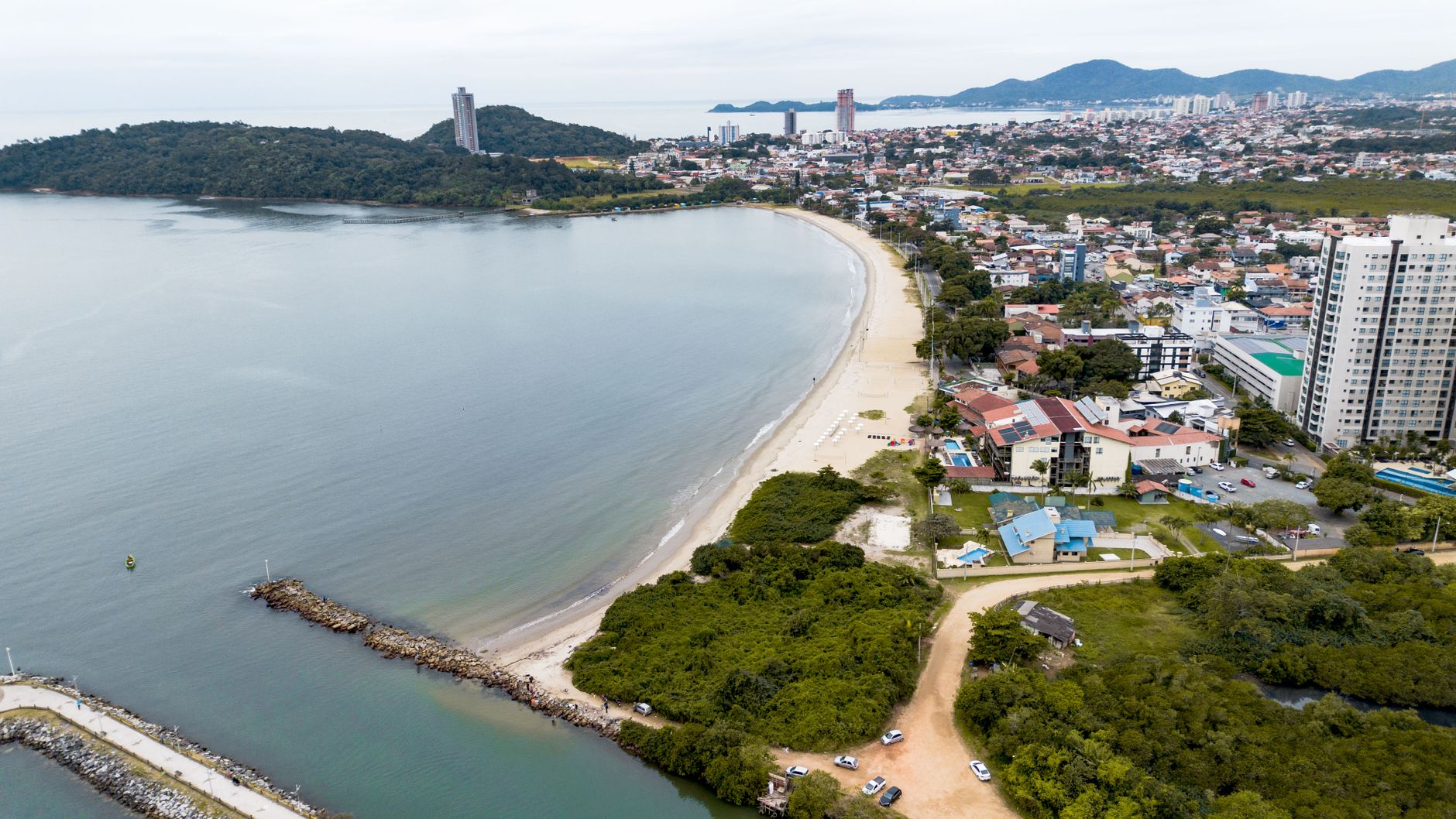
A tourist magnet for the Southern Cone
Balneário Camboriú established itself as one of the main sun-and-beach destinations in southern Brazil and a strong draw for tourists from the Southern Cone (Argentina, Uruguay, Paraguay, Chile), thanks to its skyline, its attractions and its nightlife. Visitor figures vary with the season and the source.
Source: https://es.wikipedia.org/wiki/Balne%C3%A1rio_Cambori%C3%BA

📚 Bibliography

  • Wikipedia (ES) — «Balneário Camboriú»: https://es.wikipedia.org/wiki/Balne%C3%A1rio_Cambori%C3%BA
  • Wikipedia (PT) — «Balneário Camboriú»: https://pt.wikipedia.org/wiki/Balne%C3%A1rio_Cambori%C3%BA
  • Wikipedia (EN) — «Balneário Camboriú»: https://en.wikipedia.org/wiki/Balne%C3%A1rio_Cambori%C3%BA
  • Wikipedia (PT) — «Camboriú»: https://pt.wikipedia.org/wiki/Cambori%C3%BA
  • Wikipedia (PT) — «História de Santa Catarina»: https://pt.wikipedia.org/wiki/Hist%C3%B3ria_de_Santa_Catarina
  • Wikipedia (PT) — «Imigração açoriana no Brasil»: https://pt.wikipedia.org/wiki/Imigra%C3%A7%C3%A3o_a%C3%A7oriana_no_Brasil
  • Wikipedia (PT) — «Carijós»: https://pt.wikipedia.org/wiki/Carij%C3%B3s
  • Wikipedia (ES) — «Sambaquí»: https://es.wikipedia.org/wiki/Sambaqu%C3%AD
  • Santur — Turismo de Santa Catarina: https://www.santur.sc.gov.br/

❓ Frequently asked questions

Why do they call Balneário Camboriú the 'Brazilian Dubai'?+
Because of its striking skyline: the city grew very vertically, with a concentration of very tall skyscrapers — some among the tallest in Brazil and in South America — lined up right in front of Praia Central. That image of modern towers mirrored in the sea, unusual in a beach resort, earned it the nickname of the 'Brazilian Dubai'. It's one of the destination's great visual draws, especially at night, with everything lit up.
When is the best time to go?+
It depends on what you're after. Summer (December to March, especially January and February) is the peak moment for the beach, the nightlife and the buzz, but also for crowds and higher prices, topping out at New Year and Carnival. Spring and autumn offer good weather, fewer people and better prices. Winter is cooler and not much good for the beach, but ideal for seeing the city and its attractions in peace.
How many days do I need?+
Two to three days cover the essentials: Praia Central, the Parque Unipraias cable car with Laranjeiras, the Cristo Luz, the FG Big Wheel and a couple of nights out. Four to five days add the wild southern beaches along the Interpraias, boat trips, shopping, unhurried meals and day trips to Bombinhas, Porto Belo or Florianópolis.
Which beach should I choose?+
Praia Central is the most urban and lively, with every service, perfect for having everything at hand; Praia de Laranjeiras, to the south, is quieter, with calm greenish water ringed by hills, ideal for families and for swimming; and the wild southern beaches (Estaleiro, Estaleirinho, Pinho) are more natural and serene. The ideal is to combine Praia Central with at least one southern beach.
How do I get around the city?+
In the central area, almost everything is walkable along the seafront. For the Cristo Luz, the southern beaches, the airport and for getting back at night, the most comfortable and safest option is a taxi or an app (Uber/99). The Interpraias road and the tourist shuttles connect with the wild beaches, and your own car is useful for day trips, though in summer traffic and parking downtown get complicated.
Is the nightlife worth it?+
If you're after a party, yes: Balneário Camboriú is one of the great nightlife hubs of southern Brazil, with bars, beach clubs and big clubs, above all in summer and around Barra Sul and Avenida Atlântica. The club lineup changes and places can get very crowded; check what's on at the time, carry little on you and get back by taxi/app.
How do I get to Balneário Camboriú?+
The nearest airport is Navegantes (NVT), about 20 km away (30-45 min). Many travelers also arrive through Florianópolis (FLN), a little over an hour away, or through Curitiba. The city sits on the BR-101, so it's very easy to reach by car and by bus from the rest of southern Brazil and from Argentina, Uruguay and Paraguay, with international bus connections.
How much does the Parque Unipraias cable car cost?+
The bondinho (cable car) round trip with its three stations costs R$ 80 for adults and R$ 34 for children aged 6 to 12; under 5s don't pay (source: official site, verified July 2026). The adventure attractions at the Mata Atlântica station — the ZipRider zipline and the Youhooo sled — are paid separately (R$ 55–78). Go on a clear day to make the most of the skyline views and head down to Praia de Laranjeiras.
Sources consulted (14)
Still planning?
Explore more destinations in Brazil
See all destinations →
Advertisements